Blazing Star (Mentzelia laevicaulis)
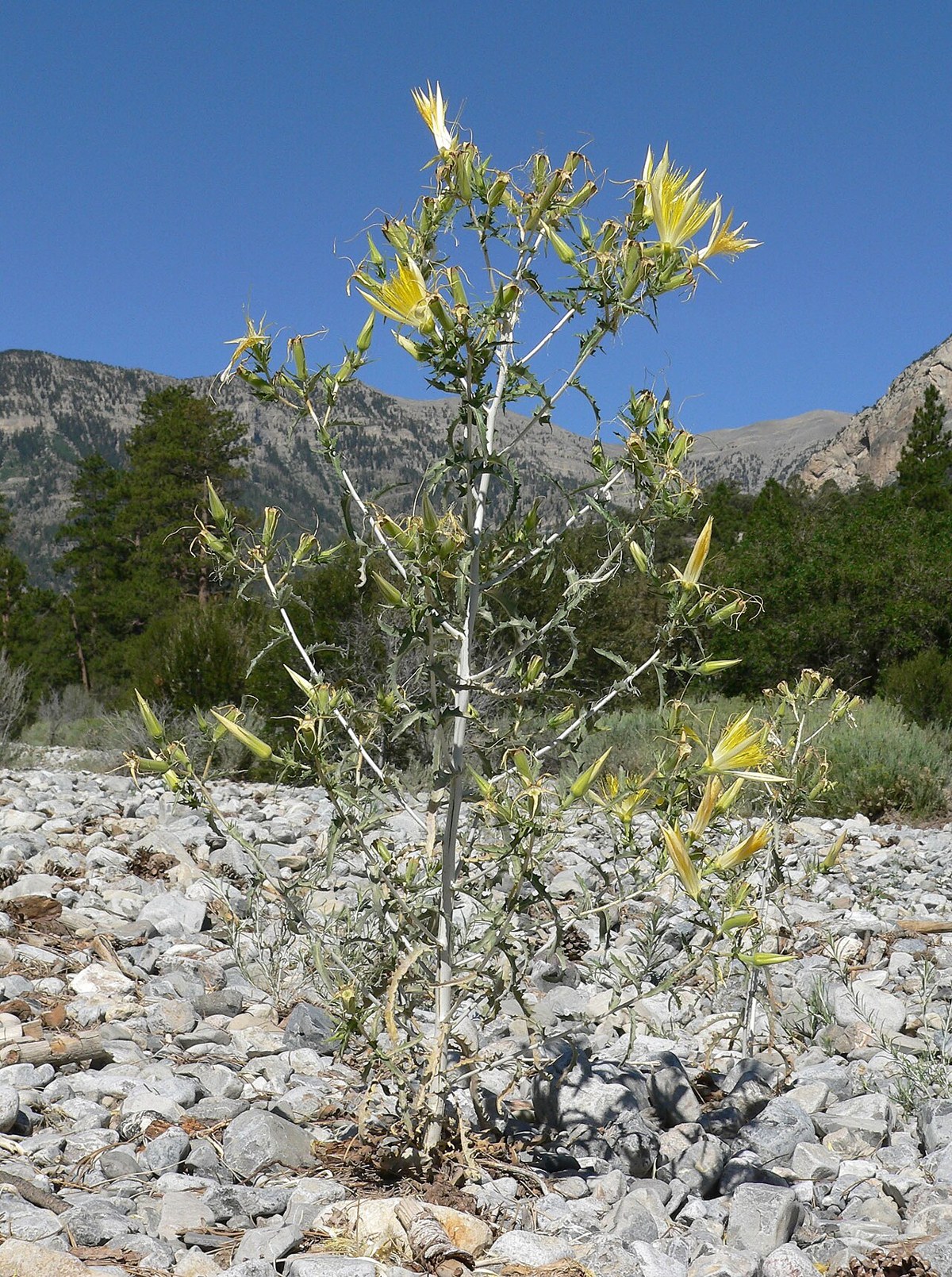
Mentzelia laevicaulis, commonly called blazing star or smoothstem blazingstar, is a striking wildflower of the dry interior West, prized by gardeners for flowers so large and luminous they seem out of scale with the scrubby, pale-stemmed plant that produces them. A member of the Loasaceae (stickleaf family), it grows wild on barren slopes, road cuts, and talus from the sagebrush steppe of the Columbia Basin south through the Great Basin and into the deserts of California and Utah. Few native plants reward so little water with so much flower.
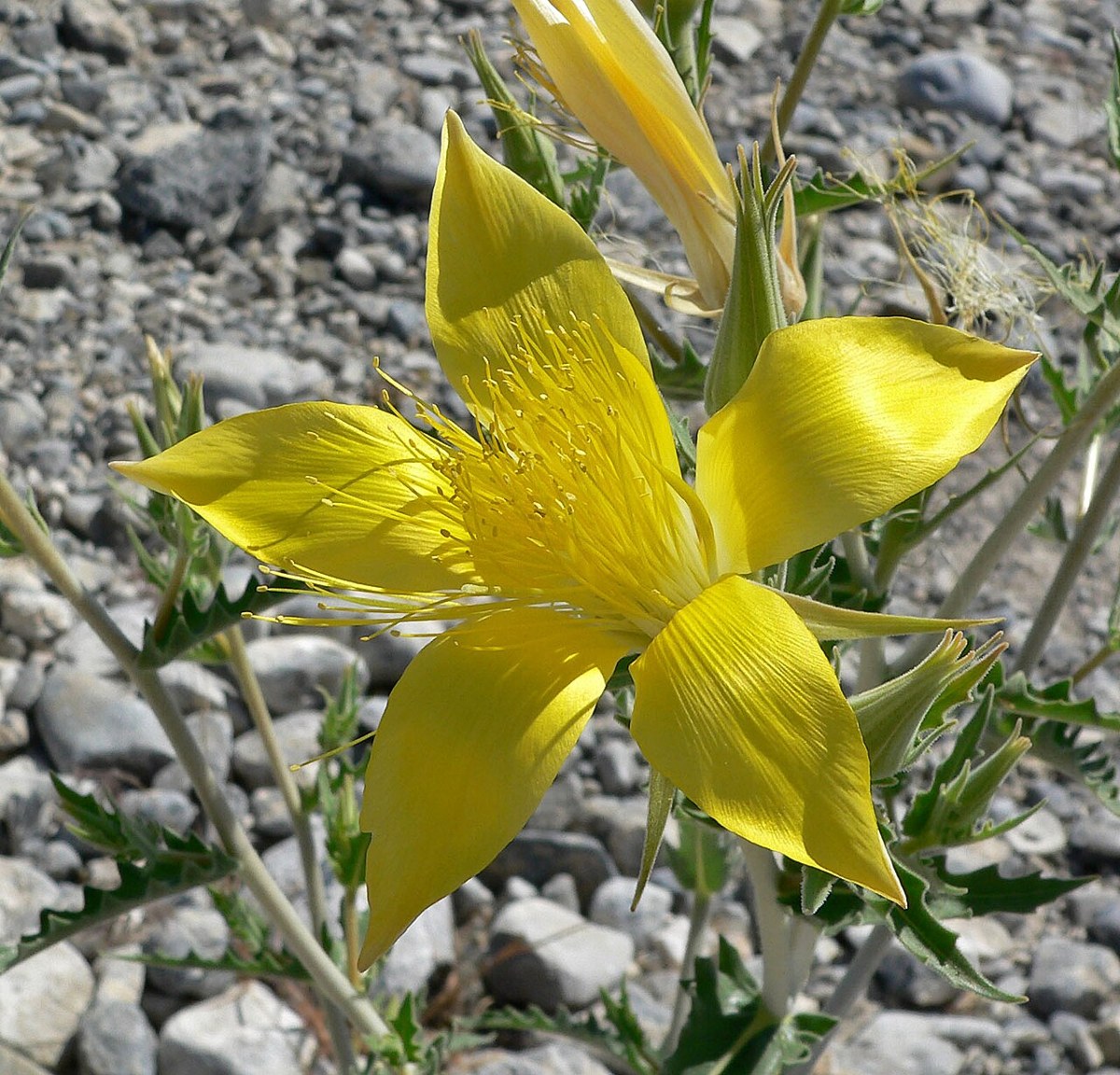
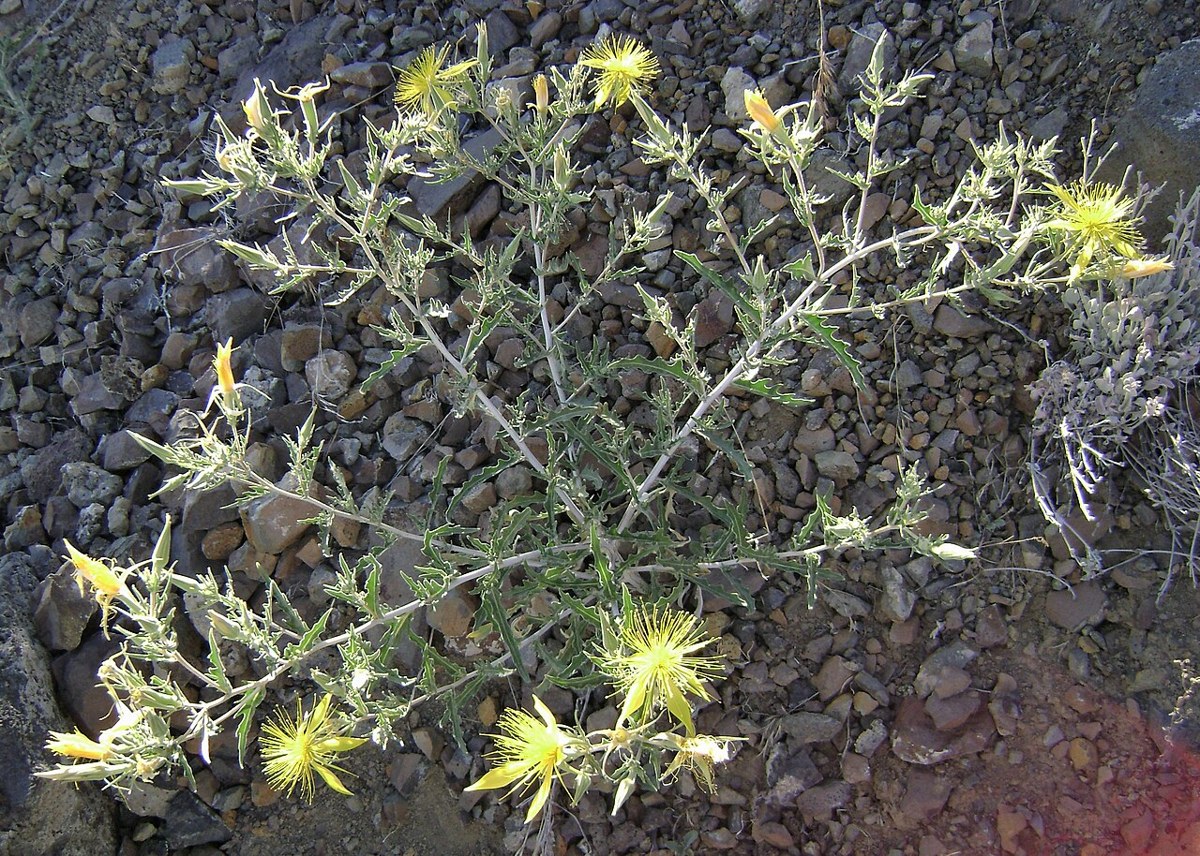
Blazing star is a biennial or short-lived perennial that forms a loose clump of whitish, somewhat brittle stems topped from midsummer into fall with satiny, lemon-to-gold flowers 1½ to 3 inches across — among the largest of any plant in the sunflower-sized wildflower category native to the dry West. The five broad petals surround a dense brush of yellow stamens, and the whole flower has a faint sheen, as if lacquered. The flowers open toward evening and stay open through the night and into the next morning, a habit tied to their main pollinators: hawkmoths that work the high desert after dark.
In the garden, blazing star earns its keep in the toughest spots — gravelly slopes, rock gardens, dry road cuts, and anywhere irrigation is an afterthought. It needs almost nothing once established beyond sun and good drainage, and it reseeds modestly without becoming a nuisance. Handle the foliage with a light touch: like its stickleaf relatives, blazing star’s leaves are covered in barbed hairs that cling to clothing, gloves, and skin, which is both an identification clue and a minor irritant worth knowing about before you reach in to deadhead.
Identification
Blazing star grows 1 to 4 feet tall from a stout taproot, branching from the base into several upright to sprawling stems. The common name “smoothstem” is a bit of a misnomer in the garden sense — the stems are pale, whitish, and smooth-barked in appearance, lacking the coarse hairiness of the leaves, but they are brittle and snap easily if bent.
Stems
Stems are whitish to pale tan, round in cross-section, and often branched above the base. The bark-like outer layer gives older stems a bleached, papery look that stands out against the surrounding rock and soil even when the plant isn’t in flower.
Leaves
Leaves are alternate, lance-shaped to narrowly oval, 2 to 6 inches long, with coarsely toothed or shallowly lobed margins and a grayish-green cast. Both surfaces are rough with barbed, hooked hairs — the “stickleaf” trait shared across the genus — that let the foliage cling tenaciously to fur, feathers, and fabric. This texture is one of the fastest ways to confirm an identification in the field.
Flowers
Flowers are solitary or in small clusters at the stem tips, with five broad, pointed, satiny yellow petals spreading 1½ to 3 inches across — exceptionally large for the genus, most of whose roughly 60 western species have smaller, many-petaled flowers. The numerous golden stamens form a conspicuous central brush; in blazing star, unlike many of its relatives, the outer stamens have not widened into extra petal-like structures. Flowers open in late afternoon or at dusk and remain open through the night and into the following morning before closing, a rhythm that matches the activity of their primary pollinators, hawkmoths.
Fruit & Seeds
The fruit is a narrow, somewhat curved woody capsule up to an inch long that splits open at the tip to release numerous flat, papery, wing-margined seeds. The capsules persist on the dried stems well into winter and are a reliable identification feature after the flowers are gone.
Quick Facts
| Scientific Name | Mentzelia laevicaulis |
| Family | Loasaceae (Stickleaf) |
| Plant Type | Biennial / Short-lived Perennial Wildflower |
| Mature Height | 1–4 ft (30–120 cm) |
| Mature Spread | 1–2 ft (30–60 cm) |
| Growth Rate | Moderate |
| Sun Exposure | Full Sun |
| Water Needs | Low |
| Soil Type | Lean, rocky, sandy or gravelly; sharply drained |
| Drought Tolerance | Excellent |
| Bloom Time | June – September |
| Flower Color | Bright yellow to gold |
| Fruit | Narrow woody capsule with flat, winged seeds |
| Deer Resistant | Yes (barbed, gritty foliage discourages browsing) |
| USDA Hardiness Zones | 4–9 |
Native Range
Blazing star is native across the dry interior West, from the Columbia Basin of central Washington and Oregon south through the Snake River Plain of Idaho, across the Great Basin of Nevada and Utah, into the mountains of Montana and Wyoming, and south through much of California to the Mojave Desert. It is a plant of open, unforested ground — the kind of barren, sun-blasted slope most wildflowers avoid.
Across this range it favors disturbed or naturally sparse sites: road cuts, talus slopes, dry washes, badlands, eroding bluffs, and gravelly or sandy flats, usually on volcanic or sedimentary substrates with little competing vegetation. It is equally at home in sagebrush steppe, pinyon-juniper woodland openings, and low desert scrub, generally below about 8,000 feet elevation.
Because it thrives on disturbance, blazing star is often one of the first showy wildflowers to recolonize cut banks, old mine tailings, and other raw ground, where its deep taproot and minimal water needs let it establish well ahead of less drought-tolerant species. It is not considered rare or declining anywhere in its range.
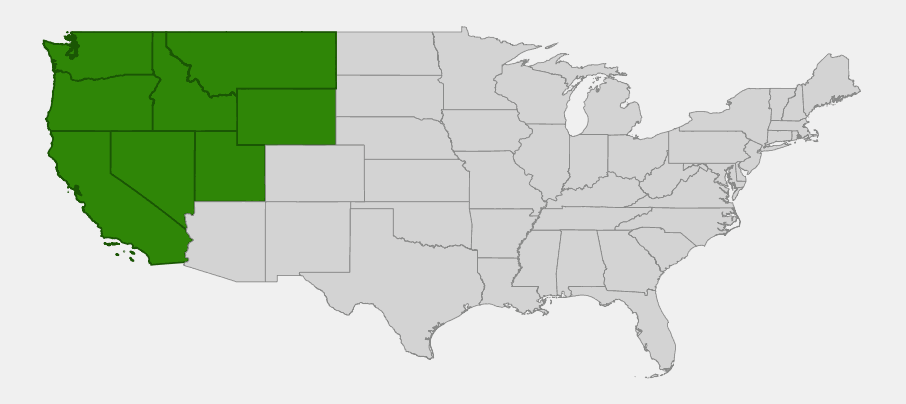
📋 Regional plant lists featuring Blazing Star: California & Nevada · Idaho, Eastern Oregon & Eastern Washington · Utah & Western Colorado · Montana & Wyoming
Growing & Care Guide
Blazing star is a plant for gardeners who want maximum flower for minimum fuss on the driest, least hospitable part of the property. Treat it like the gravelly roadside colonizer it is, and it will reward you with months of glowing flowers that open right around the time you’re out enjoying the evening.
Light
Full sun is essential. Blazing star is a plant of open, unshaded ground, and it will stretch, flop, and flower poorly in any significant shade. Choose the hottest, brightest spot available.
Soil & Water
Lean, sharply drained soil is the single most important ingredient — gravelly, sandy, or rocky ground that would frustrate most perennials suits blazing star perfectly. Rich, moisture-retentive garden soil tends to produce weak, short-lived plants. Once established, it needs no supplemental water beyond normal seasonal rainfall in most of its range; occasional deep watering during extended summer drought can extend the bloom season but is not required. Good drainage in winter is critical, since wet feet are the most common cause of failure.
Planting Tips
Direct-seed in fall or early winter so seeds experience natural cold stratification, or start seed in containers and transplant while young, since the taproot resents disturbance later on. Space plants 12 to 18 inches apart. Blazing star often behaves as a biennial, producing a basal rosette the first year and flowering the second, then setting seed and declining — plan on letting a few seed heads mature each year to keep a planting going.
Pruning & Maintenance
Little maintenance is needed. Deadheading isn’t necessary and, since the barbed foliage sticks to skin and gloves, it’s easiest to simply leave spent stems standing through winter — they add interest and let seed disperse for next year’s plants. Wear gloves and long sleeves if you do need to handle the foliage closely.
Landscape Uses
Blazing star fits naturally into several kinds of low-water plantings:
- Rock gardens and gravel gardens, where its taproot and drainage needs are easily met
- Dry slopes and road cuts too lean and sunny for most ornamentals
- Xeriscape and waterwise borders paired with sagebrush, rabbitbrush, and native bunchgrasses
- Pollinator gardens focused on moths and evening activity
- Disturbed-ground restoration on mine reclamation sites, cut banks, and eroding fill
Wildlife & Ecological Value
Blazing star plays an outsized ecological role for a plant that spends much of the day looking closed and unremarkable.
For Pollinators
The nocturnal flowering habit is the plant’s defining ecological trait: flowers open at dusk and stay open overnight, timed to the activity of hawkmoths, which are thought to be the primary pollinators. The large, pale, highly scented flowers and exposed stamens make an efficient night-time landing pad and nectar source in habitats where few other flowers are open after dark. By day, bees and other daytime pollinators will visit flowers that remain open into the morning. If pollinators fail to find a flower before it closes, blazing star can self-pollinate, since loose pollen is jostled onto the stigma as the petals fold shut in the afternoon.
For Birds & Small Mammals
The abundant, flat, winged seeds released from the dry capsules are eaten by small seed-eating birds and rodents in fall and winter, adding a food source to open ground that otherwise offers little forage once summer annuals have dried up.
Ecosystem Role
As an early colonizer of bare, disturbed, or naturally sparse soils, blazing star helps stabilize loose ground with its taproot and provides one of the few sources of floral resources on harsh sites through the heat of summer. Its presence on disturbed slopes and cut banks is often an early step toward fuller plant cover returning to a site.
Cultural & Historical Uses
Several Indigenous peoples of the Great Basin and Columbia Plateau gathered the oil-rich seeds of blazing star as a food source, parching and grinding them much as other Mentzelia and sunflower-family seeds were processed. The plant’s roots were used historically in some tribal traditions as a poultice or preparation applied for the discomfort of arthritis, rheumatism, and bruising — a traditional practice, not a current medical recommendation, and the species has no established modern herbal or medicinal use.
The species was first collected for science in 1825 by the Scottish botanist David Douglas — best known today for the Douglas-fir that bears his name — near the Great Falls of the Columbia River during his exploration of the Pacific Northwest. He originally placed it in the genus Bartonia, honoring the American botanist Benjamin Smith Barton, before it was later reclassified into Mentzelia.
The genus nickname “stickleaf,” and the comparison of its barbed foliage to natural Velcro, reflects a practical bit of frontier and ranching lore: pack animals and clothing brushing through a patch of blazing star would come away thoroughly covered in leaves, a nuisance that made the plant memorable to travelers across the dry West long before it was grown as an ornamental.
Frequently Asked Questions
Why do blazing star flowers close during the day?
The flowers are adapted to pollination by hawkmoths, which are active at night. Blooms open in late afternoon or at dusk, stay open through the night and into the following morning, then close as daytime heat builds — so the best time to see a planting in full flower is evening or early morning.
Is blazing star the same plant as the Liatris sold as “blazing star” in garden centers?
No. “Blazing star” is also a common name for several Liatris species native to the central and eastern United States, which are unrelated purple-flowered members of the aster family. Mentzelia laevicaulis is a yellow-flowered western native in the separate stickleaf family, Loasaceae; always check the scientific name when buying.
Does blazing star need irrigation once established?
Generally no. In its native range it relies on seasonal rainfall and thrives on neglect; overwatering in heavy soil is far more likely to kill it than drought. An occasional deep soak during an extended dry spell can prolong bloom but isn’t necessary for survival.
Is blazing star toxic or safe to handle?
It is not known to be toxic, but the leaves are covered in tiny barbed hairs that grip skin, gloves, and fabric and can cause mild irritation. Wear gloves when working closely with the foliage, and expect it to stick to clothing if brushed against.
Will blazing star come back every year?
It often behaves as a biennial — a basal rosette the first year, flowers and seed the second, then the individual plant dies. Established plantings persist through self-seeding, so leaving a few seed capsules to mature and drop each season keeps a patch going indefinitely.

Looking for a nursery that carries Blazing Star?
Browse our native plant nursery directory: California · Nevada · Oregon · Washington · Idaho · Utah · Montana · Wyoming