
Alderleaf Buckthorn (Rhamnus alnifolia)
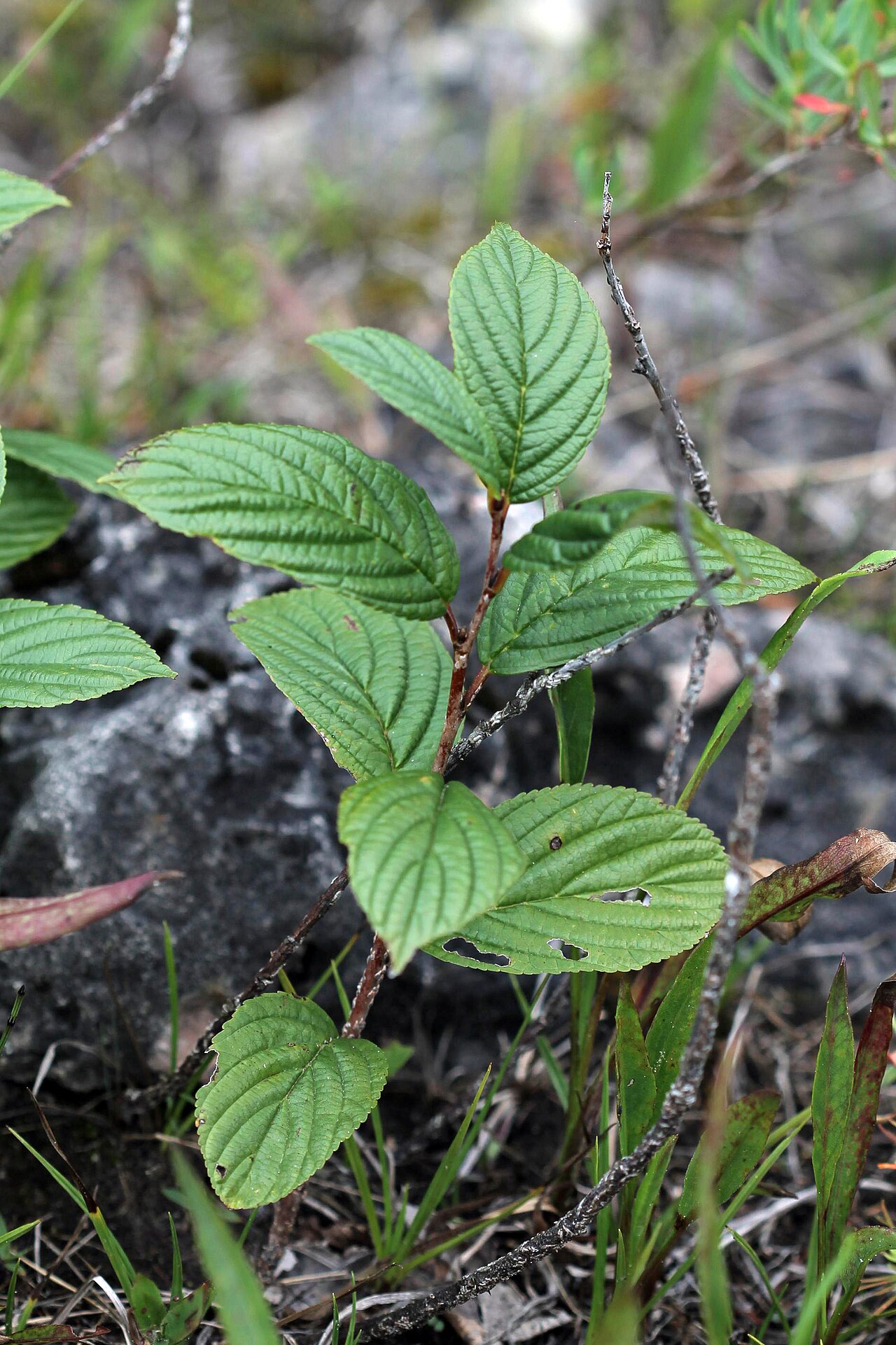
Rhamnus alnifolia, the Alderleaf Buckthorn, is a low, thornless native shrub of fens, cedar swamps, wet meadows and stream banks across the northern United States and Canada. It rarely grows more than about 3 feet tall, and its tidy, alder-like leaves with straight, parallel veins give it its name. In late spring it bears tiny greenish-yellow flowers, followed in summer by berries that ripen from red to glossy black.
This is not the invasive buckthorn. The word “buckthorn” makes many land managers reach for the loppers, because two Eurasian species, common buckthorn (Rhamnus cathartica) and glossy buckthorn (Frangula alnus), are among the most damaging invasive shrubs in the Upper Midwest and Northeast. Alderleaf buckthorn is a well-behaved native that grows in many of the same wetlands those invaders take over, so it is important to tell them apart before removing anything. The identification section below explains how.
Alderleaf buckthorn favors cool, wet, mineral-rich sites, especially calcareous fens and swamps. It is uncommon at the edges of its range and is considered rare in several states. Its berries are mildly toxic to people. This guide covers identification, native range, growing conditions and its value to wildlife.
Identification
Alderleaf buckthorn is easy to recognize once you know what to look for: a low, unarmed shrub with alternate leaves that have five to eight pairs of straight, nearly parallel side veins. Its relatives, the native Carolina Buckthorn and Cascara, are much taller shrubs or small trees.
Growth Habit
Alderleaf buckthorn is a deciduous, many-stemmed shrub, usually 1 to 3 feet tall and occasionally up to about 5 feet. The stems are slender, gray to reddish-brown and have no thorns. It often grows scattered through sedge meadows and fens rather than in dense thickets.
Leaves
The leaves are alternate, elliptic to oval, about 2 to 4 inches long, with finely round-toothed edges and a pointed tip. Each leaf has five to eight pairs of prominent side veins that run nearly straight and parallel toward the edge, much like an alder leaf. The upper surface is bright green and the underside is paler. They turn yellow in fall.
Flowers
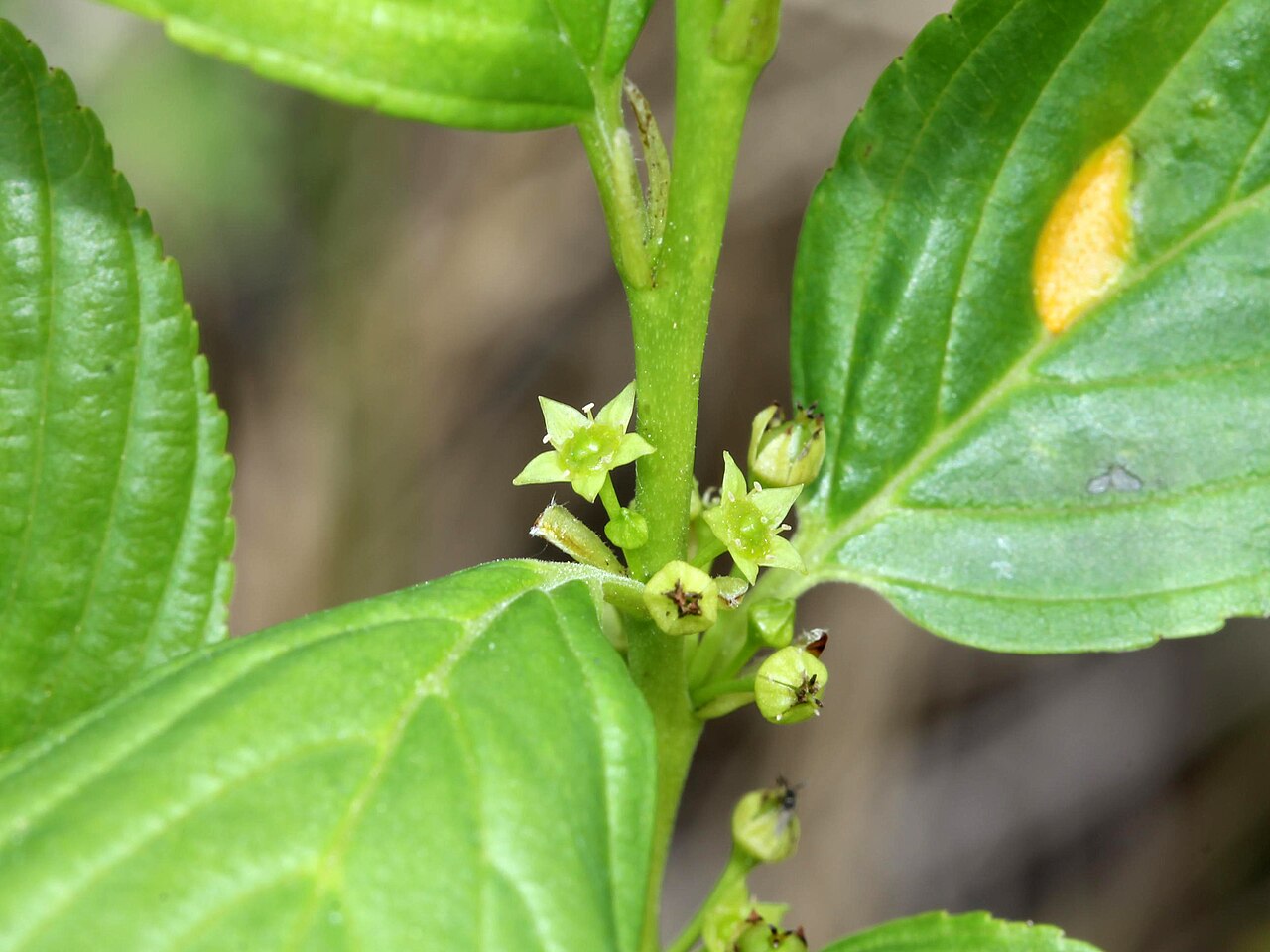
The flowers open in May and June as the leaves expand. They are tiny, about 1/8 inch across, greenish-yellow, and have five pointed sepals but no petals. They grow singly or in small clusters in the leaf axils. Male and female flowers are usually on separate plants, so only some shrubs bear fruit.
Fruit
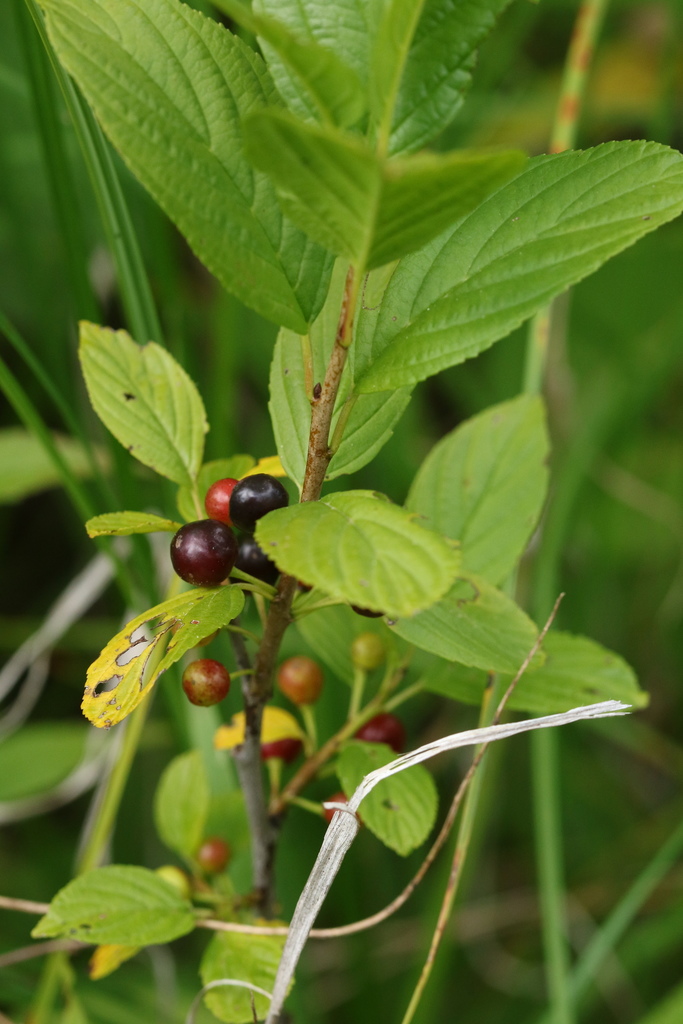
The fruit is a round, berry-like drupe about 1/4 inch across, usually with three seeds. It ripens from green to red and then glossy black in July and August, and birds take it quickly.
Telling It from the Invasive Buckthorns
Common buckthorn (Rhamnus cathartica) grows into a large shrub or small tree up to about 25 feet tall. Its leaves are mostly opposite or nearly opposite, its side veins curve strongly toward the leaf tip, and many twigs end in a sharp thorn. Its flowers have four parts.
Glossy buckthorn (Frangula alnus) is also tall, often 10 to 20 feet, and has glossy leaves with smooth, untoothed edges. Its small flowers have petals.
Alderleaf buckthorn is low (usually under 3 feet), has alternate, finely toothed leaves with straight, parallel veins, no thorns and five-parted flowers without petals. If the shrub is knee-high in a fen and has neat, alder-like leaves, it is probably the native.
Quick Facts
| Scientific Name | Rhamnus alnifolia L’Hér. |
| Family | Rhamnaceae (buckthorn family) |
| Plant Type | Low deciduous shrub; thornless |
| Mature Height | 1–3 ft (occasionally to 5 ft) |
| Mature Spread | 1–3 ft |
| Growth Rate | Slow to moderate |
| Sun Exposure | Full sun to part shade |
| Water Needs | High; constantly moist to wet soil |
| Soil Type | Wet peat, muck or mineral soils; often calcareous (fens) |
| Soil pH | About 6.0–8.0; tolerates lime |
| Bloom Time | May–June |
| Flower Color | Greenish-yellow (tiny, no petals) |
| Fall Color | Yellow |
| Fruit | Red, then glossy black drupe, about 1/4 in (mildly toxic) |
| Deer Resistant | Moderate; occasionally browsed |
| USDA Hardiness Zones | 2–7 |
Native Range
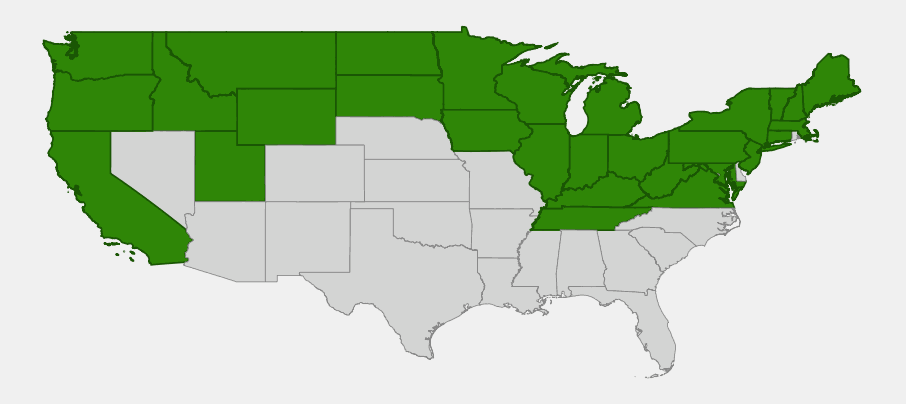
Alderleaf buckthorn has a wide but patchy northern range. In the East it grows from Newfoundland and the Maritime provinces west through New England, New York, Pennsylvania and the Great Lakes states to Minnesota, the Dakotas and the Prairie Provinces. Scattered southern populations reach Maryland, Virginia, West Virginia, Kentucky and Tennessee. In the West it grows in the northern Rocky Mountains of Montana, Wyoming, Idaho and Utah, and west to British Columbia, Washington, Oregon and the mountains of northern California.
USDA PLANTS lists it as native in 29 states and in every Canadian province from British Columbia to Newfoundland. It is most common in the Great Lakes region and northern New England. At the southern edge of its range, in states such as Maryland, Virginia, Kentucky, Tennessee and New Jersey, it is local and rare, often confined to a few calcareous wetlands.
Its typical habitats are fens, northern white cedar and tamarack swamps, wet meadows, sedge meadows, shrub carr, lake and stream margins, and seepy slopes. It strongly favors sites fed by calcium-rich groundwater, so it is a good indicator of fen conditions. In the West it grows in wet mountain meadows and along streams.
📋 Regional plant lists featuring Alderleaf Buckthorn: California & Nevada · Idaho, Eastern Oregon & Eastern Washington · Montana & Wyoming · Utah & Western Colorado · North Dakota, South Dakota & Western Minnesota · Michigan, Wisconsin & Eastern Minnesota · Illinois, Iowa & Missouri · Ohio & Indiana · Kentucky & Tennessee · Maryland, Virginia & West Virginia · New York, Pennsylvania & Northern New Jersey · Delaware, Southern New Jersey & Long Island · Connecticut, Massachusetts & Rhode Island · New Hampshire, Maine & Vermont
Growing & Care Guide
Alderleaf buckthorn is rarely sold, but native plant nurseries in the Upper Midwest and Northeast sometimes offer it for wetland restoration. It is a modest, small-scale shrub for rain gardens, pond edges and bog gardens with constantly moist soil, where it adds neat foliage and fruit for birds. It is not a plant for dry ground.
Light
It grows best in full sun to part shade. In fens and wet meadows it is often in full sun; in swamps it tolerates the light shade of cedar and tamarack.
Soil & Water
Give it soil that never dries out: wet peat, muck, or moist loam at the edge of a pond or in a low spot. It tolerates neutral to alkaline, lime-rich soils better than most wetland shrubs. Drought stress is the most common reason it fails in gardens.
Planting Tips
Plant container-grown stock in spring or early fall, setting it at the same depth it grew in the pot, and keep it well watered until established. Space plants about 2 to 3 feet apart. Because the sexes are usually on separate plants, plant several shrubs if you want fruit for birds. Buy only nursery-propagated plants; never dig them from fens, which are fragile and often protected.
Pruning & Maintenance
Little pruning is needed. Remove dead stems in late winter. Like other buckthorns, it can carry the alternate stage of oat crown rust, which causes orange spots on the leaves but rarely harms the shrub. Keep an eye out for seedlings of the invasive common and glossy buckthorns nearby, and remove those while they are small.
Propagation
Clean the seeds from ripe black fruit and sow them outdoors in fall, or give them about 60 to 90 days of cold, moist stratification before spring sowing. Softwood cuttings taken in early summer can also be rooted under mist.
Landscape Uses
- Fen and wetland restoration: a characteristic native shrub of calcareous fens and cedar swamps
- Rain gardens and pond edges: a low shrub for permanently moist soil
- Bird gardens: summer fruit eaten by thrushes, catbirds and other songbirds
- Replacing invasive buckthorns: a native alternative where common or glossy buckthorn has been removed from a wetland
- Small wet gardens: neat, compact foliage that stays in scale with bog and meadow plantings
Wildlife & Ecological Value
Alderleaf buckthorn is small, but it contributes flowers, fruit and foliage to some of North America’s richest wetland communities.
For Pollinators
The small, nectar-producing flowers are visited by small bees, flies and other insects in late spring. Lady Bird Johnson Wildflower Center lists alderleaf buckthorn as a larval host of the pale swallowtail (Papilio eurymedon), a western butterfly whose caterpillars feed on buckthorn-family plants.
For Birds
The black fruits ripen in midsummer and are eaten by songbirds such as American robins, thrushes, gray catbirds and cedar waxwings, which spread the seeds.
For Mammals
Deer and moose browse the twigs, and small mammals use the low stems for cover in wet meadows.
Ecosystem Role
Alderleaf buckthorn is a typical shrub of calcareous fens, one of the most species-rich and threatened wetland types in the northern United States. Its presence often signals calcium-rich groundwater seepage. Where invasive buckthorns invade these wetlands, the native shrub is often crowded out along with orchids, sedges and other fen specialists.
Cultural & Historical Uses
The genus name Rhamnus comes from rhamnos, an ancient Greek name for a thorny shrub. The species name alnifolia means “alder-leaved,” a reference to the straight, parallel leaf veins it shares with alders. The species was described by the French botanist Charles Louis L’Héritier de Brutelle in the late 1700s.
Buckthorns have a long history as medicinal plants because their bark and fruit contain anthraquinone glycosides, strong laxatives. The bark of the western Cascara was once a major commercial laxative. The fruit of alderleaf buckthorn contains similar compounds and should not be eaten.
In the Upper Midwest, alderleaf buckthorn is often caught up in buckthorn removal projects. Land managers and volunteers who learn to recognize it can protect this native shrub while they clear the invasive species around it.
Frequently Asked Questions
Is alderleaf buckthorn invasive?
No. Alderleaf buckthorn (Rhamnus alnifolia) is native across the northern United States and Canada and does not spread aggressively. The invasive buckthorns are the Eurasian common buckthorn (Rhamnus cathartica) and glossy buckthorn (Frangula alnus).
How do I tell alderleaf buckthorn from common buckthorn?
Alderleaf buckthorn is a low shrub, usually under 3 feet, with alternate leaves, straight parallel veins, no thorns and five-parted flowers without petals. Common buckthorn grows into a tall shrub or small tree, has mostly opposite leaves with veins curving toward the tip, often has thorn-tipped twigs and has four-parted flowers.
Are alderleaf buckthorn berries poisonous?
They are mildly toxic. Like other buckthorns, the berries contain glycosides with a strong laxative effect and can cause nausea, vomiting and diarrhea if eaten. Birds eat them without harm, but people should not.
Where does alderleaf buckthorn grow?
It grows in fens, cedar and tamarack swamps, wet meadows and along streams, especially where the groundwater is rich in calcium. Its range runs from Newfoundland to British Columbia and south to Tennessee, Utah and northern California.
Can I grow alderleaf buckthorn in my garden?
Yes, if you have constantly moist or wet soil in sun or part shade, such as a pond edge or rain garden. Buy nursery-propagated plants from a native plant nursery and never dig it from the wild.

Looking for a nursery that carries Alderleaf Buckthorn?
Browse our native plant nursery directory: California · Connecticut · Idaho, Illinois, Indiana & Iowa · Kentucky, Maine, Maryland, Massachusetts, Michigan, Minnesota & Montana · New Hampshire, New Jersey, New York, North Dakota & Ohio · Oregon · Pennsylvania, South Dakota, Tennessee, Utah, Vermont & Virginia · Washington · West Virginia, Wisconsin & Wyoming

