
Sagebrush Buttercup (Ranunculus glaberrimus)
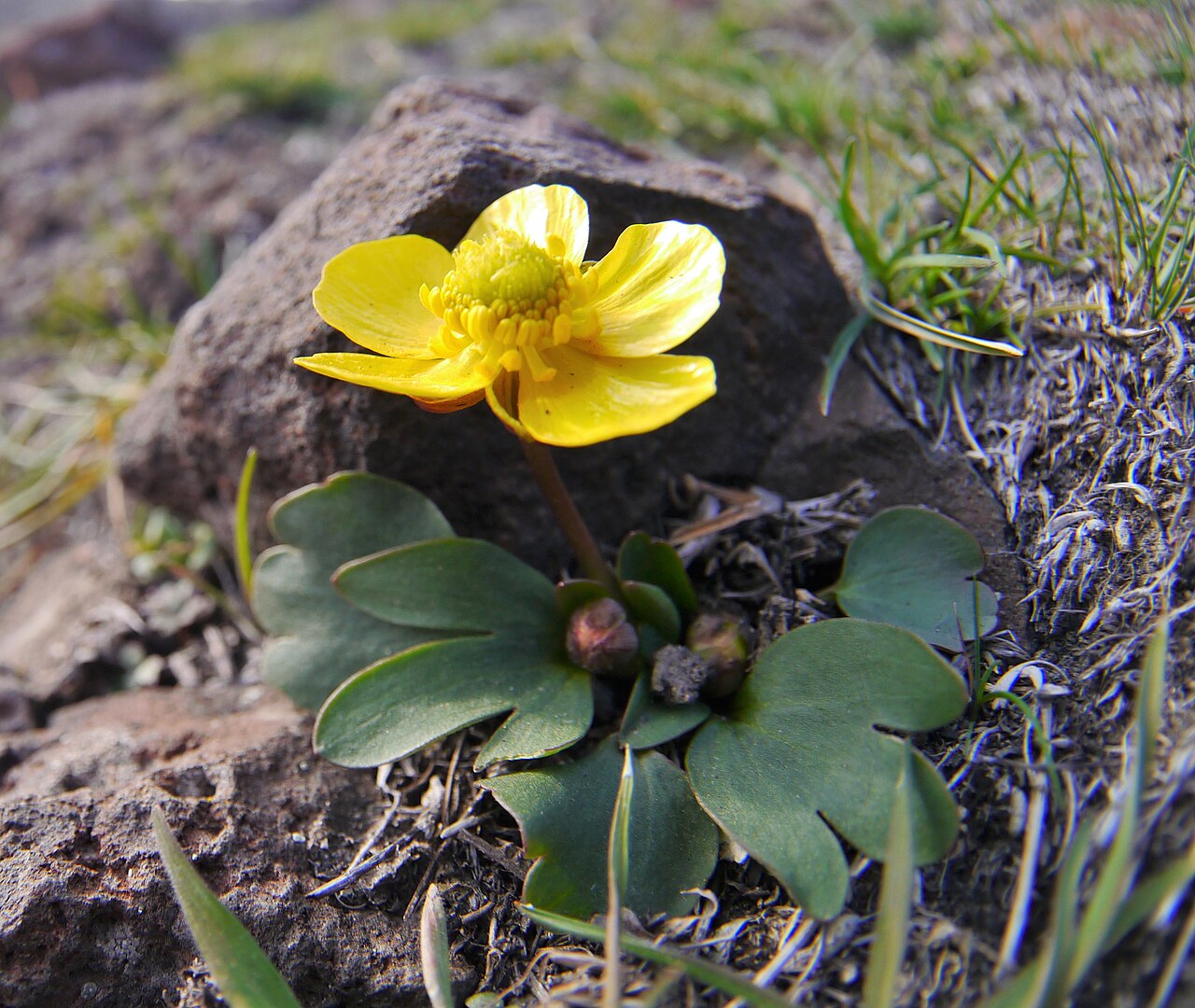
Ranunculus glaberrimus, known as Sagebrush Buttercup, is one of the very first wildflowers of spring in the interior West. Often blooming at the edge of melting snow in March or April, it opens glossy, bright yellow flowers just above a low rosette of smooth, fleshy, blue-green leaves. It grows in sagebrush steppe, grasslands and open ponderosa pine woods from British Columbia and Alberta south to California, Arizona and New Mexico, and east to the western Dakotas and Nebraska.
It is a member of the buttercup family (Ranunculaceae). The species name glaberrimus means “very smooth,” for its hairless leaves and stems. The plant is small, usually only 2 to 8 inches tall, and goes dormant soon after flowering and fruiting as the soil dries in early summer.
Safety note: like other buttercups, sagebrush buttercup contains ranunculin, which forms an irritant compound (protoanemonin) when the plant is crushed or chewed. Fresh plants can blister the skin and mouth and cause stomach upset if eaten, and they can be toxic to livestock. Do not eat any part of the plant, and wear gloves if you have sensitive skin.
Identification
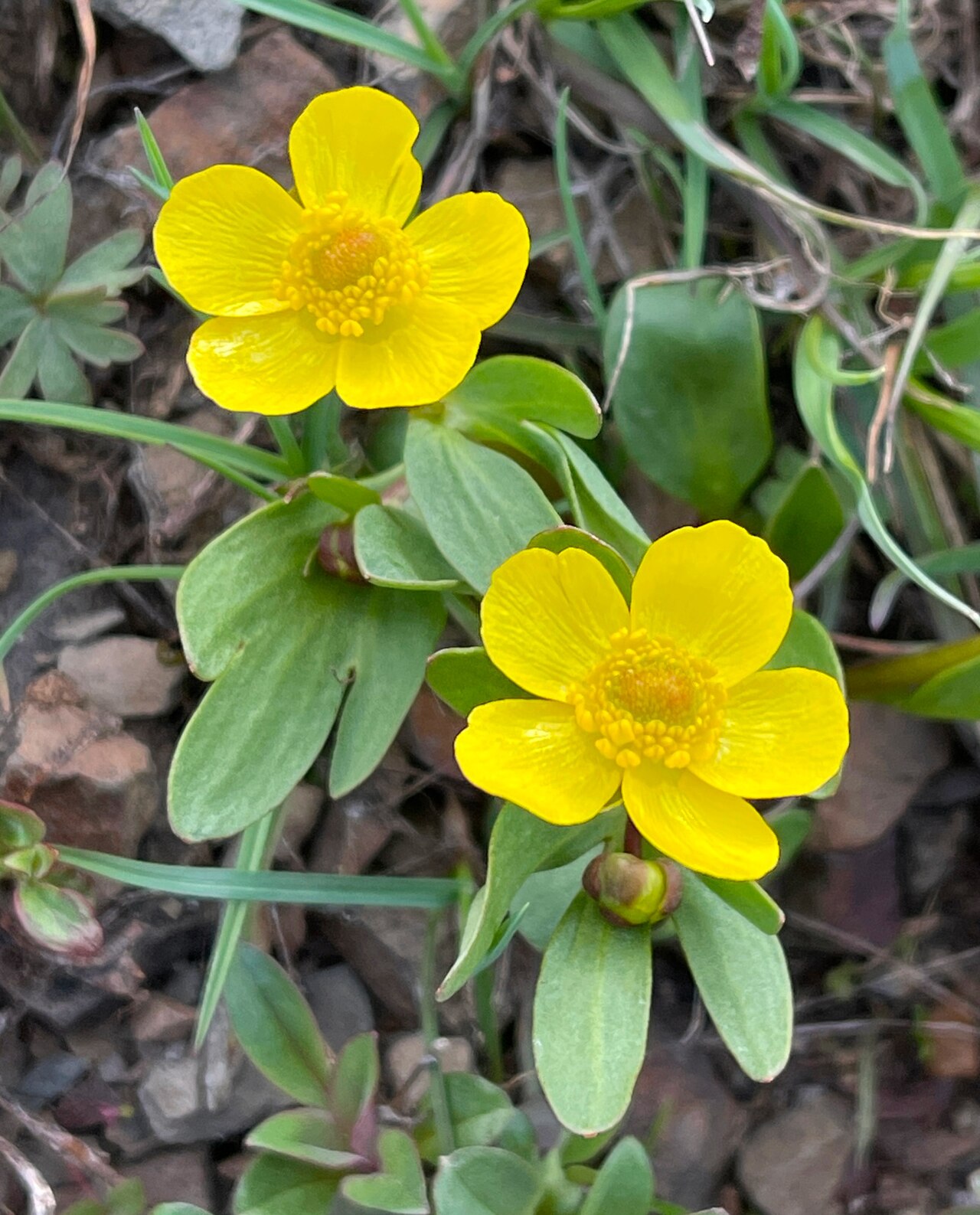
Look in early spring, often near snowbanks, for low plants with shiny yellow, five-petaled flowers and smooth, slightly fleshy leaves that are mostly rounded or elliptic, sometimes with three shallow lobes at the tip.
Growth Habit
A small perennial with a cluster of thick, fleshy roots. Stems are 2 to 8 inches long, often spreading or lying on the ground as the plant matures. The whole plant is hairless and has a slightly waxy, blue-green look.
Leaves
The basal leaves are long-stalked, smooth and fleshy. In variety glaberrimus, common in the Pacific Northwest and Great Basin, they are rounded to egg-shaped, often with three shallow lobes or teeth at the tip. In variety ellipticus, common in the Rocky Mountains and northern Great Plains, they are narrower, elliptic and usually unlobed. The stem leaves are often divided into three narrow lobes.
Flowers
The flowers are about 3/4 to 1 1/4 inches across, with five (sometimes up to ten) broad, glossy yellow petals that fade to white as they age, five greenish or purplish sepals, and many stamens around a central cluster of pistils. They bloom from about March to May, or into June at high elevations.
Fruit
The fruit is a round to egg-shaped head of many small, plump achenes, each with a short beak. The heads ripen in late spring and the plant then dies back.
Look-alikes
Other early buttercups have hairy or deeply divided leaves. California buttercup has many narrow petals and divided, hairy leaves. Western buttercup (R. occidentalis) and sagebrush-country species such as R. testiculatus (an introduced annual) differ in their hairy or dissected leaves. Marsh marigold (Caltha) has white or yellow flowers without true petals and grows in wet ground.
Quick Facts
| Scientific Name | Ranunculus glaberrimus |
| Family | Ranunculaceae (buttercup family) |
| Plant Type | Perennial wildflower (spring ephemeral) |
| Mature Height | 2–8 in |
| Mature Spread | 3–8 in |
| Growth Rate | Slow |
| Sun Exposure | Full sun to part shade |
| Water Needs | Moist in early spring; dry in summer |
| Soil Type | Rocky, gravelly or loamy, well-drained |
| Soil pH | Slightly acidic to slightly alkaline (about 6.0–8.0) |
| Bloom Time | March–May (to June at high elevations) |
| Flower Color | Glossy yellow, fading whitish |
| Fall Color | None; dormant by summer |
| Fruit | Rounded head of small beaked achenes |
| Deer Resistant | Yes; toxic and seldom browsed |
| USDA Hardiness Zones | 3–8 |
Native Range
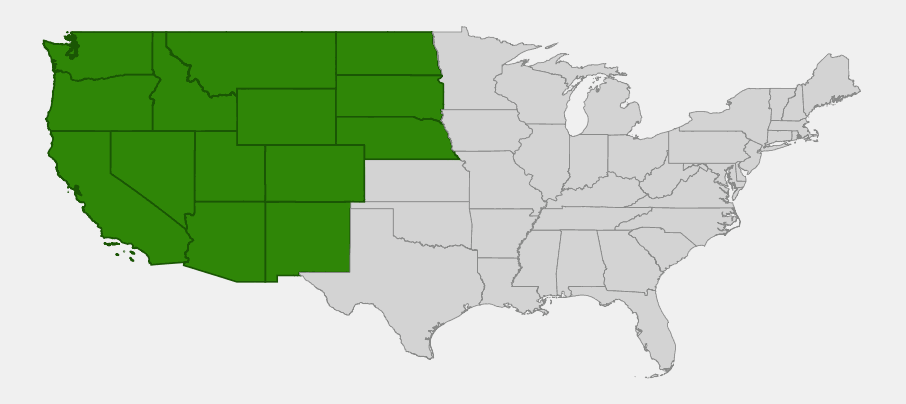
Sagebrush buttercup is widespread in western North America. USDA PLANTS lists it as native in Arizona, California, Colorado, Idaho, Montana, Nebraska, Nevada, New Mexico, North Dakota, Oregon, South Dakota, Utah, Washington and Wyoming, and in Alberta, British Columbia and Saskatchewan. It is most common in the sagebrush steppe and ponderosa pine country of the Columbia Basin, Snake River Plain, Great Basin and northern Rocky Mountains.
In Washington and Oregon it is chiefly a plant east of the Cascades, in the shrub-steppe and dry pine forests of the interior. It reaches its eastern limit in the western parts of North Dakota, South Dakota and Nebraska, including the Black Hills and the Pine Ridge region, and its southern limit in the mountains of northern Arizona and New Mexico and the eastern Sierra Nevada and northeastern mountains of California.
It grows in sagebrush steppe, bunchgrass grasslands, open ponderosa pine and juniper woodlands, rocky slopes and mountain meadows, from the foothills to the subalpine zone, usually in places that are wet from snowmelt in early spring and dry by summer.
📋 Regional plant lists featuring Sagebrush Buttercup: Idaho, Eastern Oregon & Eastern Washington · Montana & Wyoming · Nebraska, Kansas & Eastern Colorado · Utah & Western Colorado · Arizona & New Mexico · North Dakota, South Dakota & Western Minnesota · California & Nevada
Growing & Care Guide
Sagebrush buttercup is rarely grown in gardens, but it can be raised from seed by rock gardeners in the interior West. It needs a cold winter, spring moisture and a dry summer dormancy.
Light
Full sun to light part shade, such as at the edge of shrubs or open pines.
Soil & Water
Plant in gritty, well-drained soil. It needs moisture in late winter and spring, when it grows and blooms, then dry conditions in summer while it is dormant. Summer irrigation and heavy, wet soil can rot the fleshy roots.
Planting Tips
Sow fresh seed outdoors in fall in pots or in place; it needs a cold, moist winter to germinate. Plant seedlings in a rock garden, a sagebrush or steppe garden, or under deciduous shrubs where the ground stays dry in summer. Mark the spot, because the plant disappears by early summer.
Pruning & Maintenance
No pruning is needed. Let the foliage die back naturally. Wear gloves when handling the plants if you have sensitive skin, and keep them away from grazing animals.
Propagation
Grows from seed, which is slow to reach flowering size. Do not dig plants from the wild; collect only a small amount of seed where permitted.
Landscape Uses
- Rock gardens: one of the earliest flowers of spring
- Steppe and sagebrush gardens: pairs with bunchgrasses and spring bulbs
- Pollinator gardens: very early pollen for bees and flies
- Restoration: part of the native spring flora of shrub-steppe
- Nature study: a classic sign of spring in the interior West
Wildlife & Ecological Value
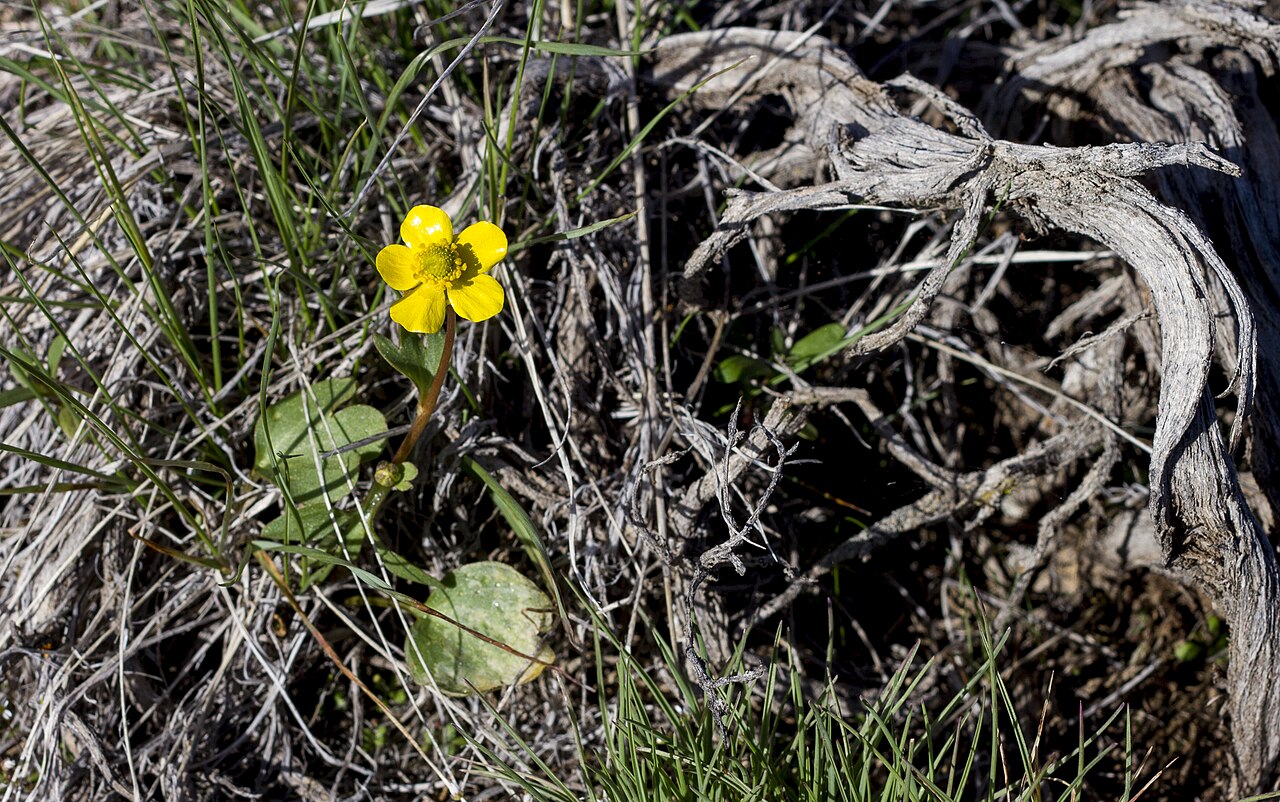
As one of the first flowers to bloom, sagebrush buttercup is an important early resource in cold, dry western landscapes.
For Pollinators
Its flowers offer pollen and some nectar very early in the season, when few other flowers are open, and are visited by early native bees, queen bumblebees and flies.
For Birds
Greater sage-grouse and other birds of sagebrush country rely on the leaves and flowers of early spring forbs, and sagebrush buttercup is part of that early forb community. Seed-eating birds may also take the small achenes.
For Mammals
Its toxins discourage most grazing. Small rodents may eat the seeds.
Ecosystem Role
As an early-season perennial, it adds diversity to the spring flora of sagebrush steppe and grasslands, which is important for wildlife that depend on early forbs.
Cultural & Historical Uses
The genus name Ranunculus is Latin for little frog, because many buttercups grow in wet places where frogs live. The species name glaberrimus means very smooth or hairless.
For many people in the interior Northwest and the northern Rockies, sagebrush buttercup is the first wildflower of the year, and its appearance near melting snowbanks is a welcome sign of spring.
The irritant in buttercups, protoanemonin, is unstable and breaks down as the plant dries, which is why dried buttercups in hay are far less harmful than fresh plants. Fresh plants are irritating and poisonous, and the plant should not be eaten.
Frequently Asked Questions
Is sagebrush buttercup poisonous?
Yes. Like other buttercups, the fresh plant contains compounds that irritate the skin and mouth and can cause stomach upset. It can be toxic to livestock. Do not eat it.
When does sagebrush buttercup bloom?
It is one of the earliest spring wildflowers, usually blooming from March to May, often next to melting snow, and into June at high elevations.
Where does sagebrush buttercup grow?
In sagebrush steppe, grasslands and open pine woods of the western United States and southwestern Canada, mostly east of the Cascades and Sierra Nevada.
Can I grow sagebrush buttercup in my garden?
It can be grown from seed in rock and steppe gardens in the interior West, but it needs a cold winter and a dry summer and is rarely sold.
Why does it disappear in summer?
It is a spring ephemeral. After flowering and setting seed, it dies back to its fleshy roots and stays dormant through the dry summer.

Looking for a nursery that carries Sagebrush Buttercup?
Browse our native plant nursery directory: Arizona · California · Colorado · Idaho · Montana · Nebraska, Nevada, New Mexico & North Dakota · Oregon · South Dakota & Utah · Washington · Wyoming
