
Musky Mint (Hyptis alata)
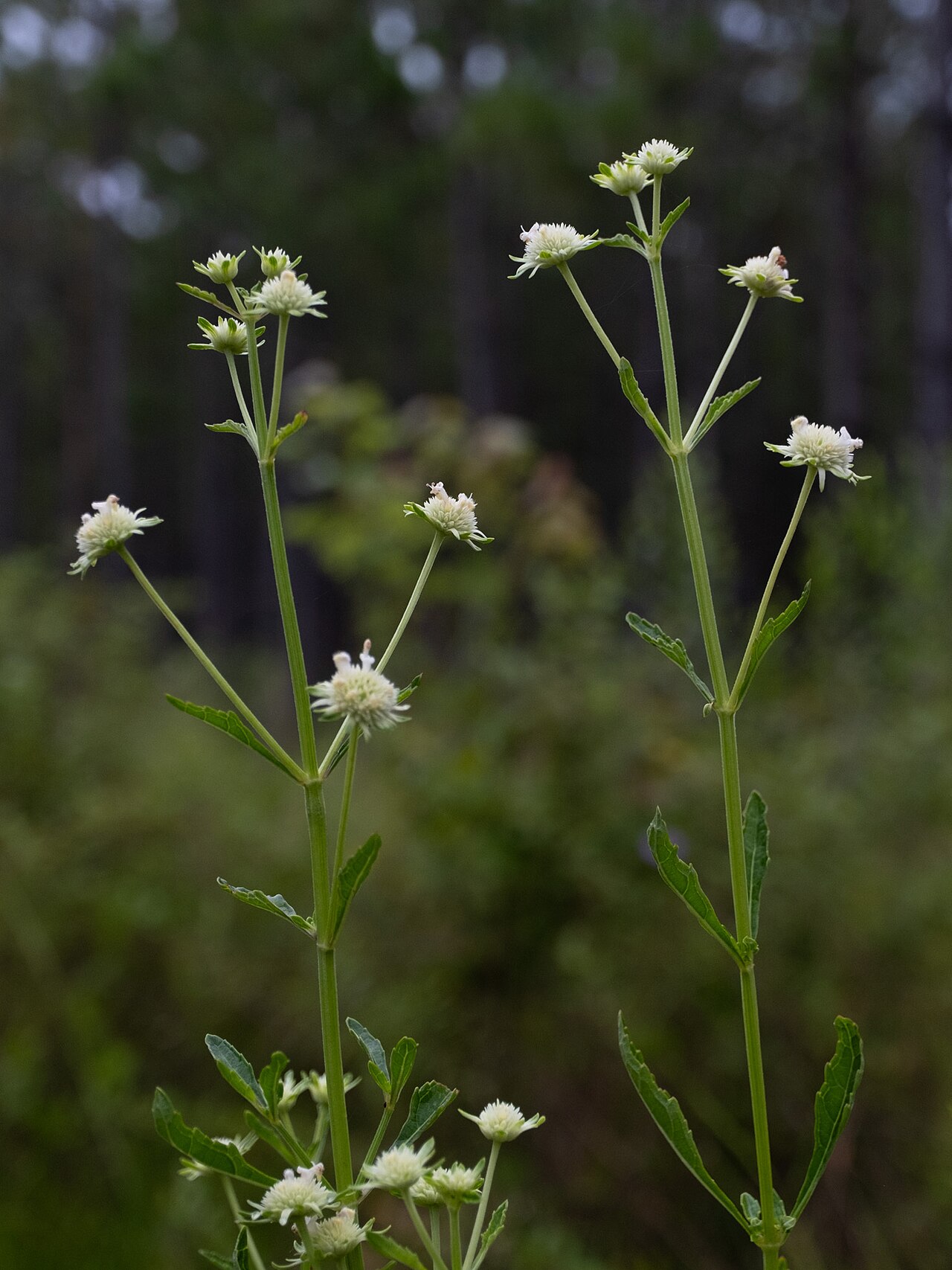
Hyptis alata, known as Musky Mint (USDA: clustered bushmint), is a tall, aromatic wildflower of wet pine savannas, flatwoods, marsh edges and ditches on the southeastern Coastal Plain. It belongs to the mint family (Lamiaceae). When the genus Hyptis was split in 2012, several weedy tropical relatives were moved to Mesosphaerum and Cantinoa, but musky mint, with its round, button-like heads, stayed in Hyptis in the strict sense.
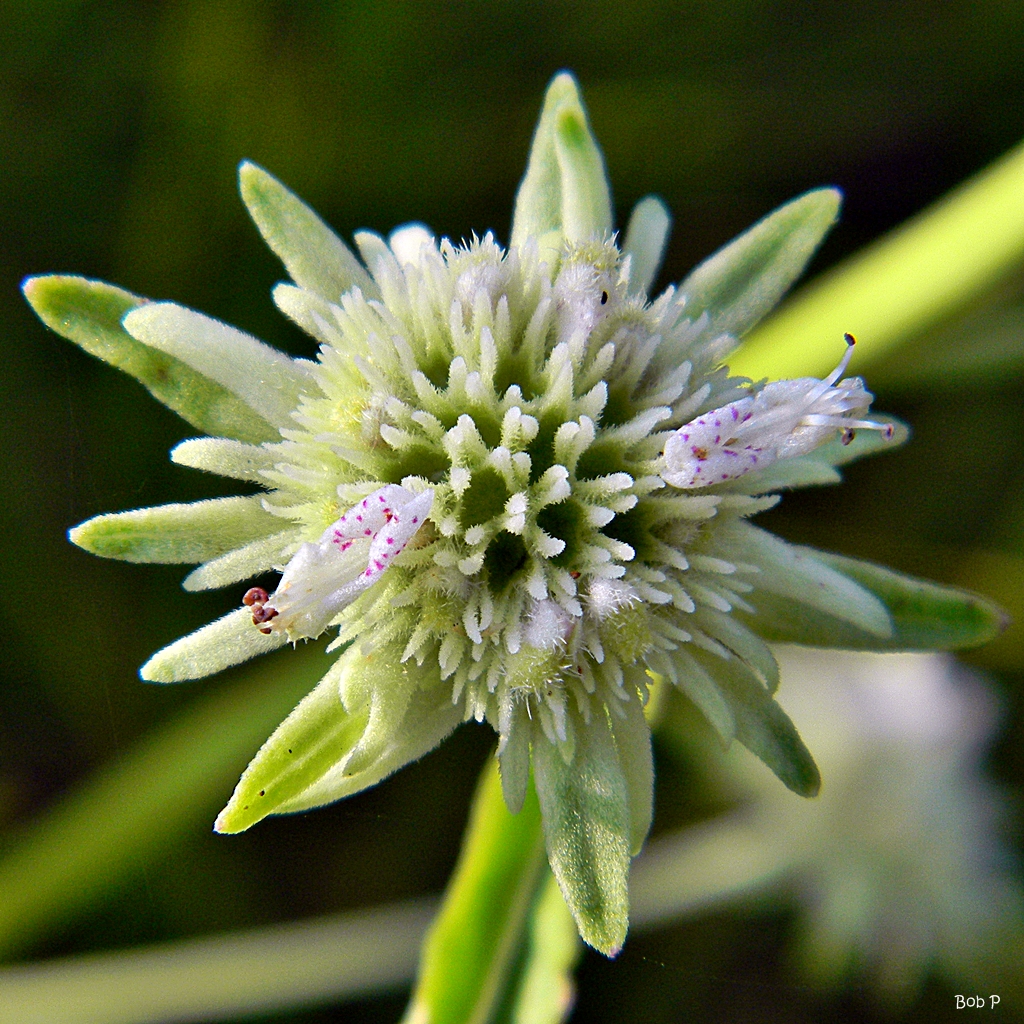
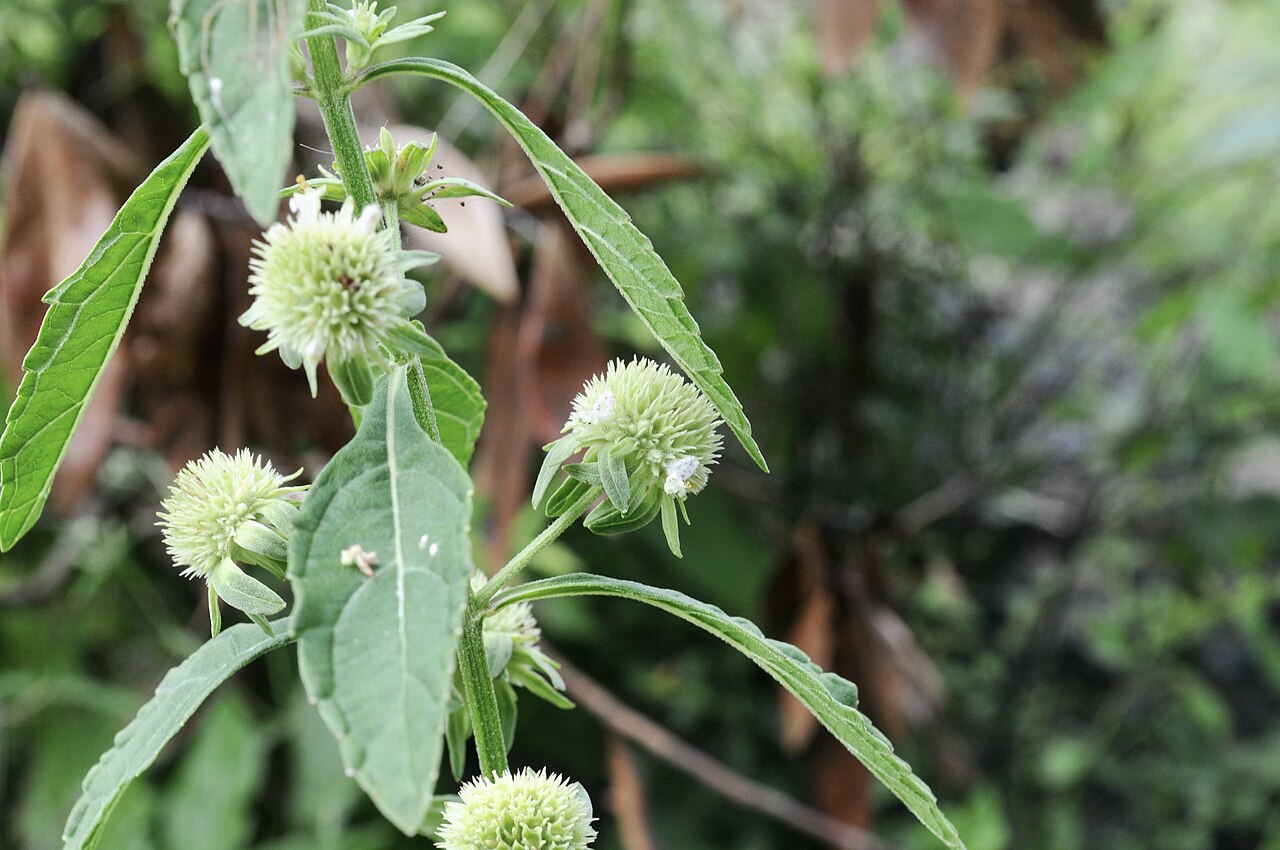
Plants grow 2 to 4 feet tall on square, sparsely branched stems with pairs of narrow, toothed leaves. From summer into fall, long stalks rise from the leaf axils, each holding a round, white, pincushion-like head about 1/2 to 3/4 inch across, framed by pale green bracts. Small white flowers dotted with purple open a few at a time around the head. Crushed leaves give off the strong, musky scent behind the common name.
Musky mint is native from North Carolina south through Florida and west along the Gulf Coast to East Texas, and also in the West Indies. It is a good plant for wet, sunny native gardens, rain gardens and pond edges, where it draws a steady stream of bees, wasps and butterflies.
Identification
Look for tall, square-stemmed mint plants in wet, sunny places with round, white, button-like flower heads on long stalks from the leaf axils.
Growth Habit
Musky mint is a perennial that grows from a short, woody base, producing one to several erect stems 2 to 4 feet tall. The stems are four-angled (square) and often slightly winged along the angles, the source of the name alata (“winged”). Plants branch sparingly near the top.
Leaves
Leaves are opposite, lance-shaped to narrowly elliptic, 2 to 4 inches long, with toothed edges and short stalks or none. They are green and somewhat rough, and the upper leaves become smaller. The foliage has a musky, slightly sharp mint smell when crushed.
Flowers
Flower heads appear mainly from June to October, and longer in Florida. Each head is held singly on a stalk 1 to 4 inches long from a leaf axil. The head is a dense, rounded cluster about 1/2 to 3/4 inch across, surrounded by a ring of lance-shaped, pale green to whitish bracts. The individual flowers are tiny, about 1/4 inch long, white and two-lipped, with purple spots on the lips; only a few open at a time.
Fruit & Seeds
Each flower produces four tiny nutlets enclosed in the persistent, bristly calyx. As the heads age they turn brown and bur-like and can stay on the plant into winter.
Look-alikes
Buttonbush (Cephalanthus occidentalis) also has round, white flower heads in wet places, but it is a woody shrub with tubular flowers. Rattlesnake masters (Eryngium) have spiny, globe-shaped heads and stiff, parallel-veined or spiny leaves. Mountain mints (Pycnanthemum) have flat-topped clusters of flowers rather than single round heads on long stalks.
Safety Notes
Musky mint is not known to be toxic, but it is not a culinary mint; its strong, musky scent is not pleasant in food or tea.
Quick Facts
| Scientific Name | Hyptis alata |
| Family | Lamiaceae (mint family) |
| Plant Type | Herbaceous perennial wildflower |
| Mature Height | 2–4 ft |
| Mature Spread | 1–2 ft |
| Growth Rate | Moderate |
| Sun Exposure | Full sun to part shade |
| Water Needs | High; moist to wet soil |
| Soil Type | Acidic, sandy or peaty wet soils |
| Soil pH | About 4.5–6.5 (acidic) |
| Bloom Time | June–October (longer in Florida) |
| Flower Color | White, spotted with purple |
| Fall Color | None notable; brown seed heads persist |
| Fruit | Tiny nutlets in bur-like heads |
| Deer Resistant | Yes; strongly aromatic foliage |
| USDA Hardiness Zones | 8–10 |
Native Range
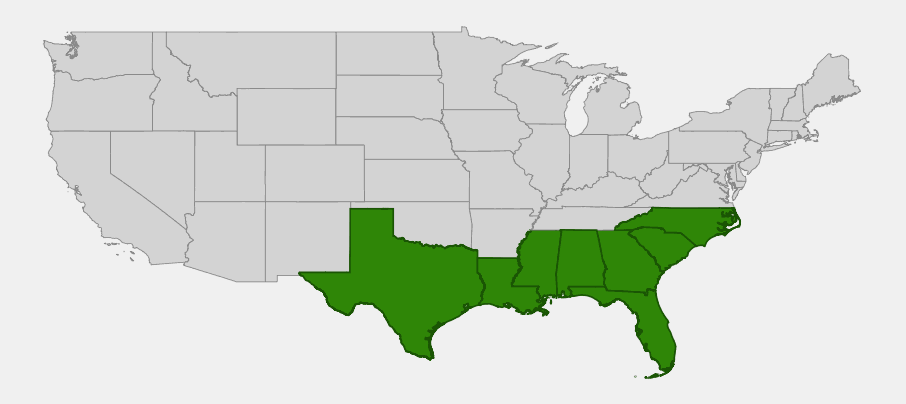
Musky mint is native to the southeastern United States and the West Indies. USDA PLANTS lists it as native in Alabama, Florida, Georgia, Louisiana, Mississippi, North Carolina, South Carolina and Texas, all on the Atlantic and Gulf Coastal Plain.
It is common throughout Florida, including the Everglades, and occurs on the Coastal Plain from southeastern North Carolina through South Carolina and Georgia and along the Gulf Coast. In Texas its records are concentrated in the eastern and coastal part of the state, in the Pineywoods and coastal prairies; it does not reach the dry South or West Texas brushlands.
Typical habitats are wet, sunny, acidic places: wet pine flatwoods and savannas, seepage slopes, bogs, marsh and pond edges, wet prairies, cypress dome margins and roadside ditches. It thrives where fire or mowing keeps taller shrubs from shading it.
📋 Regional plant lists featuring Musky Mint: Alabama, Georgia & Mississippi · North & South Florida · North & South Carolina · Arkansas, Louisiana, Eastern Oklahoma & Eastern Texas
Growing & Care Guide
Musky mint is easy to grow in moist, sunny spots in the Southeast. It is offered by some native plant nurseries in Florida and the Gulf states, and it grows readily from seed.
Light
Give it full sun to part shade. It flowers best and stays sturdier in full sun; in shade it becomes leggy.
Soil & Water
It prefers acidic, sandy, loamy or peaty soil that stays moist to wet, and it tolerates periodic flooding. It can survive short dry spells once established, but it looks best with consistent moisture.
Planting Tips
Plant it in a rain garden, along a pond or ditch edge, in a wet meadow, or in a moist border with other wetland wildflowers and grasses. Space plants about 18 inches apart. Its tall stems and round heads mix well with swamp sunflower, meadow beauties and native grasses.
Pruning & Maintenance
Little care is needed. Leave the seed heads for winter interest and for seed, then cut stems back in late winter. In the wild it benefits from fire; in gardens, an annual cutback serves the same purpose.
Propagation
Sow fresh seed on the surface of moist soil in fall or spring; it needs light to germinate. Plants can also be divided in late winter or grown from stem cuttings in summer.
Landscape Uses
- Rain gardens: tall, aromatic flowers for wet, sunny low spots
- Pond and ditch edges: tolerates periodic flooding
- Pollinator gardens: long summer-to-fall bloom for bees, wasps and butterflies
- Wet meadow and savanna restoration: a characteristic Coastal Plain wildflower
- Cut and dried flowers: round heads are interesting in arrangements
Wildlife & Ecological Value
Musky mint is a valuable late-season nectar plant in Southeastern wetlands and pine savannas.
For Pollinators
The small flowers produce nectar over a long season and attract many small bees, wasps, flies and butterflies, including small butterflies such as skippers. Because only a few flowers in each head open at once, the plants keep feeding insects for months.
For Birds
Seed-eating birds may pick nutlets from the old heads in fall and winter, and the insects drawn to the flowers feed insect-eating birds.
For Mammals
The strong-smelling foliage is rarely browsed by deer or rabbits.
Ecosystem Role
Musky mint is part of the diverse herb layer of fire-maintained pine savannas and wet flatwoods, among the most species-rich plant communities in North America. It recovers quickly after fire and helps support the pollinator community in these habitats.
Cultural & Historical Uses
The genus name Hyptis comes from the Greek hyptios, meaning “turned back,” describing the bent-back lower lip of the flower. The species was first described by Constantine Rafinesque, who placed it in another genus, and it was later transferred to Hyptis. Older references also use the names Hyptis radiata and H. alata var. stenophylla.
Several tropical relatives of musky mint, such as pignut or wild spikenard (Mesosphaerum suaveolens, formerly Hyptis suaveolens), have been used as food, medicine or insect repellents in Latin America and elsewhere. Musky mint itself has little recorded use; its strong scent is the source of its common name.
For gardeners and naturalists in the Southeast, musky mint is a familiar sight in roadside ditches and wet flatwoods in late summer, and its pincushion heads make it easy to recognize once learned.
Frequently Asked Questions
Why is it called musky mint?
Its leaves have a strong, musky, slightly sharp smell when crushed, unlike the fresh scent of spearmint or peppermint.
Is musky mint the same as clustered bushmint?
Yes. Clustered bushmint is the USDA common name for Hyptis alata; musky mint is the name most often used in Florida.
Can musky mint grow in a regular garden bed?
It can if the soil stays moist. It does best in rain gardens, pond edges and other wet, sunny spots.
Will musky mint spread like other mints?
No. It does not run by rhizomes like spearmint; it forms clumps and may self-seed in moist, open ground.
Has Hyptis alata been renamed?
No. When Hyptis was split in 2012, some relatives moved to Mesosphaerum and Cantinoa, but musky mint remained Hyptis alata.

Looking for a nursery that carries Musky Mint?
Browse our native plant nursery directory: Alabama · Florida & Georgia · Louisiana & Mississippi · North Carolina · South Carolina & Texas
