
Edible Valerian (Valeriana edulis)
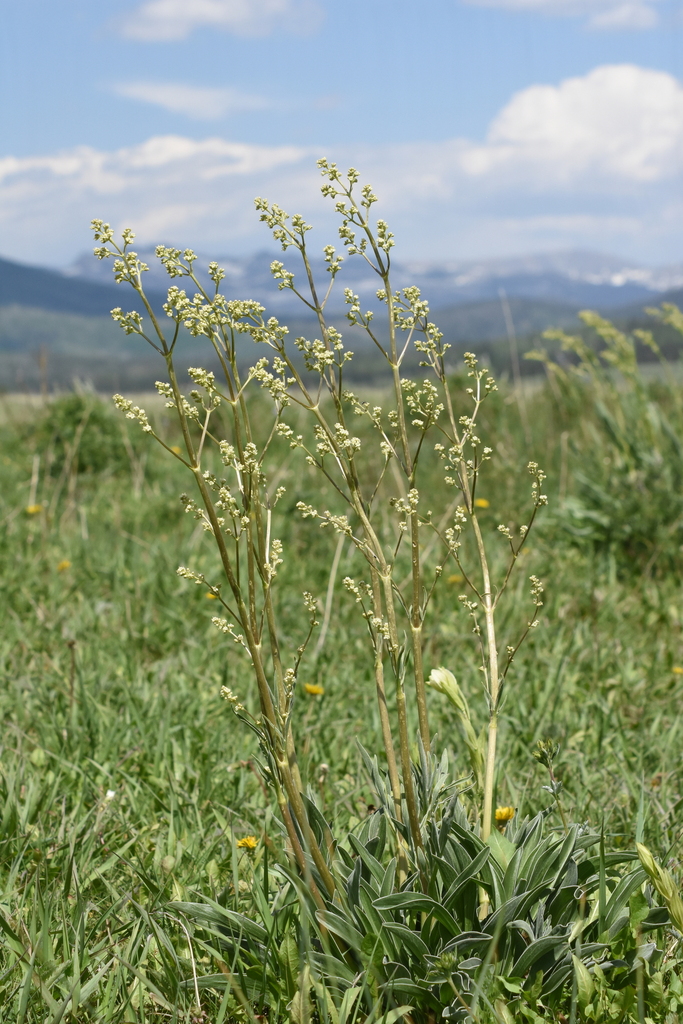
Valeriana edulis, known as Edible Valerian or tobacco root, is a tall, long-lived perennial of moist meadows and grasslands in western North America, with scattered prairie and fen populations in the Great Lakes region. Most of its leaves form a basal clump of thick, strap-shaped leaves, and in early summer it sends up sparsely leafy stems 1½ to 4 feet tall topped with loose, branched clusters of tiny cream to white flowers.
It belongs to the valerian group, now usually placed in the honeysuckle family (Caprifoliaceae). Its most remarkable feature is underground: a thick, carrot-like taproot, black outside and yellow inside, with a strong odor that many people find unpleasant. Despite the smell, the cooked root was a significant food for several Indigenous peoples of the Interior West, which is where both the species name edulis (“edible”) and the common name tobacco root come from. The plant is not related to tobacco.
Edible valerian grows from British Columbia and the northern Rockies south through the Great Basin and the Southwest into Mexico. A separate variety, var. ciliata, lives in wet prairies and fens from Minnesota and Iowa east to Ohio and Ontario, where it is uncommon. This guide covers how to identify it, where it grows, and how to grow it in a native meadow or prairie garden.
Identification
Edible valerian is easiest to recognize by its clumps of long, thick, mostly undivided basal leaves and its tall, open clusters of tiny whitish flowers. Other valerians in its range, such as Sitka valerian, have divided basal leaves and grow in moister, shadier mountain sites.
Roots & Crown
The plant grows from a long, cone-shaped taproot, often forked, about ⅓ to more than 1 inch thick. The outside is dark brown to black and the inside bright yellow. On top is a short, branched crown covered with the dark brown or blackish remains of old leaf bases. The root has a strong, distinctive valerian odor, especially when dried.
Leaves
Most leaves are basal. They are thick, somewhat fleshy, lance-shaped to narrowly spoon-shaped, usually 4 to 15 inches long and up to about 1½ inches wide, with parallel-looking veins and smooth or finely fringed margins. Some basal leaves have one or two pairs of narrow side lobes. The flowering stems carry only 2 to 6 pairs of smaller leaves, which are often divided into narrow segments. In the Midwestern var. ciliata, the leaf margins are fringed with fine hairs.
Flowers
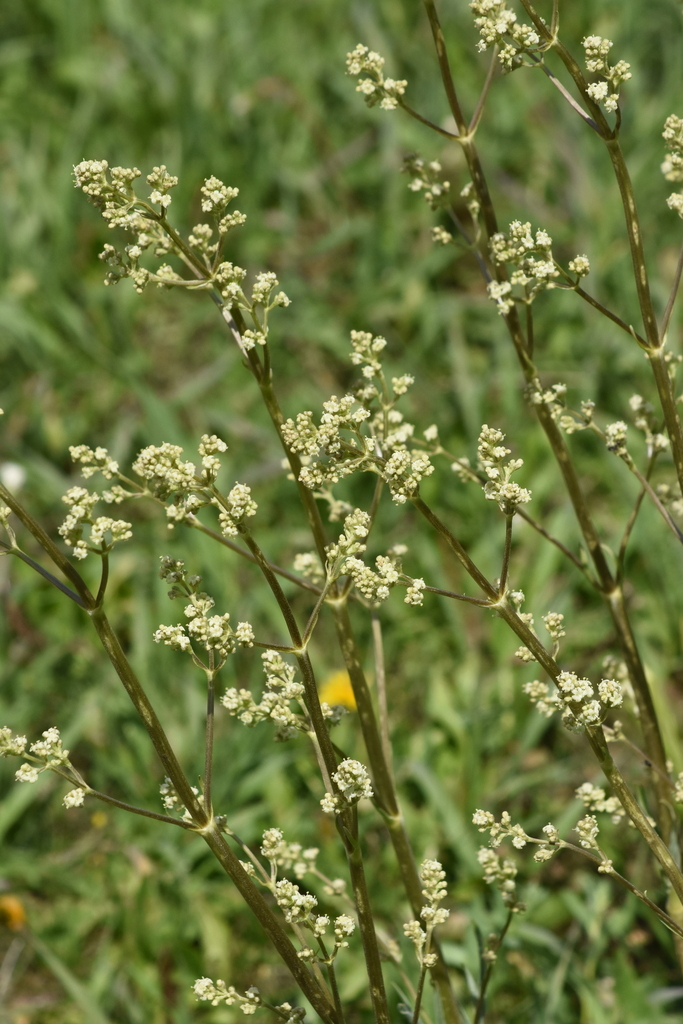
Each plant produces one to four flowering stems, usually 1½ to 4 feet (0.5 to 1.2 m) tall. The flowers are tiny and crowded into small clusters on branches that lengthen as the season goes on, forming a loose, open panicle. They are cream to white, sometimes tinged yellowish. Plants are often functionally male or female: flowers with stamens are about ⅛ inch across, while female flowers are much smaller. Bloom time is May through July, or into August at high elevations.
Fruit & Seeds
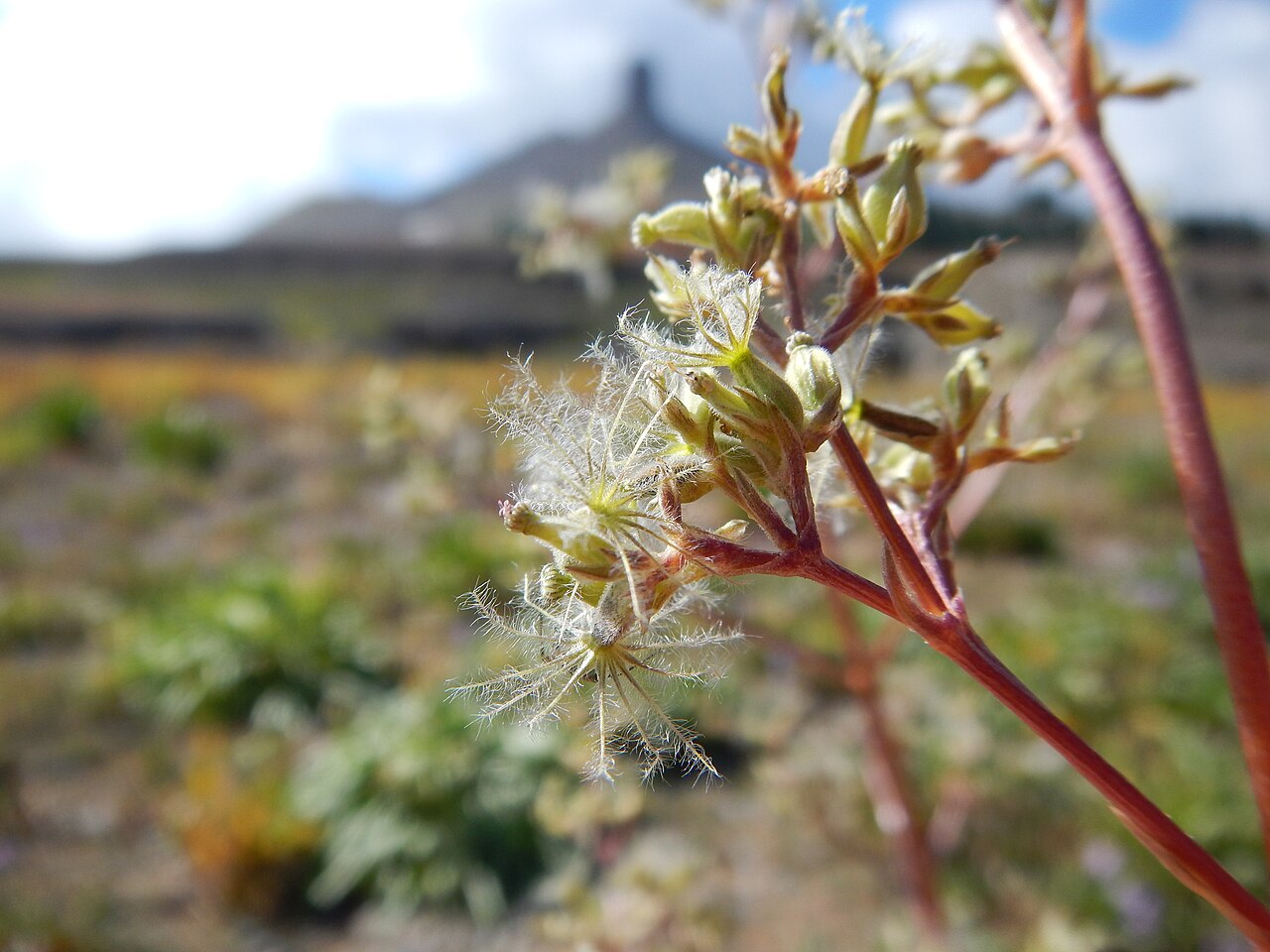
The fruit is a small, flattened, one-seeded achene. At the top, the calyx unrolls into a crown of 9 to 15 feathery bristles, so the ripe seed heads look fluffy, a bit like a dandelion’s, and the seeds drift away on the wind in mid to late summer.
Quick Facts
| Scientific Name | Valeriana edulis Nutt. ex Torr. & A. Gray |
| Family | Caprifoliaceae (honeysuckle family); formerly Valerianaceae |
| Plant Type | Herbaceous perennial from a thick taproot |
| Mature Height | 1½–4 ft in flower; basal leaves 4–15 in |
| Mature Spread | 1–1½ ft |
| Growth Rate | Slow |
| Sun Exposure | Full sun to part shade |
| Water Needs | Moderate to high; moist soil, at least in spring |
| Soil Type | Loam, clay loam or calcareous soils; moist meadows, wet prairie and fens |
| Soil pH | Neutral to alkaline (about 6.5–8.0) |
| Bloom Time | May–August, depending on elevation and latitude |
| Flower Color | Cream to white |
| Fall Color | Basal leaves turn yellow to brown |
| Fruit | Small achene with a crown of feathery bristles |
| Deer Resistant | Moderately; the strong-smelling plant is not a preferred browse |
| USDA Hardiness Zones | 3–7 |
Native Range
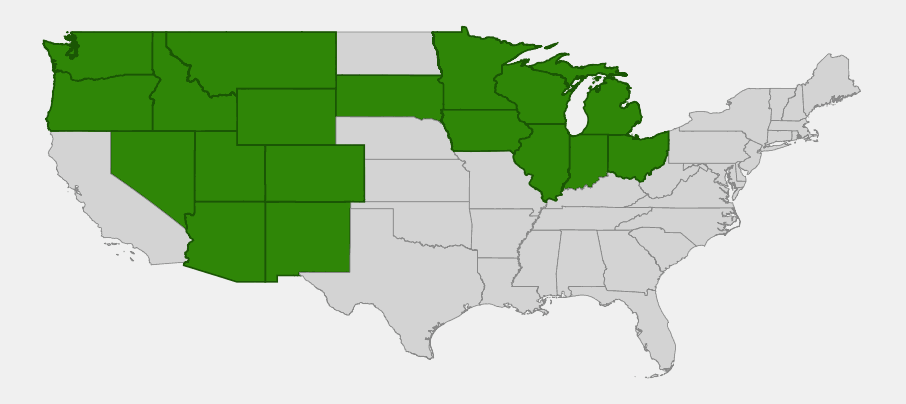
Edible valerian has a wide but patchy range. USDA PLANTS lists it as native in 18 states: Washington, Oregon, Idaho, Montana, Wyoming, Nevada, Utah, Colorado, Arizona and New Mexico in the West; South Dakota (Black Hills); and Minnesota, Iowa, Wisconsin, Illinois, Indiana, Michigan and Ohio in the Midwest and Great Lakes. In Canada it grows in British Columbia and Ontario, and it extends south through the mountains of Mexico.
In the West, the typical subspecies grows in moist to fairly dry mountain meadows, grassy openings in aspen and conifer forests, sagebrush slopes and subalpine and alpine grasslands, often on limestone. It is most common in the Rocky Mountain states and the mountains of the Great Basin, and in Oregon and Washington it grows mainly east of the Cascades.
The Midwestern and Great Lakes plants, var. ciliata, are separated from the western populations by hundreds of miles of the Great Plains. They grow in wet to moist prairies, sedge meadows and calcareous fens, and they are rare and protected in several of the states where they occur because most of that habitat has been drained or plowed.
📋 Regional plant lists featuring Edible Valerian: Montana & Wyoming · Utah & Western Colorado · Arizona & New Mexico · Idaho, Eastern Oregon & Eastern Washington · California & Nevada · North Dakota, South Dakota & Western Minnesota · Illinois, Iowa & Missouri · Michigan, Wisconsin & Eastern Minnesota · Ohio & Indiana
Growing & Care Guide
Edible valerian is not common in the nursery trade, but seed is sometimes available from native seed suppliers, and it is a good long-lived plant for a moist meadow or prairie restoration. In the Great Lakes states, plant only nursery-grown or locally sourced, legally collected seed of var. ciliata, and never dig wild plants, which are rare there.
Light
Grow it in full sun or light shade. In the mountains it grows in open meadows and forest openings, and in the Midwest in open prairies and fens.
Soil & Water
It likes deep, moist soil that is not too acidic, and many natural populations grow over limestone or in calcareous fens. Western plants tolerate drying in late summer once established, but soil should be moist through spring and early summer. Midwestern plants need consistently moist to wet soil. Avoid fertilizing.
Planting Tips
Sow seed outdoors in fall so it receives a natural cold, moist period over winter, or stratify it in the refrigerator for about two to three months before spring sowing. Seedlings put most of their early energy into the taproot, so grow them in deep pots and plant them out while young. Space plants about 1½ feet apart among grasses and other meadow wildflowers.
Pruning & Maintenance
Little care is needed once established. Leave the flowering stems standing until the fluffy seeds have blown away, then cut them back if you like. Keep aggressive grasses and weeds from overwhelming young plants. Established plants resent disturbance because of the deep root.
Propagation
Propagate by seed. Plants are slow and may take two to several years to flower. Division of the crown is possible but rarely recommended, since the taproot is easily damaged.
Landscape Uses
- Mountain meadow gardens: a tall, airy accent among native grasses, geraniums and lupines in Rocky Mountain and Intermountain gardens
- Prairie and fen restoration: var. ciliata is a fitting addition to wet prairie and calcareous fen restorations in the Great Lakes region, using local seed
- Pollinator plantings: its many small flowers attract flies, small bees and other insects in early summer
- Naturalistic plantings: best used in groups in larger meadow-style plantings rather than in formal beds
- Ethnobotany gardens: a good example of a traditional Indigenous root food of the Interior West
Wildlife & Ecological Value
Edible valerian is a long-lived plant of stable meadows and prairies, and where it is common it is part of a rich community of native forbs and grasses.
For Pollinators
The small, open flowers offer nectar and pollen to many short-tongued insects, including flies, small native bees, beetles and small butterflies. Because plants are often male or female, pollinators moving between plants are needed for good seed set.
For Birds
The plant has limited direct value for birds, but the insects that visit it in mountain meadows feed insect-eating birds, and the dense meadow vegetation it grows in provides nesting cover.
For Mammals
Bears, rodents and other animals may dig and eat the roots. Elk, deer and livestock graze the foliage lightly, though the strong-smelling plant is not usually preferred.
Ecosystem Role
Its deep taproot lets it survive dry summers, fire and grazing and regrow each spring from the crown, so individual plants can persist for many years. In the Midwest, var. ciliata is considered a characteristic species of calcareous fens and high-quality wet prairie, habitats that have become rare.
Cultural & Historical Uses
Thomas Nuttall named the species Valeriana edulis, meaning “edible valerian,” in recognition of its use as food, and it was formally published by John Torrey and Asa Gray in 1841. Nineteenth-century travelers in the West also wrote about the root as an Indigenous food.
Several Indigenous peoples of the Interior West dug the large roots and cooked them for a long time, often in earth ovens, which made them edible and less strong-smelling. The cooked roots were eaten or dried and stored. The name tobacco root comes from the root’s odor, and the Tobacco Root Mountains of southwestern Montana are named after the plant. The raw root is unpleasant and is generally considered unsafe to eat without long cooking.
Like its European relative, common valerian, the root contains aromatic compounds, and it has been used in herbal medicine. Do not use wild valerian roots medicinally without professional guidance, and leave wild plants in place, especially in the Great Lakes states where the species is rare.
Frequently Asked Questions
Is edible valerian really edible?
The roots were a traditional food of several Indigenous peoples of the Interior West, but only after long cooking, usually in pit ovens. Raw roots have a strong, unpleasant odor and may be harmful. Do not dig or eat wild plants, especially where the species is rare.
Why is it called tobacco root?
The dried root has a strong odor that early travelers compared to tobacco. The Tobacco Root Mountains in Montana take their name from the plant. Edible valerian is not related to tobacco.
How is it different from Sitka valerian?
Sitka valerian (Valeriana sitchensis) has divided basal leaves with toothed leaflets and rounded, dense clusters of white or pinkish flowers, and it grows in moist subalpine forests and meadows. Edible valerian has thick, mostly undivided basal leaves, a stout taproot and tall, open panicles of tiny cream flowers.
Can I grow it in my garden?
Yes, in a sunny, moist meadow or prairie planting within its range. Start it from seed with a cold, moist stratification and be patient, since it is slow to reach flowering size.
Is edible valerian rare?
It is common in many western mountain areas. In the Midwest and Great Lakes region, var. ciliata is uncommon and is listed as rare or protected in several states, so check local regulations and never dig wild plants.

Looking for a nursery that carries Edible Valerian?
Browse our native plant nursery directory: Arizona · Colorado · Idaho, Illinois, Indiana & Iowa · Michigan, Minnesota & Montana · Nevada, New Mexico & Ohio · Oregon · South Dakota & Utah · Washington · Wisconsin & Wyoming

