
Rabbitbells (Crotalaria rotundifolia)
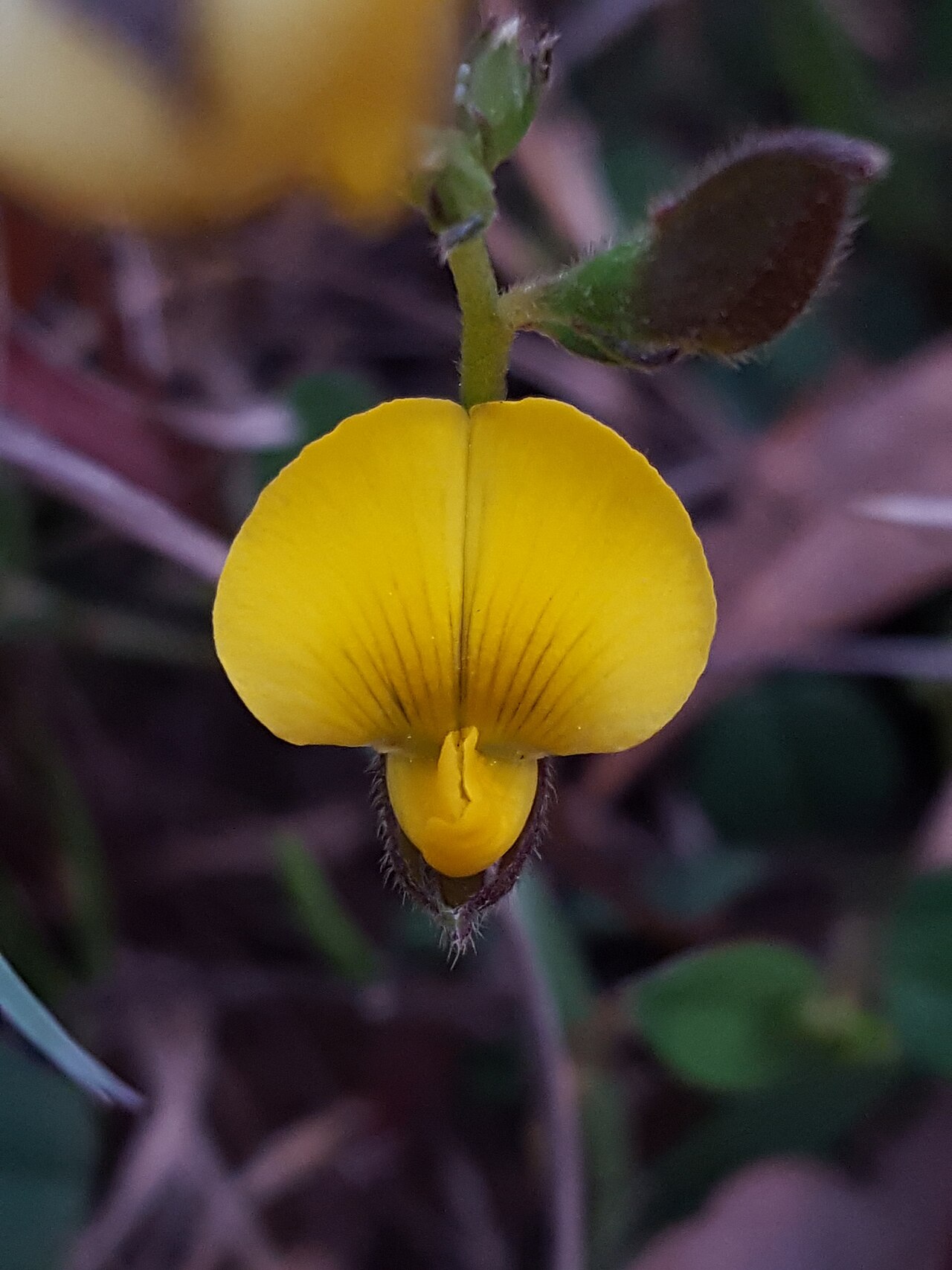
Crotalaria rotundifolia, known as Rabbitbells or prostrate rattlebox, is a low, sprawling perennial legume of dry, sandy pinelands and open ground across the southeastern Coastal Plain. Its hairy, trailing stems spread along the ground for 1 to 3 feet, carrying small, simple, oval leaves and, from spring through summer, bright yellow pea flowers about half an inch long.
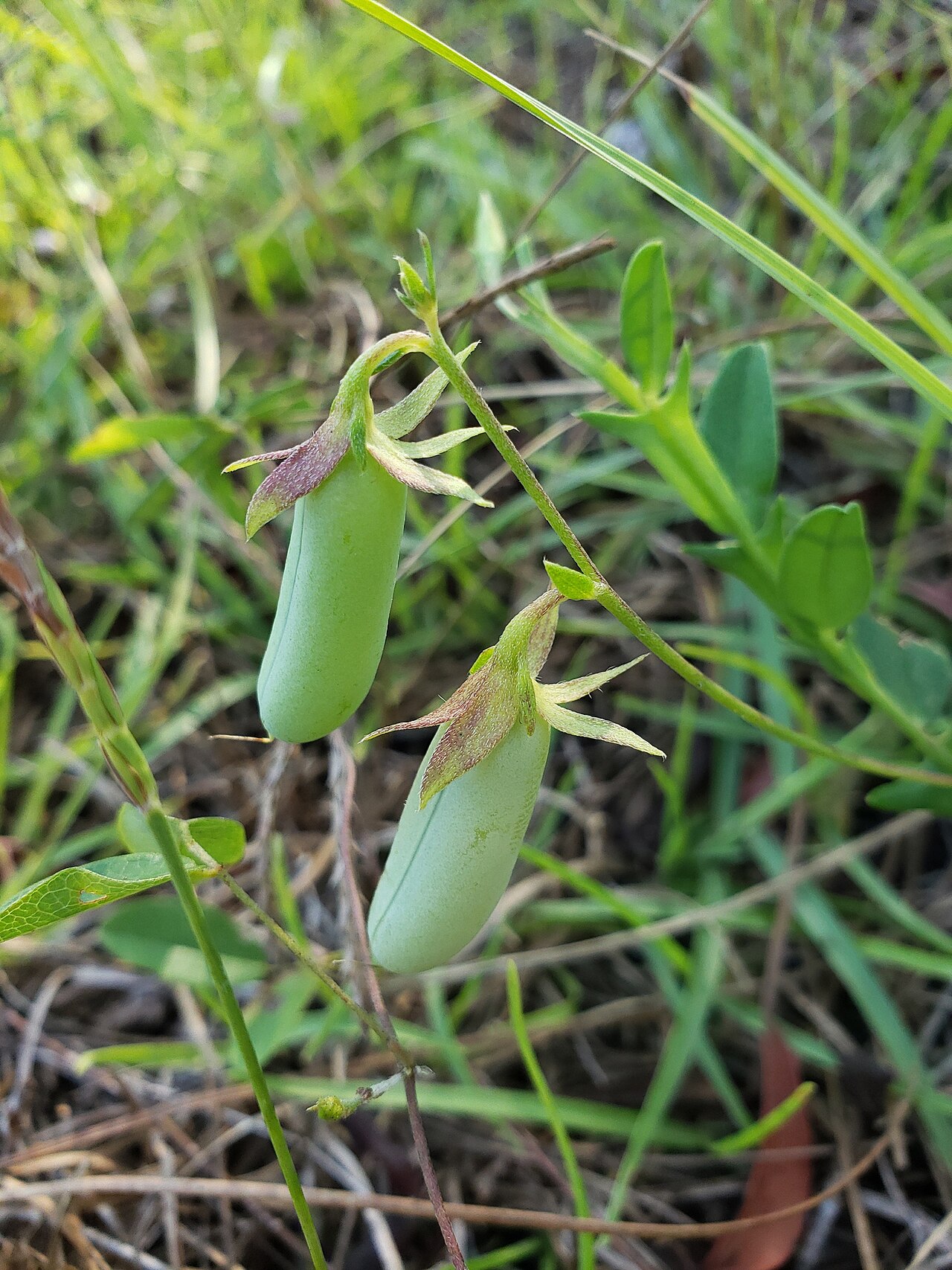
The flowers are followed by plump, inflated pods that turn dark as they dry, when the loose seeds inside rattle when shaken. That gives the genus Crotalaria, from the Greek for “rattle” and the same root as the rattlesnake genus Crotalus, its common name rattlebox. Rabbitbells belongs to the pea family (Fabaceae).
It is one of the few native Crotalaria species in the Southeast, where several larger, introduced rattleboxes have become weedy. This guide covers how to identify rabbitbells, where it grows, how it fits into sandy native gardens, its value to wildlife, and why, like all rattleboxes, it should never be eaten.
Identification
Rabbitbells is easy to step over. Look for a small, hairy, ground-hugging plant in sandy pinelands, with scattered round to oval leaves and a few bright yellow pea flowers held up on short stalks.
Growth Habit
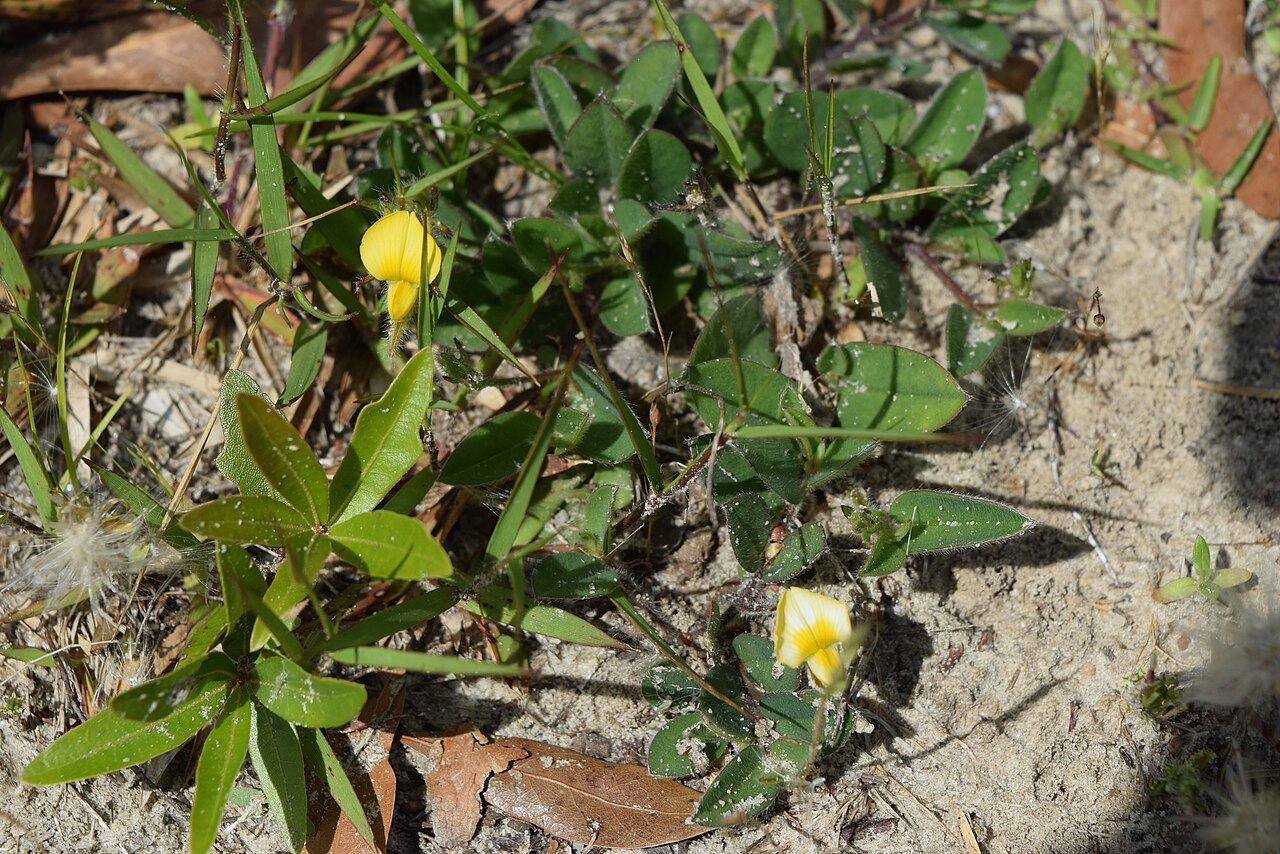
It is a low perennial from a deep taproot. Several slender, hairy stems trail along the ground or rise slightly at the tips, usually 4 to 12 inches high and up to about 3 feet long.
Leaves
The leaves are simple, not divided into leaflets, which is unusual among legumes. They are oval, elliptic or nearly round, about 1/2 to 1 1/2 inches long, short-stalked and covered with fine, flattened hairs. Very small, narrow stipules may be present at the base of the leaf stalks, but they are inconspicuous.
Flowers
The flowers are about 1/2 inch long, bright yellow, often with fine reddish-brown lines on the back of the large, rounded banner petal. They are borne one to a few together on slender stalks that arise opposite the leaves. Bloom runs mainly from April into August, and nearly year-round in South Florida.
Fruit & Seeds
The pods are inflated, oblong, about 3/4 to 1 1/4 inches long, green at first and turning brown to blackish. When dry, the shiny, kidney-shaped seeds come loose and rattle inside.
Look-alikes
Arrowhead rattlebox (Crotalaria sagittalis) is usually more upright and has large, arrow-shaped stipules running down the stem. Introduced rattleboxes such as showy rattlebox (Crotalaria spectabilis) and smooth rattlebox (Crotalaria pallida) are tall, upright plants 2 to 6 feet tall with spikes of many flowers and should not be planted. Sidebeak pencilflower has small yellow-orange pea flowers but leaves divided into three leaflets.
Quick Facts
| Scientific Name | Crotalaria rotundifolia J.F. Gmel. |
| Family | Fabaceae (pea family) |
| Plant Type | Low, sprawling herbaceous perennial |
| Mature Height | 4–12 in; stems trailing to about 3 ft |
| Mature Spread | 1–3 ft |
| Growth Rate | Moderate |
| Sun Exposure | Full sun to light shade |
| Water Needs | Low; drought tolerant |
| Soil Type | Dry to moist sandy soils |
| Soil pH | About 4.5–6.5 (acidic) |
| Bloom Time | April–August (year-round in South Florida) |
| Flower Color | Bright yellow |
| Fall Color | Not significant |
| Fruit | Inflated pod with rattling seeds |
| Deer Resistant | Usually avoided; toxic alkaloids |
| USDA Hardiness Zones | 7–11 |
Native Range
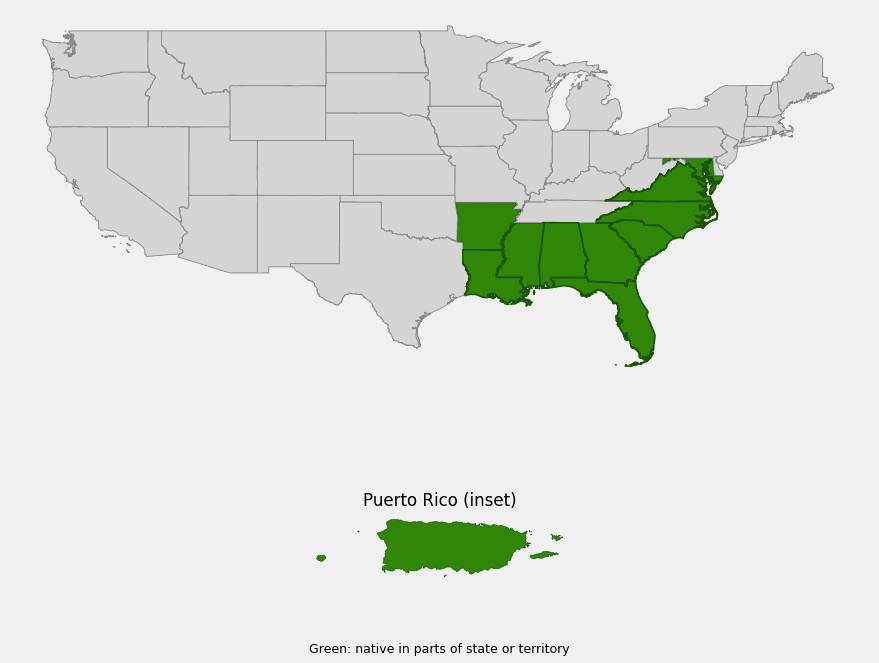
Rabbitbells is native to the southeastern United States, the Caribbean and parts of Latin America. USDA PLANTS lists it as native in Florida, Georgia, Alabama, Mississippi, Louisiana, Arkansas, South Carolina, North Carolina, Virginia and Maryland, and in Puerto Rico. It ranges south through the West Indies, Mexico and Central America.
It is common through the Coastal Plain from the Carolinas to Florida and west along the Gulf Coast, and it is found throughout nearly all of Florida. Toward the northern and western edges of its range, in Virginia, Maryland and Arkansas, it is much scarcer and confined to sandy sites, and the Maryland records are outlying.
It grows in dry to seasonally moist, sandy, sunny places: longleaf pine sandhills and flatwoods, scrub edges, dry savannas, old fields, lawns, roadsides and power-line corridors. It responds well to fire and other disturbances that keep the ground open.
📋 Regional plant lists featuring Rabbitbells: Maryland, Virginia & West Virginia · Alabama, Georgia & Mississippi · North & South Florida · Puerto Rico · North & South Carolina · Arkansas, Louisiana, Eastern Oklahoma & Eastern Texas
Growing & Care Guide
Rabbitbells is a modest, tough little groundcover for sunny, sandy native gardens, lawns and meadows in the Southeast. It is not sold widely, but it often appears on its own in sandy lawns and pinelands, and it is worth keeping where it shows up. Safety note: like other Crotalaria, rabbitbells contains pyrrolizidine alkaloids that are toxic to people, pets and livestock if eaten. Do not eat any part of it and keep it out of pastures and areas where children might eat the seeds.
Light
Grow it in full sun or light shade, such as under scattered pines. In dense shade it thins out and flowers little.
Soil & Water
It is made for dry, sandy, acidic soil and needs no fertilizer, since like most legumes it works with root bacteria that fix nitrogen. Once established it is very drought tolerant and needs no supplemental water. It also tolerates somewhat moist, sandy flatwoods soils.
Planting Tips
Let it weave between bunchgrasses and taller wildflowers in a sandhill or pine flatwoods garden, or allow it to persist in a sandy, low-mow lawn, where it flowers among the grass. It is too small to hold its own against vigorous turf or tall groundcovers.
Pruning & Maintenance
No pruning is needed. In lawns, mow high or skip mowing during its main spring flowering. Occasional mowing or prescribed fire, as in its native pinelands, keeps taller competition down.
Propagation
Grow it from seed collected from dry pods. The hard seed coat benefits from scarification, such as nicking the seed or soaking it in hot water, before sowing in sandy soil. Seedlings form a taproot quickly, so sow them where they are to grow or move them while young. Do not dig plants from the wild.
Landscape Uses
- Sandy native lawns: a low, flowering legume that persists among grasses
- Pineland and sandhill gardens: a groundcover for dry, sunny, acidic sand
- Pollinator gardens: spring and summer flowers for native bees
- Butterfly and moth gardens: a larval host plant for the ornate bella moth
- Habitat restoration: a native legume for longleaf pine and sandhill restoration
Wildlife & Ecological Value
Rabbitbells is a small plant with a big role in sandy pinelands, feeding bees, hosting a striking native moth and adding nitrogen to poor soils.
For Pollinators
The yellow pea flowers are pollinated mainly by bees strong enough to open them, such as bumble bees, leafcutter bees and other medium-sized native bees. Rabbitbells is also a larval host plant for the ornate bella moth (Utetheisa ornatrix), a pink, white and black day-flying moth whose caterpillars bore into the pods and eat the seeds. The caterpillars store the plant’s alkaloids, which make the moths distasteful to predators.
For Birds
The seeds are toxic and little used by birds, but ground-foraging birds such as northern bobwhite and towhees hunt insects among the low stems and in the litter beneath.
For Mammals
Deer and livestock generally avoid it because of its alkaloids.
Ecosystem Role
As a nitrogen-fixing legume, rabbitbells adds nitrogen to nutrient-poor sandy soils. It thrives after fire and helps cover bare sand in sandhills and flatwoods, where it is part of the rich groundcover of the longleaf pine ecosystem.
Cultural & Historical Uses
The genus name Crotalaria comes from the Greek krotalon, a rattle or castanet, referring to the loose seeds that rattle in the dry pods. The species name rotundifolia means “round-leaved”. The name is credited to Thomas Walter, who described the plant from South Carolina in his Flora Caroliniana, and to J. F. Gmelin, who validly published it a few years later.
Several rattlebox species from Asia and Africa, including showy rattlebox, were brought to the southern United States in the early twentieth century as cover crops and green manure. They escaped and are now troublesome weeds that have poisoned livestock and poultry. Native rabbitbells is far smaller and less aggressive, but it contains the same class of alkaloids.
Rabbitbells is a familiar sight to anyone who walks dry pinelands in spring, and its ornate bella moth visitors, with their bright pink hindwings, are among the most colorful insects of southern sandhills and roadsides.
Frequently Asked Questions
Is rabbitbells poisonous?
Yes. Like all Crotalaria species, it contains pyrrolizidine alkaloids that can damage the liver of people and animals. Do not eat any part of the plant and keep it out of livestock pastures.
Why is it called rattlebox?
When the inflated pods dry, the seeds come loose inside and rattle when the plant is shaken.
Is rabbitbells native or invasive?
Rabbitbells is native to the Southeast. Several larger, upright rattleboxes from other continents, such as showy rattlebox, are invasive weeds there and should not be planted.
Where does rabbitbells grow?
It grows in dry, sandy, sunny places such as pine sandhills, flatwoods, old fields and roadsides from Virginia to Florida and west to Louisiana and Arkansas, and in Puerto Rico.
What insects use rabbitbells?
Native bees pollinate the flowers, and the ornate bella moth uses it as a larval host plant, with the caterpillars feeding on the developing seeds.

Looking for a nursery that carries Rabbitbells?
Browse our native plant nursery directory: Alabama & Arkansas · Florida & Georgia · Louisiana, Maryland & Mississippi · North Carolina · South Carolina & Virginia

