
Rocky Mountain Raspberry (Rubus deliciosus)
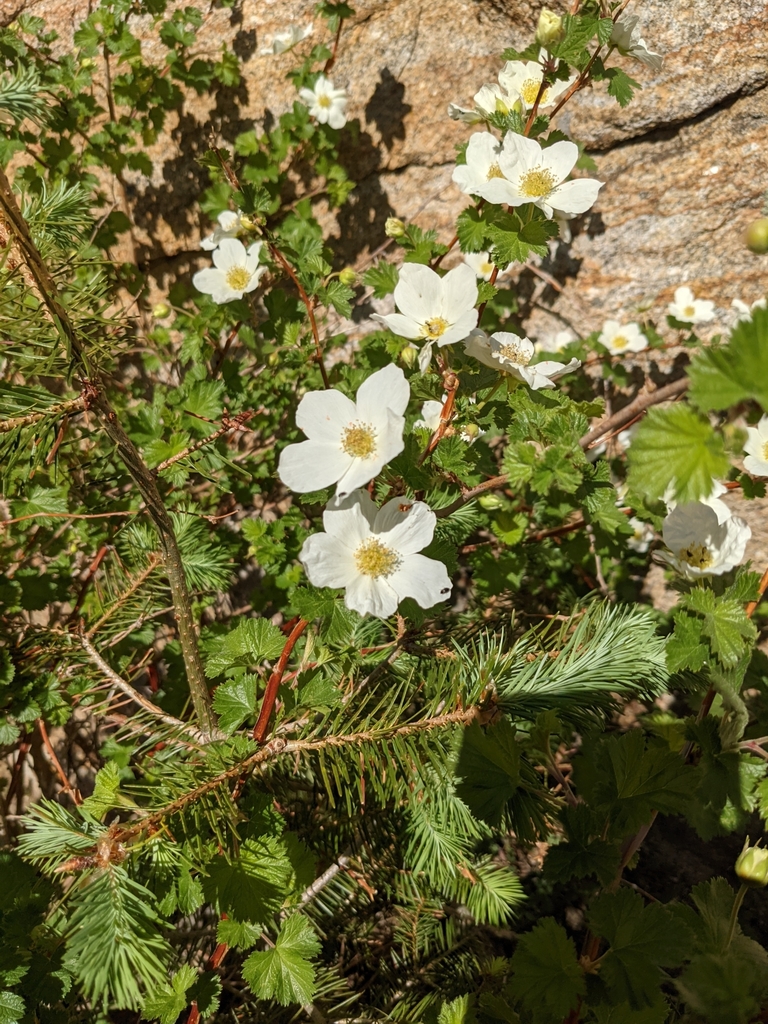
Rubus deliciosus, known as Rocky Mountain Raspberry, Boulder raspberry or delicious raspberry, is a thornless native bramble of rocky slopes and canyons in the southern Rocky Mountains. It belongs to the rose family (Rosaceae) and is one of the few Rubus species with simple, lobed leaves instead of compound ones.
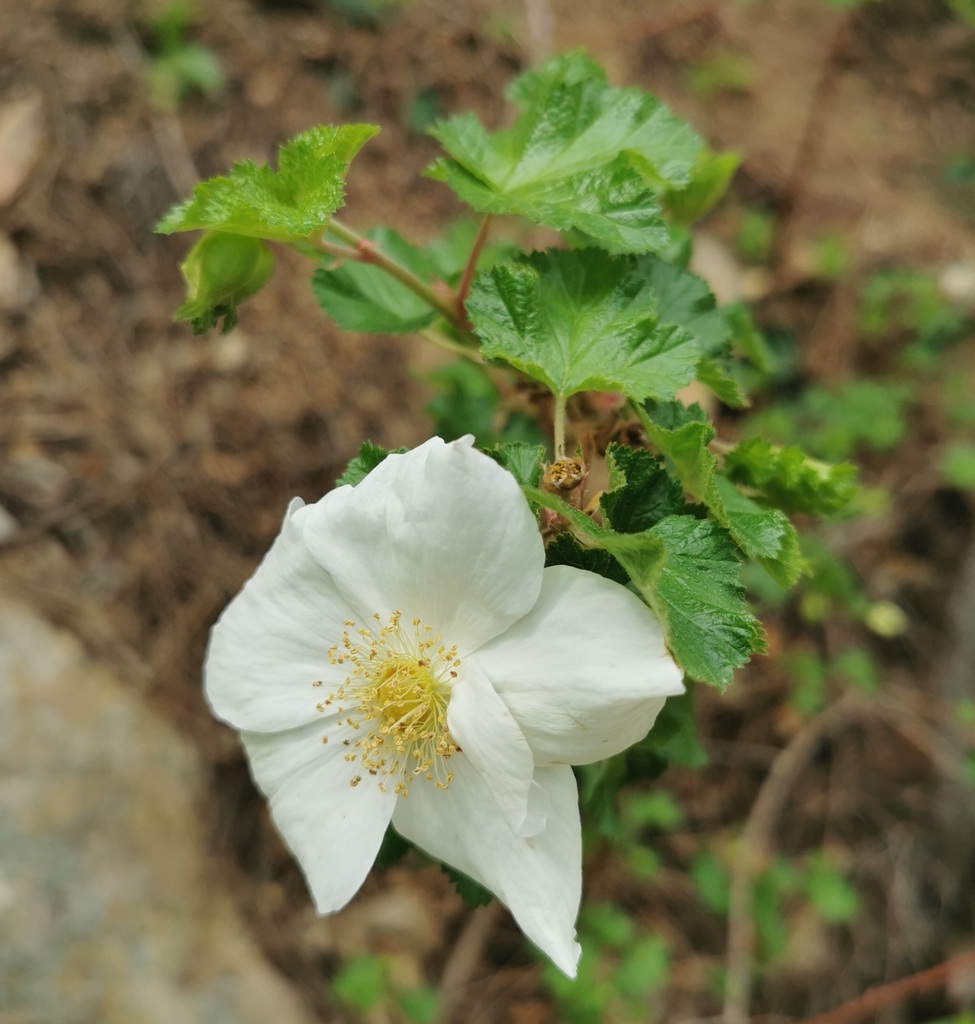
In late spring the arching, peeling-barked branches carry large, fragrant white flowers 1 1/2 to 2 1/2 inches across, which look more like wild roses than raspberry blossoms. They are followed in summer by small, dark reddish-purple raspberries. Despite the name, the wild fruit is usually rather dry and seedy, and the plant is grown far more for its flowers than its berries.
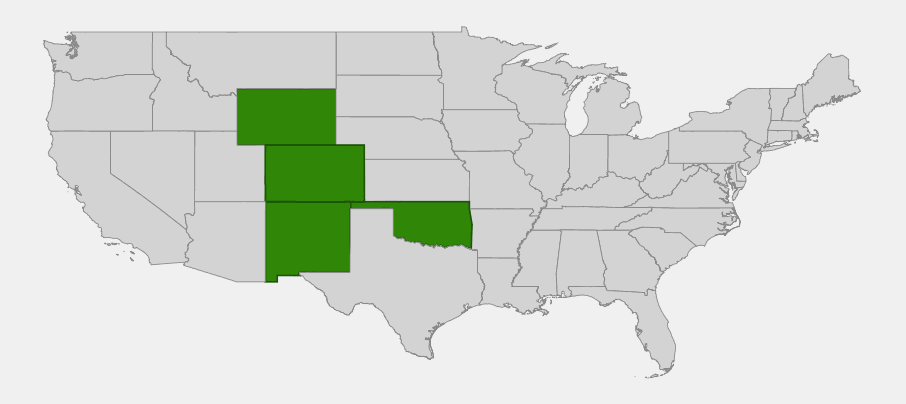
Rocky Mountain raspberry grows mainly along the Front Range and foothills of Colorado and southeastern Wyoming, south into northern New Mexico and east to the Black Mesa area of the Oklahoma Panhandle. It is a tough, drought-tolerant, deer-resistant shrub for dry, sunny western gardens, and its spring display rivals many non-native ornamental shrubs.
Identification
Look for a thornless, arching shrub on rocky foothill slopes with shreddy, peeling bark, small rounded three-lobed leaves, and large, single, rose-like white flowers in May and June.
Growth Habit
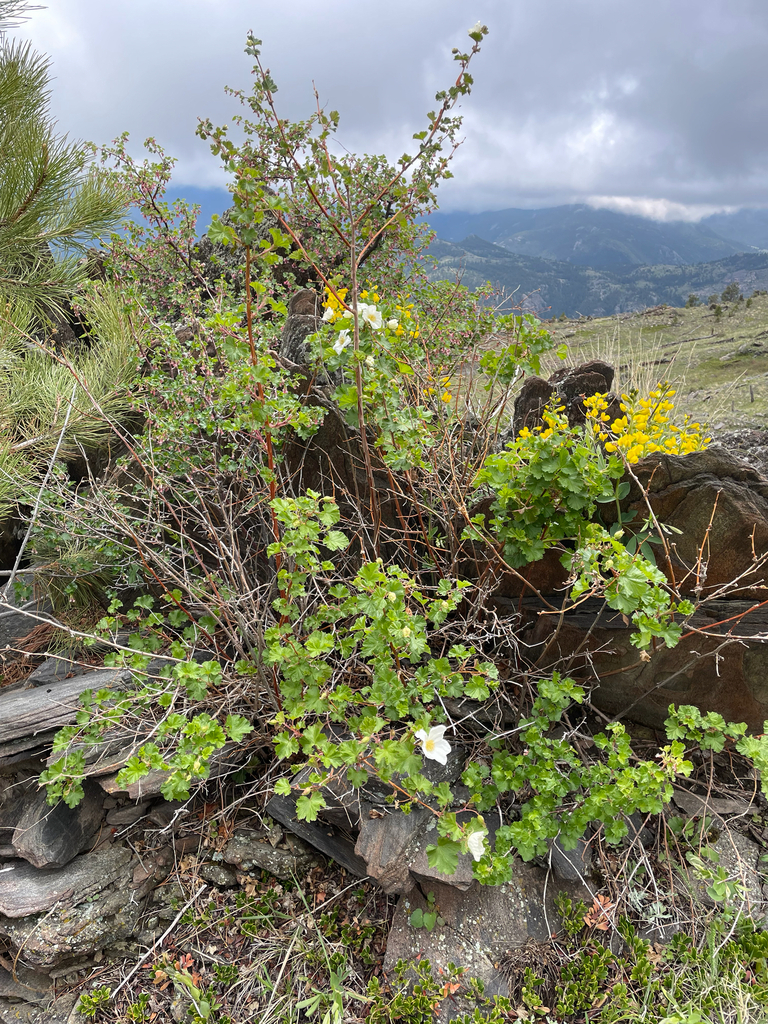
Rocky Mountain raspberry is a deciduous, multi-stemmed shrub usually 3 to 5 feet tall and as wide, occasionally reaching about 8 to 10 feet in sheltered spots. Its stems arch outward and have no prickles. Unlike most raspberries, whose canes live only two years, its woody stems are long-lived and bloom year after year. The bark on older stems is light brown and shreds or peels in thin strips.
Leaves
The leaves are simple, alternate, and roughly kidney-shaped to rounded, about 1 1/4 to 2 inches long and wide, with three (sometimes five) shallow, rounded lobes and toothed edges. They are bright green above, somewhat paler and finely hairy to nearly smooth beneath, and turn yellow in fall.
Flowers
The flowers open from about May to June, borne singly at the ends of short side branches. They are 1 1/2 to 2 1/2 inches across, with five broad, rounded white petals, many yellow stamens, and a faint sweet fragrance. The five sepals are hairy and pointed.
Fruit & Seeds
The fruit is a small raspberry about 1/2 inch across, made of many tiny drupelets. It ripens from late June to August, turning dark reddish-purple. It is edible but usually dry and seedy, with variable flavor.
Look-alikes
Thimbleberry (Rubus parviflorus) is also thornless with white flowers, but its leaves are much larger and maple-like, its flowers are borne in clusters, and its fruit is a soft red “thimble.” New Mexico raspberry (Rubus neomexicanus) of Arizona and New Mexico is very similar and was once treated as a variety of this species; it has larger, hairier leaves and grows mainly in canyons farther south and west. Wax currant (Ribes cereum) shares the same rocky slopes and has similar small lobed leaves, but its flowers are small, tubular and pinkish.
Safety Notes
The fruit is edible, and the plant is not known to be toxic. As with any wild fruit, be sure of your identification before eating it.
Quick Facts
| Scientific Name | Rubus deliciosus |
| Family | Rosaceae (rose family) |
| Plant Type | Deciduous, thornless flowering shrub |
| Mature Height | 3–5 ft (occasionally to 10 ft) |
| Mature Spread | 3–6 ft |
| Growth Rate | Moderate |
| Sun Exposure | Full sun to partial shade |
| Water Needs | Low; drought tolerant once established |
| Soil Type | Well-drained rocky, gravelly or sandy loam |
| Soil pH | About 6.0–8.0 |
| Bloom Time | May–June |
| Flower Color | White |
| Fall Color | Yellow |
| Fruit | Small dark reddish-purple raspberry, July–August |
| Deer Resistant | Moderately |
| USDA Hardiness Zones | 4–7 |
Native Range
Rocky Mountain raspberry is native to a fairly small area of the southern Rocky Mountains and adjacent plains. USDA PLANTS lists it as native in Colorado, New Mexico, Oklahoma and Wyoming. Most populations are in the foothills and lower mountains of Colorado’s Front Range, especially around Boulder, Golden and Estes Park.
From Colorado it extends north into southeastern Wyoming and south into the mountains of northern New Mexico. The Oklahoma records come from the Black Mesa area of the far western Panhandle, an outlying extension of Rocky Mountain flora onto the High Plains. Isolated reports from the Texas Panhandle and the Black Hills of South Dakota have also been published.
It typically grows on dry, rocky, south- or east-facing slopes, in canyons, along cliff bases and rock outcrops, and in open ponderosa pine and Douglas-fir woodland, at roughly 5,500 to 9,500 feet in elevation.
📋 Regional plant lists featuring Rocky Mountain Raspberry: Montana & Wyoming
Growing & Care Guide
Rocky Mountain raspberry is sold by native and xeric plant nurseries in Colorado and the Intermountain West. It is a low-maintenance shrub for dry, sunny gardens and one of the showiest native shrubs of the Front Range in spring.
Light
Grow it in full sun to partial shade. It blooms most heavily in full sun, but in hot, low-elevation gardens it appreciates some afternoon shade, as on the cooler slopes and canyon walls where it grows wild.
Soil & Water
It needs well-drained soil and does well in rocky, gravelly or sandy loam, including alkaline soils. Avoid heavy, wet clay. Water regularly in the first year; once established it is drought tolerant and needs only occasional deep watering in long dry spells. Too much water and fertilizer produce weak, leggy growth.
Planting Tips
Use it as a specimen, in a mixed shrub border, on a dry slope or in a xeric or rock garden, spaced about 4 to 6 feet apart. Because it has no prickles, it can be planted near paths and patios. It combines well with mountain mahogany, skunkbush sumac, wax currant and creeping Oregon grape.
Pruning & Maintenance
Little pruning is needed. Since its stems are long-lived and flower on older wood, prune right after flowering if at all, removing a few of the oldest or crossing stems at the base to keep the shrub open. Avoid shearing, which removes next year’s flower buds.
Propagation
It is usually propagated from softwood or semi-hardwood cuttings taken in mid to late summer, or from rooted suckers and layered stems. Seed has hard coats and needs a long period of cold, moist stratification; germination is usually slow and uneven, so cuttings are the more reliable method.
Landscape Uses
- Xeric and water-wise gardens: drought tolerant once established
- Spring flowering specimen: large, rose-like white flowers in May and June
- Wildlife gardens: fruit for birds and small mammals, flowers for bees
- Slopes and rock gardens: thrives in rocky, well-drained soil
- Paths and patios: thornless, unlike most brambles
Wildlife & Ecological Value
Rocky Mountain raspberry offers spring flowers for pollinators and summer fruit for wildlife on dry foothill slopes.
For Pollinators
The large, open flowers are visited by bumblebees, mason bees, sweat bees and other native bees, as well as honey bees, flies and beetles, which collect both pollen and nectar.
For Birds
Robins, thrushes, grosbeaks, towhees and other songbirds eat the ripe raspberries. The dense, arching branches give birds cover and nesting sites on rocky slopes.
For Mammals
Chipmunks, ground squirrels, foxes and black bears eat the fruit. Deer and elk browse the foliage to some extent, but plants usually recover well.
Ecosystem Role
As a shrub of rocky slopes and outcrops, it helps stabilize thin soils and provides structure and food in the foothills shrubland. Its fruits are spread by the birds and mammals that eat them.
Cultural & Historical Uses
The naturalist Edwin James collected Rocky Mountain raspberry in Colorado in 1820 during Major Stephen Long’s expedition to the Rocky Mountains. The American botanist John Torrey described it as Rubus deliciosus in 1827, based on James’s specimens.
The species name deliciosus means “delicious,” presumably referring to the fruit, although most people who have tasted wild plants find the berries dry and bland. The common name Boulder raspberry refers to the city of Boulder, Colorado, where it is common on the foothills above town.
It has been grown in European gardens since the 19th century, and it was crossed with the closely related Mexican species Rubus trilobus to produce the ornamental hybrid Rubus × tridel, whose cultivar ‘Benenden’ holds the Royal Horticultural Society’s Award of Garden Merit.
Frequently Asked Questions
Does Rocky Mountain raspberry have thorns?
No. Its stems are thornless, which makes it easy to plant near paths, patios and play areas.
Are Rocky Mountain raspberries good to eat?
They are edible, but wild berries are usually small, dry and seedy. Birds and mammals enjoy them more than people do.
Is Rocky Mountain raspberry drought tolerant?
Yes. Once established it needs only occasional deep watering and does well in rocky, well-drained soil.
When does Rocky Mountain raspberry bloom?
Mainly from May to June, with large white flowers that look like wild roses.
How should I prune Rocky Mountain raspberry?
Prune lightly right after flowering, removing a few of the oldest stems at the base. Its stems are long-lived and bloom on older wood, so avoid shearing.

Looking for a nursery that carries Rocky Mountain Raspberry?
Browse our native plant nursery directory: Colorado · New Mexico & Oklahoma · Wyoming

