
American Lopseed (Phryma leptostachya)
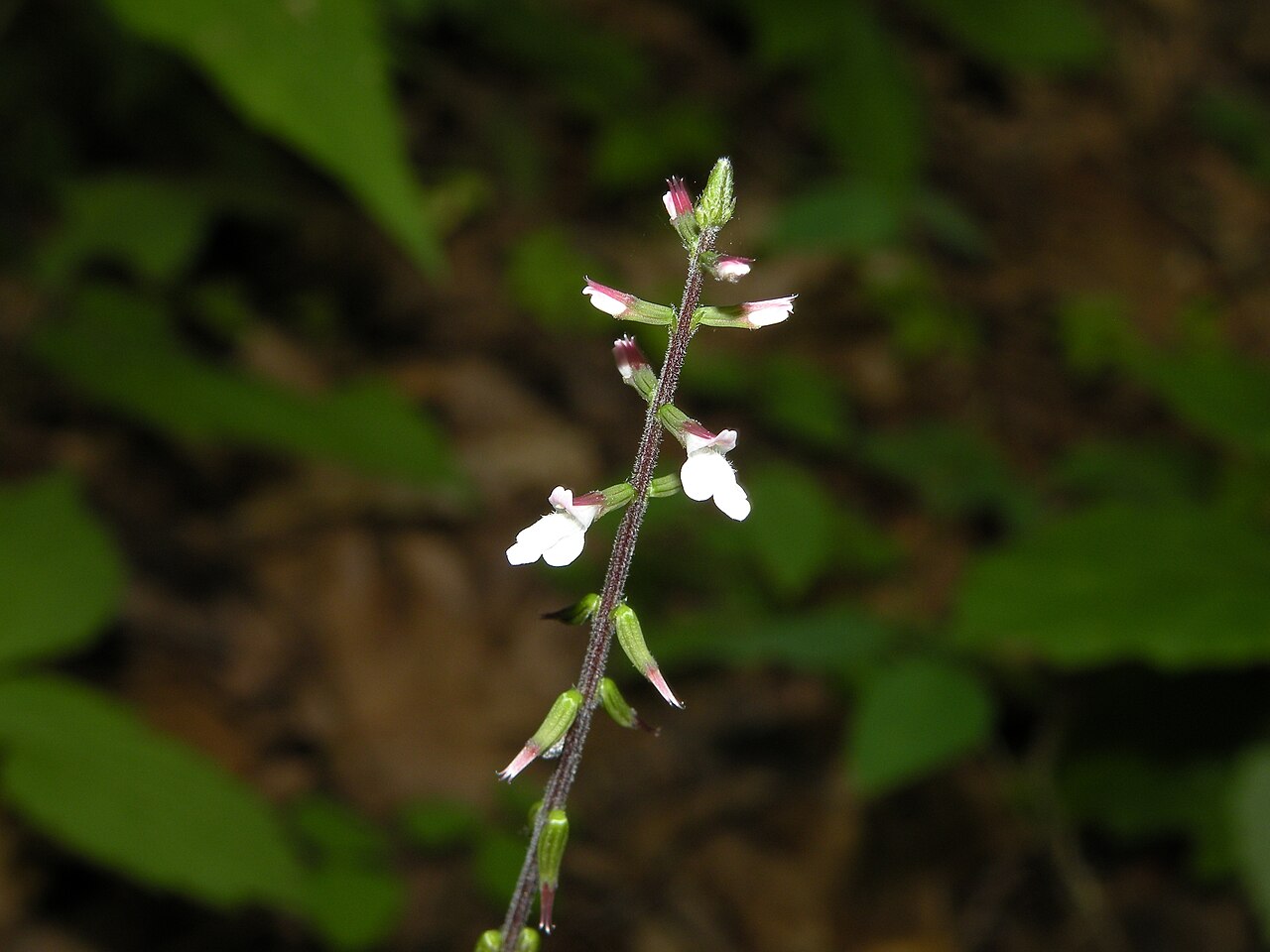
Phryma leptostachya, known as American Lopseed or simply lopseed, is a native woodland wildflower of eastern North America. It is a modest perennial 1 to 3 feet tall, with pairs of coarsely toothed, oval leaves and long, slender spikes of tiny white to pale lavender flowers in midsummer, when few other woodland plants are blooming.
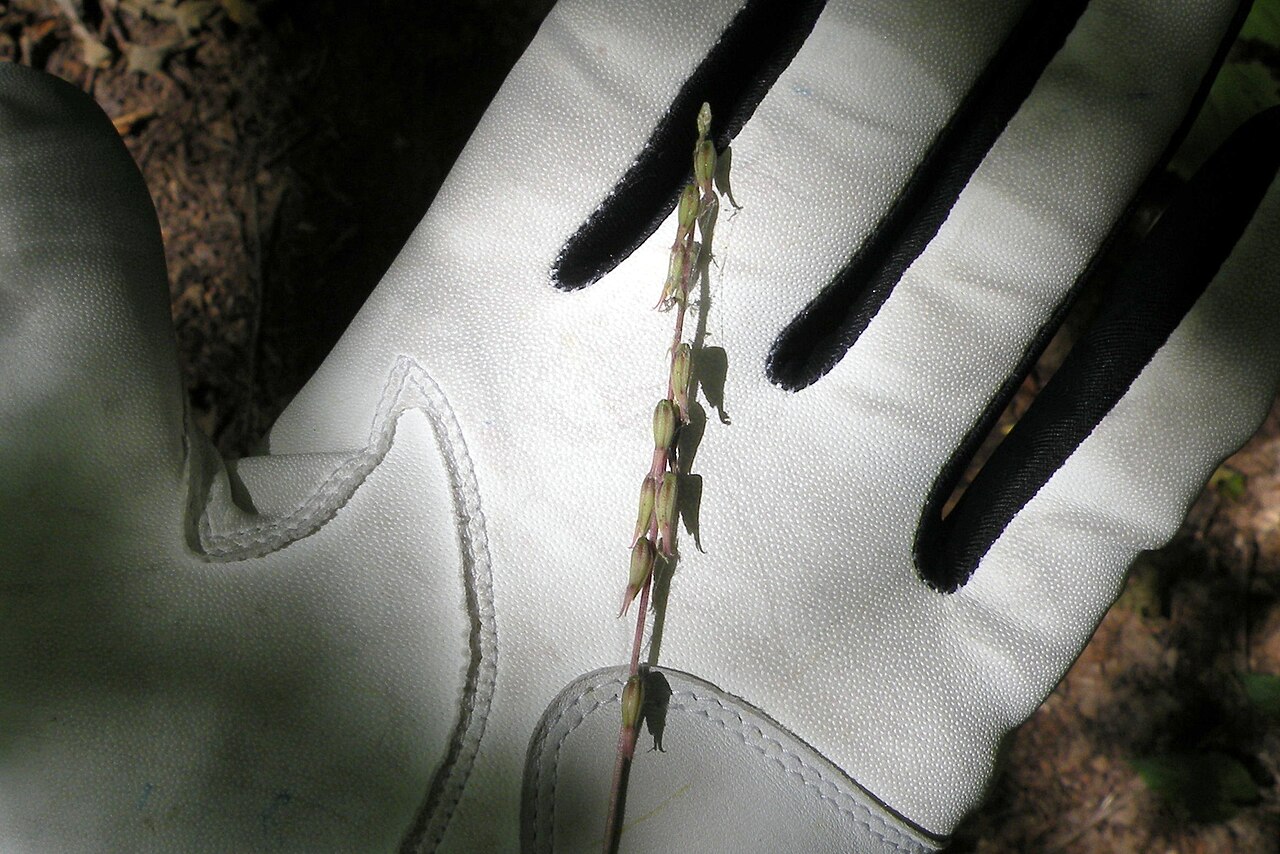
Its name comes from what happens after flowering. The flowers stand straight out from the stem, but as each one fades, its calyx bends sharply downward and presses against the stem, so a fruiting spike looks like a row of tiny hanging seeds. The calyx has three hooked teeth that catch on fur and clothing, carrying the single seed to new places. No other woodland plant in eastern North America has this combination.
Lopseed gives its name to the lopseed family (Phrymaceae), which now also includes the monkeyflowers. The species also grows in eastern Asia, where it has a long history as an insect-killing plant. For gardeners, it is an easy, shade-tolerant plant for naturalistic woodland gardens, adding late-season interest and supporting small pollinators.
Identification
American lopseed is easy to overlook, but once you notice its slender flower spikes and the downward-bent fruits, it is hard to mistake for anything else.
Stems & Leaves
The plant grows from a short rhizome with one to a few upright stems, 1 to 3 feet tall, which are four-sided, finely hairy and noticeably swollen just above each pair of leaves. The leaves are opposite, oval to broadly egg-shaped, 2 to 6 inches long, thin, and coarsely toothed. The lower leaves have long stalks, and the upper ones are smaller with short stalks or none. The overall look is somewhat like a nettle or a mint, but the plant has no stinging hairs or minty smell.
Flowers
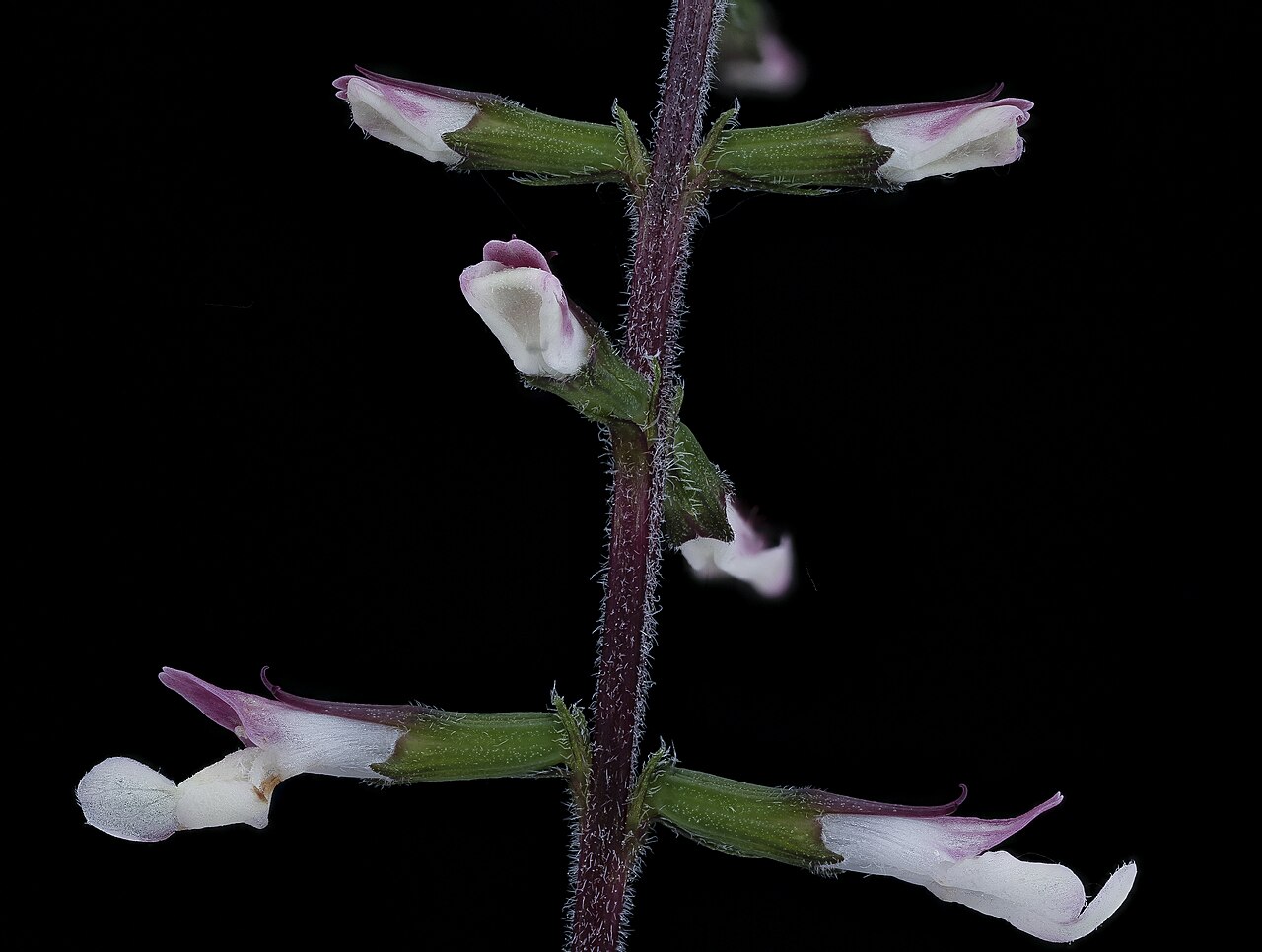
From June to September, the stems end in long, very slender spikes (racemes) 4 to 10 inches long, often branching. The flowers are in opposite pairs, each about ¼ inch long, tubular and two-lipped. The upper lip is short and notched, often pale purple or lavender, and the lower lip is larger, three-lobed and white. Only a few flowers on each spike are open at a time, starting at the base and moving upward, and they are held at right angles to the stem.
Fruit & Seeds
After flowering, each calyx bends downward until it lies flat against the stem, pointing toward the ground. Inside is a single small, seed-like fruit (an achene). The three upper calyx teeth end in small hooks, which catch in the fur of passing animals and on hikers’ socks, carrying the fruit away. Fruiting spikes, with their rows of reflexed calyces, are often more noticeable than the flowers.
Similar Species
When not in flower, lopseed might be confused with wood nettle, enchanter’s nightshade or some mints. Enchanter’s nightshade (Circaea canadensis) has tiny white flowers with two petals and round, bristly fruits on spreading stalks. Mints and hedge-nettles have square stems too, but their flowers are in clusters and the plants are often aromatic.
Quick Facts
| Scientific Name | Phryma leptostachya |
| Family | Phrymaceae (lopseed family) |
| Plant Type | Herbaceous perennial woodland wildflower |
| Mature Height | 1–3 ft |
| Mature Spread | 1–1½ ft |
| Growth Rate | Moderate |
| Sun Exposure | Partial shade to full shade |
| Water Needs | Moderate; evenly moist soil |
| Soil Type | Rich, loamy woodland soil; tolerates clay |
| Soil pH | About 5.5–7.5 |
| Bloom Time | June–September |
| Flower Color | White with pale lavender to pink upper lip |
| Fall Color | None |
| Fruit | Single achene in a downward-bent, hook-toothed calyx |
| Deer Resistant | Moderate |
| USDA Hardiness Zones | 3–9 |
Native Range
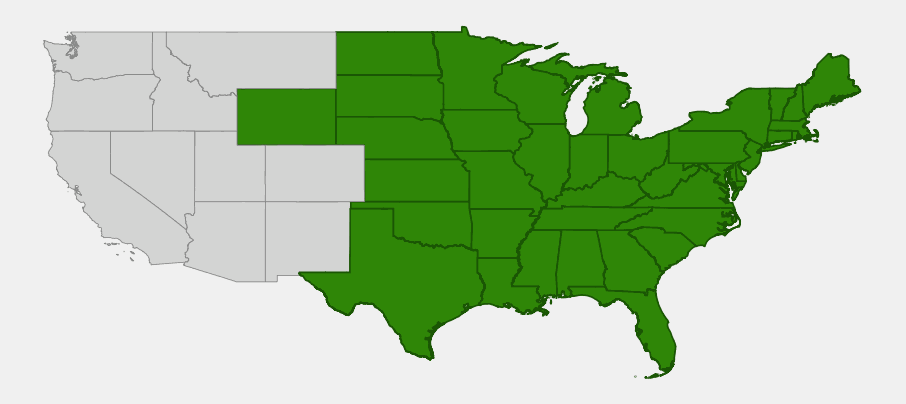
American lopseed is widespread in eastern and central North America. USDA PLANTS records it as native in 39 states and the District of Columbia, from Maine west to North Dakota and south to Florida and Texas. In Canada it grows from Manitoba and Ontario east to Quebec and New Brunswick. The species also occurs in eastern Asia, including China, Korea, Japan and the Russian Far East, where the plants are usually treated as a separate variety, var. asiatica.
It is most common in the Midwest, the Great Lakes region, the Northeast and the Appalachians, in rich deciduous woods and thickets. It reaches the edge of its range in the eastern Great Plains, where it grows in wooded river valleys and ravines, and in the Black Hills of South Dakota and northeastern Wyoming, where it is an outlying plant. In the South it extends to the Florida Panhandle and northern Florida, Louisiana and East Texas.
USDA PLANTS also lists California, but we found no herbarium specimens or documented wild records from that state, so we treat that record as unsupported and have left California off the map and the state list.
📋 Regional plant lists featuring American Lopseed: New York, Pennsylvania & Northern New Jersey · Idaho, Eastern Oregon & Eastern Washington · Ohio & Indiana · Montana & Wyoming · Michigan, Wisconsin & Eastern Minnesota · Kentucky & Tennessee · Nebraska, Kansas & Eastern Colorado · Connecticut, Massachusetts & Rhode Island · New Hampshire, Maine & Vermont · Maryland, Virginia & West Virginia · Delaware, Southern New Jersey & Long Island · Illinois, Iowa & Missouri · Alabama, Georgia & Mississippi · North & South Florida · North & South Carolina · Arkansas, Louisiana, Eastern Oklahoma & Eastern Texas · North Dakota, South Dakota & Western Minnesota
Growing & Care Guide
American lopseed is an easy plant for shady, naturalistic gardens. It is not showy, but it adds texture, blooms in midsummer when most woodland flowers are finished, and seeds itself into open spots without becoming a problem.
Light
It does best in partial to full shade under deciduous trees. It tolerates some morning sun, but strong afternoon sun scorches the thin leaves.
Soil & Water
Grow it in moist, rich, loamy soil with plenty of organic matter. It tolerates clay and somewhat drier woodland soils once established, but it grows best where the soil stays evenly moist. No fertilizer is needed.
Planting Tips
Plant potted plants in spring or fall, about 12 to 18 inches apart. Lopseed looks best in groups among ferns, sedges, woodland asters and other shade plants, where its slender spikes stand out against the foliage.
Pruning & Maintenance
No pruning is needed. Leave the plants standing after flowering so the seeds can ripen, or cut back the fruiting stems if you don’t want the hooked fruits catching on pets and clothing. Leaving leaf litter in place helps keep the soil moist and rich.
Propagation
Lopseed is easy to grow from seed. Sow the fruits outdoors in fall, or give them a period of cold, moist stratification before spring sowing. Established plants can also be divided in spring. It often reseeds into nearby shady spots.
Landscape Uses
- Woodland and shade gardens: a midsummer bloomer for the shady garden
- Naturalized woodland edges: fills gaps among ferns, sedges and spring ephemerals
- Forest restoration: an herbaceous-layer species for rich deciduous woods within its range
- Pollinator plantings in shade: nectar for small bees and flies in summer
- Teaching gardens: its distinctive drooping fruits are a good example of animal seed dispersal
Wildlife & Ecological Value
American lopseed is a small but useful part of the woodland plant community, flowering in midsummer and spreading its seeds with the help of animals.
For Pollinators
The small, two-lipped flowers are visited mostly by small bees, including small carpenter bees and sweat bees, as well as bee flies and other small flies. Because it blooms in midsummer in shade, when few woodland flowers are open, it helps fill a gap in the season for these insects.
For Birds
Lopseed offers little direct food for birds, but it adds to the dense herbaceous layer of woodland edges and thickets, where many birds forage for insects.
For Mammals
The hooked fruits catch in the fur of deer, raccoons, foxes and other mammals, which spread the seeds through the forest. Deer may browse the foliage occasionally.
Ecosystem Role
Lopseed is a component of the herbaceous layer of rich deciduous forests. Its seed dispersal by animals helps it colonize new openings in the forest. The insect-killing compounds found in the plant’s roots suggest that it is chemically well defended against many herbivores.
Cultural & Historical Uses
Carl Linnaeus described Phryma leptostachya in 1753. The species name means “slender spike” in Greek, referring to the long, narrow flower clusters. For a long time botanists placed lopseed in the verbena family, but it now gives its name to the lopseed family (Phrymaceae), which DNA studies have shown also includes the monkeyflowers (Mimulus and related genera).
In Japan, the Asian variety of lopseed is known as haedokuso, meaning “fly poison plant.” Its roots were traditionally used to make a poison for killing flies, and chemists have since isolated insecticidal compounds from it, including haedoxan A. This has made lopseed a subject of research into natural insecticides.
Lady Bird Johnson Wildflower Center notes that lopseed’s fruit and other parts are considered poisonous if eaten, so it should not be used as a food or home remedy. Some Indigenous peoples of North America used the roots medicinally, but such traditional uses rely on knowledge and preparation that are not safe to replicate casually.
Frequently Asked Questions
Why is it called lopseed?
After each flower fades, its calyx flops downward against the stem, so the developing seeds hang down or “lop.” A fruiting spike looks like a row of tiny downward-pointing seeds.
Is American lopseed poisonous?
The plant contains insecticidal compounds, and its fruit and other parts are considered poisonous if eaten. Enjoy it in the garden but don’t eat any part of it, and keep children and pets from chewing on it.
When does lopseed bloom?
Mainly from June through September. It is one of the few native woodland wildflowers that blooms in midsummer in shade.
Will lopseed spread in my garden?
It reseeds moderately in shady, moist spots, and the hooked fruits can travel on clothing and pets. It is easy to pull and is not aggressive.
Does American lopseed also grow in Asia?
Yes. The species occurs in eastern Asia as well as eastern North America, an example of a well-known pattern in which related plants are found in both regions. Asian plants are usually treated as var. asiatica.

Looking for a nursery that carries American Lopseed?
Browse our native plant nursery directory: Alabama & Arkansas · Connecticut, Delaware, Florida & Georgia · Illinois, Indiana, Iowa & Kansas · Kentucky, Louisiana, Maine, Maryland, Massachusetts, Michigan, Minnesota, Mississippi & Missouri · Nebraska, New Hampshire, New Jersey, New York, North Carolina, North Dakota, Ohio & Oklahoma · Pennsylvania, Rhode Island, South Carolina, South Dakota, Tennessee, Texas, Vermont & Virginia · West Virginia, Wisconsin & Wyoming