
Naked-Flowered Tick-Trefoil (Desmodium nudiflorum)
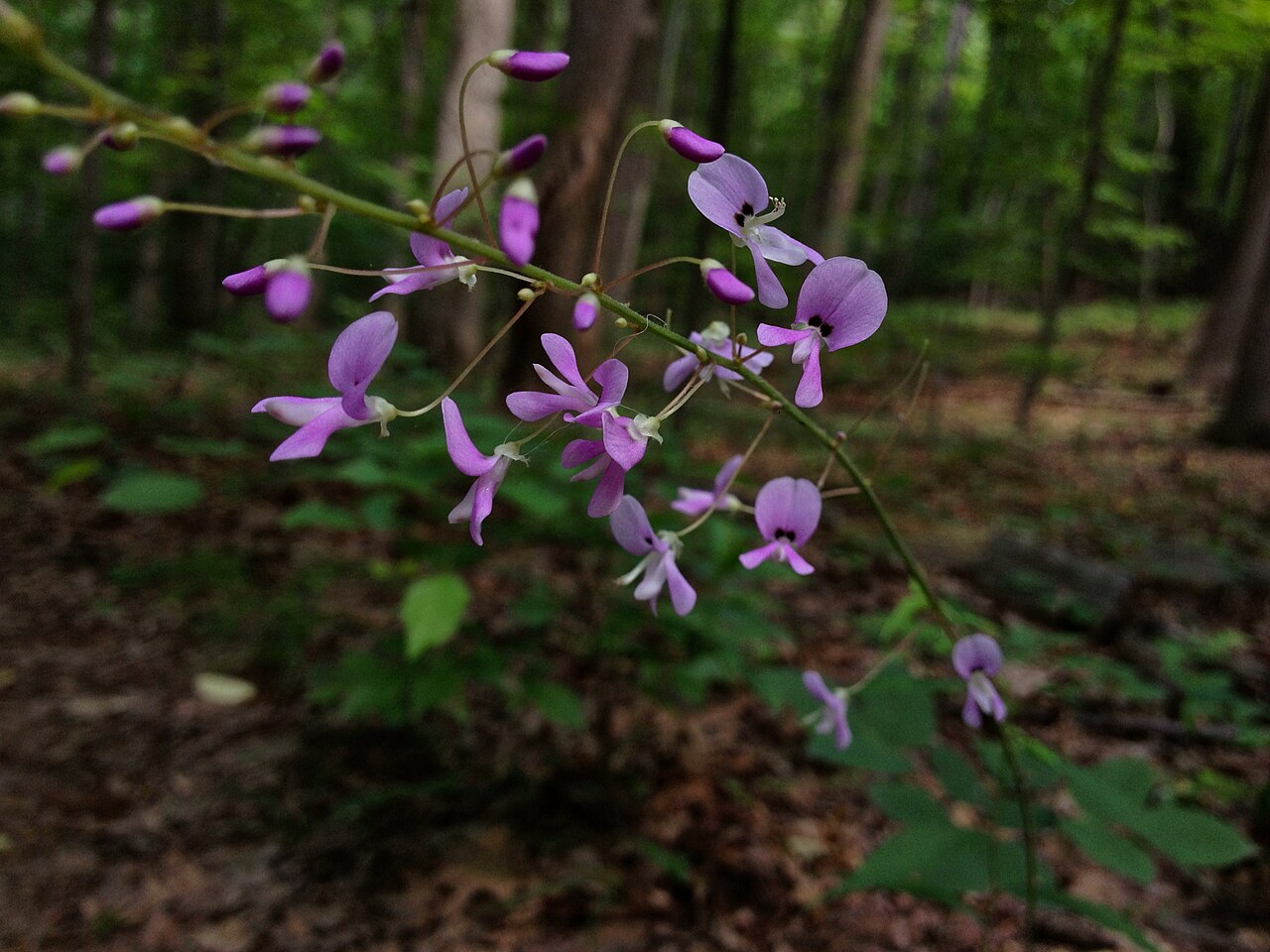
Desmodium nudiflorum, known as Naked-Flowered Tick-Trefoil (USDA: nakedflower ticktrefoil), is a native woodland perennial of the eastern United States and southern Ontario and Quebec. It is a member of the pea family (Fabaceae). Many botanists now place it in the genus Hylodesmum as Hylodesmum nudiflorum, the name used in many recent floras and on iNaturalist; USDA PLANTS still uses Desmodium nudiflorum.
The plant has an unusual habit. Each plant produces a short leafy stem, usually under a foot tall, topped with a whorl-like cluster of long-stalked leaves, each with three broad leaflets. Separately, a slender, leafless flowering stalk rises from the base to 1½ to 3 feet tall and carries an open spray of small pink to rose-purple pea flowers in mid to late summer. The “naked” flowering stalk gives the plant its name.
The flowers are followed by flat, jointed seed pods (loments) covered in tiny hooked hairs that cling to clothing and fur, the “ticks” of tick-trefoil. Naked-flowered tick-trefoil is one of the most common wildflowers of upland deciduous forests in the East and a good choice for shady woodland gardens.
Identification
In summer, look in dry to moist upland woods for a leafless stalk of small pink flowers rising beside a low cluster of three-part leaves. The separation of leaves and flowers onto different stems is the key feature.
Growth Habit
Plants grow from a knotty, woody rootstock. Each year they produce one leafy stem 4 to 12 inches tall and, on flowering plants, a separate leafless flowering stalk (scape) 1½ to 3 feet tall, which usually arises from the base of the plant rather than from the leafy stem. Non-flowering plants have only the leafy stem.
Leaves
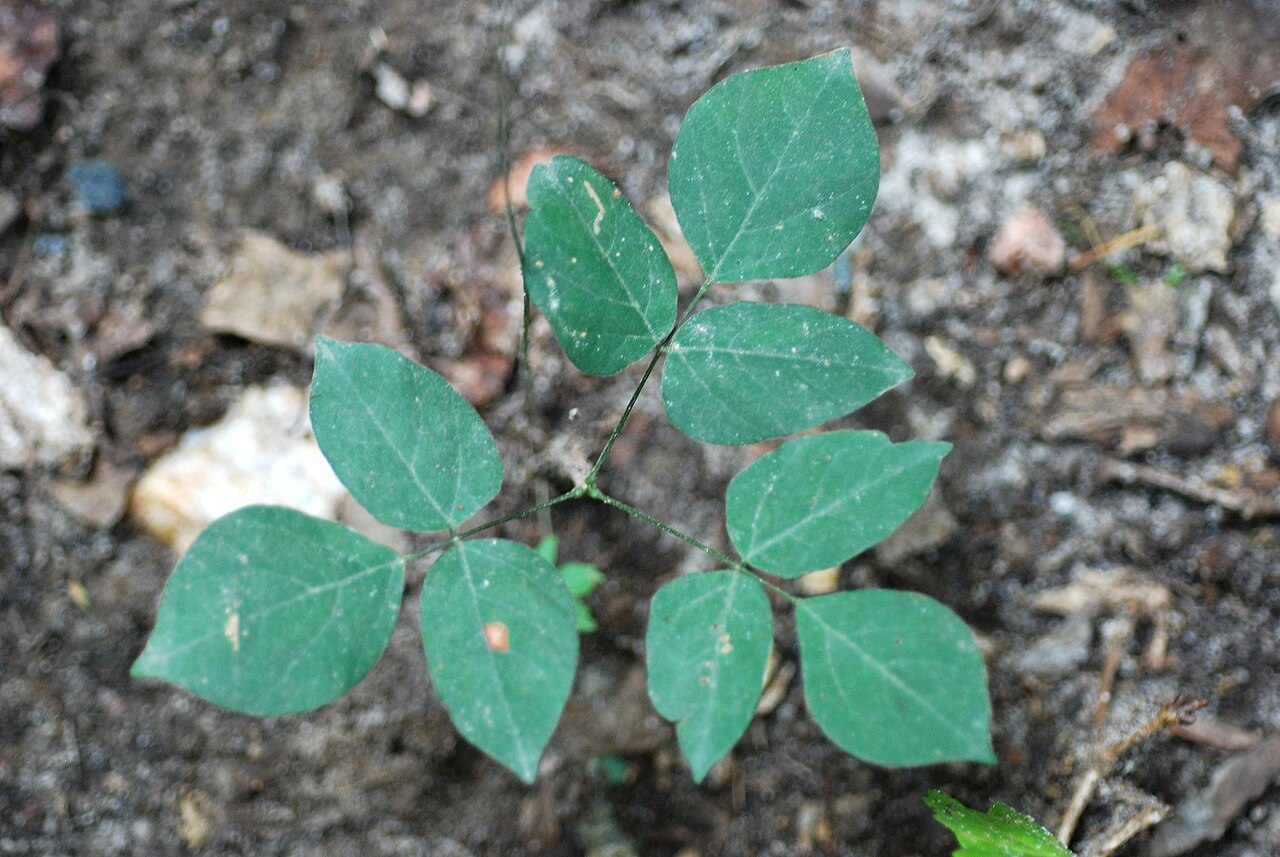
The leaves are crowded near the top of the leafy stem, so they look almost whorled. Each has a long stalk and three broadly oval to diamond-shaped leaflets, 1½ to 4 inches long, with pointed tips. The leaflets are thin, dark green above and paler below, and smooth or slightly hairy.
Flowers
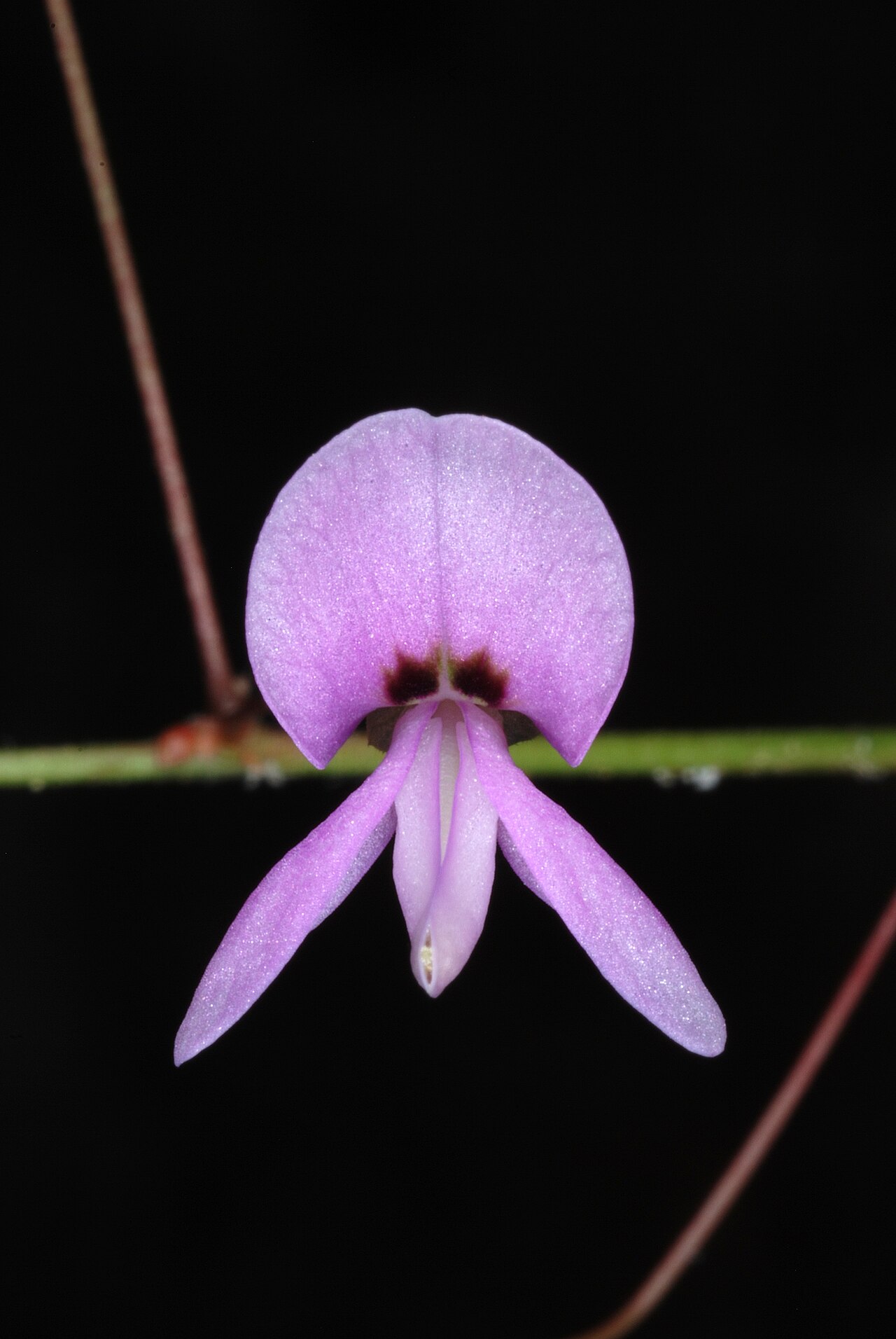
From July to September, the scape ends in a loose, open raceme of small, pea-like flowers about 1/4 to 3/8 inch long on slender stalks. They are pink, rose-purple or lavender, occasionally white, with a broad upper petal (banner) that has two small dark spots near the base.
Fruit & Seeds
The seed pods are flat loments that break into one to four triangular to half-moon-shaped segments, each about 3/8 inch long, on a long stalk. They are covered with tiny hooked hairs and stick to clothing and animal fur, which spreads the seeds. Each segment holds one seed.
Look-alikes
Pointed-leaved tick-trefoil (Desmodium glutinosum, also Hylodesmum glutinosum) also has a cluster of leaves on one stem, but its flowering stalk grows from the top of the leafy stem, above the leaves, and its leaflets are broader with tapered tips. Other tick-trefoils, such as showy tick-trefoil (Desmodium canadense) and panicled tick-trefoil (D. paniculatum), have leaves spaced along tall, leafy flowering stems and grow mainly in sunnier, open sites.
Quick Facts
| Scientific Name | Desmodium nudiflorum (syn. Hylodesmum nudiflorum) |
| Family | Fabaceae (pea family) |
| Plant Type | Herbaceous perennial wildflower |
| Mature Height | Leafy stem 4–12 in; flowering stalk 1.5–3 ft |
| Mature Spread | About 1 ft |
| Growth Rate | Slow to moderate |
| Sun Exposure | Part shade to shade |
| Water Needs | Medium; dry to moist, well-drained soil |
| Soil Type | Loam or sandy loam with leaf litter |
| Soil pH | About 5.5–7.2 (slightly acidic to neutral) |
| Bloom Time | July–September |
| Flower Color | Pink, rose-purple or lavender; rarely white |
| Fall Color | Leaves yellow before dying back |
| Fruit | Flat, jointed loment with hooked hairs (sticks to clothing) |
| Deer Resistant | No; browsed by deer |
| USDA Hardiness Zones | 3–9 |
Native Range
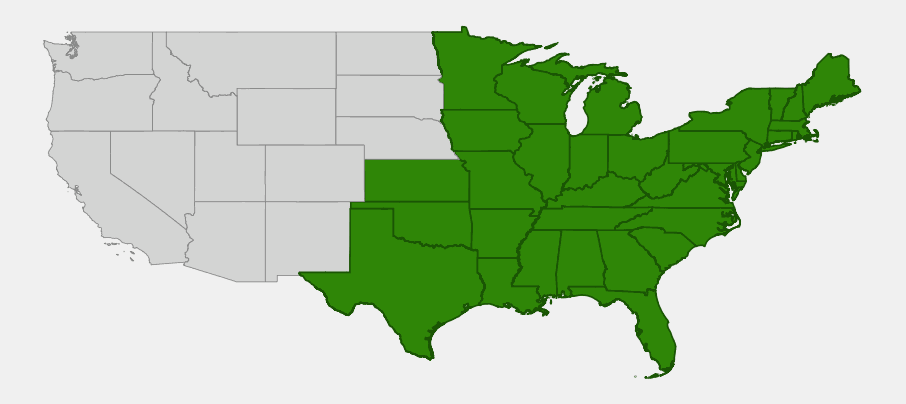
Naked-flowered tick-trefoil is native to eastern North America. USDA PLANTS lists it as native in the lower 48 states and Canada, and records it from 34 states and the District of Columbia, plus Ontario and Quebec. It ranges from southern Maine, New Hampshire and Vermont west through southern Ontario and Quebec to Michigan, Wisconsin, Minnesota and Iowa, and south to northern Florida, Louisiana and eastern Texas, with western limits in eastern Kansas and Oklahoma.
It is common through much of the Appalachian region, the Piedmont, the Ohio Valley and the Ozarks, and is one of the most frequently seen tick-trefoils in eastern forests. It becomes less common toward the Coastal Plain, the prairie border and the northern edge of its range. In Minnesota it grows in the eastern and southeastern deciduous forests, and in Texas it is a plant of the eastern Pineywoods and Post Oak woodlands.
Its habitat is mature deciduous and mixed forest: dry to moist oak-hickory and beech-maple woods, wooded slopes and ravines, and forest edges. The Lady Bird Johnson Wildflower Center describes it as a plant of mature, open, deciduous mesic woodlands on rich loamy or sandy soils.
📋 Regional plant lists featuring Naked-Flowered Tick-Trefoil: New York, Pennsylvania & Northern New Jersey · Ohio & Indiana · Michigan, Wisconsin & Eastern Minnesota · Kentucky & Tennessee · Nebraska, Kansas & Eastern Colorado · Connecticut, Massachusetts & Rhode Island · New Hampshire, Maine & Vermont · Maryland, Virginia & West Virginia · Delaware, Southern New Jersey & Long Island · Illinois, Iowa & Missouri · Alabama, Georgia & Mississippi · North & South Florida · North & South Carolina · Arkansas, Louisiana, Eastern Oklahoma & Eastern Texas
Growing & Care Guide
Naked-flowered tick-trefoil is a modest but dependable native for shady woodland gardens. It is occasionally available from native plant nurseries and seed suppliers in the East. Buy nursery-grown plants or seed rather than digging wild plants, which have deep, woody roots.
Light
Part shade to full shade under deciduous trees is ideal. It tolerates dappled sun but not hot, open sites.
Soil & Water
It grows in loam or sandy loam with a layer of leaf litter, slightly acidic to neutral. Average to moderately dry soil is fine once established; it tolerates the dry shade under oaks. Avoid soggy, poorly drained soil.
Planting Tips
Plant in spring or fall about 12 to 18 inches apart, in groups among other woodland plants. Leave fallen leaves in place as natural mulch. Plant it away from paths if you want to avoid the clingy seed pods on clothing and pets.
Pruning & Maintenance
Little care is needed. Cut back the old stems in late winter or leave them to break down naturally. It has few pest problems, though deer and rabbits may browse the leaves.
Propagation
Grow from seed. Remove seeds from the pod segments, scarify them lightly (for example, by rubbing on sandpaper) and soak them, then sow in fall outdoors or in spring after a short cold, moist period. Like many legumes, it forms root nodules with soil bacteria. Seedlings grow slowly and may take two or more years to flower.
Landscape Uses
- Woodland gardens: summer flowers in shade when spring ephemerals are gone
- Dry shade: under oaks and hickories where many plants struggle
- Naturalized woodlands: restoring the herb layer in deciduous forests
- Wildlife gardens: food and cover for birds, bees and butterflies
- Native plant education: an easy-to-find example of the pea family in woods
Wildlife & Ecological Value
Like other tick-trefoils, naked-flowered tick-trefoil supports a range of wildlife in eastern forests and improves the soil as a nitrogen-fixing legume.
For Pollinators
The flowers are visited mainly by bumblebees, small bees and other bees, which trip the flowers to reach nectar and pollen. Tick-trefoils are larval host plants for several butterflies, including the eastern tailed-blue, silver-spotted skipper and cloudywings.
For Birds
Wild turkeys, northern bobwhite and other ground-feeding birds eat the seeds of tick-trefoils.
For Mammals
White-tailed deer browse the foliage, which is high in protein, and small mammals eat the seeds. The hooked pod segments hitch rides on deer, foxes, raccoons and other animals.
Ecosystem Role
As a legume, it forms root nodules with nitrogen-fixing bacteria, adding nitrogen to forest soils. Its clingy fruits are a classic example of seed dispersal by animals.
Cultural & Historical Uses
The genus name Desmodium comes from the Greek desmos, “chain” or “bond,” referring to the jointed seed pods. Hylodesmum, the newer genus name, combines Greek hyle, “forest,” with desmos, describing these forest-dwelling tick-trefoils. The species name nudiflorum means “naked flower,” for the leafless flowering stalks.
Botanists separated the woodland tick-trefoils with clustered leaves and long-stalked pods into Hylodesmum in 2000, based on differences in pod, flower and seedling structure from the other Desmodium species. Both names are in current use.
Generations of hikers have pulled the small, triangular seed segments off their socks and trouser legs after walking through eastern woods in late summer. These “beggar’s lice” or “stick-tights” are an everyday reminder of how plants use animals to move their seeds.
Frequently Asked Questions
Why is it called naked-flowered tick-trefoil?
Because its flowers grow on a separate, leafless (“naked”) stalk instead of among the leaves. “Tick-trefoil” refers to the three-part leaves and the clingy seed pods.
Is it Desmodium nudiflorum or Hylodesmum nudiflorum?
Both names are used for the same plant. Many recent floras and iNaturalist use Hylodesmum nudiflorum; USDA PLANTS uses Desmodium nudiflorum.
How do I get the seeds off my clothes?
The pod segments are covered in tiny hooked hairs. Pick them off by hand or with a lint roller or tape; washing alone often does not remove them.
Does naked-flowered tick-trefoil grow in shade?
Yes. It is a forest plant and grows best in part to full shade under deciduous trees, including dry shade.
How is it different from pointed-leaved tick-trefoil?
In naked-flowered tick-trefoil the flowering stalk usually rises separately from the base. In pointed-leaved tick-trefoil it grows from the top of the leafy stem, above the cluster of leaves.

Looking for a nursery that carries Naked-Flowered Tick-Trefoil?
Browse our native plant nursery directory: Alabama & Arkansas · Connecticut, Delaware, Florida & Georgia · Illinois, Indiana, Iowa & Kansas · Kentucky, Louisiana, Maine, Maryland, Massachusetts, Michigan, Minnesota, Mississippi & Missouri · New Hampshire, New Jersey, New York, North Carolina, Ohio & Oklahoma · Pennsylvania, Rhode Island, South Carolina, Tennessee, Texas, Vermont & Virginia · West Virginia & Wisconsin