
Rock Harlequin (Corydalis sempervirens)
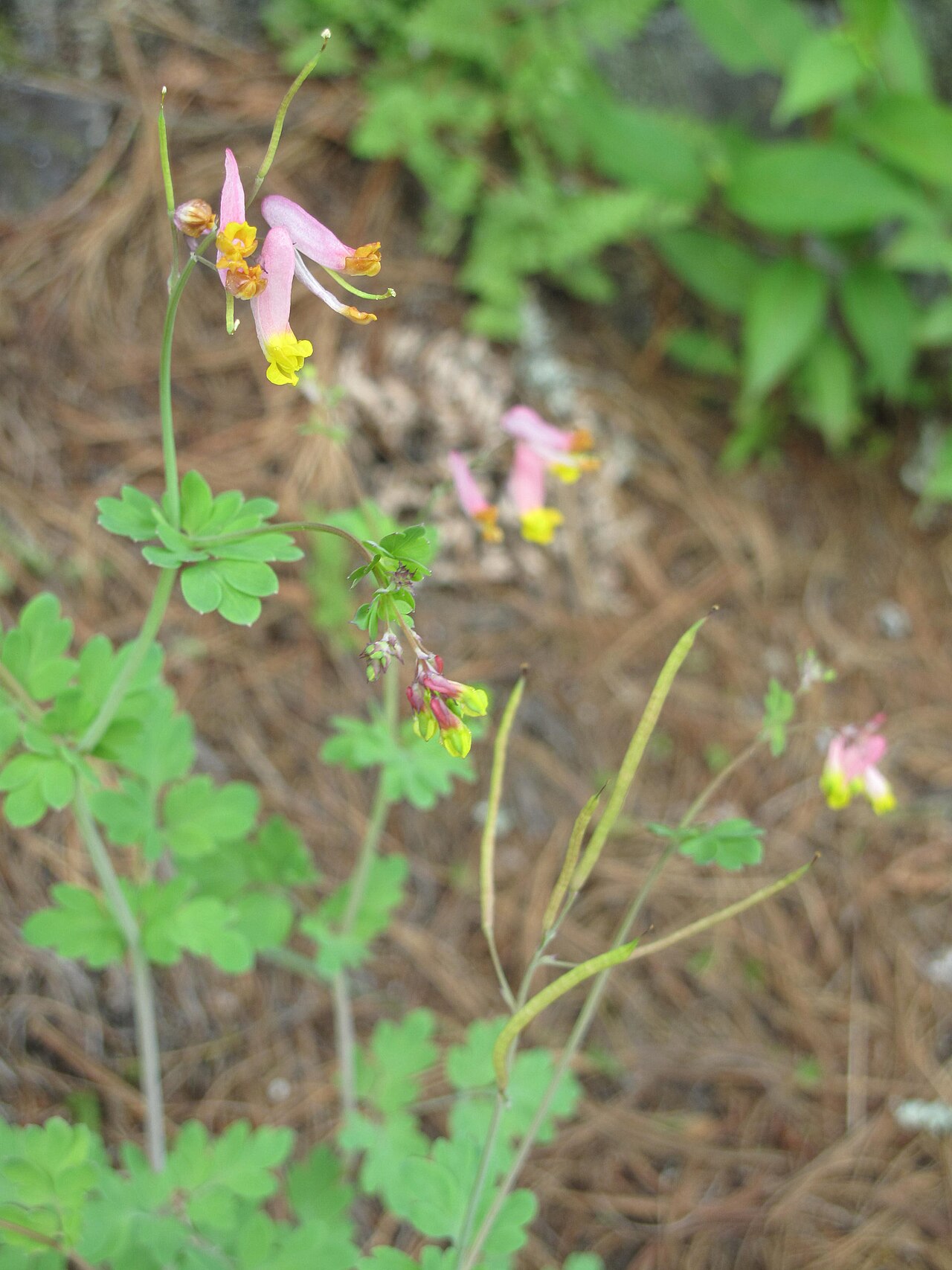
Corydalis sempervirens, known as Rock Harlequin or pale corydalis, is a delicate annual or biennial wildflower of rocky ledges, cliffs, outcrops, dry woods and recently burned or cleared ground across Canada and the northern and eastern United States. Its finely divided, blue-green leaves form lacy mounds, and from late spring through summer the plant carries small, tubular pink flowers tipped with bright yellow, like the costume of a harlequin.
It belongs to the fumitory subfamily of the poppy family (Papaveraceae) and is related to Dutchman’s breeches and bleeding hearts. Some botanists place it in its own genus, as Capnoides sempervirens, a name often used in Canadian and European references. USDA PLANTS lists it as Corydalis sempervirens.
Rock harlequin is short-lived but self-sows readily, appearing on bare, rocky or burned ground and then disappearing as other plants take over. It is a charming plant for rock gardens, stone walls and dry, gravelly sites. Like other corydalis species, it contains alkaloids and should not be eaten.
Identification
Rock harlequin is usually 6 inches to 2½ feet tall, and its pale, waxy foliage stands out against rocks and dark soil. The combination of blue-green lacy leaves and pink-and-yellow tubular flowers is distinctive.
Growth Habit
The Lady Bird Johnson Wildflower Center describes it as a biennial. In its first summer it forms a low rosette of basal leaves, and in its second year it sends up many slender, branched stems that flower, set seed and die. Some plants behave as annuals and bloom in their first year. The stems are smooth and covered with a whitish, waxy bloom.
Leaves
The leaves are alternate and divided two or three times into many small, rounded or wedge-shaped lobes, giving them a lacy, fern-like look. They are blue-green to gray-green and coated with a waxy bloom, much like the leaves of Dutchman’s breeches and bleeding hearts.
Flowers
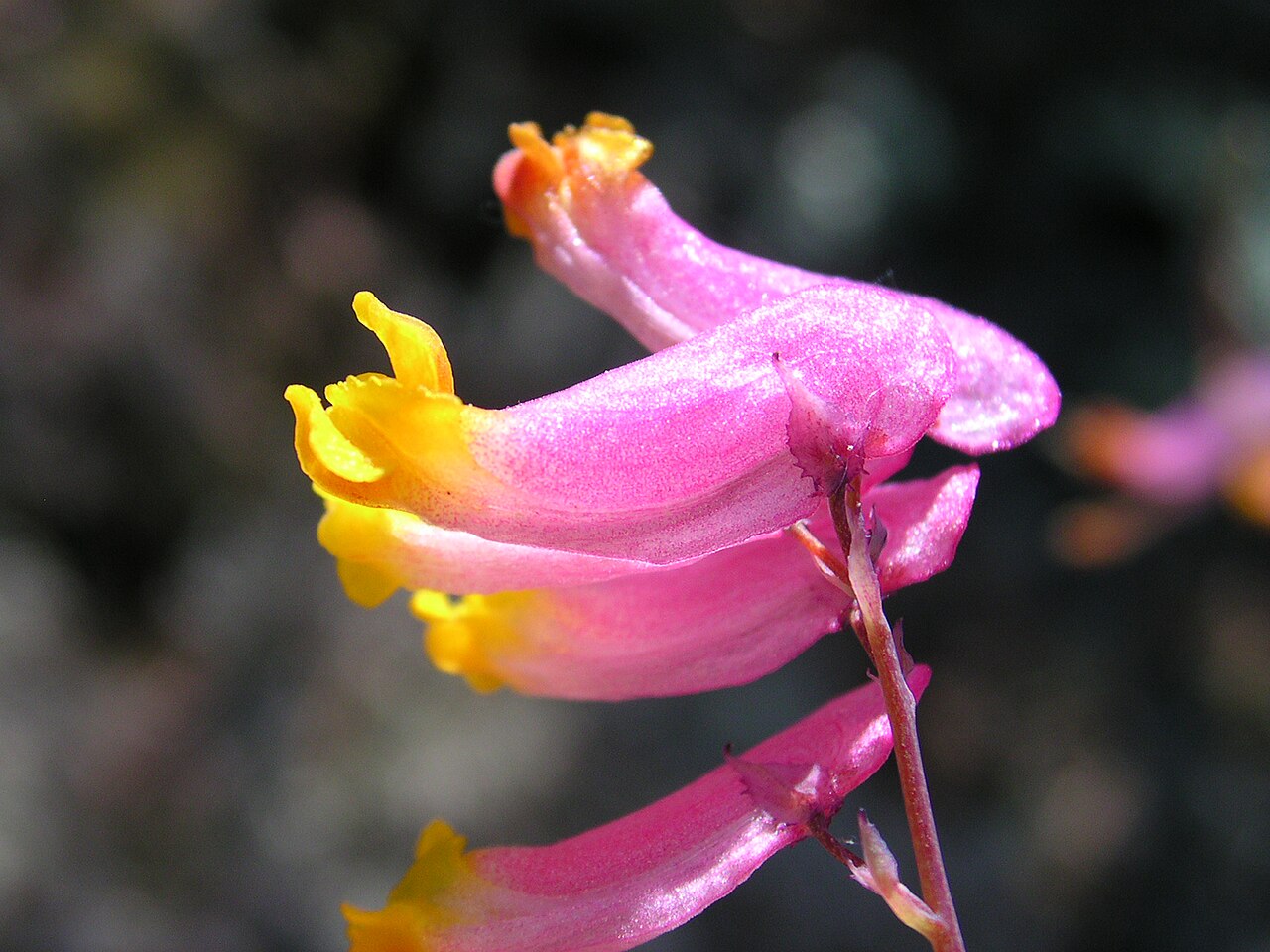
Flowers grow in small, loose clusters at the ends of the branches. Each is about ½ inch long, a narrow pink tube with a short, rounded spur at the back and bright yellow lips at the front. The flowers hang horizontally or droop slightly. Plants bloom from May through August and sometimes into September. Golden corydalis (C. aurea) and other native corydalis species have entirely yellow flowers.
Fruit & Seeds
The fruit is a slender, upright capsule 1 to 2 inches long. When ripe, it splits open to release shiny black seeds, each with a small fleshy attachment that attracts ants. The seeds can stay dormant in the soil for many years and germinate after fire or other soil disturbance.
Quick Facts
| Scientific Name | Corydalis sempervirens (syn. Capnoides sempervirens) |
| Family | Papaveraceae (poppy family; fumitory subfamily) |
| Plant Type | Annual or biennial wildflower |
| Mature Height | 6 in–2½ ft |
| Mature Spread | 6–18 in |
| Growth Rate | Fast |
| Sun Exposure | Full sun to part shade |
| Water Needs | Low; prefers dry, well-drained sites |
| Soil Type | Poor, dry, gravelly, sandy or rocky soil |
| Soil pH | About 4.5–6.5 (acidic) |
| Bloom Time | May–September |
| Flower Color | Pink with yellow tips |
| Fall Color | None; plants die after setting seed |
| Fruit | Slender upright capsule with shiny black seeds |
| Deer Resistant | Yes; foliage contains bitter alkaloids |
| USDA Hardiness Zones | 3–8 |
Native Range
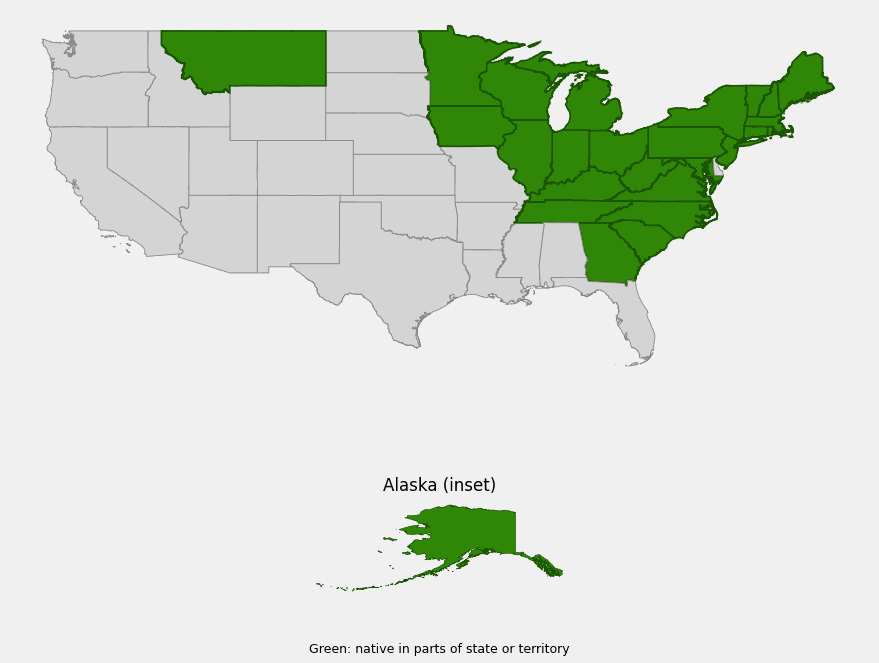
Rock harlequin is widespread across boreal and northeastern North America. It occurs throughout much of Canada, from Newfoundland, Labrador and the Maritime Provinces west to British Columbia, Yukon and the Northwest Territories, and it reaches Alaska. In the United States, USDA PLANTS records it in 26 states: throughout New England, New York, New Jersey and Pennsylvania, across the Great Lakes states to Minnesota and Iowa, and south through the Appalachian Mountains to North Carolina, South Carolina, Tennessee and Georgia.
The Lady Bird Johnson Wildflower Center summarizes its native distribution as Canada and the eastern United States south to northern Georgia and west to Minnesota, plus northwestern Montana. The Montana and Alaska populations are part of its broad boreal range across Canada. In the southern Appalachians it is mainly a plant of high, rocky summits and outcrops.
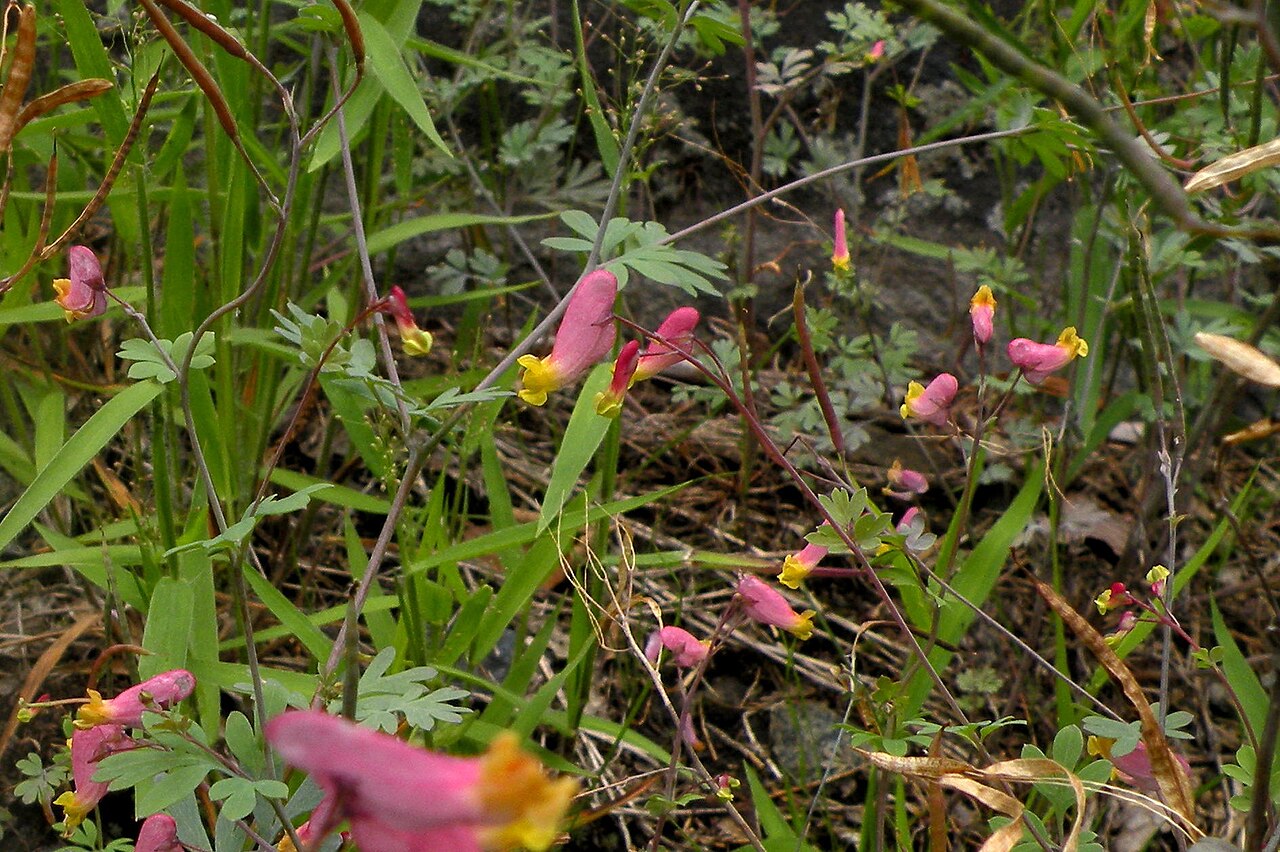
It favors open, rocky places with thin, acidic soil: cliff ledges, granite and sandstone outcrops, talus, gravelly slopes, dry rocky woods and clearings. It is also well known for springing up after forest fires, logging or other disturbances, when buried seed germinates on bare, sunny ground.
📋 Regional plant lists featuring Rock Harlequin: New York, Pennsylvania & Northern New Jersey · Idaho, Eastern Oregon & Eastern Washington · Ohio & Indiana · Montana & Wyoming · Michigan, Wisconsin & Eastern Minnesota · Kentucky & Tennessee · Connecticut, Massachusetts & Rhode Island · New Hampshire, Maine & Vermont · Maryland, Virginia & West Virginia · Delaware, Southern New Jersey & Long Island · Illinois, Iowa & Missouri · Alabama, Georgia & Mississippi · Alaska · North & South Carolina
Growing & Care Guide
Rock harlequin is an easy plant for the right spot: a sunny or lightly shaded rock garden, stone wall, gravel bed or dry slope. It is short-lived, so think of it as a self-sowing annual that will move around the garden over time. Safety note: like other corydalis species, it contains isoquinoline alkaloids that are toxic if eaten. Don’t eat any part of the plant, and keep pets and livestock from grazing on it.
Light
It grows in full sun to part shade. The Lady Bird Johnson Wildflower Center lists part shade as its light requirement. On hot sites, light afternoon shade keeps it looking fresh longer.
Soil & Water
Give it poor, dry, gravelly or sandy, acidic soil with excellent drainage. Rich, moist garden soil makes it floppy and short-lived. Once established it needs no watering except in severe drought.
Planting Tips
Sow seed directly in fall on bare, gritty soil, in rock crevices or between stones, and press it lightly into the surface. Potted plants are occasionally sold, but young plants have a taproot and resent transplanting, so move them while small. Leave a few bare patches nearby for seedlings.
Pruning & Maintenance
No pruning is needed. Let some plants go to seed so the colony continues; second-year plants die after seeding. The Lady Bird Johnson Wildflower Center notes that pale corydalis can become weedy, but unwanted seedlings are easy to pull.
Propagation
It is easily grown from seed. Fresh seed sown in fall germinates the following spring after winter cold. Stored seed may need cold, moist stratification, and some seeds stay dormant for years until the soil is disturbed.
Landscape Uses
- Rock gardens and stone walls: lacy blue-green foliage and long bloom among rocks
- Dry, gravelly sites: thrives where richer-soil plants fail
- Woodland edges and clearings: a pioneer on disturbed or burned ground
- Pollinator plantings: early-summer flowers for bumblebees
- Container and trough gardens: a delicate, self-sowing filler
Wildlife & Ecological Value
Rock harlequin is a small, short-lived plant, but it fills an important niche as a pioneer on bare rock and burned ground.
For Pollinators
The tubular flowers are pollinated mainly by bumblebees, which are strong enough to push into the flower to reach the nectar in the spur. Some bees steal nectar by biting through the side of the spur. The flowers can also set seed through self-pollination.
For Birds
Birds make little direct use of it, but it adds to the plant and insect life of open rocky habitats used by songbirds.
For Mammals
Deer and other browsers generally avoid it because the foliage is bitter and contains alkaloids.
Ecosystem Role
Rock harlequin is a fire follower and early colonizer. Its long-lived seeds wait in the soil until fire, logging or rockfall opens the ground, then germinate and help cover bare soil. Ants carry off the seeds for the fleshy attachments, which spreads them into new crevices.
Cultural & Historical Uses
Linnaeus described the species in 1753 as Fumaria sempervirens. The genus name Corydalis comes from the Greek word for the crested lark, because the spurred flowers were thought to resemble a lark’s crest. The epithet sempervirens means evergreen, perhaps because the first-year rosettes stay green late into autumn.
The alternative genus name Capnoides means smoke-like, an allusion shared with the related fumitories (Fumaria, from the Latin for smoke). Common names include rock harlequin, pale corydalis, pink corydalis and tall corydalis.
The Lady Bird Johnson Wildflower Center notes that some corydalis species have sedative and pain-killing compounds, but many also contain toxic alkaloids. Rock harlequin is not a safe medicinal or edible plant, and it is best enjoyed in place.
Frequently Asked Questions
Is rock harlequin a perennial?
No. It is a biennial or annual. It forms a rosette in its first year, flowers and sets seed in its second, and then dies. It persists by self-sowing.
Where does rock harlequin grow?
On rocky ledges, cliffs, outcrops, gravelly slopes, dry woods and recently burned or cleared ground across Canada, Alaska, the northeastern and Great Lakes states, the Appalachians and northwestern Montana.
Is rock harlequin poisonous?
Yes. Like other corydalis species, it contains toxic isoquinoline alkaloids. Don’t eat it, and keep pets and livestock from grazing on it.
Why does rock harlequin appear after a fire?
Its seeds can stay dormant in the soil for years. Fire, logging or other disturbance clears the ground, and the seeds germinate in the open, sunny conditions.
How do I grow rock harlequin?
Sow seed in fall on poor, gravelly, well-drained acidic soil in sun or part shade, such as a rock garden or stone wall, and let the plants self-sow.

Looking for a nursery that carries Rock Harlequin?
Browse our native plant nursery directory: Alaska · Connecticut & Georgia · Illinois, Indiana & Iowa · Kentucky, Maine, Maryland, Massachusetts, Michigan, Minnesota & Montana · New Hampshire, New Jersey, New York, North Carolina & Ohio · Pennsylvania, Rhode Island, South Carolina, Tennessee, Vermont & Virginia · West Virginia & Wisconsin