
Common Marsh Bedstraw (Galium palustre)
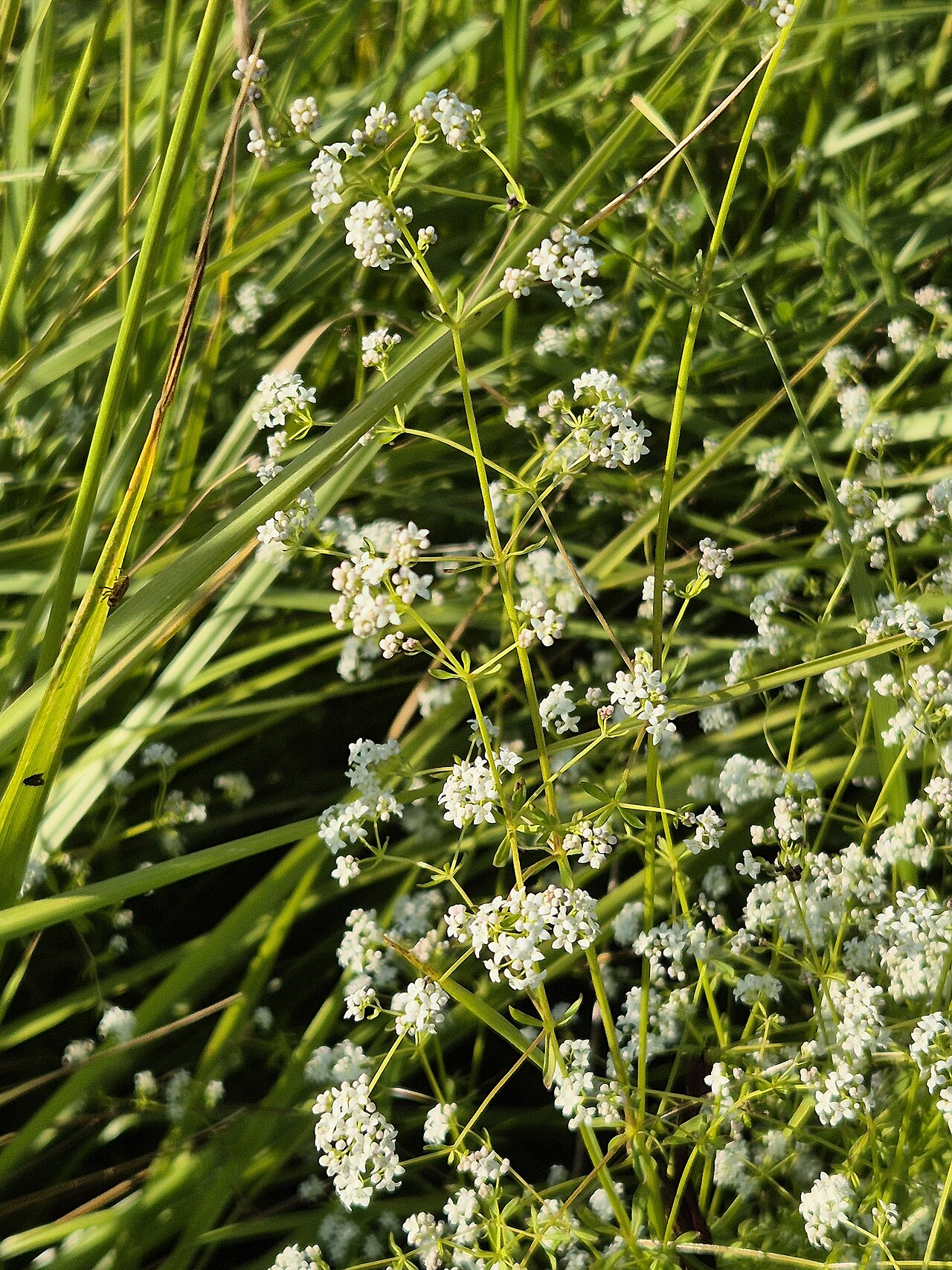
Galium palustre, the Common Marsh Bedstraw, is a slender, sprawling perennial of marshes, wet meadows, swamps and pond edges. Its weak, four-angled stems lean on surrounding grasses and sedges, carrying whorls of narrow leaves and, in summer, loose, airy sprays of tiny white, four-petaled flowers. It belongs to the coffee family (Rubiaceae) and is a cousin of the woodland bedstraws such as Sweet-scented Bedstraw and the prairie Northern Bedstraw.
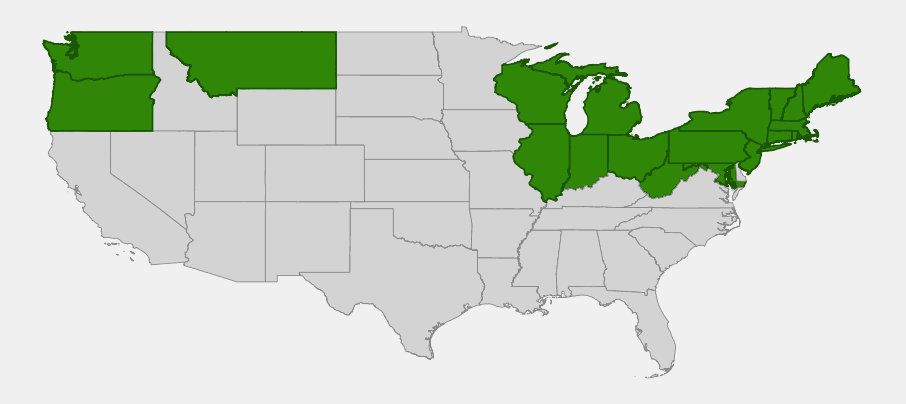
Marsh bedstraw has a very wide range. It is native across most of Europe and parts of western Asia and North Africa, and in North America it grows from Newfoundland and Labrador through eastern Canada and the northeastern United States to the Great Lakes, with scattered records in Montana, Oregon and Washington. USDA PLANTS lists it as native in the lower 48 states. Its status here is not entirely simple, though: Go Botany, citing the Flora Novae Angliae, answers “yes and no (some introduced)” to the question of whether it is native, because some North American populations probably arrived from Europe.
This is a modest plant rather than a showy one, but it is an important part of the tangle of low wetland vegetation. This guide explains how to identify it among the many similar small bedstraws, where it grows, and how it fits into wet meadow and rain garden plantings.
Identification
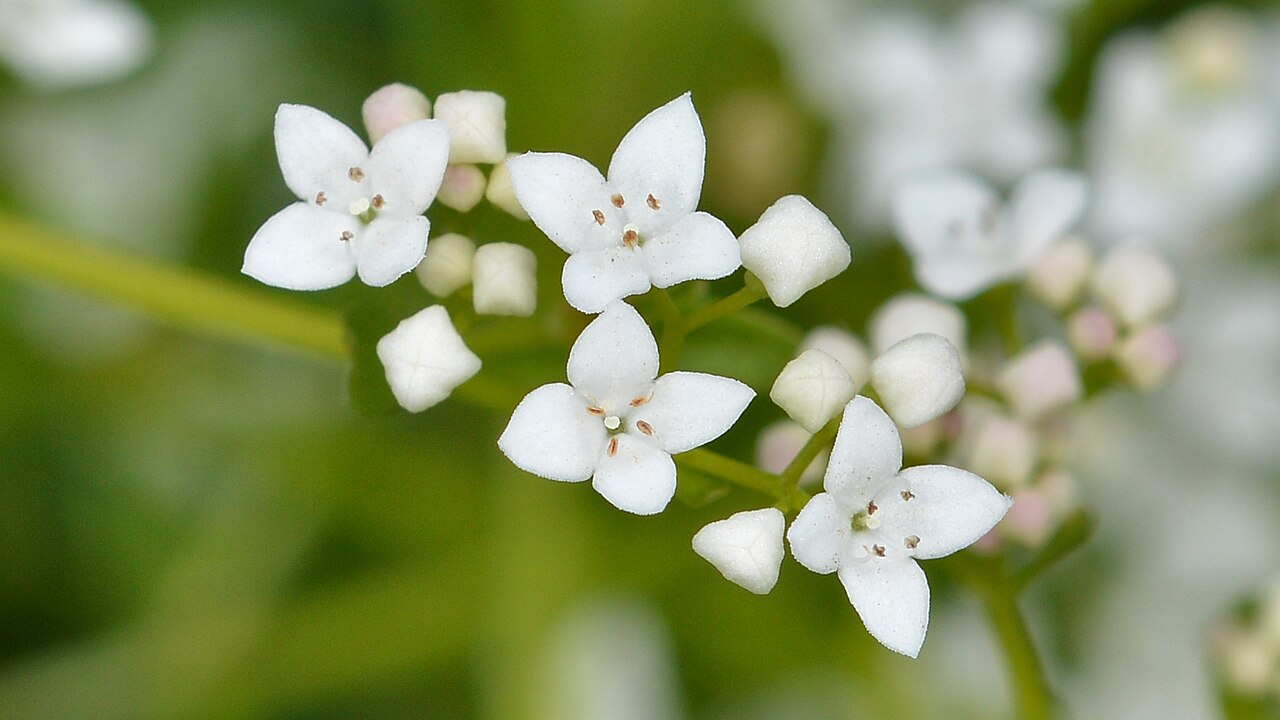
Several small white-flowered bedstraws grow in North American wetlands, and they can be hard to tell apart. Count the leaves in each whorl, look at the leaf tips, and count the flowers in each cluster. Common marsh bedstraw has blunt leaves, mostly in fours, and many flowers in each branched cluster.
Stems & Growth Habit
Marsh bedstraw is a perennial that spreads from slender rhizomes. Its stems are thin, square (four-angled) and weak, usually 8 inches to 2 feet long and sometimes longer when they climb through dense vegetation. They sprawl or lean on other plants rather than standing upright. The angles of the stem carry tiny, backward-pointing prickles, so the stems feel slightly rough and cling lightly to clothing and to neighboring plants.
Leaves
The leaves are in whorls, mostly of four, sometimes five or six on the main stems. Each leaf is narrow, about a third of an inch to 1 inch long, widest above the middle and blunt or rounded at the tip, without the sharp bristle point of some other bedstraws. The leaf edges may have tiny rough prickles. The plants often turn blackish when dried.
Flowers
Flowering runs from about June to August. The flowers are tiny, roughly an eighth of an inch across, with four pointed white petals joined at the base. They are borne in loose, branched clusters at the ends of the stems and in the upper leaf axils, usually with many flowers per cluster. The inflorescence typically branches three or more times and carries five or more flowers, which helps separate it from small-flowered look-alikes.
Fruit
Each flower produces a pair of small, rounded, dry, one-seeded nutlets about a sixteenth of an inch across. They are smooth, without the hooked bristles that make the fruits of cleavers stick to clothing, and they ripen to dark brown in late summer.
Similar Species
Small bedstraw (Galium trifidum) has three-lobed flowers and only one to three flowers per cluster. Stiff marsh bedstraw (Galium tinctorium) has smaller flowers with three or four lobes in clusters of two to four. Rough bedstraw (Galium asprellum) has leaves mostly in sixes with sharp, bristle-pointed tips and much rougher stems. Some botanists recognize a larger form, great marsh bedstraw (Galium elongatum), as a separate species, while others include it in G. palustre.
Quick Facts
| Scientific Name | Galium palustre L. |
| Family | Rubiaceae (coffee or madder family) |
| Plant Type | Herbaceous perennial; sprawling, rhizomatous wetland forb |
| Mature Height | 8–24 in (stems sprawl or lean on other plants) |
| Mature Spread | 1–2 ft; spreads slowly by rhizomes |
| Growth Rate | Moderate |
| Sun Exposure | Full sun to partial shade |
| Water Needs | High; wet to saturated soil, tolerates shallow flooding |
| Soil Type | Wet mucky, peaty, sandy or loamy soils |
| Soil pH | About 5.0–7.5 |
| Bloom Time | June–August |
| Flower Color | White |
| Fall Color | None notable |
| Fruit | Pair of small, smooth, dry nutlets |
| Deer Resistant | Moderate |
| USDA Hardiness Zones | 3–8 |
Native Range
In North America, common marsh bedstraw is most common in eastern Canada and the northeastern United States. USDA PLANTS records it from Connecticut, Illinois, Indiana, Maine, Maryland, Massachusetts, Michigan, Montana, New Hampshire, New Jersey, New York, Ohio, Oregon, Pennsylvania, Rhode Island, Vermont, Washington, West Virginia and Wisconsin, and from every Atlantic province, Quebec, Ontario, Manitoba and the Yukon. Go Botany reports it from all six New England states, where it is widespread and secure. In the Pacific Northwest, the Burke Herbarium at the University of Washington lists it as native and reports it on both sides of the Cascade crest.
Its native status in North America has long been discussed. The species is unquestionably native in Europe, and it also grows natively in Greenland and on Saint Pierre and Miquelon. Many North American botanists treat it as native in eastern Canada and the Northeast, but some populations, especially those in disturbed ground, ditches and around old ports, may have been introduced from Europe. Small marsh bedstraws are also easily confused with each other, so some older records may refer to related species. This page follows USDA in treating it as native in the states shown on the map.
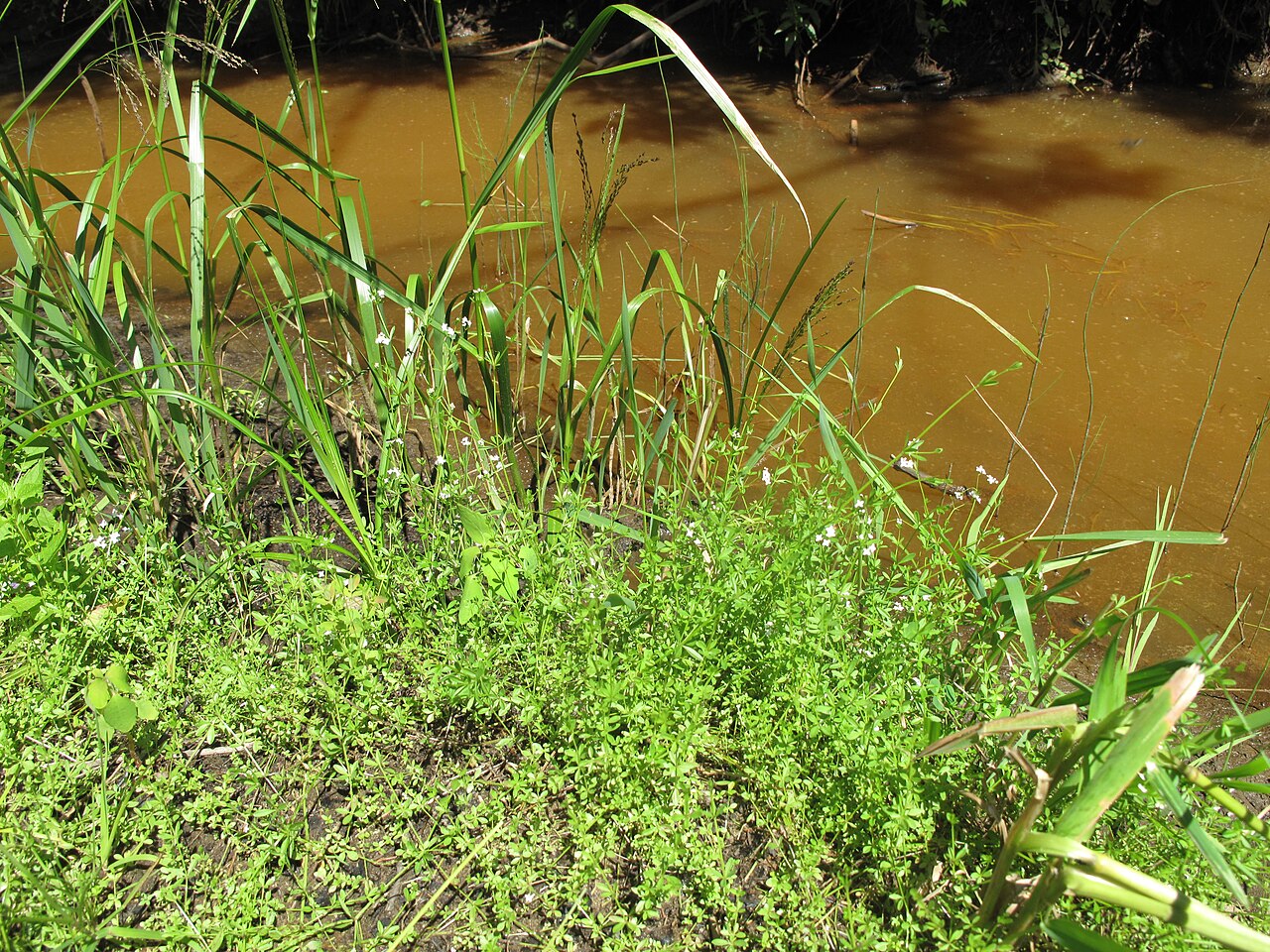
Marsh bedstraw grows in marshes, wet meadows, shrub swamps, bog and fen edges, shores of ponds and streams, wet ditches and other open or lightly shaded wetlands. It is rated an obligate wetland plant in New England, meaning it almost always grows in wetlands.
📋 Regional plant lists featuring Common Marsh Bedstraw: Connecticut, Massachusetts & Rhode Island · New Hampshire, Maine & Vermont · New York, Pennsylvania & Northern New Jersey · Delaware, Southern New Jersey & Long Island · Maryland, Virginia & West Virginia · Ohio & Indiana · Illinois, Iowa & Missouri · Michigan, Wisconsin & Eastern Minnesota · Montana & Wyoming · Western Oregon & Western Washington · Idaho, Eastern Oregon & Eastern Washington
Growing & Care Guide
Common marsh bedstraw is rarely sold by nurseries, and it often arrives on its own in wet meadows and restored wetlands. It is not a plant to feature for its flowers, but it is a useful, low, soft-textured filler for the wettest parts of a rain garden, pond edge or wet meadow, where it knits taller plants together. Because some North American populations may be introduced, gardeners who want strictly local stock should start it from seed or divisions of nearby wild populations, collected with permission and in small amounts.
Light
Full sun to partial shade. In full sun it flowers more heavily; in shade the stems become longer and sparser.
Soil & Water
It needs consistently wet soil: saturated muck, peat or wet loam, including sites that are briefly flooded in spring. It tolerates acidic to near-neutral conditions. It does not survive in ordinary garden soil that dries out in summer.
Planting Tips
Plant divisions or small plugs in spring along a pond margin, in the low zone of a rain garden or among sedges and rushes in a wet meadow. Because the stems are weak and sprawling, it looks best when it can lean on taller plants such as sedges, blue flag iris and bluejoint grass. Space plants about 12 inches apart.
Pruning & Maintenance
No pruning is needed. Leave the dead stems in place over winter; they help protect the crowns and provide cover for insects. It spreads slowly and rarely becomes a nuisance among vigorous wetland plants.
Propagation
Divide clumps in spring by separating rooted sections of rhizome. Seed can be sown outdoors in fall on wet soil and allowed to overwinter; like many wetland perennials, it germinates best after a cold, moist period.
Landscape Uses
- Wet meadows: a fine-textured filler among sedges, rushes and wetland grasses
- Pond and stream margins: a low, sprawling plant for saturated soil at the water’s edge
- Rain gardens: suits the wettest, lowest zone of a rain garden in cool climates
- Wetland restoration: part of the natural groundlayer of marshes and wet meadows
- Naturalistic plantings: adds soft texture and tiny summer flowers to wild, wet corners
Wildlife & Ecological Value
Small as it is, marsh bedstraw is part of the dense, low vegetation that makes wet meadows rich in insects and cover.
For Pollinators
The tiny, open white flowers are visited by small bees, flies, beetles, wasps and other small insects that can reach the shallow nectar easily. Bedstraws are larval food plants for several moths, including the bedstraw hawk-moth (Hyles gallii), whose caterpillars feed on Galium species across northern North America and Eurasia.
For Birds
The small, dry fruits are eaten by some ground-feeding birds, but they are not a major food source. The tangled stems add to the dense low cover used by marsh-nesting birds such as rails, swamp sparrows and common yellowthroats.
For Mammals
Small mammals such as meadow voles use the dense low growth of wet meadows for cover. Deer and other browsers eat bedstraws only lightly.
Ecosystem Role
Marsh bedstraw is one of many low, sprawling forbs that fill the spaces between sedges and grasses in wet meadows and marsh edges. These layers shade the soil, hold sediment and provide habitat for insects and the animals that feed on them. Its rhizomes help bind wet, mucky soils along shores.
Cultural & Historical Uses
Linnaeus named Galium palustre in 1753 in his Species Plantarum. The epithet palustre means “of marshes.” The genus name comes from the Greek word for milk, because yellow bedstraw (Galium verum) was once used in Europe to curdle milk for cheese.
The common name “bedstraw” also comes from European bedstraws, whose dried, fragrant stems were used to stuff mattresses. Several bedstraws contain red pigments in their roots, like their relative madder, and some, including the North American stiff marsh bedstraw (Galium tinctorium), have been used as dye plants.
In Britain, common marsh-bedstraw is a characteristic plant of rush pastures and fens, and it is used to describe several wet grassland plant communities in the British National Vegetation Classification. In North America it receives less attention, but it is a familiar plant to botanists surveying northern marshes and wet meadows.
Frequently Asked Questions
Is common marsh bedstraw native to North America?
USDA PLANTS lists it as native in the lower 48 states, and it is generally considered native in eastern Canada and the northeastern United States. However, some botanists believe certain populations were introduced from Europe, and Go Botany describes its native status as “yes and no (some introduced).”
How do I tell marsh bedstraw from other bedstraws?
Look for leaves mostly in whorls of four with blunt tips, four-petaled white flowers about an eighth of an inch across, and branched flower clusters with five or more flowers. Small bedstraw and stiff marsh bedstraw have fewer, smaller flowers, and rough bedstraw has sharp-tipped leaves mostly in sixes.
Is marsh bedstraw sticky like cleavers?
Only slightly. Its stems have tiny backward-pointing prickles that help it cling to other plants, but its fruits are smooth, unlike the hooked, burr-like fruits of cleavers (Galium aparine).
Can I grow marsh bedstraw in a rain garden?
Yes, in the wettest zone of a rain garden or along a pond edge in a cool climate. It needs soil that stays wet all season and looks best among taller sedges and rushes it can lean on.
Is marsh bedstraw invasive?
It is not considered invasive in North America. It spreads slowly by rhizomes among other wetland plants and rarely forms large, dominant patches.

Looking for a nursery that carries Common Marsh Bedstraw?
Browse our native plant nursery directory: Connecticut · Illinois & Indiana · Maine, Maryland, Massachusetts, Michigan & Montana · New Hampshire, New Jersey, New York & Ohio · Oregon · Pennsylvania, Rhode Island & Vermont · Washington · West Virginia & Wisconsin

