
Gunnison’s Mariposa Lily (Calochortus gunnisonii)
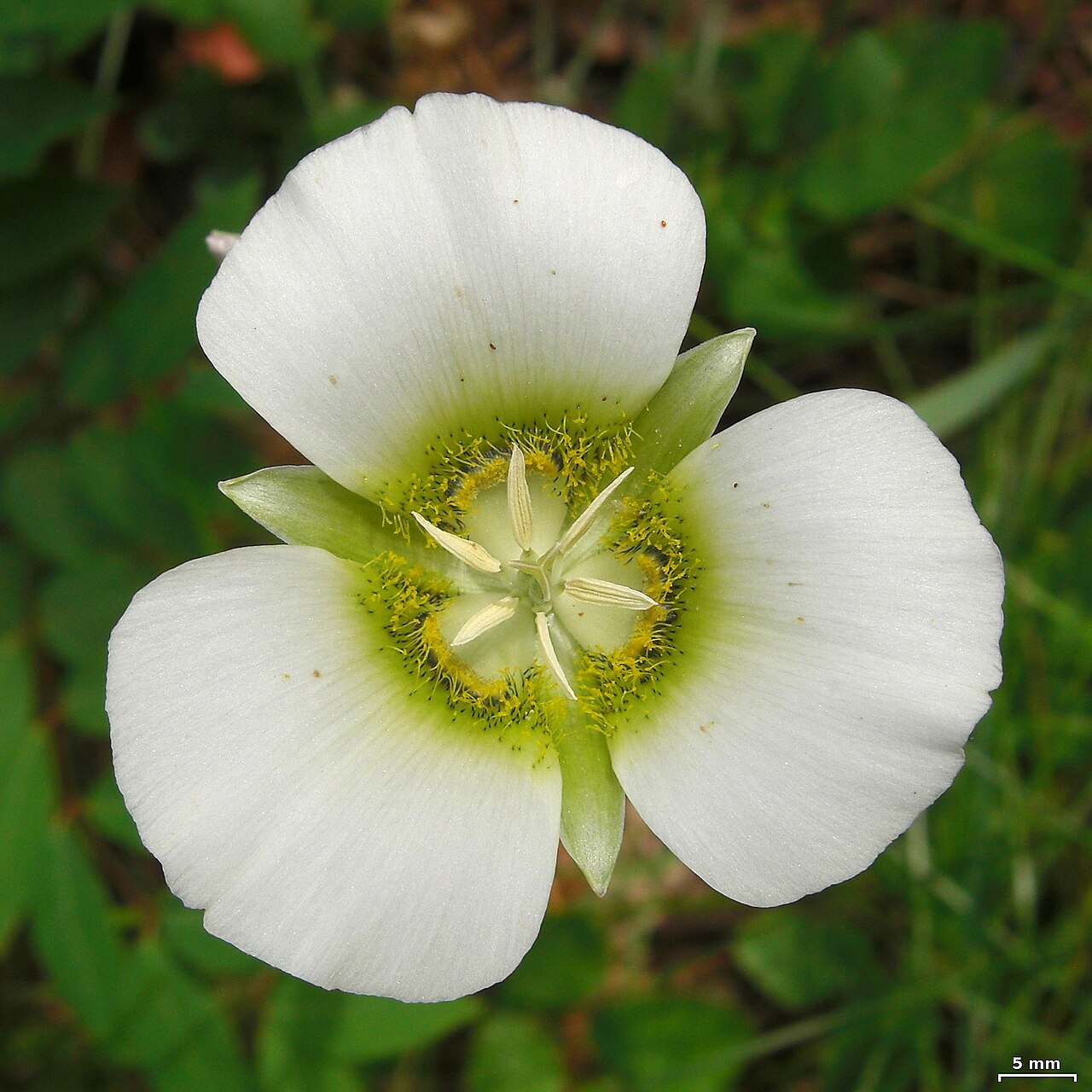
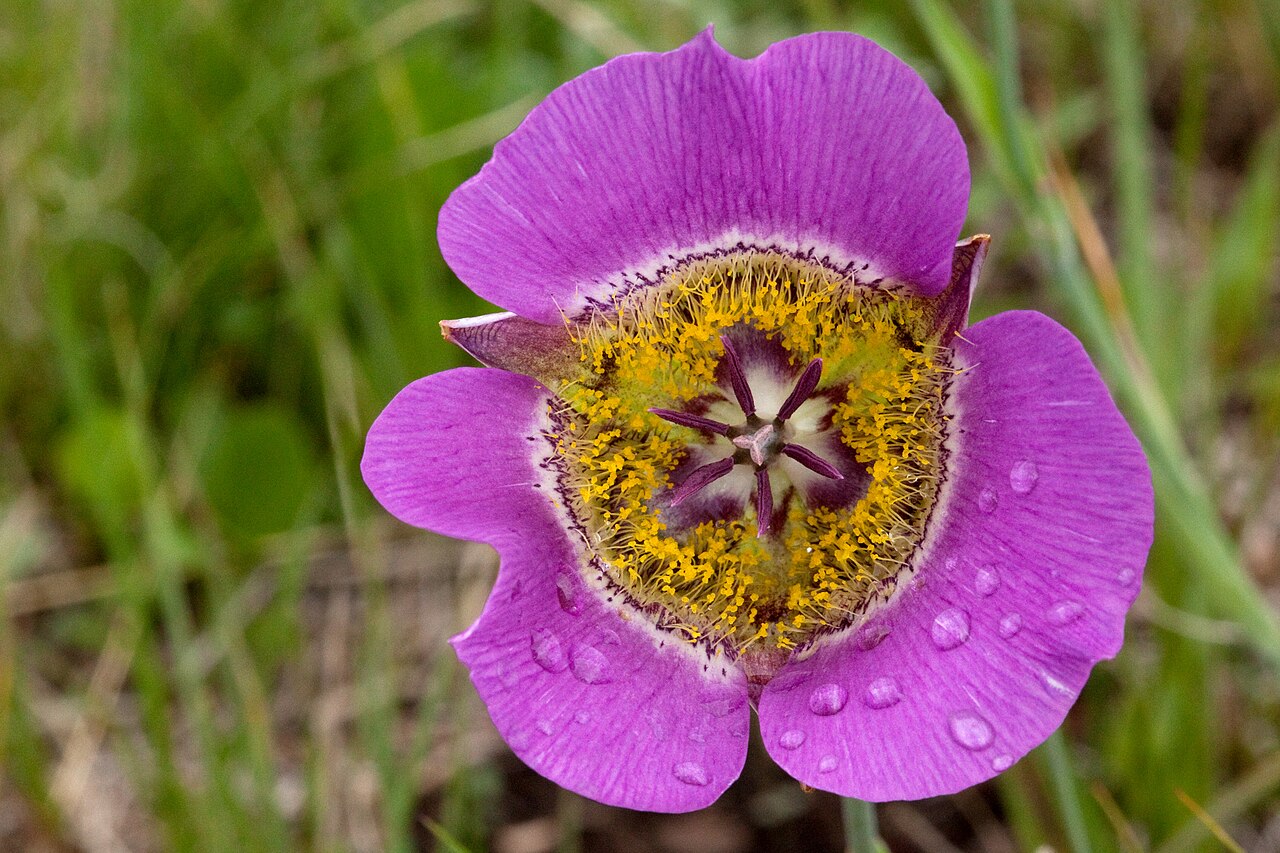
Calochortus gunnisonii, known as Gunnison’s Mariposa Lily or mariposa tulip, is a native perennial bulb of the lily family (Liliaceae) that grows in meadows, grasslands and open forests of the Rocky Mountains and the western Great Plains. In early to midsummer it opens striking, cup-shaped flowers with three broad petals, usually white to cream but sometimes lavender or rose-purple.
Look into a flower and you will see why mariposa lilies (mariposa is Spanish for “butterfly”) are among the most admired western wildflowers: near the base of each petal is a band of yellow and purple, fringed with fine hairs around a nectar gland, like the markings on a butterfly’s wing.
Gunnison’s mariposa lily is a wild plant best enjoyed where it grows. It is rarely available from nurseries, the bulbs should never be dug from the wild, and it is challenging to grow. This guide covers how to identify it, where to find it, how it can be raised from seed, and its value to wildlife.
Identification
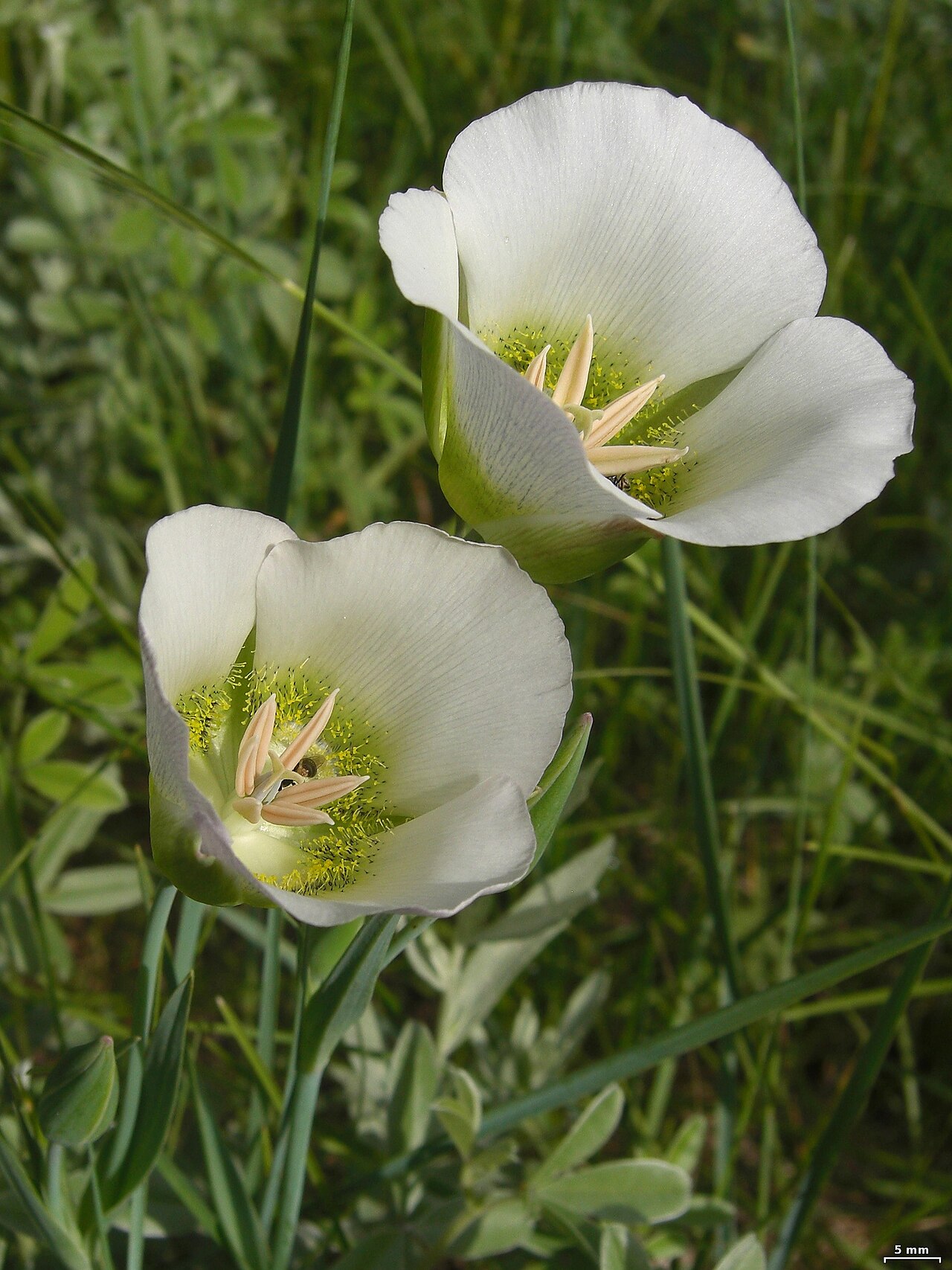
In summer, Gunnison’s mariposa lily is easy to spot: one to a few large, upright, three-petaled cups on slender stems, held above sparse grass-like leaves. Look into the flower for the hairy, yellow-green to purple band and gland at the base of each petal.
Growth Form
A perennial from a small, deep, onion-like bulb. Each plant sends up a single slender, unbranched or sparingly branched stem usually 8 to 20 inches tall, carrying one to three flowers. Plants go dormant soon after seeds ripen, disappearing until the following spring.
Leaves
The leaves are few, narrow and grass-like, 2 to 6 inches long, with one basal leaf that often withers by flowering time and one or two smaller leaves on the stem. Without flowers, the plant is very hard to see among grasses.
Flowers
The flowers are upright, open bell- or cup-shaped, 1½ to 3 inches across, with three broad, rounded petals and three narrower, pointed green sepals. Petals are usually white to cream but range to lavender and rose-purple. Near the base of each petal is a band of yellow-green and often a purple bar or blotch, with a nectar gland covered in yellow or yellowish hairs. Bloom runs from about June to August, depending on elevation.
Fruit & Seeds
The fruit is an erect, narrow, three-angled capsule 1½ to 2½ inches long that dries and splits open to release flat, pale seeds in late summer.
Similar Species
Sego lily (Calochortus nuttallii), the state flower of Utah, grows in drier sagebrush country and has a nearly round, sharply defined gland with few hairs and often a dark purple crescent above it. The Pecos mariposa lily of New Mexico is treated as a variety of this species (var. perpulcher).
Quick Facts
| Scientific Name | Calochortus gunnisonii |
| Family | Liliaceae (lily family) |
| Plant Type | Perennial bulb (wildflower) |
| Mature Height | 8–20 in |
| Mature Spread | 3–6 in |
| Growth Rate | Slow; 3–5 years from seed to bloom |
| Sun Exposure | Full sun to part shade |
| Water Needs | Low to moderate; dry in summer |
| Soil Type | Well-drained loam, gravelly or rocky mountain soils |
| Soil pH | About 6.0–8.0 |
| Bloom Time | June–August |
| Flower Color | White to cream, sometimes lavender or rose-purple |
| Fall Color | None; dormant by late summer |
| Fruit | Erect, three-angled capsules |
| Deer Resistant | No; deer and elk browse the flowers |
| USDA Hardiness Zones | 3–7 |
Native Range
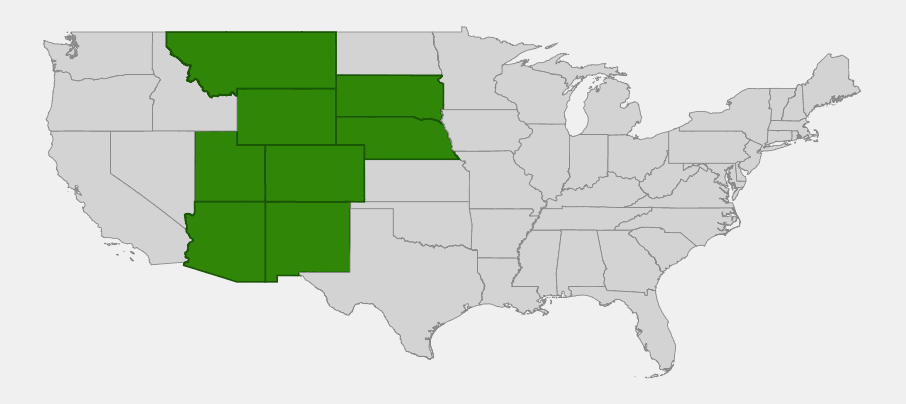
Gunnison’s mariposa lily is native to eight states in the Rocky Mountain region and the western Great Plains: Montana, Wyoming, South Dakota, Nebraska, Colorado, Utah, Arizona and New Mexico. In South Dakota and Nebraska it grows on the western edge of the Plains, including the Black Hills of South Dakota and the northwestern corner of Nebraska.
It is a plant of foothills and mountains, most common at middle and upper elevations from roughly 5,000 to 10,000 feet. It grows in mountain meadows and grasslands, sagebrush openings, aspen groves and the open understory of ponderosa pine and other conifer forests.
Like other mariposa lilies, it grows in places with moist springs and dry late summers. The bulb rests deep in well-drained soil and sends up leaves with the spring moisture, flowers in summer and goes dormant as the soil dries.
📋 Regional plant lists featuring Gunnison’s Mariposa Lily: Montana & Wyoming · Nebraska, Kansas & Eastern Colorado · Utah & Western Colorado · Arizona & New Mexico · North Dakota, South Dakota & Western Minnesota
Growing & Care Guide
Gunnison’s mariposa lily is a wildflower to admire in its native habitat more than a garden plant. It is rarely sold, it is slow to grow from seed, and its bulbs must never be dug from the wild. Gardeners within its range who want to try it can grow it from responsibly collected or purchased seed in a dry, well-drained rock garden.
Light
It grows in full sun to light shade, as in open pine forest or at the edge of aspen groves.
Soil & Water
It needs very well-drained gravelly or loamy soil. The bulbs want moisture in spring and early summer and a dry rest from late summer through winter. Summer irrigation and heavy, wet soils rot the bulbs, so plant it away from watered lawns and beds.
Planting Tips
Sow seed in a rock garden, dry meadow or deep pot of gritty mix, among low bunchgrasses such as Idaho fescue or Arizona fescue. Mark the spot, since seedlings look like blades of grass for several years.
Pruning & Maintenance
Let the foliage wither naturally after flowering so the bulb can store energy. Protect plants from voles, gophers and deer, which eat the bulbs and flowers. Avoid disturbing the soil around dormant bulbs.
Propagation
Grow it from seed. Sow in fall outdoors, or give seed about 2 to 3 months of cold, moist stratification before spring sowing. Seedlings form tiny bulbs and usually take three to five years to bloom. Never dig bulbs from the wild; in many places, such as national parks and other public lands, collecting plants is prohibited.
Landscape Uses
- Where to see it: summer meadows and open pine and aspen forests of the Rockies
- Rock gardens: for patient growers within its range, from seed
- Dry meadow plantings: among native bunchgrasses at higher elevations
- Native plant photography: one of the showiest summer wildflowers of the Rockies
- Restoration seed mixes: adds a native bulb to mountain grassland restorations
Wildlife & Ecological Value
Mariposa lilies are part of the summer wildflower community of western mountains and provide food for a range of insects and animals.
For Pollinators
Bees, especially native solitary bees and bumble bees, as well as beetles and flies, visit the flowers for pollen and for nectar from the hairy glands. The open cups also serve as warm resting spots for small insects on cool mountain mornings.
For Birds
Birds benefit mainly from the insects that visit the flowers. Ground-feeding birds may eat some of the seeds.
For Mammals
Deer and elk browse the flower stalks, and pocket gophers, voles and other rodents eat the bulbs. Black bears and other animals also dig bulbs of wild lilies.
Ecosystem Role
As a summer-flowering bulb, it adds to the diversity of mountain grasslands and open forests and is one of many wildflowers that feed native bees after the spring bloom.
Cultural & Historical Uses
The species was named in 1871 by the American botanist Sereno Watson in honor of Captain John W. Gunnison, a U.S. Army officer and surveyor who explored the central Rockies in the 1850s and was killed in Utah in 1853 while surveying a route for the Pacific Railroad. The Gunnison River, Gunnison County and the city of Gunnison in Colorado are also named for him.
Native peoples of the West gathered and ate the starchy bulbs of mariposa lilies, including the closely related sego lily, which also served as an emergency food for early Mormon settlers in Utah. Wild bulbs should not be harvested today; many mariposa lily populations are small and slow to recover.
The genus name Calochortus comes from Greek words meaning “beautiful grass,” a reference to the grass-like leaves that carry some of the most beautiful flowers in North America.
Frequently Asked Questions
Can I buy Gunnison’s mariposa lily?
It is rarely sold. Look for seed from reputable native seed suppliers in the Rocky Mountain region. Never buy or dig wild-collected bulbs.
Can I dig up the bulbs to move them?
No. The bulbs are deep, sensitive and often fail after transplanting, and wild populations should be left undisturbed. Collecting plants is also prohibited on many public lands.
When does it bloom?
From about June to August. Plants at lower elevations bloom earlier, and those in high mountain meadows bloom in July and August.
How is it different from the sego lily?
The sego lily grows in drier sagebrush and pinyon-juniper country and has a round, sharply outlined gland with few hairs. Gunnison’s mariposa lily grows in moister mountain meadows and forests and has a hairier, less sharply outlined gland.
Where can I see Gunnison’s mariposa lily?
Look in mountain meadows, foothill grasslands and open ponderosa pine and aspen forests from Montana and the Black Hills south to Arizona and New Mexico, in June through August.

Looking for a nursery that carries Gunnison’s Mariposa Lily?
Browse our native plant nursery directory: Arizona · Colorado · Montana · Nebraska & New Mexico · South Dakota & Utah · Wyoming