
Marsh Horsetail (Equisetum palustre)
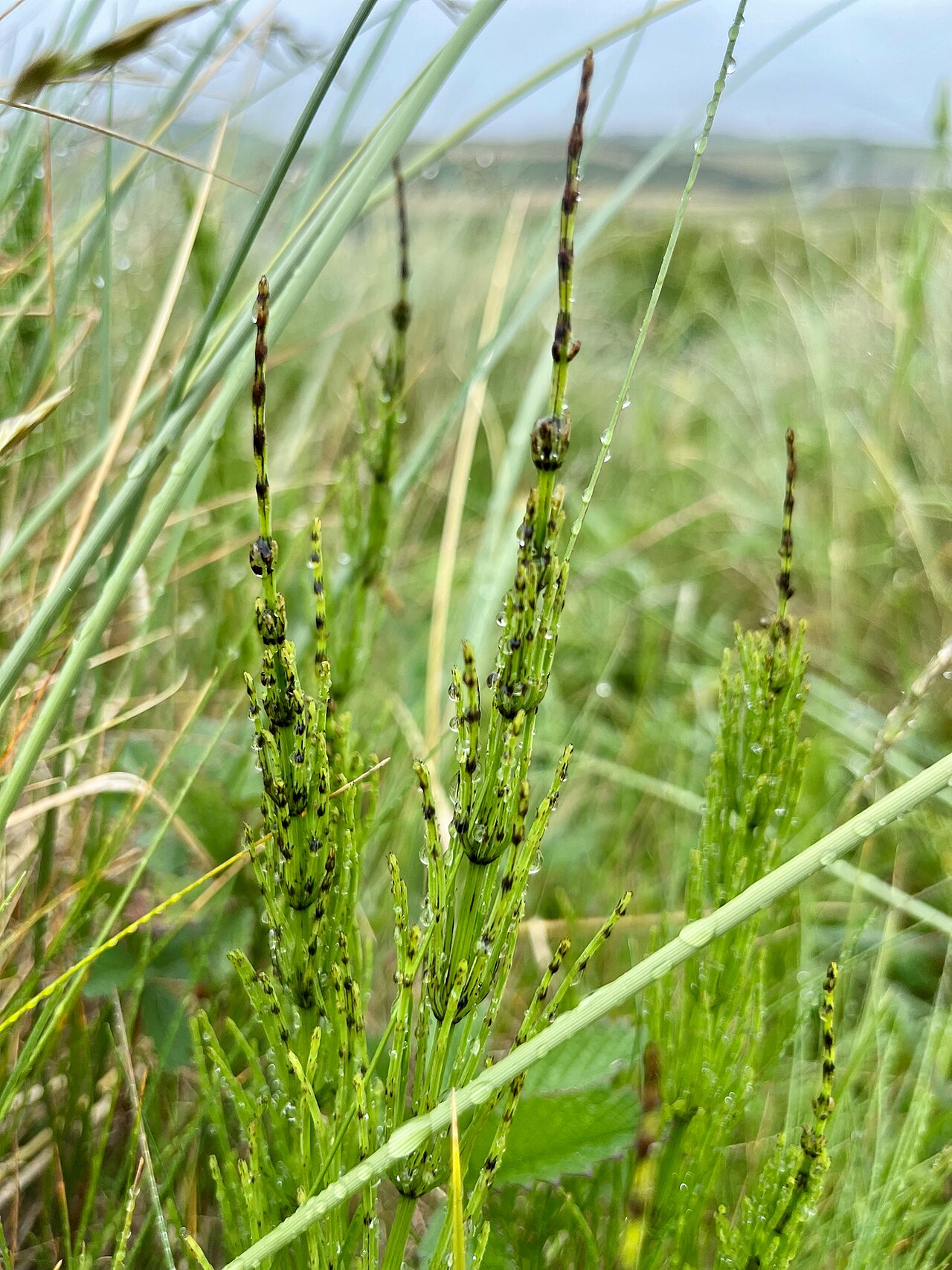
Equisetum palustre, known as Marsh Horsetail, is a slender, jointed, rush-like plant of marshes, wet meadows, lakeshores, ditches and stream banks across the northern half of the world. Its green stems, 8 to 30 inches tall, carry whorls of thin branches at each joint, and in early summer some stems are tipped with small, blunt spore cones. Like all horsetails it reproduces by spores rather than flowers or seeds, and it is grouped with the ferns and their relatives (family Equisetaceae).
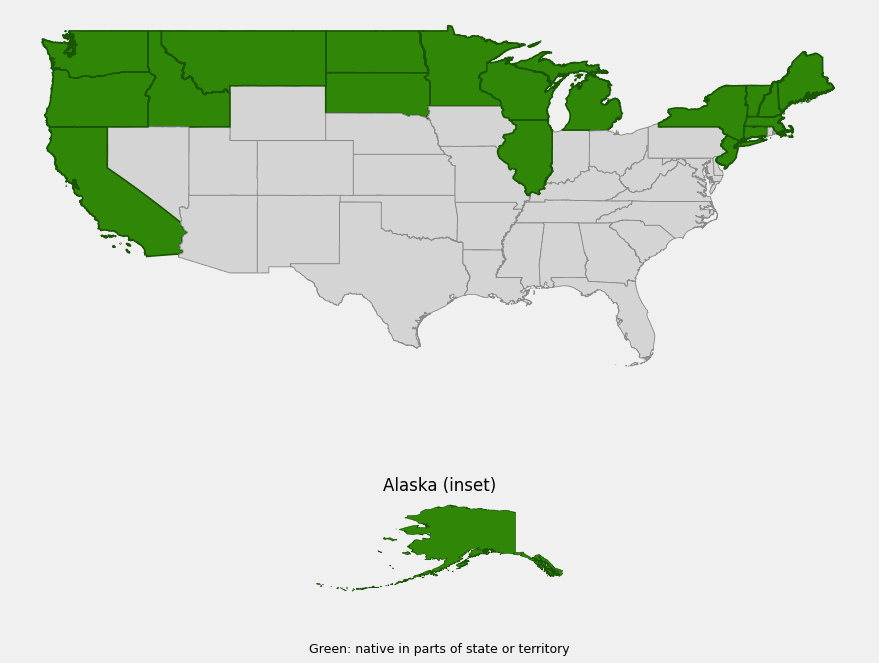
In North America it grows from Alaska and Canada south into the northern United States, from the Pacific states across the northern Rockies and Great Lakes to New England. It is often confused with the much more common Field Horsetail (Equisetum arvense), but its stem sheaths, branch joints and the way it produces its cones are different.
Safety note: marsh horsetail is toxic to livestock. It contains the alkaloid palustrine and, like other horsetails, the enzyme thiaminase, which destroys vitamin B1. Cattle, horses and sheep that eat it, especially in hay from wet meadows, can suffer weight loss, reduced milk yield, weakness, staggering and, in severe cases, death. It is not a food or herbal plant for people or pets. This guide covers identification, range, where it belongs in a landscape, and its ecology.
Identification
Marsh horsetail is a typical branched horsetail, but a few details set it apart: few, broad sheath teeth with white margins, a short first branch segment, a small central hollow, and cones borne on normal green stems.
Stems
The stems are green, 8 to 30 inches tall and about 1/16 to 3/16 inch thick, with 5 to 10 strong ridges, and they die back each winter. The central hollow of the stem is small, only about a sixth of its width or less, while the stem’s outer ring of air canals is relatively large; this is clear in a cross-section. All stems are alike: fertile stems are green and branched like sterile ones, and simply have a cone at the tip.
Sheaths
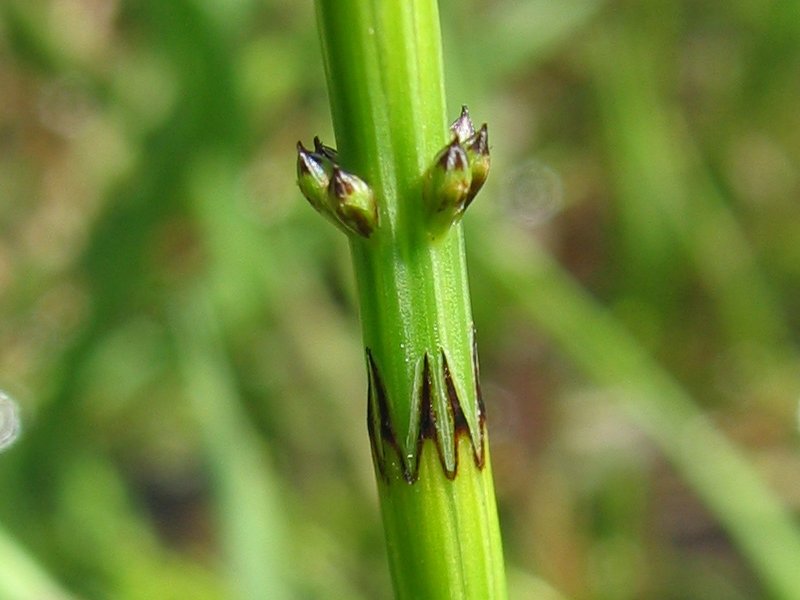
At each joint, a short, green, loose sheath circles the stem, ending in 4 to 12 (usually 5 to 10) triangular teeth. The teeth are black or dark brown with broad, papery white margins and stay on the plant rather than falling off.
Branches
Whorls of slender, usually 4- to 6-ridged, hollow branches grow from most joints, though branching varies from dense to sparse and some stems have almost none. The key feature is the first segment of each branch: it is shorter than the sheath on the main stem next to it. In Field Horsetail the first branch segment is longer than the stem sheath.
Spore Cones & Look-alikes
Blunt-tipped cones ½ to 1¼ inches long form at the tips of some green stems from June to August, releasing green spores. Field horsetail produces its cones in early spring on separate, pale brown, unbranched stems. Water Horsetail (E. fluviatile) grows in deeper water and has a very large central hollow, about four-fifths of the stem width, and many small sheath teeth. Wood Horsetail has branches that are themselves branched, giving a lacy look.
Quick Facts
| Scientific Name | Equisetum palustre |
| Family | Equisetaceae (horsetail family) |
| Plant Type | Rhizomatous perennial horsetail; spore-bearing fern ally |
| Mature Height | 8–30 in |
| Mature Spread | Spreads indefinitely by deep rhizomes |
| Growth Rate | Moderate to fast in wet soil |
| Sun Exposure | Full sun to part shade |
| Water Needs | Wet; saturated soil to shallow standing water |
| Soil Type | Wet mineral soil, muck, peat, sand or gravel |
| Soil pH | About 5.5–8.0; often in neutral to calcareous wetlands |
| Bloom Time | Non-flowering; spore cones June–August |
| Flower Color | None (green spore cones) |
| Fall Color | Stems turn tan and die back |
| Fruit | None; reproduces by spores and rhizomes |
| Deer Resistant | Yes; rarely browsed, and toxic to livestock |
| USDA Hardiness Zones | 1–7 |
Native Range
Marsh horsetail is circumpolar, native across northern Europe, Asia and North America. USDA PLANTS lists it as native in Alaska and in Washington, Oregon, California, Idaho, Montana, North Dakota, South Dakota, Minnesota, Wisconsin, Michigan, Illinois, New York, New Jersey, Vermont, New Hampshire, Maine, Massachusetts and Connecticut. In Canada it grows in every province and territory from Yukon and British Columbia to Newfoundland and Labrador.
It is most frequent in Alaska, the boreal regions of Canada, the northern Great Lakes states and northern New England. Farther south it becomes scattered, and the records from northern California, Illinois, New Jersey and southern New England are outlying populations at the southern edge of its range, often in fens, calcareous marshes or cold, spring-fed wetlands.
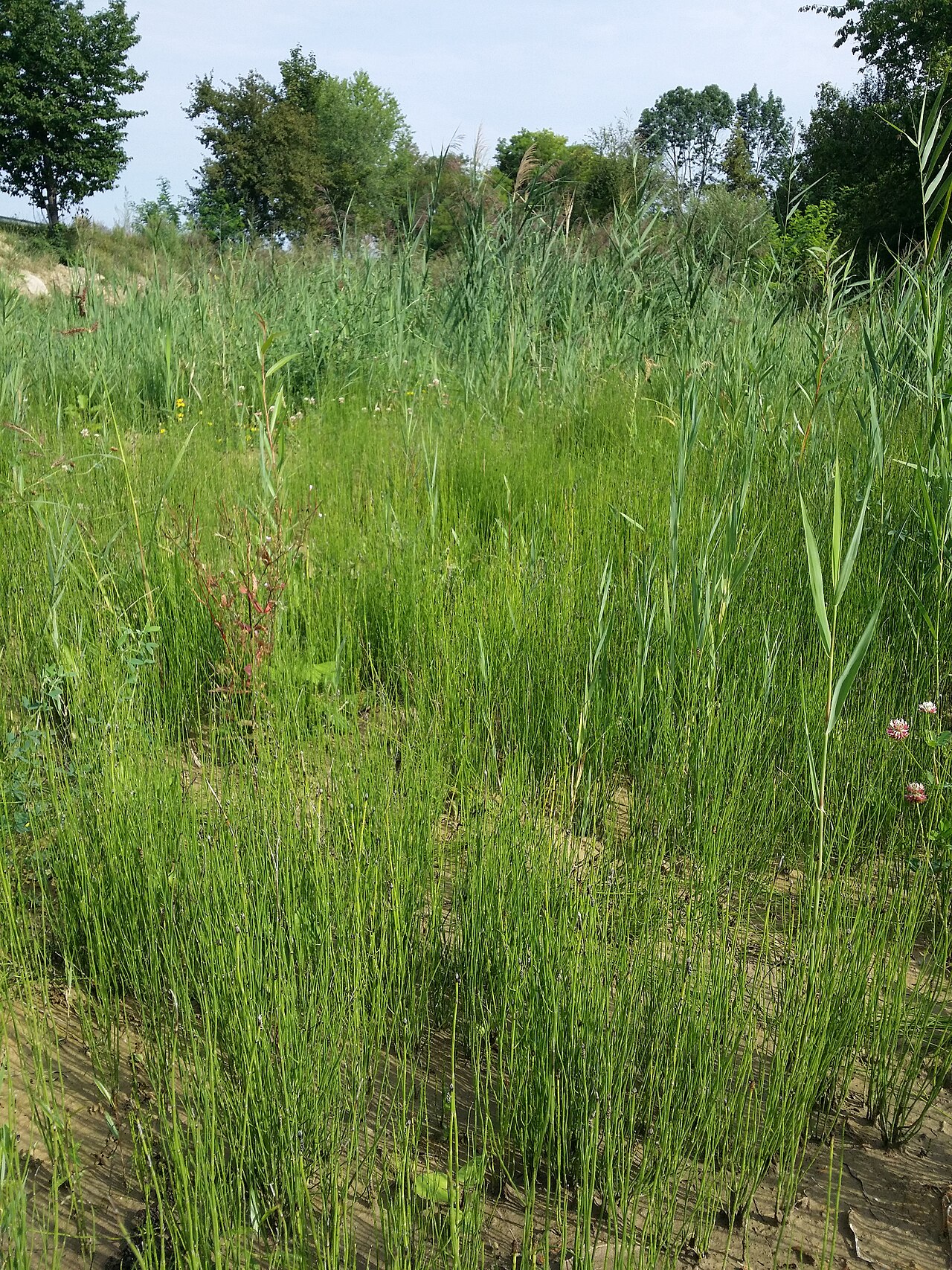
Its habitats include marshes, fens, wet meadows, lakeshores, river and stream banks, ditches, gravel bars and wet, disturbed ground, from near sea level to subalpine elevations in the West. It tolerates seasonal flooding and grows best where the soil stays wet through the summer.
📋 Regional plant lists featuring Marsh Horsetail: Alaska · California & Nevada · Idaho, Eastern Oregon & Eastern Washington · Montana & Wyoming · North Dakota, South Dakota & Western Minnesota · Michigan, Wisconsin & Eastern Minnesota · Illinois, Iowa & Missouri · New York, Pennsylvania & Northern New Jersey · Delaware, Southern New Jersey & Long Island · Connecticut, Massachusetts & Rhode Island · New Hampshire, Maine & Vermont · Western Oregon & Western Washington
Growing & Care Guide
Marsh horsetail is seldom planted on purpose. It is native wetland vegetation that holds soil along wet edges, but its deep, running rhizomes make it hard to control in gardens, and its toxicity makes it a poor choice anywhere near pastures, hay fields or horse paddocks. If you want a horsetail for a pond, consider growing one in a sunken container, and never plant marsh horsetail where livestock graze or hay is cut.
Light
It grows in full sun to part shade, forming the densest stands in open marshes and wet meadows.
Soil & Water
It needs constantly moist to wet soil or shallow water, and it does well in mineral soil, muck, sand or gravel. It is tolerant of neutral to alkaline (calcareous) water. It will not persist in dry garden soil.
Planting Tips
For a water garden or wetland restoration within its native range, plant divisions of rhizome in spring at the water’s edge. In a garden pond, grow it in a submerged pot or a container sunk in the margin to keep the rhizomes from spreading. Keep it well away from grazing areas.
Pruning & Maintenance
Cut back the dead stems in late fall or early spring if desired. Pulling or mowing does not eliminate an established stand, because the rhizomes run deep, often several feet below the surface. On farms, draining wet spots and improving pasture are the usual ways to reduce it.
Propagation
It spreads mainly by rhizomes and is easily propagated by dividing them. Spores are short-lived and need constantly wet, bare soil to grow into tiny independent plants (gametophytes), so propagation from spores is rarely practical.
Landscape Uses
- Wetland restoration: native cover for marsh edges, fens and wet meadows within its range
- Shoreline and ditch stabilization: deep rhizomes bind wet soil and gravel
- Contained water gardens: in pots or sunken containers at pond margins, away from livestock
- Nature study: a living relative of the giant horsetails of the Carboniferous period
Wildlife & Ecological Value
Marsh horsetail is part of the low, dense vegetation of northern wetlands, providing cover and holding wet soils together. It has no flowers and offers little food to most wildlife.
For Pollinators
As a non-flowering plant it provides no nectar or pollen. Its spores are carried by wind.
For Birds
Dense stands give cover to rails, snipe, sparrows and other wetland birds, and waterfowl and geese occasionally graze young shoots.
For Mammals
Wild herbivores generally avoid it, though moose, muskrats and some other wetland mammals may eat horsetails in small amounts. It is toxic to domestic livestock, which are mostly exposed through hay.
Ecosystem Role
Its rhizomes help stabilize stream banks, gravel bars and wet ditches, and it is among the first plants to colonize wet, disturbed ground. Horsetails absorb large amounts of silica, which stiffens the stems and contributes to their roughness.
Cultural & Historical Uses
Linnaeus described Equisetum palustre in 1753. Equisetum comes from the Latin equus, horse, and seta, bristle, for the horse-tail look of the branched stems, and palustre means “of marshes.” Horsetails are the only surviving genus of a group of plants that, over 300 million years ago, included tree-sized species that helped form today’s coal deposits.
Marsh horsetail has long been known to farmers in northern Europe as a problem weed of wet hay meadows, where it is called “Sumpf-Schachtelhalm” in German and is a known cause of livestock poisoning. Researchers have identified the alkaloid palustrine as one of its main toxic components, and its levels are not reduced by drying, so poisoned hay remains dangerous.
Like other horsetails, its silica-rich stems were used in the past for scouring and polishing, although the rougher Scouring Rush (E. hyemale) was the species most often used for that purpose.
Frequently Asked Questions
Is marsh horsetail poisonous?
Yes, to livestock. It contains the alkaloid palustrine and thiaminase, and cattle, horses and sheep that eat it, mostly in hay, can become ill or die. It should not be eaten by people or pets, and it should not be used as an herbal remedy.
How do I tell marsh horsetail from field horsetail?
Look at a branch where it leaves the stem. In marsh horsetail the first branch segment is shorter than the stem sheath; in field horsetail it is longer. Marsh horsetail also has fewer, broader, white-edged sheath teeth and produces cones on green, branched stems in summer, while field horsetail produces cones on separate brown stems in early spring.
Is marsh horsetail native?
Yes. It is native to Alaska, Canada and the northern United States, as well as northern Europe and Asia.
How do I get rid of marsh horsetail in a pasture?
Its rhizomes run deep, so pulling and mowing rarely work. Improving drainage, keeping it out of hay, and consulting your local extension service for control options are the usual approaches. Keep livestock away from dense stands.
Can I grow marsh horsetail in a pond?
You can grow it in a pot or sunken container at the edge of a pond within its native range, but keep it contained, since it spreads aggressively, and never plant it near grazing animals.

Looking for a nursery that carries Marsh Horsetail?
Browse our native plant nursery directory: Alaska · California · Connecticut · Idaho & Illinois · Maine, Massachusetts, Michigan, Minnesota & Montana · New Hampshire, New Jersey, New York & North Dakota · Oregon · South Dakota & Vermont · Washington · Wisconsin

