
Doubleclaw (Proboscidea parviflora)
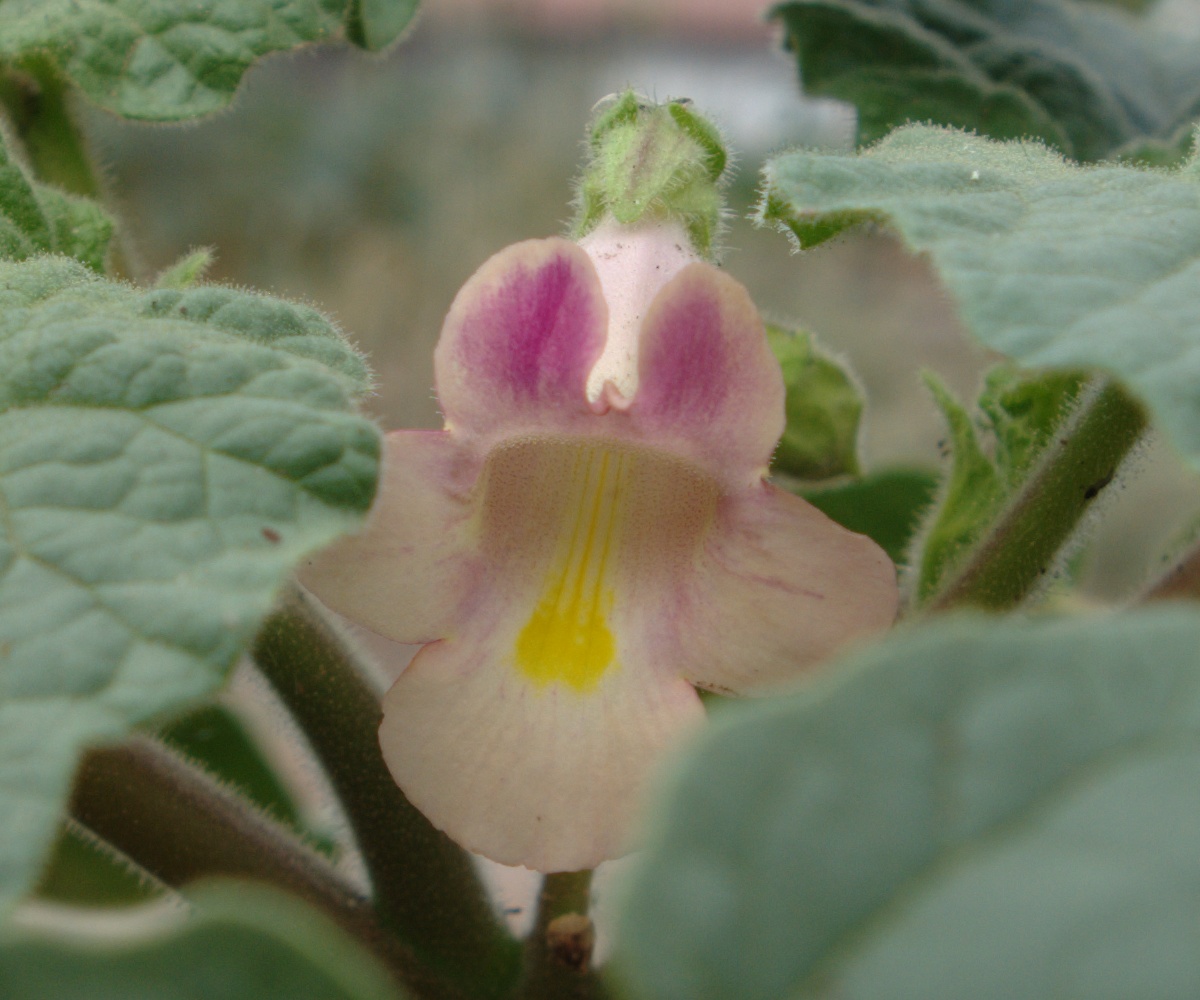
Proboscidea parviflora, called Doubleclaw, red devil’s claw or Sonoran devil’s claw, is a native annual of the desert Southwest best known for its astonishing fruit. Each green, curved pod dries into a woody capsule that splits into two long, hooked black claws, which can snag the feet of passing animals and carry the seeds away. It belongs to the small unicorn-plant family (Martyniaceae).
The plant itself is a sprawling, sticky-hairy annual 1 to 3 feet tall with large, rounded leaves and pink to reddish-purple, foxglove-like flowers marked with a yellow stripe in the throat. It springs up after the summer monsoon rains on sandy flats, washes, roadsides and old fields from western Texas to southern California and northern Mexico, and flowers through the hot season.
Doubleclaw is also one of the most culturally important wild plants of the Southwest. Tohono O’odham, Akimel O’odham and other peoples ate the young pods and seeds, and they selected and grew a cultivated form whose extra-long, jet-black claws are woven into the dark designs of their famous baskets. This guide covers identification, range, growing it from seed, and its long history.
Identification
Two native devil’s claws are common in the Southwest, and they are easiest to separate by their flowers. Doubleclaw has smaller, deeper-colored flowers than common devil’s claw, and its claws are usually much longer than the body of the fruit.
Habit & Stems
Doubleclaw is a warm-season annual from a stout taproot. It forms a low, spreading mound 1 to 3 feet tall and often wider, with thick, branching stems. The entire plant is covered with glandular hairs that feel sticky and give off a strong, somewhat unpleasant odor. Small insects and grains of sand often stick to the foliage.
Leaves
Leaves are mostly opposite, long-stalked, and broadly round to heart-shaped or roughly triangular, up to about 6 inches long. The edges are smooth to shallowly lobed or wavy. Like the stems, they are thick, grayish-green and clammy to the touch.
Flowers
Flowers appear from June to October in loose clusters above the leaves. Each is a two-lipped, bell-shaped tube about 1 to 1½ inches long, flaring into five rounded lobes. They are pink to reddish purple, often paler or white at the base, frequently with darker purple blotches on the upper lobes and a bright yellow nectar guide running down the lower lip. Common devil’s claw (Proboscidea louisianica) has larger flowers that are creamy white to pale lavender with purple and yellow spotting.
Fruit & Seeds
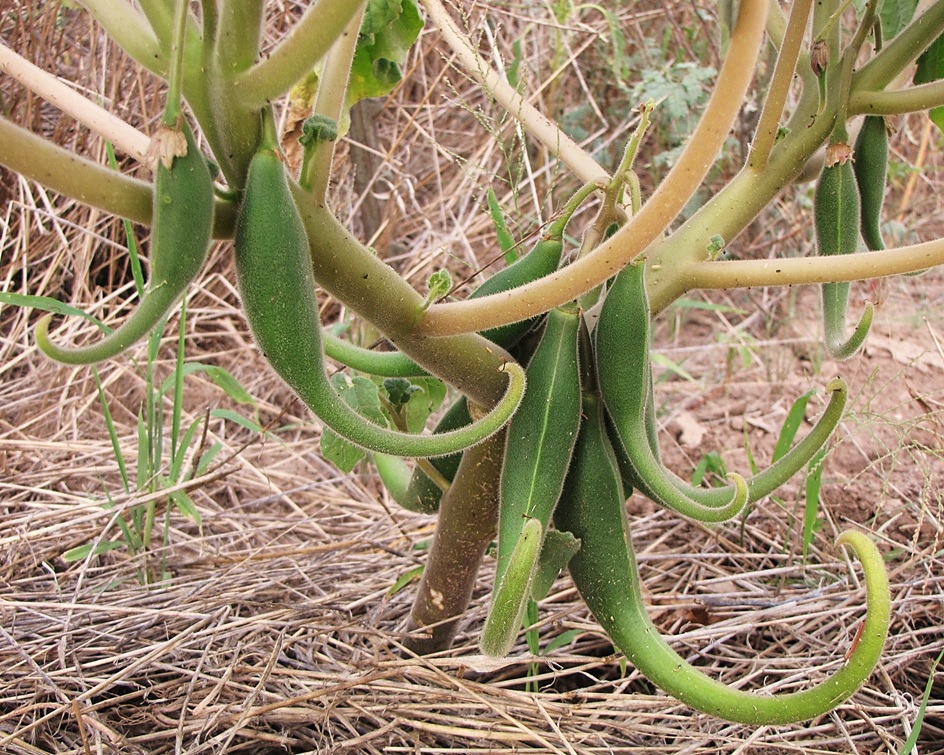
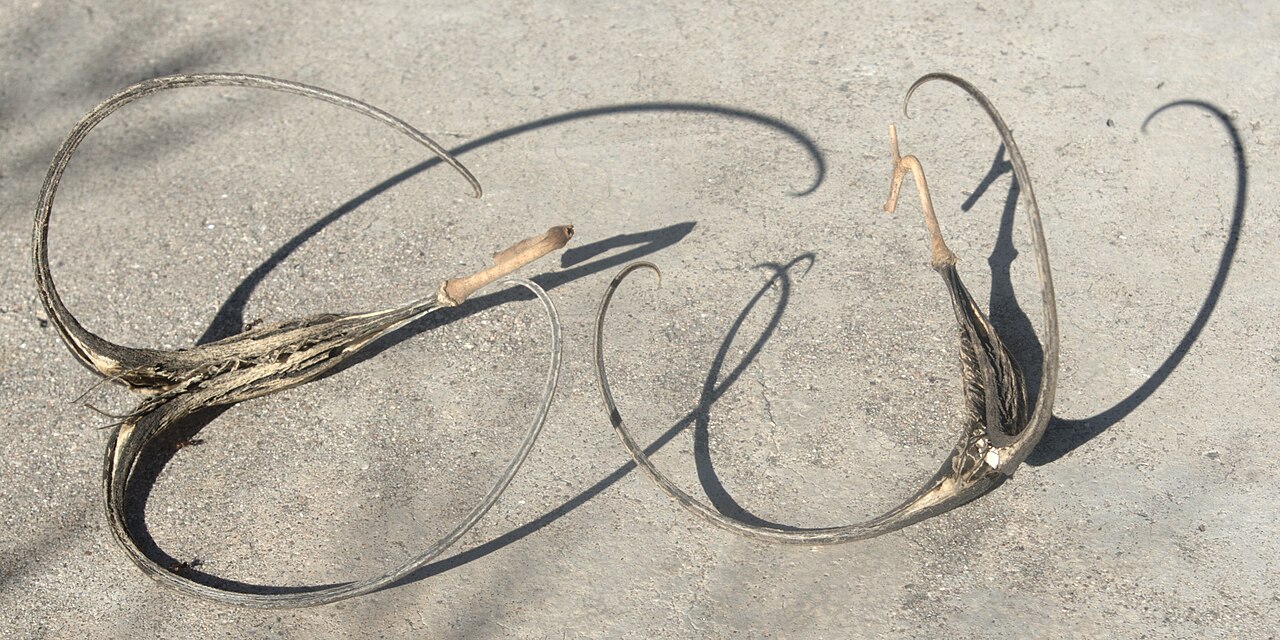
The fruit is the plant’s signature. It begins as a fleshy green pod 4 to 6 inches long or more, with a plump body tapering into a long, curved beak, so the plant is also called unicorn plant. As it ripens, the soft outer layer peels away and the woody inner capsule splits down the beak into two black, hooked claws, often 6 inches or longer. Black (or in cultivated forms, white) seeds rattle out through an opening between the claws as the fruit is carried along.
Quick Facts
| Scientific Name | Proboscidea parviflora |
| Family | Martyniaceae (unicorn-plant family) |
| Plant Type | Warm-season annual herb |
| Mature Height | 1–3 ft |
| Mature Spread | 2–4 ft |
| Growth Rate | Fast |
| Sun Exposure | Full sun |
| Water Needs | Low; grows on summer rains |
| Soil Type | Sandy, gravelly or loamy; well drained, often disturbed |
| Soil pH | About 6.5–8.5 |
| Bloom Time | June–October (after summer rains) |
| Flower Color | Pink to reddish purple with a yellow nectar guide |
| Fall Color | None; plants die with frost |
| Fruit | Curved green pod drying to two long, black, hooked claws |
| Deer Resistant | Yes; the sticky, smelly foliage is rarely eaten |
| USDA Hardiness Zones | Annual; grows anywhere with a long, hot summer (best in zones 7–11) |
Native Range
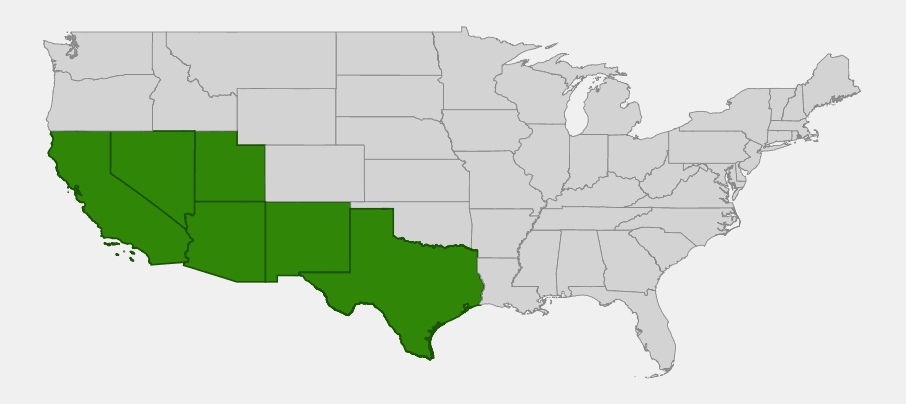
Doubleclaw is native to the desert Southwest of the United States and northwestern Mexico. USDA PLANTS records it from six states: Arizona, New Mexico, western Texas, southern California, southern Nevada and southern Utah. In Mexico it ranges through Sonora, Chihuahua and nearby states.
It is most abundant in the Sonoran and Chihuahuan Deserts and adjacent desert grasslands of southern Arizona and southern New Mexico, where summer monsoon rains trigger mass germination. In Texas it grows mainly in the Trans-Pecos region of far West Texas. The California, Nevada and Utah records are at the edges of its range, in hot desert lowlands.
Because people have carried and planted it for centuries, it is not always easy to tell wild stands from old garden escapes. The white-seeded cultivated form, sometimes named var. hohokamiana, was selected by Native American farmers and is grown in gardens far from its source.
📋 Regional plant lists featuring Doubleclaw: Arizona & New Mexico · California & Nevada · Utah & Western Colorado · South & West Texas
Growing & Care Guide
Doubleclaw is easy to grow from seed wherever summers are long and hot. It is grown both as a curiosity and as a traditional crop, and seed of wild and cultivated forms is available from Southwest seed-saving organizations and native seed companies.
Light
Full sun is essential. Doubleclaw is a desert summer annual and sulks in shade or cool weather.
Soil & Water
Grow it in well-drained sandy or loamy soil. It tolerates poor and alkaline soils and needs no fertilizer. In the low desert, water it regularly until it is established, then deeply every week or two in dry spells. It grows best when planted to coincide with the summer rainy season. Avoid heavy, constantly wet soil, which causes root rot.
Planting Tips
Sow seeds directly in the garden once the soil is warm, usually late May to July in the Southwest. Germination is slow and erratic because of the hard seed coat. Nicking or carefully cracking the seed coat and soaking seeds overnight speeds germination. Space plants 3 feet apart, as they sprawl widely.
Pruning & Maintenance
No pruning is needed. Pick young green pods while they are about 3 inches long and still tender if you want to eat them. Leave others to mature and dry on the plant if you want claws or seed. Wear gloves when handling the sticky plants and the sharp dry claws.
Propagation
Propagate only from seed. Collect seed from fully dried claws in fall, shake it out through the opening between the claws, and store it dry. Seed remains viable for several years.
Landscape Uses
- Desert gardens: a fast summer annual for hot, dry, sunny spots
- Edible and heritage gardens: young pods are cooked like okra; seeds are edible
- Craft and basketry gardens: grown for the long black claws used in Native American basketry
- Children’s and curiosity gardens: the claw-shaped fruits are fascinating to all ages
- Pollinator gardens: summer flowers feed native bees during the monsoon season
Wildlife & Ecological Value
Doubleclaw has an unusual relationship with animals. Its flowers feed bees, and its fruits are designed to be carried off by them.
For Pollinators
The large, nectar-rich flowers are pollinated mainly by bees, especially larger native bees such as bumblebees and carpenter bees, which crawl into the tube guided by the yellow stripe. The stigma has two sensitive lobes that close when touched, a feature thought to help ensure that pollen delivered by a visiting bee is retained.
For Birds
Doubleclaw is not an important bird food. Seed-eating birds may pick up seeds spilled from the dry claws, and the leafy mounds give some shade and cover to ground-foraging birds in otherwise bare summer desert.
For Mammals
The dry claws are built to hook onto the legs and hooves of large mammals. Seeds are shaken out as the animal walks, spreading the plant along trails and washes. Some botanists think this design evolved for now-extinct large mammals of the Ice Age; today livestock, deer and people do the job. Rodents eat the oily seeds.
Ecosystem Role
As a fast-growing summer annual, doubleclaw quickly covers disturbed and bare ground after monsoon rains, helping to shade the soil and offering nectar at a season when many perennials are dormant. Its sticky foliage traps small insects, but it is not considered a carnivorous plant.
Cultural & Historical Uses
For Tohono O’odham, Akimel O’odham and other peoples of the Sonoran Desert, devil’s claw (in O’odham, ihug) is a treasured plant. Young pods were cooked and eaten, and the oily seeds were eaten as well. Most important, the long black fibers stripped from the dry claws provide the black color in coiled baskets, woven alongside white yucca and bear grass.
Basket makers selected and grew forms with especially long claws and with white seeds, which distinguish a domesticated form from wild plants. Botanists consider it one of the few crops domesticated within what is now the United States. The cultivated form has been called var. hohokamiana, a name that honors the ancient Hohokam culture of southern Arizona.
Doubleclaw also has a darker reputation among ranchers, because the hooked claws can cling to the legs and muzzles of livestock. Today seed-saving organizations in the Southwest keep traditional strains of devil’s claw in cultivation, and the claws remain in demand among basket weavers.
Frequently Asked Questions
What is the difference between doubleclaw and common devil’s claw?
Doubleclaw (Proboscidea parviflora) has smaller, pink to reddish-purple flowers, and its claws are usually longer than the body of the fruit. Common devil’s claw (Proboscidea louisianica) has larger, creamy white to pale lavender flowers and grows across a much wider area of the Great Plains and South. See our common devil’s claw guide.
Is doubleclaw edible?
Yes. The young green pods, picked when tender, are cooked like okra, and the seeds are eaten raw or roasted. Mature pods are woody and inedible.
How do I grow devil’s claw from seed?
Sow seeds in warm soil in full sun in late spring or early summer. Nick the hard seed coat and soak the seeds overnight to speed germination, which can still take a few weeks.
Why is it called doubleclaw?
When the fruit dries, its long curved beak splits into two hooked halves, so each fruit carries a pair of claws.
Is doubleclaw a weed?
It is a native annual that likes disturbed ground, so it often appears in fields and along roads in the Southwest. The dry claws can be a nuisance for livestock, but it is not considered an invasive species.

Looking for a nursery that carries Doubleclaw?
Browse our native plant nursery directory: Arizona · California · Nevada & New Mexico · Texas & Utah

