
Yellow Rattle (Rhinanthus minor)
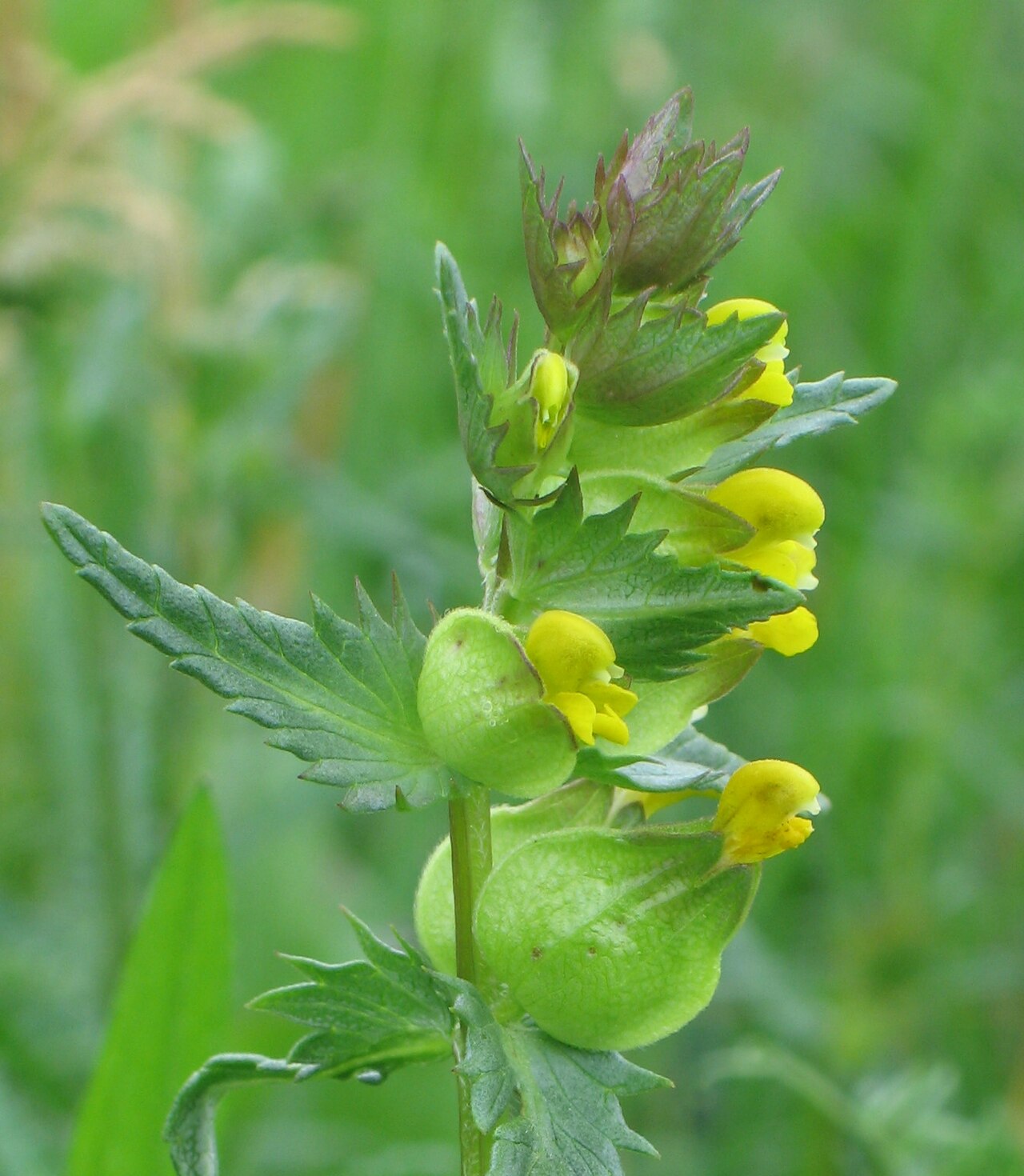
Rhinanthus minor, known as Yellow Rattle or little yellow rattle (and in Britain as hay rattle), is a small annual wildflower in the broomrape family (Orobanchaceae). It grows 4 to 20 inches tall, with paired, toothed leaves and hooded yellow flowers that sit in flattened, balloon-like green calyces. When the seed pods dry in late summer, the loose seeds rattle inside them, which is where the name comes from.
Yellow rattle is a hemiparasite. It has green leaves and makes its own sugars, but its roots also tap into the roots of nearby grasses and other plants and take water and nutrients from them. This weakens vigorous grasses, which is why meadow makers sow it to open up dense turf so wildflowers can get established. It is grown only from fresh seed sown directly into grass, not as potted transplants.
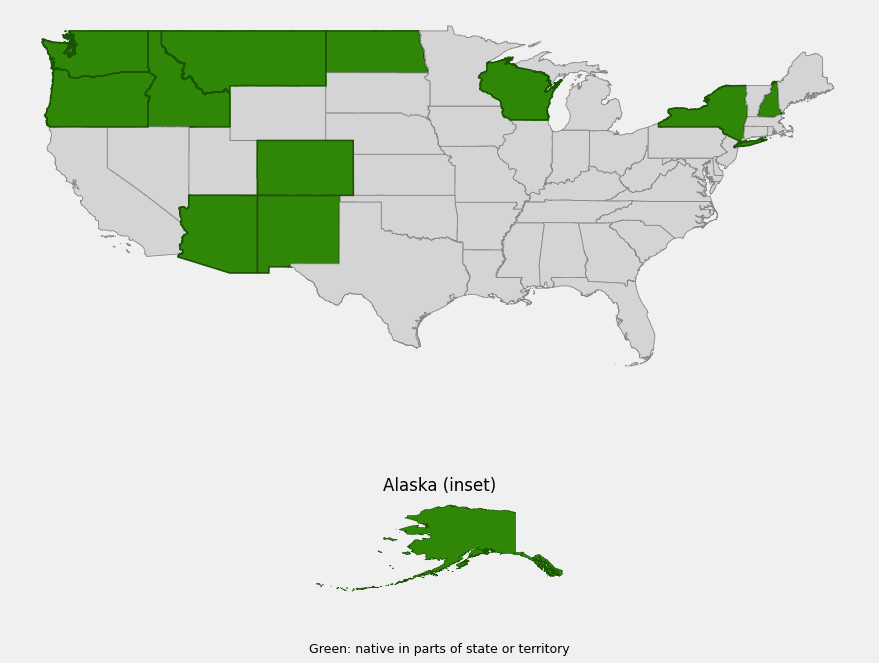
It grows across Alaska and Canada and south in the mountains of the West, with native populations in the U.S. from the Pacific Northwest and the Rockies to North Dakota, Wisconsin, New York and the alpine zone of New Hampshire. In much of New England the lowland meadow plants are considered introduced from Europe, a point worth knowing before you buy seed.
Identification
Look for an upright annual with paired, toothed, stalkless leaves and yellow, two-lipped flowers held in flattened, inflated green calyces in the upper leaf axils, in grassy places in early to midsummer.
Growth Habit
Yellow rattle is a slender, upright annual, usually 4 to 20 inches tall, with a single stem or a few side branches. The stem is often streaked or spotted with dark purple. It germinates in early spring, flowers in early summer and dies after setting seed, so a stand persists only if it reseeds every year.
Leaves
The leaves are opposite and stalkless, narrowly oblong to lance-shaped, about 1 to 2 inches long, with coarse, regular teeth along the edges. They feel rough and are often a dull dark green.
Flowers
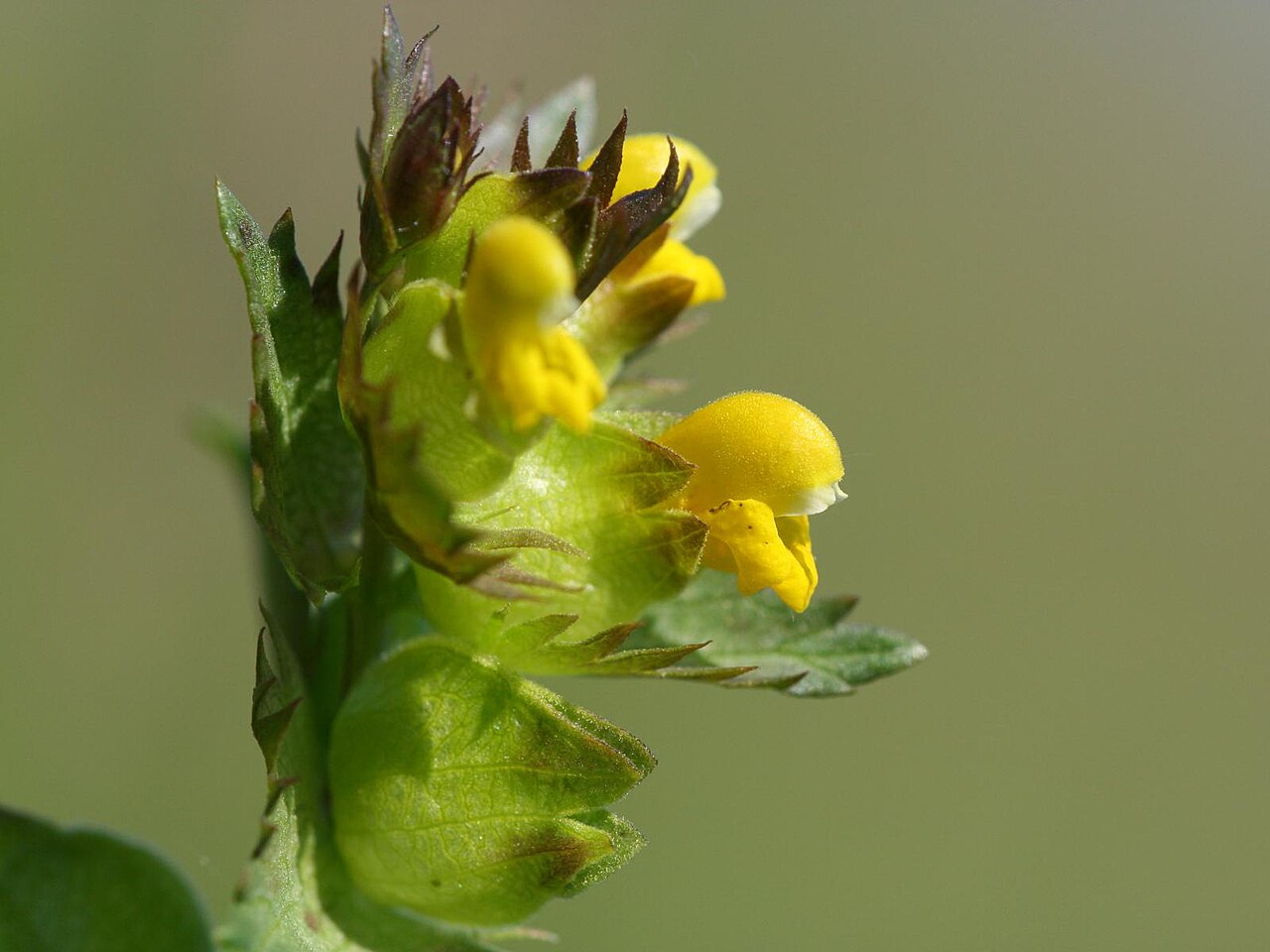
The flowers grow in a leafy spike at the top of the stem, each sitting above a toothed, leaf-like bract. The corolla is bright yellow, about half an inch long, and two-lipped: a hooded upper lip with two tiny teeth, usually violet or whitish, and a three-lobed lower lip. The green calyx below each flower is flattened and inflated, and grows larger as the fruit ripens. Bumblebees open the flowers to reach the nectar. It blooms mainly from June to August.
Fruit & Seeds
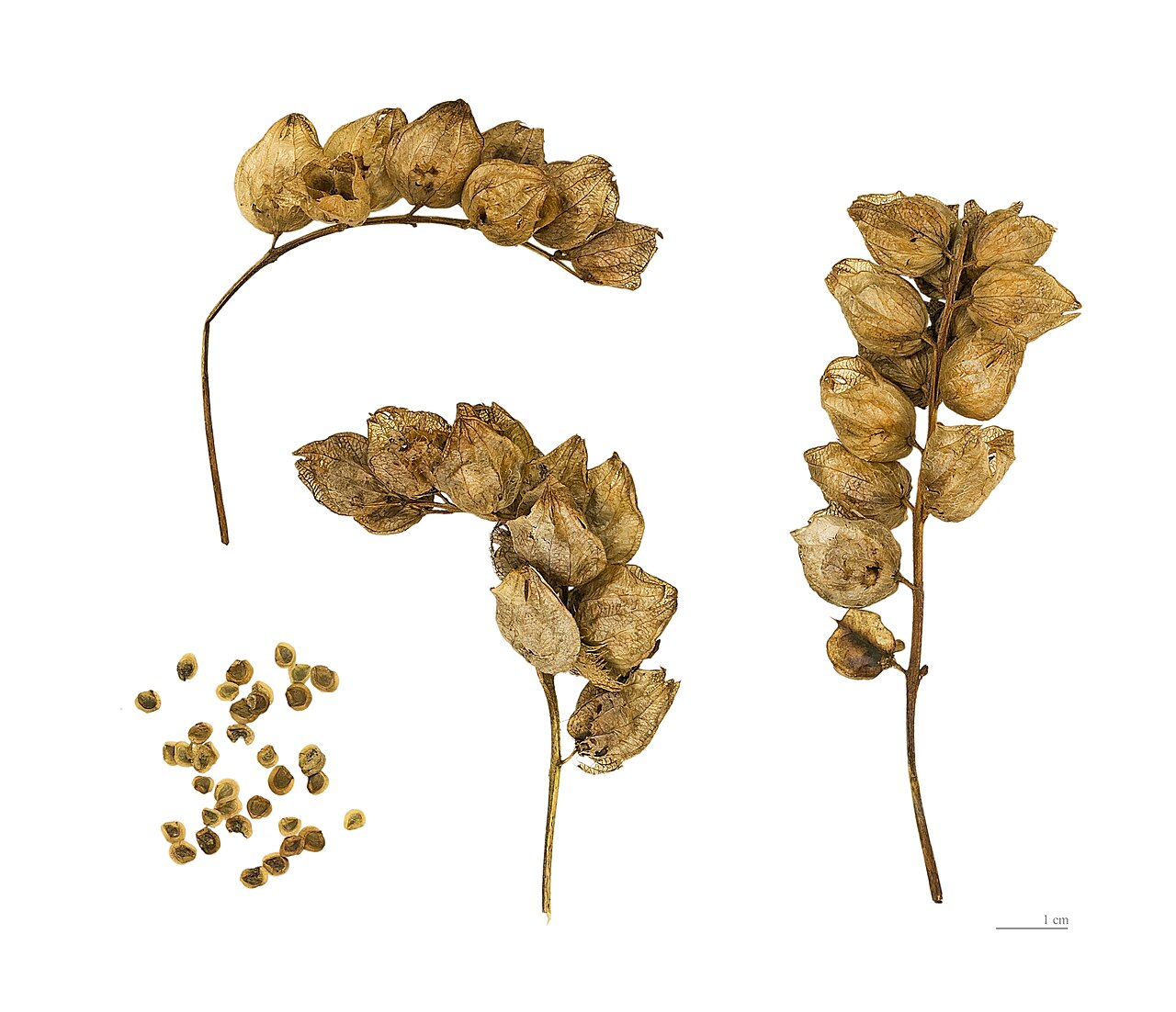
The fruit is a round, flattened capsule enclosed in the papery calyx. Each capsule holds a few flat, winged seeds that rattle when the dry stems are shaken in late summer. The seeds drop close to the parent plant, so colonies spread slowly.
Look-alikes
The related narrowleaf cow-wheat is another annual hemiparasite of the broomrape family, but it grows in woods and has narrow white and yellow flowers without an inflated calyx. Louseworts, such as bracted lousewort, also have hooded flowers but are perennials with fern-like, divided leaves. The European greater yellow rattle (Rhinanthus angustifolius) is larger, with longer teeth on the upper lip, and is sometimes sold as meadow seed. Yellow rattle’s inflated calyx and rattling pods are the best field marks.
Quick Facts
| Scientific Name | Rhinanthus minor |
| Family | Orobanchaceae (broomrape family) |
| Plant Type | Annual wildflower; hemiparasite on grasses and other plants |
| Mature Height | 4–20 in |
| Mature Spread | 3–6 in |
| Growth Rate | Fast (one-season annual) |
| Sun Exposure | Full sun |
| Water Needs | Moderate |
| Soil Type | Grassy meadow soils of low to moderate fertility; loam, sandy or gravelly |
| Soil pH | Slightly acid to slightly alkaline (about 5.5–7.5) |
| Bloom Time | June–August |
| Flower Color | Yellow |
| Fall Color | None (dies after seeding) |
| Fruit | Flattened capsule with winged seeds that rattle |
| Deer Resistant | Unknown; seldom browsed |
| USDA Hardiness Zones | 2–7 (needs winter cold to germinate) |
Native Range
Yellow rattle is a circumboreal plant of Europe, northern Asia and northern North America. In North America it ranges across Canada from Newfoundland and Labrador to British Columbia, Yukon, the Northwest Territories and Nunavut, and through much of Alaska. USDA PLANTS lists it as native in Alaska and in Arizona, Colorado, Idaho, Montana, New Mexico, North Dakota, New Hampshire, New York, Oregon, Washington and Wisconsin. The Arizona and New Mexico records are outlying mountain populations at the southern edge of its range.
The plant is variable, and two subspecies are recognized in the Northeast. The native subspecies groenlandicus grows in open alpine places above treeline; in New England, Go Botany (Native Plant Trust) knows it only from New Hampshire, where it is of conservation concern, and NatureServe also lists it as rare in New York. The European subspecies minor is introduced in lowland fields and roadsides of Connecticut, Massachusetts, Maine, New Hampshire and Vermont, so those meadow populations are not counted as native here.
In the West and North it grows in mountain and subalpine meadows, grassy slopes, streamsides, forest openings, fields and roadsides, often with fescues, hairgrasses and bluegrasses. It favors open, grassy ground where the turf is not too dense or heavily fertilized.
📋 Regional plant lists featuring Yellow Rattle: Alaska · Arizona & New Mexico · Idaho, Eastern Oregon & Eastern Washington · Western Oregon & Western Washington · Montana & Wyoming · North Dakota, South Dakota & Western Minnesota · Michigan, Wisconsin & Eastern Minnesota · New Hampshire, Maine & Vermont · New York, Pennsylvania & Northern New Jersey · Delaware, Southern New Jersey & Long Island
Growing & Care Guide
Yellow rattle is not a bedding plant. It is an annual hemiparasite that has to be sown as fresh seed directly into existing grass in fall, so it can attach to the roots of the grasses around it. Potted transplants rarely survive. Seed is widely sold for meadow making, but much of it comes from Europe; where you can, use seed of North American origin, and in New England remember that lowland meadow plants are considered introduced.
Light
Full sun. It grows in open meadows and fails under trees or in tall, shading grass.
Soil & Water
Any ordinary meadow soil that is not too rich. It does best in low to moderate fertility, where grasses are not too lush. Normal rainfall is enough in cool climates; it does not need watering once established, but it dislikes hot, dry summers and is best suited to northern and mountain regions.
Planting Tips
Sow fresh seed (harvested the same year) from late summer to early winter. The seed needs about three to four months of winter cold before it germinates in early spring, and it loses viability within a year, so don’t store it. Mow or graze the grass very short first and rake or scarify the turf hard so that at least half the area is bare soil, then scatter the seed and press it in by walking over it. Don’t cover it with soil. Seedlings appear in early spring and attach to grass roots as they grow.
Pruning & Maintenance
Leave the meadow uncut until the pods rattle and the seed has dropped, usually July or August, then cut and remove the hay. Repeat each year: because it is an annual, a late mowing that lets it set seed is what keeps a stand going. Over a few years it weakens the grass and makes room for perennial wildflowers. Don’t sow it into lawns or pastures where you want strong grass growth.
Propagation
From seed only. Collect ripe seed from dry, rattling pods in late summer and sow it the same fall. Never dig wild plants; they are annuals that cannot be moved, and digging does nothing but destroy them. Collect only a small share of seed from wild stands, with permission.
Landscape Uses
- Meadow making: sown into turf to weaken dominant grasses and open space for wildflowers
- Lawn-to-meadow conversions: used with late mowing to turn a grassy area into a flowery meadow
- Pollinator gardens: an early-summer nectar source for bumblebees
- Mountain and northern restoration: part of native subalpine and boreal meadow plantings where it grows naturally
Wildlife & Ecological Value
Yellow rattle matters to meadows more for what it does to grasses than for its flowers. By tapping into grass roots it reduces their growth, which lets slower wildflowers, and the insects that use them, gain a foothold.
For Pollinators
The flowers are pollinated mainly by bumblebees, which are strong enough to push between the lips to reach the nectar. Some bees also rob nectar by chewing through the corolla tube. It flowers in early summer, filling the gap between spring and late-summer bloom in northern meadows.
For Birds
The flat seeds fall close to the plant and are a minor food for ground-feeding birds. The more varied meadow it helps create offers more insects and seeds for birds.
For Mammals
It is not an important browse plant. In Europe it was long known as a pest of hay meadows because it lowers hay yields, and farmers tried to keep it out of fields grown for hay.
Ecosystem Role
As a hemiparasite, yellow rattle is a natural regulator of grassland plant communities. Its haustoria, small root connections, attach to the roots of grasses and some legumes and draw off water and nutrients, which reduces the vigor of dominant grasses and increases the variety of other plants. Its soft, fast-decaying leaves also return nutrients to the soil.
Cultural & Historical Uses
The genus name Rhinanthus comes from the Greek for nose and flower, from the beak-like shape of the hooded upper lip. Minor means smaller, setting it apart from the larger European yellow rattle. Old English names include hay rattle, rattlebox and cockscomb.
In European farming tradition, the rattle of the dry pods was a sign that the hay meadows were ready to cut. Farmers mostly regarded it as a weed because it cut hay yields, but since the late 20th century conservationists and gardeners have turned that habit into a tool, sowing it to restore wildflower meadows.
Yellow rattle was long placed in the figwort family (Scrophulariaceae). DNA studies moved it, along with paintbrushes, louseworts and cow-wheats, into the broomrape family (Orobanchaceae), which contains both fully parasitic plants and green hemiparasites like yellow rattle.
Frequently Asked Questions
Is yellow rattle a parasite?
Yes, partly. It is a hemiparasite: it has green leaves and photosynthesizes, but its roots attach to the roots of grasses and other plants and take water and nutrients from them. That is why it weakens grass and helps wildflowers.
Can I buy yellow rattle plants?
It is grown from seed, not transplants. Sow fresh seed in fall directly into short-mown, raked grass; it needs winter cold to germinate and must have grass roots nearby to grow.
Will yellow rattle kill my lawn?
It won’t kill grass, but it can weaken it noticeably, which is the point in a meadow. Don’t sow it in lawns or pastures where you want thick grass.
Is yellow rattle native to the United States?
Yes, in Alaska, the Northwest, the Rockies, the northern Plains, Wisconsin, New York and the alpine zone of New Hampshire. In lowland New England, meadow plants are considered introduced from Europe.
Why does yellow rattle disappear from my meadow?
It is an annual, so it returns only if it sets seed. Mow too early, before the pods rattle, and the next year’s plants are lost. Very dense or fertile grass can also crowd it out.

Looking for a nursery that carries Yellow Rattle?
Browse our native plant nursery directory: Alaska & Arizona · Colorado · Idaho · Montana · New Hampshire, New Mexico, New York & North Dakota · Oregon · Washington · Wisconsin

