
Bracted Lousewort (Pedicularis bracteosa)
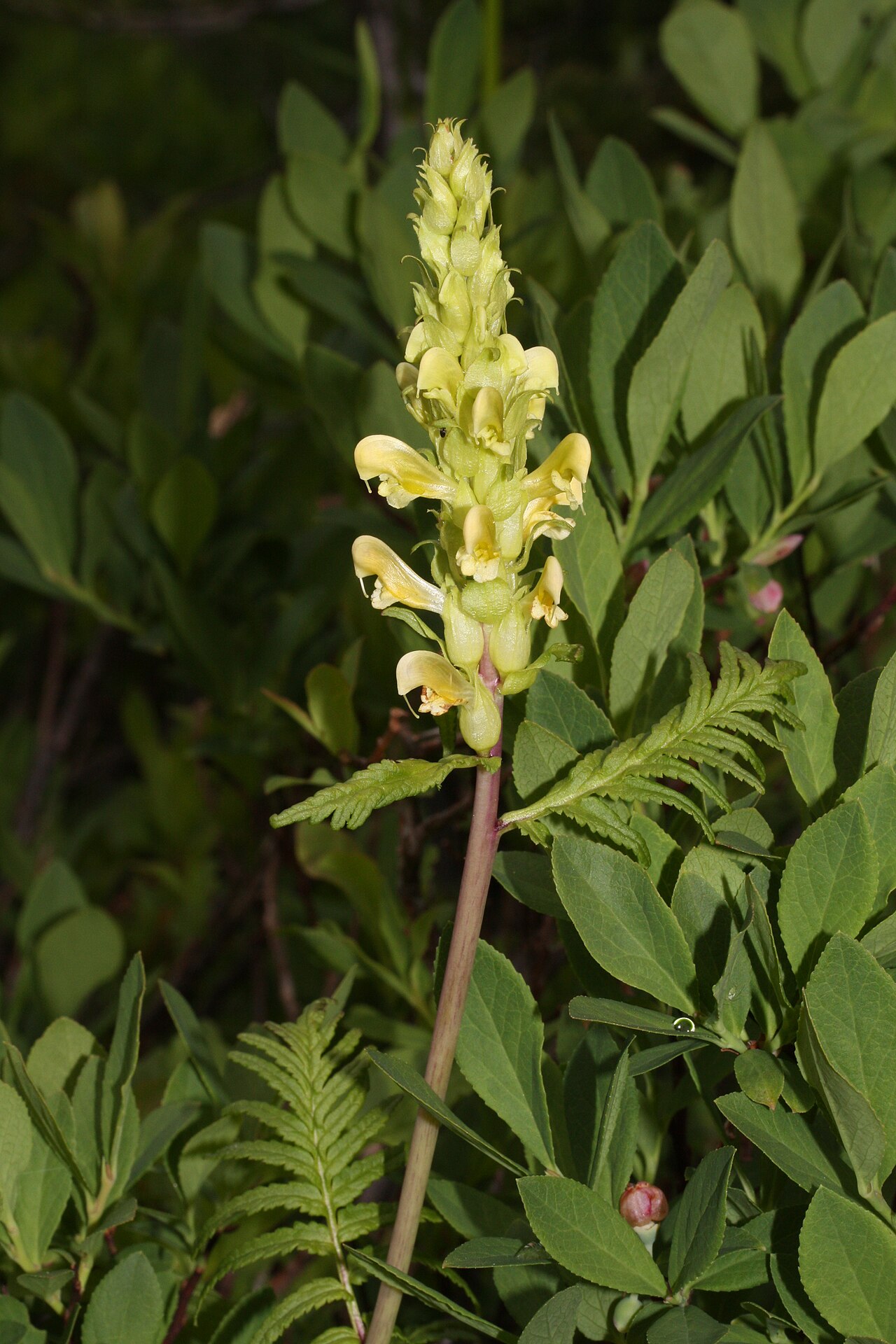
Pedicularis bracteosa, known as Bracted Lousewort, towering lousewort or fernleaf, is a tall wildflower of moist mountain meadows and forest openings in western North America. It grows from a cluster of fibrous roots into leafy stems up to about 3 feet tall, with large, finely divided, fern-like leaves. In summer each stem ends in a dense spike of beaked, two-lipped flowers, usually pale yellow but in some places bronze, red or purplish, tucked among conspicuous leafy bracts that give the plant its name.
Like all louseworts, it belongs to the broomrape family (Orobanchaceae) and is a hemiparasite. Its green leaves make their own food, but its roots also attach to the roots of neighboring plants and take water and nutrients from them. That partnership is the main reason it is almost never seen in gardens: it depends on a living community of host plants and on the cool, moist conditions of the high country.
For hikers in the Cascades, the Rockies and the northern Sierra, bracted lousewort is one of the signature flowers of the subalpine wildflower season, often growing with lupines, valerian and paintbrush. This guide covers how to identify it, where it grows, why it is best enjoyed in the wild, and its role as a bumblebee flower in mountain meadows.
Identification
Bracted lousewort is one of the tallest louseworts in the West. The combination of big, fern-like leaves on the stem and a long, dense spike of beaked flowers with leafy bracts is distinctive.
Stems & Growth Habit
Plants form a clump of one to several stout, unbranched stems from a short root crown with fleshy, fibrous roots. Stems are usually 1 to 3 feet tall in flower, with leaves spaced along their whole length rather than only at the base. Plants die back to the ground each fall.
Leaves
The leaves are alternate, lance-shaped in outline and divided all the way to the midrib into many narrow, toothed segments, so each leaf looks like a small fern frond. The lower leaves can be 6 inches long or more, and the leaves get smaller toward the top of the stem. They are largely hairless and stay green through the summer.
Flowers
The flowers are crowded into a dense, cylindrical spike 2 to 8 inches long at the top of the stem. Each flower is about ½ to ¾ inch long, with a hooded, slightly arched upper lip (the galea) that ends in a short beak, and a smaller three-lobed lower lip. Narrow, leafy bracts stick out between the flowers, giving the spike a shaggy look. Color varies by region and variety: most plants are pale yellow or greenish yellow, while some populations, especially in the northern Rockies and Cascades, have purplish-red or bronze flowers. Bloom is from June to August, following snowmelt.
Fruit & Seeds
Each flower produces a flattened, slightly curved capsule about ½ inch long that splits to release several small seeds. The stiff fruiting spikes, turning brown, often stay standing into fall and are easy to spot among the meadow grasses.
Look-alikes
Sickletop lousewort (Pedicularis racemosa) shares its forest habitat but has undivided, toothed leaves and white or pink flowers with a sickle-shaped, twisted beak. Elephant’s head (P. groenlandica) has pink flowers shaped like tiny elephant heads and grows in wetter, boggy sites. The eastern Canadian lousewort is much shorter, with a compact head of flowers. Out of flower, the leaves can be mistaken for a fern, but ferns never have a central flowering stem.
Quick Facts
| Scientific Name | Pedicularis bracteosa |
| Family | Orobanchaceae (broomrape family; formerly in Scrophulariaceae) |
| Plant Type | Herbaceous perennial; hemiparasitic on the roots of other plants |
| Mature Height | 1–3 ft |
| Mature Spread | 1–1.5 ft |
| Growth Rate | Slow |
| Sun Exposure | Full sun to part shade |
| Water Needs | Medium to high (moist through the growing season) |
| Soil Type | Moist, humus-rich mountain soils |
| Soil pH | Acidic to neutral |
| Bloom Time | June–August |
| Flower Color | Pale yellow; sometimes bronze, red or purplish |
| Fall Color | None of note |
| Fruit | Flattened capsule with several small seeds |
| Deer Resistant | Moderate |
| USDA Hardiness Zones | 3–7 |
Native Range
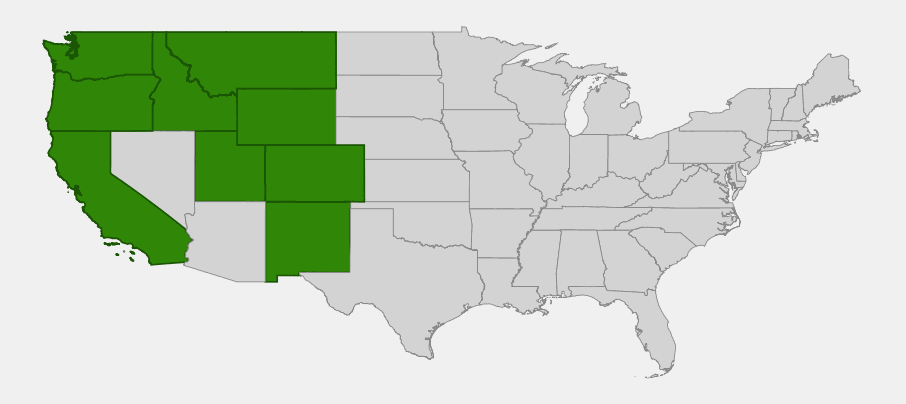
Bracted lousewort is a plant of the western mountains. USDA PLANTS lists it as native in nine states: Washington, Oregon, California, Idaho, Montana, Wyoming, Utah, Colorado and New Mexico. In Canada it grows in British Columbia and Alberta. It is most common in the Cascades, the northern Rockies and the mountains of Idaho and Montana, and it reaches its southern limits in the northern California mountains and in the Rocky Mountains of Colorado and northern New Mexico.
Botanists recognize several varieties, which differ mainly in leaf shape and flower color. Var. flavida is the common yellow-flowered form of the Cascades and northern California, var. paysoniana is the plant of the central and southern Rockies, and the purple- or red-flowered var. atrosanguinea grows in British Columbia and Washington. Several other varieties occur in Idaho, Montana and eastern Washington and Oregon.
It grows in moist subalpine meadows, avalanche tracks, open conifer forests and forest edges, typically from mid elevations up to near treeline. It favors places where snow lingers into early summer and the soil stays moist well into the growing season.
📋 Regional plant lists featuring Bracted Lousewort: Idaho, Eastern Oregon & Eastern Washington · Montana & Wyoming · Utah & Western Colorado · Western Oregon & Western Washington · California & Nevada
Can You Grow It?
In practice, bracted lousewort is not a garden plant. It is a root hemiparasite that needs living host plants around it, and it is adapted to deep winter snow, a short, cool growing season and soil that stays moist all summer. It is rarely, if ever, offered by nurseries, and it does not survive transplanting. Never dig it from the wild: the plants almost always die, and digging damages mountain meadow communities that recover very slowly.
Light
In the wild it grows in full sun in open meadows and in part shade along forest edges and in open conifer stands. Hot, low-elevation sun is a different matter: it does poorly in lowland heat.
Soil & Water
It needs soil that stays cool and moist from snowmelt through the end of flowering, usually a deep, humus-rich mountain loam. It does not tolerate summer drought, heat or heavy, waterlogged clay.
Planting Tips
The only realistic way to grow it is from seed sown into an existing native meadow at a similar elevation, where grasses, sedges and wildflowers can act as hosts. Gardeners at high elevations in its native range who are restoring a mountain meadow might try this with responsibly collected or commercially sourced seed. It cannot be grown alone in a pot or in a bare bed.
Pruning & Maintenance
Where it already grows on your property, leave it alone. Avoid mowing meadows before the seed has ripened in late summer, keep foot traffic off the plants, and do not fertilize, since fertilizer favors the grasses that compete with it.
Propagation
Louseworts are notoriously hard to propagate. Seed generally needs a long period of cold, moist conditions before it germinates, and seedlings must connect to a host root early on to survive. In research and restoration settings, seedlings are sometimes raised in pots alongside a host plant, but this is a specialist technique and success rates are low.
Where to See It
- Mount Rainier and the Cascades: common in subalpine meadows at Paradise and along trails such as the Wonderland Trail in July and August
- Northern Rockies: moist meadows and forest openings in Glacier National Park and the mountains of Idaho and Montana
- Southern Rockies: subalpine meadows and spruce-fir forest openings in Colorado and northern New Mexico
- Northern California: moist mountain meadows in the Klamath Mountains and the northern Sierra Nevada and Cascades
- Photography and botany: its tall, ferny spikes are a favorite subject on summer wildflower walks; enjoy and photograph it in place
Wildlife & Ecological Value
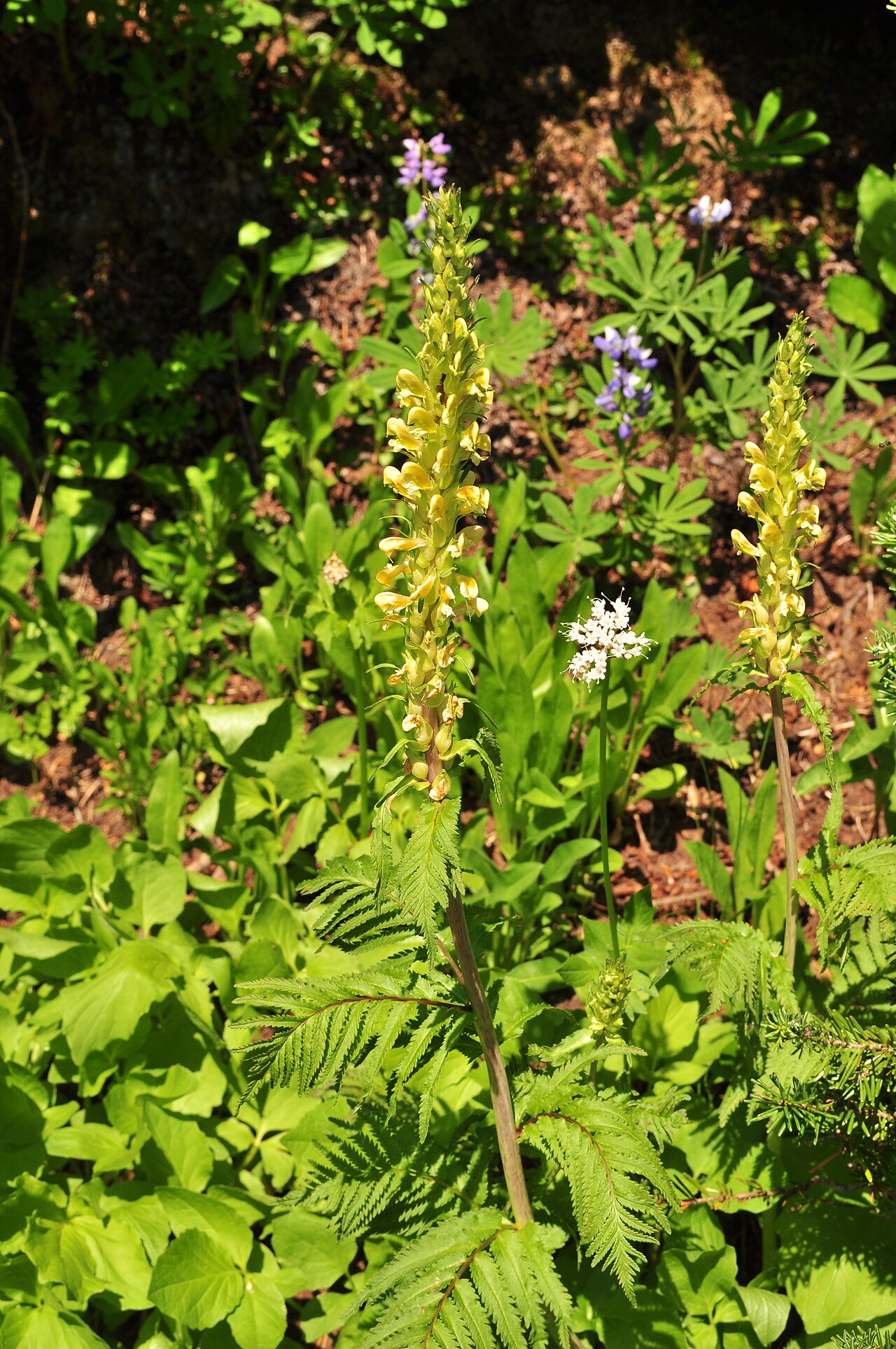
Bracted lousewort is a characteristic part of western subalpine meadows, and it plays several roles there, from feeding bumblebees to quietly shaping which plants grow around it.
For Pollinators
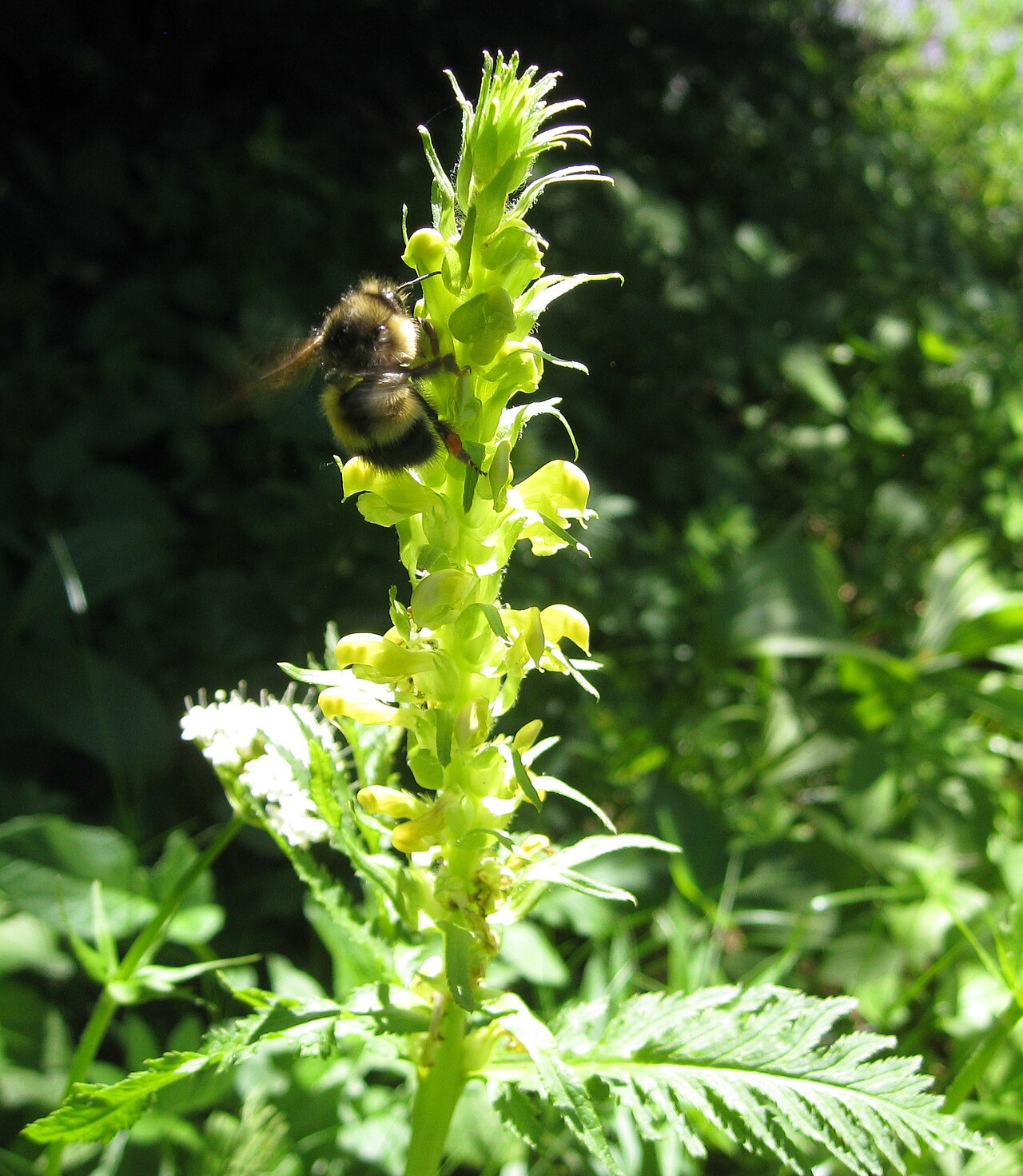
The hooded, beaked flowers are built for bumblebees, which are its main pollinators. A bumblebee lands on the lower lip, pushes its head under the hood and gets dusted with pollen. Bumblebees are among the most important pollinators in the short mountain summer, and a dense patch of bracted lousewort in bloom can be busy with them.
For Birds
It has little direct value to birds, but it is part of the flower-rich meadows that support insect prey for mountain birds such as hummingbirds, sparrows and bluebirds.
For Mammals
Deer, elk and other grazers may browse the leaves and stems in mountain meadows. It is not a major food plant for any of them.
Ecosystem Role
As a root hemiparasite, bracted lousewort taps into the roots of many neighboring plants. Hemiparasites in this family can reduce the vigor of the plants they attach to, especially dominant grasses, and in doing so they can help maintain a mix of species in meadow communities. Its presence is a sign of an intact, moist mountain meadow or forest edge.
Cultural & Historical Uses
The genus name Pedicularis comes from the Latin pediculus, “louse,” after an old European belief that livestock grazing among louseworts would become infested with lice. The species name bracteosa means “with many bracts,” after the leafy bracts mixed in among its flowers. Other common names include towering lousewort, tall lousewort and fernleaf.
The species was described by the English botanist George Bentham in 1838 from specimens collected in northwestern North America. Several of its varieties were first described as separate species and later combined, which is why older floras list it under many names.
Some louseworts have a history of use in folk medicine, including as a muscle relaxant. Because louseworts can take up chemical compounds from their host plants, which may be toxic, bracted lousewort should not be eaten or used as a home remedy.
Frequently Asked Questions
Is bracted lousewort a parasite?
It is a hemiparasite. It has green leaves and photosynthesizes, but its roots also attach to the roots of neighboring plants and draw water and nutrients from them. It weakens its hosts but does not normally kill them.
Can I grow bracted lousewort in my garden?
Almost certainly not in a typical garden. It needs host plants and the cool, moist conditions of mountain meadows, it is not sold by nurseries, and it does not survive transplanting. It is best enjoyed in the wild. Never dig it up.
Where can I see bracted lousewort?
In moist mountain meadows and open forests of the West in summer. Mount Rainier, the North Cascades, Glacier National Park and the high country of Idaho, Montana and Colorado are all good places to look in July and August.
What color are its flowers?
Usually pale yellow or greenish yellow, but some populations have bronze, red or purple flowers. The variety and the region largely determine the color.
How is it different from other louseworts?
It is one of the tallest, with big fern-like leaves along the stem and a long, dense flower spike with leafy bracts. Sickletop lousewort has undivided leaves and white, twisted flowers, and elephant’s head has pink flowers shaped like tiny elephant heads.

Looking for a nursery that carries Bracted Lousewort?
Browse our native plant nursery directory: California · Colorado · Idaho · Montana · New Mexico · Oregon · Utah · Washington · Wyoming
