
Canadian Lousewort (Pedicularis canadensis)
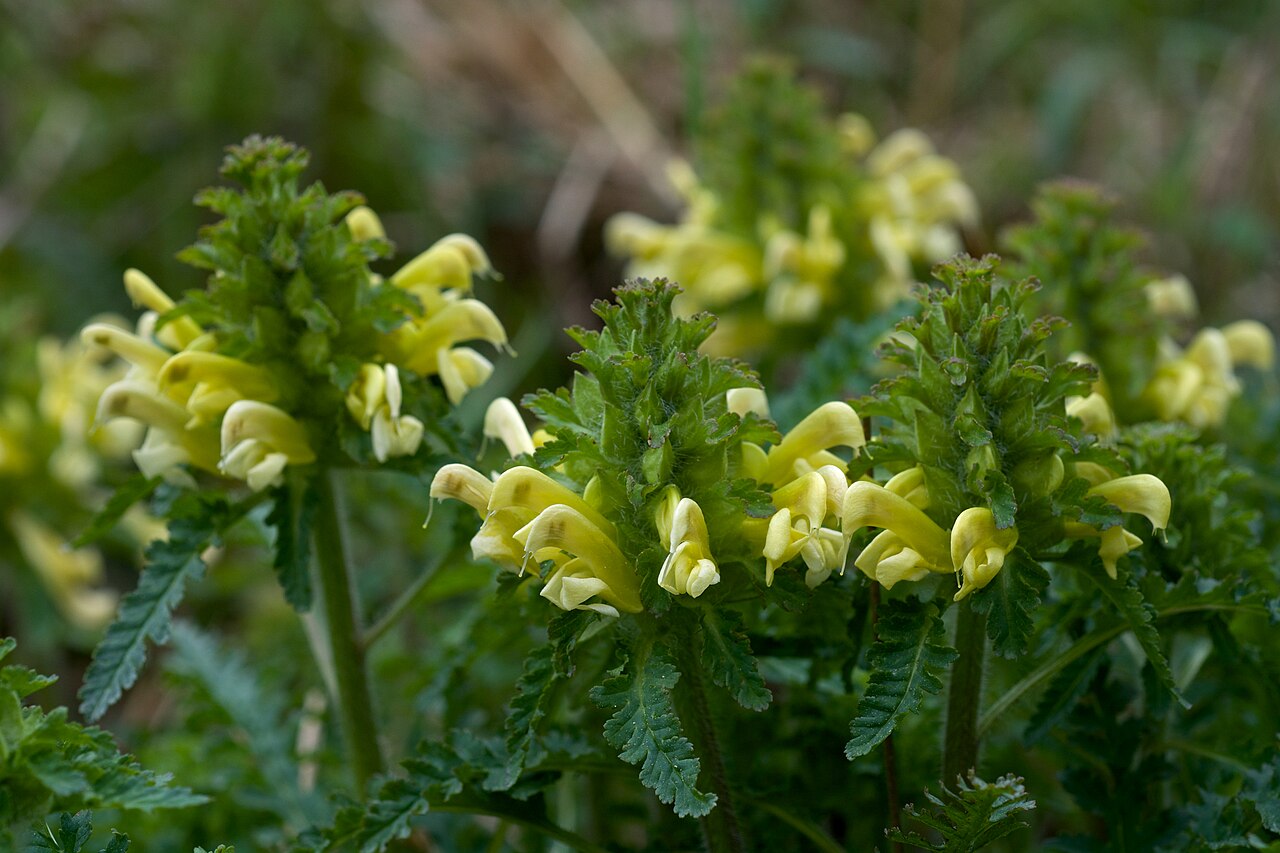
Pedicularis canadensis, known as Canadian Lousewort or wood betony, is a low spring wildflower of open woods, savannas and prairies across eastern and central North America. It forms clumps of soft, hairy, fern-like leaves, often bronze or reddish when they first appear, and in spring each stem ends in a dense, rounded head of hooded, two-lipped flowers in yellow, maroon-red or a mix of both. It belongs to the broomrape family (Orobanchaceae), the family that includes many plants that are partly or wholly parasitic.
Canadian lousewort is a hemiparasite. It has green leaves and makes its own food, but its roots also attach to the roots of nearby plants, especially grasses and other prairie plants, and draw water and nutrients from them. This trait makes it ecologically important. By weakening dominant grasses, it helps keep space open for other wildflowers, and prairie restorationists increasingly add it to seed mixes to boost plant diversity.
Its odd common name comes from an old European belief that livestock grazing in pastures full of louseworts would become infested with lice. The flowers are actually an important early-season food for queen bumblebees. This guide covers how to identify Canadian lousewort, where it grows, the honest limits of growing it in gardens, and its role in prairie and woodland ecosystems.
Identification
Canadian lousewort is distinctive in bloom, with its compact heads of hooded flowers above fern-like foliage. Out of flower, its deeply lobed, hairy leaves can be mistaken for a fern or a young yarrow plant.
Stems & Growth Habit
Plants grow in clumps of several unbranched stems from a short, fibrous-rooted crown. Stems are hairy and usually 6 to 14 inches tall in flower, lengthening somewhat as the seeds develop. Clumps can spread slowly into small colonies.
Leaves
Most leaves are basal or on the lower part of the stem. They are 3 to 5 inches long, lance-shaped in outline and deeply cut into many toothed, rounded lobes, giving them a fern-like look. They are softly hairy and are often bronze, red or purplish when they emerge in early spring, turning green as they mature.
Flowers
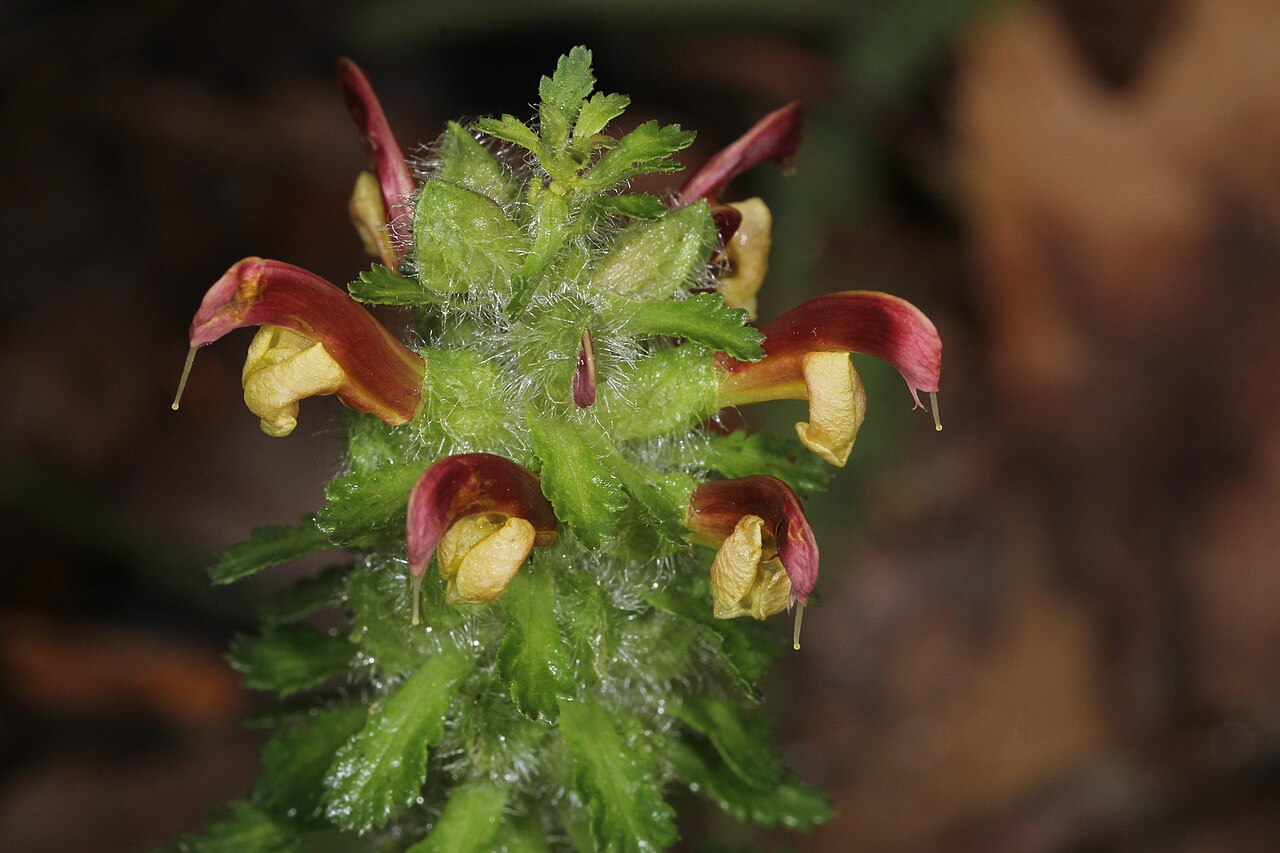
The flowers are packed into a short, dense spike at the tip of each stem, about 1 to 2 inches long at first and lengthening later. Each flower is about ¾ inch long and strongly two-lipped. The upper lip forms a curved, beak-like hood with two small teeth near the tip, and the lower lip is three-lobed. Color varies widely: some plants have all-yellow flowers, others are maroon-red, and many are bicolored with red hoods over yellow lower lips. Leafy bracts and hairs between the flowers give the spike a fuzzy look. It blooms mostly from April to June.
Fruit & Seeds
Each flower produces a flattened, oblique capsule, about ½ inch long, that splits to release a few brown seeds. The seeds fall close to the parent plant, so clumps spread slowly. Dry stalks with open capsules often stand through summer.
Look-alikes
Swamp lousewort (Pedicularis lanceolata) blooms in late summer in wet meadows and fens and has less deeply cut leaves. Out of bloom, young leaves can look like fern fronds, but they are hairy, and the plants produce their unique hooded flowers in spring.
Quick Facts
| Scientific Name | Pedicularis canadensis |
| Family | Orobanchaceae (broomrape family; formerly in Scrophulariaceae) |
| Plant Type | Herbaceous perennial; hemiparasitic on the roots of other plants |
| Mature Height | 6–14 in |
| Mature Spread | 6–12 in |
| Growth Rate | Slow to moderate |
| Sun Exposure | Full sun to part shade |
| Water Needs | Low to medium |
| Soil Type | Well-drained loam, sandy or rocky soils |
| Soil pH | About 5.0–7.5 |
| Bloom Time | April–June |
| Flower Color | Yellow, maroon-red, or bicolored red and yellow |
| Fall Color | None of note |
| Fruit | Flattened capsule with a few seeds |
| Deer Resistant | Moderate |
| USDA Hardiness Zones | 3–8 |
Native Range
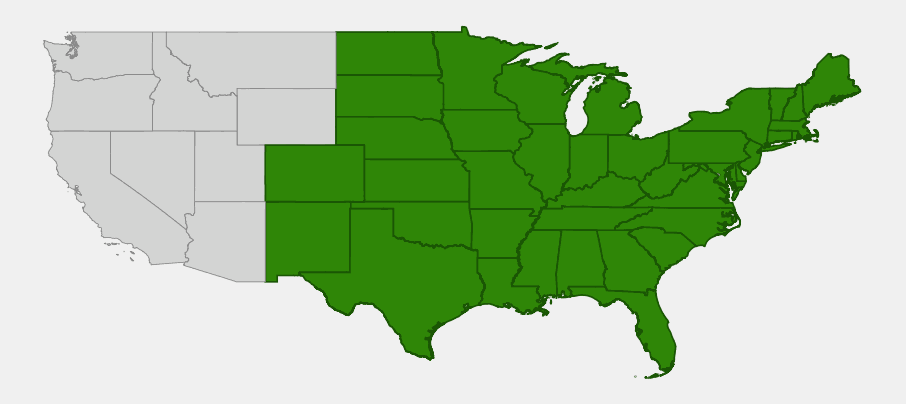
Canadian lousewort is one of the most widespread louseworts in North America. USDA PLANTS lists it as native in 39 states, from Maine and the Great Lakes south to northern Florida and the Gulf Coast, west across the prairies to the Dakotas, Nebraska, Kansas, Oklahoma and Texas, and as far as the eastern foothills of Colorado and New Mexico. In Canada it grows from Manitoba east through Ontario and Quebec to New Brunswick.
It is most common in the Midwest and the Appalachians, in prairies, oak savannas, open oak and pine woods, glades and barrens. In the Great Plains it is found mostly in the eastern, wetter prairies and in wooded draws, and the plants at its western edge in Colorado, New Mexico and western Texas are often treated as a separate subspecies. In the Southeast it is scattered and found mainly in upland woods and on rocky slopes.
Canadian lousewort depends on open, sunny or lightly shaded conditions maintained by fire and grazing. It has declined in many areas as savannas and prairies have been plowed or overgrown, and its presence is often a sign of a remnant, never-plowed prairie or savanna.
📋 Regional plant lists featuring Canadian Lousewort: New York, Pennsylvania & Northern New Jersey · Idaho, Eastern Oregon & Eastern Washington · Ohio & Indiana · Michigan, Wisconsin & Eastern Minnesota · Kentucky & Tennessee · Nebraska, Kansas & Eastern Colorado · Connecticut, Massachusetts & Rhode Island · New Hampshire, Maine & Vermont · Maryland, Virginia & West Virginia · Delaware, Southern New Jersey & Long Island · Illinois, Iowa & Missouri · Alabama, Georgia & Mississippi · North & South Florida
Growing & Care Guide
Canadian lousewort is not a typical garden perennial. Because it is a hemiparasite, it cannot survive alone in a pot or a bare bed; it needs host plants growing around it. It is best grown in prairie, savanna and meadow plantings, where it can connect to grasses and other perennials. Buy nursery-propagated seed or plants from native plant nurseries, and never dig it from the wild: it rarely survives transplanting, and digging damages remnant populations.
Light
Full sun to part shade. It grows well in open prairies and on the lightly shaded floor of oak savannas and open woods, but declines in dense shade.
Soil & Water
Give it well-drained soil of average to low fertility: sandy, loamy, gravelly or rocky soils all work. It tolerates dry conditions once established but not prolonged waterlogging. Do not fertilize. Fertile soil favors the grasses and other plants that would outcompete it.
Planting Tips
The most reliable way to establish it is by seeding it into an existing or newly planted prairie, meadow or savanna with plenty of grasses and wildflowers to act as hosts. If you use plugs, plant them in spring close to established native grasses such as little bluestem or sedges, so the roots can find a host quickly. Expect some losses; lousewort is less predictable than most perennials.
Pruning & Maintenance
No pruning is needed. Avoid heavy mulch around the plants, and let the seed capsules ripen and drop to help the colony spread. In larger plantings, periodic burning or mowing in late winter mimics the natural disturbance that maintains its habitat. Remove invasive shrubs that shade it out.
Propagation
Grow it from seed. Collect ripe seed in early to mid-summer and sow it outdoors in fall, or give it about 60 to 90 days of cold, moist stratification before sowing in spring. Sow it where host plants are already growing, or sow it in pots together with a host such as a native grass. Seedlings grow slowly and usually flower after two or three years.
Landscape Uses
- Prairie and savanna restoration: added to seed mixes to curb dominant grasses and increase wildflower diversity
- Meadow and pollinator plantings: an early bloom for queen bumblebees in spring
- Open woodland gardens: under oaks and pines, among sedges and spring wildflowers
- Rock gardens and dry slopes: on thin, well-drained soils with native grasses
- Remnant protection: a characteristic species of high-quality prairie and savanna remnants
Wildlife & Ecological Value
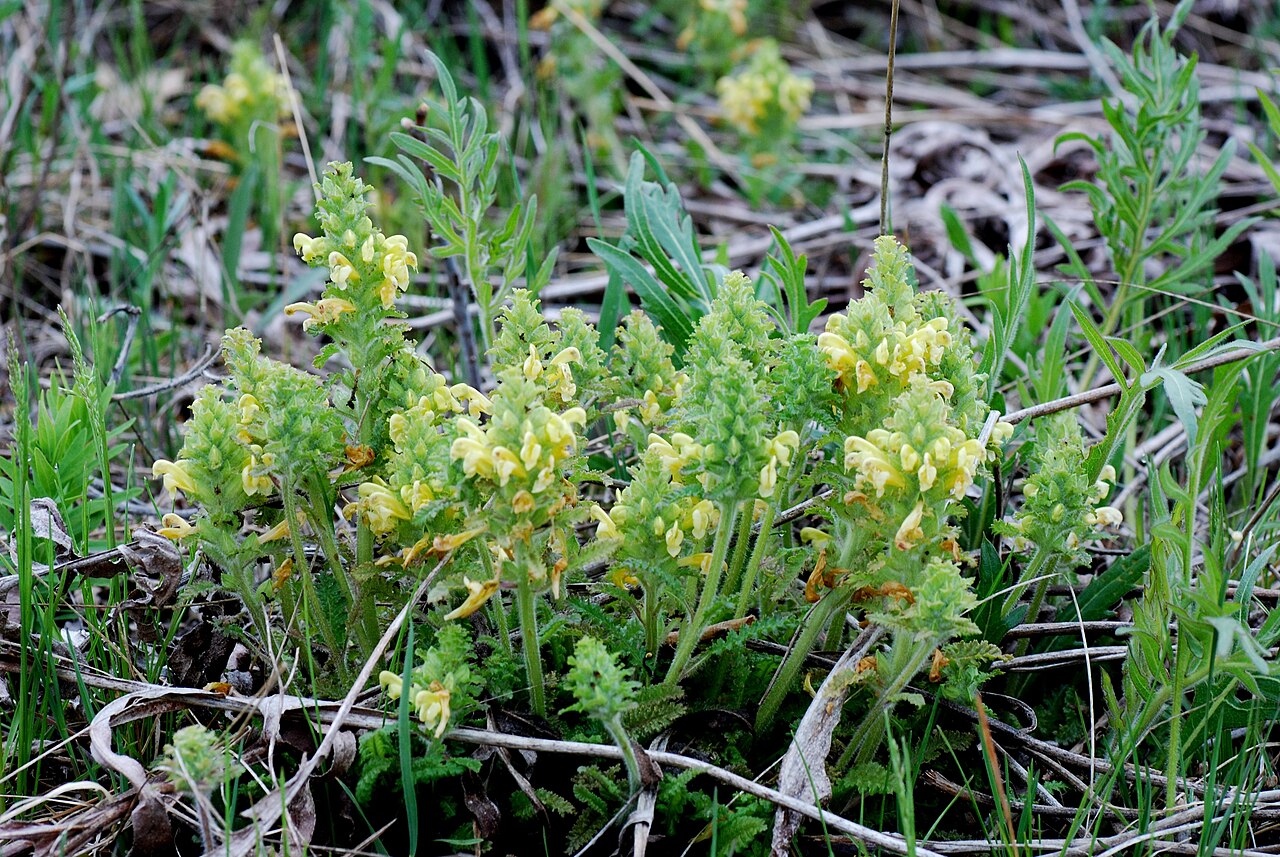
Canadian lousewort plays a role far larger than its size, both as an early-season bumblebee flower and as a natural regulator of grasses in prairie and savanna communities.
For Pollinators
The hooded flowers are adapted for bumblebees. Large queen bumblebees, newly emerged in spring and starting their colonies, are the main pollinators; they force their way under the hood to reach nectar and are dusted with pollen. Smaller bees occasionally visit as well. Its early bloom makes it a valuable food source when few other flowers are open.
For Birds
The plant has little direct value for birds, but it supports the diverse prairie and savanna plant communities that grassland and woodland-edge birds rely on.
For Mammals
Deer and rabbits sometimes browse it. The plant is otherwise of little importance to mammals.
Ecosystem Role
As a root hemiparasite, Canadian lousewort taps into the roots of many host plants, especially grasses, and reduces their growth. Studies of related hemiparasites and of this species have shown that they can reduce the dominance of vigorous grasses and allow more wildflowers to persist, which is why restoration ecologists are interested in it. It is also a larval host plant for some butterflies, including the Baltimore checkerspot, which uses it as an alternate host in some areas.
Cultural & Historical Uses
The genus name Pedicularis comes from the Latin pediculus, “louse.” European farmers believed that livestock grazing in pastures with louseworts became infested with lice. More likely, louseworts thrived in the same poor, wet pastures that also produced unhealthy, louse-ridden animals. The other common name, wood betony, borrows the name of an unrelated European herb (Betonica, now Stachys) with a similar look.
Several Native American peoples used Canadian lousewort medicinally,, and some reportedly used it as a love charm. These are historical uses, and since the plant draws compounds from its host plants, it is not recommended for eating or medicine.
In recent decades, Canadian lousewort has gained attention in prairie restoration. Restorationists who struggled with grass-dominated plantings found that adding hemiparasites such as lousewort can help other wildflowers persist, and native seed companies in the Midwest now offer its seed for restoration projects.
Frequently Asked Questions
Is Canadian lousewort a parasite?
It is a hemiparasite. It has green leaves and photosynthesizes, but its roots also attach to the roots of nearby plants and take water and nutrients from them. It does not kill its hosts, but it can weaken vigorous grasses.
Can I grow Canadian lousewort in my garden?
Yes, but only with host plants around it, ideally in a prairie, meadow or savanna planting with native grasses and sedges. It does not grow well alone in a pot or bare bed. Use nursery-propagated seed or plants, and never dig it from the wild.
Why is it called lousewort?
The name comes from an old European belief that livestock grazing on louseworts would get lice. It is not true; the plant does not cause lice.
What pollinates Canadian lousewort?
Mainly queen bumblebees in spring, which force their way under the hooded upper lip of the flowers to reach nectar and pollen.
What color are the flowers?
They vary from plant to plant: all yellow, maroon-red, or red hoods over yellow lower lips. Different colors can grow in the same colony.

Looking for a nursery that carries Canadian Lousewort?
Browse our native plant nursery directory: Alabama & Arkansas · Colorado, Connecticut, Delaware, Florida & Georgia · Illinois, Indiana, Iowa & Kansas · Kentucky, Louisiana, Maine, Maryland, Massachusetts, Michigan, Minnesota, Mississippi & Missouri · Nebraska, New Hampshire, New Jersey, New Mexico, New York, North Carolina, North Dakota, Ohio & Oklahoma · Pennsylvania, Rhode Island, South Carolina, South Dakota, Tennessee, Texas, Vermont & Virginia · West Virginia & Wisconsin