
Hayfield Tarweed (Hemizonia congesta)
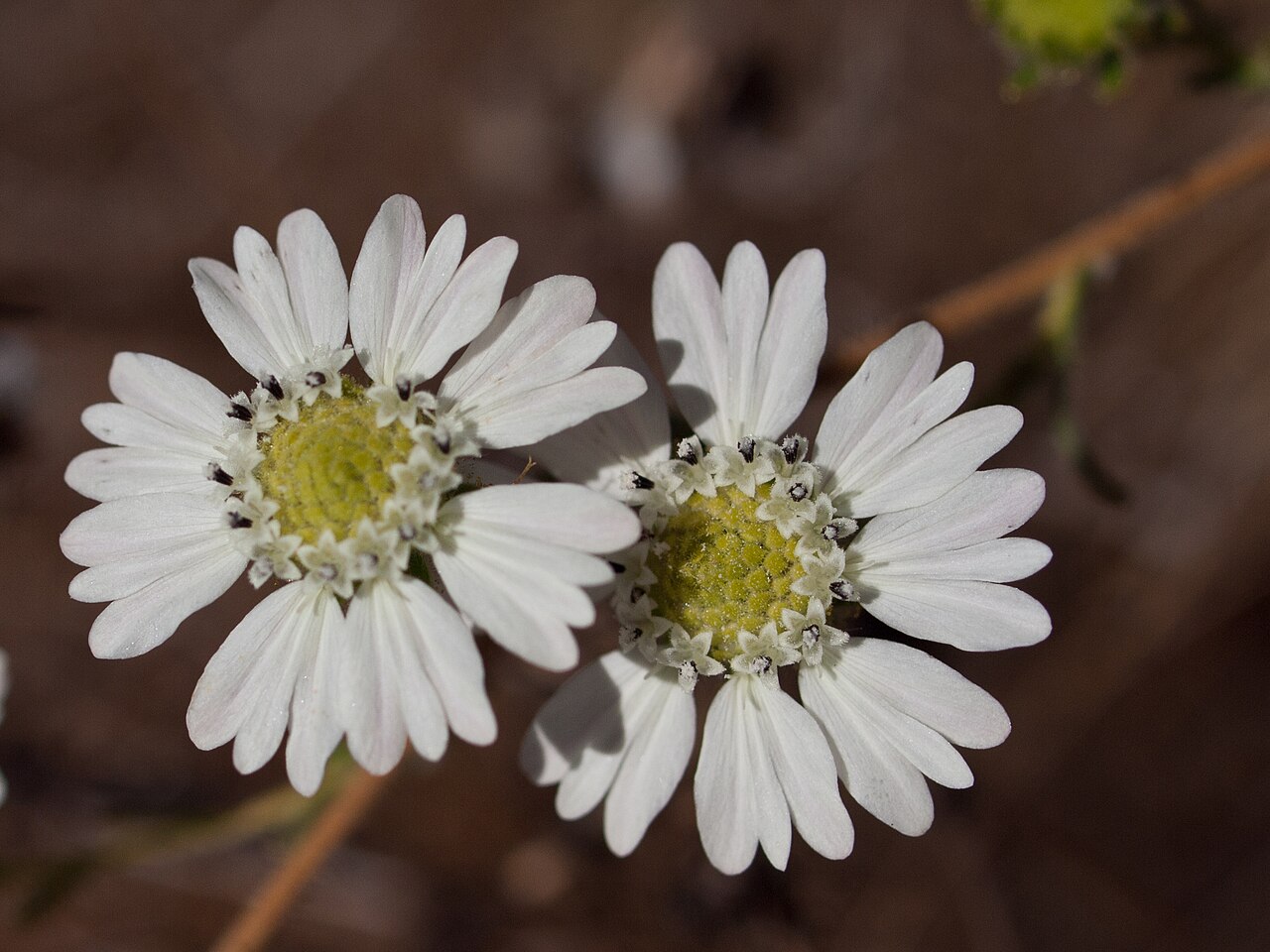
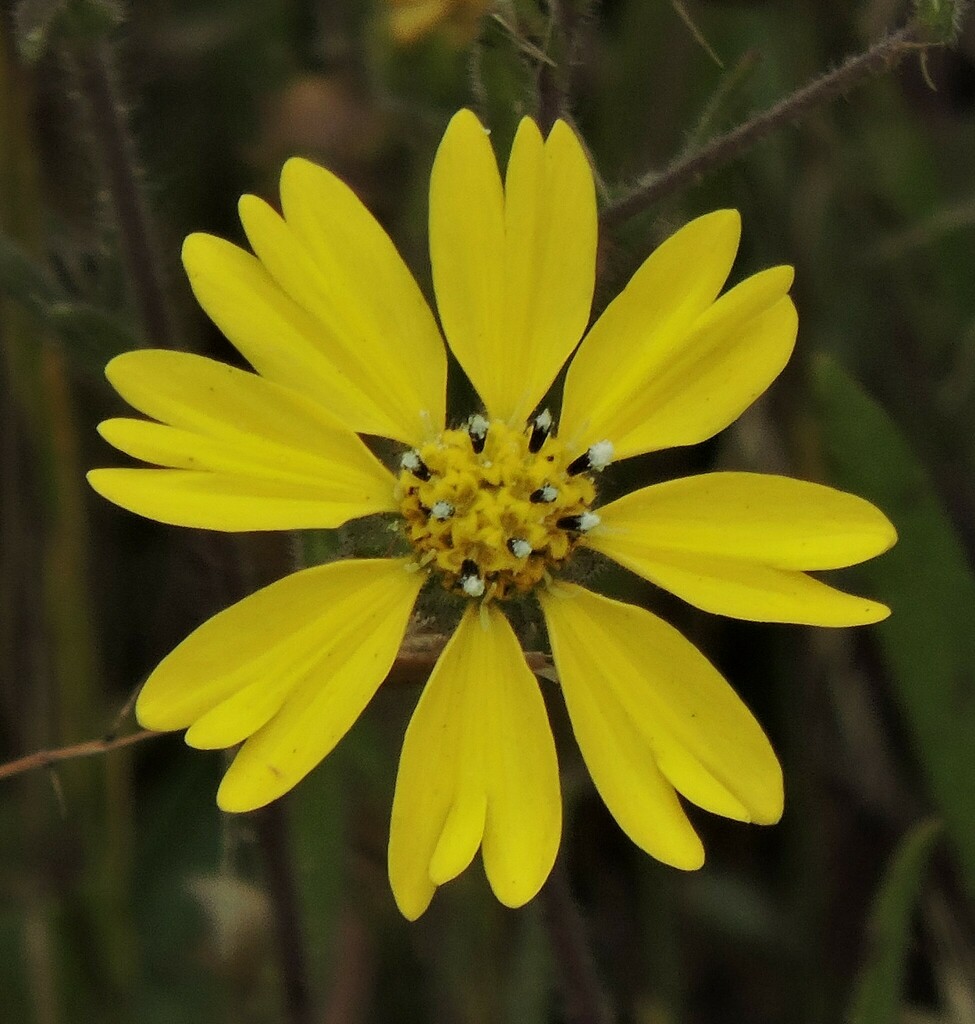
Hemizonia congesta, known as Hayfield Tarweed or hayfield tarplant, is a summer-blooming annual wildflower in the aster family (Asteraceae). It grows on slender, branching stems usually 4 to 30 inches tall, and its upper stems and flower heads are covered with sticky, glandular hairs that give off a strong, resinous “tarweed” scent. The daisy-like flower heads have white to bright yellow rays, often streaked with purple on the back.
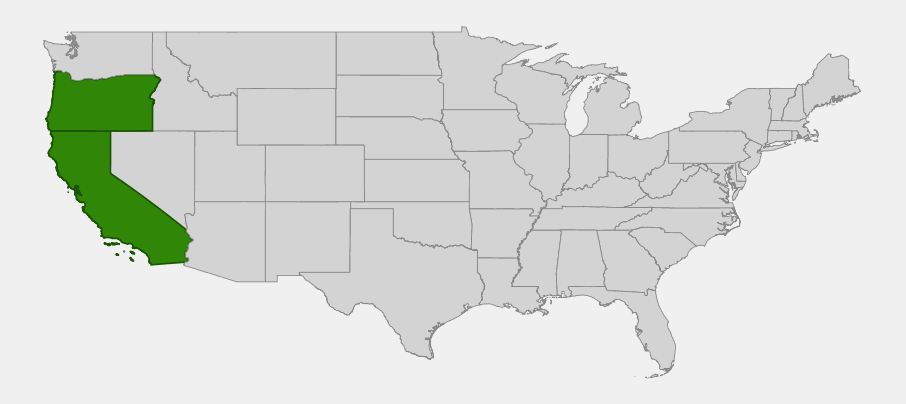
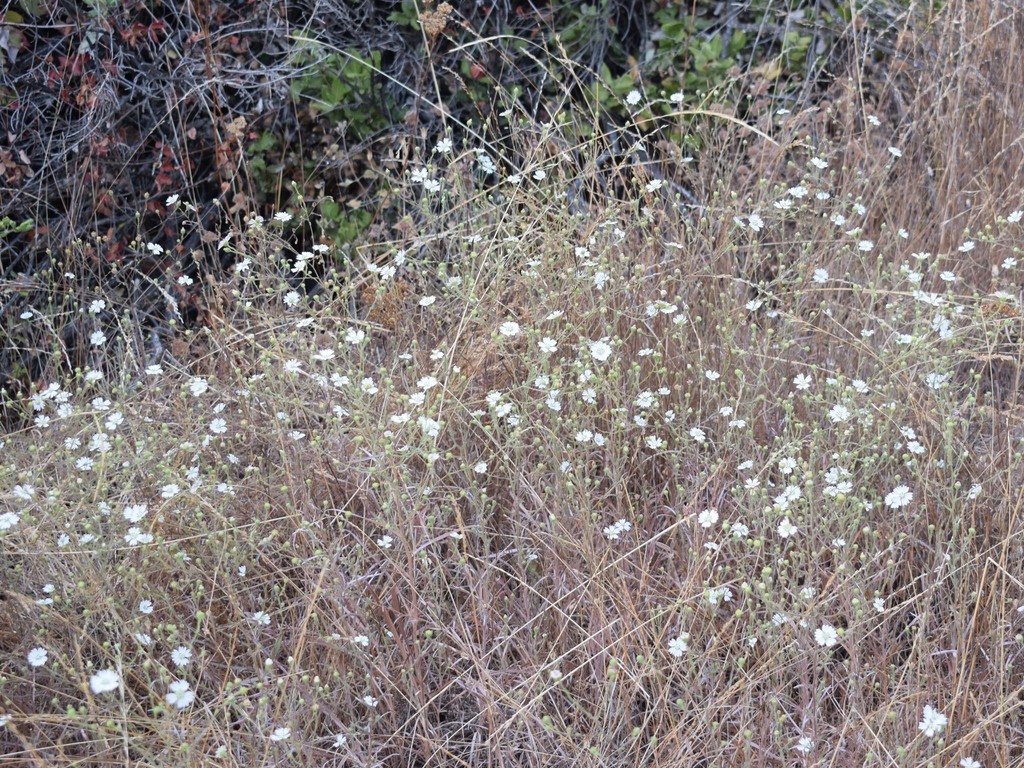
Hayfield tarweed grows in California and southwestern Oregon. It is common in grasslands, open oak woodlands, pastures, fallow fields and roadsides in the Coast Ranges, around the Central Valley and in the Rogue and Illinois valleys of Oregon. It is the only species left in the genus Hemizonia after most of its former relatives were moved to Deinandra and other genera.
Its most remarkable trait is its timing. While most annuals in California grasslands have set seed and dried up by June, tarweeds keep growing on deep roots and bloom through the dry summer and into fall, providing late nectar for bees and butterflies and seeds for birds.
Identification
Look for a slender, branching annual blooming in dry summer grassland, with sticky, strong-smelling upper stems and daisy-like heads with lobed white or yellow rays.
Growth Habit
Hayfield tarweed is an annual that germinates with the winter rains, grows as a low rosette through spring and then bolts into a slender, upright, branching plant in late spring and summer. Plants are usually 4 to 30 inches tall, sometimes taller in good soil.
Leaves
Most leaves are near the base of the plant and on the lower stem. They are long, narrow and pointed, up to several inches long, with smooth or few-toothed edges, and are softly hairy. The upper leaves are much smaller. The lower leaves often wither by the time the plant flowers.
Flower Heads
The heads are about 1/2 to 1 inch across, carried in loose or crowded clusters at the ends of branches. Each has a ring of ray florets that are white, cream or bright yellow, often with purple veins on the underside, with three lobes at the tip, the middle one narrower. The center holds yellowish disk florets with dark-tipped anthers. The bracts and flower stalks are covered with sticky glandular hairs. Bloom time is from about May to November, peaking in late summer.
Fruit
The seeds (achenes) are small, dark and smooth. The ray achenes are held by the surrounding bracts and lack a pappus, so they fall near the parent plant.
Subspecies
Several subspecies are recognized, differing in ray color, hairiness and range. For example, subsp. luzulifolia usually has white rays, while subsp. lutescens has yellow rays. Some subspecies, such as Tracy's tarplant (subsp. tracyi) and Mendocino tarplant (subsp. calyculata), have small ranges in northern California.
Look-alikes
Other tarweeds, such as common madia (Madia elegans), also bloom in summer and are sticky and scented, but common madia has yellow rays often with a maroon spot at the base, and its flowers close in the middle of the day. Spikeweeds (Centromadia) have spine-tipped leaves, and Deinandra tarplants have yellow rays and usually more ray florets.
Quick Facts
| Scientific Name | Hemizonia congesta |
| Family | Asteraceae (aster family) |
| Plant Type | Summer-blooming annual wildflower |
| Mature Height | 4–30 in |
| Mature Spread | 6–18 in |
| Growth Rate | Fast (completes its life cycle in one year) |
| Sun Exposure | Full sun |
| Water Needs | Low; no summer water needed |
| Soil Type | Clay, loam or gravelly grassland soils |
| Soil pH | Slightly acidic to neutral (about 6.0–7.5) |
| Bloom Time | May–November, peaking in late summer |
| Flower Color | White, cream or yellow; rays often purple-veined beneath |
| Fall Color | None |
| Fruit | Small dark achenes |
| Deer Resistant | Yes; sticky, aromatic foliage is rarely browsed |
| USDA Hardiness Zones | Annual (Mediterranean climates of zones 7–10) |
Native Range
USDA PLANTS lists hayfield tarweed as native in two states, California and Oregon. Most of its range is in California, where it grows mainly in the North and Central Coast Ranges, the San Francisco Bay Area and around the edges of the Central Valley.
In Oregon it is limited to the southwestern part of the state, west of the Cascades, where it grows in grasslands and oak savannas of the Rogue River Valley around Medford and Eagle Point and the Illinois Valley around Cave Junction.
It grows in valley and foothill grasslands, coastal prairies and marine terraces, open oak woodland, pastures and hayfields, fallow fields and roadsides, usually on clay or loam soils that hold some moisture deep into summer, from near sea level to about 5,000 feet.
📋 Regional plant lists featuring Hayfield Tarweed: Western Oregon & Western Washington · California & Nevada
Growing & Care Guide
Hayfield tarweed is an easy annual for unwatered meadows and grassland gardens in California and southwestern Oregon. It is grown from seed and, once established, can return each year by self-sowing.
Light
Full sun. In shade it becomes weak and blooms poorly.
Soil & Water
It grows best in clay or loam that holds winter moisture deep in the soil. It needs no summer water; in fact, summer irrigation can encourage weeds and rot. Rely on winter rain to establish the plants.
Planting Tips
Sow seed in fall, before the winter rains, on bare or lightly raked soil in a sunny meadow, among native bunchgrasses or along a dry slope. Combine it with spring annuals such as California poppy and lupines so the meadow blooms from spring into fall.
Pruning & Maintenance
Leave the plants standing after they bloom so the seed can ripen and drop. Mow or cut the dry stems in late fall or winter if needed. Keep aggressive non-native annual grasses in check, because they compete strongly with tarweed seedlings.
Propagation
Grow it only from seed, collected from dry flower heads in fall. Sow it directly where you want it to grow, as seedlings do not transplant well.
Landscape Uses
- Unwatered meadows: blooms through the dry summer without irrigation
- Grassland restoration: a native annual for valley and foothill grasslands
- Pollinator gardens: late-season nectar for bees and butterflies
- Bird gardens: seeds for finches, sparrows and quail
- Fragrance: a resinous, summery scent on warm days
Wildlife & Ecological Value
Tarweeds are among the most important late-season plants of California grasslands, flowering when almost nothing else does.
For Pollinators
Native bees, including sweat bees, leafcutter bees and long-horned bees, along with honeybees, flies and butterflies, visit the flowers from summer into fall, when nectar is scarce in dry grasslands.
For Birds
The seeds are eaten by goldfinches, sparrows, quail and other seed-eating birds in late summer and fall.
For Mammals
Rodents eat the seeds. The sticky, strong-smelling foliage discourages browsing by deer.
Ecosystem Role
By using deep soil moisture and blooming in the dry season, tarweeds extend the flowering season of grasslands and support insects that are active in late summer and fall. Their sticky glands also trap small insects.
Cultural & Historical Uses
The name Hemizonia comes from the Greek for “half girdle,” referring to the bracts that partly wrap around the ray achenes. The species name congesta means “crowded,” for the clustered flower heads. “Tarweed” refers to the sticky, resin-scented glands, which can leave a tarry residue on clothing, boots and the legs of animals that walk through the plants.
Many California Indigenous peoples gathered the oily seeds of tarweeds, often by burning or beating the plants, and ate them parched or ground into meal (pinole). Tarweed seeds were among the important seed foods of California grasslands.
Botanists have studied tarweeds as a striking example of rapid evolution. The Hawaiian silversword alliance, including the famous Haleakalā silversword, is descended from a North American tarweed ancestor that reached Hawaii millions of years ago.
Frequently Asked Questions
Why is it called tarweed?
Because its upper stems and flower heads are covered with sticky, glandular hairs that smell resinous or tar-like and can leave a tarry residue on clothing and boots.
When does hayfield tarweed bloom?
From about May to November, with the peak in late summer, after most other grassland annuals have dried up.
Does hayfield tarweed need summer water?
No. It uses moisture stored deep in the soil from winter rains and blooms through the dry summer without irrigation.
Is hayfield tarweed white or yellow?
Both. Ray color varies by subspecies and population, from white or cream to bright yellow, often with purple veins on the underside.
Is hayfield tarweed native to Oregon?
Yes. It grows in southwestern Oregon, mainly in the Rogue and Illinois valleys, as well as across much of northern and central California.

Looking for a nursery that carries Hayfield Tarweed?
Browse our native plant nursery directory: California · Oregon