
White Locoweed (Oxytropis sericea)
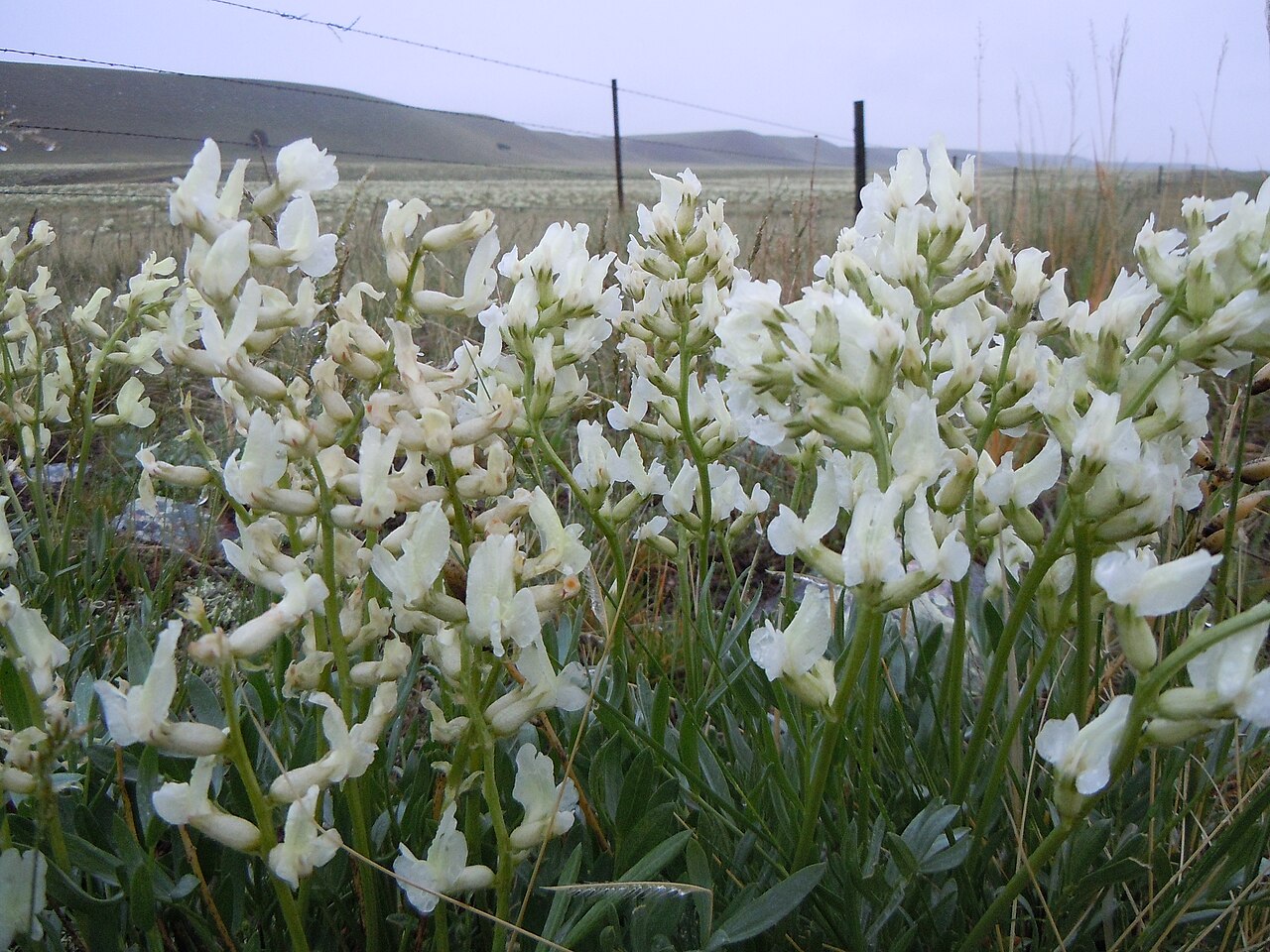
Oxytropis sericea, known as White Locoweed, and also as white point-vetch, whitepoint crazyweed and silky crazyweed, is a low, tufted perennial of the pea family (Fabaceae). It is one of the most common spring wildflowers of the Great Plains and Rocky Mountains, growing from short-grass prairie and sagebrush steppe up to alpine ridges above 12,000 feet.
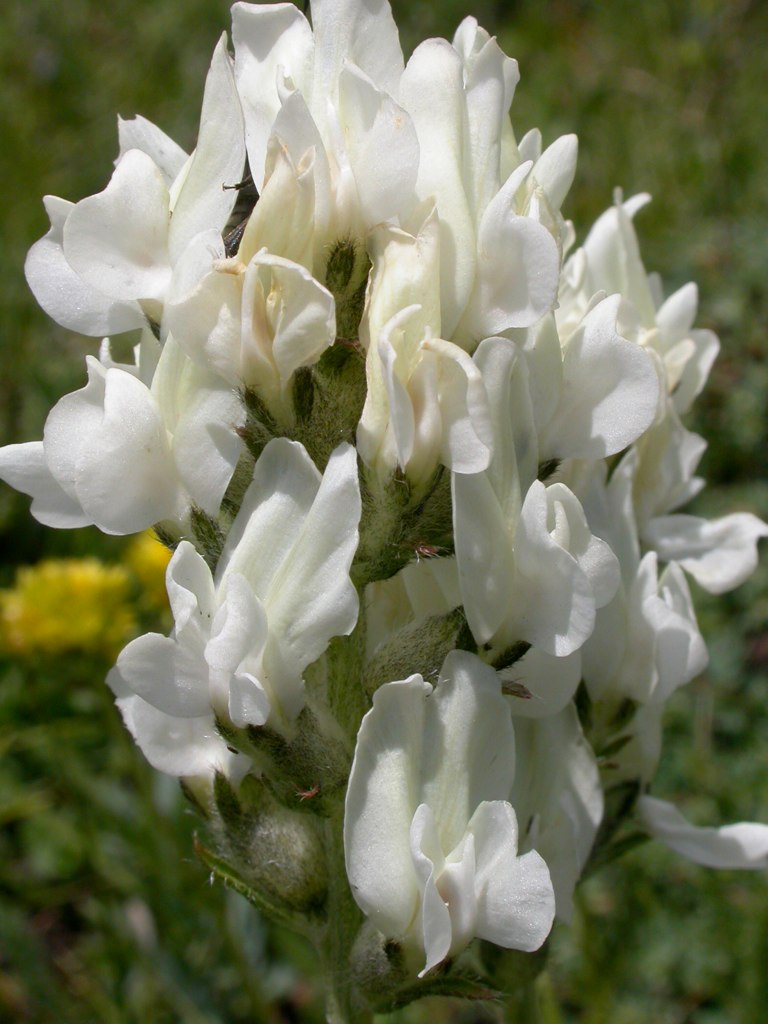
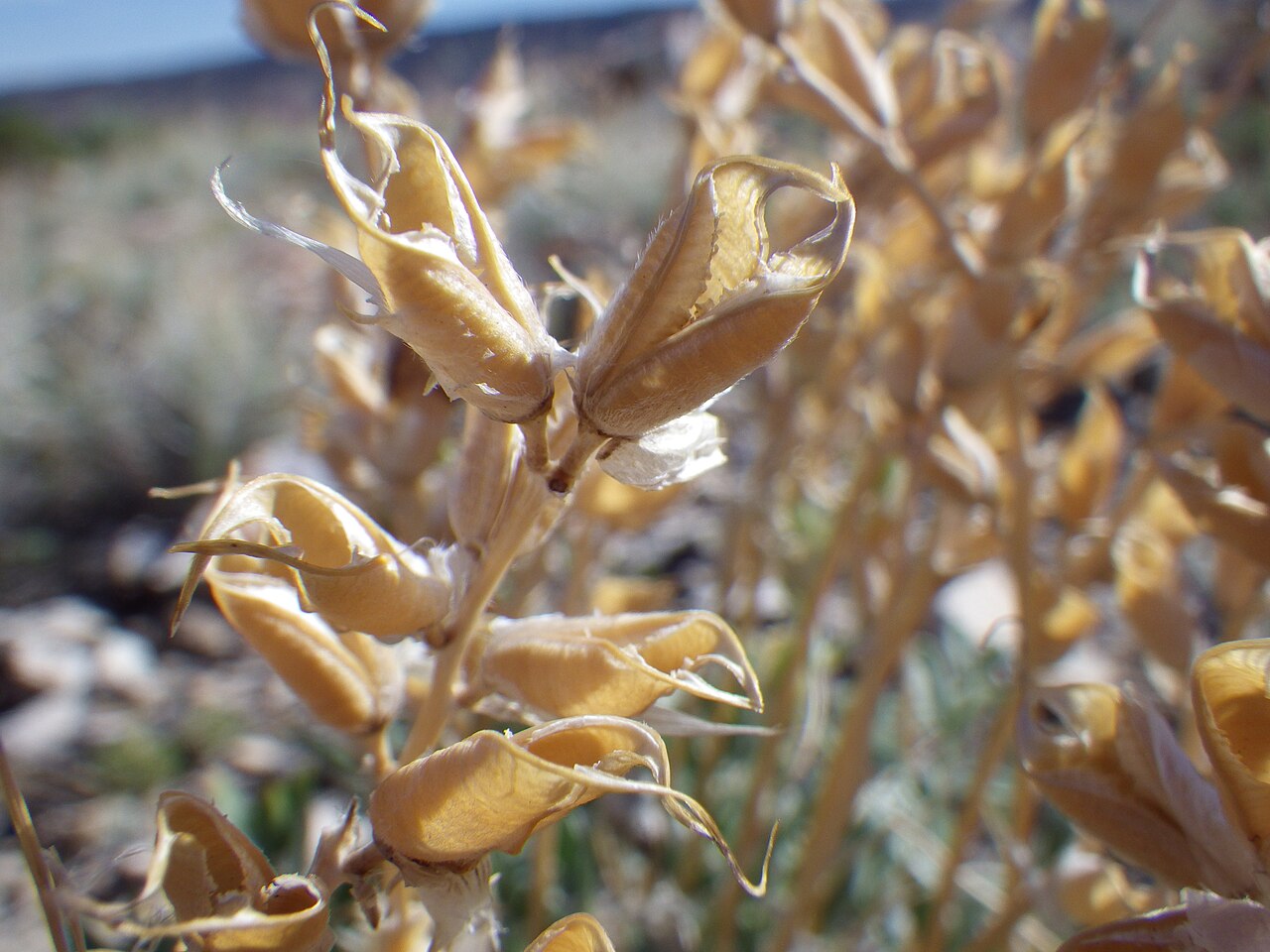
Each plant forms a clump of silvery, silky-hairy compound leaves from a deep taproot. In spring and early summer leafless stalks rise above the leaves and carry dense spikes of creamy white pea flowers, often with a purple spot on the tip of the keel. The flowers are followed by firm, hairy pods held upright in clusters.
Safety note: white locoweed is poisonous. All parts contain swainsonine, an alkaloid that causes locoism, a chronic and often fatal nerve disease in horses, cattle, sheep and other animals, including elk and deer. Some animals become addicted to eating it. Never plant it in or near pastures, paddocks or rangeland, and do not let children or pets eat any part of it. In wild gardens away from livestock it is a hardy, drought-tolerant native for dry, sunny sites.
Identification
Look for a low clump of silvery, silky pinnate leaves with leafless stalks holding dense spikes of white pea flowers, each with a small sharp point at the tip of the keel.
Growth Habit
A stemless, tufted perennial 4 to 16 inches tall, growing from a stout, deep taproot and a branched, woody crown. Older plants form wide clumps with many leaves and flower stalks.
Leaves
The leaves all grow from the base and are up to about 8 inches long, divided into 7 to 21 lance-shaped to oblong leaflets about 1/2 to 1 1/2 inches long. They are covered with fine, silky, silvery hairs that lie flat and are attached in the middle, giving the plant a gray-green look.
Flowers
Each leafless stalk carries a dense, elongating spike of 6 to about 27 pea-shaped flowers, each about 3/4 to 1 inch long. They are white to cream, sometimes tinged yellow or pinkish, and the keel ends in a short, sharp beak that is often purple-tipped. Plants bloom from April to July, depending on elevation.
Fruit & Seeds
The pods are oblong, about 3/4 to 1 inch long, firm-walled and hairy, held upright in a cluster. They split at the tip to release many small, hard, kidney-shaped seeds that can remain dormant in the soil seed bank for years.
Look-alikes
Lambert’s locoweed (Oxytropis lambertii) is similar but has pink to purple flowers; where the two meet, they hybridize and produce plants with mixed colors. Field oxytrope (O. campestris) has pale yellow flowers and thinner, papery pods. Milkvetches such as woollypod milkvetch (Astragalus) usually have leafy stems and a blunt keel without a point.
Quick Facts
| Scientific Name | Oxytropis sericea |
| Family | Fabaceae (pea family) |
| Plant Type | Tufted herbaceous perennial |
| Mature Height | 4–16 in |
| Mature Spread | 6–18 in |
| Growth Rate | Slow to moderate |
| Sun Exposure | Full sun |
| Water Needs | Low; very drought tolerant |
| Soil Type | Dry, well-drained gravelly, rocky or sandy soils |
| Soil pH | Neutral to alkaline (about 6.5–8.5) |
| Bloom Time | April–July |
| Flower Color | White to cream, keel often purple-tipped |
| Fall Color | None notable |
| Fruit | Firm, hairy, upright pods |
| Deer Resistant | No; toxic to deer, elk and livestock that eat it |
| USDA Hardiness Zones | 3–7 |
Native Range
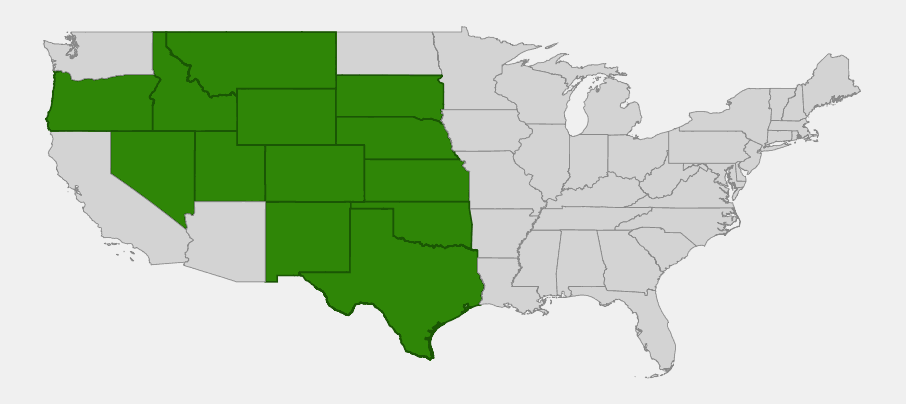
White locoweed is native to western North America. USDA PLANTS lists it from Montana, Idaho and eastern Oregon south through Wyoming, Colorado, Utah and Nevada to New Mexico and Texas, and east across the western Great Plains of South Dakota, Nebraska, Kansas and Oklahoma. In Canada it grows in Alberta and Saskatchewan, and north in the Rockies through British Columbia to Yukon.
It is most abundant in the Rocky Mountains and on the high plains of Wyoming, Montana and Colorado. At the eastern and southern edges of its range it is scarcer: in Oklahoma it is found in the western part of the state and the Panhandle, and in Texas in the Panhandle. In Oregon it grows in the mountains and high desert of the east, well east of the Cascades.
Habitats range from short-grass and mixed-grass prairie, sagebrush steppe and open ponderosa pine woodland to mountain meadows, rocky slopes and alpine tundra; it has been recorded above 12,000 feet in Colorado. It thrives on overgrazed or disturbed rangeland, roadsides and gravelly banks, where competition from grasses is low.
📋 Regional plant lists featuring White Locoweed: Idaho, Eastern Oregon & Eastern Washington · Montana & Wyoming · Nebraska, Kansas & Eastern Colorado · Utah & Western Colorado · North Dakota, South Dakota & Western Minnesota · California & Nevada
Growing & Care Guide
White locoweed is very easy to grow in a dry, sunny garden in the West, but because it is poisonous to livestock and wildlife that graze it, plant it only in gardens well away from horses, cattle, sheep and goats. It is best suited to rock gardens, xeric borders and native plant gardens in towns, not to rural properties with animals.
Light
Full sun. It flowers poorly and grows weak in shade.
Soil & Water
Lean, gravelly, sandy or rocky soil with excellent drainage; it tolerates alkaline soils. Water only to establish it. Mature plants rely on their deep taproot and rarely need watering; too much water and rich soil shorten their life.
Planting Tips
Plant small seedlings, because the deep taproot makes larger plants hard to move. Space them 12 to 18 inches apart among bunchgrasses or in a rock garden. Wear gloves when handling plants and keep children and pets from chewing them.
Pruning & Maintenance
Little care is needed. To limit self-seeding, cut off the flower stalks after bloom before the pods ripen, and dispose of them where animals cannot reach them. Remove any plants that appear near pastures.
Propagation
From seed. The hard seed coat must be nicked (scarified) or soaked in hot water before sowing. Sow in fall outdoors or in spring after scarification, in deep pots to protect the taproot. Like other legumes, it forms root nodules with nitrogen-fixing bacteria.
Landscape Uses
- Rock gardens: a tough, silver-leaved clump with bright spring flowers
- Xeriscapes: needs no irrigation once established in the dry West
- Pollinator gardens: an early-season food source for bumble bees
- Prairie restoration: part of native short-grass and mountain grassland communities; use with care near grazing land
- Educational plantings: a well-known example of a native poisonous range plant
Wildlife & Ecological Value
White locoweed is a native part of western grasslands and mountain slopes, with benefits for insects and soil and well-known risks for grazing animals.
For Pollinators
Its spring flowers are pollinated mainly by bumble bees, which are strong enough to open the pea-shaped flowers, and they are also visited by other native bees.
For Birds
Birds make little use of it. Grouse and other ground birds may pick at seeds, but the plant’s toxins limit its value as food.
For Mammals
It is toxic to most grazing mammals. Elk, deer, pronghorn, horses, cattle and sheep that eat large amounts over weeks or months can develop locoism.
Ecosystem Role
Like other legumes, it hosts nitrogen-fixing bacteria in root nodules and adds nitrogen to poor soils. Swainsonine is produced not by the plant itself but by an endophytic fungus (Alternaria section Undifilum) that lives inside it.
Cultural & Historical Uses
The name Oxytropis comes from the Greek for “sharp keel,” for the pointed tip of the lower petals, and sericea means “silky,” for its leaves. The word “loco” is Spanish for “crazy,” describing the strange behavior of poisoned animals, and similar plants are also called crazyweeds.
Locoweeds have caused large losses to the livestock industry in the western United States since the 1800s, and locoweed poisoning has been called the most widespread poisonous plant problem in the West. Ranchers manage it by moving animals away from heavy locoweed stands, especially in years when the plant is abundant.
Research on swainsonine, the toxic alkaloid, has shown that it is made by a fungus living inside the plant. The compound has also been studied in medical research for its effects on cell processes, though it is not used as a treatment.
Frequently Asked Questions
Is white locoweed poisonous?
Yes. It contains swainsonine, which causes locoism in horses, cattle, sheep, goats, elk and deer. Animals that eat it over weeks or months can suffer permanent nerve damage or die. Keep it away from pastures and do not let children or pets eat it.
What is the difference between white locoweed and Lambert’s locoweed?
White locoweed has white to cream flowers, while Lambert’s locoweed has pink to purple flowers. They hybridize where they grow together, producing plants with mixed flower colors.
Can I grow white locoweed in my garden?
Yes, in a dry, sunny, well-drained garden where no livestock graze. It is drought tolerant and blooms early in spring.
Why is it called white point-vetch?
The keel of each flower ends in a small, sharp point. This point separates point-vetches (Oxytropis) from milkvetches (Astragalus).
Does white locoweed spread?
It reseeds and is often abundant on overgrazed or disturbed land, but it does not spread by roots. Its seeds can last many years in the soil.

Looking for a nursery that carries White Locoweed?
Browse our native plant nursery directory: Colorado · Idaho & Kansas · Montana · Nebraska, Nevada, New Mexico & Oklahoma · Oregon · South Dakota, Texas & Utah · Wyoming

