
Threeleaf Foamflower (Tiarella trifoliata)
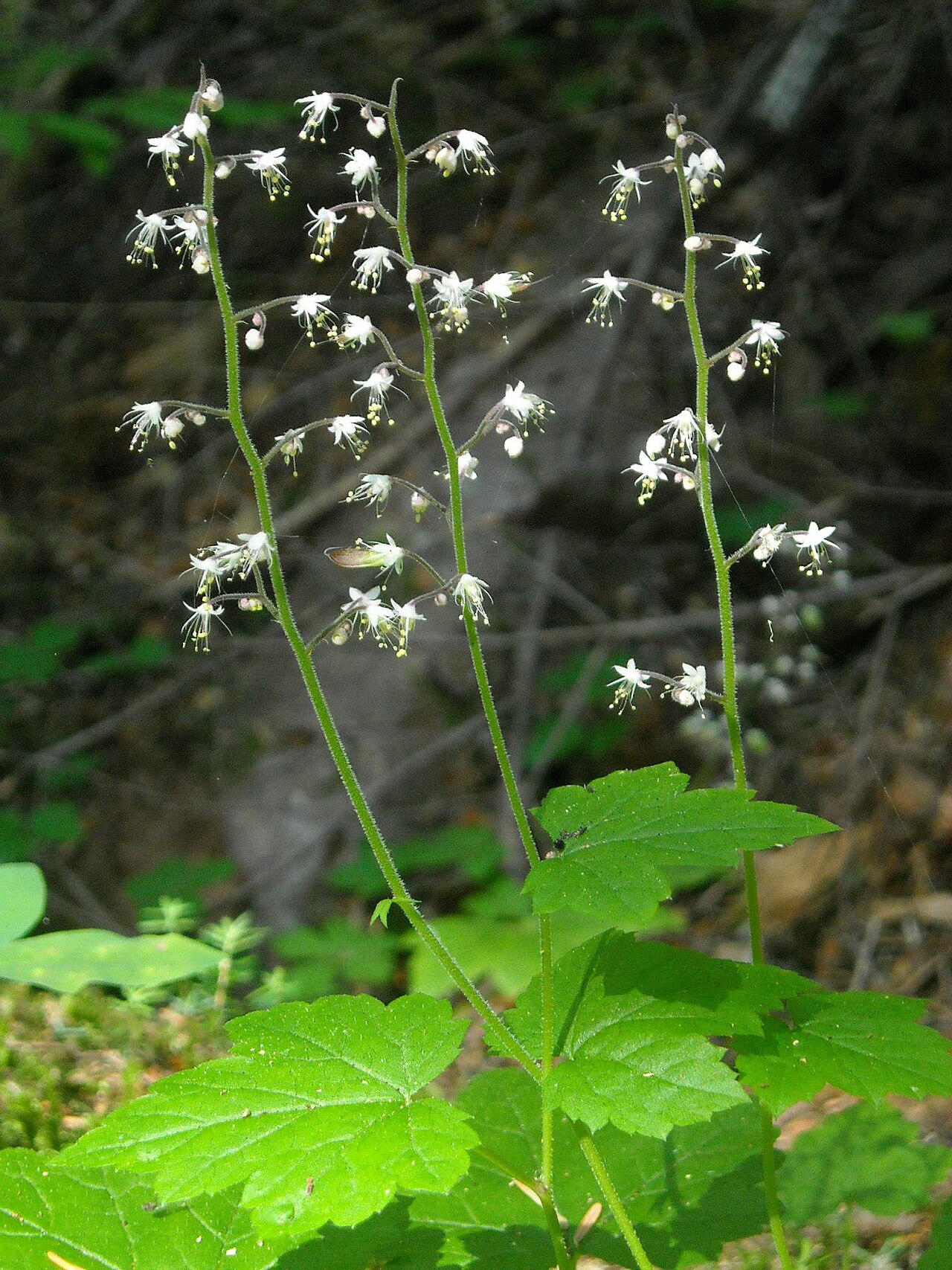
Tiarella trifoliata, known as Threeleaf Foamflower, coolwort or sugar-scoop, is one of the most common wildflowers of the moist conifer forests of western North America. From late spring through summer it sends up slender, wiry stalks lined with tiny white flowers that seem to float in the shade like flecks of foam. It is a low, clump-forming perennial of the saxifrage family (Saxifragaceae), closely related to coral bells (Heuchera) and to the eastern Foamflower (Tiarella cordifolia).
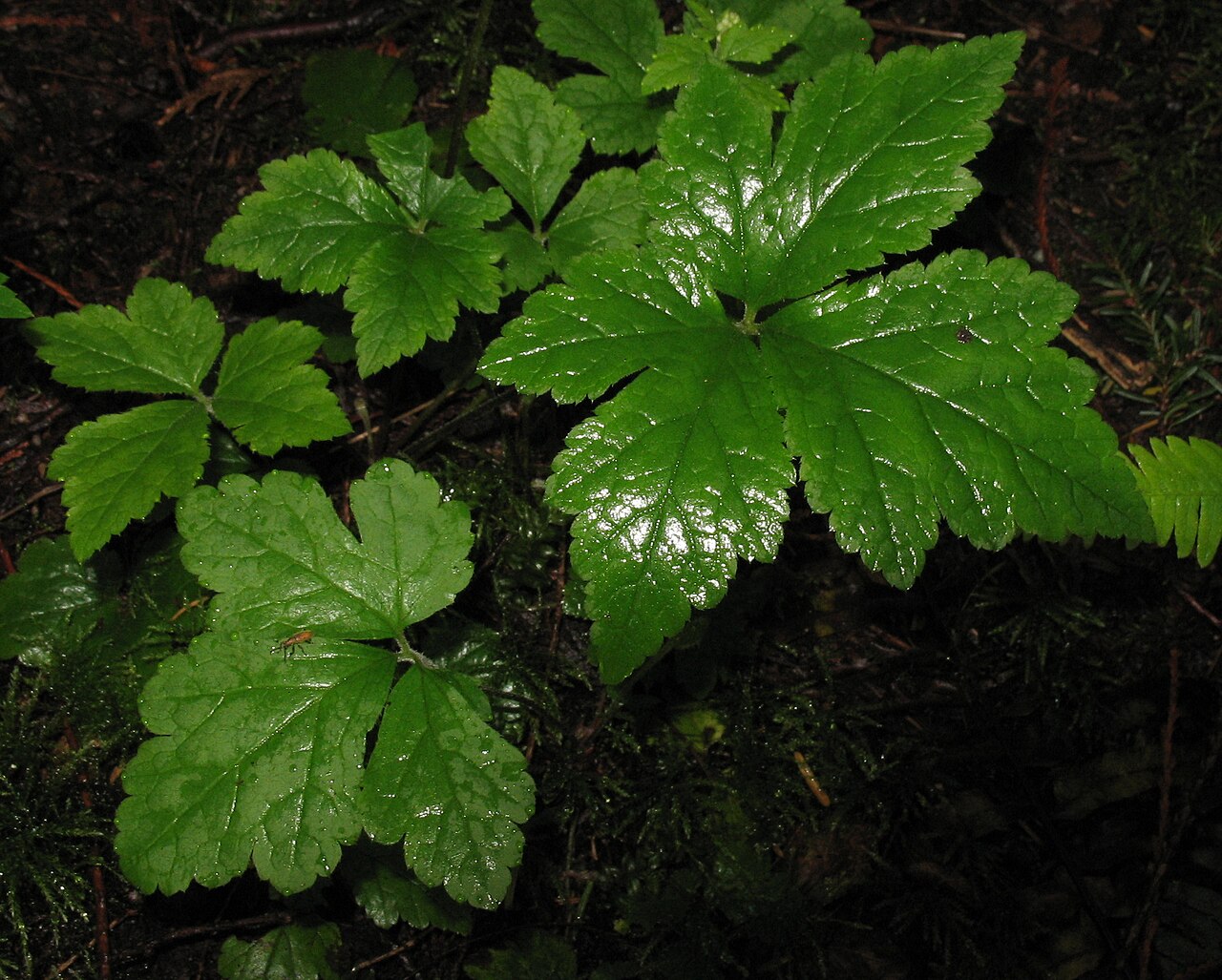
The plant’s leaves grow mostly from the base and vary across its range. In the typical form, var. trifoliata, each leaf is divided into three toothed leaflets. Var. unifoliata, the one-leaved foamflower, has simple, maple-like leaves, and var. laciniata, found in coastal British Columbia, has deeply cut, lacy leaflets. All three share the airy flower stalks and the small, distinctive seed capsules that inspired the genus name: Tiarella means “little tiara.”
Threeleaf foamflower ranges from Alaska and British Columbia south along the coast and Cascades to northern California, and inland to Alberta, Idaho and Montana. It grows in damp, shady forests, along streams and in subalpine meadows, often in great numbers. For gardeners in the Pacific Northwest it is an excellent native groundcover for shade, and this guide covers how to recognize it, where it grows and how to grow it.
Identification
Foamflower’s narrow sprays of tiny white flowers and its basal clumps of lobed or three-parted leaves make it easy to recognize. The main confusion is with a few close relatives in the saxifrage family, which differ in flower shape and leaf form.
Roots & Growth Habit
Plants grow from slender, creeping rhizomes and form loose clumps or patches. Most of the leaves are basal, on long, hairy stalks, and the flowering stems carry only one to three smaller leaves. The plant stays low, with foliage typically 4 to 8 inches tall, while flowering stems reach 8 to 20 inches.
Leaves
The leaves are 1 to 4 inches wide, with sparse glandular hairs. In var. trifoliata they are divided into three leaflets, each shallowly lobed and toothed, the middle leaflet the largest. In var. unifoliata they are simple, broadly heart-shaped and three- to five-lobed, much like a small maple leaf. In var. laciniata the three leaflets are deeply cut into narrow segments. Leaves are green through the growing season and, in mild coastal climates, often stay green through winter.
Flowers
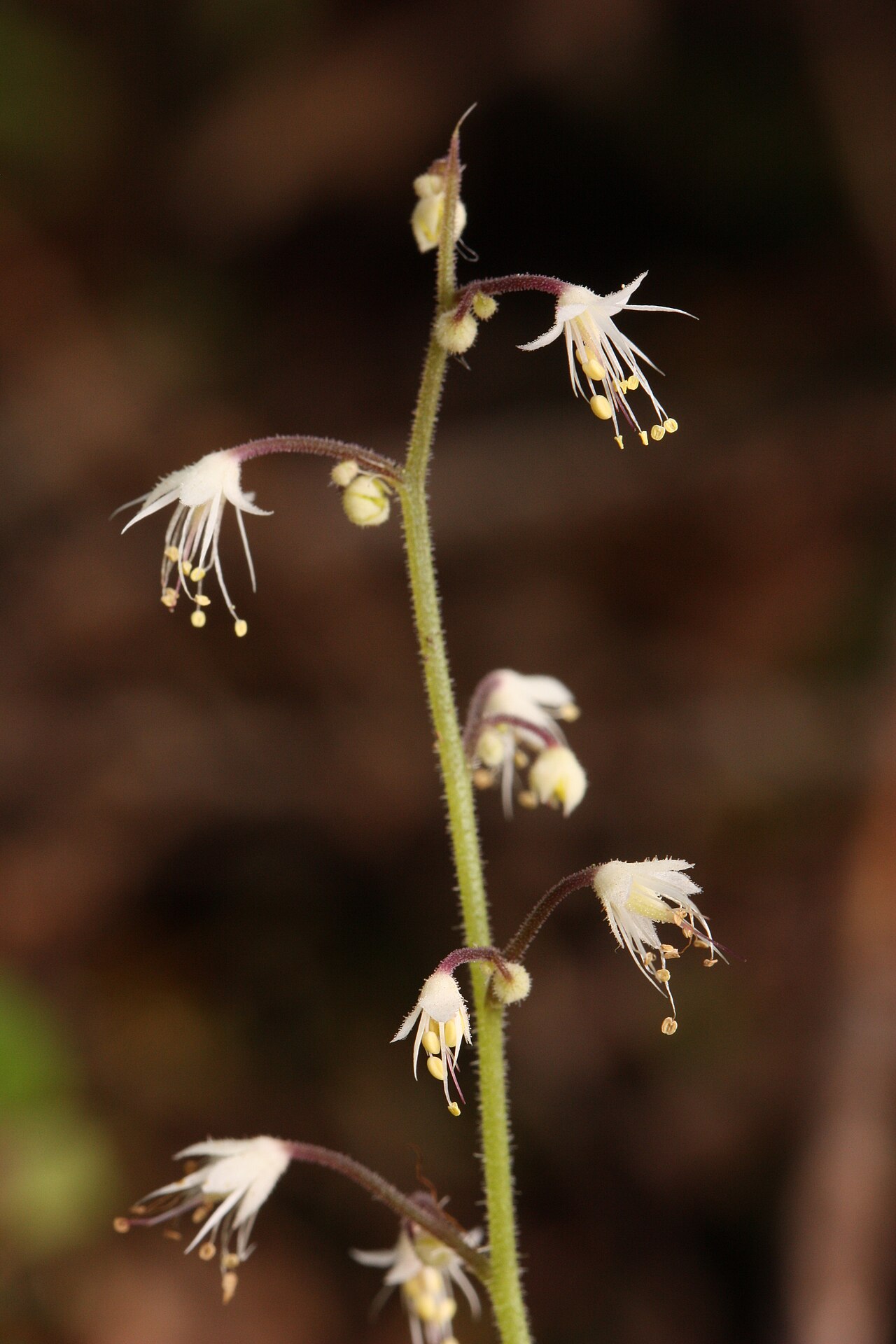
The flowers are borne in a narrow, open panicle on a slender, glandular-hairy stalk. Each flower is tiny, about ¼ inch long, white or sometimes faintly pink, with a bell-shaped calyx, five very narrow petals and ten long stamens that stick out beyond the petals. The overall effect is a fine, frothy spray. Flowering runs from about May to August, depending on elevation.
Fruit
The fruit is a small capsule made of two unequal halves: one short and one about twice as long. As it matures it opens along the top, looking like a tiny scoop or crown, which is the source of the names sugar-scoop and Tiarella. The open capsule is thought to work as a “splash cup,” with raindrops knocking out the small, shiny black seeds.
Similar Species
The eastern Foamflower (Tiarella cordifolia) has simple, heart-shaped leaves and its flowers are crowded in a denser, bottlebrush-like cluster; it does not grow in the West. Mitreworts (Mitella and related genera) have similar habitats, but their tiny flowers have finely divided, snowflake-like petals. Fringe Cups has larger, cup-shaped, fringed flowers on a taller stalk.
Quick Facts
| Scientific Name | Tiarella trifoliata L. (incl. var. unifoliata and var. laciniata) |
| Family | Saxifragaceae (saxifrage family) |
| Plant Type | Herbaceous perennial wildflower spreading by rhizomes |
| Mature Height | 4–8 in foliage; flower stalks 8–20 in |
| Mature Spread | 8–18 in; slowly forms patches |
| Growth Rate | Moderate |
| Sun Exposure | Part shade to full shade |
| Water Needs | Medium; soil should stay moist |
| Soil Type | Rich, humusy forest loam |
| Soil pH | About 5.0–6.5 (acidic) |
| Bloom Time | May–August, depending on elevation |
| Flower Color | White, sometimes faintly pink |
| Fall Color | Little; leaves often stay green in mild winters |
| Fruit | Small two-parted capsule that opens like a scoop |
| Deer Resistant | Moderately; browsed occasionally |
| USDA Hardiness Zones | 4–8 |
Native Range
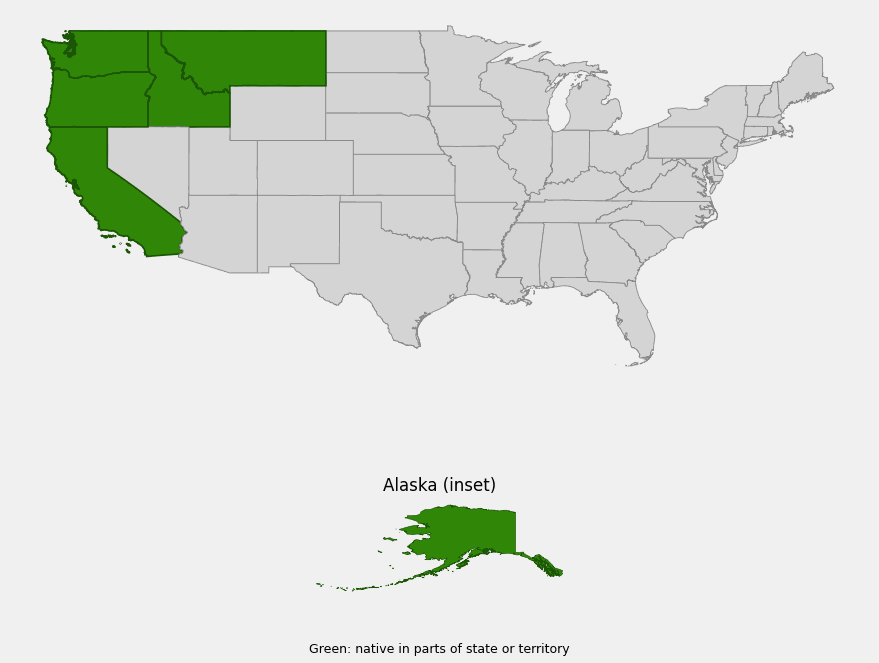
Threeleaf foamflower is native to northwestern North America. USDA PLANTS records it in Alaska, Washington, Oregon, California, Idaho and Montana, and it also grows in British Columbia and Alberta. In Alaska it is found mainly in the southeastern panhandle and along the south-central coast, and in California it reaches the northern Coast Ranges and Klamath Mountains.
It is most abundant in the wet forests west of the Cascade crest, in western Washington, western Oregon and coastal British Columbia, where it is one of the characteristic plants of the forest floor under Douglas-fir, western hemlock and western redcedar. Inland it grows in moist forests of the northern Rocky Mountains of Idaho, Montana and Alberta. The one-leaved var. unifoliata is the common form in the mountains and inland, while var. trifoliata dominates in lowland coastal forests and var. laciniata is mostly restricted to Vancouver Island and the adjacent coast.
Its habitats range from sea level to the subalpine zone, including moist coniferous forests, stream banks, seepage areas, shaded ravines and moist subalpine meadows and avalanche slopes.
📋 Regional plant lists featuring Threeleaf Foamflower: Western Oregon & Western Washington · California & Nevada · Idaho, Eastern Oregon & Eastern Washington · Montana & Wyoming · Alaska
Growing & Care Guide
Threeleaf foamflower is one of the easiest native perennials for shady gardens in the Pacific Northwest and similar cool, moist climates. It is attractive in leaf from spring to fall, and its flowers brighten dark corners for much of the summer.
Light
Part shade to full shade. It does best in the bright shade under tall trees or on the north side of buildings. In sun the leaves scorch unless the soil stays constantly moist and summers are cool.
Soil & Water
Plant it in rich, loose, slightly acidic soil with plenty of organic matter, such as leaf mold or compost. Keep the soil evenly moist, especially in its first year and during hot, dry summers. A mulch of shredded leaves or conifer needles helps retain moisture. It does not tolerate long drought or waterlogged, airless soil.
Planting Tips
Plant in spring or early fall, 10 to 12 inches apart, in groups for a groundcover effect. Foamflower pairs well with ferns, Inside-Out Flower, Western Wild Ginger and vanilla leaf, and it is a good native alternative to nonnative groundcovers in shady beds and woodland paths.
Pruning & Maintenance
Remove spent flowering stalks if you want a tidier look, or leave them for seed. Cut back worn foliage in late winter. Slugs occasionally feed on the leaves. Divide crowded clumps every few years in spring or fall.
Propagation
Divide clumps or separate rooted rhizome pieces in spring or fall. Seeds can be sown on the surface of moist potting mix in fall and left outdoors over winter; they need light and cold, moist conditions to germinate. Seedlings grow slowly and usually bloom in their second or third year.
Landscape Uses
- Shade groundcover: forms low, attractive patches under trees and shrubs
- Woodland gardens: pairs naturally with ferns and other forest wildflowers
- Stream and pond edges: in moist, shady soil along water features
- Pollinator gardens in shade: long-lasting flowers for small bees and flies
- Forest restoration: understory planting in moist conifer forests within its native range
Wildlife & Ecological Value
Threeleaf foamflower is part of the rich understory of western forests, and its long flowering season makes it a steady resource for small insects in the shade.
For Pollinators
The small, open flowers are visited by small native bees, bumble bees, hover flies and other flies, which collect nectar and pollen. Because plants keep flowering from late spring into summer and grow where few other plants bloom, they are a useful food source in deep forest shade.
For Birds
Foamflower is not a significant food plant for birds, but the insects it supports are food for forest songbirds, and its dense patches provide cover for ground-foraging birds such as thrushes and wrens.
For Mammals
Deer and elk browse foamflower occasionally, and small mammals use the cover of its patches. It is not a major food plant.
Ecosystem Role
Foamflower helps form the herb layer of moist forests, where its spreading rhizomes and leafy clumps cover and stabilize soil on slopes and stream banks. Its seeds fall or are splashed only short distances, so patches expand slowly and stay in the moist, sheltered soil the plant needs.
Cultural & Historical Uses
Linnaeus described Tiarella trifoliata in 1753. Its name, like the genus Tiarella, refers to the shape of the fruit, which resembles a small tiara or turban. The names sugar-scoop and coolwort are old common names; sugar-scoop also comes from the shape of the open seed capsule.
Some Indigenous peoples of the Northwest are reported to have used foamflower medicinally, but details are poorly documented. The plant is not considered a food plant, and it is best enjoyed as an ornamental and wildlife plant.
Today threeleaf foamflower is widely grown by native plant nurseries in Washington, Oregon and British Columbia, and it is a favorite for shade gardens and urban forest restoration projects. Its eastern cousin, Tiarella cordifolia, is the parent of many garden hybrids, but the western species remains much more at home in Pacific coastal gardens.
Frequently Asked Questions
Is threeleaf foamflower evergreen?
In mild coastal climates the leaves often stay green through winter. In colder inland and mountain areas the foliage dies back or becomes ragged in winter and regrows in spring.
How is it different from eastern foamflower?
Eastern foamflower (Tiarella cordifolia) has simple, heart-shaped leaves and denser, bottlebrush-like flower clusters, and it spreads by surface runners. Threeleaf foamflower usually has three-parted leaves and much airier, more open flower sprays. It is native to the West and is better adapted to Pacific Northwest gardens.
Will foamflower grow in dry shade?
It needs consistently moist soil. In dry shade, such as under shallow-rooted trees, it struggles unless watered regularly in summer.
Why is it called sugar-scoop?
The small seed capsule has two unequal halves. When it opens, it looks like a tiny scoop, the kind once used to dip sugar from a barrel.
Does it attract pollinators?
Yes. Its long-lasting flowers are visited by small native bees, bumble bees and hover flies, which are valuable in shady gardens where few other plants bloom.

Looking for a nursery that carries Threeleaf Foamflower?
Browse our native plant nursery directory: Alaska · California · Idaho · Montana · Oregon · Washington