Deciduous Holly (Ilex decidua)
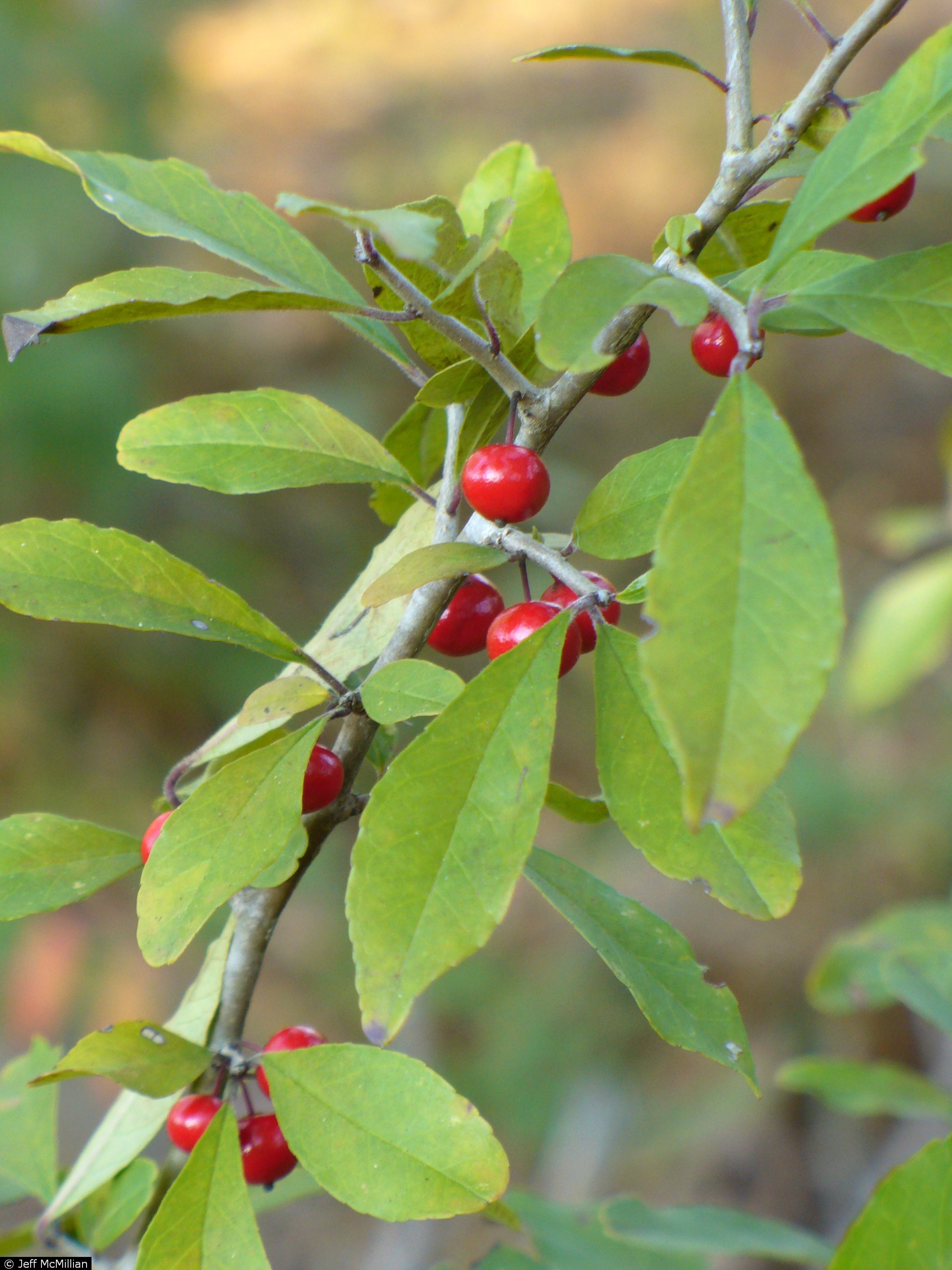
Ilex decidua, commonly known as Deciduous Holly, Possumhaw Holly, or Winterberry Holly (though this name more commonly refers to I. verticillata), is a striking native deciduous shrub renowned for its spectacular winter berry display. Unlike the familiar evergreen American Holly, Deciduous Holly drops its leaves in autumn — and when those leaves fall, they reveal an astonishing display of brilliant red to orange berries that persist through winter, providing vital food for birds and offering dramatic ornamental interest in the landscape at a time when color is most welcome.
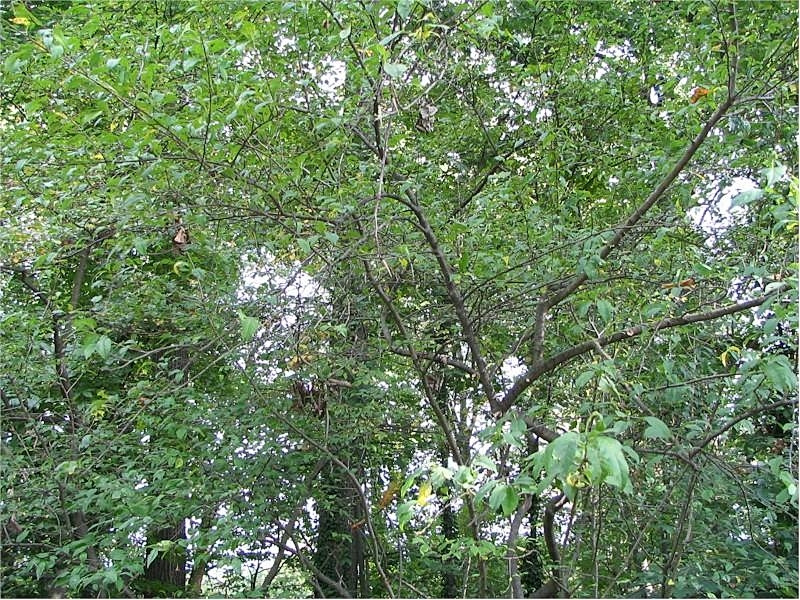
A member of the Aquifoliaceae (holly) family, Deciduous Holly grows to 25 feet tall in its native habitat, though most landscape specimens are considerably smaller. Native to the southeastern and south-central United States, it thrives in moist to wet soils along stream banks, woodland borders, and in lowland forests from Maryland and Delaware south to Florida and west to Kansas and Texas. In Kentucky and Tennessee, it is a reliable native shrub for challenging wet sites, providing year-round interest through spring flowers, summer foliage, and its stunning winter berry display.
As a dioecious plant, Deciduous Holly requires both male and female plants to produce the berries that make it so attractive. Female plants bear the prolific fruit display; male plants are needed nearby for pollination. When properly sited and planted in appropriate male-female combinations, a well-grown female Deciduous Holly in full sun can be one of the most spectacular berry-producing shrubs in the eastern landscape — rivaling non-native berry bushes while providing far superior ecological value to native wildlife.
Identification
Deciduous Holly can be identified by its combination of simple alternate leaves, inconspicuous white flowers in spring, and its most diagnostic feature — the brilliant red or orange-red berries that persist on bare branches through winter after the leaves have fallen.
Bark & Stems
The bark is smooth to slightly rough, gray-brown in color. Young stems are slender, often somewhat angled, and gray-green. The shrub is typically multi-stemmed with an irregular branching pattern that becomes more pronounced as the plant matures. Older specimens develop more furrowed bark. Unlike hawthorns or native plums, Deciduous Holly branches lack thorns.
Leaves
The leaves are simple, alternate, deciduous (dropping in fall), and 1 to 3 inches long, with an elliptic to oblanceolate shape — widest above the middle and tapering toward the base. The margins are finely and sharply toothed. The upper surface is bright to dark green and somewhat glossy; the lower surface is paler. Leaves emerge in spring around the same time as the inconspicuous flowers. Fall color is generally undistinguished — yellow-green to yellow — as the primary interest shifts to the berries.
Flowers & Fruit
The flowers are small, white, and inconspicuous, appearing in April–May in the leaf axils on current-year growth. Being dioecious, plants are either male (producing pollen) or female (producing fruit). The fruit is a small, round, fleshy berry (drupe) about ¼ inch in diameter, brilliant red to orange-red at maturity. The berries develop in summer and ripen in fall, then persist through winter, often remaining on the plant until consumed by birds or until the following spring. In a good year, the berry display on a female Deciduous Holly can be extraordinarily prolific.
Quick Facts
| Scientific Name | Ilex decidua |
| Family | Aquifoliaceae (Holly) |
| Plant Type | Deciduous Shrub / Small Tree |
| Mature Height | 25 ft (typically 7–15 ft in landscape) |
| Sun Exposure | Full Sun |
| Water Needs | Moderate to High |
| Bloom Time | April – May (inconspicuous white flowers) |
| Fruit Color | Brilliant red to orange-red (females only) |
| Dioecious | Yes — need both male and female plants for berries |
| Wildlife Value | Excellent — berries eaten by 20+ bird species |
| USDA Hardiness Zones | 5–9 |
Native Range
Deciduous Holly is native to the southeastern and south-central United States, with its natural range centered in the lower Mississippi Valley and the Atlantic and Gulf Coastal Plains. It extends from the mid-Atlantic states (Maryland, Delaware) southward through the entire Southeast to Florida, and westward through the Gulf Coast states to Texas, Oklahoma, and Kansas, with scattered populations northward through Missouri, Illinois, and into the Ohio Valley region including Kentucky and Tennessee.
In its native habitat, Deciduous Holly is strongly associated with moist to wet soils — it thrives along stream banks, around ponds and lakes, in bottomland forests, wetland edges, and seasonally flooded lowlands. It is commonly found growing in full sun to light shade at the margins of moist forests and in shrub thickets along watercourses. In Kentucky and Tennessee, it occurs throughout both states but is most common in the western portions and along major river systems.
The species exhibits considerable variation across its range, and several botanical varieties or forms have been recognized. Horticultural selections bred for particularly prolific or ornamental fruit production have expanded its use well beyond its natural range.
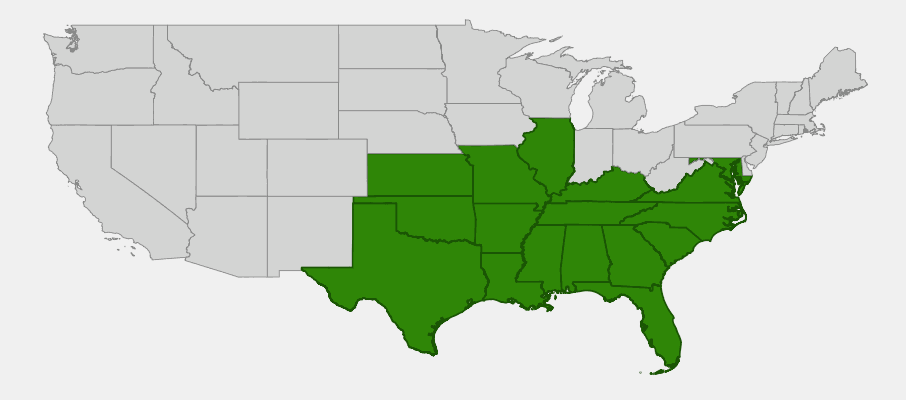
📋 Regional plant lists featuring Deciduous Holly: Kentucky & Tennessee
Growing & Care Guide
Deciduous Holly is a rewarding native shrub for the right conditions — a moist site in full sun will produce spectacular berry displays that rival any ornamental in the winter garden. Understanding its dioecious nature and moisture requirements is the key to success.
Light
Deciduous Holly produces its best berry displays in full sun, where it develops a dense, well-branched form and maximum fruit production. In part shade, the plant will grow but produce fewer berries. In deep shade, berry production is minimal. For spectacular winter interest, site it in as much sun as possible while ensuring adequate moisture.
Soil & Water
This species thrives in moist to wet, acidic soils (pH 5.5–6.5). It tolerates periodic flooding and heavy clay soils, making it ideal for rain gardens, wet swales, pond margins, and low-lying areas that may be wet in winter and spring. While established plants show some drought tolerance once they have developed deep root systems, consistent moisture produces the best growth and fruit production. Mulch to maintain soil moisture.
Planting Tips
The most important consideration: for berry production, you need at least one male plant for every two to three female plants, planted within 50 feet of each other for bee-assisted pollination. When purchasing plants, ask the nursery to identify male vs. female specimens, or buy plants when they are fruiting or flowering to confirm sex. Female cultivars with heavy fruiting include ‘Council Fire’, ‘Red Cascade’, and ‘Warren’s Red’. Plant in fall or early spring, spacing plants 8–12 feet apart for naturalistic groupings.
Pruning & Maintenance
Deciduous Holly requires minimal pruning. If shaping is desired, prune just after the berries are past their peak in late winter. Remove any dead or damaged wood at that time as well. The plant naturally develops an irregular, somewhat open form that is characteristic and attractive — resist the urge to over-prune into a formal shape. Rejuvenation pruning (removing one-third of the oldest stems each year for three years) can revitalize an overgrown specimen.
Landscape Uses
- Winter interest — one of the best native shrubs for spectacular winter berry display
- Rain gardens — thrives in the wet zone, tolerates periodic inundation
- Wetland buffers — ideal for stream bank and pond margin planting
- Wildlife gardens — berries provide critical winter food for thrushes, waxwings, and more
- Foundation plantings — female specimens near downspouts get the moisture they need
- Mixed shrub borders — dramatic when combined with other winter-interest natives
Wildlife & Ecological Value
Deciduous Holly is one of the most wildlife-valuable native shrubs for the eastern and southern United States, particularly for birds during the critical winter months when food sources are scarce.
For Birds
The brilliant red berries are consumed by more than 20 species of birds, including American Robins, Hermit Thrushes, Eastern Bluebirds, Yellow-rumped Warblers, Mockingbirds, Cedar Waxwings, Brown Thrashers, Purple Finches, and White-throated Sparrows. Waterfowl including Wood Ducks, Mallards, and several teal species also consume the fruits where available. The berries are particularly important as a winter food source when other fruit is scarce. The dense branching structure also provides excellent nesting habitat for songbirds.
For Mammals
White-tailed deer browse the leaves and young stems, and opossums (hence the common name “Possumhaw”) eat the berries. Raccoons and gray foxes also consume the fruit. The dense, thorny growth provides protective cover for rabbits and other small mammals. Important note: the berries are toxic to humans and domestic animals — do not plant where small children or pets might consume the fruit.
For Pollinators
The small spring flowers attract numerous native bees, sweat bees, and other small pollinators that are essential for pollination and fruit set. Native bees are more effective pollinators of hollies than honeybees. The spring bloom period, while not showy to human eyes, is an important early nectar source for native bee populations.
Ecosystem Role
Deciduous Holly serves as a keystone species in moist-to-wet edge habitats, providing shelter, nesting sites, and food resources that support diverse wildlife communities. Its tolerance of wet soils makes it an important component of riparian buffers and wetland restoration projects, where it helps stabilize banks, filter runoff, and provide structural complexity to the vegetation. The species contributes to forest succession in wet areas, where it often serves as nurse cover for tree seedlings.
Cultural & Historical Uses
Native American peoples throughout the Southeast found numerous medicinal uses for Deciduous Holly. The Cherokee used bark infusions as an anti-inflammatory treatment and as a remedy for digestive complaints. Several nations used the plant medicinally for fever reduction, as a stimulant, and in ceremonial purification rituals. The plant’s name “Possumhaw” reflects the importance of opossums as consumers of the berries in Indigenous ecological knowledge.
European settlers quickly recognized the plant’s ornamental value, particularly its stunning winter berry display, and it was cultivated in gardens throughout the Colonial period. The wood, while too small for significant lumber, was used for small carved objects and fuel. The berries were never used as food by European settlers — they are toxic to humans and must never be eaten — though Indigenous peoples understood this distinction clearly and used the plant medicinally only under controlled circumstances.
In modern horticulture, Deciduous Holly has become increasingly popular as a native alternative to the widely planted non-native Nandina and Pyracantha, which produce berries toxic to birds in high quantities. Native plant advocates and wildlife garden designers consistently recommend Deciduous Holly as one of the most important shrubs for winter bird feeding habitat in Kentucky, Tennessee, and the broader Southeast. Numerous horticultural cultivars have been selected for maximum berry production and ornamental value.
Frequently Asked Questions
Are the berries of Deciduous Holly edible?
No — the berries of Deciduous Holly (and all hollies) are toxic to humans, dogs, cats, and horses. Ingestion can cause nausea, vomiting, diarrhea, and other symptoms. However, the berries are perfectly safe for and actively beneficial to native wildlife species, particularly birds that have evolved to eat them. Keep children and pets away from the berries.
Why is my Deciduous Holly not producing berries?
There are three common reasons: (1) Your plant is male — only female plants produce berries. (2) There is no male plant within pollination range (50 feet) of your female. (3) The plant is in too much shade — insufficient sunlight dramatically reduces fruit production. Ensure you have a male plant nearby and site females in full sun for maximum berry production.
What is the difference between Deciduous Holly and Winterberry Holly?
Both are native deciduous hollies with spectacular winter berries, and both are sometimes called “Winterberry.” Technically, “Winterberry Holly” most often refers to Ilex verticillata, which has smaller berries borne in dense clusters close to the stem. Deciduous Holly (I. decidua) has larger, more loosely arranged berries, typically orange-red, and is better adapted to drier or more southern conditions. Both are excellent native plants for wildlife gardens.
How much space does Deciduous Holly need?
For a landscape setting, plan for 8–12 feet of spread at maturity for most cultivars. The natural species can reach 25 feet tall over decades, but landscape specimens are typically kept smaller through selective pruning. Allow adequate space for air circulation to prevent fungal issues. It makes an excellent specimen shrub when given room to develop its naturally attractive irregular form.
When do the berries ripen on Deciduous Holly?
Berries develop throughout summer and ripen to their brilliant red or orange color in September–October, just as the leaves are falling. They typically persist through winter, often until February or March, unless consumed by birds. In exceptional years or with heavy bird pressure, all berries may be consumed by mid-winter. Early-ripening cultivars may color up in late August.