Maleberry (Lyonia ligustrina)
Lyonia ligustrina, commonly known as Maleberry or He-Huckleberry, is a native deciduous shrub of the eastern United States — a member of the Ericaceae (heath) family that occupies the moist, acidic habitats of bogs, wet thickets, streambanks, and swampy forest edges throughout much of eastern North America. The unusual common name “Maleberry” refers to the plant’s non-edible fruits (unlike the “female” blueberries and huckleberries, Maleberry’s fruits are dry capsules, not juicy berries — despite the “berry” in the name). The alternate name “He-Huckleberry” reflects the same distinction: this is the “male” (unproductive) counterpart to the fertile, fruit-producing huckleberries of the same habitat.
Despite its modest reputation in the fruit department, Maleberry is a genuinely attractive and ecologically valuable native shrub. Growing 6–12 feet tall, it develops a multi-stemmed, somewhat open form with exfoliating reddish-brown bark that becomes increasingly attractive as the plant matures. In June — later than most spring-blooming shrubs — it produces generous clusters of small, pure white, urn-shaped flowers along the previous year’s branches. These blooms are a valuable nectar source for pollinators at a time when the early spring flush is over and summer bloomers haven’t yet begun. The plant’s autumn foliage turns attractive shades of red and orange, extending its seasonal appeal.
For gardeners and restoration ecologists in Delaware, New Jersey, and New York, Maleberry is an excellent native alternative to non-native ornamental shrubs for moist, acidic sites. It tolerates the wet conditions and acidic soils that challenge many ornamental plants, provides excellent wildlife cover and structure year-round, and requires minimal maintenance once established. Its bloom time fills a gap in the native bloom calendar, and its dense branching provides secure nesting habitat for many songbirds.
Identification
Maleberry is a multi-stemmed deciduous shrub growing 6–12 feet (1.8–3.6 m) tall, typically with an upright to slightly arching form. Older specimens develop attractively shaggy, exfoliating bark. The plant does not spread aggressively by rhizomes like many of its Ericaceae relatives but grows as a somewhat open, multi-stemmed clump that expands slowly from its base.
Bark and Stems
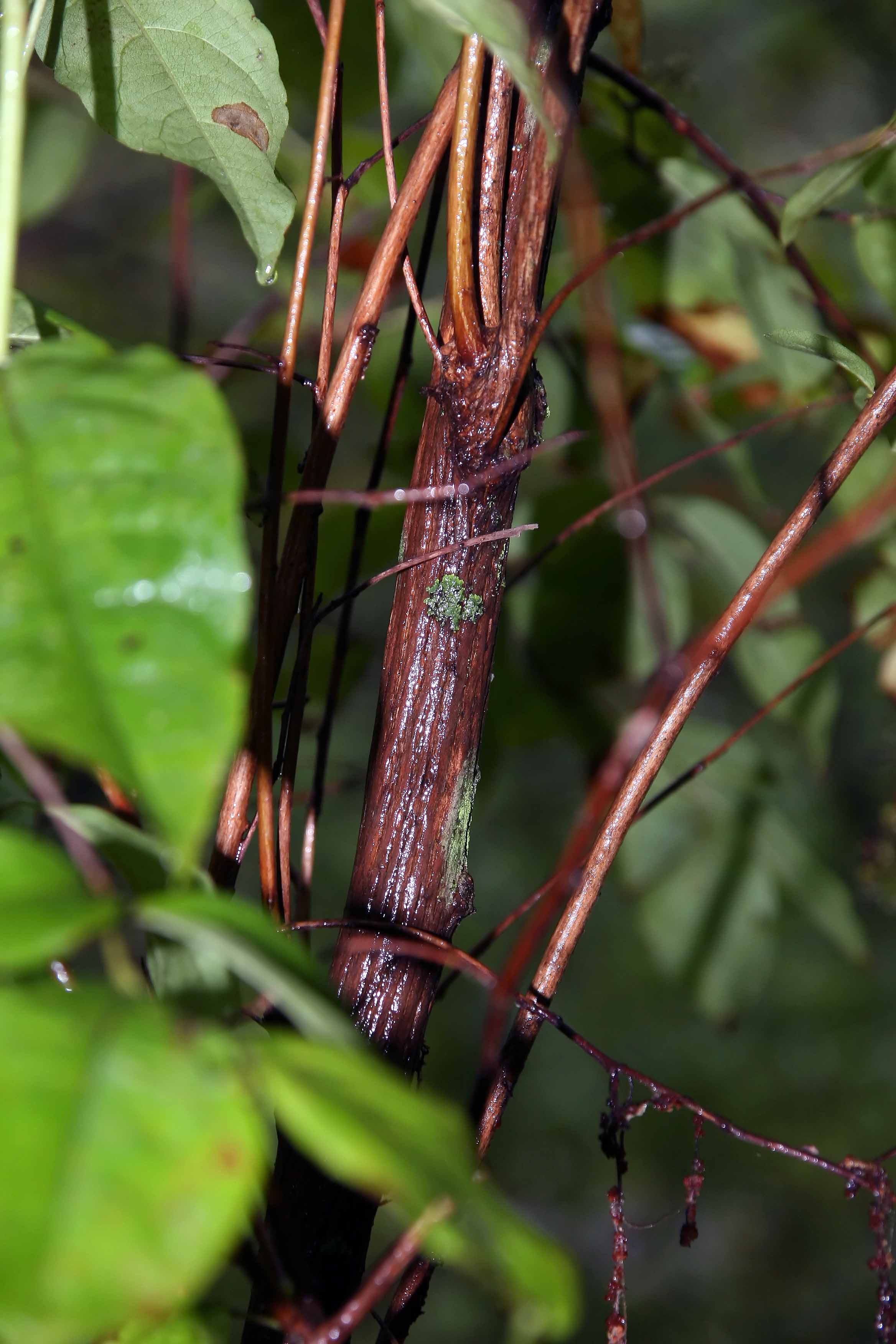
Young stems are slender, reddish-brown to greenish-brown, and may be somewhat pubescent. As the plant ages, the bark becomes increasingly attractive — reddish-brown and beginning to exfoliate (peel) in thin strips, similar to the exfoliating bark of Leucothoe and related heath family shrubs. The exfoliating bark provides year-round ornamental interest and is particularly effective in winter when the leaves have dropped. Older stems become grayish-brown. The branching pattern is irregular and somewhat open, with arching branch tips.
Leaves
Leaves are alternate, simple, elliptic to obovate (widest toward the tip), 1–3 inches (2.5–7.5 cm) long. The upper surface is dark to medium green, with a somewhat shiny texture; the underside is paler. Leaf margins are entire to finely serrulate. Unlike many Ericaceae relatives, the leaves are not particularly leathery. Small tufts of bristly hairs may be present on midribs and veins. In autumn, leaves turn attractive reddish to orange-red colors before dropping, providing a late-season ornamental display.
Flowers
The flowers bloom in June — later than most other native heath family shrubs (which bloom April–May). They are borne in dense, elongated clusters (racemes or panicles) along the previous year’s leafy branches, creating a profuse bloom effect that covers much of the shrub. Individual flowers are small (about ¼ inch long), white to creamy white, and urn-shaped (urceolate) — the classic flower form of the Ericaceae family. The flowers are somewhat fragrant and attract numerous pollinating insects.
Fruit
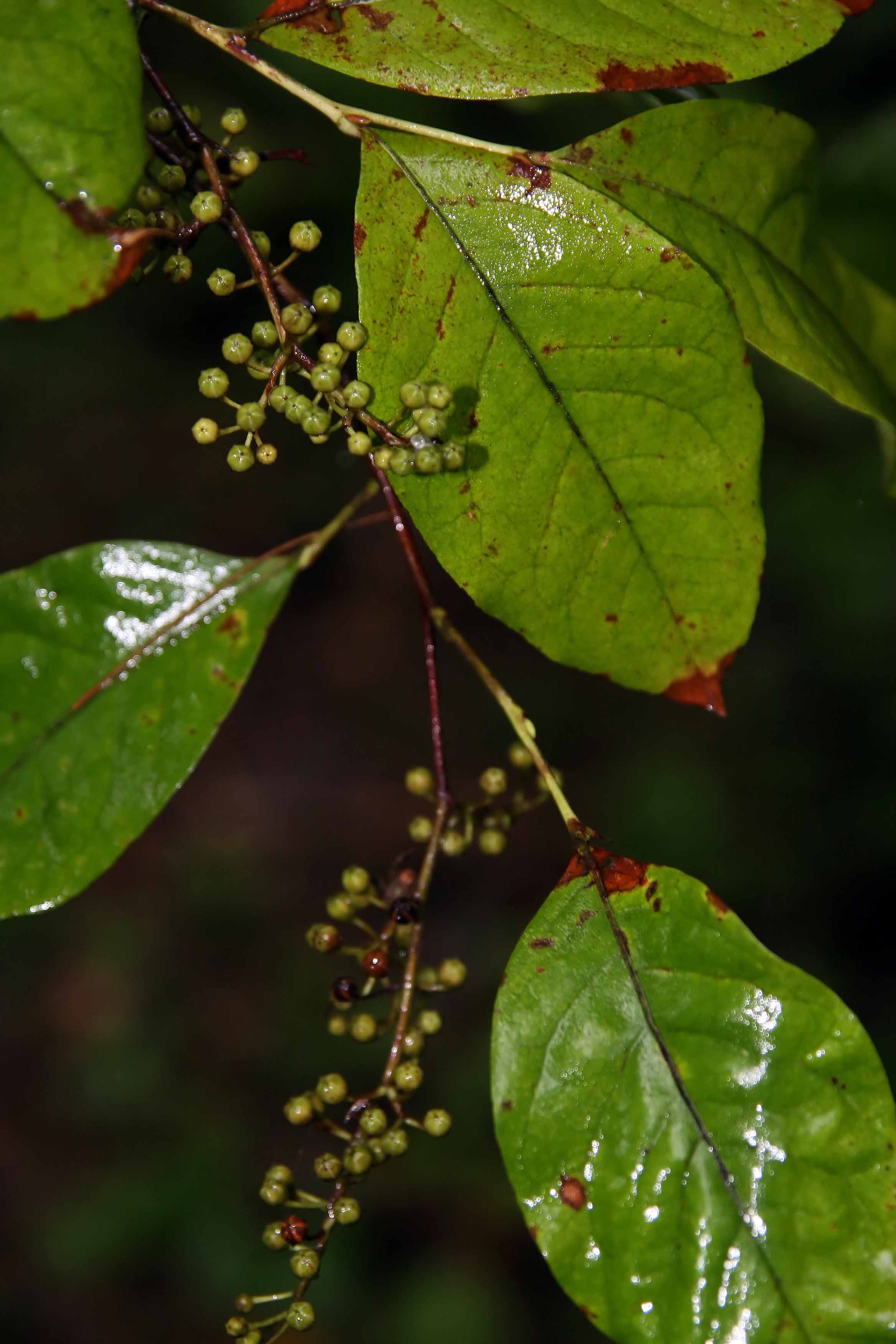
The fruit is a small, round to ovoid woody capsule, about ⅛ inch (3–4 mm) in diameter, that splits open at maturity to release numerous tiny seeds. The persistent capsules remain on the shrub through fall and winter, creating an interesting dry texture on bare branches. This is the source of the “maleberry” common name — unlike the edible, juicy berries of blueberries and huckleberries that grow nearby, Maleberry produces dry, inedible capsules.
Quick Facts
| Scientific Name | Lyonia ligustrina |
| Family | Ericaceae (Heath family) |
| Plant Type | Deciduous Shrub |
| Mature Height | 6–12 ft |
| Sun Exposure | Full Sun to Part Shade |
| Water Needs | Moderate to High |
| Bloom Time | June |
| Flower Color | White |
| Fruit Type | Dry woody capsule (not edible) |
| Fall Color | Red to orange-red |
| USDA Hardiness Zones | 3–9 |
Native Range
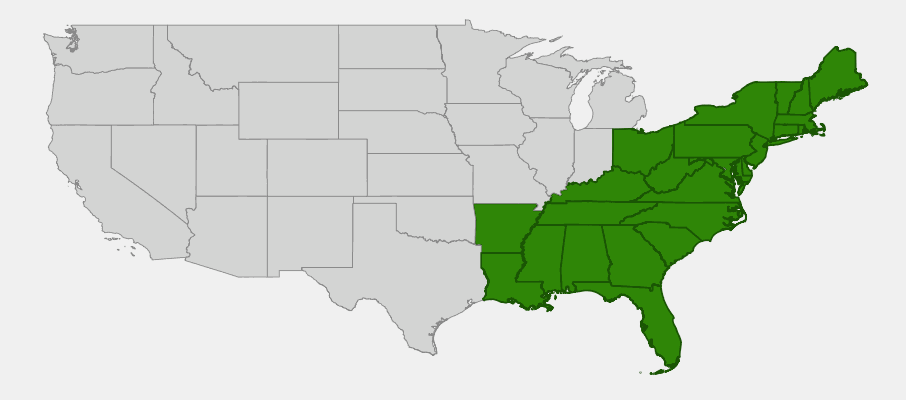
Maleberry is native to a substantial portion of eastern North America, ranging from southern Maine south through New England, the Mid-Atlantic states, and the Southeast to Florida, and west along the Gulf Coastal Plain to eastern Texas and Louisiana. It extends northward into New England and the Great Lakes region, with populations in Maine, New Hampshire, Vermont, Massachusetts, Rhode Island, and Connecticut. The species is widespread in the Mid-Atlantic and Southeast, occurring in every state from New York to Florida.
Throughout its range, Maleberry occupies consistently moist to wet, acidic habitats: the edges of bogs and sphagnum swamps, Atlantic white cedar swamps, pocosins, shrubby wetland thickets (particularly alder and red maple swamps), stream margins, and moist upland edges. In the coastal plain of New Jersey and Delaware, it is a frequent component of the shrubby wetland communities associated with the Pine Barrens’ cedar swamps and beaver meadows. In New York, it occurs throughout the Hudson Valley and Long Island in appropriate moist, acidic situations.
The species is somewhat more tolerant of shade than many of its Ericaceae relatives and can grow in the partial shade of wetland forest margins. It tends to form dense multi-stemmed thickets in favorable conditions, creating structural complexity in wetland edge communities that supports both nesting birds and diverse invertebrate populations. Two varieties are recognized: var. ligustrina across most of the range, and var. foliosiflora in parts of the Southeast, differing in leaf and flower cluster characteristics.
📋 Regional plant lists featuring Maleberry: Delaware, New Jersey & New York
Growing & Care Guide
Maleberry thrives in moist, acidic conditions and is relatively straightforward to grow if those basic needs are met. Like all Ericaceae members, it requires acidic soil and consistent moisture to perform at its best.
Light
Maleberry grows in full sun to part shade. In full sun with adequate moisture, it produces the densest growth and most abundant bloom. In part shade — the dappled light of open woodland edges or alongside larger shrubs — it grows more openly and blooms somewhat less prolifically but remains healthy and attractive. It is less shade-tolerant than Highbush Blueberry or Swamp Azalea; deep shade should be avoided.
Soil & Water
Acidic soil (pH 4.5–6.0) and consistent moisture are essential. Maleberry naturally grows in wet to moist conditions and tolerates poorly drained, seasonally waterlogged soils far better than most ornamental shrubs. It is an excellent choice for wet spots that are difficult to plant with conventional landscaping. While it tolerates standing water for short periods, it performs best in soil that is consistently moist rather than permanently flooded. Amend neutral or alkaline soils with sulfur and acidic organic matter. Mulch with pine bark or wood chips to retain moisture and maintain soil acidity.
Planting Tips
Plant in fall or early spring. Space plants 4–6 feet apart to allow for mature spread. Dig a wide, shallow planting hole and backfill with a mix of native soil and acidic organic compost. Water thoroughly at planting and during the establishment period (first 2–3 growing seasons). Once established, Maleberry is relatively drought-tolerant on a short-term basis but performs best with consistent moisture. Do not plant in highly alkaline soils without significant amendment.
Pruning & Maintenance
Maleberry requires minimal pruning. Remove dead, damaged, or crossing branches in late winter. To maintain size or rejuvenate an aging shrub, cut one-third of the oldest stems to the ground each year over a 3-year cycle — this “renewal pruning” encourages vigorous new growth and maintains shrub vitality. Flowers are produced on previous year’s wood, so avoid heavy pruning in late summer or fall (which would remove next year’s flower buds). No significant pest or disease problems under appropriate conditions; occasional leaf spots and leaf miners are possible but rarely serious.
Landscape Uses
- Wet and moist site planting — one of the best native shrubs for wet spots
- Rain garden edges and bioswales
- Bog and pond margins
- Native shrub borders with Highbush Blueberry and Swamp Azalea
- Wildlife plantings — dense cover for nesting and roosting birds
- Late-spring gap filler in the bloom calendar (June bloom)
- Woodland edge naturalization
Wildlife & Ecological Value
While Maleberry’s dry capsules don’t provide the fruit resources of its berry-bearing relatives, the shrub contributes substantially to wildlife habitat in other important ways.
For Birds
The dense, multi-stemmed branching of Maleberry provides excellent nesting and roosting habitat for numerous songbirds. Common Yellowthroat, Yellow Warbler, Red-winged Blackbird, Gray Catbird, Song Sparrow, and Swamp Sparrow all nest in dense shrubby wetland vegetation of the type that Maleberry helps create. The June flowers attract insects that in turn provide food for insectivorous birds during the active nesting season. The persistent dry capsules on winter stems provide visual texture and occasional seeds for small birds, particularly chickadees and finches that forage among the branches.
For Mammals
White-tailed deer occasionally browse the foliage and twigs, though Maleberry is less palatable than many other wetland shrubs. The dense thickets provide cover for small mammals including muskrats, mink, and various wetland rodents. The shrub’s root system in saturated soils provides habitat for aquatic and semi-aquatic invertebrates.
For Pollinators
Maleberry’s June bloom fills a critical gap in the native bloom calendar — after the spring rush of early-blooming heaths and before the main summer bloom period. The white urn-shaped flowers attract bumblebees, native bees, and various other pollinators. As an Ericaceae member, Maleberry supports specialist native bees that require buzz pollination. The insect community attracted to Maleberry’s flowers supports insectivorous birds and bats in the surrounding area.
Ecosystem Role
In wetland and bog edge communities, Maleberry is an important structural component of the native shrub layer. Its ability to tolerate wet, acidic conditions means it occupies habitat niches that few other large shrubs can fill. In the shrub bog and Atlantic white cedar swamp communities of New Jersey and Delaware, Maleberry is a characteristic species whose presence indicates intact, high-quality native habitat. It contributes to the structural complexity of these ecosystems, creating diverse vertical layering that supports biodiversity at all levels.
Cultural & Historical Uses
Maleberry has a more modest ethnobotanical history than its fruit-bearing heath family relatives — its dry, inedible fruits offered no food value, and the plant attracted less human interest than the productive blueberries and huckleberries with which it grows. Nevertheless, Indigenous peoples throughout its range had knowledge of the plant. Some nations used the bark and leaves medicinally, particularly as a poultice for skin irritations and as a component of treatments for various ailments. The Iroquois reportedly used some Lyonia species in traditional ceremonies and as materials for specific crafts, though documentation of specific uses is limited.
The genus Lyonia is named after John Lyon, a Scottish-born plant explorer and nurseryman who worked in the southeastern United States in the late 18th and early 19th centuries. Lyon collected numerous native plants for introduction to European gardens and corresponded with the leading botanists of the day, including Benjamin Smith Barton and Asa Gray’s predecessor William Bartram. His collections helped introduce many eastern North American natives to European horticulture, though Maleberry itself never became a major horticultural subject due to its non-showy fruits.
In the 19th and early 20th centuries, Maleberry was occasionally noted in regional floras and botanical surveys as a characteristic component of coastal plain wetland communities. Its ecological distinctiveness — growing in the exact habitat of highbush blueberry and huckleberries but producing non-edible fruits — made it a useful botanical marker for swampy acidic habitats. Today, it is increasingly recognized for its genuine horticultural merits: June bloom, attractive bark, fall color, and exceptional performance in difficult wet and acidic sites where few other native shrubs thrive.
Frequently Asked Questions
Why is it called Maleberry if it doesn’t produce berries?
The name reflects the old folk distinction between “male” (non-fruit-bearing) and “female” (fruit-bearing) plants of similar appearance — a naming convention that predates modern botanical classification. Maleberry grows in the same wet, acidic habitats as huckleberries and blueberries but produces dry capsules instead of juicy berries, hence the “male” (fruitless) counterpart name. The alternate name “He-Huckleberry” means the same thing.
Will Maleberry grow in waterlogged soil?
Yes — Maleberry is one of the more flood-tolerant native shrubs for acidic wetland conditions. It tolerates seasonal waterlogging and even brief periods of standing water. It is an excellent choice for the wet margins of rain gardens, bog gardens, and pond edges where the soil stays consistently moist to wet.
How does Maleberry differ from Staggerbush (Lyonia mariana)?
Both are native Lyonia species in the Mid-Atlantic, but they differ in habitat and form. Staggerbush (L. mariana) is shorter (2–6 ft), prefers drier, sandy, acidic soils of the coastal plain, and blooms in May with similar urn-shaped white flowers. Maleberry is taller (6–12 ft), prefers wetter conditions, and blooms in June. In the field, habitat is often the best clue: Maleberry = wet, Staggerbush = dry.
Is Maleberry toxic?
Like most Ericaceae members, Maleberry contains andromedotoxins (also called grayanotoxins) — compounds that are toxic to livestock and humans if consumed in significant quantities. This is the likely origin of the “staggerbush” name for related species (livestock that ate the foliage would stagger). Do not consume any part of the plant. This toxicity is also why Maleberry is generally avoided by deer.
When is the best time to plant Maleberry?
Fall planting is ideal — the plant establishes its root system during the cool, moist months before summer heat arrives. Spring planting also works well. Container-grown plants can be transplanted throughout the growing season if irrigation is available. Bare-root plants should be planted in early spring before bud break or in fall after leaf drop.

Looking for a nursery that carries Maleberry?
Browse our native plant nursery directory: Delaware · New Jersey