Globe Mallow (Spharalcea ambigua)
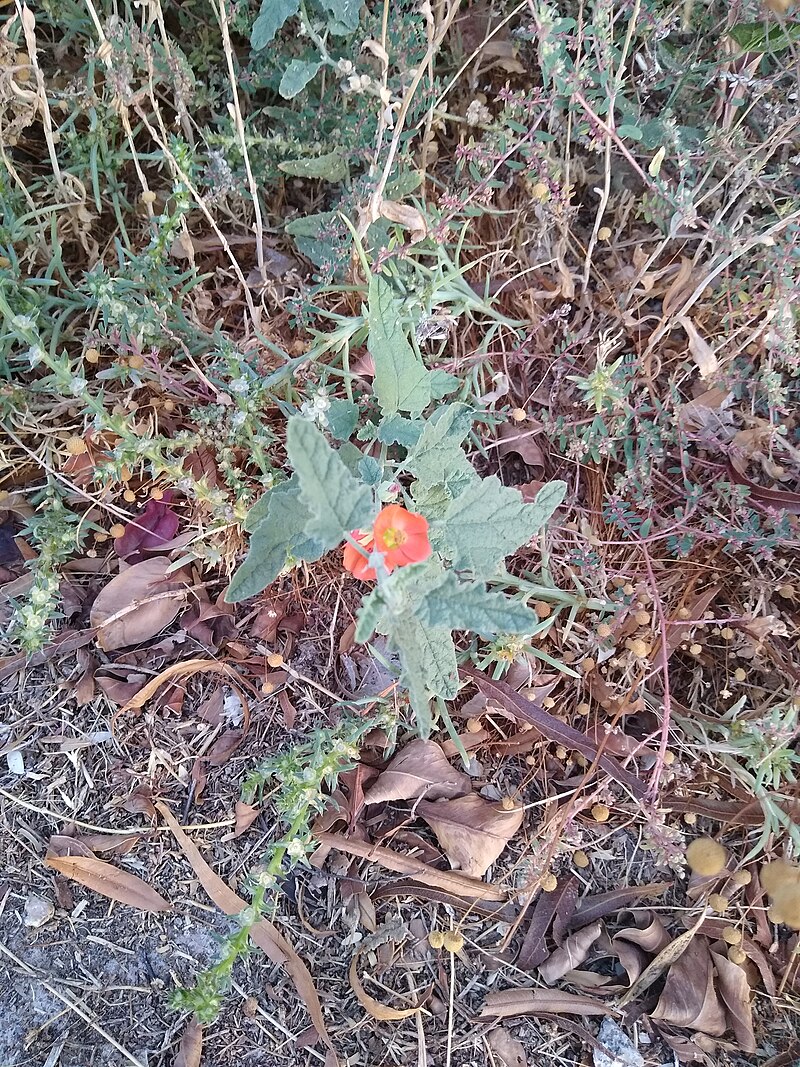
Sphaeralcea ambigua, known as Globe Mallow or Desert Mallow, is one of the most spectacular and beloved wildflowers of the American Southwest deserts. A native perennial subshrub in the Malvaceae (mallow) family, Globe Mallow lights up rocky slopes, desert roadsides, and open bajadas with masses of vivid orange, pink, red, or white cup-shaped blooms that emerge reliably after rains and carry through the spring and fall seasons. It is among the most drought-tolerant native plants available to desert gardeners, thriving in the leanest, hottest conditions with minimal supplemental water once established.
Globe Mallow forms a rounded to sprawling shrub typically 2 to 3 feet tall and 3 to 4 feet wide, with silvery-gray lobed leaves and upright flowering stems densely studded with 1-inch blossoms. The plant’s ability to bloom prolifically in both spring and after summer monsoon rains gives it an exceptionally long effective display season compared to many desert natives. It is short-lived (typically 3–5 years) but reseeds freely, maintaining persistent colonies in suitable habitat without any gardener intervention.
In the wild, Globe Mallow is a common pioneer of disturbed and open desert land — roadsides, dry washes, rocky slopes — throughout the Sonoran and Mojave Desert regions. Its cultural and ecological importance is difficult to overstate: it has been used medicinally by Indigenous peoples for generations, it supports specialist native bees that depend on mallow pollen, and it is one of the most reliably cheerful and low-maintenance plants a desert gardener can choose.
Identification
Globe Mallow is a woody-based perennial subshrub with distinctive silvery-gray appearance, lobed leaves, and dense spikes of cup-shaped flowers. The overall plant has a soft, silvery texture from the dense star-shaped (stellate) hairs covering all surfaces, giving it a gray-green appearance that contrasts beautifully with the vivid flowers.
Stems & Leaves
Stems are erect to spreading, woody at the base, and up to 3 feet long, densely covered with grayish stellate hairs. The leaves are alternate, 1 to 2 inches long, with 3 to 5 shallow to moderately deep lobes in a maple-leaf pattern. Both leaf surfaces are covered with the same whitish stellate hairs, giving the foliage a pale, dusty appearance. Importantly, the stellate leaf hairs can cause eye irritation — avoid rubbing eyes after handling Globe Mallow and wash hands after gardening with it.
Flowers & Seeds
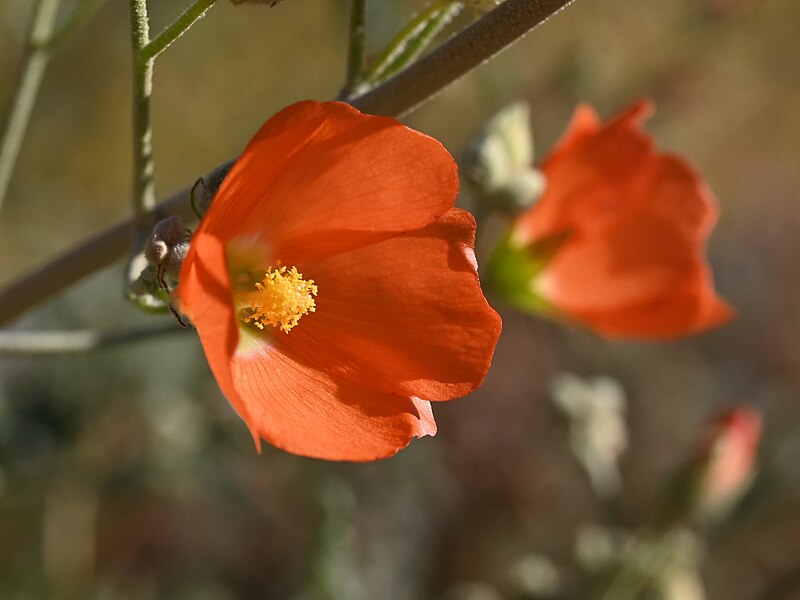
The flowers are 5-petaled, cup-shaped, about 1 inch in diameter, and occur in a range of colors within the species: most commonly brilliant orange, but forms with pink, red, white, and lavender flowers also exist. The petals are broad and overlapping, and the staminal column typical of the mallow family is prominent in the center. Flowers are produced in elongated racemes along the upper stems from February through May, then again after summer monsoon rains from August through October. The fruit is a segmented schizocarp that splits into individual seed-bearing segments at maturity.
Quick Facts
| Scientific Name | Sphaeralcea ambigua |
| Family | Malvaceae (Mallow) |
| Plant Type | Perennial Subshrub |
| Mature Height | 3 ft |
| Sun Exposure | Full Sun |
| Water Needs | Low (Drought Tolerant) |
| Bloom Time | February – May; August – October |
| Flower Color | Orange (also pink, red, white, lavender forms) |
| Notes | Short-lived, reseeds freely. Stellate leaf hairs may irritate eyes. |
| USDA Hardiness Zones | 7–11 |
Native Range
Globe Mallow is a signature plant of the Mojave and Sonoran Deserts, with its range extending from the warm deserts of southern California through Nevada, Utah, Arizona, New Mexico, and Texas. It is one of the most common and conspicuous wildflowers on the rocky slopes, sandy flats, and roadsides of the Mojave Desert, where it often dominates hillsides in spectacular spring bloom displays after adequate winter rains. In Arizona, it is ubiquitous in the Sonoran Desert from sea level to about 3,500 feet elevation.
The species grows in a wide range of desert habitats: dry, rocky slopes; sandy desert washes; gravelly bajadas; roadside embankments; and disturbed ground. It tends to avoid heavy clay soils and does not occur in the coldest high-desert environments of the Colorado Plateau. Globe Mallow is a reliable indicator of Sonoran and Mojave Desert conditions — where you see it growing naturally, you’re in classic warm-desert territory.
In years following abundant winter and spring rainfall, Globe Mallow can blanket extensive areas of the desert landscape in vivid color, creating some of the most spectacular wildflower displays in North America. These “superbloom” years occur periodically when winter precipitation is well above average, and Globe Mallow is reliably among the most prolific contributors to the display.
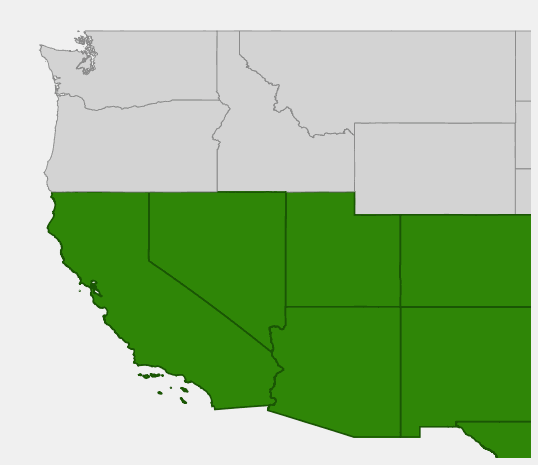
📋 Regional plant lists featuring Globe Mallow: Arizona
Growing & Care Guide
Globe Mallow is among the easiest native plants to establish in the desert Southwest. It is virtually indestructible once rooted into well-drained soil in full sun — asking for little more than the natural rainfall cycle and occasional deep watering during prolonged droughts.
Light
Full sun is mandatory. Globe Mallow grows naturally in the most exposed, sun-baked locations in the desert landscape — bare rocky slopes, south-facing hillsides, open roadsides — with no shade protection whatsoever. In the garden, give it the hottest, most exposed location you have. Shade causes weak, leggy growth and dramatically reduced flowering.
Soil & Water
Excellent drainage is the single most important soil requirement. Globe Mallow naturally grows in coarse, rocky, gravelly, or sandy soils that drain instantly after rain. It will decline and die in heavy clay or irrigated lawn areas. In the garden, plant it in the lowest-water zone possible — established plants in Tucson and Phoenix thrive on rainfall alone with perhaps one or two deep summer soakings during monsoon drought breaks. Overwatering is the primary cause of Globe Mallow death in garden settings.
Planting Tips
Globe Mallow is best established from seed sown directly in fall, or from container transplants set out in early fall or late winter. Seeds require scarification (light abrasion or hot water soak) to improve germination rates. Plant in improved drainage areas — mound the soil or use gravelly substrate. Space plants 3 to 4 feet apart; they will spread and self-sow to fill gaps. Handle seedlings carefully as they dislike root disturbance.
Pruning & Maintenance
Cut Globe Mallow back by half after the spring bloom to encourage compact, dense new growth and promote the fall rebloom. Remove dead stems from the base in early spring. The plant is naturally short-lived (3–5 years), but colonies persist indefinitely through self-seeding — allow some seed heads to mature and drop naturally. Avoid eye contact with the plant’s stellate hairs when pruning.
Landscape Uses
- Dry slope and hillside planting — excellent erosion control and color
- Roadside revegetation — tough, fast-establishing, colorful
- Desert wildflower meadow — core component of any Sonoran desert wildflower mix
- Pollinator garden anchor — supports specialist mallow bees
- Rock garden — thrives in gravelly, rocky substrates
- Mass planting — spectacular when planted in large drifts
Wildlife & Ecological Value
Globe Mallow is ecologically important far beyond its visual appeal. It is a foundation species for a guild of specialist pollinators that depend almost exclusively on mallow-family plants throughout the Southwest.
For Birds
The seeds of Globe Mallow are consumed by quail, doves, and various sparrows. Mourning Doves and Gambel’s Quail regularly forage beneath Globe Mallow plants for fallen seeds. The plant’s dense, low structure provides cover for ground-nesting quail and other birds during the vulnerable incubation period.
For Mammals
The foliage is browsed by desert tortoise (a threatened species) as a significant component of their diet in the Sonoran and Mojave Deserts. Jackrabbits and cottontails consume both leaves and stems. The mucilaginous compounds in Globe Mallow foliage provide some nutritional value and moisture in dry habitats where water is scarce.
For Pollinators
Globe Mallow is critically important for specialist mallow bees, particularly Diadasia spp. and Ashmeadiella spp., which collect pollen almost exclusively from Sphaeralcea and related genera. These oligolectic (pollen specialist) bees are entirely dependent on Globe Mallow and its relatives for successful reproduction, making the plant’s presence essential to their persistence in desert ecosystems. Carpenter bees, digger bees, and various generalist native bees also visit the flowers frequently.
Ecosystem Role
Globe Mallow plays an important pioneer role in desert ecosystem dynamics. Its rapid colonization of disturbed areas stabilizes bare soil against wind and water erosion, builds organic matter, and creates the initial habitat structure that allows other species to establish. Its ability to support oligolectic specialist bees makes it a keystone species for the pollinator community in Mojave and Sonoran desert plant communities.
Cultural & Historical Uses
Globe Mallow has one of the richest Indigenous use records of any Southwestern plant. The Navajo people used the plant extensively — fresh leaves were mashed and applied as a poultice to treat skin sores, rashes, and insect bites, while a tea made from boiled roots and leaves was used internally to treat digestive complaints. The strong mucilaginous quality of Globe Mallow — characteristic of all mallow-family plants — made it effective as a soothing agent for inflamed tissues, both externally and internally.
Hopi people used Globe Mallow as a traditional dye plant, producing pink and reddish tones from the flowers and leaves. The plant was also used by the Pima (Akimel O’odham) and Papago (Tohono O’odham) peoples for its medicinal properties, including as an eyewash — a traditional use that seems ironic given that the plant’s stellate hairs can cause eye irritation in some individuals. The Seri people of Sonora, Mexico used the plant’s fibers for weaving and the leaves medicinally for wound treatment.
In modern Western herbalism, mallow species including Globe Mallow are recognized for their high mucilage content — water-soluble polysaccharides that form a gel when hydrated and have genuine soothing and anti-inflammatory properties on mucous membranes. Globe Mallow remains culturally significant in contemporary Indigenous communities throughout the Southwest as both a medicinal plant and a beautiful symbol of desert resilience and renewal after drought.
Frequently Asked Questions
Why does Globe Mallow cause eye irritation?
The tiny star-shaped (stellate) hairs covering the leaves and stems can lodge in eyes and cause significant irritation — redness, itching, and inflammation. Always wear eye protection when pruning Globe Mallow, and avoid rubbing your eyes after handling the plant. Wash hands thoroughly after working with it. The irritation is mechanical, not chemical, and resolves on its own.
Is Globe Mallow the same as Desert Mallow?
Yes — “Desert Mallow” is a common alternate name for Sphaeralcea ambigua. Other common names include Apricot Mallow and Desert Hollyhock. Several other Sphaeralcea species in the region are also called globe mallows, creating some confusion; S. ambigua is the most widespread and commonly cultivated species in Arizona.
How do I get Globe Mallow to rebloom in fall?
Cut the plant back by about half after the spring bloom season ends (typically June). This encourages fresh growth that will flower again after the monsoon rains arrive in July–August. Consistent moisture during the summer monsoon season dramatically improves the quality and quantity of the fall bloom.
Can Globe Mallow grow in a pot?
Globe Mallow can be grown in containers, but requires a well-draining pot with multiple drainage holes. Ensure the potting mix is very porous (add perlite or coarse gravel). Water sparingly — the most common mistake with potted Globe Mallow is overwatering. A large pot (5+ gallons) works better than a small one.
How long does Globe Mallow live?
Individual plants typically live 3 to 5 years before declining. However, Globe Mallow self-seeds prolifically and easily maintains persistent colonies in the landscape. To ensure continuity, allow some seed heads to ripen and drop naturally each year — new seedlings will replace aging plants seamlessly.

Looking for a nursery that carries Globe Mallow?
Browse our native plant nursery directory: Arizona