Titi (Cyrilla racemiflora)
Cyrilla racemiflora, commonly known as Titi, Swamp Cyrilla, or Leatherwood, is a distinctive native shrub or small tree of the southeastern United States — one of the defining plants of the coastal plain wetlands. A monotypic genus in the Cyrillaceae family (it is the only species in the genus Cyrilla), Titi is notable for its spectacular summer flowers, unusual semi-evergreen to deciduous habit, exceptional tolerance of wet and waterlogged soils, and the incredible wildlife value of its persistent, winter-lasting seeds. Growing to 30 feet tall in ideal conditions, it is more commonly encountered as a multi-stemmed large shrub or small tree in the wet flatwoods, bay swamps, and stream margins of the coastal plain.
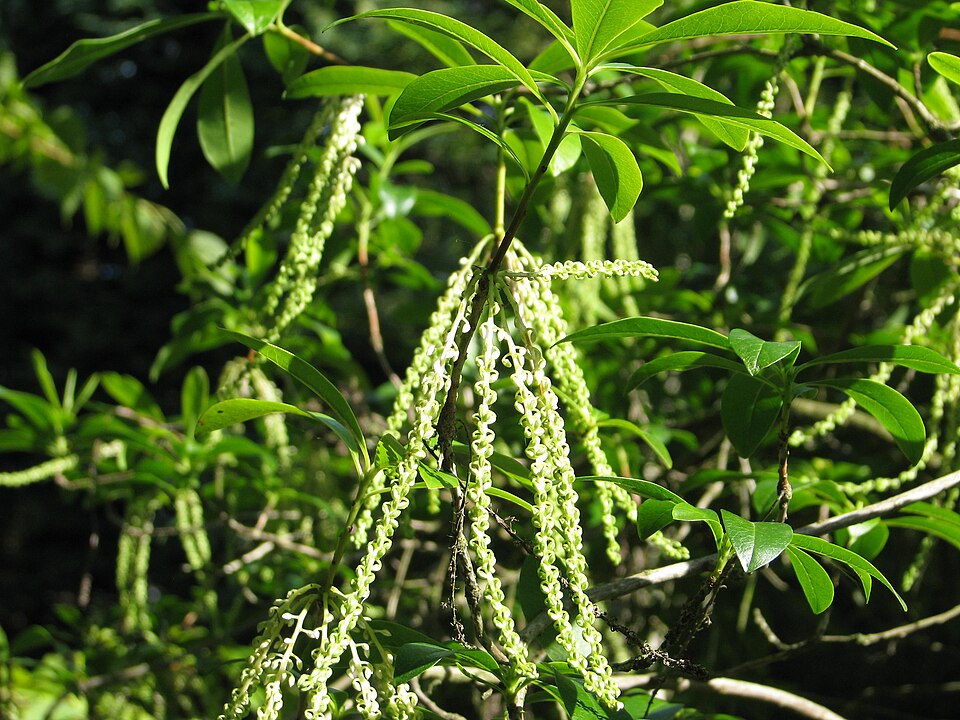
The flowers are among Titi’s greatest attractions: long, arching racemes of tiny white, fragrant blossoms appear in May–June, draping gracefully from the branch tips and transforming the plant into a magnificent floral display. The honey produced from Titi flowers is distinctive — prized in the South as “titi honey” or “titi white” — with a characteristic taste that beekeepers value. The flowers are important sources of nectar and pollen for honeybees and native bees alike. After flowering, the branches become laden with clusters of small brown fruits that remain on the plant through winter, providing persistent food resources for birds and small mammals.
Titi is a foundational species of the coastal plain wetland shrub community — appearing in pocosins, bay swamps, cypress-gum forests, and wet flatwoods throughout its range from Virginia to Texas. For southeastern gardeners with wet or seasonally flooded sites, Titi is one of the most rewarding and ecologically important native plants available. It tolerates standing water, produces spectacular fragrant flowers, provides exceptional wildlife value, and offers attractive fall foliage color — making it a plant of year-round interest and ecological significance.
Identification
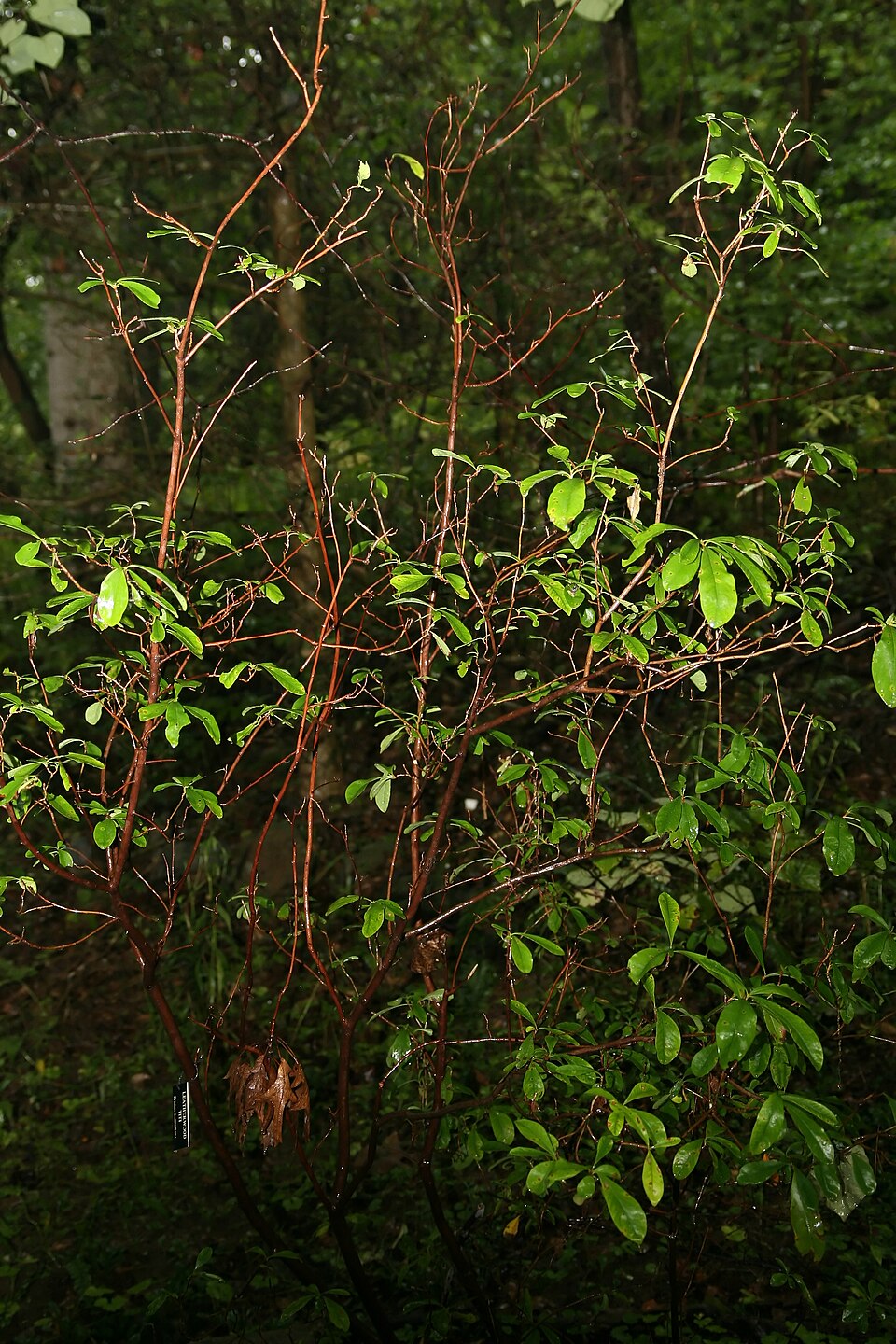
Titi is a large deciduous to semi-evergreen shrub or small tree, typically reaching 10 to 20 feet in cultivation and up to 30 feet in optimal wild conditions. It often forms multi-stemmed thickets by sprouting from the root collar. The branching pattern is dense and somewhat irregular, with branches that tend to curve and zigzag slightly, giving mature specimens an attractive, sculptural quality. The plant is notable for its exceptionally dense, arching racemes of white flowers that hang from branch tips in summer.
Bark & Stems
The bark on mature stems and trunks is grayish-brown to reddish-brown, thin, and exfoliating in thin plates or strips that peel away to reveal reddish inner bark — a characteristic that gives the plant the common name “Leatherwood” in some areas. This peeling, multi-colored bark is attractive in the winter landscape. Young twigs are slender, often slightly reddish, and somewhat angular. The wood is tough and hard — harder than most shrubs of similar stature.
Leaves
The leaves are alternate, simple, 2 to 4 inches long, oblanceolate to obovate (widest near the tip), with smooth margins and a distinctive lustrous quality. The upper surface is dark, glossy green; the underside is paler. The leaf base tapers gradually to a short petiole. Titi’s leaf persistence varies by climate: in the deep South it may remain semi-evergreen or evergreen through mild winters, while in colder parts of its range it is deciduous. Where leaves do drop in fall, they turn shades of orange, red, and bronze — providing attractive autumn color before dropping. Dead leaves often persist on the plant through much of winter before finally falling.
Flowers & Fruit
The flowers are small — about ¼ inch across — with five white petals, but they are produced in extraordinary abundance in dense, cylindrical racemes 3 to 6 inches long that arise from leaf axils along much of the previous year’s growth. Each raceme contains dozens to hundreds of individual flowers, and a well-established plant produces hundreds of racemes simultaneously, creating a spectacular effect. The flowers are fragrant, with a sweet, honey-like scent that attracts pollinators from considerable distances. Bloom time is May–June. The fruit is a small, ovoid drupe, about ¼ inch long, ripening in late summer to a yellowish-tan color and persisting through winter. The persistent fruits are an important winter food resource for birds.
Quick Facts
| Scientific Name | Cyrilla racemiflora |
| Family | Cyrillaceae |
| Plant Type | Deciduous to Semi-evergreen Shrub / Small Tree |
| Mature Height | 30 ft |
| Sun Exposure | Full Sun to Part Shade |
| Water Needs | Moderate to High |
| Bloom Time | May – June |
| Flower Color | White |
| USDA Hardiness Zones | 5–10 |
Native Range
Titi has an unusually wide native range that extends from southeastern Virginia southward along the Atlantic Coastal Plain through the Carolinas, Georgia, and Florida, westward along the Gulf Coast through Alabama, Mississippi, Louisiana, and into Texas, and also extends into the Caribbean and Central America — one of the few native southeastern shrubs with a pantropical distribution. Within the United States, it is most abundant along the Gulf Coastal Plain and in Florida, where it forms dense thickets in wet flatwoods and bay swamps.
The species is characteristic of wetland and wet-forest habitats throughout its range. It is particularly abundant in pocosins (peat-based shrub wetlands of the Carolinas and Virginia), bay swamps, cypress-gum forests, wet pine flatwoods, and the margins of blackwater streams and ponds. Titi forms such dense, impenetrable thickets in some of these habitats that it has given rise to a regional term — “titi thickets” or “he-huckleberry thickets” — for the dense, difficult-to-penetrate shrubland it dominates in parts of the coastal plain.
Titi is strongly associated with acidic, peaty or organic-rich soils that are saturated or flooded for much of the year. It tolerates extended flooding and is considered one of the most flood-tolerant native shrubs in its range. This extreme wetland tolerance, combined with its tendency to form dense thickets, makes it a dominant species in many coastal plain wetland communities where few other large woody plants can compete.
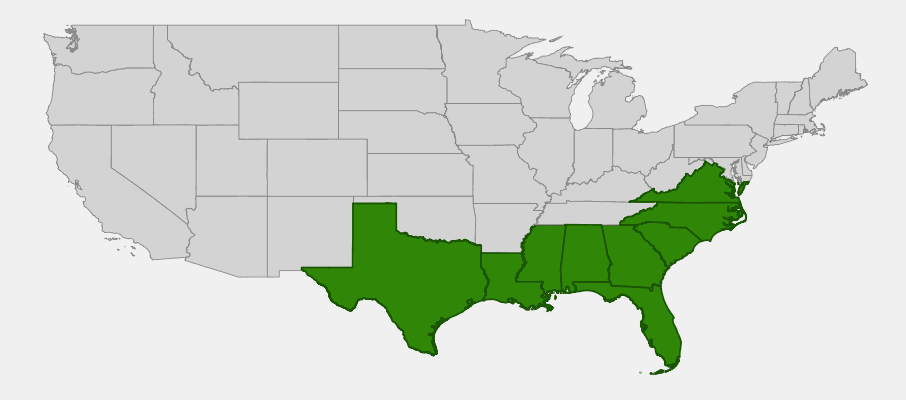
📋 Regional plant lists featuring Titi: Alabama, Georgia & Mississippi
Growing & Care Guide
Titi is an easy-care plant for wet sites throughout the Southeast. Its primary requirement is consistent moisture — it will not thrive in dry soils — but given adequate water, it is virtually maintenance-free and rewards with spectacular summer flowers and persistent wildlife value.
Light
Titi tolerates a range of light conditions from full sun to partial shade. In full sun with adequate moisture, it grows most vigorously and flowers most abundantly. In partial shade, flowering is somewhat reduced but the plant remains healthy and attractive. It does not grow well in heavy shade. The best flowering performance is in open or partially open settings — forest edges, pond margins, and open wetland areas.
Soil & Water
Consistently moist to wet, acidic soil is the primary requirement. Titi tolerates extended flooding and saturated soil better than almost any other native shrub in its range. It grows naturally in peat-based, highly organic, acidic soils (pH 4.0–6.0) that are waterlogged for much of the year. In cultivation, it adapts to any consistently moist, acidic soil — whether sandy, loamy, or clay-loam. It is an outstanding plant for rain gardens, stormwater bioswales, pond and stream margins, and any wet or poorly drained site that would challenge other plants.
Planting Tips
Plant in fall or early spring. Container-grown plants establish well. Space plants 6–10 feet apart for naturalistic groupings; in wet sites, allow them to form natural thickets over time. Titi combines naturally with pond cypress, sweetbay magnolia, Virginia willow, buttonbush, and native hollies in wetland plantings. The thicket-forming habit is an asset in naturalistic and restoration plantings but may require management in formal settings.
Pruning & Maintenance
Titi requires minimal pruning. Remove dead or damaged branches as needed. If size control is necessary, prune in late winter before growth resumes. The plant responds well to coppicing (cutting to near ground level) for rejuvenation, producing vigorous new growth. It is essentially pest- and disease-free and requires no fertilization in appropriate conditions.
Landscape Uses
- Rain gardens and stormwater management — one of the best native shrubs for wet sites
- Pond and stream margins — natural habitat mimic and excellent wildlife planting
- Naturalistic wetland screens — dense thickets provide privacy and wildlife habitat
- Specimen shrub or small tree for large properties with wet areas
- Pollinator gardens — exceptional bee plant when in bloom
- Coastal and low-lying landscapes throughout the Southeast
Wildlife & Ecological Value
Titi is one of the most ecologically significant native shrubs of the coastal plain, providing food and habitat across all four seasons.
For Birds
The persistent brown seeds that remain on the plant through winter are consumed by numerous songbirds and game birds, including Pine Warbler, American Goldfinch, Carolina Wren, and various sparrows. The dense thickets provide exceptional nesting habitat for several species of birds, including Prothonotary Warbler, Common Yellowthroat, and various wetland songbirds. The insect community supported by Titi’s canopy, bark, and leaf litter is a critical food source for insectivorous birds throughout the nesting season.
For Pollinators
Titi’s May–June flowering season is one of its most important ecological contributions. The fragrant white flowers are a major nectar and pollen source for honeybees and native bees, particularly at a time of year when early spring bloom has ended but summer flowers have not yet peaked. “Titi honey” is a distinctive southeastern product — light-colored and mild-flavored — produced by honeybee colonies that work Titi flowers intensively. Native bees including bumblebees, mining bees, and sweat bees also visit the flowers in large numbers.
For Mammals
White-tailed deer browse Titi foliage in some areas. The dense thickets provide excellent cover for rabbits, rodents, and their predators. River otters and mink use Titi-dominated streambanks as travel corridors and foraging habitat in the coastal plain.
Ecosystem Role
Titi is a foundational species of coastal plain wetland plant communities. Its deep root system helps stabilize streambanks and wetland margins, reducing erosion. In pocosins and bay swamps — among the most carbon-dense terrestrial ecosystems in North America — Titi contributes significantly to carbon sequestration in the organic peat soils it helps build and maintain. The species’ tolerance of fire (it resprouts vigorously from the root crown after burning) makes it an important component of fire-managed longleaf pine ecosystems.
Cultural & Historical Uses
Titi has been valued by people of the southeastern coastal plain for centuries. Its exceptionally hard, fine-grained wood — stronger than many larger trees — was used historically for tool handles, small implements, and other items requiring a tough, compact wood. The common name “Leatherwood” reflects the tough, flexible quality of the wood. Indigenous peoples of the coastal Southeast used the bark in various preparations, and the species’ occurrence in wetland habitats associated with food and water sources made it a landmark plant for navigating the coastal plain landscape.
The honey produced from Titi flowers has been an important commercial product in the Florida panhandle, Alabama, and Mississippi for well over a century. Beekeepers in these areas have long recognized the value of Titi as a nectar source — timing hive moves to coincide with the bloom season and producing distinctive “titi honey” for sale. The honey is distinctly mild and light-colored, prized for its delicate flavor. In good Titi years, beehives placed in areas with abundant Titi can produce exceptional honey crops.
In the modern conservation and restoration ecology context, Titi has gained recognition as a keystone species of the coastal plain wetland plant community. It is a frequent component of wetland restoration plantings, particularly in the Gulf Coast states where bottomland forest and wetland habitats have been significantly reduced by development, agriculture, and hydrologic alteration. Conservation organizations working to restore pocosin, bay swamp, and flatwoods habitats regularly include Titi in restoration seed mixes and planting plans.
Frequently Asked Questions
Why is it called “Titi”?
The name “Titi” (pronounced “tie-tie”) is of uncertain origin but is widely used throughout the southeastern coastal plain. It may derive from Indigenous languages of the region. The plant is also called “Swamp Cyrilla,” “Leatherwood,” “He-huckleberry,” and “Burn-wood” in different parts of its range.
Can Titi grow in standing water?
Yes — Titi is exceptionally flood-tolerant and grows naturally in habitats that are waterlogged for months at a time. It is one of the best native woody plants for persistently wet or seasonally flooded sites in the southeastern landscape.
Is Titi evergreen?
Titi’s leaf persistence depends on winter temperatures. In the deep South (Florida, Gulf Coast), it tends to be semi-evergreen or evergreen through mild winters. In the northern parts of its range (Virginia, North Carolina, Tennessee), it is more deciduous. In the middle of its range, behavior varies from year to year depending on winter severity.
Does Titi really produce honey?
Yes — “Titi honey” or “ti-ti honey” is a well-known southeastern product. The abundant, fragrant flowers are worked intensively by honeybees, producing a distinctive light-colored, mild honey valued by southeastern beekeepers and honey consumers. The honey is generally considered high-quality with a characteristic flavor.
How do I control Titi spreading in my yard?
Titi spreads by root suckers from the base of established plants. To control spread, periodically remove suckers by cutting them off at the base or digging them out. In naturalistic plantings, the thicket-forming habit is generally an asset rather than a problem. In more formal settings, plant it in areas where its natural spread won’t be problematic, or use root barriers.

Looking for a nursery that carries Titi?
Browse our native plant nursery directory: Alabama · Georgia · Mississippi