Live Oak (Quercus virginiana)
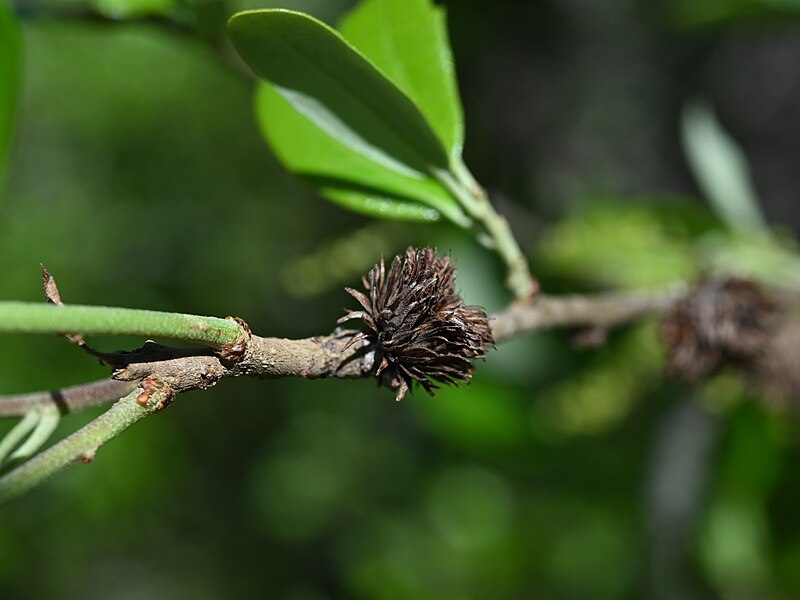
Quercus virginiana, the Live Oak, is one of the most majestic and ecologically significant trees in the American South — an enduring symbol of the region’s landscape, history, and natural heritage. The name “live” oak derives from its evergreen nature: unlike most North American oaks, it retains its leaves through winter, only shedding them briefly in spring as new growth emerges. This characteristic evergreen quality, combined with its enormous size, extraordinarily long lifespan (often exceeding 500 years), and iconic spreading silhouette, makes Live Oak one of the most recognizable and beloved trees on the continent.
Characterized by a massive, short trunk supporting an expansive canopy of horizontal or sweeping branches that can spread 100 to 150 feet across, Live Oak creates an almost cathedral-like presence in the landscape. The tree can reach 70 to 95 feet in height, though in exposed coastal settings it often grows lower and more windswept. Its thick, leathery, oblong leaves remain on the tree through winter and into spring — the old leaves finally dropping in March and April just as the new growth emerges, giving the tree only a few weeks of “nude” appearance before it leafs out fully again.
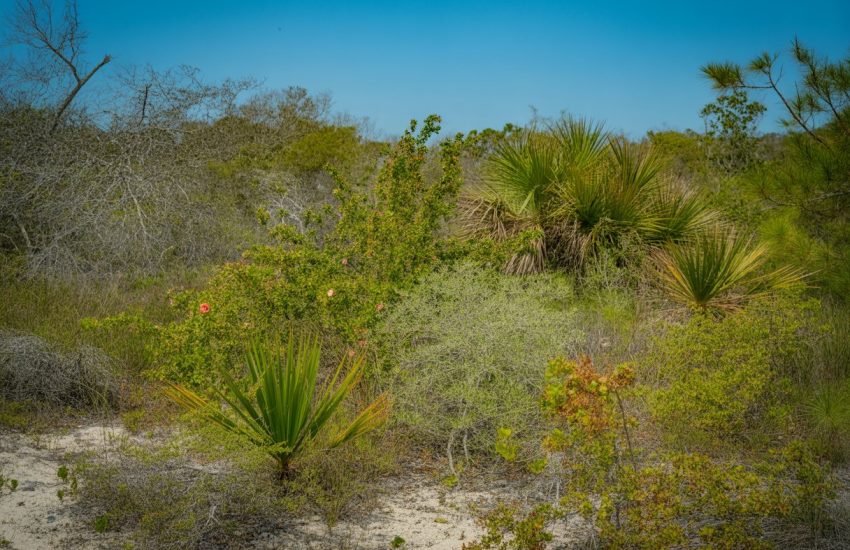
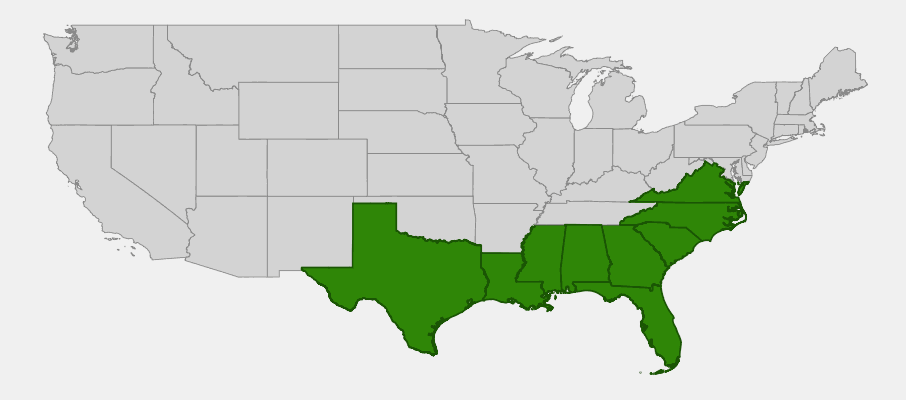
From the coastal barrier islands of Virginia through the Carolinas, Georgia, Florida, Alabama, Mississippi, Louisiana, and Texas, Live Oak dominates the maritime forests and coastal hammocks that fringe the American shoreline. In these exposed coastal positions, it develops gnarled, wind-sculpted forms of extraordinary beauty. Further inland, given sufficient moisture and the right soil conditions, it grows more upright and massive. The tree is an ecological cornerstone wherever it grows, supporting hundreds of species of insects, dozens of bird species that depend on its acorns, and the entire community of epiphytes — Spanish moss, resurrection fern, bromeliads — that drape and enrich its branches.
Identification
Live Oak is unmistakable once you know it — no other oak in the Southeast combines its evergreen habit, short-boled massive form, horizontal branching, and small, leathery, oblong leaves. In youth it grows more rapidly than many oaks, developing its characteristic form relatively quickly. Old specimens become truly monumental — the famous Angel Oak near Charleston, South Carolina, is estimated to be between 400 and 500 years old with a crown covering over 17,000 square feet.
Bark & Trunk
The trunk is short, massive, and often heavily buttressed at the base in mature trees. The bark is dark brown to grayish-brown, broken into flat, scaly, interlocking ridges — giving mature trunks a rugged, deeply textured appearance. In very old trees, the trunk can reach 6 to 8 feet in diameter, becoming one of the largest trunk diameters of any tree in the eastern United States. The wood is extraordinarily hard and dense — historically prized for shipbuilding — and is famously resistant to rot, which contributes to the tree’s impressive longevity.
Leaves
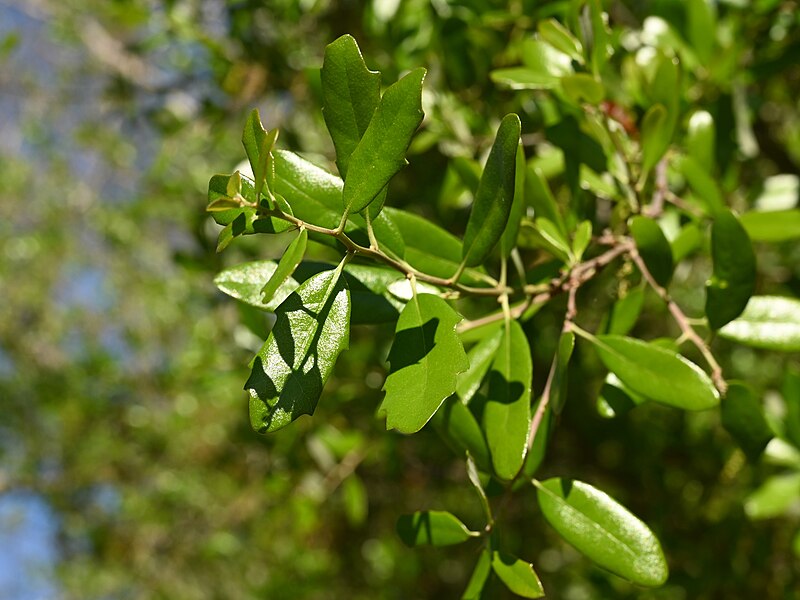
The leaves are simple, alternate, thick, and leathery, with a distinctive oblong to elliptical shape, 2 to 5 inches long and ½ to 1½ inches wide. The margins are entire (smooth-edged) or very rarely with a few small teeth — completely unlike the lobed leaves of most oaks. The upper surface is dark, lustrous green; the lower surface is paler, grayish or whitish, often with small tufts of hair in the vein axils. In February and March, the old leaves turn bronze or yellow-green before dropping, briefly exposing the branches just as new spring growth emerges.
Flowers & Acorns
Like all oaks, Live Oak is monoecious — bearing separate male and female flowers on the same tree. The male flowers appear in spring as dangling yellowish-green catkins 1 to 3 inches long, releasing large quantities of wind-borne pollen. The acorns ripen in a single growing season. They are small — ¾ to 1 inch long — dark brown to nearly black when ripe, with a thin, saucer-shaped cap. They ripen in September and October and are eagerly consumed by a wide variety of wildlife. Acorn production is prolific in mature trees, with a single tree producing thousands of acorns annually.
Quick Facts
| Scientific Name | Quercus virginiana |
| Family | Fagaceae (Beech) |
| Plant Type | Evergreen Tree |
| Mature Height | 70–95 ft |
| Crown Spread | 60–120 ft |
| Sun Exposure | Full Sun to Full Shade |
| Water Needs | Low to Moderate |
| Bloom Time | February – April (catkins) |
| Flower Color | Yellowish-green (inconspicuous catkins) |
| Acorn Season | September – October |
| USDA Hardiness Zones | 7b–10b |
Native Range
Live Oak is native to the coastal and near-coastal regions of the southeastern United States, ranging from extreme southeastern Virginia south along the Atlantic Coast through the Carolinas, Georgia, and all of Florida, then west along the Gulf Coast through Alabama, Mississippi, Louisiana, and Texas to northeastern Mexico. The species is most abundant in the maritime forests of barrier islands and coastal mainland areas, where its salt spray tolerance and ability to withstand hurricane-force winds make it the dominant tree. It extends inland along river drainages and in mesic soils up to 100 miles from the coast in some areas.
Within its range, Live Oak is the dominant tree of the “maritime hammock” community — a distinctive forest type found immediately behind coastal dunes and barrier beaches where salt-spray-tolerant tree species form dense, wind-pruned forests. In these exposed positions, it grows in a highly characteristic “gallery” form, with branches sweeping dramatically away from the prevailing wind direction and creating an almost architectural canopy structure. In more protected interior settings, Live Oak grows taller and more symmetrically, forming the “live oak forests” and “live oak hammocks” that historically covered extensive areas of the Coastal Plain.
The “Live Oak Allee” — rows of Live Oaks lining the approaches to plantation houses — became one of the defining images of the antebellum South. Famous examples include the Avenue of Oaks at Boone Hall Plantation in South Carolina and similar avenues throughout Georgia and Louisiana. While many of these plantation allees are associated with a painful chapter of American history, the trees themselves are remarkable living monuments, some dating back 250 to 350 years and representing extraordinary specimens of natural heritage.
📋 Regional plant lists featuring Live Oak: Alabama, Georgia & Mississippi
Growing & Care Guide
Live Oak is among the most rewarding — and long-term — investments in native tree planting. The tree’s full potential is realized only over decades and centuries, but it is also a reasonably fast-growing tree in its early years, establishing quickly and beginning to develop its characteristic spreading form within 10 to 15 years of planting. Careful site selection is the most important decision, as a mature Live Oak will dominate any landscape it inhabits.
Light
Live Oak is extremely adaptable in terms of light exposure, tolerating everything from full sun to quite heavy shade. However, the most magnificent spreading specimens develop in full sun with ample space on all sides. In shaded or crowded conditions, the tree grows more upright and narrow, never achieving its signature picturesque form. For maximum impact, choose an open site where the crown can spread unimpeded in all directions.
Soil & Water
One of Live Oak’s greatest virtues is its soil and drought tolerance. It grows in sandy, loamy, or clay soils across a wide pH range and tolerates salt spray, drought, and brief flooding. It is not recommended for poorly drained soils with prolonged standing water. Once established (typically after 2–3 years), Live Oak is remarkably drought-tolerant and rarely requires supplemental irrigation. During establishment, water weekly if rainfall is below 1 inch per week. Avoid overwatering — this oak is more drought-tolerant than wet-tolerant.
Planting Tips
Plant Live Oak in fall for best establishment. Choose the site with the tree’s ultimate size in mind — a mature Live Oak needs at minimum 60 feet of horizontal clearance. Keep the tree well away from structures, paved surfaces, and underground utilities, as the extensive root system and massive eventual trunk will cause damage if planted too close. Container-grown trees transplant easily; balled-and-burlapped trees are also available for larger starting sizes.
Pruning & Maintenance
Young Live Oaks benefit from structural pruning to establish a strong branch scaffold. In the first 5 years, remove any crossing, rubbing, or weakly attached branches. Raise the crown gradually to allow access underneath. Once established, mature Live Oaks require minimal pruning — they are self-maintaining. In areas prone to oak wilt, avoid pruning during the growing season when the pathogen is most active. If the tree becomes draped with Spanish Moss or resurrection fern, there is no need to remove these epiphytes — they are native organisms that cause no harm to the tree.
Landscape Uses
- Specimen tree — the ultimate destination tree in the southern landscape
- Street tree — widely planted along boulevards and in median strips
- Park and campus plantings — magnificent for large open spaces
- Coastal gardens — exceptional salt and wind tolerance
- Wildlife anchors — the most ecologically valuable tree you can plant in the South
- Historic estate plantings — the traditional Southern avenue tree
Wildlife & Ecological Value
Live Oak is arguably the single most ecologically valuable tree that can be planted in the southeastern coastal plain. Its wildlife value is staggering — greater than virtually any other tree species in the region — earned through hundreds of thousands of years of co-evolution with the insects, birds, and mammals of the American South.
For Birds
Live Oak acorns are consumed by an extraordinary diversity of birds, including Wood Ducks, Wild Turkeys, Blue Jays, Red-headed Woodpeckers, Yellow-bellied Sapsuckers, Brown-headed Nuthatches, Carolina Wrens, thrushes, and numerous sparrow species. The tree is also a critical resource for migrating songbirds, who feed on the caterpillars and insects associated with oak foliage during spring and fall migration. Osprey, Bald Eagles, Red-tailed Hawks, and Barred Owls frequently nest in large Live Oaks, and the tree’s wide, horizontal branches provide ideal nesting platforms.
For Mammals
The acorns of Live Oak are a critical mast crop for white-tailed deer, wild pigs, gray squirrels, fox squirrels, raccoons, and black bears. The tree’s evergreen leaves provide year-round thermal cover, and the massive trunk and branches support extensive bat roost sites. In many areas of the Gulf Coast, Live Oak is the only available tall-canopy tree, making it the primary structure for all wildlife dependent on vertical forest architecture.
For Pollinators
Though Live Oak flowers are wind-pollinated, the tree supports an extraordinary diversity of insect life. Over 500 species of Lepidoptera (butterflies and moths) use Live Oak as a larval host plant in various parts of its range, making it one of the top native trees for supporting the insect food web. The massive caterpillar populations on Live Oak in spring are the primary food source for breeding birds and are essential for the survival of nestlings of dozens of species.
Ecosystem Role
Live Oak is a keystone species and ecosystem engineer of the first order. Its long lifespan means it accumulates ecological relationships over centuries. Its root system, extending far beyond the drip line, stabilizes coastal soils and prevents erosion. Its vast canopy provides shade that moderates temperatures for the entire community living beneath it. Dead limbs and cavities in old trees provide critical nesting and roosting sites for owls, woodpeckers, bats, and small mammals — the tree’s old age is as ecologically valuable as its youth and maturity.
Cultural & Historical Uses
Live Oak holds a unique place in American history, particularly in naval history. The extraordinary hardness and durability of Live Oak wood made it the preferred material for the frames of wooden warships. During the late 18th and early 19th centuries, the U.S. government became so concerned about securing adequate supplies of Live Oak for naval construction that it passed the Navy Timber Act of 1799, authorizing the federal government to purchase and reserve Live Oak forests — one of the first federal conservation actions in American history. The wood of USS Constitution (“Old Ironsides”), whose oak sides deflected British cannonballs during the War of 1812, was primarily Live Oak.
Indigenous peoples of the southeastern coast depended heavily on Live Oak acorns as a food source. Unlike the bitter acorns of many other oaks, Live Oak acorns are relatively low in tannins and palatable after minimal processing. The Seminole, Creek, Choctaw, and Timucua nations ground dried acorns into flour for bread, prepared acorn mush, and stored the nuts for winter food. The bark was used medicinally as an astringent and the wood for tool handles and construction.
In contemporary culture, the Live Oak has become one of the most planted street and park trees in the southeastern United States, appreciated for its shade, longevity, and spectacular appearance. Cities like Houston, Savannah, Charleston, and New Orleans have made the Live Oak central to their urban forest planning, recognizing that the massive specimens planted in the 19th and early 20th centuries are now priceless urban infrastructure. The Live Oak Society, founded in Louisiana in 1934, works to document and protect heritage Live Oak specimens across the region.
Frequently Asked Questions
How long does a Live Oak live?
Live Oaks are extraordinarily long-lived — specimens of 500 years are documented, and some may be considerably older. The famous Angel Oak on James Island, South Carolina, is estimated at 400–500 years old. Under favorable conditions, Live Oaks can potentially live 1,000 years or more, making them true multigenerational investments in the landscape.
How fast does Live Oak grow?
Live Oak grows at a moderate to fast rate — typically 2 to 3 feet per year in height when young, slowing as the tree matures and begins investing energy into trunk girth and canopy spread. A 10-year-old tree may be 20–30 feet tall with a spread of 15–25 feet. The characteristic horizontal spreading form develops over decades, becoming most dramatic in trees over 50 years old.
Is Live Oak appropriate for small yards?
Honestly, no — a mature Live Oak requires at least 60 to 100 feet of horizontal clearance and should be placed far from buildings, driveways, and underground utilities. For smaller properties, consider smaller alternatives such as Shumard Oak, Willow Oak, or Water Oak. If you have a large property and want to make a multigenerational contribution to the landscape, Live Oak is an excellent choice.
Does Live Oak drop leaves in winter?
Live Oak is technically evergreen but is “briefly deciduous” — it drops its old leaves in late winter to early spring (typically February–April) just as the new growth emerges. This brief period of leaf drop is relatively clean compared to typical deciduous trees, and the tree is back in full leaf within a few weeks. The spring leaf drop can produce substantial amounts of leaf litter for a 2–4 week period.
Is Live Oak resistant to hurricanes?
Live Oak is one of the most hurricane-resistant trees in the southeastern United States. Its short, massive trunk, deep and extensive root system, and flexible, interlocking branch structure allow it to withstand extraordinarily high wind speeds. Studies after major hurricanes have consistently shown Live Oak to be among the last trees standing — its survival rate in category 3–4 hurricanes far exceeds that of most other trees. The tree’s natural form — low to the ground, spreading — is aerodynamically efficient in high winds.

Looking for a nursery that carries Live Oak?
Browse our native plant nursery directory: Alabama · Georgia · Mississippi