Spruce Pine (Pinus glabra)
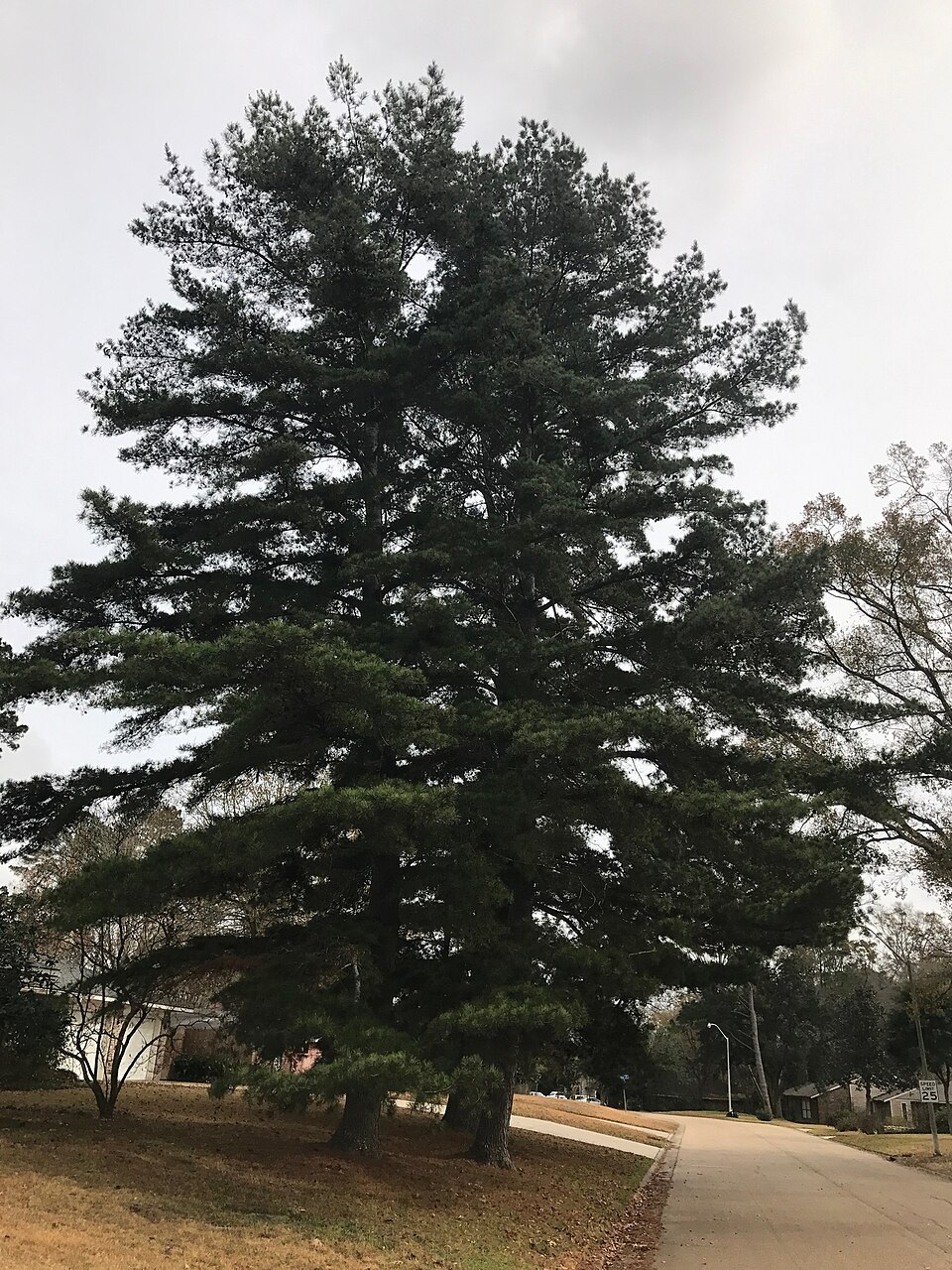
Pinus glabra, commonly known as Spruce Pine or Cedar Pine, is a native pine of the Gulf Coastal Plain that occupies a genuinely unique ecological niche among North American conifers: it is one of the very few shade-tolerant pines on the continent. While virtually all other North American pines require full sun and open, fire-maintained habitats, Spruce Pine grows naturally in the understory and canopy gaps of bottomland hardwood and mixed forest — thriving beneath the shade of oaks, beech, and magnolia rather than requiring full sun exposure. This remarkable shade tolerance, combined with its distinctive short, twisted yellowish-green needles, unusually smooth bark that matures to an oak-like furrowed pattern, and restricted natural range along the Gulf Coast, makes Spruce Pine one of the most botanically interesting and least-known native pines in the entire eastern United States.
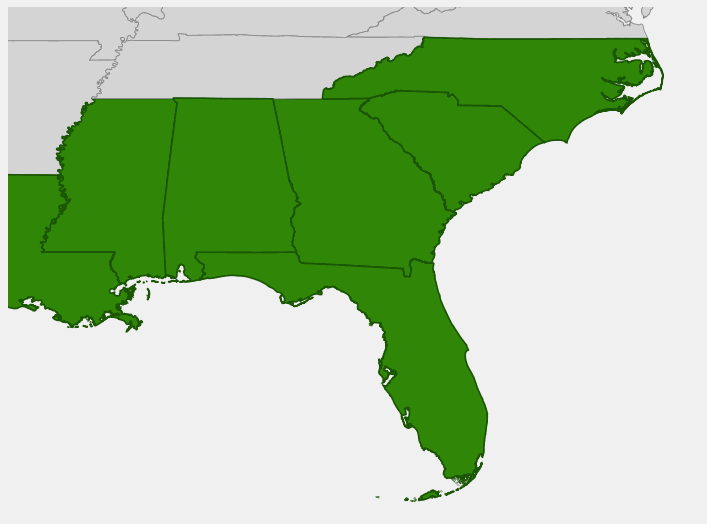
Growing naturally in only a narrow coastal band from southeastern North Carolina south through South Carolina, Georgia, Florida, Alabama, Mississippi, and into southeastern Louisiana, Spruce Pine inhabits the moist, rich soils of bottomland hardwood forests, ravine slopes, and mixed pine-hardwood forests in the Gulf Coastal Plain — always in shaded or semi-shaded conditions rather than the open, sunny exposures favored by Longleaf, Loblolly, or Slash Pine. It frequently grows in close association with American Beech, Southern Magnolia, White Oak, Sweetgum, and other hardwoods, appearing almost as a misplaced, out-of-place conifer in what would otherwise be a purely deciduous forest setting.
Despite its limited natural range and relative obscurity in horticulture, Spruce Pine has significant landscape potential as an unusual, adaptable, shade-tolerant conifer for the Deep South. Its drought tolerance once established, ability to grow under heavy canopy shade, and handsome distinctive appearance make it a valuable choice for naturalistic woodland gardens, forest edge plantings, and specimen trees where an evergreen conifer is desired in a shaded location — a virtually unique combination among native pines that deserves far wider recognition and planting throughout the Gulf states.
Identification
Spruce Pine is a medium to large evergreen coniferous tree, typically reaching 50 to 70 feet tall with a trunk 1 to 2 feet in diameter at maturity. Young trees develop a pyramidal form with a single straight central leader; mature trees develop a more open, somewhat irregular, rounded to oval crown that is less formal than young specimens. The overall appearance is somewhat intermediate between a typical pine and a spruce — contributing to the common name, though it is not related to spruces at all.
Bark
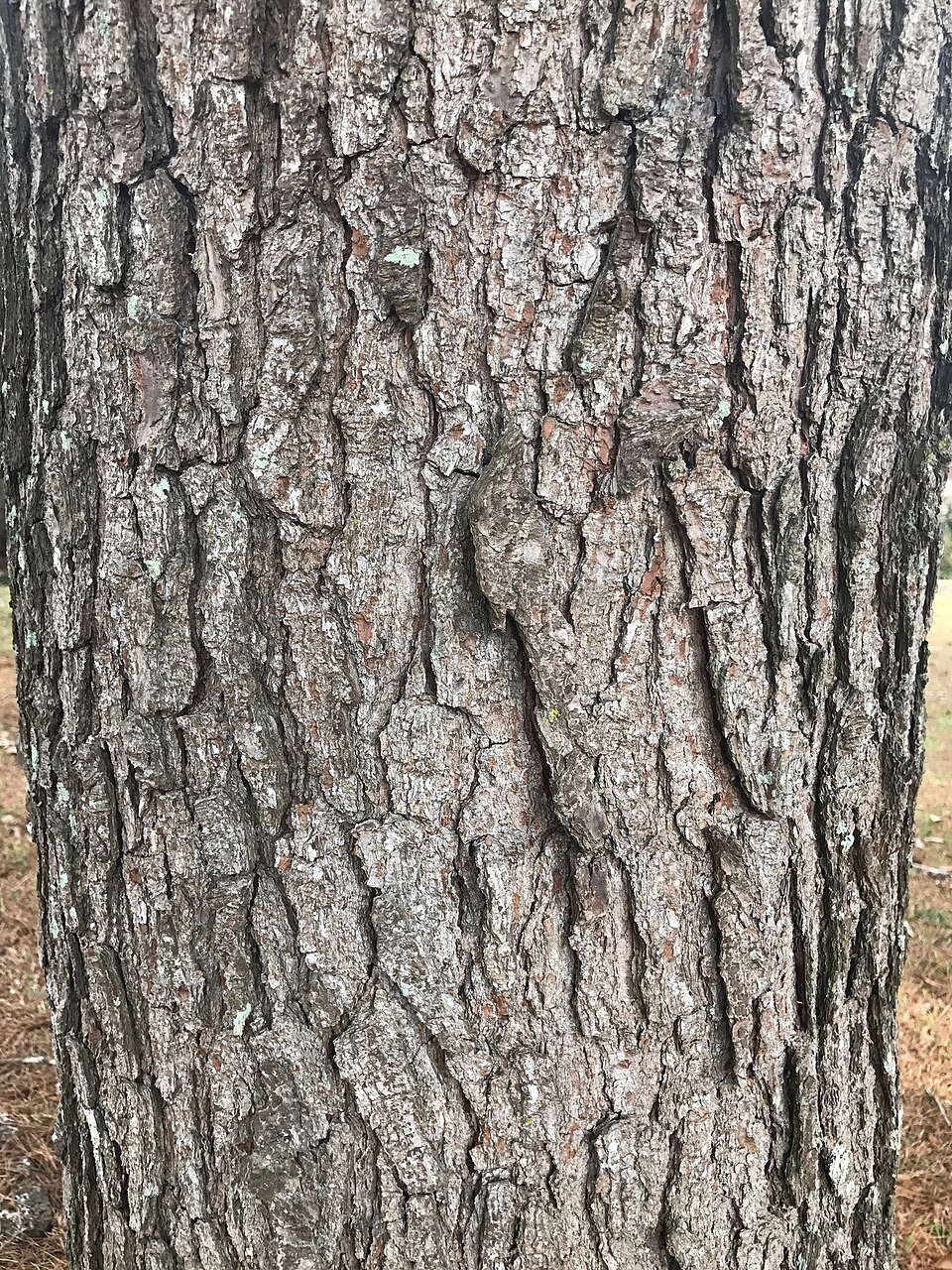
The bark is one of the most immediately distinctive features of Spruce Pine and immediately separates it from all other southeastern pines. On young trees, the bark is surprisingly smooth and gray — nothing like the rough, plated bark of Loblolly or the thick, blocky scales of Longleaf Pine. As the tree matures, the bark develops narrow, flat-topped, interlacing gray-brown ridges separated by shallow, irregular furrows in a pattern that closely resembles the bark of oak or hickory species rather than any pine. This smooth-to-subtly-furrowed gray bark, reminiscent of hardwood rather than pine, is the single most reliable field identification character for Spruce Pine at any age.
Needles
The needles are produced in fascicles (bundles) of 2, and are distinctively short — only 1½ to 4 inches long — making them among the shortest needles of any 2-needle pine in the eastern United States. They are slender, flexible, and often slightly twisted or bent along their length. The color is a characteristic yellowish-green to medium green that is noticeably different from the darker or bluer greens of most other southeastern pines. The needles persist for 2–3 years, creating a moderately dense but somewhat open-textured canopy with a distinctive fine-textured appearance.
Cones & Seeds
The cones are relatively small — 1½ to 2½ inches long — oval-cylindrical in shape, with thin, nearly unarmed scales (the scale tips lack the prominent sharp spines found on many other pine species). Cones are produced in clusters of 2–5, maturing in autumn of the second year and persisting on the branches for 2–3 additional years before falling. The seeds are small, winged, and wind-dispersed. First cone production typically occurs at 10–15 years of age in open-grown trees, somewhat later in heavily shaded conditions.
Quick Facts
| Scientific Name | Pinus glabra |
| Family | Pinaceae (Pine) |
| Plant Type | Evergreen Coniferous Tree |
| Mature Height | 70 ft |
| Sun Exposure | Full Sun to Part Shade |
| Water Needs | Low to Moderate |
| Needles | Short (1.5–4 in), twisted, in pairs; yellowish-green |
| Bark | Smooth gray; matures to oak-like furrowed ridges |
| Cones | Small (1.5–2.5 in), unarmed scales |
| Special Feature | One of very few shade-tolerant native pines in North America |
| USDA Hardiness Zones | 8–9 |
Native Range
Spruce Pine is native to a narrow coastal band along the Gulf of Mexico and South Atlantic Coastal Plain — one of the most geographically restricted ranges of any native eastern pine. Its natural distribution spans from southeastern North Carolina south through South Carolina, Georgia, and Florida, and westward along the Gulf Coast through Alabama, Mississippi, and into southeastern Louisiana. It does not range into Texas or other Gulf states west of Louisiana, and its northern limits are determined by winter temperature tolerance rather than summer heat.
Within this range, Spruce Pine is characteristic of the moist, loamy, organically rich soils of bottomland hardwood forests and mixed pine-hardwood forests on slopes and ridges adjacent to streams and rivers. Unlike virtually all other native pines, it does not grow in the open, fire-maintained longleaf pine flatwoods and sandhill communities that dominate the Coastal Plain landscape — instead, it occupies the shaded interiors of forests where regular fire disturbance does not reach. It grows alongside American Beech, Southern Magnolia, White Oak, Sweetgum, and Swamp Chestnut Oak in conditions more typical of rich hardwood forest than conventional pine habitat.
The restricted distribution and unusual ecology of Spruce Pine make it somewhat vulnerable to habitat change. Its preference for moist, shaded bottomland forest habitats — which have been extensively cleared and drained throughout the Gulf Coastal Plain — means that suitable habitat has declined significantly over the past century. However, within remaining bottomland hardwood forests and mixed forest tracts throughout its range, Spruce Pine remains a natural component of the forest community and is not currently considered a species of serious conservation concern.
📋 Regional plant lists featuring Spruce Pine: Alabama, Georgia & Mississippi
Growing & Care Guide
Spruce Pine is an excellent, low-maintenance native conifer for gardens in the Gulf states (Zones 8–9) that want an evergreen tree with unusual characteristics — particularly its ability to grow in partial shade conditions that would exclude virtually all other native pines. Once established, it requires minimal care and provides lasting ornamental and ecological value.
Light
Spruce Pine is unique among southeastern native pines in tolerating partial shade. It grows successfully in full sun to partial shade (down to 3–4 hours of direct sun per day), though it develops its best form and fastest growth in full sun. In partial shade, it grows somewhat more slowly and with a slightly more open canopy, but remains healthy and attractive. This shade tolerance makes it invaluable for sites beneath or adjacent to established hardwood canopy where most conifers would fail.
Soil & Water
Spruce Pine grows naturally in moist, loamy to sandy-loam, moderately acidic soils and performs best when replicated in cultivation. However, once established, it has good drought tolerance and can persist through dry summers without supplemental irrigation. It prefers slightly to moderately acidic soils (pH 5.0–6.5) and does not perform well in strongly alkaline conditions. It is not suited to shallow, rocky, or highly calcareous soils.
Planting Tips
Plant container-grown stock in fall or early spring. Spruce Pine establishes readily from small container plants and grows at a moderate rate once established. Space trees at least 20–30 feet apart for specimen planting; closer spacing (15–20 feet) is appropriate for naturalistic groves. Mulch with 2–3 inches of pine bark or wood chips to maintain soil moisture and acidity. No staking is needed for trees under 6 feet if planted in a sheltered location.
Pruning & Maintenance
Minimal pruning is required. Remove any dead branches and dead lower limbs as they appear. Maintain the single leader on young trees. Unlike many fast-growing pines, Spruce Pine does not typically develop multiple competing leaders. The tree is generally resistant to most pine pests and diseases, though Southern Pine Beetle can occasionally affect stressed trees — maintaining good vigor through appropriate siting and watering is the best prevention.
Landscape Uses
- Shade-tolerant evergreen specimen — unique ability to grow under partial canopy shade
- Mixed woodland planting — natural companion to beech, magnolia, and oak in moist forest settings
- Wildlife tree — seeds feed birds and squirrels; mature trees provide nesting habitat
- Naturalistic forest garden — creates authentic Deep South woodland character
- Botanical collection specimen — unusual appearance and restricted range make it a collector’s pine
- Screening and windbreak — dense evergreen canopy provides year-round screening in appropriate conditions
Wildlife & Ecological Value
Like all pines, Spruce Pine provides significant wildlife value through its seeds, structure, and the diverse invertebrate community its foliage supports. Though it lacks the fire-ecology specializations of longleaf pine, it is a productive and ecologically important tree in its bottomland hardwood forest niche.
For Birds
Pine seeds are consumed by Red-breasted Nuthatches, White-breasted Nuthatches, Brown-headed Nuthatches, Pine Warblers, Red Crossbills, and various finches and sparrows. The persistent cones attract seed-eating birds from late summer through winter. The dense evergreen canopy provides nesting habitat for warblers, vireos, and other insectivorous birds, while the bark of older trees supports a rich invertebrate community that feeds woodpeckers and nuthatches year-round.
For Mammals
Gray and Fox Squirrels harvest the pine seeds extensively. Flying Squirrels nest in natural cavities in older trees. White-tailed deer browse seedlings and low branches but rarely seriously damage established trees. The dense evergreen canopy provides thermal cover for deer and other mammals during cold winter periods.
For Pollinators & Insects
Pines are wind-pollinated and provide no nectar, but the foliage supports a diverse community of specialist pine insects including various species of pine sawflies, bark beetles, and moth larvae — all of which contribute to the forest food web by supporting the insectivorous birds and predatory insects that depend on them. Spruce Pine’s distinctive short needles support a somewhat different arthropod community than other southeastern pines, contributing to local biodiversity.
Ecosystem Role
In its native bottomland and mixed forest habitats, Spruce Pine provides the structure of a large, long-lived evergreen tree in a setting where other conifers cannot persist. Its shade-tolerance allows it to function as a canopy tree in mature mixed forest rather than only in open, disturbed early-successional habitats — a fundamentally different ecological role than most native pines. Its persistent cones, dense canopy, and eventual large trunk contribute to the habitat complexity and vertical structure of Deep South bottomland forests.
Cultural & Historical Uses
Spruce Pine has a more limited cultural history than the more abundant and commercially important pines of the Southeast — largely because its restricted range, bottomland habitat, and relatively scattered occurrence made it less accessible for large-scale exploitation than Longleaf, Loblolly, or Slash Pine. Nevertheless, where it was available, Spruce Pine timber was recognized as useful and workable. The wood is moderately hard, moderately strong, and with a relatively fine, straight grain — making it suitable for general construction, interior woodwork, boxes, and small furniture items.
Indigenous peoples of the Gulf Coast who encountered Spruce Pine used it in the same ways they used other pines: the resin for waterproofing canoes, baskets, and containers; the inner bark as emergency food during lean seasons; and the green needles brewed as a vitamin C-rich tea. The species would have been valued particularly in areas where larger and more abundant longleaf pine was not available — in the shaded, moist bottomland forests where Spruce Pine is the dominant conifer.
In modern horticulture, Spruce Pine is slowly gaining recognition as an unusual native conifer for Gulf state gardens. Its combination of shade tolerance (virtually unique among native pines), handsome smooth gray bark, distinctive short twisted needles, and adaptability to moist bottomland conditions makes it a genuinely unusual and attractive landscape tree with no close substitutes among native species. As awareness of native plants grows throughout the Deep South, Spruce Pine is likely to see increasing use by landscape architects and native plant nurseries as an alternative to non-native conifers in shaded and semi-shaded site conditions.
Frequently Asked Questions
Why is Spruce Pine called “Spruce Pine” if it’s a pine?
The name likely reflects its somewhat spruce-like appearance — the short, somewhat stiff twisted needles, relatively smooth bark, and pyramidal form of young trees do superficially resemble some spruce species. The name may also reflect its tendency to grow in shaded bottomland habitats alongside hardwoods, somewhat like eastern spruce species do in northern forests, rather than in the open pine flatwoods where other southern pines are found.
Is Spruce Pine really shade tolerant?
Yes — Spruce Pine is genuinely one of the few shade-tolerant pines in North America. It naturally regenerates and persists beneath the canopy of bottomland hardwood forests, a habitat condition that kills seedlings of virtually all other native pines. This does not mean it prefers shade — it also grows well in full sun — but its ability to establish and thrive with as little as 3–4 hours of direct sun daily is quite unusual for a pine.
How does Spruce Pine compare to Loblolly Pine?
Loblolly Pine is faster-growing, more widely adaptable, and tolerates more disturbance. Spruce Pine is slower-growing, more restricted to moist bottomland conditions, but has distinctive ornamental features (smooth bark, short twisted needles) and exceptional shade tolerance that Loblolly lacks. For gardens wanting a native pine that can grow in partial shade under existing hardwood trees, Spruce Pine is the far superior choice.
Can Spruce Pine grow in clay soil?
Spruce Pine grows naturally in the clay-rich soils of bottomland forests and tolerates heavy clay reasonably well, provided drainage is adequate and the soil does not remain waterlogged for extended periods. In garden settings, amending heavy clay soils with organic matter and ensuring there are no drainage barriers beneath the planting hole will help establish the tree successfully.
What wildlife does Spruce Pine support?
Spruce Pine supports a diverse community of wildlife similar to other southeastern pines: seed-eating birds (nuthatches, crossbills, Pine Warblers), squirrels, various invertebrates associated with pine foliage and bark, and cavity-nesting birds and mammals in mature trees. Its persistent cones provide a reliable seed source through the winter months, making it particularly valuable for resident seed-eating bird populations.

Looking for a nursery that carries Spruce Pine?
Browse our native plant nursery directory: Alabama · Georgia · Mississippi