
California Buckeye (Aesculus californica)
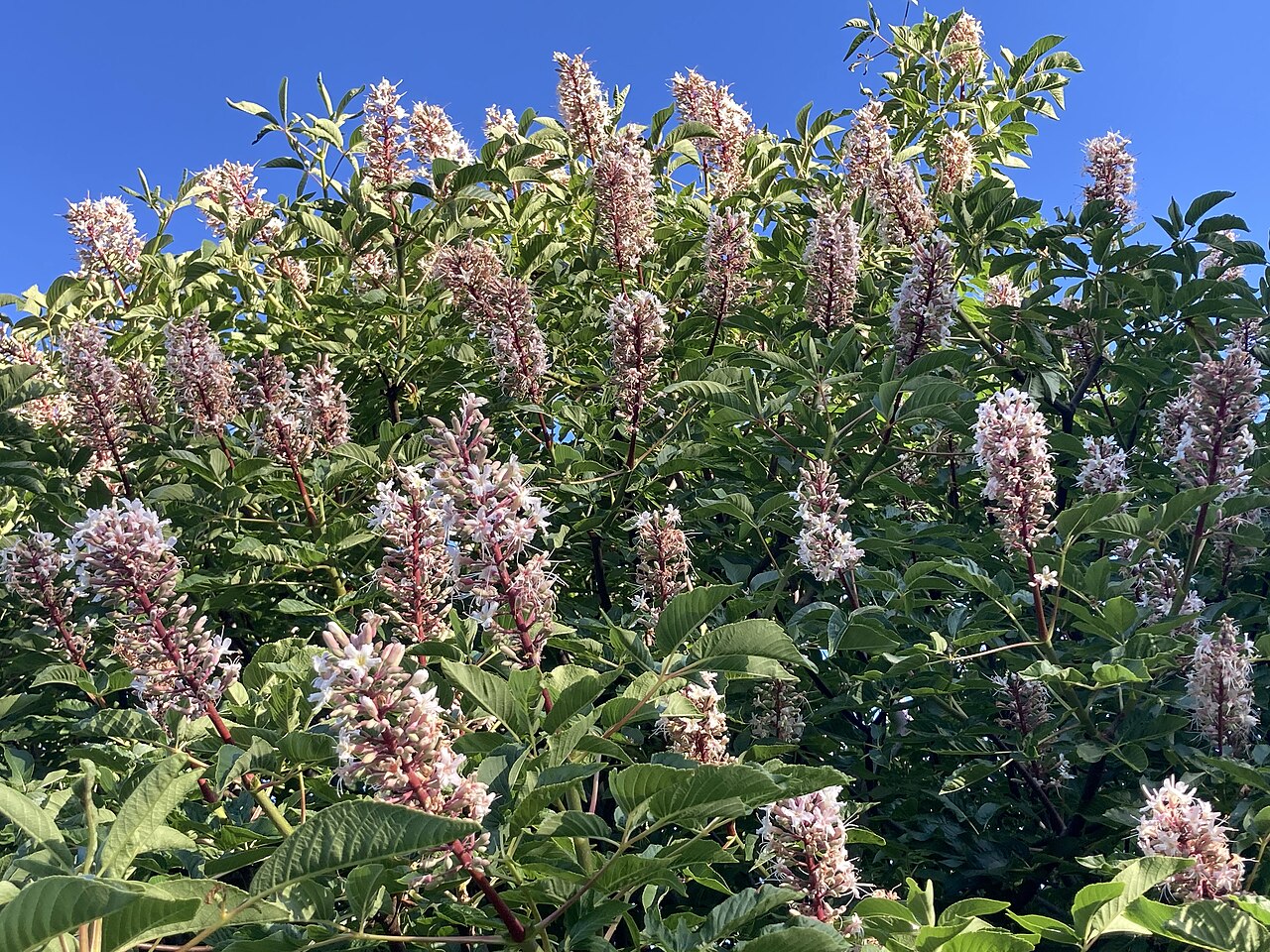
Aesculus californica, the California Buckeye (also called California Horse-Chestnut), is one of the most distinctive and unmistakable native trees of California’s foothills and coastal ranges. A member of the soapberry family (Sapindaceae), it is endemic to California — found nowhere else in the wild — where it forms a rounded, often multi-trunked small tree or large shrub instantly recognizable each spring for its tall, candle-like spikes of white to pale pink flowers that crowd the ends of every branch.
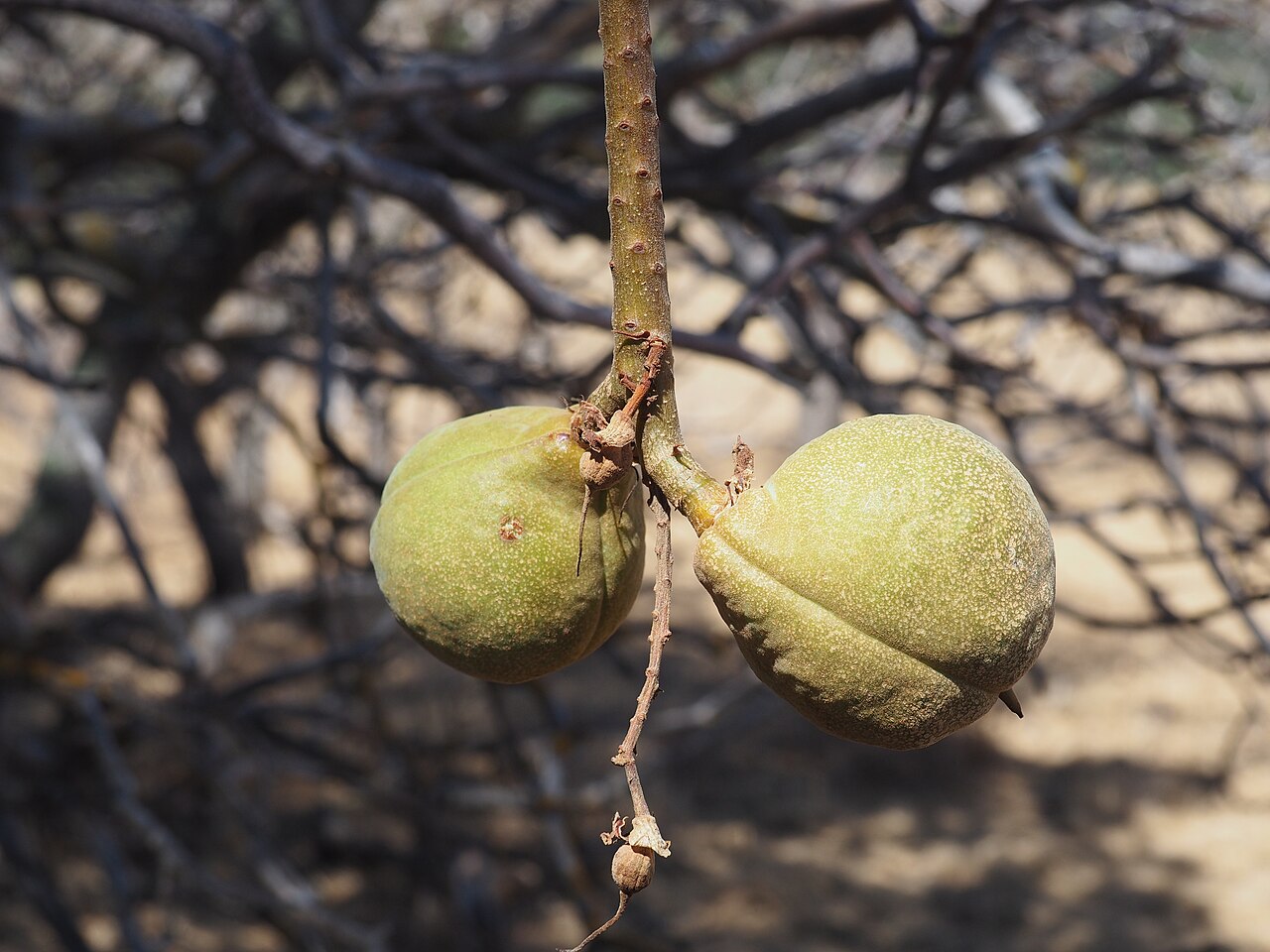
California Buckeye has adapted to California’s long, dry summers in a way few other trees have: it is drought-deciduous, dropping its leaves as early as midsummer — often while still green — once the dry season sets in, long before the golden hues of autumn affect the surrounding hills. This early leaf drop, paired with its large, dangling, pear-shaped seed capsules that persist on bare branches into fall and winter, gives the tree a striking, almost sculptural silhouette for much of the year.
Every part of California Buckeye — leaves, bark, flowers, and especially the large shiny seeds — contains toxic compounds (glycosides including aesculin) and should never be eaten by people or pets. Despite this, the tree is prized in native landscaping for its sculptural form, spectacular spring bloom, and extreme drought tolerance, and it plays an important, if complicated, ecological role for the pollinators and wildlife of its home range.
Identification
California Buckeye typically grows as a broad, rounded large shrub or small tree 10 to 25 feet tall (occasionally reaching 40 feet in favorable sites), often with multiple trunks and a dense, umbrella-like crown nearly as wide as it is tall.
Leaves
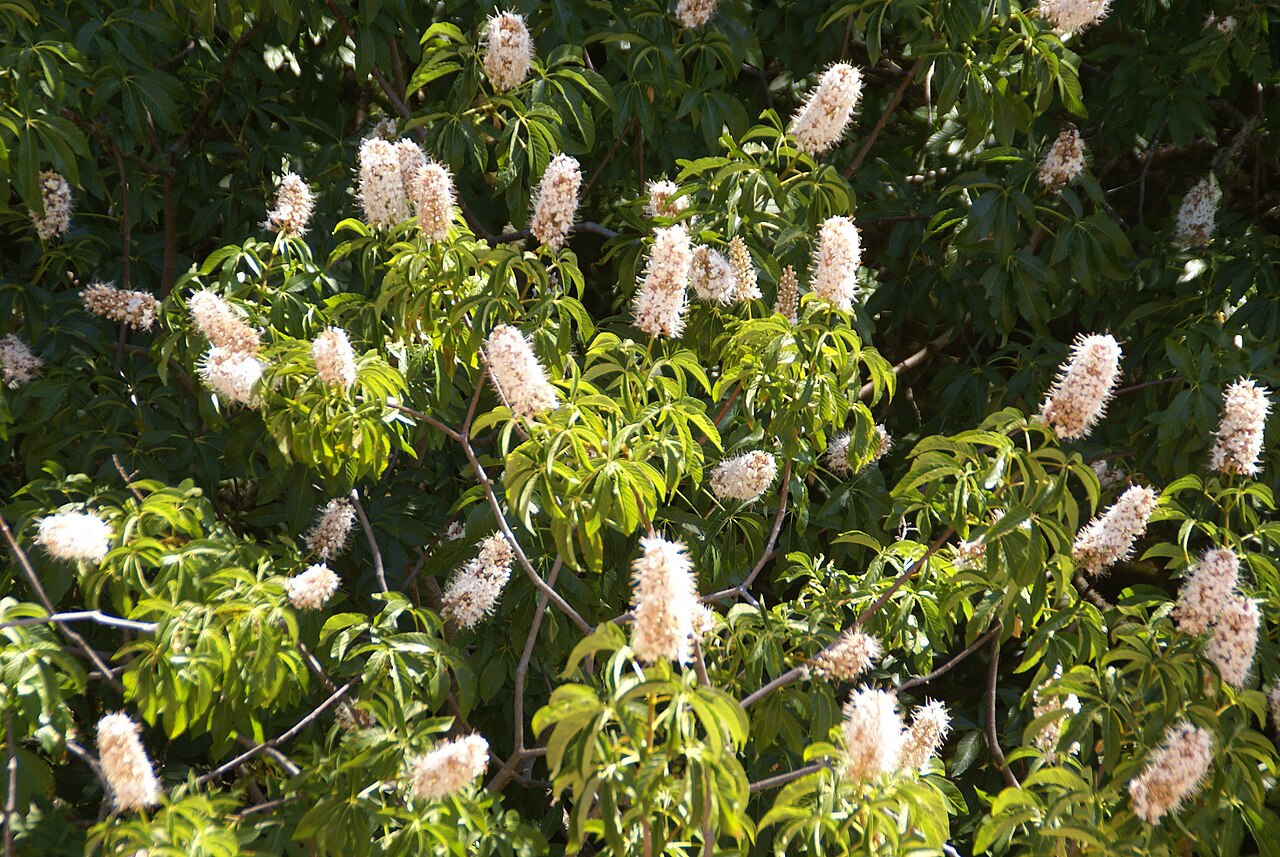
The leaves are opposite and palmately compound, typically with five (occasionally seven) leaflets radiating from a central point like fingers on a hand, each leaflet 3 to 6 inches long, elliptical, and finely toothed. The foliage emerges a fresh, bright green in late winter — among the earliest native trees to leaf out — and is drought-deciduous, often dropping by mid to late summer as the dry season progresses, well ahead of most other California natives.
Flowers
In late spring (April through June), upright flower spikes (panicles) 4 to 8 inches long appear at the branch tips, densely packed with small, fragrant, white to pale pink flowers. Each spike resembles a candle or bottlebrush and is highly conspicuous against the tree’s rounded green crown, visible from a considerable distance on hillsides. The flowers are sweetly, strongly scented, though the scent and pollen can be mildly toxic to honeybees, an unusual and well-documented ecological quirk of this species.
Fruit
By late summer and fall, the tree produces large, smooth, pear-shaped seed capsules 2 to 3 inches long that hang from bare or nearly bare branches — a striking sight once the leaves have dropped. Each capsule splits open to release one or occasionally two large, shiny, chestnut-brown seeds. All parts of the fruit and seed are toxic if eaten.
Quick Facts
| Scientific Name | Aesculus californica |
| Family | Sapindaceae (Soapberry) |
| Plant Type | Deciduous Tree / Large Shrub |
| Mature Height | 10–25 ft (occasionally to 40 ft) |
| Growth Rate | Slow to moderate |
| Sun Exposure | Full Sun to Part Shade |
| Water Needs | Low (highly drought-tolerant) |
| Soil Type | Well-drained; tolerates rocky or clay soils |
| Soil pH | 6.0–8.0 (slightly acidic to alkaline) |
| Bloom Time | April – June |
| Flower Color | White to pale pink |
| Fall Color | Drought-deciduous; drops green or pale yellow in summer |
| Fruit | Large pear-shaped capsule with one shiny toxic seed |
| Toxicity | All parts toxic to humans, pets, and livestock if eaten |
| Deer Resistant | Yes |
| USDA Hardiness Zones | 7–10 |
Native Range
California Buckeye is endemic to California, meaning it occurs naturally nowhere else. Within the state it ranges through the Coast Ranges and Klamath Mountains from the Oregon border south to Los Angeles County, and through the foothills of the Cascade Range and Sierra Nevada, as well as scattered sites in the Tehachapi Mountains and the edges of the southwestern Mojave Desert. It is not native to Oregon or any other state, despite occasionally being listed in older or non-botanical sources as reaching just across the border; authoritative California flora references (Calflora, the U.S. Forest Service) confirm it as a California endemic.
Within California, it grows in a wide range of dry habitats including chaparral, oak woodland, foothill woodland, and streamside canyons, typically at elevations from near sea level up to about 5,000 feet. It is especially conspicuous on dry, open hillsides in spring, where its pale flower spikes stand out dramatically against the surrounding chaparral and grassland.
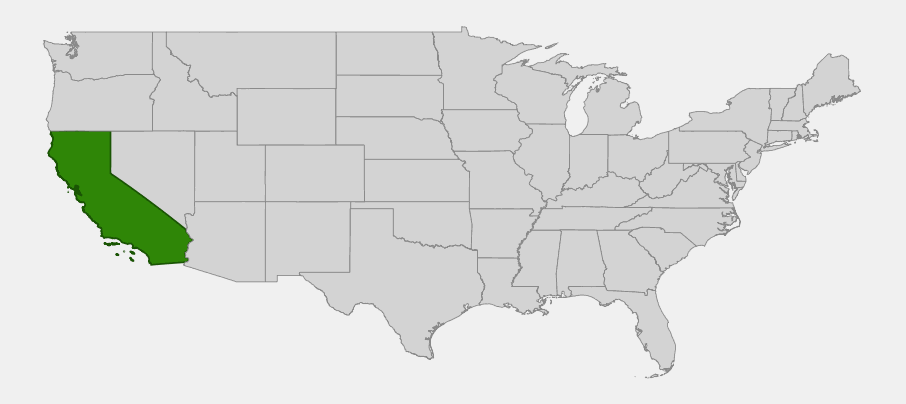
📋 Regional plant lists featuring California Buckeye: California Buckeye is endemic to California; Plant Native does not currently maintain a California-specific regional plant list.
Growing & Care Guide
California Buckeye is one of the most drought-adapted native trees available to California gardeners, making it an excellent low-water, low-maintenance choice once established.
Light
Full sun produces the fullest flowering and most compact, rounded form, though the tree also tolerates part shade, particularly in hotter inland locations where some afternoon shade can reduce summer stress during its brief leafed-out period.
Soil & Water
This species thrives in well-drained soils, including rocky, gravelly, or clay sites typical of California foothills, and tolerates summer drought exceptionally well once established — it is, after all, adapted to drop its leaves rather than fight the dry season. Young trees benefit from occasional deep watering during their first two to three summers; mature trees need little to no supplemental irrigation in most California climates.
Planting Tips
Plant container stock in fall or early winter so roots can establish during the rainy season before the first dry summer. Choose a site with room for its broad, rounded mature canopy — allow at least 15 to 20 feet of spread. Because the tree drops its leaves by mid to late summer, it is best sited where bare summer branches won’t be a liability, such as mixed with evergreen natives.
Maintenance
Established trees need minimal care. Prune only to remove dead or crossing branches, ideally in the dormant leafless season. Do not be alarmed by early, sometimes abrupt summer leaf drop — this is normal drought-deciduous behavior, not a sign of disease or stress in an otherwise healthy tree. Because all plant parts are toxic, keep raked leaves, flowers, and especially fallen seeds away from areas where children, pets, or livestock graze or play.
Landscape Uses
- Specimen tree for its dramatic spring flower display
- Drought-tolerant and water-wise landscaping
- Oak woodland and chaparral restoration plantings
- Wildlife gardens for native pollinators
- Erosion control on dry slopes and foothill sites
Wildlife & Ecological Value
California Buckeye has a genuinely unusual relationship with the pollinators of its native range, one that makes it an ecologically interesting, if nuanced, addition to a wildlife garden.
For Pollinators
The abundant spring flowers attract numerous native bees, bumblebees, and butterflies, which have co-evolved with the species and forage on it without apparent harm. However, the nectar and pollen are toxic to non-native European honeybees, causing illness, reduced brood viability, and even colony-level harm — a well-studied example of a native plant whose chemistry is tuned to its native pollinator community rather than to introduced honeybees. Gardeners near managed hives sometimes choose to avoid planting it for this reason, though its value to native bee populations remains high.
For Birds and Mammals
The dense canopy provides nesting and perching cover for birds, and the tree is a larval host and nectar source within its chaparral and oak woodland community. The large seeds, though toxic to humans and livestock, were historically processed by Indigenous peoples using extensive leaching, and some wildlife can tolerate small amounts, though the seeds are not a major wildlife food source given their toxicity.
Ecosystem Role
As one of the earliest native trees to leaf out in late winter and one of the first to summer-drop its leaves, California Buckeye plays a distinctive phenological role in California’s oak woodland and chaparral communities, offering an early-season burst of flowers and pollinator forage before the dry season silences much of the surrounding landscape.
Cultural & Historical Uses
California Buckeye holds an important place in the ethnobotany of California’s Indigenous peoples. Several tribes, including groups in the Sierra Nevada foothills and Coast Ranges, processed the toxic seeds through extensive grinding, leaching, and roasting — a labor-intensive process similar to that used for acorns — to render them edible as a famine or supplemental food in years when acorn crops failed. The raw seeds and all other plant parts are toxic and must never be eaten without this traditional, specialized preparation, which modern foragers should not attempt to replicate.
Seeds and plant material were also historically used by some California tribes as a fish poison in streams, crushed and introduced to stupefy fish for easier harvest, a traditional practice documented across several Native Californian communities. Today, California Buckeye is valued primarily as an ornamental and restoration tree, prized by native plant gardeners for its sculptural form and dramatic, fragrant spring bloom.
California Buckeye is commonly found growing alongside Pacific Madrone in mixed oak woodland and chaparral communities throughout its range.
Frequently Asked Questions
Is California Buckeye poisonous?
Yes. All parts of the tree — leaves, bark, flowers, and especially the seeds — contain toxic glycosides and should never be eaten by people, pets, or livestock. Keep fallen seeds away from children and grazing animals.
Why does California Buckeye lose its leaves in summer?
It is drought-deciduous, an adaptation to California’s dry summers. The tree drops its leaves — sometimes while they are still green — as early as midsummer to conserve water, well before the typical autumn leaf-drop season of most deciduous trees.
Is California Buckeye bad for bees?
Its nectar and pollen are toxic specifically to non-native European honeybees, which can suffer illness or colony harm from foraging on it, though native bee species that evolved alongside the tree are not harmed. This is an important consideration for gardeners near managed honeybee hives.
Is California Buckeye native to Oregon?
No. It is endemic to California. While a few non-botanical sources mention southwestern Oregon, authoritative California flora references identify it as occurring only within California’s borders.
How drought-tolerant is California Buckeye?
Extremely. Once established, it needs little to no supplemental water and is one of the best choices for low-water, waterwise California native gardens, surviving the state’s long dry summers by going dormant and dropping its leaves early.

Looking for a nursery that carries California Buckeye?
Browse our native plant nursery directory: California