
Coast Live Oak (Quercus agrifolia)
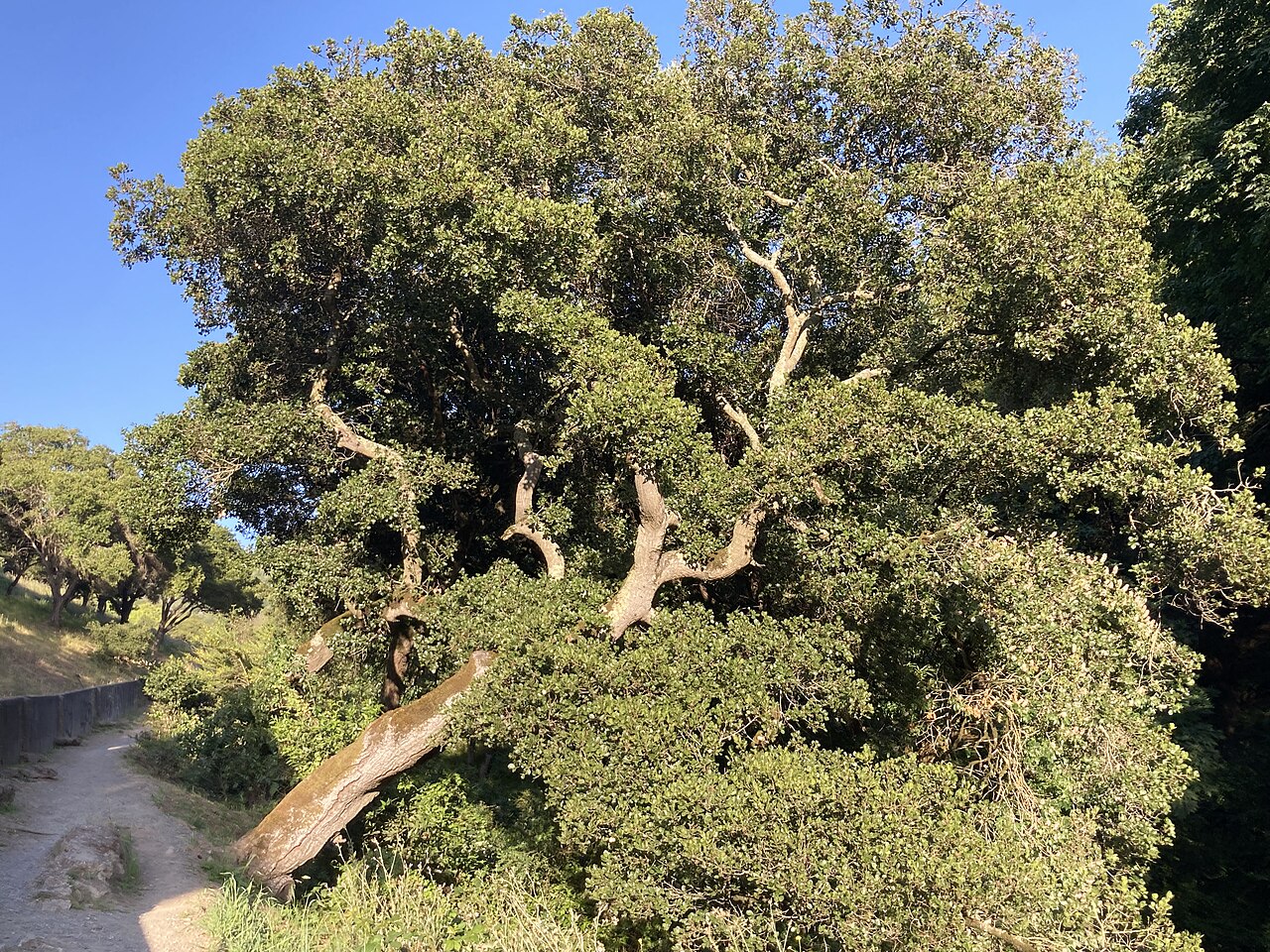
Quercus agrifolia, the Coast Live Oak, is the iconic evergreen oak of the California coastal landscape — a massive, long-lived, broad-canopied tree that defines the look of oak woodlands and savannas from the San Francisco Bay Area south to northern Baja California. A member of the red oak group within Fagaceae, it is one of the most recognizable and ecologically important trees in California, often described as a keystone species for the astonishing diversity of wildlife it supports.
Coast Live Oak grows 30 to 75 feet tall with an even wider spread, developing a dense, rounded or dome-shaped crown of dark green, holly-like leaves that persist year-round, dropping and replacing gradually rather than in a single autumn event. Its thick, massive trunk and heavy, often twisting horizontal limbs give old specimens a sculptural, almost otherworldly presence — some individual trees are documented to be several centuries old and are treasured local landmarks.
Because it tolerates the Mediterranean climate’s dry summers and wet winters so well, Coast Live Oak is both a defining feature of wild California landscapes and a valued specimen and shade tree in gardens throughout its range. It asks for very little once established — in fact, the most common way gardeners harm this tree is by giving it too much summer water — making it one of the best long-term investments a California native plant gardener can make.
Identification
Coast Live Oak is identified by its evergreen, spiny-margined leaves, broad rounded crown, and deeply furrowed gray bark. It is most easily confused with the related Interior Live Oak (Quercus wislizeni), but Coast Live Oak’s leaves are typically more convex or cupped and its acorns are more slender and elongated.
Bark
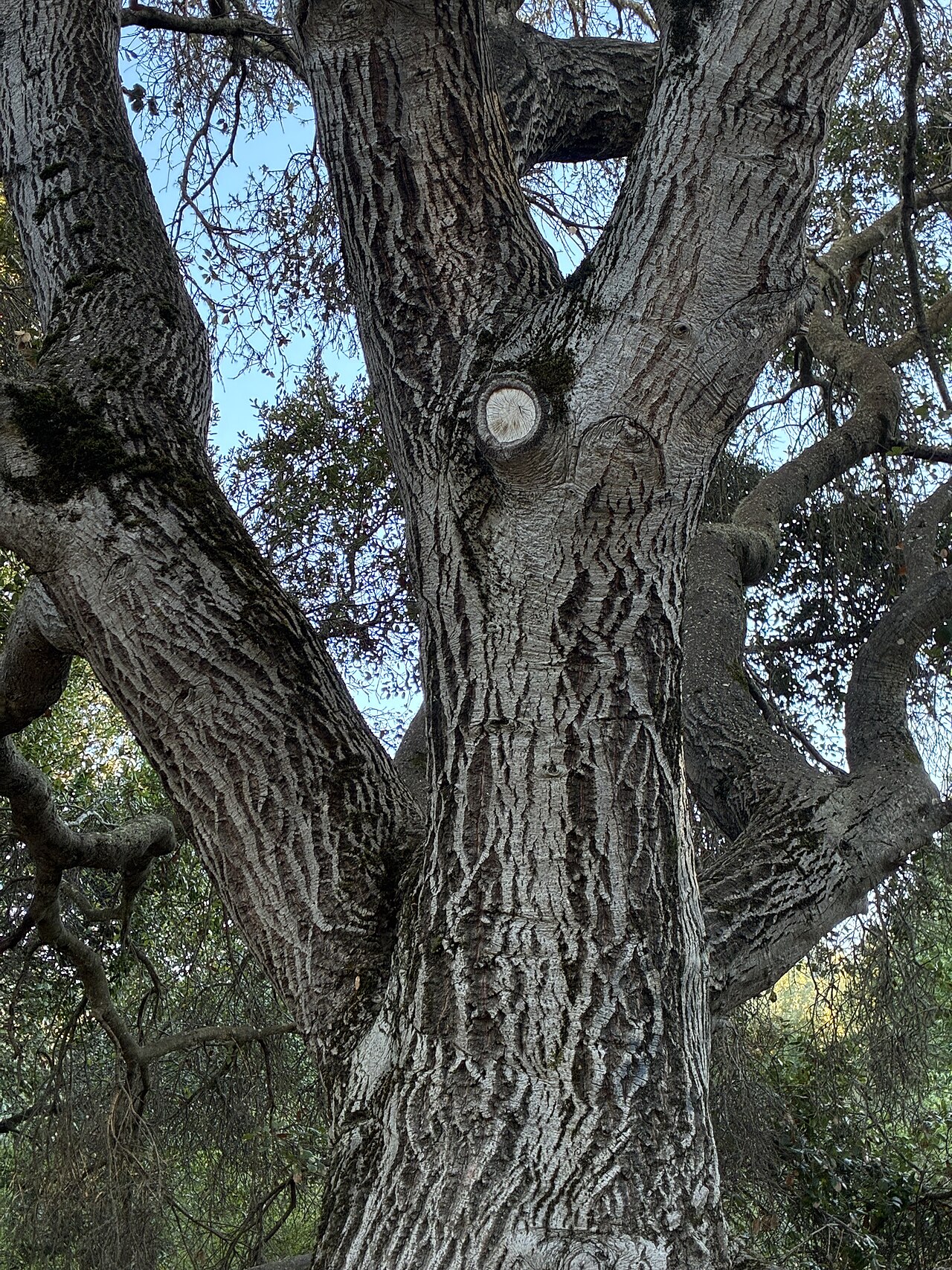
The bark is thick, hard, and dark gray to nearly black on mature trunks, developing deep furrows and plated ridges with age. On younger trees and branches the bark is smoother and lighter gray. The heavy, often horizontal lower limbs of old trees frequently touch or nearly touch the ground, giving mature specimens their characteristic sprawling silhouette.
Leaves
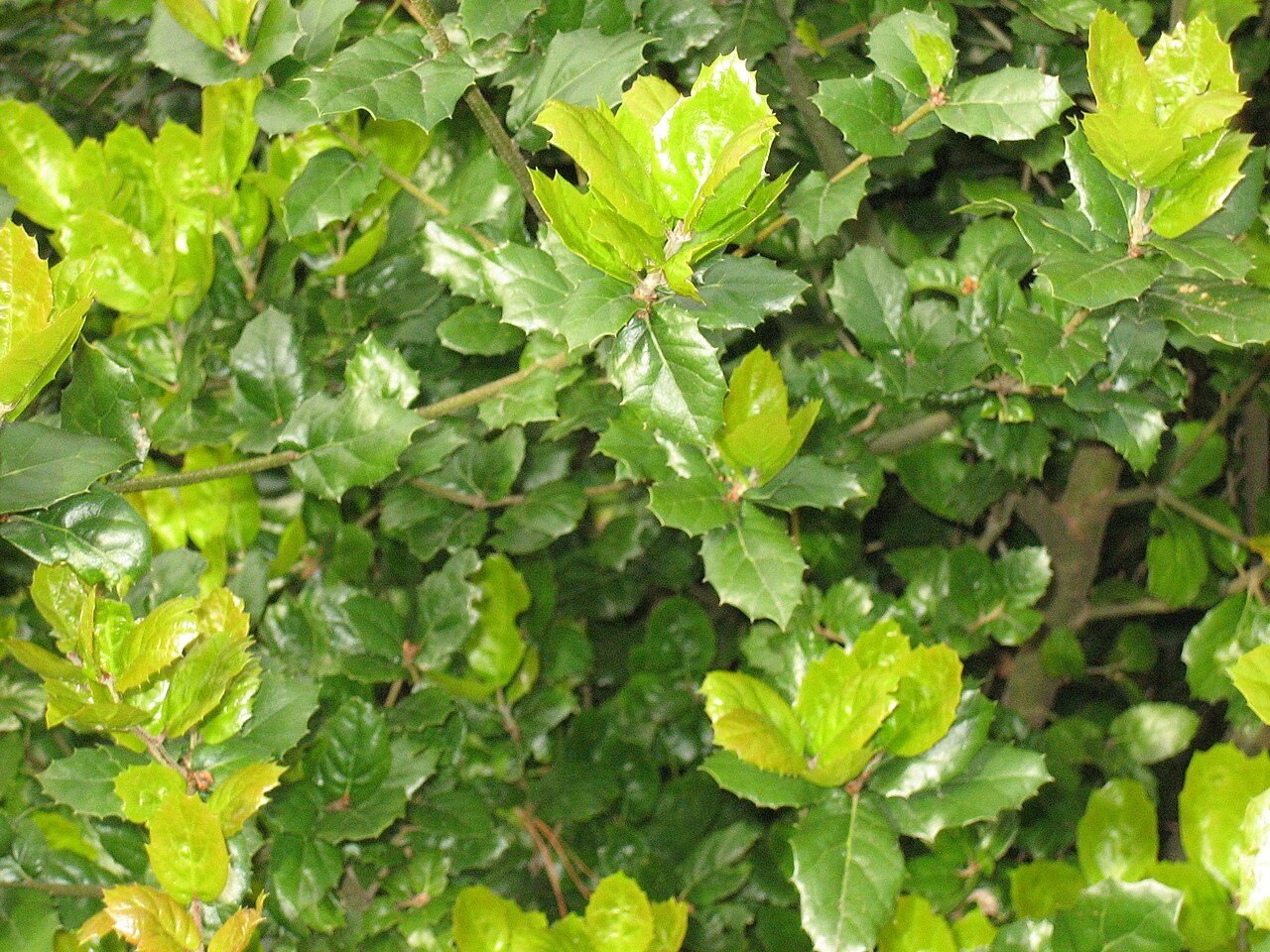
Leaves are evergreen, oval to elliptic, 1 to 4 inches long, with spiny, holly-like tooth margins (though some leaves, especially on older growth, may have smoother edges). The upper surface is glossy dark green and often slightly cupped or convex; the underside is paler, sometimes with small tufts of hair in the vein axils. Unlike deciduous oaks, Coast Live Oak sheds and replaces its leaves gradually through the year, so the canopy always appears full and green.
Flowers
Like all oaks, Coast Live Oak is wind-pollinated, producing inconspicuous flowers in spring. Male flowers hang in slender, pale yellow-green catkins 2 to 3 inches long; female flowers are tiny and borne singly or in small clusters in the leaf axils, largely unnoticed except by close inspection.
Fruit & Seeds
The acorns are slender and elongated, 1 to 1½ inches long, narrowing to a pointed tip, and seated in a thin, scaly, bowl-shaped cap that covers about a third of the nut. Acorns mature in a single season (unlike red oaks in colder climates, which often take two years) and drop in autumn, typically September through November, in cycles of boom-and-bust mast years that strongly influence regional wildlife populations.
Quick Facts
| Scientific Name | Quercus agrifolia |
| Family | Fagaceae (Beech/Oak) |
| Plant Type | Evergreen Tree |
| Mature Height | 30–75 ft |
| Mature Spread | 40–90 ft (often wider than tall) |
| Growth Rate | Slow to Moderate |
| Sun Exposure | Full Sun to Part Shade |
| Water Needs | Low (drought tolerant once established) |
| Soil Type | Well-drained; tolerates clay, loam, or rocky soils |
| Soil pH | 5.5–7.5 (acidic to neutral) |
| Bloom Time | March – April (inconspicuous) |
| Flower Color | Pale yellow-green catkins |
| Fall Color | Evergreen (no fall color change) |
| Fruit | Slender acorns, 1–1½ in, maturing in one season |
| Deer Resistant | Moderate (mature trees generally tolerate browsing) |
| USDA Hardiness Zones | 9–10 |
Native Range
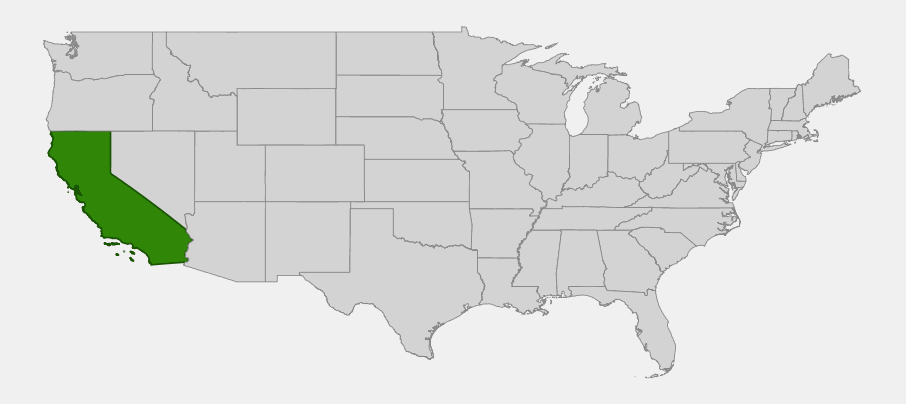
Coast Live Oak is native to the coastal and near-coastal regions of California, from Mendocino and Sonoma counties in the north, south through the San Francisco Bay Area, the Central Coast, and the Transverse and Peninsular Ranges, to San Diego County and on into northern Baja California, Mexico. It is strictly a California species within the United States — no other U.S. state shares it as a native tree — and it does not occur naturally in the state’s interior valleys, deserts, or higher mountains away from coastal climate influence.
Within this range, Coast Live Oak is the dominant tree of coastal oak woodlands and savannas, typically growing from near sea level up to about 3,000 feet in the Coast Ranges, occasionally higher in the Transverse Ranges. It thrives on a wide range of slopes and soils but is most abundant on well-drained hillsides, canyon slopes, and valley margins within reach of coastal fog and moderated temperatures, which helps sustain it through the region’s long, rainless summers.
Coast Live Oak woodlands are increasingly threatened by Sudden Oak Death (caused by the pathogen Phytophthora ramorum), as well as by urban and suburban development pressure along the California coast. Mature specimens are protected by local tree ordinances in many California cities and counties, reflecting both their ecological importance and the decades or centuries required to replace a large oak once it is lost.
📋 Regional plant lists featuring Coast Live Oak: not currently covered by one of our regional native plant lists.
Growing & Care Guide
Coast Live Oak is a long-lived, low-maintenance tree once established, but it has one well-known Achilles’ heel in cultivation: overwatering, particularly in summer, which can trigger root rot and crown decline in a tree perfectly adapted to bone-dry summer soils.
Light
Plant in full sun to light part shade. Young trees establish and grow fastest in full sun, though they tolerate some shade, especially in hot interior-facing sites. Avoid deep, continuous shade, which weakens growth and bloom.
Soil & Water
Coast Live Oak is highly adaptable to soil type, growing well in clay, loam, or rocky hillside soils as long as drainage is adequate. The single most important cultural rule is to withhold summer irrigation near the trunk once the tree is established — California oaks evolved with a summer-dry, winter-wet rainfall pattern, and supplemental summer water close to the root crown is the leading cause of oak decline and root disease in managed landscapes. Water deeply but infrequently during the first two to three years to establish a deep root system, then taper off.
Planting Tips
Plant young trees in fall or winter to take advantage of natural rainfall for establishment. Choose small container stock over large boxed trees where possible — young oaks with undisturbed taproots generally outperform larger transplants over time. Keep irrigation, mulch, and any plantings well away from the trunk and root crown, and avoid grading or compacting soil under the drip line of existing mature oaks, which can seriously damage their shallow feeder roots.
Pruning & Maintenance
Prune in the dry season (summer to early fall) rather than during the rainy winter months, when wounds are more vulnerable to the fungal pathogens associated with Sudden Oak Death. Limit pruning to dead, damaged, or hazardous limbs; mature Coast Live Oaks need very little structural correction. Many California jurisdictions regulate or require permits for pruning or removing native oaks above a certain trunk diameter — check local ordinances before major work.
Landscape Uses
Coast Live Oak anchors a wide range of California native landscapes:
- Specimen shade tree for large residential and public landscapes
- Oak woodland restoration and habitat plantings
- Dry-climate shade gardens beneath an established canopy
- Erosion control on coastal hillsides and canyon slopes
- Wildlife habitat plantings supporting birds and mammals
- Low-water landscaping once the tree is established
Wildlife & Ecological Value
Coast Live Oak is widely regarded as one of the single most valuable wildlife trees in California, supporting a web of species that depend on its acorns, foliage, and structure.
For Pollinators
While wind-pollinated and not a major nectar source, Coast Live Oak hosts an enormous diversity of native insects — including gall wasps, moths, and butterflies — whose caterpillars feed on its leaves, in turn supporting the insect-eating birds that nest in its canopy.
For Birds
Acorn Woodpeckers rely on Coast Live Oaks for both nesting cavities and their namesake food, often drilling elaborate granary trees to store thousands of acorns. Western Scrub-Jays, Band-tailed Pigeons, Wild Turkeys, and many songbirds feed on the acorns or forage for insects among the foliage, while the dense canopy provides important nesting and roosting habitat.
For Mammals
Acorns are a critical fall and winter food source for Mule Deer, Black Bears (in parts of the range), gray squirrels, and numerous smaller rodents, which in turn support the predators that feed on them. Mast years with heavy acorn production can measurably boost local rodent and deer populations the following season.
Ecosystem Role
Coast Live Oak woodlands are considered a foundational, keystone habitat type in California, supporting hundreds of associated plant, insect, bird, and mammal species. The trees’ extensive root systems stabilize hillsides, their canopies moderate understory temperature and moisture, and their accumulated leaf litter builds the rich soils that support California’s distinctive oak woodland understory flora.
Cultural & Historical Uses
Coast Live Oak acorns were a staple food for California’s Indigenous peoples for thousands of years, including the Ohlone, Chumash, Miwok, and many other coastal and near-coastal nations. Because raw acorns contain bitter tannins, they required careful processing — typically shelling, grinding into meal, and leaching with repeated rinses of water — before being cooked into acorn mush, bread, or cakes that formed a dietary staple across much of California.
Entire villages were often sited near reliable stands of productive oaks, and oak woodlands were actively managed through practices such as periodic low-intensity burning, which cleared underbrush, reduced pest and disease pressure, and promoted the kind of open, park-like oak savanna structure early European visitors described upon arrival in California.
Today, Coast Live Oak remains deeply woven into California’s cultural and ecological identity. Many of the state’s oldest and most storied trees are Coast Live Oaks, and the species continues to anchor land conservation, oak woodland restoration, and native landscaping efforts throughout its range.
Frequently Asked Questions
Can you eat Coast Live Oak acorns?
Yes, after processing. Raw acorns are high in bitter tannins and are not palatable or advisable to eat without preparation. Indigenous Californians traditionally shelled, ground, and leached the meal with water to remove the tannins before cooking it into mush or bread — a labor-intensive but well-documented process.
Why shouldn’t I water my Coast Live Oak in summer?
This species evolved with a summer-dry, winter-wet Mediterranean climate, and its root systems are highly susceptible to fungal root rot when summer-irrigated, especially near the trunk. Keeping irrigation away from the root crown and limiting water to the dry season’s establishment years is the single best thing you can do for a mature tree’s long-term health.
How long do Coast Live Oaks live?
Many live 200 to 300 years, and some well-documented specimens are believed to exceed that, making them some of the longest-lived trees in California’s coastal landscape. Their slow growth rate is part of what allows such longevity.
What is Sudden Oak Death, and does it affect Coast Live Oak?
Sudden Oak Death is a disease caused by the pathogen Phytophthora ramorum, which has killed large numbers of Coast Live Oaks and related species in coastal California since the 1990s. It spreads partly through moisture on foliage, so avoiding overhead irrigation and pruning during wet weather helps reduce infection risk.
Is Coast Live Oak a good shade tree for a home landscape?
Yes, for landscapes with the space to accommodate its eventual size — it can reach 40 to 90 feet in spread. It is best planted where its root zone can remain undisturbed and unirrigated in summer, away from lawns, patios, and other features that would require regular watering near the trunk.

Looking for a nursery that carries Coast Live Oak?
Browse our native plant nursery directory: California