
Inside-out Flower (Vancouveria hexandra)
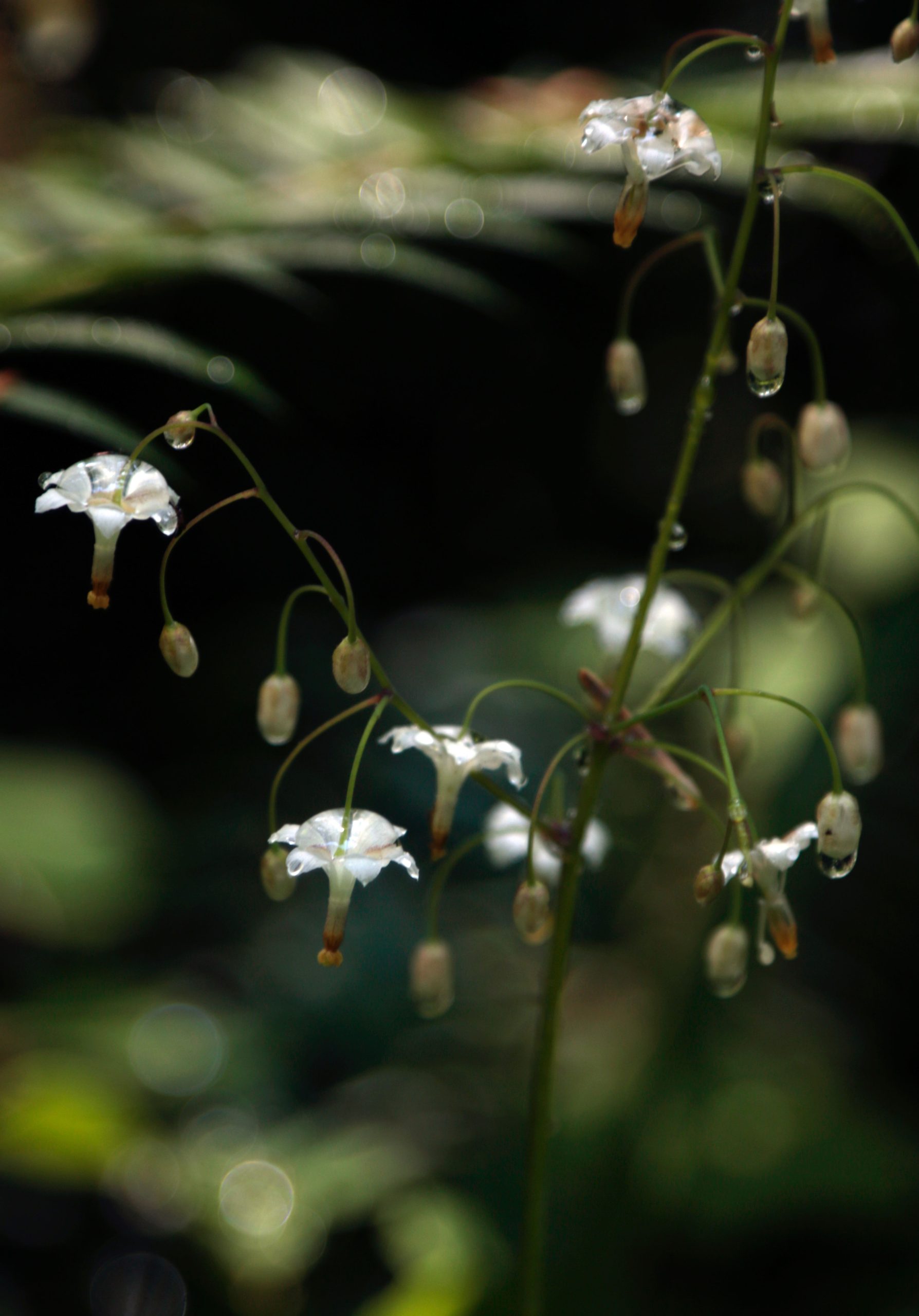
Vancouveria hexandra, commonly known as Inside-out Flower or White Inside-out Flower, is a low, rhizomatous perennial of the moist Douglas-fir forests of the Pacific Northwest, named for its small, delicate white flowers whose petals sweep backward so sharply that the bloom appears turned inside out. It belongs to the barberry family and is one of just a handful of species in its genus, all restricted to the West Coast — the genus itself is named for Captain George Vancouver, reflecting its distinctly Pacific Northwest identity.
In the wild, Inside-out Flower forms loose, spreading colonies across the shaded forest floor, its wiry black petioles and lobed, “duck-foot” leaflets creating a soft groundcover beneath conifers and bigleaf maples. In late spring, airy clusters of small white flowers rise on thin, branching stalks well above the foliage, each flower nodding and reflexed so completely that only the bright yellow anthers point forward, like a tiny firework caught mid-burst. The effect is subtle from a distance but genuinely striking up close, and it has made the species a favorite of native shade gardeners throughout western Oregon and Washington.
Though slow to spread, Inside-out Flower is a patient, long-lived groundcover once established, asking only for the same cool, humus-rich shade it enjoys in its native understory. It pairs naturally with sword fern, wild ginger, and other shade-loving Pacific Northwest natives, and its evergreen to semi-evergreen foliage provides structure in the garden even when the flowers have finished for the season.
Identification
Inside-out Flower is a low, non-woody perennial typically 8 to 16 inches tall, spreading slowly by shallow, branching rhizomes to form loose colonies rather than dense mats. It has no true aboveground stems; both leaves and flower stalks arise directly from the rhizome at ground level.
Leaves
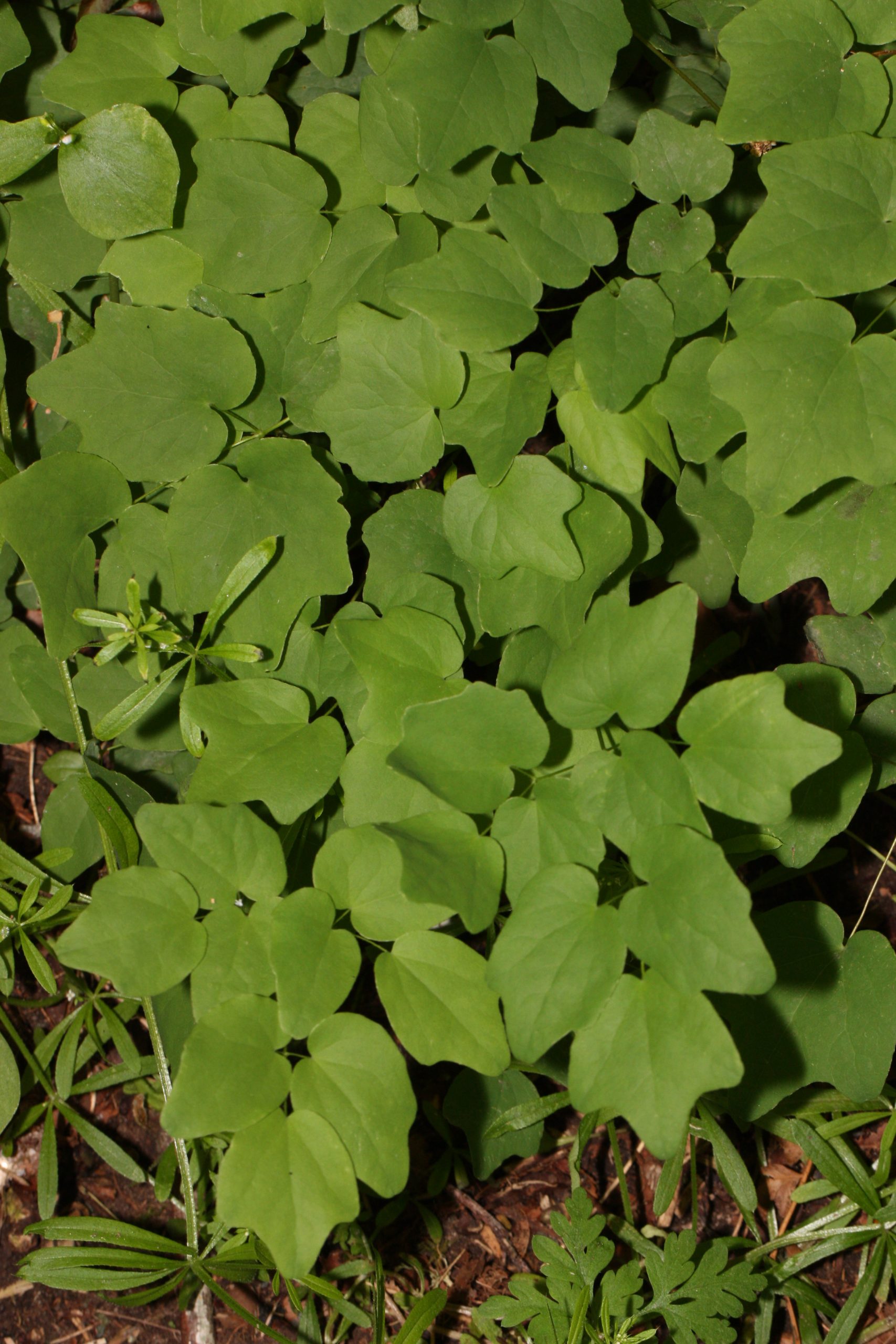
The leaves are compound, borne on wiry, dark petioles 8 to 12 inches long, and divided into two or three heart-shaped to rounded leaflets, each shallowly lobed in a shape widely described as “duck-foot.” New leaves often emerge with a bronze or reddish flush before maturing to a soft, matte green, and the foliage is thin-textured and semi-evergreen, persisting through mild winters but thinning in harder cold.
Flowers
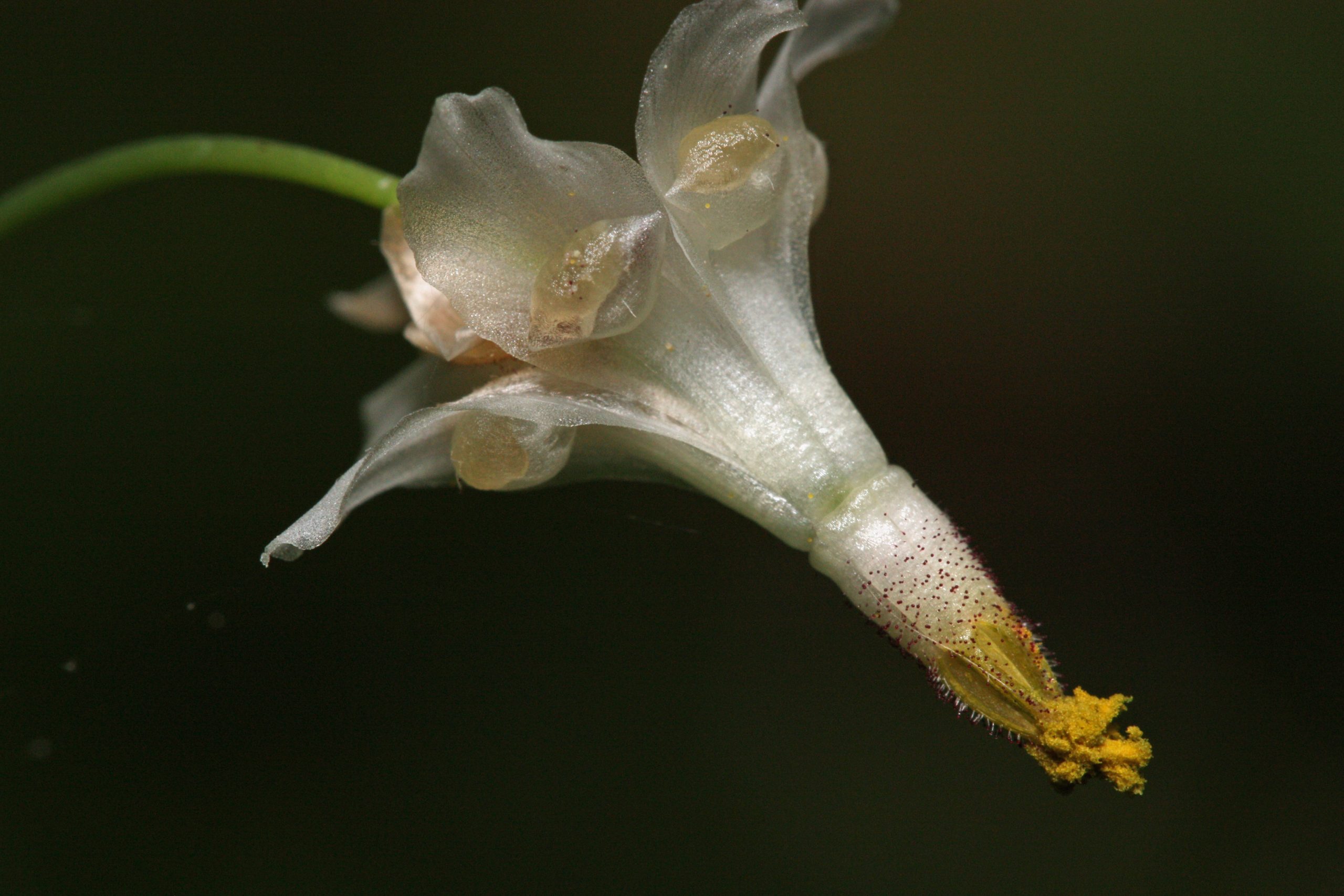
Flower stalks rise above the foliage in late spring, each bearing a loose, airy cluster of 10 to 30 small white flowers on thin, spreading pedicels. Each flower is only about ¼ inch across but strikingly constructed: six white, papery petal-like sepals and six smaller true petals sweep sharply backward and upward, away from the flower’s center, while the stamens and pistil point forward and downward — the reverse of a typical flower’s arrangement, which gives the plant both its common name and its slightly otherworldly look up close.
Fruit & Seeds
Flowers give way to narrow, inconspicuous capsules that split to release seeds. In the wild, ants are important dispersers, carrying the seeds — which bear small fatty attachments called elaiosomes — back to their nests, a dispersal strategy shared with many other spring-blooming forest floor perennials of the region.
Quick Facts
| Scientific Name | Vancouveria hexandra |
| Family | Berberidaceae (Barberry) |
| Plant Type | Herbaceous / Semi-evergreen Perennial Groundcover |
| Mature Height | 8–16 in |
| Mature Spread | 12–24 in (slowly spreading by rhizome) |
| Growth Rate | Slow |
| Sun Exposure | Part Shade to Full Shade |
| Water Needs | Moderate |
| Soil Type | Humus-rich, moist, well-drained forest soil |
| Soil pH | 5.5–7.0 (slightly acidic to neutral) |
| Bloom Time | May – July |
| Flower Color | White |
| Fall Color | None (semi-evergreen, foliage persists) |
| Fruit | Small inconspicuous capsule, ant-dispersed seed |
| Deer Resistant | Yes |
| USDA Hardiness Zones | 6 – 9 |
Native Range
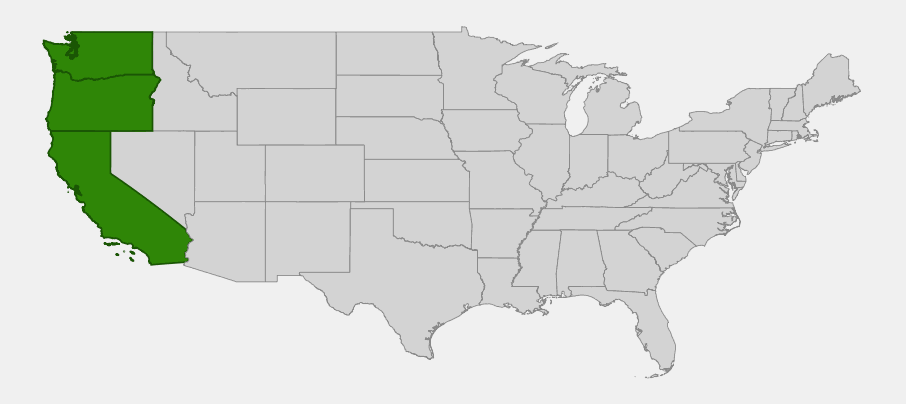
Inside-out Flower is native to the moist, low- to mid-elevation forests of the Pacific Coast, found from western Washington south through western Oregon and into the extreme northwestern corner of California, roughly as far south as the redwood belt of the North Coast. It also occurs just across the international border in southwestern British Columbia, making it a true Pacific Northwest regional specialty rather than a widespread continental species.
Throughout this range, it grows almost exclusively on the shaded floor of moist, mixed Douglas-fir and western hemlock forests, often alongside bigleaf maple, sword fern, and other characteristic understory natives. It favors the humus-rich, consistently moist but well-drained soils typical of these forests, and it is rarely found far from a closed or nearly closed forest canopy.
Within California, Inside-out Flower is confined to the far northwestern corner of the state — it is not found through the Central Valley, the Sierra Nevada, or Southern California, despite California being included among its native states. Gardeners anywhere outside its native range who see it offered commercially should treat it as an introduced ornamental rather than assume local native status.
📋 Regional plant lists featuring Inside-out Flower: Western Oregon & Western Washington
Growing & Care Guide
Inside-out Flower rewards gardeners who can offer it the cool, shaded, humus-rich conditions of a Pacific Northwest forest floor. It is not a plant for sunny beds or dry gardens, but in the right shady spot it is dependable and essentially carefree once established.
Light
Part to full shade is ideal, mimicking its native understory habitat beneath a conifer or broadleaf canopy. It will tolerate brief dappled morning sun in cooler coastal gardens but struggles and bleaches in hot afternoon sun, especially away from the moderating coastal and marine-influenced climate of its native range.
Soil & Water
Give it a humus-rich, evenly moist but well-drained soil, ideally amended with leaf mold or compost to mimic forest duff. It is not drought-tolerant and performs best with consistent moisture through the growing season, though established plantings can tolerate a normal Pacific Northwest dry summer with some supplemental water. Avoid soggy, poorly drained sites, which can lead to rot at the rhizome.
Planting Tips
Plant divisions or container stock in fall or early spring, spacing plants 12 to 18 inches apart to allow for slow rhizome spread over several seasons. A loose mulch of leaf litter or fine bark helps retain moisture and replicates the natural forest floor. Be patient — colonies spread gradually and may take a few years to knit together into a continuous groundcover.
Pruning & Maintenance
Essentially maintenance-free once established. Old or winter-damaged foliage can be tidied in late winter before new growth emerges, but this is purely cosmetic. The plant is not prone to significant pests or disease in appropriate shady, moist conditions.
Landscape Uses
Its fine texture, slow spread, and shade tolerance suit several niches in a native woodland garden:
- Woodland groundcover beneath conifers, maples, or other shade trees
- Shade garden companion alongside sword fern, wild ginger, and trillium
- Understory restoration plantings in disturbed Douglas-fir forest edges
- Container or shaded rock garden accent, where its delicate flowers can be appreciated up close
Wildlife & Ecological Value
Inside-out Flower plays a quiet but genuine ecological role in the Pacific Northwest forest understory, supporting both pollinators and the seed-dispersing ants that help it spread.
For Pollinators
The small white flowers attract native bees and other small pollinating insects during their late spring bloom, offering a modest nectar source in the shaded, flower-sparse environment of the closed forest floor.
For Other Wildlife
Seeds bear fatty, nutrient-rich elaiosomes that attract forest ants, which carry the seeds back to their nests, eat the elaiosome, and discard the still-viable seed nearby — a mutualistic dispersal relationship called myrmecochory that is shared with many other Pacific Northwest forest floor perennials and that helps the species colonize new patches of suitable habitat over time.
Ecosystem Role
As a low, spreading groundcover, Inside-out Flower helps stabilize forest floor soils and contributes to the layered understory structure that supports overall forest biodiversity. Its dense rhizome mats, once established, can help suppress erosion on shaded slopes and contribute organic matter to the forest soil as foliage dies back and decomposes.
Cultural & Historical Uses
Inside-out Flower has a modest documented history of use among Indigenous peoples of the Pacific Northwest, where some groups used preparations of the plant topically in traditional practices; specific applications and attributions vary across available ethnobotanical sources and are not consistently documented, so no particular traditional use is described here as established fact. The plant’s primary significance to people today is horticultural rather than historical: it has long been valued by native plant gardeners in the Pacific Northwest for its delicate, uncommon-looking flowers and reliable shade performance.
Botanically, the genus Vancouveria commemorates Captain George Vancouver, the British naval officer who charted much of the Pacific Northwest coast in the late 18th century, linking the plant’s name directly to the region it calls home. It remains a relatively specialized, regionally beloved native rather than a plant with a wide historical trade or utilitarian record.
Frequently Asked Questions
Why is it called “inside-out flower”?
Its petals and sepals sweep sharply backward and upward, away from the center of the bloom, while the reproductive parts point forward — the reverse of how most flowers are arranged, giving the bloom a turned-inside-out appearance up close.
Is Inside-out Flower native to California?
Only to the far northwestern corner of the state, in the redwood belt near the Oregon border. It is not native to the rest of California, including the Central Valley, Sierra Nevada, or Southern California.
Does Inside-out Flower spread aggressively?
No — it spreads slowly by shallow rhizomes and can take several years to form a continuous groundcover. It is not considered an aggressive or weedy spreader in the garden.
Can Inside-out Flower grow in sun?
It prefers part to full shade and performs poorly in hot, direct sun, especially away from the cool, humid coastal climate of its native range. Plant it beneath trees or on the shaded side of structures for best results.
What does Inside-out Flower pair well with in a garden?
It combines naturally with other Pacific Northwest shade natives such as sword fern, wild ginger, and trillium, all of which share its preference for moist, humus-rich, shaded forest-floor conditions.

Looking for a nursery that carries Inside-out Flower?
Browse our native plant nursery directory: Washington · Oregon · California