
Coulter Pine (Pinus coulteri)
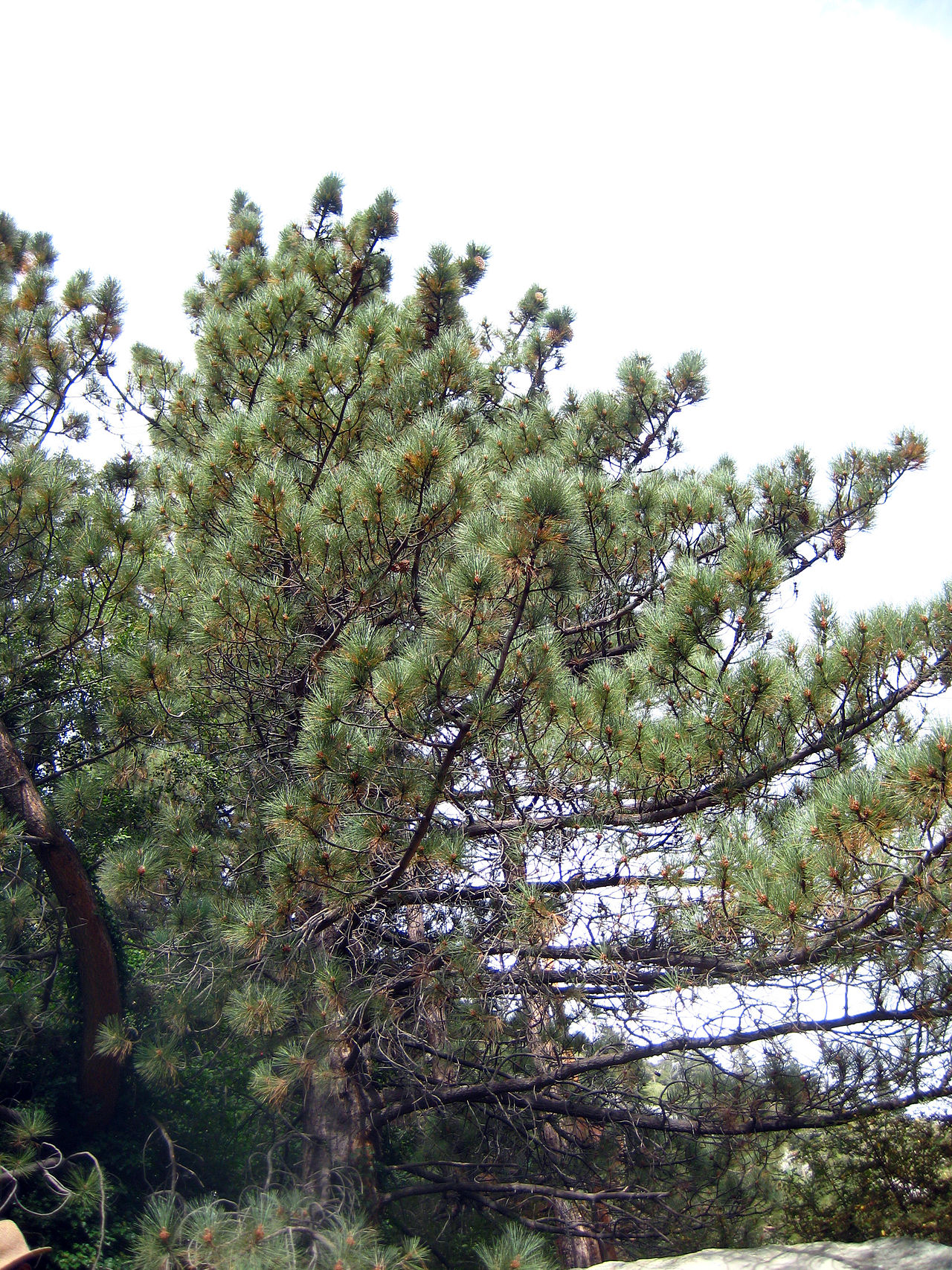
Pinus coulteri, the Coulter Pine, is a rugged, slow-to-mid-growing conifer found only in the mountains of Southern and Central California and a sliver of northern Baja California, Mexico. It is best known for producing the heaviest cones of any pine in the world — mature cones can weigh 4 to 10 pounds and are armed with wickedly curved, claw-like spines, which has earned the species the nickname “widowmaker pine” among hikers who camp beneath it. Named for Irish botanist Thomas Coulter, who collected the first specimens in the 1830s, this tree is a defining presence on the dry, rocky slopes where California’s chaparral meets its mixed-conifer forests.
Coulter Pine occupies a narrow but well-defined range: the Coast Ranges from the Diablo Range and Santa Lucia Mountains south through the Transverse and Peninsular Ranges, including the San Gabriel, San Bernardino, San Jacinto, Santa Ana, Palomar and Cuyamaca mountains, with outlying populations continuing into Baja California. It typically grows at middle elevations, from about 2,000 to 7,000 feet, where summers are hot and dry and fire is a frequent and essential part of the landscape.
For California gardeners with large, dry, sunny properties, Coulter Pine offers a distinctive silhouette, extreme drought tolerance once established, and genuine wildlife value — but its size, heavy cones and fire-adapted biology mean it needs a thoughtful site, well away from roofs, walkways and parking areas.
Identification
Coulter Pine is a medium to large evergreen conifer, usually reaching 40 to 80 feet tall with a broad, somewhat open, irregular crown, though exceptional trees can exceed 100 feet. The trunk commonly runs 1.5 to 3 feet in diameter. Young trees have a more pyramidal shape that becomes flatter-topped and more irregular with age.
Bark & Stems
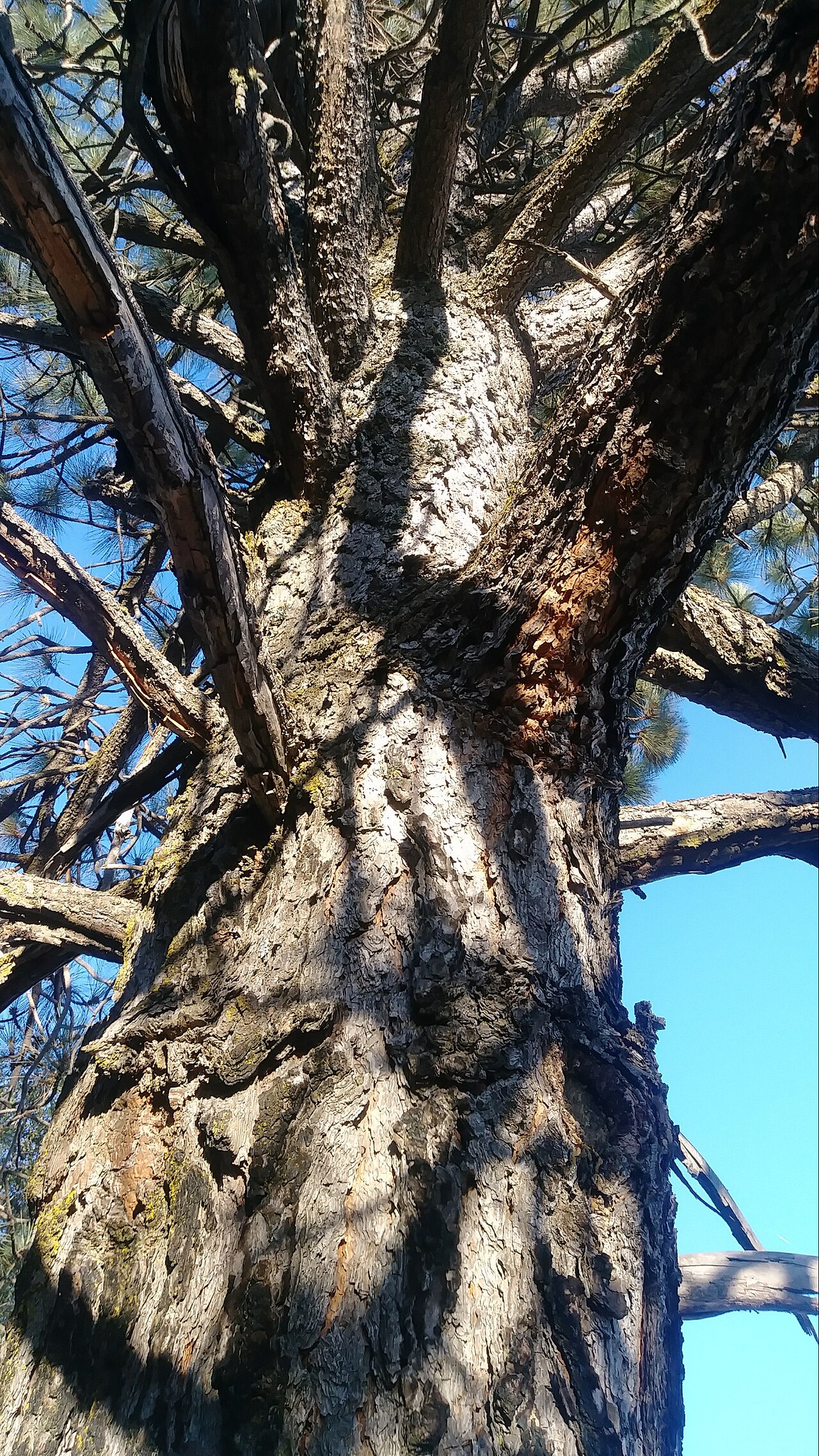
Bark on mature trees is dark gray-brown to nearly black, deeply furrowed into long, irregular ridges and plates, giving older trunks a rough, almost blocky texture. Young branches and twigs are stout and orange-brown, thickening noticeably with age.
Leaves
Needles are striking: long (8 to 12 inches), stiff, gray-green to blue-green, and bundled in fascicles of three. They are noticeably stouter and more rigid than most California pines, and tend to cluster toward the ends of branches, giving the crown a tufted, somewhat sparse look compared to denser pines.
Cones & Seeds
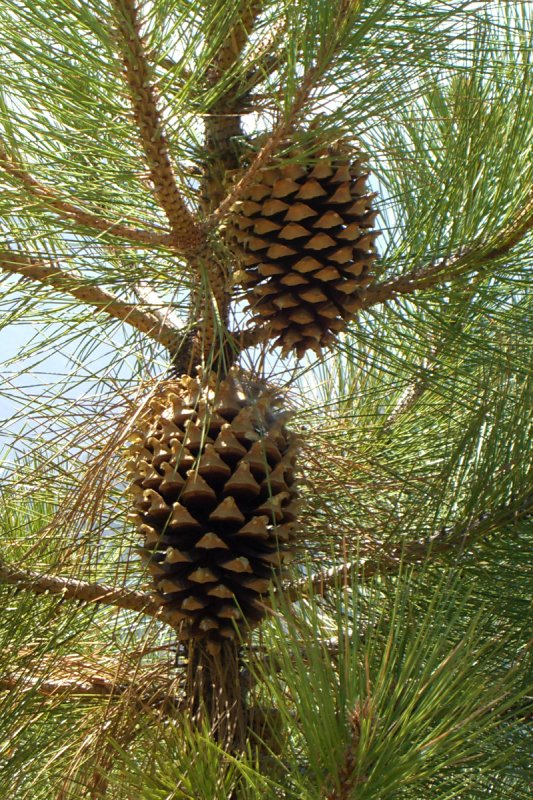
The cones are the tree’s signature feature — massive, heavy, egg-shaped to oblong structures 9 to 14 inches long, armored with thick, curved, talon-like spines up to 2 inches long on each scale. A fully ripe cone can weigh 4 to 10 pounds, among the heaviest of any pine species on Earth, and falling cones pose a genuine hazard, which is the origin of the “widowmaker” nickname. Cones mature over two seasons and often remain closed (serotinous) for years, opening fully only after fire or intense heat releases the large, hard-shelled, wind- and animal-dispersed seeds.
Quick Facts
| Scientific Name | Pinus coulteri |
| Family | Pinaceae (Pine) |
| Plant Type | Evergreen Coniferous Tree |
| Mature Height | 40–80 ft (occasionally over 100 ft) |
| Mature Spread | 25–40 ft, broad and irregular |
| Growth Rate | Moderate |
| Sun Exposure | Full Sun |
| Water Needs | Low once established |
| Soil Type | Dry, rocky, well-drained; tolerates poor and shallow soils |
| Soil pH | 6.0–7.5 |
| Bloom Time | Spring (wind-pollinated; cones mature over two years) |
| Flower Color | N/A (inconspicuous yellow-brown male cones) |
| Fall Color | None; evergreen |
| Fruit | Massive spiny cones, 9–14 in, up to 10 lb |
| Deer Resistant | Yes |
| USDA Hardiness Zones | 8–10 |
Native Range
Coulter Pine is a California endemic (with a small extension into Baja California, Mexico) found nowhere else in the United States. Its range runs along the Coast Ranges from the Diablo Range and Santa Lucia Mountains in central California south through the Transverse Ranges (San Gabriel, San Bernardino mountains) and Peninsular Ranges (San Jacinto, Santa Ana, Palomar, Cuyamaca mountains) to the US-Mexico border and beyond into northern Baja California.
It typically occupies dry, rocky, often south-facing slopes and ridgelines at middle elevations, frequently in transitional zones between chaparral and mixed-conifer forest. It is often found growing with Coast Live Oak, Bigcone Douglas-fir, Jeffrey Pine, Ponderosa Pine, Canyon Live Oak and various chaparral shrubs, tolerating the thin, rocky soils and hot, dry summers that limit many other conifers.
Fire has shaped Coulter Pine’s biology directly: many populations carry serotinous cones that stay sealed with resin for years, opening and releasing seed in large numbers only after the heat of a wildfire, which also clears competing vegetation and exposes bare mineral soil ideal for seedling establishment.
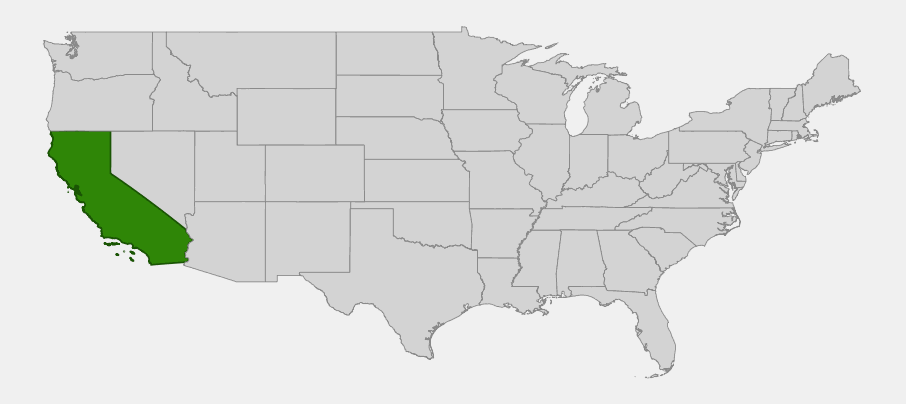
📋 Coulter Pine’s native range is limited to California, which is not yet covered by one of our regional plant lists.
Growing & Care Guide
Coulter Pine is a tree for a specific kind of site: large, open, sunny and well-drained, ideally mimicking the dry mountain slopes where it grows wild. It is not a tree for small yards or anywhere near structures, given its mature size and the genuine weight of its falling cones.
Light
Give it full sun. Coulter Pine is adapted to open, exposed slopes and does not perform well in shade or dense plantings, where it grows weak and leggy.
Soil & Water
It thrives in lean, rocky, fast-draining soil and is intolerant of heavy clay or soils that stay wet. Water deeply but infrequently while young to encourage a deep root system; established trees need little to no supplemental irrigation in most California climates and can suffer from root disease if overwatered.
Planting Tips
Plant young, container-grown trees in fall or early spring, well away from buildings, driveways, parking areas and foot-traffic paths — mature cones can fall with real force. Allow at least 25 to 30 feet of clearance from structures and high-use areas, and choose a site with excellent drainage and full sun exposure.
Pruning & Maintenance
Established Coulter Pines need very little maintenance. Remove dead or damaged branches as needed, and keep an eye on fallen cones in high-traffic areas. Avoid heavy pruning or shaping, which can stress the tree and is rarely necessary given its naturally open, irregular form.
Propagation
Propagation is by seed, which benefits from cold stratification and, in some populations, the heat that triggers serotinous cones to open. Seedlings establish best in full sun on disturbed, mineral soil, echoing the post-fire conditions the species relies on in the wild.
Landscape Uses
- Specimen tree for large, dry, sunny properties
- Fire-adapted landscaping in appropriate, defensible locations
- Erosion control on dry slopes once a tree is established
- Habitat restoration in chaparral-conifer transition zones
- Windbreak or screen on large rural parcels
Wildlife & Ecological Value
Coulter Pine plays an important role in the dry mountain ecosystems it inhabits, both as a fire-adapted forest component and as a food source.
For Birds
Woodpeckers, jays and nuthatches work the bark for insects, while the large seeds, when cones do open, provide food for seed-caching birds such as Steller’s Jays and Acorn Woodpeckers in mixed habitat.
For Mammals
Squirrels and other rodents are major consumers of Coulter Pine seeds, gnawing into cones for the large, nutritious kernels and helping disperse seed in the process. Black bears and deer use the open pine-chaparral stands the tree grows in for cover and foraging.
For Pollinators
As a wind-pollinated conifer, Coulter Pine does not depend on insect pollinators, though its pollen is a seasonal food source for some insects, and the open stands it forms support the diverse chaparral plant community that in turn feeds many pollinators.
Ecosystem Role
Coulter Pine is a classic fire-adapted species, with many populations holding serotinous cones that only release their seed after fire, allowing the species to regenerate quickly on bare, sunlit, post-fire ground before faster-germinating competitors move in. This makes it an important, resilient component of Southern California’s fire-shaped mountain forests.
Cultural & Historical Uses
Coulter Pine takes its common name from Irish botanist and physician Thomas Coulter, who collected the first scientific specimens in California’s mountains in the 1830s while working for a Mexican mining company. The tree was formally described to Western science from his collections, and the name has stuck ever since, alongside regional nicknames like “big-cone pine” for its enormous, spine-covered cones.
Indigenous peoples of Southern California’s mountain regions, including groups within the Cahuilla, Serrano and Kumeyaay homelands, traditionally gathered the large, nutritious seeds from Coulter Pine cones as a food source, much as they did with other regional pines, though the heavily armored cones made harvesting a careful, deliberate task.
Today the tree is best known among hikers and campers for its massive, dangerous cones — the source of the enduring “widowmaker” nickname — and among gardeners and land managers for its drought tolerance and role in fire-adapted mountain landscaping.
Frequently Asked Questions
Why is Coulter Pine called the “widowmaker”?
Its cones are the heaviest produced by any pine, often 4 to 10 pounds and armed with sharp, curved spines. Falling from a tall tree, a mature cone can cause serious injury, which is why experienced campers avoid pitching tents beneath Coulter Pines.
Can I grow Coulter Pine outside California?
It can be grown in other Mediterranean or dry-summer climates with full sun and excellent drainage, but it is not reliably cold-hardy or well-adapted outside its native range, and it offers the most ecological value when planted within or near its natural California range.
How big do Coulter Pine cones really get?
Mature cones typically run 9 to 14 inches long and can weigh up to 10 pounds, making them the heaviest cones of any pine species in the world.
Does Coulter Pine need fire to reproduce?
Not exclusively, but many populations carry serotinous cones that stay sealed for years and open most readily after the heat of a wildfire, which is a key part of how the species regenerates in its native chaparral-conifer habitat.
Is Coulter Pine a good yard tree?
Only on a large, sunny, well-drained property with plenty of clearance from structures and walkways, given its eventual size and the real hazard posed by its falling cones.

Looking for a nursery that carries Coulter Pine?
Browse our native plant nursery directory: California