
Kauila (Alphitonia ponderosa)
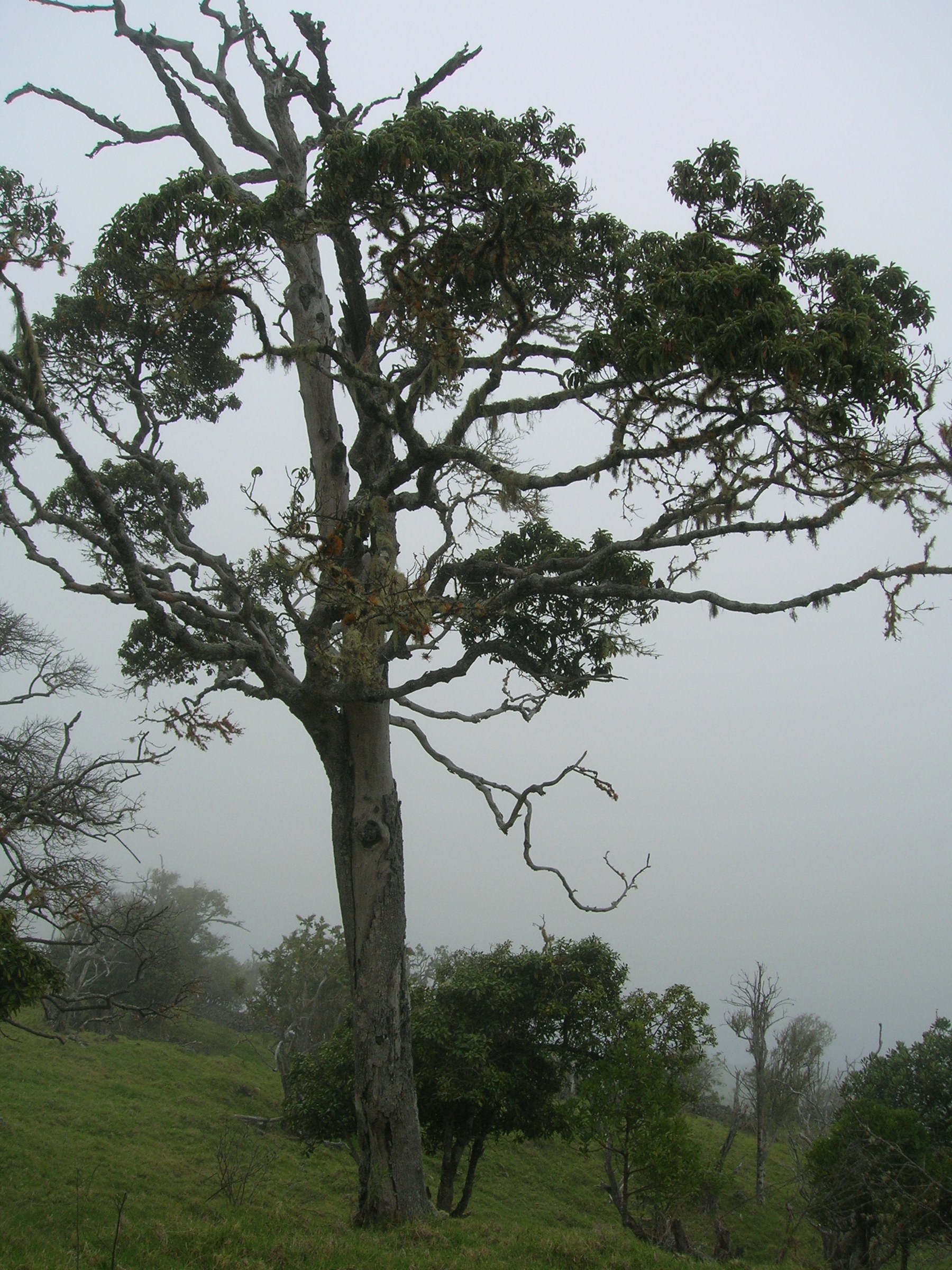
Alphitonia ponderosa, known in Hawaiian as Kauila (also spelled Kauwila, or locally called ʻOʻa on Maui), is a medium to large forest tree found only in the Hawaiian Islands. It belongs to the buckthorn family, Rhamnaceae, and is one of two unrelated-looking Hawaiian trees that share the name “kauila” — the other being Colubrina oppositifolia, a different genus in the same family. Both were prized by Native Hawaiians for the same reason: exceptionally dense, hard, reddish-brown wood that served many of the purposes metal tools would later fill.
Kauila grows as a substantial forest tree, typically reaching 15 to 24 meters (about 50 to 80 feet) tall with a trunk 20 to 60 centimeters in diameter, though it can also persist as a smaller, wind-pruned shrub on exposed ridgelines. Its shiny, hairless, ovate leaves are a glossy dark green above and a duller light green below, with distinctive rust-colored veining visible on the underside. Small, pale, five-petaled flowers cluster at the leaf bases, giving way to fleshy, red-seeded drupes that ripen through the dry and mesic forests the species calls home.
Today, Kauila is classified as Vulnerable by the IUCN Red List because of its fragmented distribution, ongoing habitat loss, and pressure from invasive mammals and plants. While it still occurs on all the main Hawaiian Islands except Niʻihau and Kahoʻolawe, it is uncommon through most of its range and is most frequently encountered on Kauaʻi. For gardeners and restoration projects on the islands working with dry forest or mixed mesic forest sites, Kauila is a slow-growing but ecologically and culturally significant tree worth the patience it requires.
Identification
Kauila is identified by its combination of glossy, rust-veined leaves, small inconspicuous flower clusters, and strikingly dense, reddish-brown wood.
Bark & Stems
Mature trunks are grayish and often mottled with lichen in the humid forest conditions where the species thrives, as seen in older specimens growing in misty upland habitat. The wood beneath the bark is notably heavy and dense — a defining trait that made it so valuable to Native Hawaiian woodworkers — reddish-brown in color, close-grained, and strong enough to have served as a functional substitute for metal before Western contact.
Leaves
Leaves are alternately arranged, ovate in shape, and 5 to 15 centimeters long, carried on petioles roughly 13 to 25 millimeters long. The upper leaf surface is shiny, hairless, and deep green; the underside is a duller, lighter green marked with distinctive rust-colored veins, a detail that helps separate Kauila from similar-looking native trees at a glance.
Flowers
Flowers are small, only about 6 millimeters across, and polygamous (bearing both bisexual and unisexual flowers on the same plant). They form in cymes clustered at the bases of the leaves, each with five tiny sepals about 1.5 millimeters long covering five smaller petals around 0.75 millimeters long. The flowers are easy to overlook against the tree’s glossy foliage.
Fruit & Seeds
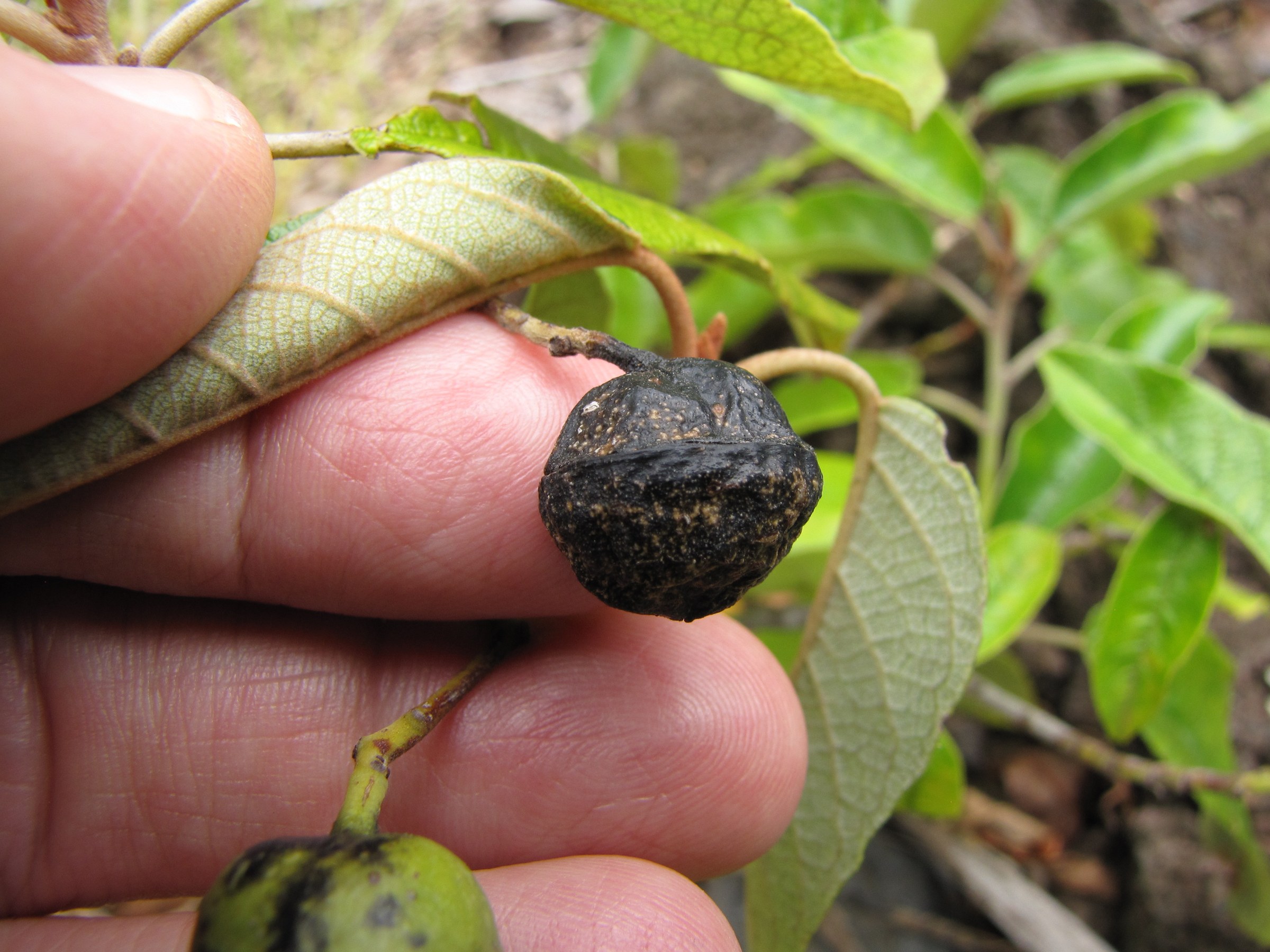
The fruit is a fleshy drupe about 15 millimeters in diameter, containing two to three shiny, oblong seeds wrapped in a distinctive red seed covering. Fruit and foliage are often photographed together, since both persist on the tree at the same time through much of the fruiting season.
Quick Facts
| Scientific Name | Alphitonia ponderosa |
| Family | Rhamnaceae (Buckthorn) |
| Plant Type | Evergreen Tree |
| Mature Height | 50–80 ft (15–24 m); smaller and shrubby on exposed ridges |
| Trunk Diameter | 8–24 in (20–60 cm) |
| Growth Rate | Slow |
| Sun Exposure | Full Sun to Part Shade |
| Water Needs | Low to Moderate |
| Soil Type | Well-drained volcanic soils; dry to mesic forest sites |
| Soil pH | Neutral to slightly acidic |
| Bloom Time | Variable; year-round in favorable sites |
| Flower Color | Pale, inconspicuous |
| Fall Color | None (evergreen) |
| Fruit | Fleshy drupe, ~15 mm, with red-coated seeds |
| Deer Resistant | N/A (no deer in native Hawaiian range) |
| USDA Hardiness Zones | 10–11 |
Native Range
Kauila is endemic to the Hawaiian Islands, meaning it occurs naturally nowhere else on Earth. It is found on all the main islands except Niʻihau and Kahoʻolawe, but its distribution is patchy and its overall numbers are low across most of that range. The species is most common on Kauaʻi, where dry and mesic forest habitat has persisted in greater extent than on the other islands, and it grows there alongside other dry-forest natives rather than forming dense stands of its own.
Kauila inhabits dry, coastal mesic, and mixed mesic forests at elevations of roughly 240 to 1,250 meters (about 790 to 4,100 feet). On exposed ridges with thin soils and strong wind, it grows as a low, gnarled shrub rather than a full-size tree, a form shift typical of many Hawaiian dry-forest species adapting to difficult sites.
Hawaiian dry forest is among the most endangered forest types in the world, reduced by historic ranching, fire, and introduced grasses to a small fraction of its original extent. As a result, Kauila’s remaining populations are fragmented and generally small, and the IUCN Red List classifies the species as Vulnerable due to this fragmentation combined with ongoing threats from feral pigs, deer, rats, competition from invasive plants, and wildfire.
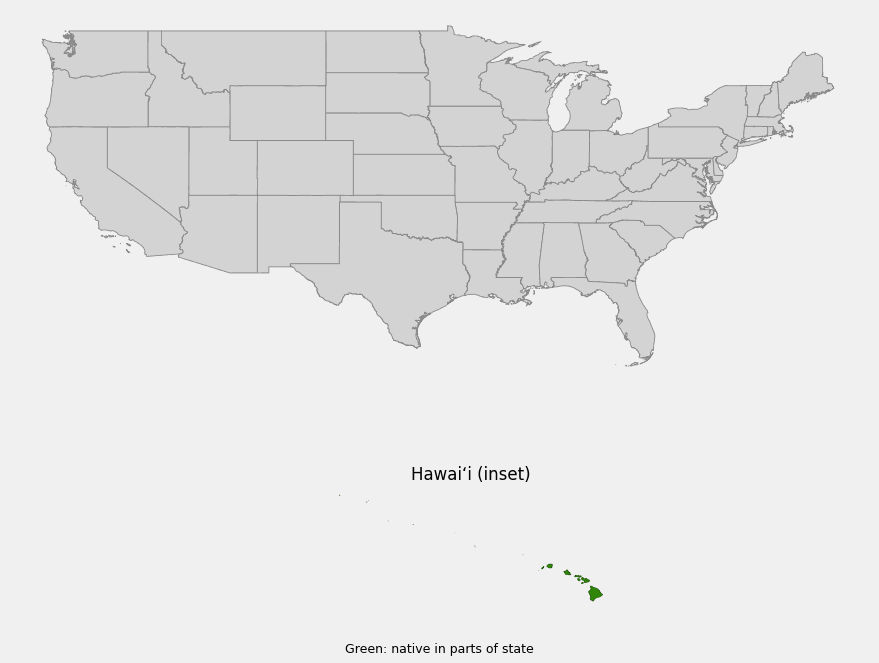
📋 Regional plant lists featuring Kauila: Hawaii
Growing & Care Guide
Kauila is primarily a tree for Hawaiian native forest restoration and dry-forest landscaping rather than a fast-growing ornamental. Its slow growth and specific habitat needs mean it rewards patience more than quick results, but it is a genuinely distinctive addition to a dryland native garden on the islands.
Light
Kauila grows in full sun on exposed dry-forest ridges and in part shade within denser mesic forest stands. Young trees often establish best with some overhead or side shade before growing tall enough to reach full sun themselves.
Soil & Water
This species is adapted to the well-drained volcanic soils of Hawaiian dry and mesic forest and does not tolerate waterlogged conditions. Once established, it is reasonably drought-tolerant, reflecting its native habitat’s seasonal dry periods, though young plants need regular watering during establishment.
Planting Tips
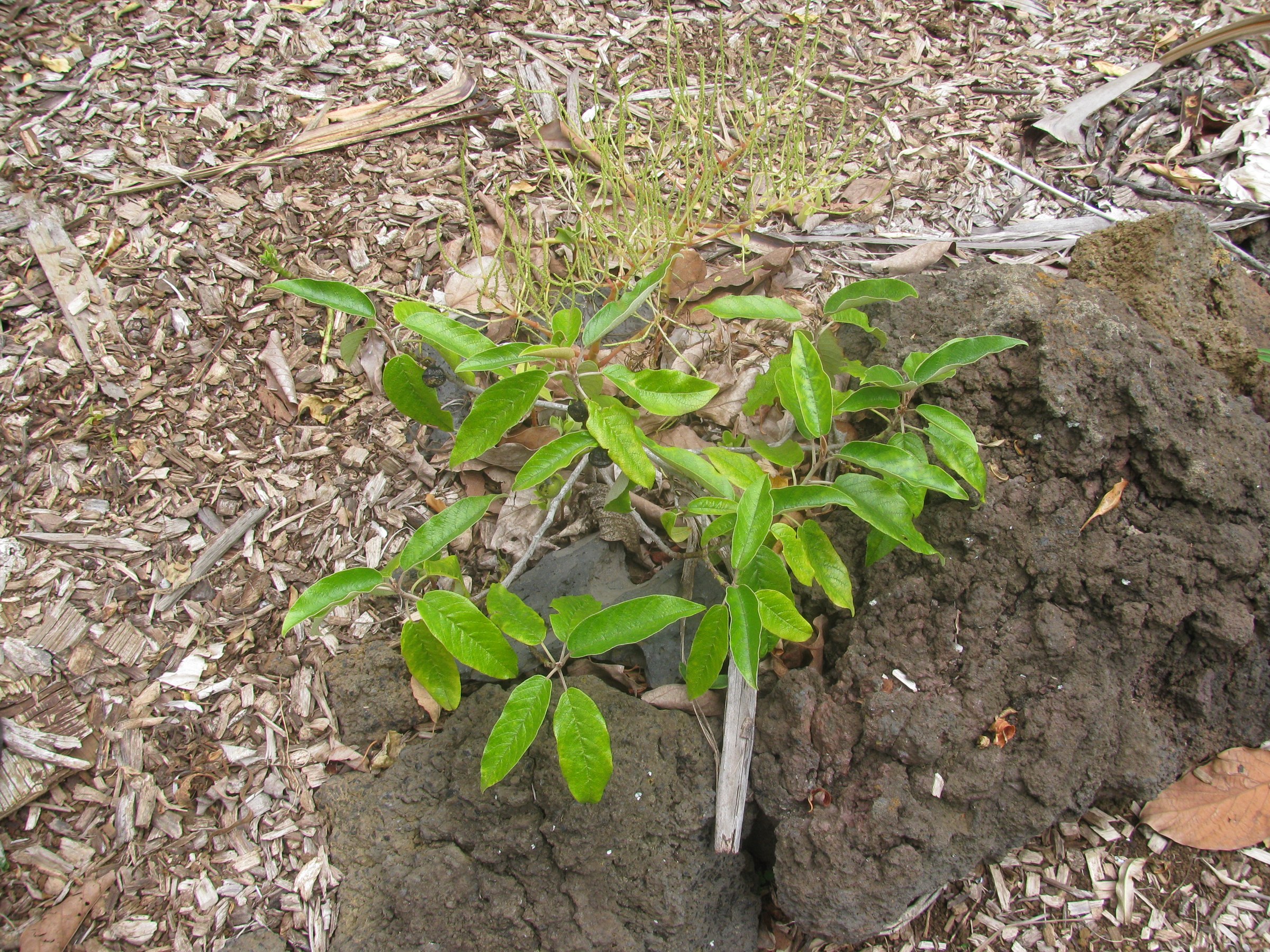
Propagation is from seed, and Hawaiian native plant growers rate germination and early growth as intermediate in difficulty — seeds are typically started in a well-drained cinder and vermiculite mix, with seedlings potted up individually once roots appear and kept consistently moist while establishing. Because Kauila is slow-growing, nursery stock for outplanting is often several years old before it reaches a size suitable for restoration sites. It is best sourced from Hawaiian native plant nurseries propagating from locally appropriate seed sources.
Pruning & Maintenance
Established Kauila trees need little routine maintenance beyond removing dead or storm-damaged wood. Because the wood is extremely dense and slow to decay, dead branches can persist on the tree for a long time without becoming a safety concern, but should still be removed near trails or structures.
Landscape Uses
Kauila fits a narrow but important set of landscape roles in Hawaii:
- Dry forest restoration plantings on the main Hawaiian Islands
- Native Hawaiian cultural gardens highlighting traditional wood-use plants
- Specimen tree for xeriscaped or dryland native landscaping
- Mixed mesic forest understory and canopy restoration
Wildlife & Ecological Value
As a canopy and subcanopy tree of one of the world’s most endangered forest types, Kauila contributes meaningfully to the handful of native Hawaiian dry-forest ecosystems that remain.
For Pollinators
The small, clustered flowers provide nectar and pollen for native Hawaiian insects adapted to dry-forest conditions, contributing to the pollinator resources available in habitat that has lost many of its original flowering plant species to clearing and invasion.
For Birds
The fleshy fruit and red-coated seeds are a food source for native and introduced forest birds that persist in Hawaiian dry-forest remnants, with birds in turn helping disperse Kauila seeds between isolated forest patches.
For Mammals
Native Hawaii has no native land mammals apart from one bat species, so Kauila’s seedlings and bark face pressure instead from introduced browsers and rooters — feral pigs, goats, and axis deer — which are identified as major threats to the species’ regeneration in the wild.
Ecosystem Role
Kauila is one of the structural tree species of Hawaiian dry and mixed mesic forest, a habitat type that has been reduced to a small fraction of its historical extent and is now considered critically endangered as an ecosystem. Protecting and restoring remaining Kauila populations supports the broader community of native plants and animals that depend on this same forest type, many of which are themselves rare or threatened.
Cultural & Historical Uses
Kauila holds a significant place in Native Hawaiian material culture as a premier hardwood, valued historically in much the same way metal was valued in other societies. Its Hawaiian name, kauila (also spelled kauwila, or called ʻoʻa on Maui), is shared with the related tree Colubrina oppositifolia, and in older ethnographic records and museum collections it is often unclear which of the two trees a particular artifact or account refers to, since both produce comparably dense, prized wood.
Historically, Native Hawaiians used kauila wood for a wide range of tools and weapons that depended on its hardness and durability: laʻau melomelo (fishing lures), pāhoa (daggers), ihe (short spears) and pololū (long spears), ʻōʻō (digging sticks), kapa beaters used in making bark cloth, leiomano (shark-tooth clubs), and kiʻi (carved images). The wood’s density and strength made it a practical substitute for metal implements in a society that had no access to iron or bronze, and it was also used to repair wooden bowls by hammering in small kauila pegs. According to Hawaiian ethnobotanical records, aged kauila wood shavings were also prepared as an internal remedy in traditional healing practice — a documented historical use rather than a current medical recommendation, and not a practice this guide suggests trying.
Today, Kauila is valued less for wood harvesting, which would be inappropriate given its vulnerable conservation status, and more as a living connection to traditional Hawaiian craft and a priority species in native dry-forest restoration efforts across the islands.
Frequently Asked Questions
Is Kauila the same tree as the other plant called Kauila?
No. Two unrelated Hawaiian trees share the name kauila: Alphitonia ponderosa (the subject of this guide) and Colubrina oppositifolia. Both belong to the buckthorn family and were valued for similarly dense wood, but they are different genera and different species, and PlantNative maintains separate profiles for each.
Is Kauila endangered?
Kauila is classified as Vulnerable by the IUCN Red List due to its fragmented distribution and declining population, driven by habitat loss and pressure from feral pigs, deer, invasive plants, and wildfire. It is not currently listed under the U.S. Endangered Species Act, but it warrants careful, locally sourced propagation rather than wild collection.
Can I grow Kauila outside Hawaii?
Kauila is adapted specifically to Hawaiian dry and mesic forest conditions and tropical USDA hardiness zones 10–11. It is not a realistic choice for mainland native plant gardens and should only be grown within its native Hawaiian range.
How fast does Kauila grow?
Slowly. Its exceptionally dense wood develops gradually, and restoration growers typically keep seedlings in the nursery for an extended period before outplanting. This slow growth is directly tied to the hardness that made the wood so valuable traditionally.
Can you eat Kauila fruit?
No reliable source documents Kauila fruit as a food plant for people, and it should not be eaten. Its ecological value lies in feeding native forest birds, not in human consumption.

Looking for a nursery that carries Kauila?
Browse our native plant nursery directory: Hawaii