
Cocoplum (Chrysobalanus icaco)
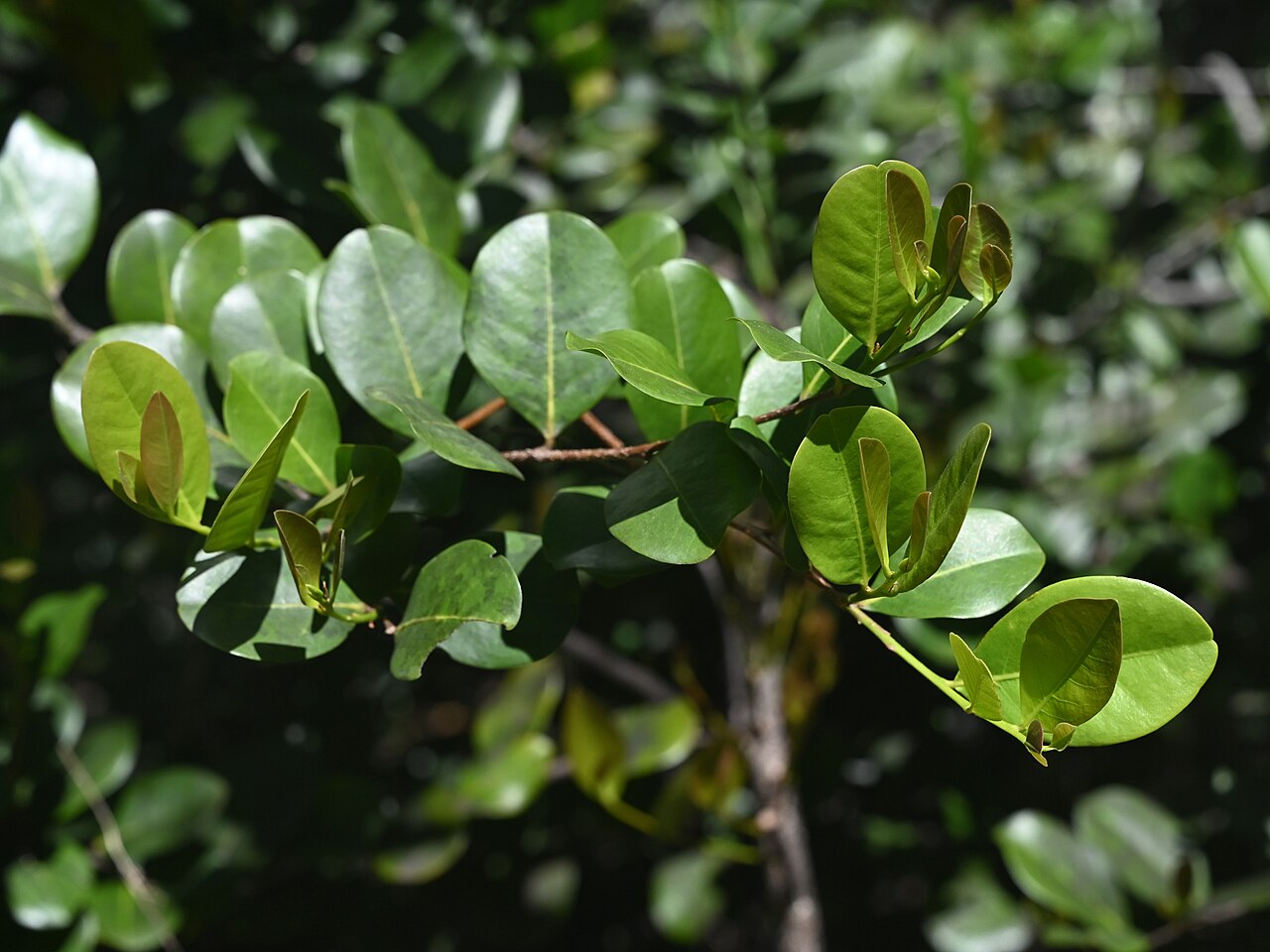
Chrysobalanus icaco, commonly known as Cocoplum (also called paradise plum or icaco), is a tough, salt-tolerant evergreen shrub native to the coastal hammocks, dunes, and pinelands of extreme southern Florida. It belongs to the Chrysobalanaceae (cocoplum family) and is one of the most dependable native shrubs for South Florida landscaping, prized for its glossy foliage, easy care, and edible fruit.
In the wild, cocoplum forms dense thickets along beaches, tidal shorelines, and the edges of coastal hammocks, where its tolerance for salt spray, wind, and poor sandy soil lets it thrive where few other shrubs can. Two recognizable forms occur: a low, sprawling coastal type that often roots where its branches touch the ground, and a more upright inland type that grows taller and holds a more typical shrub or small-tree form.
For gardeners in its native range, cocoplum is an easy, low-maintenance choice for hedges, screens, and foundation plantings, and it remains one of the most widely sold native shrubs in South Florida nurseries. It is worth noting, though, that cocoplum is also planted far beyond its small native range throughout frost-free parts of the state and the broader Caribbean and tropical Americas — those plantings are ornamental, not evidence that the species is native there.
Identification
Cocoplum grows as a many-branched evergreen shrub 3 to 10 feet tall in its low, spreading coastal form, or as a more upright shrub to small tree reaching up to 15 to 20 feet, rarely more, in its inland form. The bark is grayish to reddish-brown and speckled with small white lenticels (pores).
Leaves
Leaves are simple, alternate, broadly oval to nearly round, 1 to 4 inches long, with a smooth margin and a somewhat leathery, glossy texture. New growth often emerges tinged pink, bronze, or red before maturing to deep green, a trait especially pronounced in the popular ‘Red Tip’ selection. The leaf tip is often notched rather than pointed, a useful field mark for the species.
Flowers
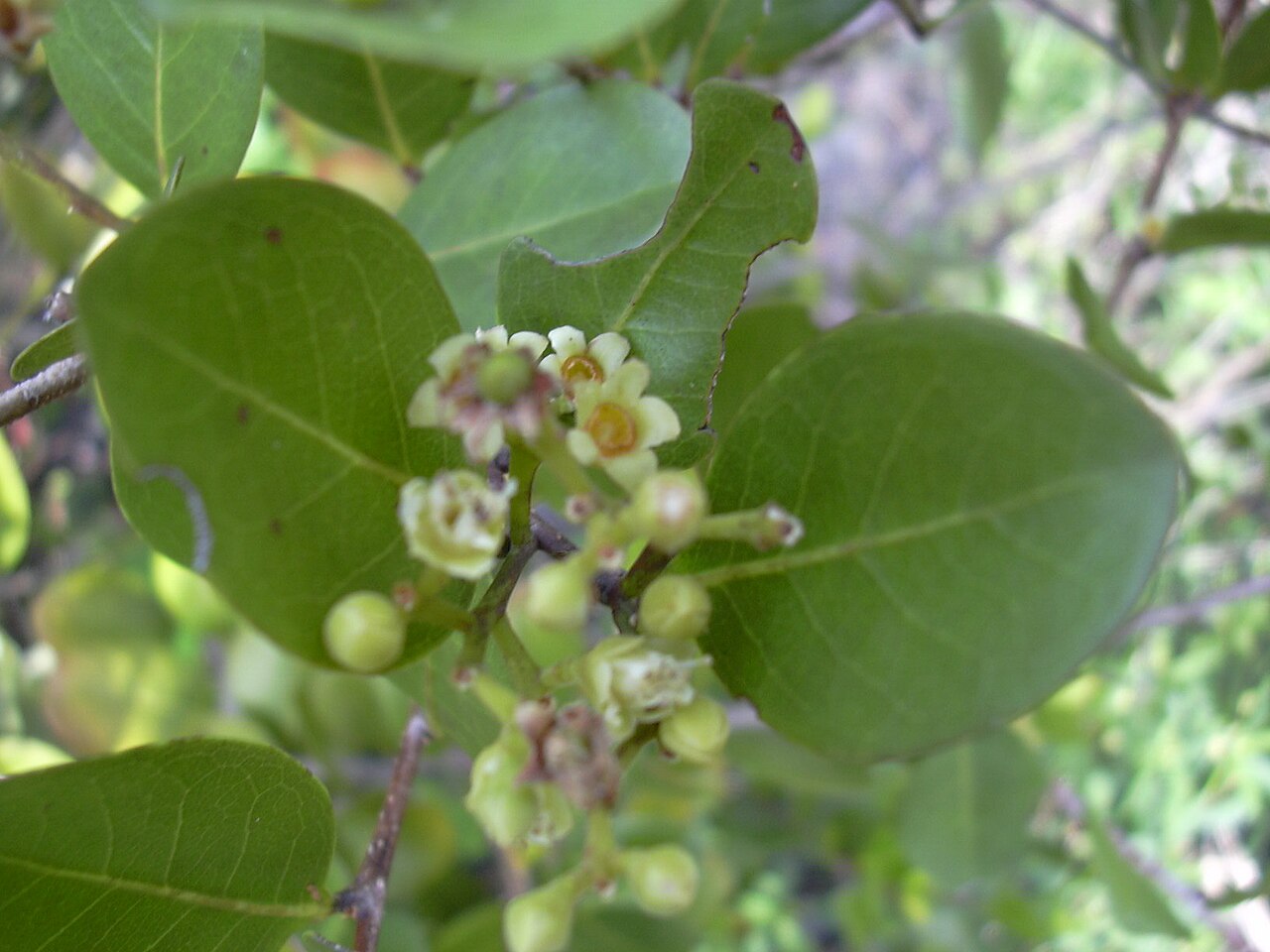
Small, inconspicuous greenish-white flowers appear in clusters at branch tips and leaf axils. Cocoplum blooms more or less year-round in its native range, with a peak from winter into spring, and the flowers are visited readily by bees along with butterflies, beetles, and wasps.
Fruit & Seeds
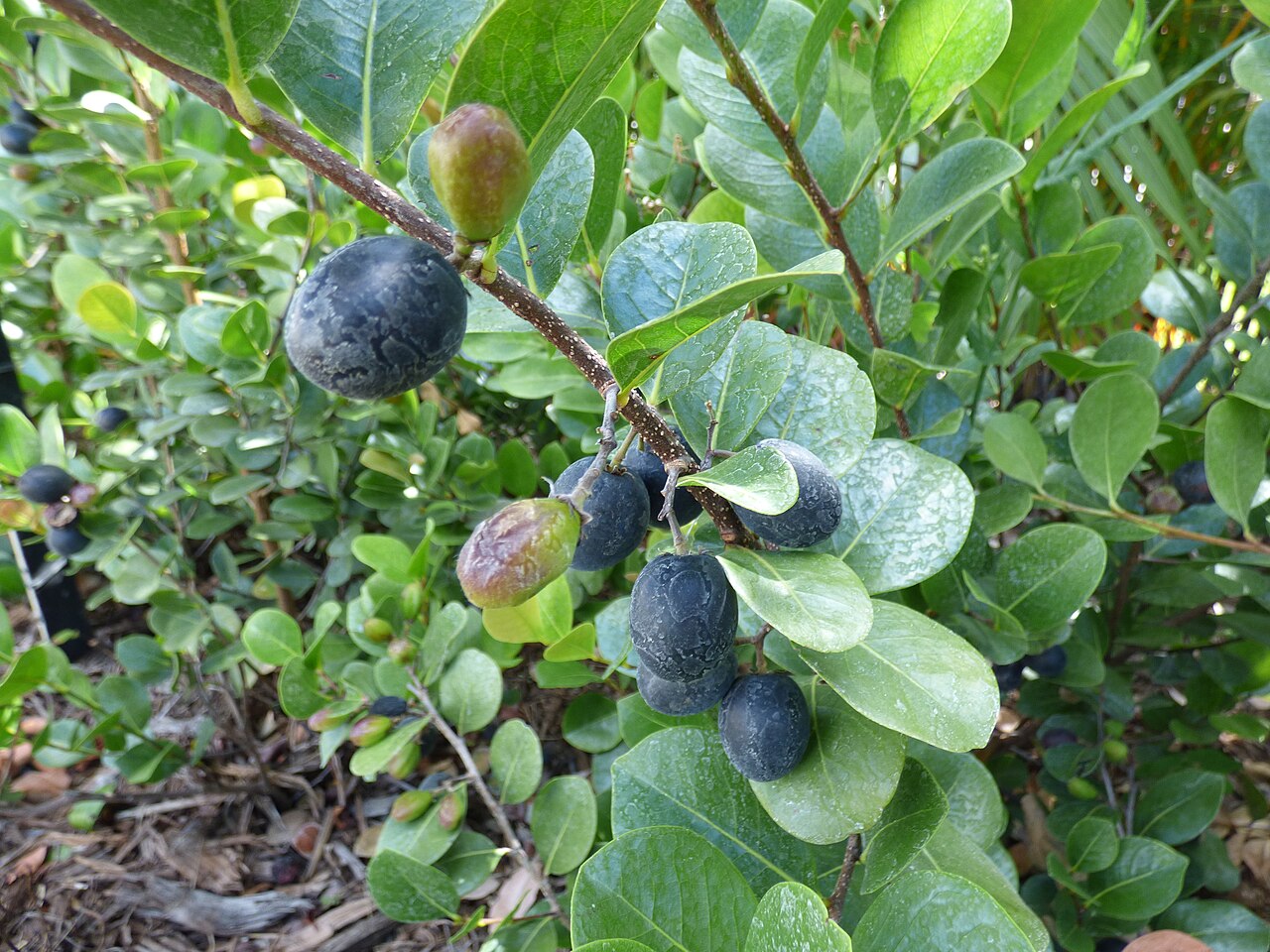
The fruit is a round to oval drupe up to about 2 inches across in the coastal form (smaller, oval, and darker in the inland form), ripening from green through pink to a dusky purple-black, often with a whitish waxy bloom on the skin. Inside is a single ridged stone containing an edible kernel. The fruit has a mild, faintly sweet flavor and is eaten fresh or made into jam; the skin and surrounding flesh are not toxic, though the fruit is a minor food crop rather than a widely marketed one.
Quick Facts
| Scientific Name | Chrysobalanus icaco |
| Family | Chrysobalanaceae (Cocoplum) |
| Plant Type | Evergreen shrub (occasionally small tree) |
| Mature Height | 3–10 ft (coastal form); to 15–20 ft (inland form) |
| Mature Spread | 4–10 ft, wider in the sprawling coastal form |
| Growth Rate | Moderate |
| Sun Exposure | Full sun to part shade |
| Water Needs | Average, tolerates both dry spells and seasonally wet sites |
| Soil Type | Sandy, rocky, or limestone-based; very adaptable |
| Soil pH | Acidic to strongly alkaline (tolerates up to about 8.4) |
| Bloom Time | Year-round, heaviest winter through spring |
| Flower Color | Greenish-white |
| Fall Color | None (evergreen); new growth often pink or bronze |
| Fruit | Edible purple-black to pale drupe, up to 2 in |
| Deer Resistant | Moderately (occasional browsing reported) |
| USDA Hardiness Zones | 10–11 (no hard-frost tolerance) |
Native Range
In the continental United States, cocoplum is native only to the southern tip of Florida — the coastal counties of the Keys, Miami-Dade, Monroe, and adjacent far-southern counties — where it grows in coastal strand, mangrove edges, dunes, and pine rockland margins. It also occurs natively in Puerto Rico and the U.S. Virgin Islands, as well as throughout the wider Caribbean, coastal Central America, and northern South America. USDA PLANTS lists Florida as a whole as “native,” but cocoplum does not occur naturally outside the warm, frost-free southern end of the state; it is not native to central or north Florida, where it is grown only as a landscape plant.
Cocoplum’s natural habitat reflects its high tolerance for salt and poor soil: coastal hammocks, beach dunes and strand vegetation just above the high-tide line, brackish shoreline edges, and the margins of pine rocklands on oolitic limestone. The coastal ecotype is the most salt-tolerant and often forms low, dense colonies that help stabilize dune and shoreline soil, while the inland ecotype grows further back from salt spray in slightly richer hammock soils.
Because cocoplum tolerates heat, drought, salt, and poor soil so well, it has become a popular landscape shrub throughout Florida and other frost-free regions worldwide — in some Pacific and Indian Ocean islands it has naturalized and become locally invasive. That horticultural popularity should not be confused with its much narrower natural range within the continental U.S.
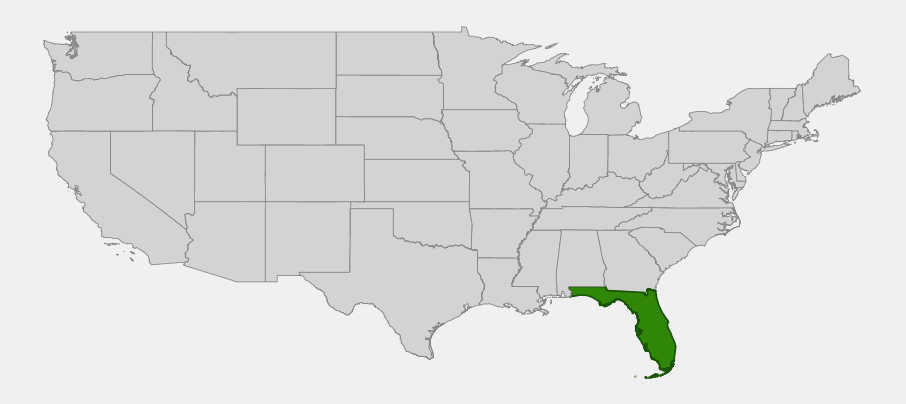
📋 No current Plant Native regional list covers South Florida; cocoplum’s native range is limited to the Florida Keys and the state’s southernmost coastal counties.
Growing & Care Guide
Cocoplum is one of the easiest and most forgiving native shrubs for South Florida gardens, tolerating heat, salt, wind, and a wide range of soils with very little fuss once established.
Light
Cocoplum grows well in full sun to part shade. Plants in full sun tend to stay denser and more compact, while shadier sites produce a slightly looser, more open habit. It handles the intense reflected heat of coastal and paved sites without difficulty.
Soil & Water
This shrub is remarkably adaptable, growing in sandy, rocky, or limestone-derived soils and tolerating soil pH as high as roughly 8.4. Established plants are quite drought tolerant, yet cocoplum also grows naturally in seasonally wet pinelands, so it tolerates occasional flooding better than many drought-tough shrubs. It is also notably salt tolerant, making it a mainstay for seaside landscaping.
Planting Tips
Plant container-grown cocoplum in spring or early in the rainy season so roots establish before the next dry spell. Space plants 3 to 5 feet apart for a solid hedge, or farther apart for specimen use. Cocoplum has no hard-frost tolerance, so in the northern edge of its growing range protect young plants or site them where cold air drains away.
Pruning & Maintenance
Cocoplum takes shearing very well and is widely used as a formal clipped hedge in South Florida, though it also looks attractive left to grow into its natural rounded form. Prune after flowering flushes if a more formal shape is wanted; otherwise it needs little regular maintenance. It has few serious pest or disease problems in its native range.
Propagation
Cocoplum is propagated from fresh seed, which germinates readily, or from semi-hardwood cuttings for named selections such as ‘Red Tip’ and ‘Horizontal’. The low, sprawling coastal form roots naturally where branches touch moist soil, which can also be used to start new plants by layering.
Landscape Uses
- Clipped or informal hedges, one of the most popular uses in South Florida landscaping
- Coastal and seaside plantings, where its salt tolerance is a major asset
- Foundation plantings around homes and commercial buildings
- Dune stabilization using the low, spreading coastal form
- Wildlife gardens, for the cover and fruit it provides
- Edible landscaping, for gardeners interested in the fruit
Wildlife & Ecological Value
Cocoplum earns its keep in coastal South Florida ecosystems, offering food and shelter across the year thanks to its nearly continuous bloom and fruit production.
For Pollinators
The small flowers attract a steady stream of bees, along with butterflies, beetles, and wasps. Because cocoplum flowers more or less year-round, it provides a dependable nectar source during months when fewer other natives are blooming.
For Birds
Many of the fruits are too large for small songbirds to swallow whole, but larger birds such as Northern Cardinals, Common Grackles, and Blue Jays feed on them, along with various other fruit-eating birds that visit the dense cover cocoplum thickets provide.
For Mammals
Gray squirrels readily eat the fruit and help disperse the seeds. The dense, tangled branching of cocoplum thickets, especially in the low coastal form, provides cover for small mammals along shorelines and hammock edges.
Ecosystem Role
Along beaches and coastal strand, cocoplum’s spreading, rooting branches help stabilize loose sand and reduce erosion, functioning alongside sea grape and buttonwood as part of the first line of woody vegetation behind the open beach. Its dense thickets also buffer more sensitive interior hammock vegetation from salt spray and wind.
Cultural & Historical Uses
Cocoplum’s ripe fruit has long been gathered and eaten fresh throughout its range in the Caribbean, Central America, and South Florida, and it is traditionally cooked into jams and preserves in many of the places where it grows. The seed kernel inside the hard stone is also edible and, in parts of West Africa where the species has been introduced, is dried and ground into a spice used in pepper soup mixes.
In South Florida, cocoplum’s main modern history is horticultural rather than culinary: its toughness, salt tolerance, and tidy evergreen foliage made it one of the most widely planted native hedge shrubs in the region’s landscaping industry, particularly after it became easier to source from nurseries propagating named selections like ‘Red Tip’ and ‘Green Tip.’
Outside its native range, cocoplum’s easy cultivation has been a double-edged sword: in some tropical island settings beyond the continental U.S., escaped plantings have naturalized and, in a few cases, become locally invasive, crowding out native coastal vegetation. This is a reminder that even a native, well-behaved shrub in South Florida can act differently when introduced somewhere it does not naturally occur.
Frequently Asked Questions
Is cocoplum fruit safe to eat?
Yes. The ripe fruit is non-toxic and has a long history of being eaten fresh or made into jam throughout its range, though the flavor is mild and only lightly sweet rather than a prized dessert fruit.
Is cocoplum native to all of Florida?
No. Its natural native range in the continental U.S. is limited to the southernmost coastal counties and the Florida Keys. It is grown as an ornamental landscape shrub throughout the rest of frost-free Florida, but those plantings are outside its native range.
How salt tolerant is cocoplum?
Very. The low, spreading coastal ecotype is especially salt tolerant and is commonly found growing just behind open beach dunes, making it one of the better native shrub choices for seaside landscaping.
Does cocoplum tolerate cold?
No. Cocoplum has no tolerance for hard frost and is reliably hardy only in USDA zones 10 to 11. Gardeners at the colder edge of its range should expect damage or dieback during freeze events.
Can cocoplum be kept as a formal hedge?
Yes, it is one of the most commonly clipped hedge shrubs in South Florida and responds well to regular shearing, though it also looks attractive left unpruned in its natural rounded form.

Looking for a nursery that carries Cocoplum?
Browse our native plant nursery directory: Florida