
Pacific Rhododendron (Rhododendron macrophyllum)
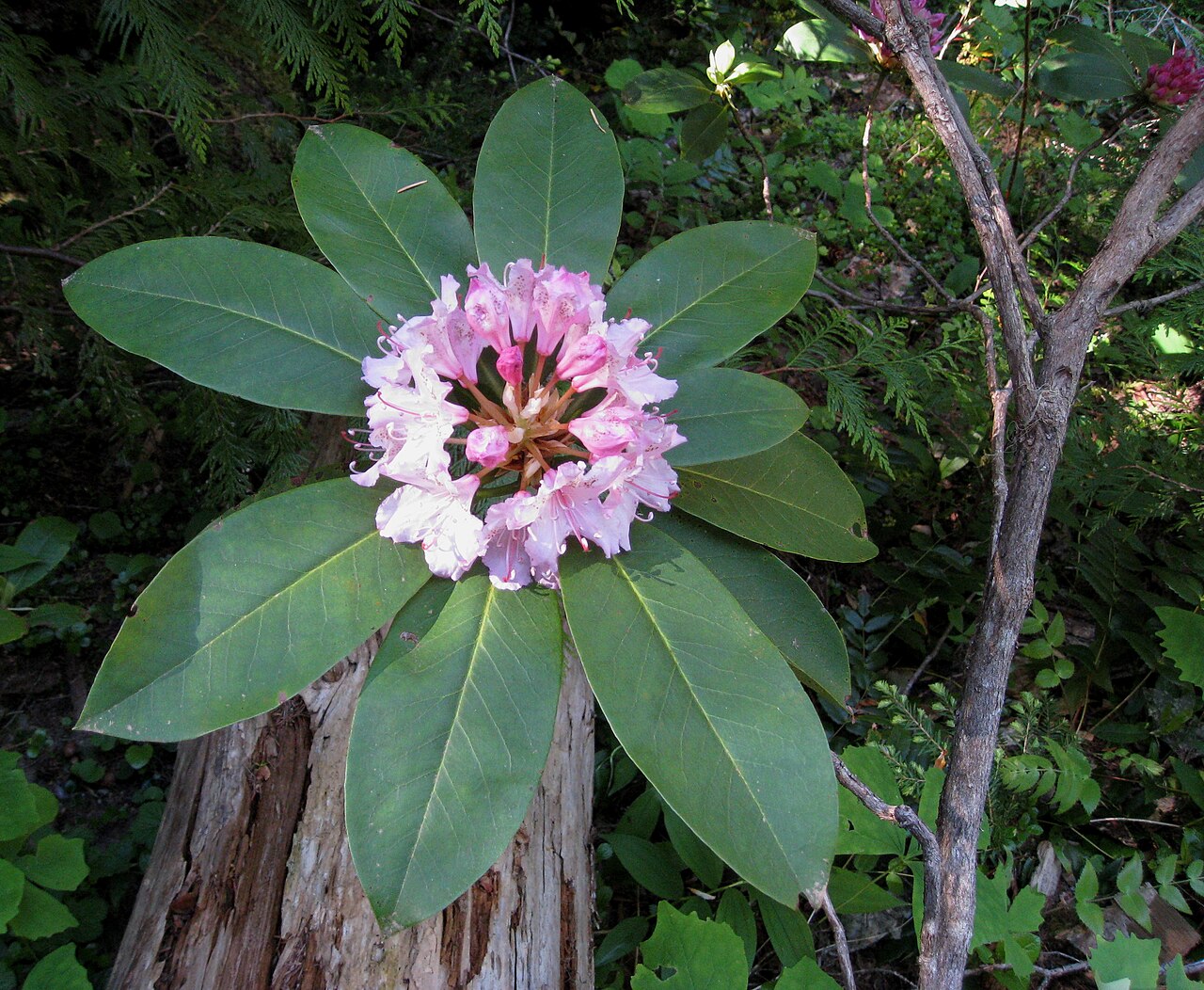
Rhododendron macrophyllum, the Pacific rhododendron, is the large-leaved, big-flowered evergreen shrub that gives the understory of Pacific Coast conifer forests their most dramatic spring display. Also called coast rhododendron, California rose bay or big-leaf rhododendron, it grows wild from southern British Columbia down the coast and Cascade foothills to around Monterey Bay, California. In 1959 the Washington State Legislature designated it the official state flower of Washington, cementing its place as one of the most iconic native shrubs of the Pacific Northwest.
A member of the heath family (Ericaceae), Pacific rhododendron is an evergreen shrub to small tree, typically 7 to 15 feet tall in cultivation but capable of reaching 25 to 30 feet in favorable forest conditions. Its thick, leathery, dark green leaves persist for two to three years, giving the plant year-round structure, while its large, rounded clusters of pink, bell-shaped flowers put on a spectacular show from late spring into early summer.
Every part of Pacific rhododendron — leaves, flowers, stems, pollen and nectar — contains grayanotoxins and is toxic to people, pets and livestock if ingested. Honey made from its nectar can also be toxic in quantity. It is grown strictly as an ornamental shrub; keep grazing animals, pets and small children away from the foliage and flowers.
Identification
Pacific rhododendron is a large, dense, evergreen shrub or small multi-stemmed tree with a rounded to irregular crown. It thrives in the shaded to partly sunny understory of coniferous forest, where its glossy foliage and showy spring flowers make it unmistakable among native shrubs of the region.
Bark & Stems
Stems are stout and woody, with smooth gray-brown bark on older growth and greener, more flexible twigs toward the branch tips. Plants typically develop multiple trunks from the base, forming a broad, dense thicket where growing conditions allow.
Leaves
The leaves are the plant’s namesake feature — large, thick and leathery, 3 to 9 inches long and 1 to 3 inches wide, with smooth margins and a glossy dark green upper surface. They are retained on the plant for two to three years before dropping, giving Pacific rhododendron reliable year-round screening value unusual among native Pacific Coast shrubs.
Flowers
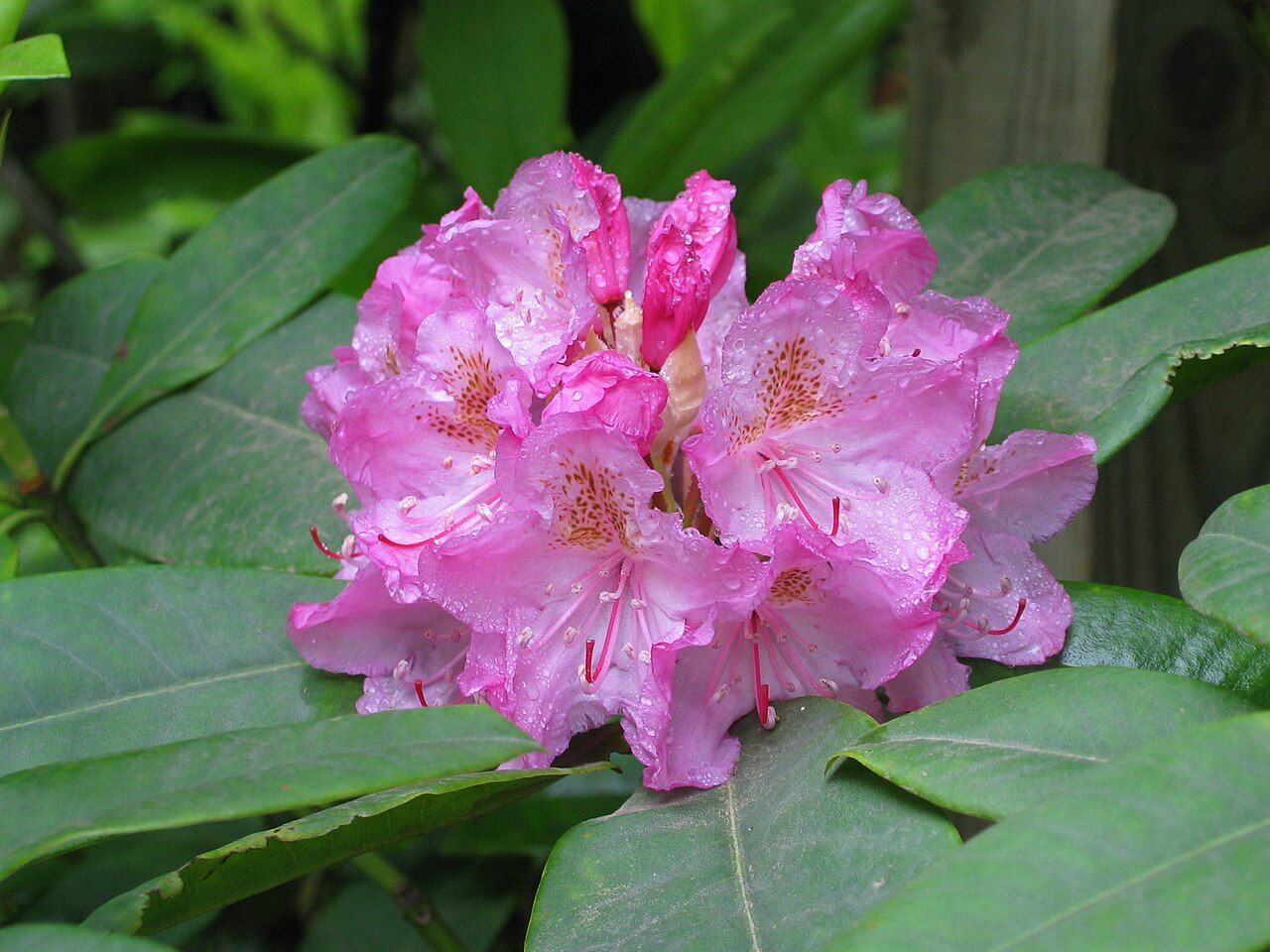
Flowers are bell- to funnel-shaped, about 1 to 1.6 inches long, with five flaring lobes, and are held in dense, rounded trusses of a dozen or more blooms at branch tips. Color is usually rose-pink, sometimes with deeper pink or magenta spotting on the upper lobe, though white and pale pink forms occur. Bloom comes in late spring to early summer, later than many other native shrubs, making it one of the last major flower displays of the forest understory season.
Fruit & Seeds
After flowering, Pacific rhododendron produces small, dry, woody seed capsules that split open to release numerous tiny, wind-dispersed seeds. The capsules are not fleshy and have no food value.
Quick Facts
| Scientific Name | Rhododendron macrophyllum |
| Family | Ericaceae (Heath) |
| Plant Type | Evergreen shrub / small tree |
| Mature Height | 7–15 ft (to 25–30 ft in forest settings) |
| Mature Spread | 6–12 ft |
| Growth Rate | Slow |
| Sun Exposure | Part shade to full shade; tolerates more sun on the coast |
| Water Needs | Moderate |
| Soil Type | Well-drained, humus-rich acidic soil |
| Soil pH | 4.5–6.0 (acidic) |
| Bloom Time | Late May – July |
| Flower Color | Rose-pink, sometimes white |
| Fall Color | Evergreen; no fall color change |
| Fruit | Dry woody seed capsule (not edible) |
| Deer Resistant | Yes; toxic foliage is rarely browsed |
| USDA Hardiness Zones | 6–8 |
Native Range
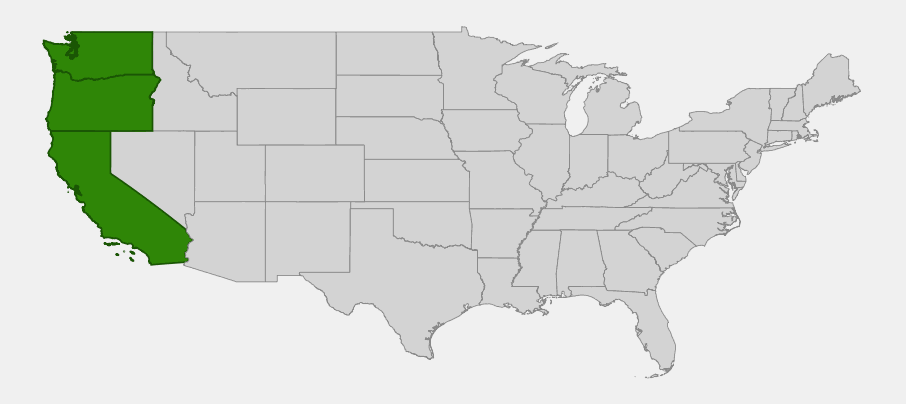
Pacific rhododendron’s native range follows the Pacific Coast and its adjacent mountains from southwestern British Columbia south through western Washington and western Oregon to around Monterey Bay in central California. Within the United States it is found in California, Oregon and Washington; it is most abundant in the Coast Ranges and western Cascade foothills, less common in coastal areas of northern Oregon and Washington, and more frequent south of the Siuslaw River in Oregon.
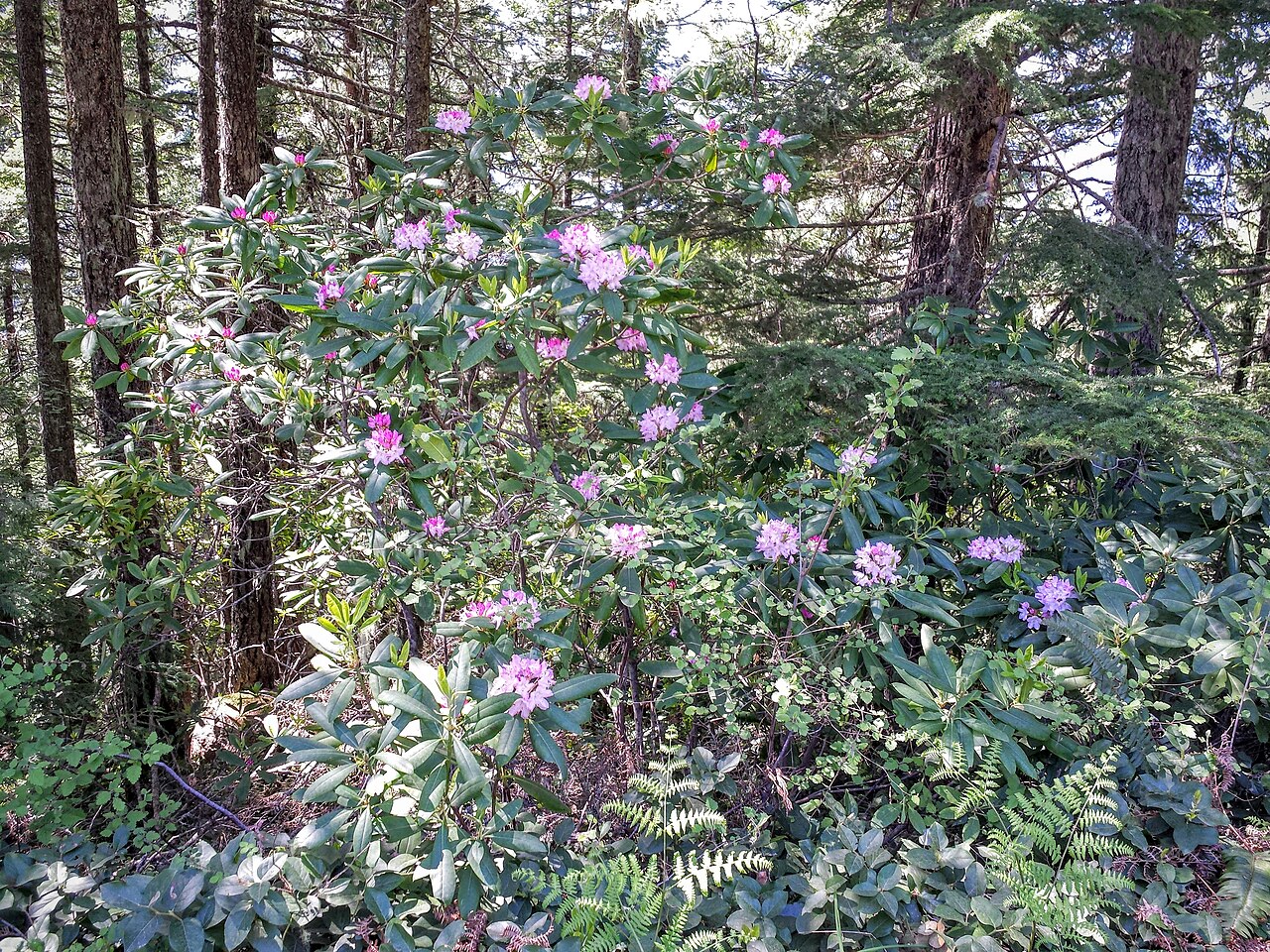
It grows from near sea level up to about 6,000 feet in elevation, typically as an understory shrub beneath Douglas-fir, western hemlock and other conifers, though it also colonizes recently disturbed ground such as roadside embankments and logged areas, where increased light can trigger especially heavy flowering. It favors acidic, humus-rich, well-drained forest soils.
Pacific rhododendron is not native outside this Pacific Coast range; gardeners east of the Cascades or outside USDA zones 6–8 should not expect it to perform like a true native and should check local conditions carefully before planting.
📋 Regional plant lists featuring Pacific Rhododendron: Western Oregon & Western Washington
Growing & Care Guide
Pacific rhododendron can be a slow but rewarding garden shrub when its forest-understory preferences are respected. Replicating dappled light and acidic, well-drained soil is the key to success.
Light
Give it part shade to full shade for best performance, mimicking its natural position beneath a conifer canopy. In cooler, foggier coastal gardens it tolerates more direct sun, but inland or in hot summer climates, too much sun scorches the leaves and reduces vigor.
Soil & Water
Plant in well-drained, humus-rich, consistently moist, acidic soil (pH 4.5–6.0). It does not tolerate soggy, poorly drained ground or alkaline soil, both of which lead to root problems and chlorotic foliage. Water regularly during the first few years and through summer dry spells once established, especially away from the coast.
Planting Tips
Plant in fall or spring, setting the root ball slightly high in the planting hole, since rhododendrons are shallow-rooted and resent being planted too deep. Mulch with 2–3 inches of pine needles, bark or leaf litter to keep roots cool and conserve moisture. Site it beneath or near established trees to recreate natural dappled shade, and allow 6 to 12 feet of space for mature spread.
Pruning & Maintenance
Prune only as needed immediately after flowering, since next year’s buds form on the current season’s new growth soon after bloom. Remove dead, damaged or crossing branches anytime. Established plants are relatively low-maintenance but benefit from an annual light feeding with an acid-forming fertilizer formulated for rhododendrons.
Propagation
Propagation is typically by semi-hardwood cuttings taken in late summer, or by seed sown on the surface of moist, acidic growing medium; germination and growth to flowering size are both slow.
Landscape Uses
Pacific rhododendron’s year-round structure and showy late-spring bloom suit several garden roles:
- Woodland garden understory beneath established conifers or deciduous shade trees
- Evergreen privacy screen or hedge in shaded to partly sunny sites
- Specimen planting for a dramatic late-spring flower display
- Native plant and pollinator gardens in Pacific Coast climates
- Erosion control on shaded forest slopes and embankments
Wildlife & Ecological Value
Pacific rhododendron provides significant habitat structure and seasonal food resources in Pacific Coast conifer forests, despite its toxicity to large mammals.
For Pollinators
The large, nectar-rich flowers attract bumblebees and other native bees, which are the primary pollinators, along with occasional visits from hummingbirds. Because the plant blooms later than many other native shrubs, it provides an important nectar source as spring transitions into summer.
For Birds
The dense evergreen foliage offers year-round nesting sites and cover for forest songbirds, including thrushes and wrens, particularly valuable in winter when deciduous shrubs have dropped their leaves.
For Mammals
Because its foliage contains grayanotoxins, Pacific rhododendron is rarely browsed by deer or elk, making it one of the more reliably deer-resistant native shrubs in Pacific Coast gardens. Small mammals use the dense branching for cover and protection from predators.
Ecosystem Role
As a dominant evergreen shrub-layer species in many Pacific Coast conifer forests, Pacific rhododendron adds structural complexity beneath the canopy, moderates understory microclimate, and its root systems help stabilize forest soils on slopes. Its persistence through logging and disturbance also makes it a useful early indicator of forest recovery in managed timberlands.
Cultural & Historical Uses
Pacific rhododendron has no documented history as a food or medicinal plant among Indigenous peoples of the Pacific Northwest, consistent with the toxicity shared by all rhododendrons in the heath family. Its cultural significance is instead tied to its striking appearance and its later role as a regional symbol.
British naturalist Archibald Menzies is credited with the first European scientific observation of Pacific rhododendron in May 1792, during an expedition with Captain George Vancouver near present-day Port Discovery, Washington. Seed was later sent to England in 1850 by plant collector William Lobb, introducing the species to European horticulture.
In 1892, Washington schoolchildren voted for a state flower in advance of the World’s Columbian Exposition, choosing the native “rhododendron,” and in 1959 the Washington State Legislature formally designated Rhododendron macrophyllum — specifically the pink wild form, not pink or white garden hybrids — as the official state flower, cementing its status as an enduring regional symbol of the Pacific Northwest.
Frequently Asked Questions
Is Pacific rhododendron poisonous?
Yes. Like all rhododendrons and azaleas, every part of the plant — leaves, flowers, stems, pollen and nectar — contains grayanotoxins and is toxic to people, pets and livestock if ingested. Honey made from its nectar can also cause illness in quantity. Grow it strictly as an ornamental.
Why is Pacific rhododendron the state flower of Washington?
Washington schoolchildren voted for it as a symbolic state flower in 1892, and the Washington State Legislature made the designation official in 1959, specifically naming the native pink-flowered wild species rather than garden hybrids.
Does Pacific rhododendron need shade?
It prefers part to full shade, as it naturally grows in the conifer forest understory. In cooler coastal climates it tolerates more sun, but inland or in hot summer regions, too much direct sun scorches the foliage.
How fast does Pacific rhododendron grow?
Slowly. It can take many years to reach its mature size of 7 to 15 feet in a garden setting, though old specimens in favorable forest conditions can eventually reach 25 feet or more.
Can Pacific rhododendron grow outside the Pacific Coast?
It is only native to California, Oregon and Washington and is best suited to the mild, humid climate of the Pacific Coast. It can be grown as an ornamental in USDA zones 6–8 with acidic soil and consistent moisture, but it is not native or naturalized east of the Cascades or outside the West Coast.

Looking for a nursery that carries Pacific Rhododendron?
Browse our native plant nursery directory: California · Oregon · Washington