Scrub Oak (Quercus berberidifolia)
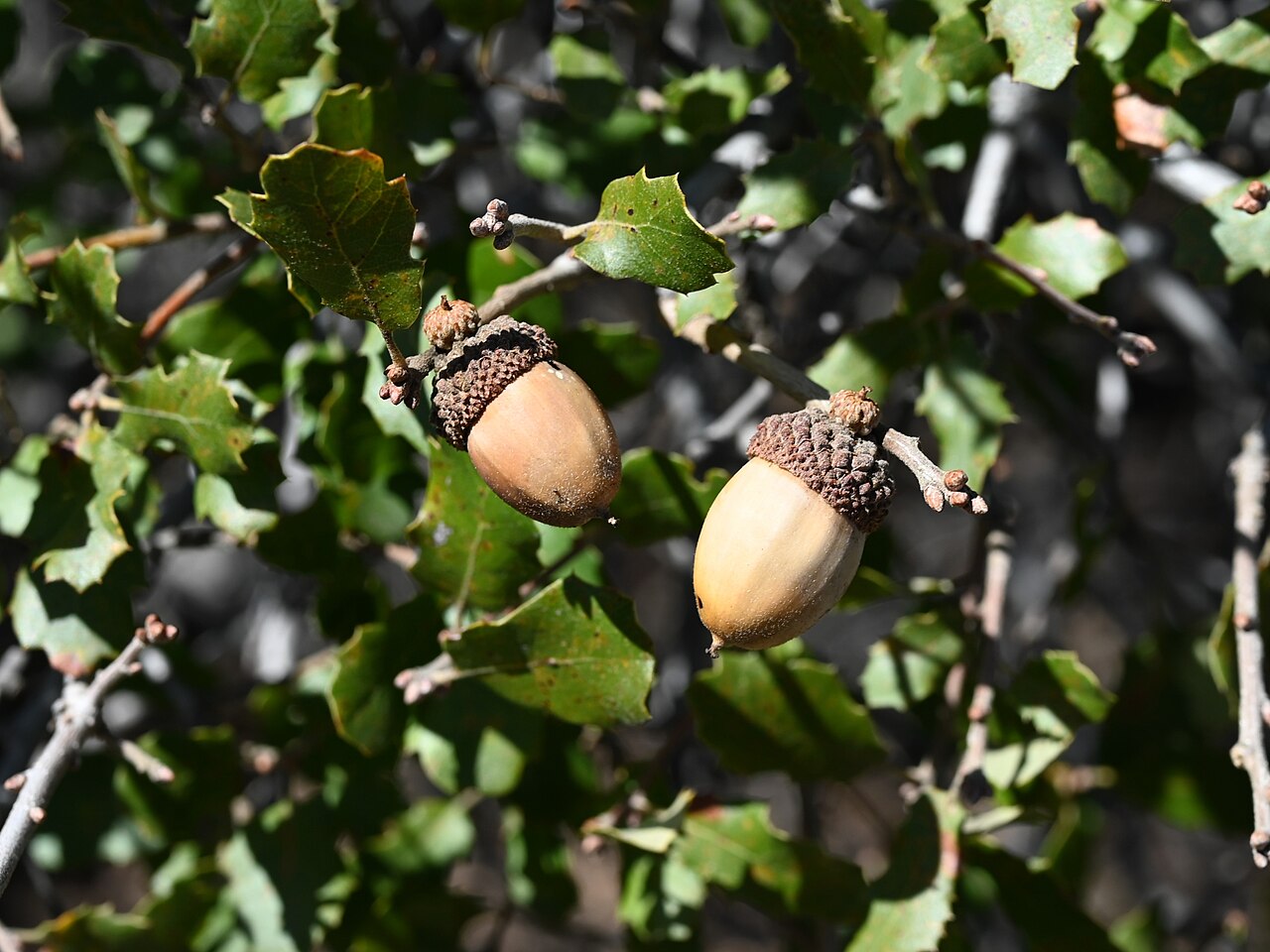
Quercus berberidifolia, commonly called Scrub Oak or California Scrub Oak, is one of the defining shrubs of California chaparral — a dense, evergreen, holly-leaved oak that forms thickets so tight they are nearly impassable, covering hillsides across the state’s interior and coastal foothills. Its species name, meaning “barberry-leaved,” describes the small, spiny leaves that make it instantly recognizable as a member of the oak family even though it rarely takes tree form.
Scrub Oak is often confused with several other shrubby California oaks that share the common name “scrub oak,” most notably Shrub Live Oak (Quercus turbinella), a different and mostly more desert-adapted species found further east and south. Quercus berberidifolia is the common, widespread scrub oak of the state’s Coast Ranges, Transverse and Peninsular Ranges, and Sierra Nevada foothills, and it is this species — not Q. turbinella — that dominates so much of California’s classic chaparral landscape.
As a keystone chaparral shrub, Scrub Oak provides structure, food, and cover across millions of acres, and it is a textbook example of a fire-adapted California native: top-killed by fire like most of its chaparral neighbors, but capable of resprouting vigorously from a woody underground burl almost immediately afterward. For gardeners in fire-prone, dry-summer regions of California, it is a tough, low-water shrub well suited to naturalistic and wildlife-focused plantings.
Identification
Scrub Oak typically grows 3 to 15 feet tall, forming a dense, rounded to irregular mound of tangled, often interlocking branches. Where conditions allow, especially on deeper soils with reduced fire frequency, it can reach the upper end of that range and take on a more small-tree-like form, but across most of its chaparral habitat it remains a multi-stemmed shrub.
Bark
Bark on older stems is gray and finely scaly, while younger branches are smooth and gray to grayish-brown. The dense branching habit, with many stems packed closely together, is often as useful for field identification as the bark itself.
Leaves
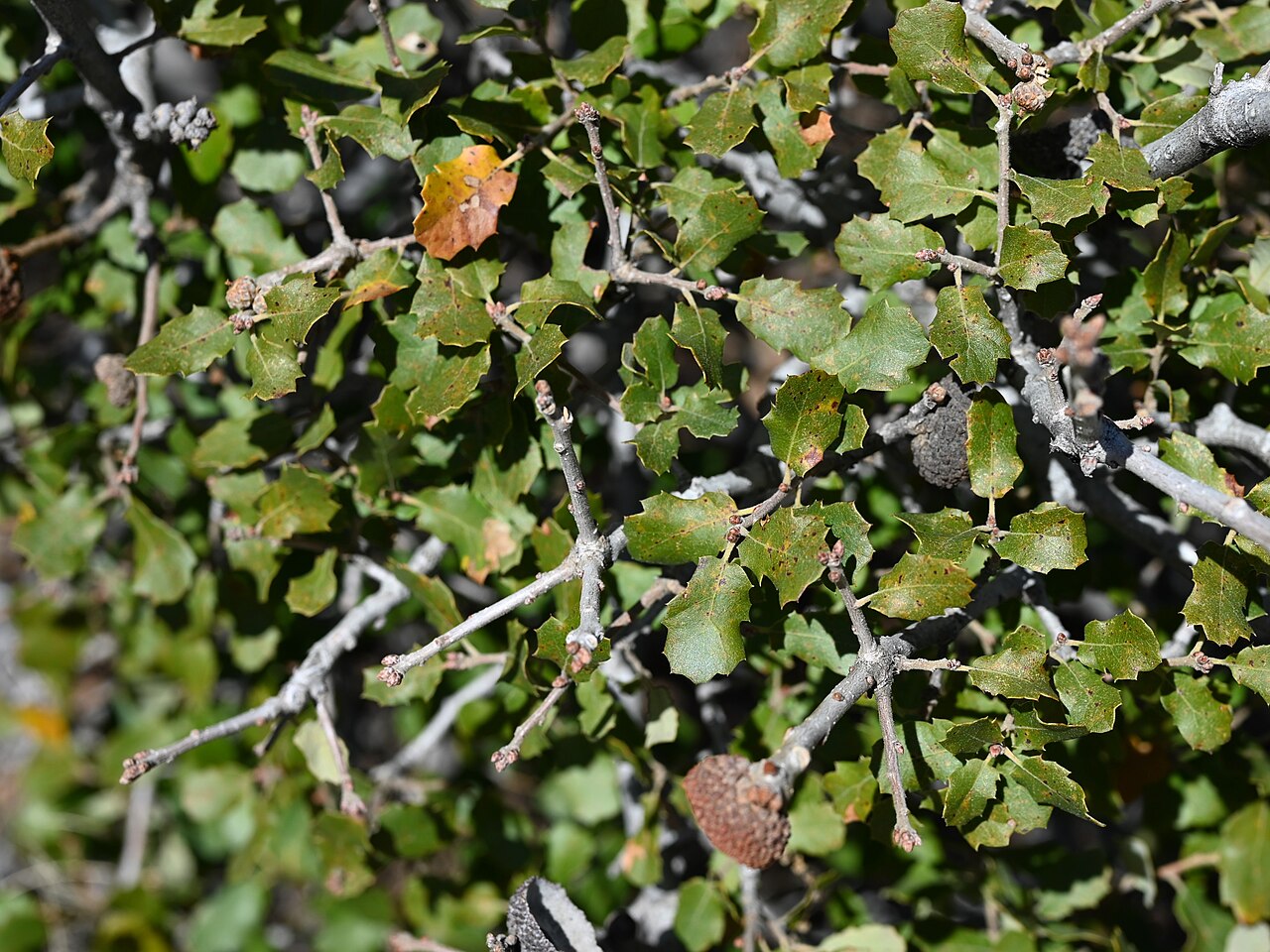
Leaves are small, typically ½ to 1½ inches long, oval to oblong, and usually convex or slightly cupped, with spiny, holly-like teeth along the margins — though leaf shape and spininess can vary considerably even on the same plant. Color ranges from gray-green to a deeper, glossier green depending on site and moisture. The dense evergreen foliage is held year-round, giving chaparral slopes their characteristic gray-green winter color.
Flowers & Fruit
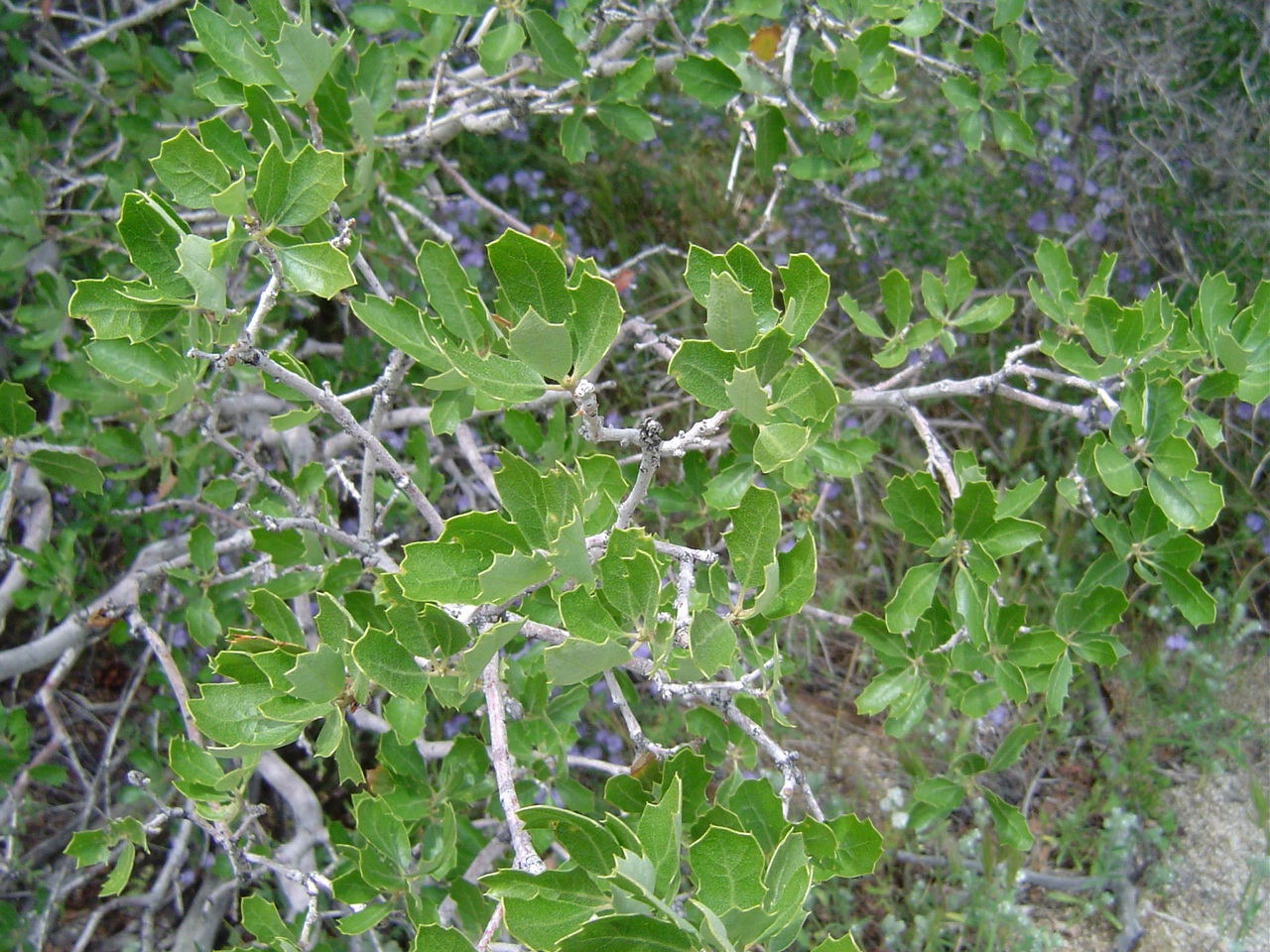
Inconspicuous male catkins appear in spring alongside new growth, dusting nearby foliage with pollen. Acorns are relatively small, about ½ to ¾ inch long, with a scaly cap covering roughly a third of the nut, and mature in a single growing season. Acorn production can be prolific in good years, making Scrub Oak thickets an important seasonal food source across the chaparral.
Quick Facts
| Scientific Name | Quercus berberidifolia |
| Family | Fagaceae (Beech/Oak) |
| Plant Type | Evergreen Shrub |
| Mature Height | 3–15 ft |
| Mature Spread | 6–15 ft, dense and spreading |
| Growth Rate | Slow |
| Sun Exposure | Full Sun to Part Shade |
| Water Needs | Low once established |
| Soil Type | Well-drained; tolerates rocky, shallow, or clay soils |
| Soil pH | 6.0–7.5 (neutral to slightly acidic) |
| Bloom Time | March – April |
| Flower Color | Yellow-green (inconspicuous) |
| Fall Color | None (evergreen) |
| Fruit | Small acorns, ½–¾ in, maturing in one season |
| Deer Resistant | Yes (spiny leaves strongly deter browsing) |
| USDA Hardiness Zones | 7–10 |
Native Range
Scrub Oak is native to California, where it is one of the most widespread shrubs of the chaparral belt. It occurs through the central and southern Coast Ranges, the Transverse and Peninsular Ranges of Southern California, and the foothills of the Sierra Nevada, generally between about 500 and 5,000 feet in elevation. The species also extends into northern Baja California, Mexico.
Within this range, Scrub Oak typically grows on dry, rocky slopes and ridgelines with well-drained soils, often forming dense, nearly monotypic thickets or mixing with chamise, manzanita, and ceanothus in classic mixed chaparral. It is notably absent from the immediate desert interior and from the higher, colder elevations of the Sierra Nevada proper, staying within the Mediterranean-climate belt of winter rain and long dry summers.
Scrub Oak is frequently confused in both casual and nursery references with Shrub Live Oak (Quercus turbinella), a separate species native mainly to the desert-edge mountains of the Southwest with its own existing profile on this site, and historically also with the more coastal, narrowly distributed Quercus dumosa. Gardeners and land managers working from a common name alone should confirm the scientific name, since care needs and regional appropriateness differ between these look-alike species.
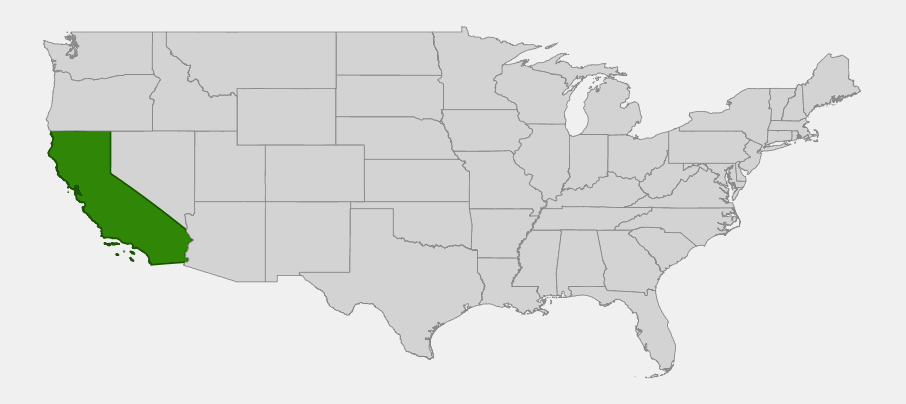
📋 Regional plant lists featuring Scrub Oak: California & Nevada
Growing & Care Guide
Scrub Oak is an exceptionally low-maintenance, drought-tolerant shrub once sited correctly, making it a strong choice for fire-wise, water-wise chaparral gardens within its native range.
Light
Plant Scrub Oak in full sun to light part shade, matching the open, exposed slopes where it grows wild. It develops its densest, most compact form in full sun and tends to grow looser and more open in significant shade.
Soil & Water
This shrub is adapted to well-drained, often rocky or shallow soils and is excellent drought tolerant once established, needing no irrigation beyond winter rainfall through most of its range after the first couple of years. Like other chaparral natives, it is intolerant of regular summer water, which promotes root disease; keep it well away from lawns and routinely irrigated beds.
Planting Tips
Start from small container stock, since Scrub Oak is slow-growing and establishes a deep root system early that resents disturbance. Plant in fall to take advantage of winter rains, water modestly through the first one to two dry seasons, then withhold supplemental irrigation entirely. Space plants 8 to 12 feet apart if a continuous hedge or thicket effect is desired, since the shrub’s natural tendency is to fill in densely over time.
Pruning & Maintenance
Scrub Oak needs very little pruning in a naturalistic planting; where used closer to structures, it benefits from maintaining clearance and removing dead interior wood to reduce fire fuel load, a standard defensible-space practice for chaparral shrubs in fire-prone areas. Because it resprouts readily from its root crown, it also tolerates occasional hard renewal pruning better than many woody natives.
Landscape Uses
- Wildlife hedge or screen providing dense year-round cover
- Chaparral restoration alongside chamise, manzanita, and ceanothus
- Erosion control on dry, rocky slopes
- Deer-resistant barrier planting thanks to its spiny foliage
- Low-water foundation or background shrub in fire-wise landscaping
Wildlife & Ecological Value
As one of the most abundant shrubs in California chaparral, Scrub Oak anchors food webs and provides structural habitat across a huge area of the state.
For Birds
The dense, thorny thickets provide excellent nesting cover and predator protection for chaparral birds such as California Towhee, Wrentit, and California Thrasher, species that depend on exactly this kind of low, tangled shrub structure. Acorns feed Acorn Woodpeckers, Scrub-Jays, and quail where Scrub Oak grows near other oak woodland.
For Mammals
Mule deer and other browsers generally avoid the spiny foliage itself but rely on Scrub Oak thickets for cover, while acorns provide fall and winter forage for California ground squirrels, woodrats, and black bears in parts of the range. The dense growth form also offers critical escape cover for rabbits and other small mammals pursued by coyotes and bobcats.
For Pollinators
Though wind-pollinated, Scrub Oak’s spring catkins contribute pollen to the broader chaparral pollinator community, and the structural shelter it provides supports the many native bees and butterflies that nest or overwinter in chaparral leaf litter and woody debris.
Ecosystem Role
Scrub Oak is a textbook fire-adapted chaparral species: fire typically kills the above-ground portion of the plant, but a woody burl at the base survives and resprouts vigorously within the first growing season after a burn, helping stabilize slopes and speed chaparral recovery. This resilience makes it a foundational species in maintaining chaparral as a stable, self-renewing plant community across fire cycles.
Cultural & Historical Uses
Like other California oaks, Scrub Oak acorns were gathered by Indigenous peoples across its range, including groups in the Coast Ranges and Transverse Ranges, who processed the tannin-rich nuts through leaching before grinding them into meal. Because Scrub Oak typically grows as dense, low thickets rather than large trees, its acorn harvest was often a secondary resource compared to the larger valley and black oaks nearby, but still contributed to the broader acorn economy that sustained many California tribes.
The dense, spiny growth habit that makes Scrub Oak less useful for timber has historically made it valuable in a different way: as a natural barrier and boundary hedge on hillside ranchland, where its thickets are difficult for livestock or people to push through.
Today Scrub Oak is increasingly recognized for its role in fire ecology and chaparral conservation, and it appears more often in native plant gardens and restoration plantings as interest grows in low-water, fire-adapted landscaping that reflects the natural chaparral communities of California’s foothills.
Frequently Asked Questions
Is Scrub Oak the same plant as Shrub Live Oak (Quercus turbinella)?
No, these are different species sometimes confused under the shared common name “scrub oak.” Quercus berberidifolia is the common chaparral scrub oak of California’s Coast Ranges and Southern California mountains, while Quercus turbinella is a more desert-adapted species found mainly in the interior Southwest; this site maintains separate profiles for each.
Does Scrub Oak ever grow into a tree?
Occasionally, on favorable sites with deeper soil and less fire disturbance, it can reach small-tree proportions toward the upper end of its height range. Across most of its chaparral habitat, though, it remains a dense, multi-stemmed shrub rather than a single-trunked tree.
How does Scrub Oak survive wildfire?
The above-ground shrub is typically killed by fire, but a woody burl at the base survives underground and resprouts vigorously, often within weeks of a burn. This resprouting ability is a defining trait of California chaparral shrubs and helps the plant community recover quickly after fire.
Is Scrub Oak good for defensible space landscaping?
It needs thoughtful placement. While Scrub Oak is a valuable native habitat shrub, its dense, woody structure can build up significant fuel load over time, so in fire-prone areas it is best kept well-spaced from structures, pruned to reduce dead interior wood, and sited according to local defensible-space guidelines.
Can Scrub Oak acorns be eaten?
Yes, after thorough leaching to remove the bitter tannins, following traditional processing methods used historically by California Indigenous peoples. Raw, unprocessed acorns are too bitter and tannic to eat directly and are best left for wildlife.

Looking for a nursery that carries Scrub Oak?
Browse our native plant nursery directory: California