Catalina Ironwood (Lyonothamnus floribundus)
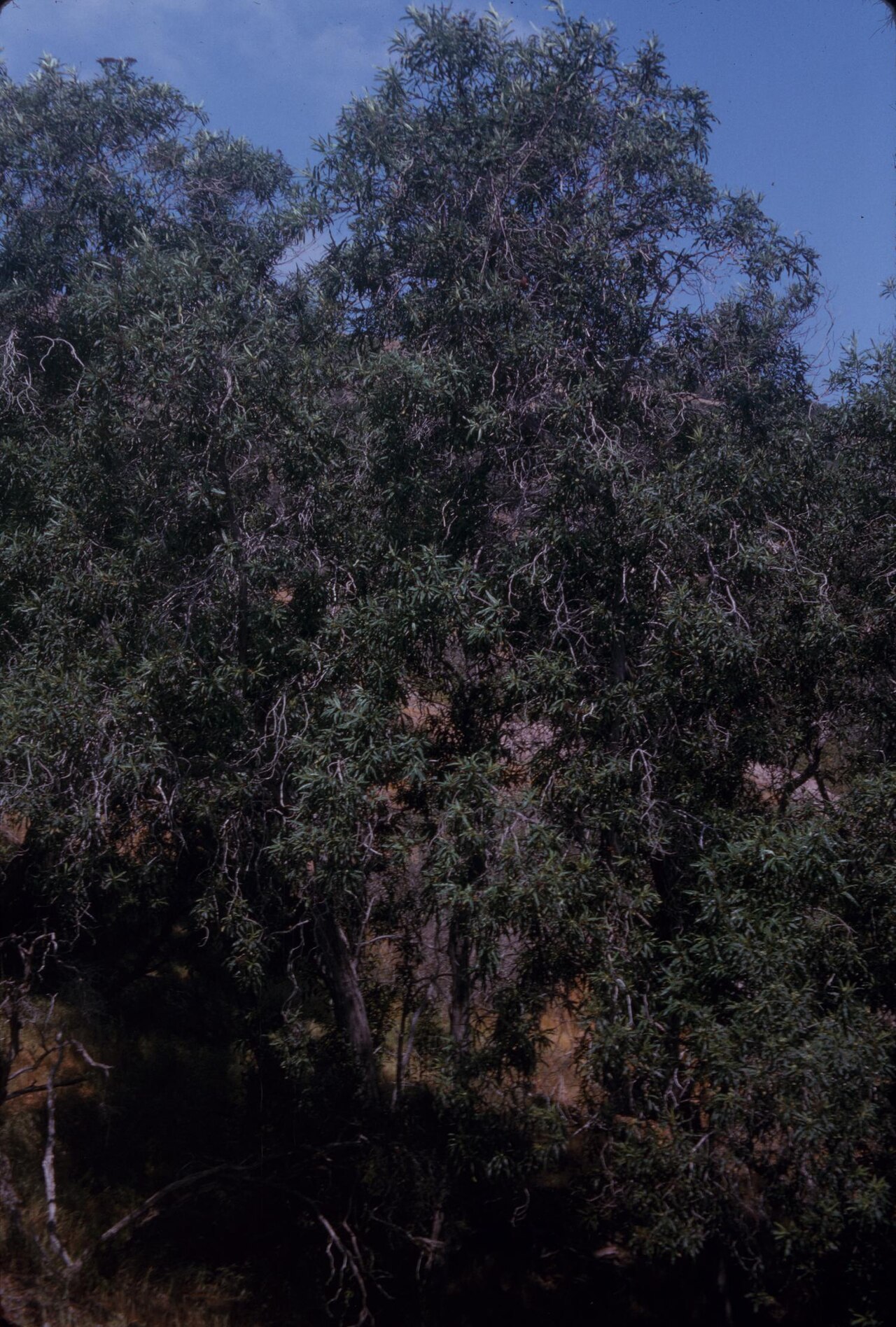
Lyonothamnus floribundus, the Catalina ironwood, is an evergreen tree found nowhere on Earth except California’s Channel Islands. It is the sole species in its genus, a true botanical relict — fossil leaves nearly identical to the living tree have been found on the California mainland, evidence that Catalina ironwood once grew far beyond its present island refuge before the climate dried out and competitors moved in. Today it survives on just a handful of islands, protected from the mainland’s changes by the surrounding sea.
The tree’s common name comes from its wood, which is exceptionally hard and dense — heavy enough to sink in water — and from Santa Catalina Island, where the typical-leaved subspecies grows. A second subspecies, with finely divided, fern-like foliage, occurs on Santa Cruz, Santa Rosa and San Clemente islands. Both share the same reddish, shredding bark, flat clusters of small white flowers in late spring, and a naturally narrow, upright habit that makes mature trees look sculptural even without pruning.
Despite being an island endemic with a tiny native range, Catalina ironwood has become a well-regarded landscape tree across coastal and inland California, prized for its fast growth, drought tolerance once established, and handsome peeling bark. For gardeners working with wild-collected or nursery-propagated stock of verified island origin, it offers a strong vertical accent and a direct link to one of the state’s rarest native plant communities.
Identification
Catalina ironwood grows as a single- or multi-trunked evergreen tree, typically 25 to 40 feet tall in cultivation and reported to reach 50 feet or more in sheltered canyons in the wild. Young trees are narrow and upright; older specimens broaden somewhat but keep a distinctly vertical, columnar silhouette compared with most California native trees.
Bark & Stems
The bark is one of the tree’s best field marks: reddish-brown to chestnut in color, thin, and constantly shredding and peeling away in long, curling strips to reveal lighter, smoother bark underneath. This gives even young trees a textured, almost shaggy trunk that stands out in silhouette. The wood beneath is remarkably hard and heavy, among the densest of any California tree, which is the origin of the “ironwood” name.
Leaves
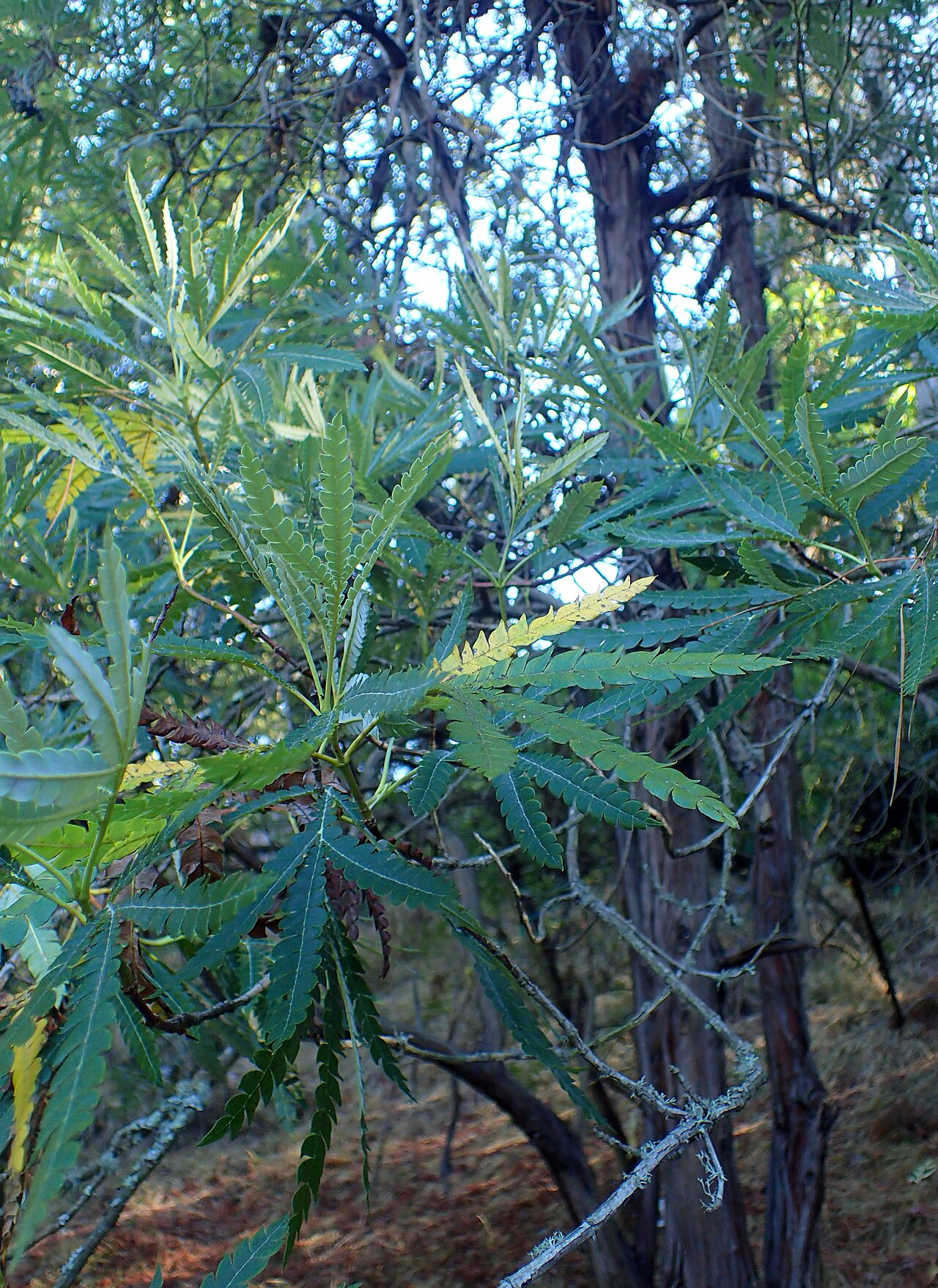
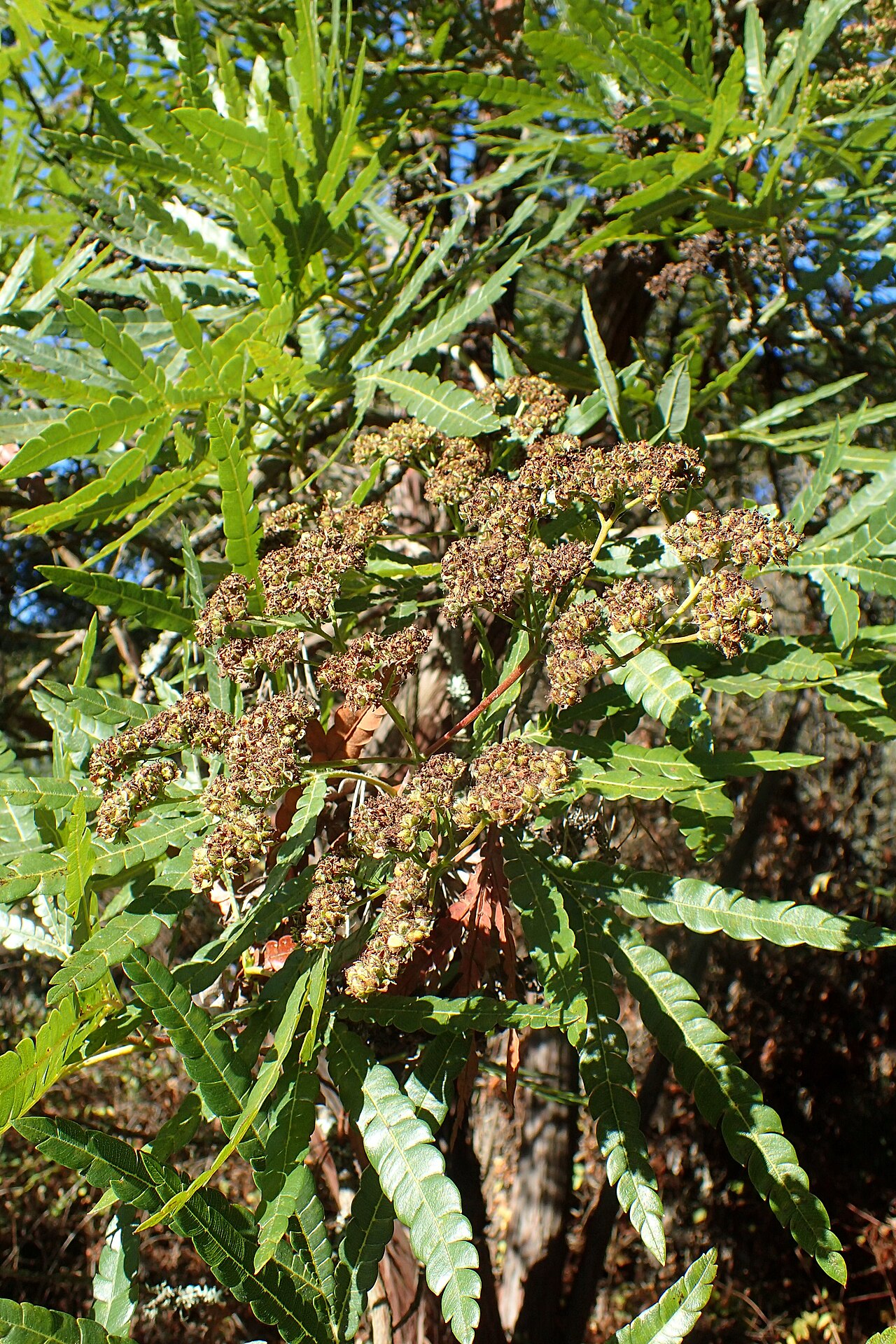
Leaf form is the main difference between the two subspecies. Ssp. floribundus, native to Santa Catalina Island, has simple, undivided leaves: narrow, leathery, lance-shaped, 3 to 6 inches long, dark glossy green above and pale and finely hairy beneath, with finely toothed margins. Ssp. aspleniifolius, native to Santa Cruz, Santa Rosa and San Clemente islands, instead has leaves pinnately divided into narrow, fern-like, toothed leaflets, giving the whole frond a feathery texture closer to a fern than a typical tree leaf. Both forms are evergreen and arranged oppositely along the stem.
Flowers
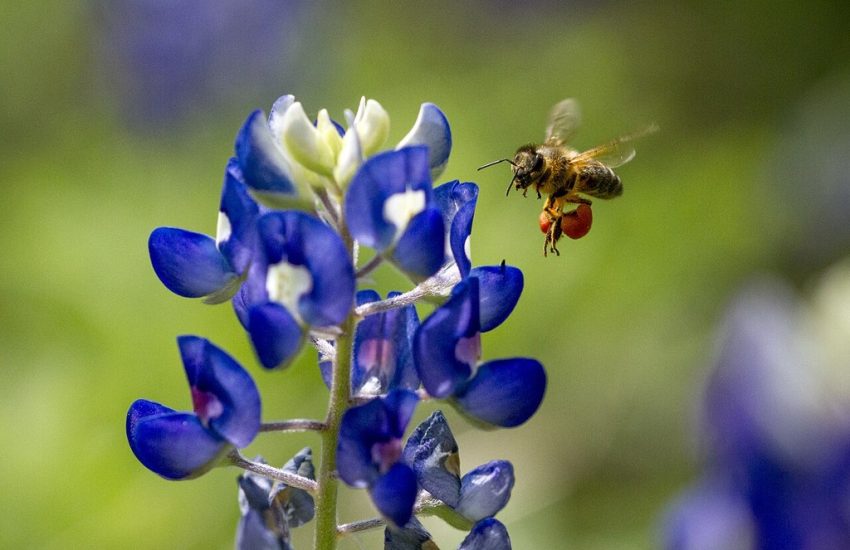
In late spring, usually May into June, Catalina ironwood produces flat-topped clusters (corymbs) of small, white, five-petaled flowers at the branch tips, often several inches across and heavy enough with bloom to be visible from a distance. The flowers are typical of the rose family in structure, with a faint sweet fragrance, and are visited readily by bees and other small pollinating insects.
Fruit & Seeds
Flower clusters mature into dense heads of small, woody, brown follicles (capsules), each holding one or two tiny seeds. These seed heads persist on the tree well into fall and winter, turning from greenish to dark brown, and are a useful identifying feature even when the tree is not in bloom — look for the dried, branched clusters of woody capsules at the tips of the previous season’s growth.
Quick Facts
| Scientific Name | Lyonothamnus floribundus |
| Family | Rosaceae (Rose) |
| Plant Type | Evergreen Tree |
| Mature Height | 25–40 ft (to 50 ft in sheltered canyons) |
| Mature Spread | 12–20 ft, narrow and upright |
| Growth Rate | Fast for a California native tree |
| Sun Exposure | Full Sun |
| Water Needs | Low to moderate once established |
| Soil Type | Well-drained; adaptable to loam, sand or clay-loam |
| Soil pH | Slightly acidic to slightly alkaline (6.0–7.5) |
| Bloom Time | May – June |
| Flower Color | White |
| Fall Color | None (evergreen) |
| Fruit | Small woody brown capsules in persistent clusters |
| Deer Resistant | Yes, generally |
| USDA Hardiness Zones | 8–10 |
Native Range
Catalina ironwood is endemic to California’s Channel Islands and grows wild nowhere else in the world. Ssp. floribundus, with simple undivided leaves, is native only to Santa Catalina Island. Ssp. aspleniifolius, with fern-like divided leaves, is native to Santa Cruz Island, Santa Rosa Island and San Clemente Island. On the mainland, the species is widely planted as a landscape and street tree in coastal and inland Southern and Central California, but it is not naturalized or wild there.
On its home islands, Catalina ironwood grows in moist canyon bottoms, north-facing slopes and other sheltered sites within island chaparral and oak woodland, often rooted in rocky or shallow soils near seasonal drainages where some extra moisture collects. These protected canyon settings buffer the trees from the islands’ drying winds and intense summer sun, and many of the oldest stands are found in exactly this kind of topography.
Island populations were sharply reduced in the nineteenth and twentieth centuries by grazing and trampling from feral goats, pigs and sheep introduced to the Channel Islands, which prevented seedlings from establishing for decades in many areas. Since the eradication of these grazing animals from the Channel Islands National Park and Santa Catalina Island beginning in the late twentieth century, natural regeneration has improved, though the species remains uncommon and is considered rare across its native range.
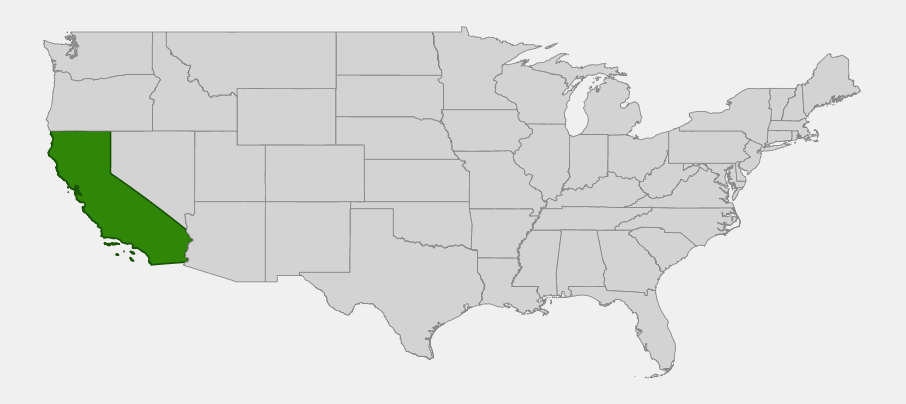
📋 Regional plant lists featuring Catalina Ironwood: California & Nevada
Growing & Care Guide
Away from its island home, Catalina ironwood has proven to be one of the easier and faster-growing native trees for California gardens, tolerating heat, wind and poor soil far better than its rare wild status might suggest.
Light
Plant Catalina ironwood in full sun. It develops its best upright form and densest foliage with at least six to eight hours of direct sun daily. Trees grown in too much shade tend to stretch and become sparse rather than keeping the tidy, columnar habit that makes the species popular as a specimen or street tree.
Soil & Water
This tree is remarkably adaptable to soil type, growing in sandy, loamy or clay-based soils as long as drainage is reasonable. Give young trees regular deep watering through their first two or three summers to build a strong root system; once established, Catalina ironwood is quite drought tolerant and in coastal gardens often needs no supplemental water beyond normal rainfall. In hot inland valleys, an occasional deep summer soak keeps the canopy fuller and reduces leaf drop.
Planting Tips
Set out young, nursery-propagated trees (never wild-collected, given the species’ rarity) in fall or early spring so roots can establish before summer heat arrives. Stake loosely for the first year if the planting site is windy, since young trees can be somewhat top-heavy relative to their trunk diameter. Give each tree at least 15 to 20 feet of space from structures and other trees to let its narrow crown develop fully.
Pruning & Maintenance
Catalina ironwood needs little pruning to look good. Remove dead, crossing or storm-damaged branches in late winter while the tree is dormant-ish, and thin congested interior growth on multi-trunked specimens to keep air moving through the canopy. Resist the urge to prune the peeling bark away — the shredding strips are a natural, attractive feature, not a sign of disease. The species is generally free of serious pests and diseases in cultivation.
Landscape Uses
- Specimen or accent tree where the narrow, columnar form and shredding bark can be appreciated up close
- Street and parkway tree in coastal and inland Southern California cities
- Screening planted in a row, since the upright habit takes little horizontal space
- Drought-tolerant gardens paired with other California natives such as Toyon
- Wildlife and pollinator gardens, for the bee-attracting spring bloom
- Habitat and restoration plantings using verified nursery stock of documented island provenance
Wildlife & Ecological Value
Though its wild range is tiny, Catalina ironwood plays a real role in the Channel Islands’ native plant communities and offers modest but reliable wildlife value in gardens.
For Pollinators
The flat clusters of small white flowers are a reliable nectar and pollen source for native bees, honeybees and various beneficial flies and beetles during their late-spring bloom, at a time when many other California natives have already finished flowering.
For Birds
Small songbirds use the dense evergreen canopy for cover and nesting sites, and the fine branching provides good perching structure. The seed capsules are not a major food source for birds compared with fleshier native fruits, but the tree’s year-round foliage adds valuable shelter.
For Mammals
On the Channel Islands, the endemic island fox forages and shelters in ironwood stands along with other native island chaparral species. On the mainland, the dense canopy provides cover for squirrels and other small mammals in garden and park settings.
Ecosystem Role
On its native islands, Catalina ironwood is a structurally important canopy tree in canyon woodland, stabilizing slopes with its root systems and creating shaded microhabitats that support understory plants and animals adapted to cooler, moister conditions than the surrounding chaparral. Because the species survives today in such a restricted range, every wild stand is ecologically significant, and ongoing recovery following the removal of feral grazing animals is considered an important conservation success story for the Channel Islands.
Cultural & Historical Uses
Catalina ironwood has no significant documented history of use by Indigenous peoples comparable to many mainland California trees, likely reflecting both its restricted island range and the dense, extremely hard wood that makes it difficult to work with hand tools. The name “ironwood” itself speaks to this density — the wood is heavy enough to sink in water and was historically noted by island visitors and early botanists for its unusual hardness.
The species drew early scientific attention as a botanical curiosity: it is the only member of its genus, and fossil leaves closely matching the living tree, found in mainland California sediments far from any surviving population, showed that Catalina ironwood is a relict of a much more widespread ancestral flora. This “living fossil” status has made it a touchstone species in discussions of how California’s vegetation has changed since the wetter climates of the Tertiary period.
In the twentieth century, Catalina ironwood moved from botanical curiosity to nursery trade staple, valued by California landscape architects for its fast growth, narrow form and low water needs long before “drought-tolerant native” became a common design goal. It remains a recognizable sight in older California parks, campuses and street plantings dating back many decades, planted well beyond the narrow island range where it occurs naturally.
Frequently Asked Questions
Is Catalina ironwood the same as desert ironwood?
No. Catalina ironwood (Lyonothamnus floribundus) is a Channel Islands endemic in the rose family. Desert ironwood (Olneya tesota) is an unrelated legume tree native to the Sonoran Desert. They share only the common “ironwood” name, which refers to the hardness of both species’ wood.
Can I grow Catalina ironwood away from the coast?
Yes. It is widely and successfully planted in inland Southern and Central California gardens, as long as it gets full sun, reasonable drainage and some supplemental water during its first few summers. It handles heat better than many people expect from an island species.
Why is Catalina ironwood considered rare?
Its entire wild distribution is limited to a few Channel Islands, and populations there were suppressed for generations by grazing from introduced goats, pigs and sheep, which ate seedlings before they could mature. Since those animals were removed from the islands, natural regeneration has improved, but the species remains uncommon in the wild.
What is the difference between the two Catalina ironwood leaf forms?
Ssp. floribundus, from Santa Catalina Island, has simple, undivided, lance-shaped leaves. Ssp. aspleniifolius, from Santa Cruz, Santa Rosa and San Clemente islands, has leaves divided into narrow, fern-like leaflets. Both are evergreen with the same reddish, shredding bark and white spring flower clusters.
How fast does Catalina ironwood grow?
It is considered one of the faster-growing California native trees, often adding one to two feet or more per year under good conditions with adequate water during establishment. Growth slows somewhat as the tree matures and shifts energy into canopy density rather than height.

Looking for a nursery that carries Catalina Ironwood?
Browse our native plant nursery directory: California