Butterfly Mariposa Lily (Calochortus venustus)
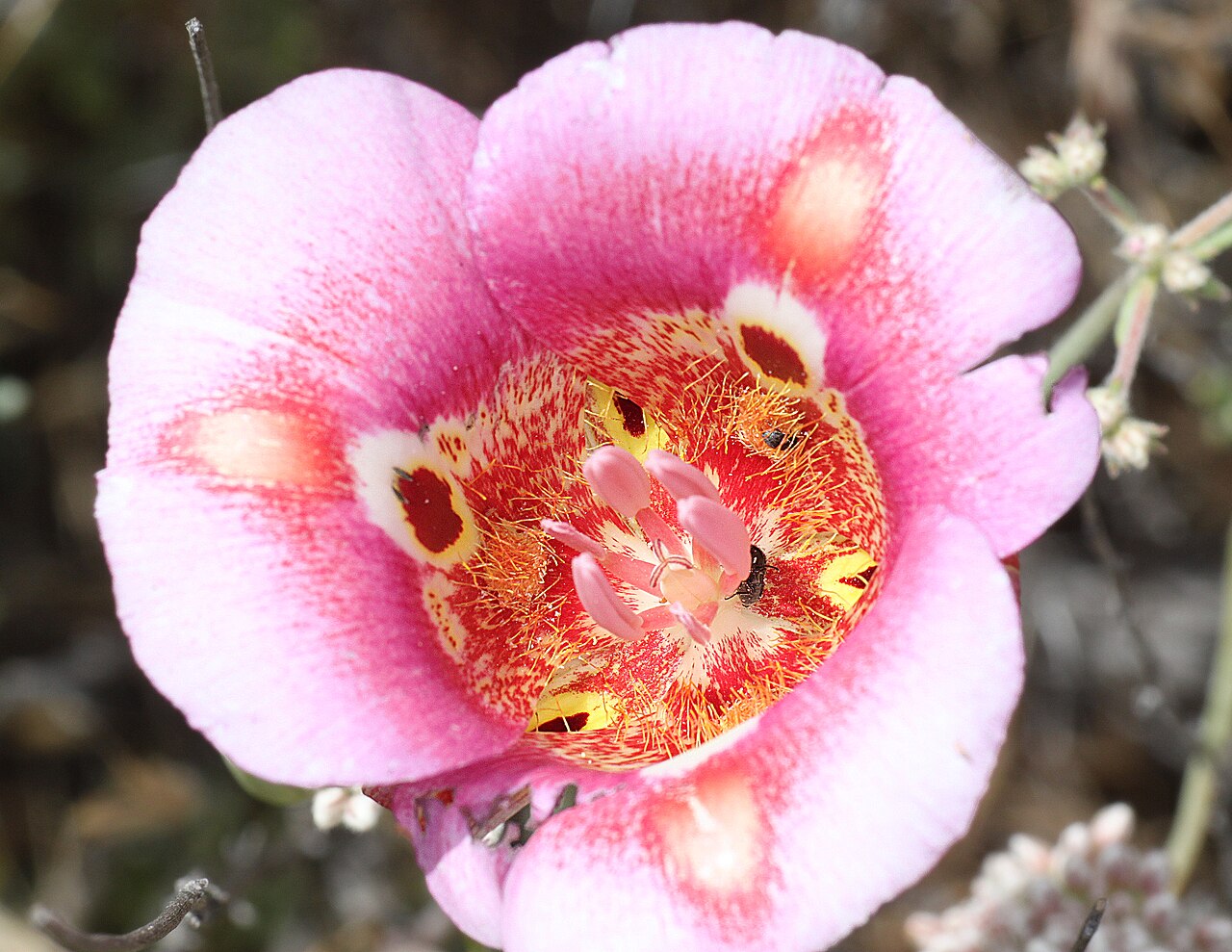
Calochortus venustus, the butterfly mariposa lily, is one of the most dramatically variable wildflowers in California — a single population can include flowers in white, cream, yellow, pink, red, and lavender-purple, each one overlaid with an intricate pattern of eyespots, crescents, and bands that make no two quite alike. This California endemic grows from a small bulb buried in dry, often rocky or sandy soils across the state’s foothills and mountains, disappearing underground for most of the year and putting on a brief but spectacular show each late spring and early summer.
The genus name Calochortus comes from Greek words meaning “beautiful grass,” a nod to the plant’s unassuming, grass-like foliage outside of bloom season, while “mariposa” is Spanish for butterfly — a fitting name for flowers whose petals seem to flutter atop thin, wiry stems in open grassland and dry slopes.
Identification
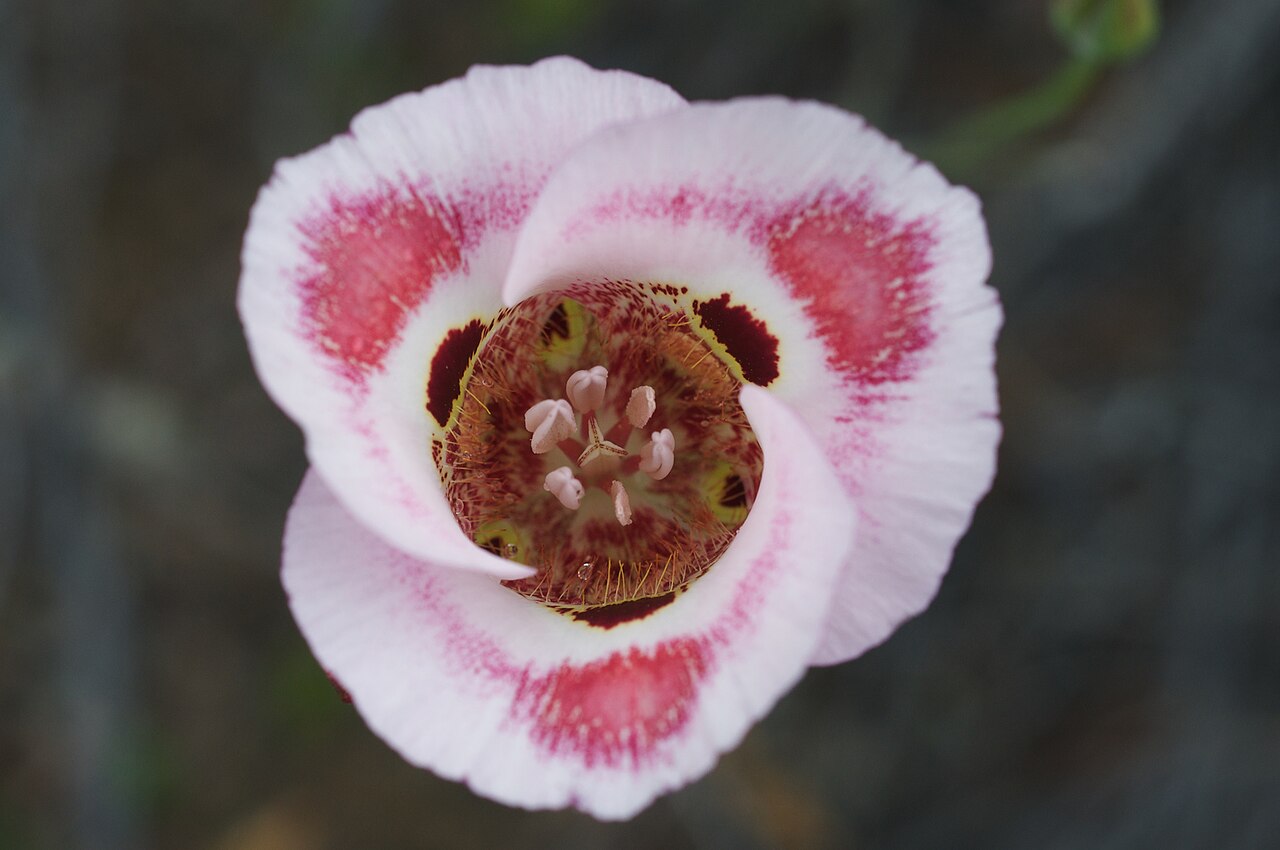
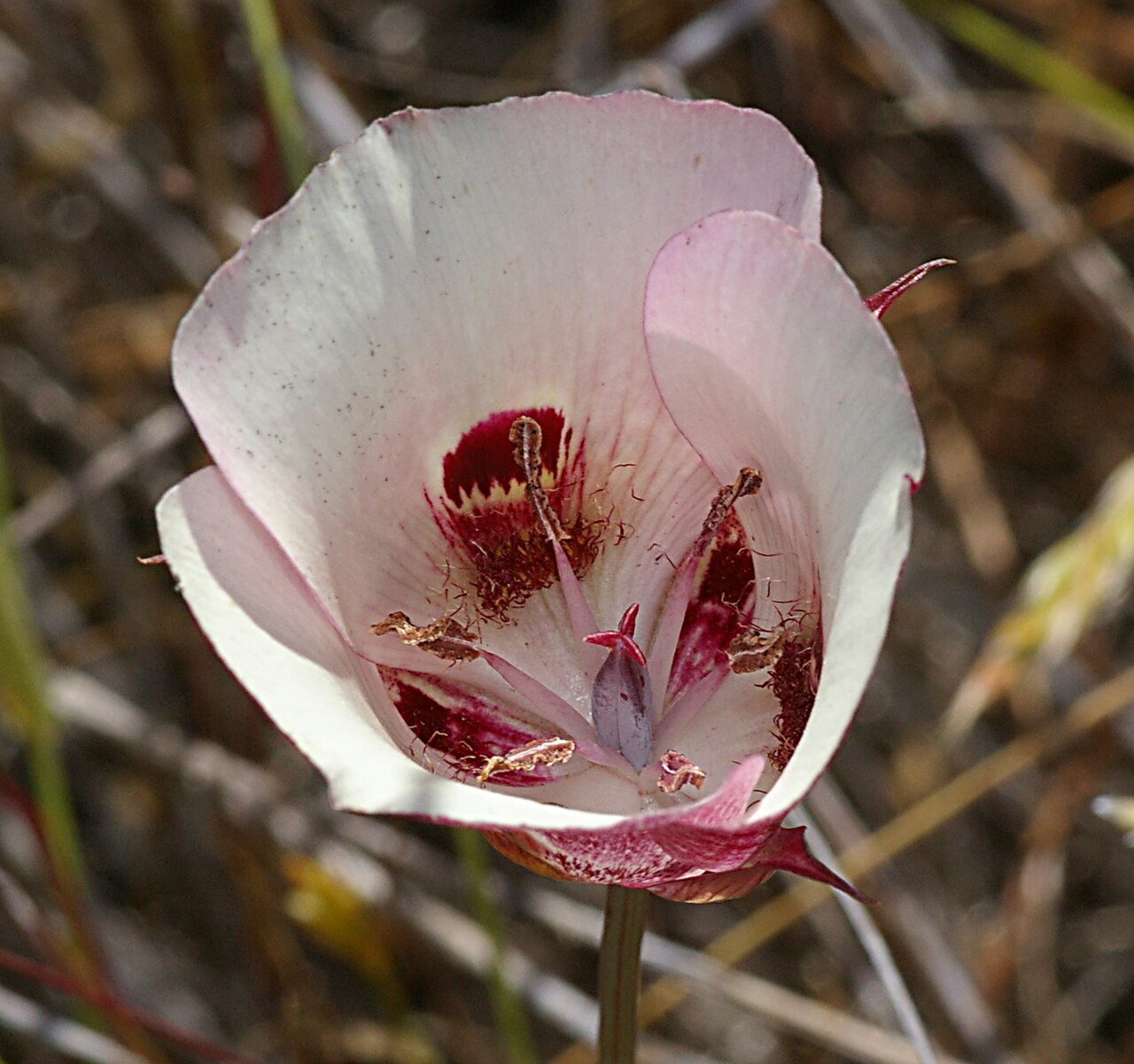
Butterfly mariposa lily can be identified by its combination of broad, often squared-off petal tips, a dark reddish-brown crescent or blotch near the base of each petal, and a paler halo or band of color surrounding that blotch — a more layered, multi-toned pattern than the single simple eyespot seen in some related mariposa lilies.
Foliage
A single narrow, grass-like basal leaf, up to about 8 inches long, emerges in late winter or early spring and is often withered by bloom time. Stem leaves are few and reduced.
Flowers
Flowering stems reach 6 to 20 inches tall, usually branched, bearing one to several upright, cup- to bowl-shaped flowers roughly 1.5 to 3 inches across. The three broad petals are extremely variable in color — white, cream, yellow, pink, red, or lavender — each marked near the base with a dark reddish-brown to blackish crescent or spot, often rimmed with a paler yellow or cream band and sometimes an additional ring of color further out on the petal. A patch of fine hairs covers the gland area at the base of each petal. Three narrow, pointed sepals alternate with the petals. Bloom season runs roughly May through July, with timing shifting by elevation.
Fruit
Pollinated flowers form narrow, three-angled, upright seed capsules that dry and split to release numerous small, flattened seeds in mid to late summer, by which point the rest of the plant has died back completely for its long dry-season dormancy.
Quick Facts
| Scientific Name | Calochortus venustus |
| Family | Liliaceae |
| Plant Type | Perennial bulb (geophyte) |
| Mature Height (in bloom) | 6–20 in |
| Growth Rate | Slow |
| Sun Exposure | Full sun to light part shade |
| Water Needs | Very low once established; summer-dry |
| Soil Type | Sandy or rocky, well-drained; granitic soils common |
| Drought Tolerance | Excellent |
| Bloom Time | May – July |
| Flower Color | Highly variable: white, cream, yellow, pink, red, or lavender |
| Deer Resistant | Mostly, though bulbs may be dug by rodents |
| USDA Hardiness Zones | 7–10 |
Native Range
Butterfly mariposa lily is endemic to California, ranging from Shasta County in the north through the Sierra Nevada foothills, inner Coast Ranges, and Transverse Ranges south to San Diego County. It is particularly common in the San Gabriel Mountains, the southern Sierra Nevada, and the Coast Ranges between the San Francisco Bay Area and Los Angeles. It is not native to Nevada, Oregon, or any other state.
It grows from about 1,000 to nearly 9,000 feet in elevation, typically in sandy or granitic soil in open grassland, oak and yellow-pine woodland, and chaparral — habitats that are reliably hot and dry by midsummer, matching the bulb’s dormancy schedule.
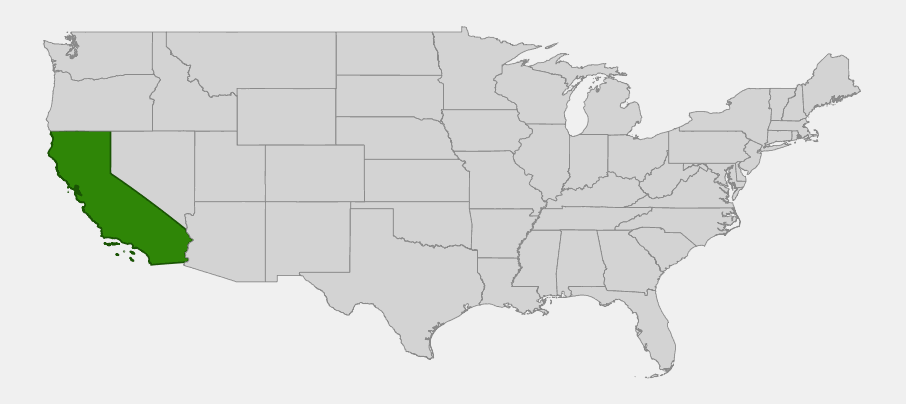
📋 Regional plant lists featuring butterfly mariposa lily: California & Nevada
Growing & Care Guide
Like other California mariposa lilies, butterfly mariposa lily thrives on being left alone for most of the year and wants sharp drainage above all else.
Light
Full sun to light part shade works best, echoing the open, rocky slopes and woodland edges where it grows wild.
Soil & Water
Sandy, gravelly, or decomposed granite soils with excellent drainage are ideal; the bulb is prone to rot in heavy, poorly drained clay or if watered through summer dormancy. Provide modest water during the winter and spring growing season and then withhold irrigation completely once the foliage yellows, allowing the bulb a fully dry summer rest.
Planting Tips
Plant bulbs in fall about 3 inches deep in a well-drained bed, rock garden, or slope. Because the plant vanishes entirely during its long summer dormancy, mark the spot clearly and avoid digging nearby. Mariposa lilies generally dislike being divided or moved once established, so choose a permanent site from the start.
Maintenance
Minimal — allow foliage to die back naturally rather than cutting it, and protect dormant bulbs from gophers and ground squirrels with a wire basket if rodent pressure is heavy in your garden.
Landscape Uses
- Dry rock gardens and gravel beds with sharp drainage
- Chaparral and foothill restoration plantings
- Oak woodland edges alongside native bunchgrasses
- Pollinator gardens for native bees
- No-summer-water slopes and banks
Wildlife & Ecological Value
For Pollinators
The broad, open flowers and contrasting color patterns act as strong visual nectar guides for native bees, which are the primary pollinators. The tufts of hair near the base of the petals are thought to help trap pollen and direct visiting insects toward the flower’s reproductive parts.
For Wildlife
As with other mariposa lilies, the starchy bulbs attract gophers and ground squirrels, which can limit colony persistence in disturbed grassland. The plant’s brief but abundant bloom contributes to the broader wildflower displays that support pollinator populations through the dry late-spring and early-summer period.
Cultural & Historical Uses
Mariposa lily bulbs, including those of butterfly mariposa lily and its relatives, were historically dug and eaten by California’s Indigenous peoples, typically roasted or boiled as one of many wild bulb and root foods gathered through the growing season. This is documented history rather than a modern foraging suggestion; because mariposa lily populations recover slowly from bulb harvesting and some colonies are already uncommon, digging wild bulbs today is discouraged.
The extraordinary color variability of this species has also made it a long-standing favorite of California wildflower photographers and botanists, who often seek out a single hillside to find flowers ranging from near-white to deep rose in a single short walk.
Frequently Asked Questions
Why do the flowers come in so many colors?
Butterfly mariposa lily is naturally variable in flower color across its range and even within single populations, producing white, cream, yellow, pink, red, and lavender forms. The underlying pattern of a dark crescent blotch near the petal base, often with a paler surrounding band, stays fairly consistent even as the background color shifts.
How is this different from superb mariposa lily?
Superb mariposa lily (Calochortus superbus) typically shows a single simple eyespot per petal in a narrower range of cream, pale yellow, or lilac tones, while butterfly mariposa lily shows much greater color variability and a more layered, multi-toned marking pattern with a dark crescent and paler halo.
Why isn’t my mariposa lily bulb coming back each year?
The most common cause is summer watering, which rots the dormant bulb, followed by rodent predation. Ensure the planting site stays dry through summer and consider a wire basket if gophers or ground squirrels are active nearby.
Is it legal or advisable to dig wild mariposa lily bulbs?
Many mariposa lily populations, including this species, grow on public or protected lands where digging plants is prohibited, and wild colonies recover slowly from bulb harvesting. Enjoy the flowers in place, or grow the species from responsibly sourced nursery bulbs instead.
What elevation range does butterfly mariposa lily grow in?
It has one of the broader elevation ranges among California’s mariposa lilies, from roughly 1,000 feet in foothill grassland up to nearly 9,000 feet in subalpine meadows and open conifer forest, which contributes to its wide geographic distribution across the state.

Looking for a nursery that carries butterfly mariposa lily?
Browse our native plant nursery directory: California