Lanceleaf Liveforever (Dudleya lanceolata)
Dudleya lanceolata, commonly called lanceleaf liveforever or lance-leaved dudleya (also known regionally as “desert savior,” despite having little to do with true desert habitat), is a distinctive California rock succulent recognized by its narrow, lance-shaped leaves and brilliant red-orange, yellow-tipped flowers. It ranges across the Coast Ranges and Transverse and Peninsular Ranges of central and southern California, typically rooted in rocky outcrops, canyon walls, and well-drained slopes within chaparral and coastal sage scrub communities.
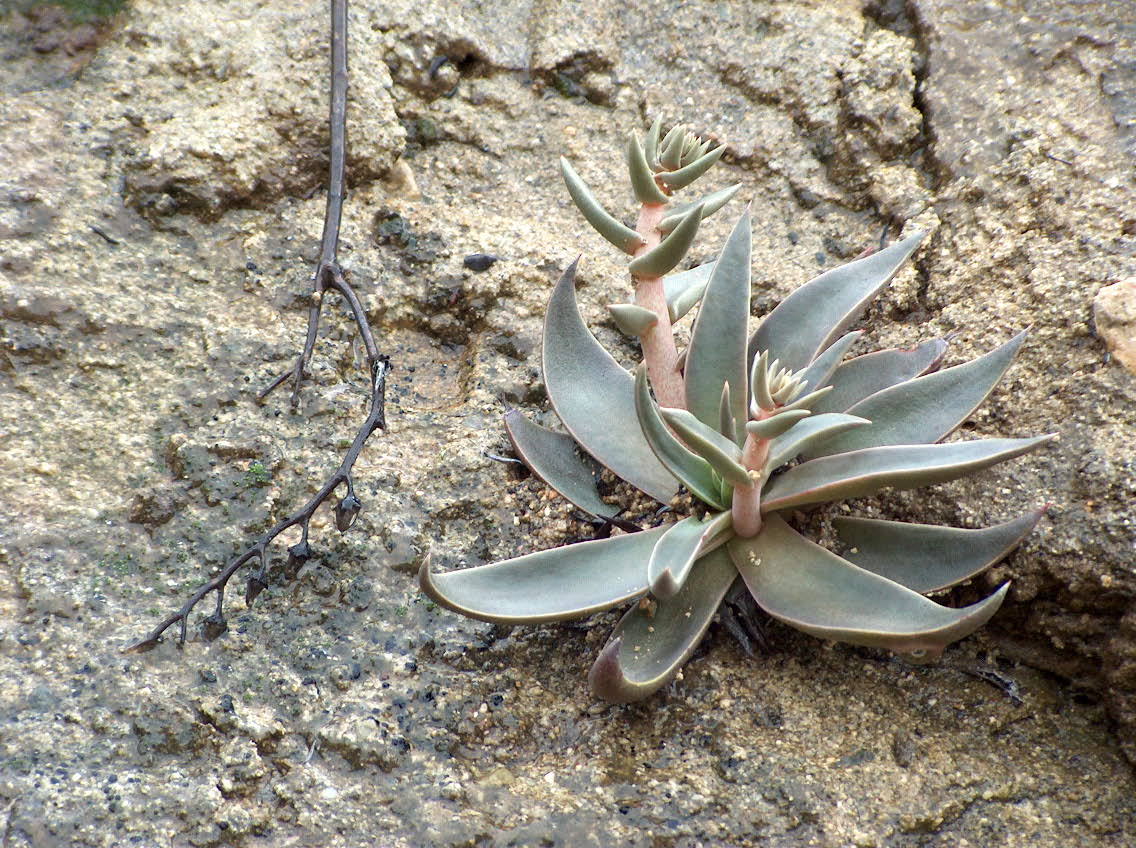
Unlike the broad, flattened leaves of chalk liveforever or the rounder forms seen in many other Dudleya, lanceleaf liveforever’s leaves are narrow, pointed, and often gently curved upward or outward from the rosette center, giving the plant a more open, spiky silhouette. In late spring the rosette sends up branched flowering stalks topped with one of the most vividly colored blooms among California’s native succulents: tubular red-orange flowers with bright yellow petal tips that practically glow against gray rock.
Lanceleaf liveforever is an excellent choice for California rock gardens and dry, well-drained slopes, valued both for its sculptural foliage and its unusually vivid flower color. As with all native Dudleya, wild populations face pressure from illegal succulent poaching, so plant only nursery-propagated stock and never collect from habitat.
Identification
Lanceleaf liveforever is distinguished from other California Dudleya primarily by its narrow, lance-shaped leaf form and its striking red-orange and yellow flower coloring.
Leaves & Rosette
The rosette is composed of 15 to 30 narrow, pointed, lance-shaped leaves, typically blue-green to gray-green, often with a light dusting of farina and sometimes flushed reddish at the tips or margins under stress. Leaves commonly curve gently outward or upward rather than lying flat, giving the rosette a more three-dimensional, spiky appearance than the flatter rosettes of chalk or bluff liveforever. Mature rosettes reach about 4 to 8 inches across, often growing singly or in loose small clusters rather than the dense mats typical of some related species.
Flowers
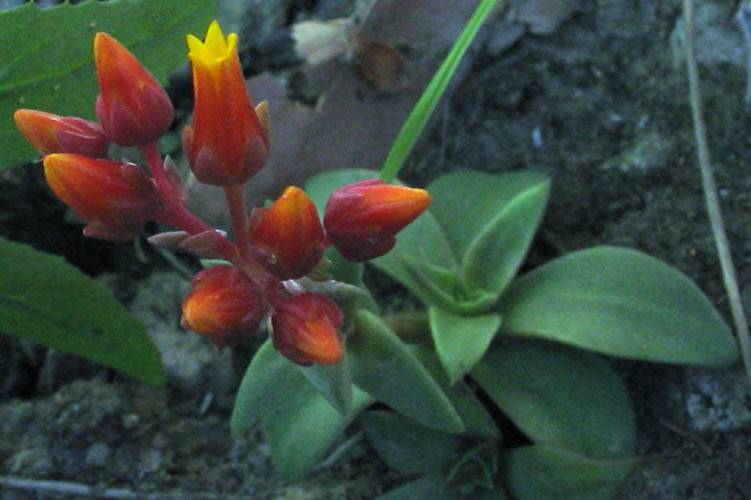
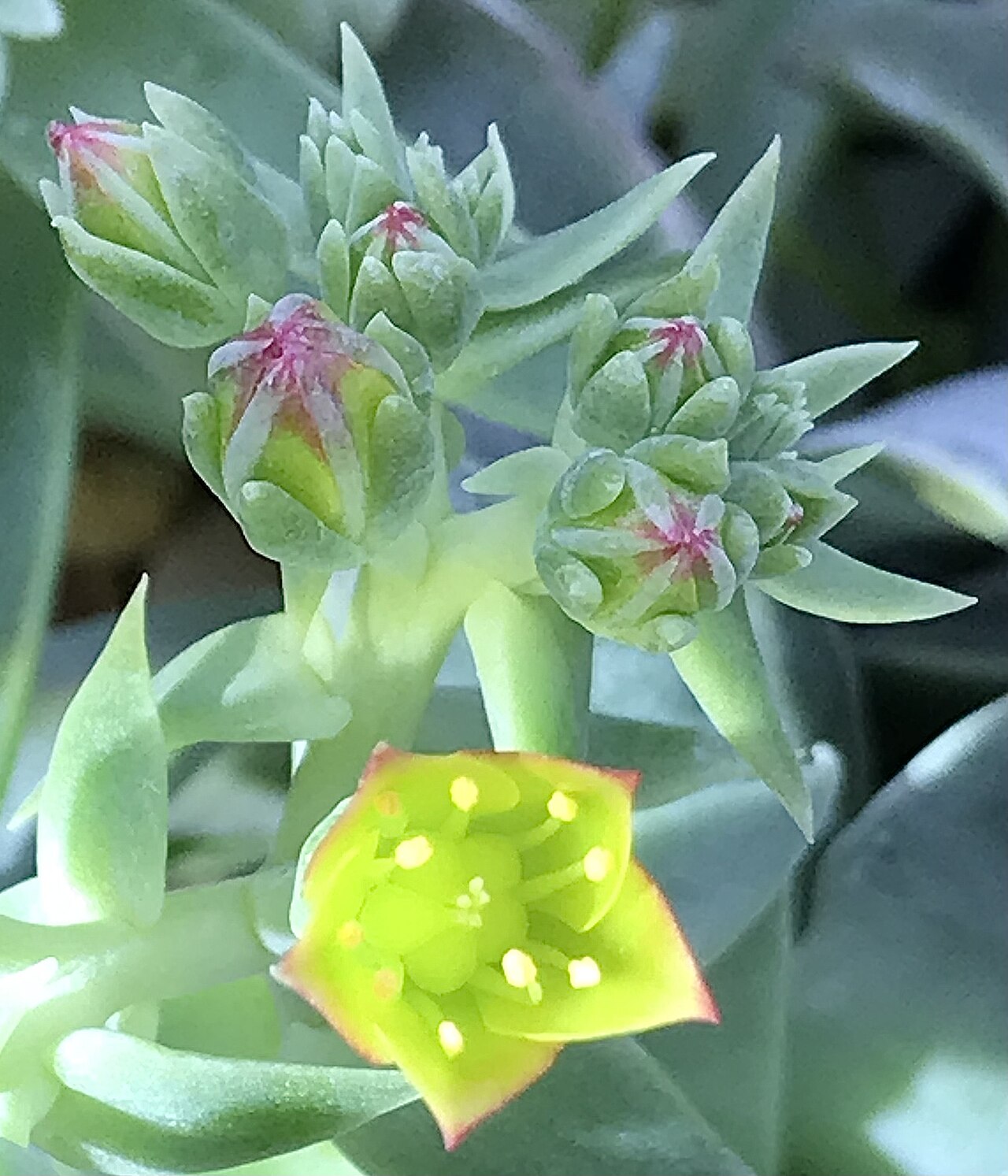
From April through June, one or more branched flowering stalks rise 6 to 18 inches from the rosette, often tinged reddish along their length. The tubular, bell-shaped flowers are a vivid combination of red-orange at the base and bright yellow at the petal tips — among the most colorful blooms of any California Dudleya — and are held in loosely branched clusters that make the plant conspicuous from a distance when in full bloom.
Fruit & Seeds
After flowering, each flower develops into a small cluster of dry, beaked follicles that split open to scatter fine, dust-like seed onto nearby rock. Rosettes are long-lived perennials that persist for years in a favorable crevice, slowly forming small colonies through both seed dispersal and occasional offsets.
Quick Facts
| Scientific Name | Dudleya lanceolata |
| Family | Crassulaceae (Stonecrop) |
| Plant Type | Evergreen Succulent Perennial |
| Mature Height | Rosette 3–6 in; flower stalks 6–18 in |
| Mature Spread | 4–8 in |
| Growth Rate | Slow |
| Sun Exposure | Full Sun to Part Shade |
| Water Needs | Very low; summer-dry, winter-wet |
| Soil Type | Rock crevices, lean and sharply drained |
| Soil pH | 6.0–7.5 |
| Bloom Time | April – June |
| Flower Color | Red-orange with yellow petal tips |
| Fall Color | Evergreen; leaves may flush reddish |
| Fruit | Small dry beaked follicles |
| Deer Resistant | Yes |
| USDA Hardiness Zones | 9–11 |
Native Range
Lanceleaf liveforever is native to California, found from the Central Coast Ranges south through the Transverse Ranges and Peninsular Ranges into San Diego County, with its core distribution centered on the mountains and foothills surrounding the Los Angeles Basin and extending along much of the southern and central California coast and nearby interior ranges.
Within this range, it typically grows in rocky outcrops, canyon walls, road cuts, and well-drained rocky slopes within coastal sage scrub, chaparral, and oak woodland plant communities, usually from near sea level up to around 5,000 feet. It is often found on north-facing or partially shaded rock faces that retain slightly more moisture than fully exposed south-facing slopes, though it also grows on sunnier aspects given adequate winter rainfall.
Lanceleaf liveforever does not occur in the wild outside California. Like other Dudleya, individual populations can be locally distinct, and gardeners should avoid transplanting wild material between distant parts of the range.
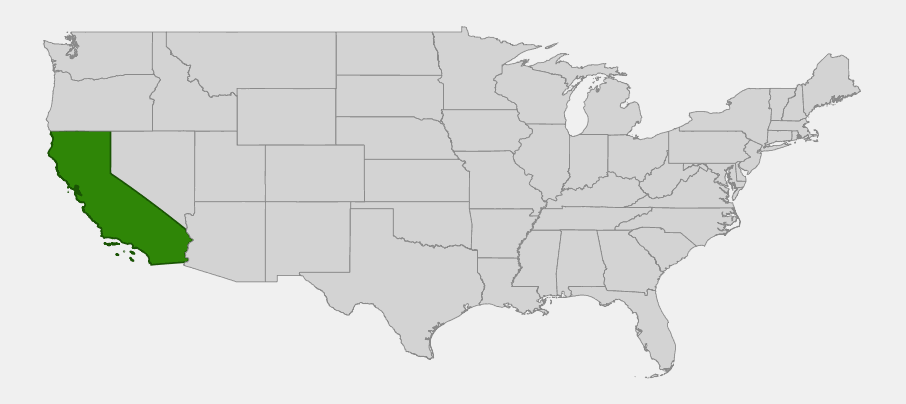
📋 Regional plant lists featuring Lanceleaf Liveforever: California & Nevada
Growing & Care Guide
Lanceleaf liveforever follows the same essential care rules as its California relatives: excellent drainage and a strict dry summer rest, with its narrow, upright leaf form and bright flowers rewarding gardeners with one of the showier native rock succulents.
Light
Full sun to part shade works well, with light shade helpful in hotter inland gardens to prevent leaf scorch. In its wild canyon and rock-face habitat it often grows in partially shaded niches, so dappled light in cultivation is well tolerated.
Soil & Water
Sharp drainage is essential. Lanceleaf liveforever roots in narrow rock crevices with minimal retained moisture in the wild and is highly prone to crown and root rot in heavy or slow-draining soil. Water during the cool winter rainy season and withhold water almost entirely through the summer dry season once plants are established. A gritty, mineral-rich succulent mix suits container culture well.
Planting Tips
Plant small nursery-grown rosettes in fall into rock crevices, a raised scree bed, or well-drained containers. Keep the crown slightly elevated above the soil surface to avoid moisture collecting against the base. Because wild Dudleya populations are vulnerable to illegal collection, buy only nursery-propagated plants.
Pruning & Maintenance
Minimal care is required. Remove spent flower stalks after seed set if a tidier look is preferred, and keep accumulated leaf litter away from the crown. Watch for mealybugs in the leaf axils on container-grown specimens.
Landscape Uses
Lanceleaf liveforever’s vivid flowers and spiky form suit several garden settings:
- Rock gardens and crevice plantings with sharp drainage
- Dry slope and canyon-style plantings paired with chaparral natives
- Container and trough culture in fast-draining succulent mix
- Pollinator gardens that benefit from its vivid spring color
- Retaining walls and rock outcrop features
Wildlife & Ecological Value
Lanceleaf liveforever’s unusually vivid flower color makes it a particularly attractive nectar source among California’s rock-dwelling succulents.
For Pollinators
The tubular red-orange and yellow flowers are well suited to hummingbird pollination and are frequently visited by them, along with native bees and butterflies drawn to the bright color and nectar reward during the spring bloom period.
For Birds & Mammals
Beyond hummingbird foraging on the flowers, lanceleaf liveforever offers limited direct food value to larger wildlife, but the rocky canyon and outcrop habitats it occupies commonly shelter lizards and small mammals that use the same crevices for cover.
Ecosystem Role
As with other California Dudleya, lanceleaf liveforever colonizes bare rock surfaces that few other plants can use, adding a reliable, highly visible source of spring nectar to canyon walls and outcrops within chaparral and coastal sage scrub communities.
Cultural & Historical Uses
Indigenous peoples across lanceleaf liveforever’s range in central and southern California, including Chumash and Tongva communities, were familiar with the diverse Dudleya species found on the region’s rocky canyon walls and outcrops, though — as with most Dudleya — it was not documented as a major food or material plant compared to more abundant regional resources such as acorns or yucca.
The species gained the alternate common name “desert savior” through horticultural circulation, though this is something of a misnomer since the plant is primarily a rock-crevice specialist of chaparral and coastal sage scrub rather than true desert habitat. Among succulent and native-plant gardeners, lanceleaf liveforever has long been prized for producing some of the most vividly colored flowers of any California Dudleya, a trait that continues to draw interest from rock-garden enthusiasts and native-plant landscapers alike.
Frequently Asked Questions
Why is lanceleaf liveforever also called “desert savior”?
This common name is a long-standing horticultural nickname rather than an accurate habitat description — the species actually grows in rocky chaparral and coastal sage scrub, not true desert.
How is lanceleaf liveforever different from other Dudleya?
Its narrow, lance-shaped, often upward-curving leaves and vivid red-orange, yellow-tipped flowers distinguish it from broader-leaved species like chalk liveforever and from the generally smaller, more variable canyon liveforever.
Can I collect lanceleaf liveforever from the wild?
No. Wild Dudleya populations across California, including this species, have been targeted by illegal poaching for the succulent trade. Always buy nursery-propagated plants.
How much water does lanceleaf liveforever need?
Very little, and only during the cool season. It follows a strict winter-wet, summer-dry cycle and is highly prone to rot if watered during summer dormancy.
Will lanceleaf liveforever attract hummingbirds?
Yes. Its tubular red-orange and yellow flowers are well adapted to hummingbird pollination and are a reliable draw for them during the spring bloom period.

Looking for a nursery that carries Lanceleaf Liveforever?
Browse our native plant nursery directory: California