Indian Rhubarb (Darmera peltata)
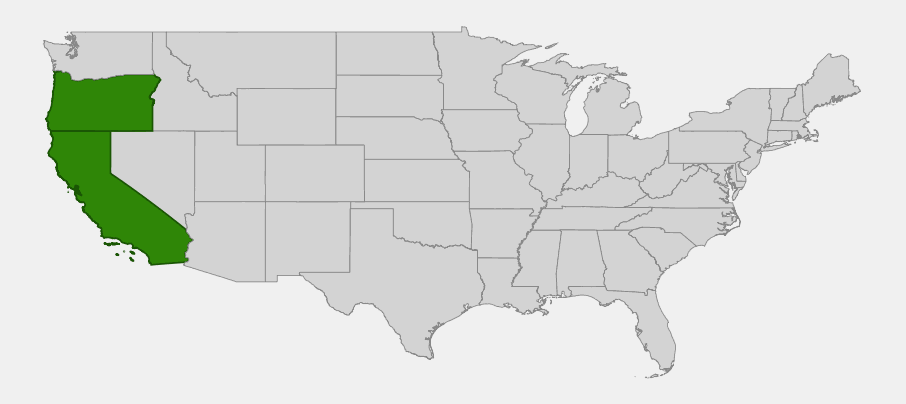
Darmera peltata (syn. Peltiphyllum peltatum), commonly called Indian rhubarb or umbrella plant, is a rhizomatous perennial in the saxifrage family (Saxifragaceae) found along the rocky streams of the Klamath-Siskiyou Mountains in southwestern Oregon and northern California, with scattered outlying populations in the central Sierra Nevada. It is one of the most distinctive native plants of the region: a single species genus found nowhere else in the world, adapted specifically to the boulder-strewn, seasonally flooded banks of fast mountain streams.
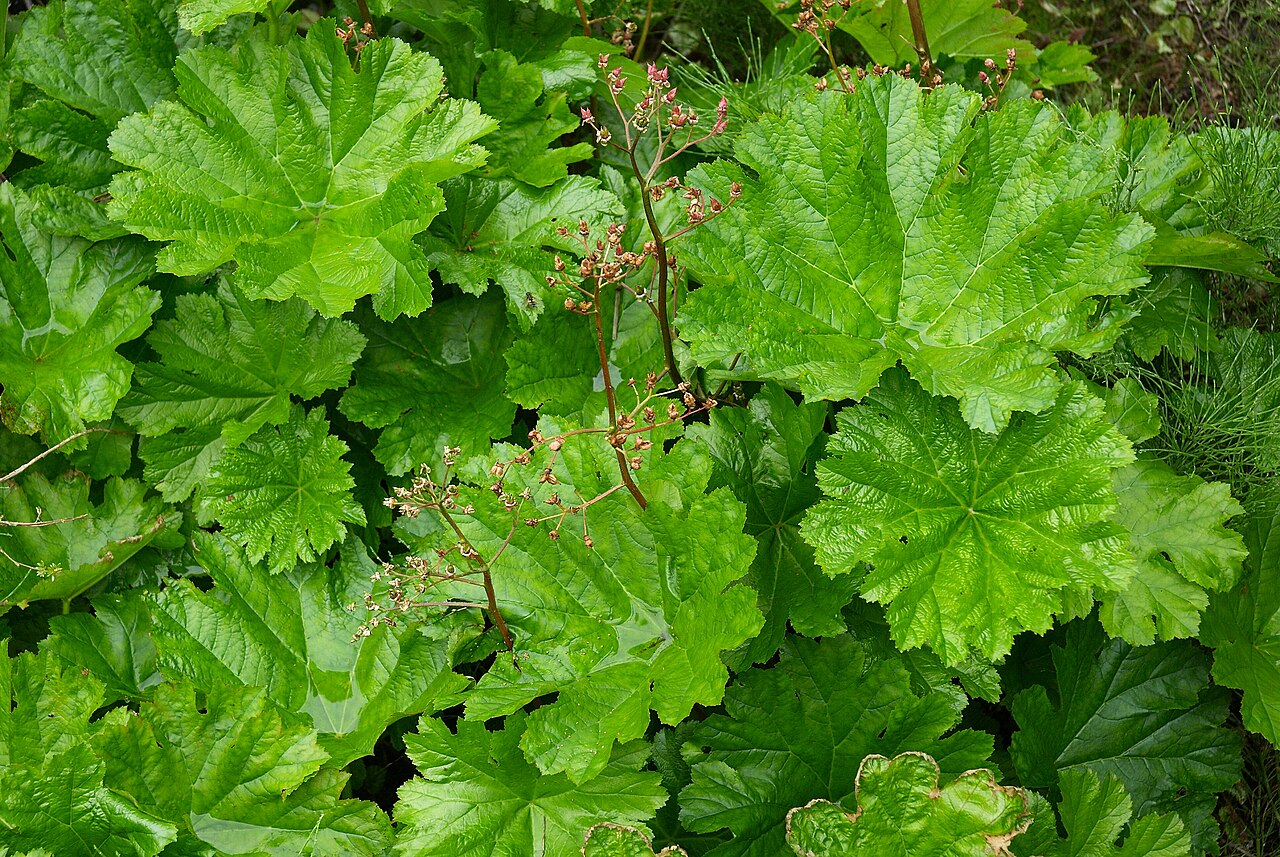
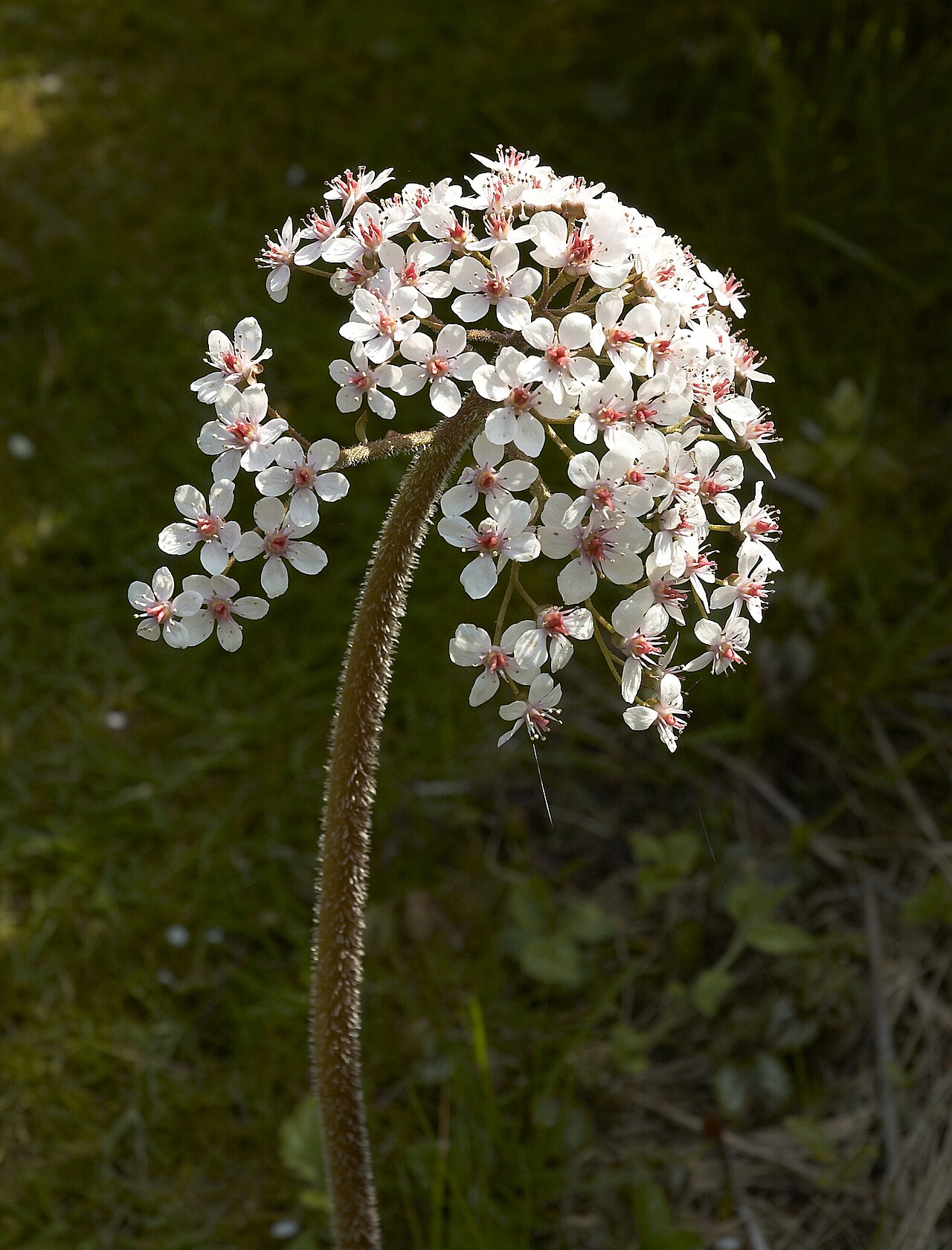
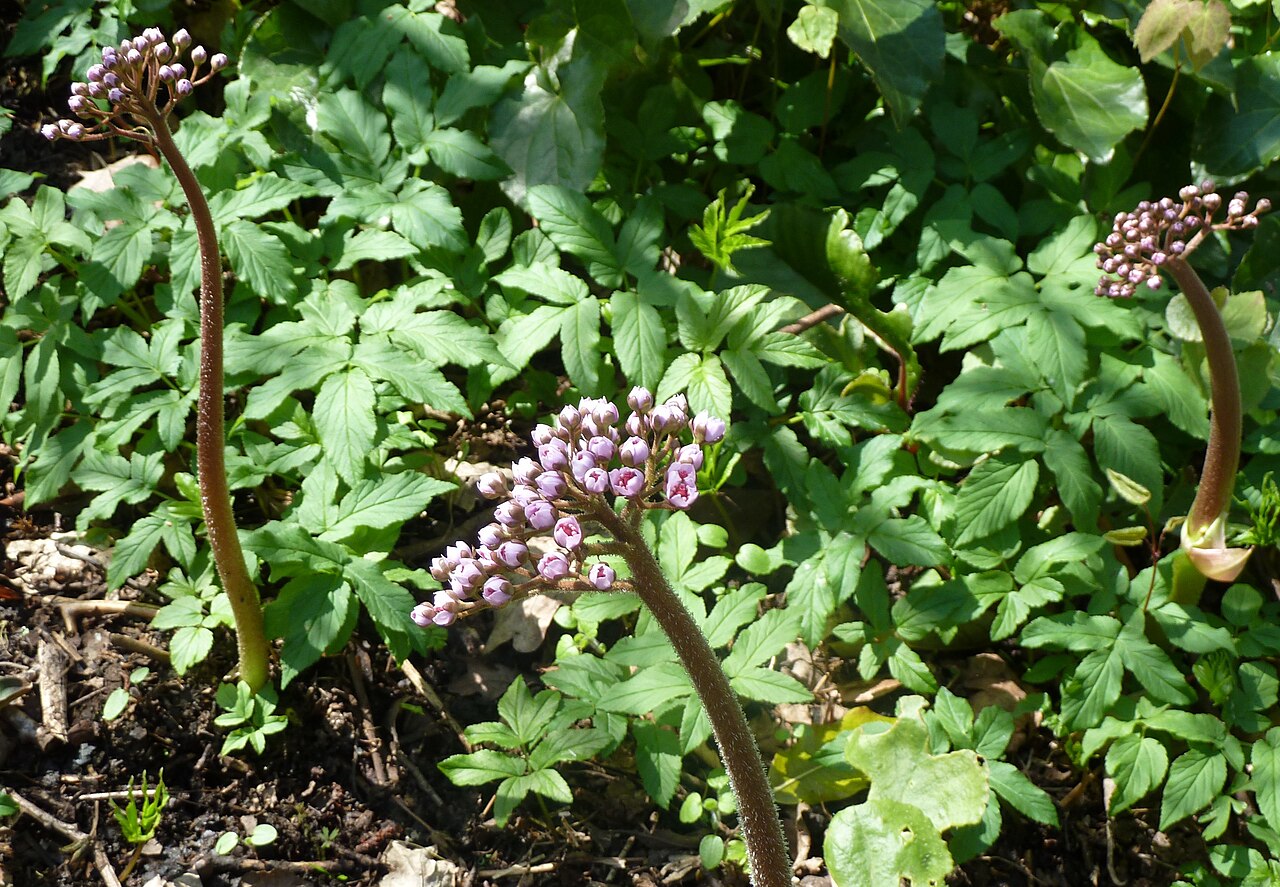
In early spring, bare flower stalks push up through gravel bars before a single leaf has appeared, each topped with a rounded cluster of small white-to-pink, star-shaped flowers on a hairy, reddish stem. By late spring the true spectacle arrives: enormous round leaves, 12 to 24 inches across, unfurl on tall separate stalks attached dead-center to the leaf blade (a peltate arrangement, like a tiny umbrella) rather than at the leaf’s edge. Dense colonies of these leaves can carpet a streambank for yards, giving the plant its other common name.
Indian rhubarb is not related to true rhubarb (Rheum) and its leaves are not a food crop, but it is a superb garden plant for anyone with a pond edge, stream, or consistently damp shaded bed in USDA zones 5 through 9. In the garden it is prized for its bold, tropical-looking foliage, striking spring flowers, and brilliant bronze-to-crimson fall color — qualities that make it a favorite in both native-plant and ornamental water gardens far outside its native Pacific Coast range, where it is grown but not naturalized.
Identification
Indian rhubarb is unmistakable where it grows wild: no other native plant along Klamath-Siskiyou streams produces leaves of this size and shape.
Leaves
The basal leaves are the plant’s signature feature — nearly round, 12 to 24 inches (30–60 cm) across, with 9 to 15 shallow, toothed lobes radiating from the center like spokes. The leaf stalk (petiole) attaches to the underside of the blade rather than its margin, a peltate arrangement shared by only a handful of other plants. Leaves emerge bright green in late spring well after the flowers, rising on stout stalks 1 to 3 feet tall directly from a thick, woody, creeping rhizome that often runs along and anchors itself among streamside boulders. In fall, the foliage turns a deep bronze, orange, or crimson red before dying back for winter, and the rhizome survives being periodically submerged by winter flood flows.
Flowers
Flower stalks appear before the leaves, in March or April, rising 2 to 6 feet tall on thick, reddish, glandular-hairy stems. Each stalk ends in a rounded, umbel-like cyme of 10 to 50 small flowers, each about ½ inch across with five white to deep pink petals and prominent red-tipped stamens. The clustered inflorescence has been described as looking almost coral-like against the bare early-spring gravel bars.
Fruit & Seeds
After flowering, each flower develops into a pair of small beaked follicles (dry, splitting pods) that ripen reddish-brown and release numerous tiny seeds by midsummer. The rhizome spreads at least as effectively as seed, so established colonies expand mainly by vegetative growth, slowly knitting together to stabilize gravel and cobble streambanks.
Quick Facts
| Scientific Name | Darmera peltata (syn. Peltiphyllum peltatum) |
| Family | Saxifragaceae (Saxifrage) |
| Plant Type | Rhizomatous Herbaceous Perennial |
| Mature Height | 2–6 ft in flower; leaves 1–3 ft |
| Mature Spread | 3–6 ft, spreading by rhizome |
| Growth Rate | Moderate to fast with consistent moisture |
| Sun Exposure | Part Shade to Full Shade (full sun only with constant water) |
| Water Needs | High; streamside/boggy |
| Soil Type | Rocky, gravelly or loamy; tolerates poor drainage |
| Soil pH | 5.5–7.0 (slightly acidic to neutral) |
| Bloom Time | March – April, before leaves emerge |
| Flower Color | White to pink |
| Fall Color | Bronze, orange to crimson red |
| Fruit | Small paired beaked follicles (dry pods) |
| Deer Resistant | Moderate (occasionally browsed) |
| USDA Hardiness Zones | 5–9 |
Native Range
Indian rhubarb’s wild range is narrow and specific: it is centered on the Klamath-Siskiyou Mountains, where it grows along fast, rocky streams from southwestern Oregon’s Curry and Josephine counties south through Del Norte, Siskiyou, Humboldt, Trinity, and neighboring northern California counties. A separate, smaller set of populations occurs well to the south and east, scattered along streams in the central Sierra Nevada foothills and mid-elevation canyons. Outside of these two core areas it does not occur in the wild in North America, though it is cultivated as an ornamental pond-edge plant across much of the temperate United States, Canada, and Europe, where it does not spread beyond plantings.
Throughout its range, Indian rhubarb is a true streambank specialist. It roots directly into cracks and crevices among boulders and cobbles in the active channel or on gravel bars that flood every winter, a habitat few other herbaceous perennials can tolerate. The thick rhizomes anchor the plant against scouring flows, and the same flooding that would kill most garden perennials is part of its natural cycle. It is typically found in full to partial shade beneath canyon live oak, Douglas-fir, or mixed evergreen forest canopy at low to mid elevations in the mountains.
Because its habitat is so specific — cold, fast, rocky, perennial mountain streams — Indian rhubarb is uncommon outside the Klamath-Siskiyou and Sierra Nevada drainages and has not become naturalized as a wild plant elsewhere in North America despite its popularity in cultivation. Gardeners outside its native range should treat it strictly as a garden ornamental rather than a restoration species.
📋 Regional plant lists featuring Indian Rhubarb: California & Nevada · Western Oregon & Western Washington
Growing & Care Guide
Indian rhubarb is easy to grow given one non-negotiable requirement: it needs reliably moist to wet soil. Give it a pond edge, stream bank, bog garden, or consistently irrigated shade bed and it will reward you with bold architectural foliage and little other fuss.
Light
Part shade to full shade suits it best, mimicking the forest-edge canyons where it grows wild. It can tolerate more sun, even nearly full sun in cooler coastal gardens, but only with constant soil moisture; in hot inland gardens, strong afternoon sun will scorch the broad leaves unless the roots stay wet.
Soil & Water
This is fundamentally a bog and streamside plant. It wants soil that is constantly moist to saturated and tolerates brief standing water or seasonal flooding without harm — a trait almost no other ornamental perennial shares. It is not drought tolerant and will wilt and brown quickly if the soil dries out, even for a few days in summer. Rich, gravelly or loamy soil with a slightly acidic to neutral pH suits it well; good aeration in the root zone matters more than fertility.
Planting Tips
Plant rhizome divisions or container stock in fall or early spring directly at a pond margin, streambank, or the low point of a rain garden. Space divisions 2 to 3 feet apart, since the rhizomes will knit together into a solid colony within a few seasons. Mulch helps retain moisture while plants establish, though established colonies at a true water’s edge need none.
Pruning & Maintenance
Cut back tattered or frost-damaged foliage in late winter before new flower stalks emerge. Established clumps need little other care; divide overcrowded rhizomes every few years in early spring if the colony has outgrown its space. Watch for slug and snail damage on the tender new leaves in wet shade gardens.
Landscape Uses
Indian rhubarb earns its keep in several garden settings:
- Pond and stream margins, where its spreading rhizomes help stabilize banks
- Bog and rain gardens that stay consistently wet
- Bold architectural foliage accent in shaded woodland gardens
- Erosion control on damp, rocky slopes within its native range
- Fall color feature for its reliable bronze-to-red autumn foliage
- Wildlife and pollinator gardens near water features
Wildlife & Ecological Value
Indian rhubarb plays an outsized ecological role for a single-species genus confined to a small range, stabilizing the very streambanks where it grows and supporting early-season pollinators when few other flowers are available.
For Pollinators
The early, exposed flower clusters are an important nectar source for native bees and flies emerging in late winter and early spring, well before most other streamside plants bloom. Because the flowers open on bare stalks before leaves obscure them, they are especially visible and accessible to foraging insects.
For Birds & Mammals
The dense leaf canopy that develops by early summer provides cover for small streamside wildlife, including amphibians and ground-foraging birds, while the extensive rhizome mats offer additional bank stability that benefits fish habitat by reducing sediment input into cold mountain streams.
Ecosystem Role
Few plants are as well adapted as Indian rhubarb to anchoring loose cobble and gravel bars against the force of winter flood flows. Its thick, woody rhizomes bind streambank substrate in place, reducing erosion and helping maintain the complex, rocky channel structure that native fish and aquatic insects depend on in Klamath-Siskiyou streams.
Cultural & Historical Uses
Indigenous peoples of the Klamath-Siskiyou region, including the Karuk, Yurok, and neighboring groups, have long been familiar with Indian rhubarb along the rivers and creeks that are central to their traditional territories, though it was not a primary food or material plant the way true rhubarb or many other riverside species were. The common name “Indian rhubarb” reflects an early settler-era association with the unrelated garden rhubarb (Rheum) based on superficial leaf resemblance rather than any documented traditional use as food.
The plant was formally described to Western science in the mid-1800s and was quickly recognized by botanists and horticulturists for its striking, outsized foliage. By the late 19th century it had entered cultivation in British and European gardens as an exotic curiosity from the American West, and it remains a staple of bog and water gardens internationally today, valued for the same bold texture that distinguishes it on its native streambanks.
Because Darmera is a monotypic genus — this is the only species — Indian rhubarb also holds a notable place in botanical history as an example of a highly localized California Floristic Province endemic that has become a widely grown garden plant far from its narrow natural range.
Frequently Asked Questions
Can you eat Indian rhubarb?
No. Despite the common name, Indian rhubarb is not related to true rhubarb and is not a food plant. It is grown strictly as an ornamental.
Why do the flowers appear before the leaves?
Flowering before leaf-out lets Indian rhubarb bloom and get pollinated while streambanks are still open and sunlit in early spring, before the plant commits energy to producing its large leaves later in the season.
Will Indian rhubarb survive without a pond or stream?
Only with dedicated irrigation. It needs consistently moist to wet soil and will struggle or die back in an average dry garden bed. It is best suited to a true bog garden, pond margin, or heavily irrigated shade bed.
Is Indian rhubarb invasive?
No. Outside its native Klamath-Siskiyou and Sierra Nevada range, it is widely cultivated as an ornamental but has not been documented naturalizing or spreading into wild habitats elsewhere.
How is Indian rhubarb different from umbrella plant relatives sold at nurseries?
“Umbrella plant” is sometimes used for other unrelated species, including tropical Cyperus sedges. True Indian rhubarb (Darmera peltata) is identified by its peltate, shield-shaped leaves on a thick creeping rhizome and its bare, pink-flowered stalks that emerge before any foliage.

Looking for a nursery that carries Indian Rhubarb?
Browse our native plant nursery directory: California · Oregon