Narrowleaf Onion (Allium amplectens)
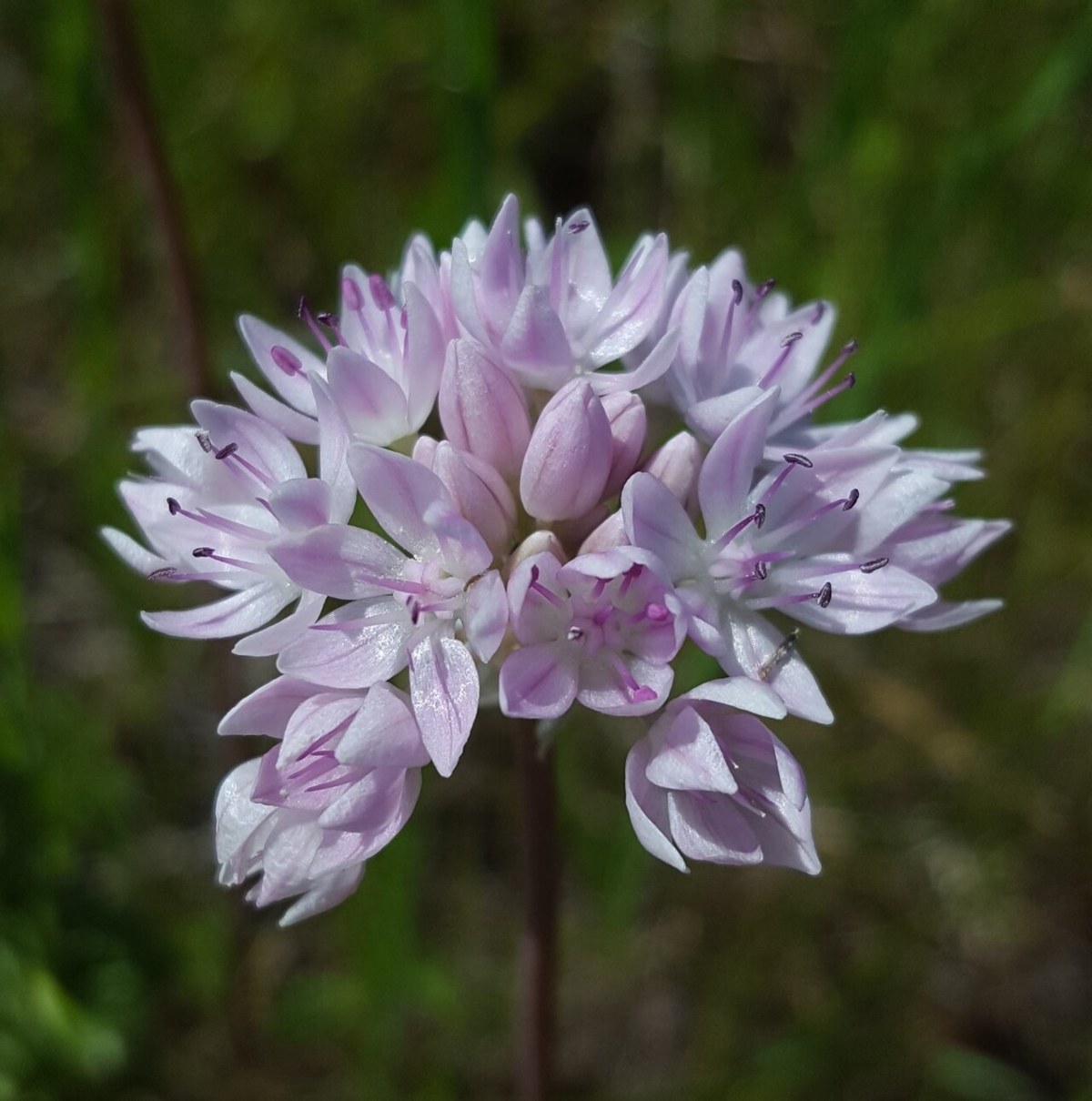
Allium amplectens, commonly known as narrowleaf onion, is a small, spring-blooming native bulb of the west coast of North America. A member of the Amaryllidaceae (onion family, formerly Alliaceae), it grows from a slender, pinkish-brown bulb and sends up one or two narrow, grass-like leaves followed by a single leafless flowering stem topped with a tidy ball-shaped cluster of white to pale pink flowers. It is widespread in California’s Coast Ranges and Central Valley grasslands, with scattered populations north into western Oregon, western Washington, and southern British Columbia.
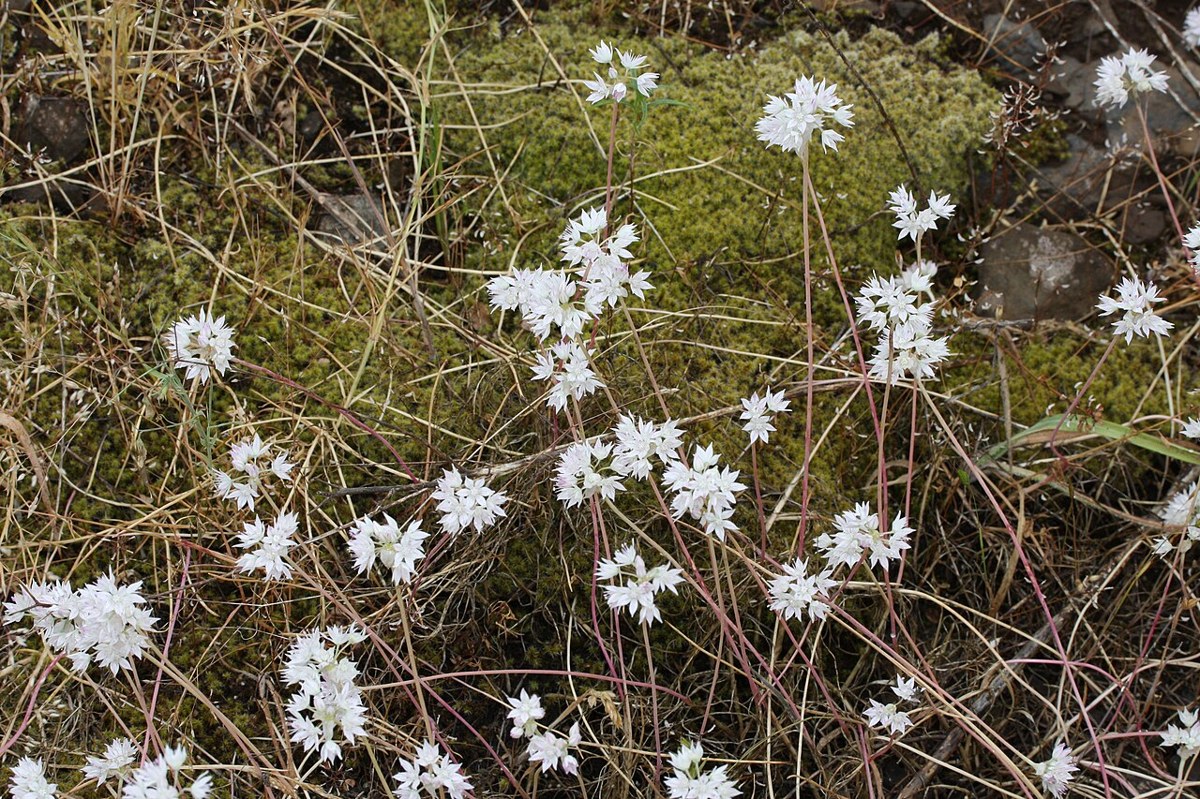
True to its common name, narrowleaf onion has notably slender leaves — usually just one or two per bulb — that wither away by the time the flowers open, a typical strategy among California’s spring-blooming geophytes that avoids wasting resources on foliage through the dry summer. The flower cluster is a loose umbel, 1 to 2 inches across, made up of a dozen or more small, bell-shaped flowers that range from pure white to a soft pink, often with a darker pink midvein on each petal.
Narrowleaf onion favors heavy clay soils, vernal swales, and serpentine or other mineral-rich substrates that stay damp in winter and spring and bake dry by summer — conditions shared with many Pacific Coast wildflower specialists. For gardeners within its native range, it is a charming, low-care addition to a dry summer bulb garden or native meadow planting, disappearing cleanly underground once its brief season is over.
Identification
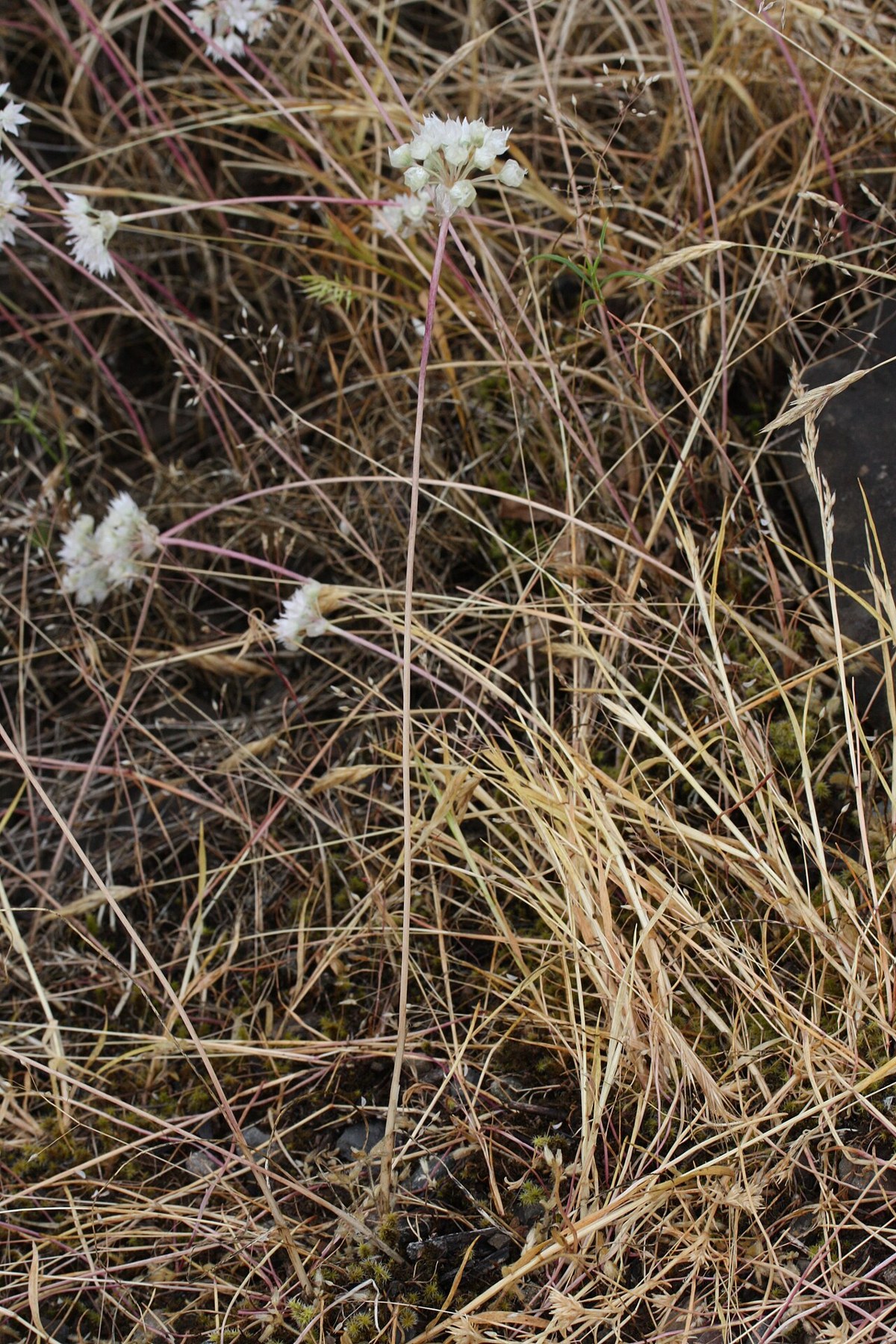
Narrowleaf onion is a bulb-forming perennial herb, typically 4 to 16 inches tall when in flower. Like other true onions, it has an oniony or garlicky smell when the leaves or bulb are crushed, which is a reliable way to distinguish it from non-onion look-alikes in the lily and brodiaea families.
Bulb & Leaves
The bulb is small, ovoid, and covered in thin, pinkish-brown to gray fibrous coats. Each bulb produces one or occasionally two very narrow, channeled or flat leaves that emerge in late winter, elongate through early spring, and typically wither before or soon after the flowers fully open — a drought-avoidance habit typical of California’s native bulbs.
Flowers
The flowering stem (scape) is slender, leafless, and rises 4 to 16 inches above the ground, ending in a rounded umbel of 10 to 35 small flowers. Each flower has six tepals, white to pale pink with a darker pink or rose midstripe, giving the cluster an overall soft pink-and-white appearance. Bloom occurs from April through June depending on elevation and site conditions.
Fruit & Seeds
After flowering, the plant produces a small three-lobed capsule containing black, angular seeds. The papery flower parts often persist around the maturing capsule. Like many spring bulbs, narrowleaf onion goes fully dormant below ground through the dry summer and fall, re-emerging with the first soaking rains of the following winter.
Quick Facts
| Scientific Name | Allium amplectens |
| Family | Amaryllidaceae (Onion) |
| Plant Type | Perennial Bulb |
| Mature Height | 4–16 in in flower |
| Mature Spread | 2–4 in per bulb |
| Growth Rate | Slow (bulb offsets and seed) |
| Sun Exposure | Full Sun to Part Shade |
| Water Needs | Low (winter-spring moisture, dry summer dormancy) |
| Soil Type | Clay, serpentine, or other mineral-rich soils |
| Soil pH | 6.0–7.5 |
| Bloom Time | April – June |
| Flower Color | White to pale pink |
| Fall Color | Not applicable (summer dormant) |
| Fruit | Small three-lobed capsule with black seeds |
| Deer Resistant | Yes |
| USDA Hardiness Zones | 7–9 |
Native Range
Narrowleaf onion is native to the Pacific Coast of North America, from southern British Columbia south through western Washington and western Oregon into California, where it is most abundant and widespread in the Coast Ranges, Central Valley, and Sierra Nevada foothills. County-level records place it on both sides of the Cascades crest in the Pacific Northwest portion of its range mainly in the lowland valleys west of the mountains.
It grows in open grassland, oak woodland, and vernally moist flats and swales, often on heavy clay or on serpentine and other unusual mineral soils that exclude many competing grasses. These sites are wet in winter and early spring, when the bulb is actively growing and flowering, and dry out completely by summer, which the plant tolerates by retreating underground.
Narrowleaf onion is not native east of the Cascade-Sierra crest, in the Great Basin, or in the Rocky Mountains, and gardeners outside its Pacific Coast range should choose a locally native onion species instead.
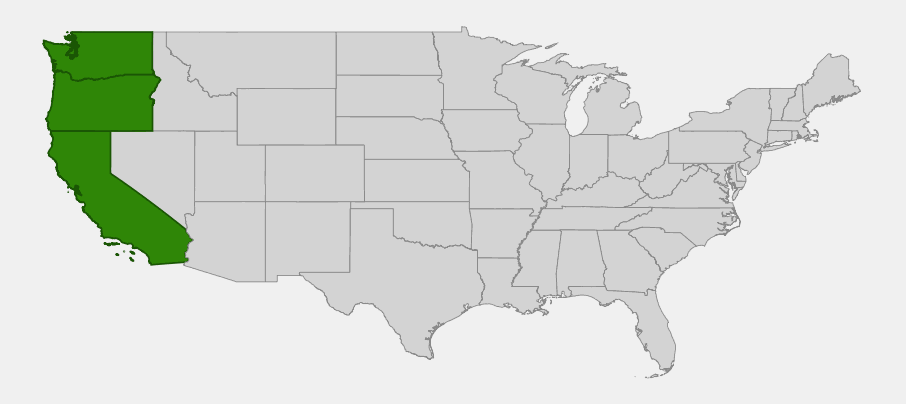
📋 Regional plant lists featuring narrowleaf onion: California & Nevada · Western Oregon & Western Washington
Growing & Care Guide
Narrowleaf onion rewards gardeners who can replicate its natural winter-wet, summer-dry rhythm. It is best suited to a dedicated bulb bed, rock garden, or dry meadow planting where summer irrigation is limited.
Light
Full sun produces the most flowers, though narrowleaf onion also grows well under the dappled light of open oak woodland, which mimics part of its natural habitat.
Soil & Water
Plant in clay, loam, or other soils that hold winter moisture but drain and dry out by summer. Water during the fall-to-spring growing season if rainfall is sparse, then withhold water completely once the foliage yellows, allowing the bulb to rest dry through summer dormancy. Soils that stay moist year-round encourage bulb rot.
Planting Tips
Plant dormant bulbs in fall, 2 to 3 inches deep and 2 to 4 inches apart, so they can root ahead of winter rains. Narrowleaf onion naturalizes well in a meadow setting among other dry-summer natives; mark planting locations since the foliage disappears completely by midsummer.
Pruning & Maintenance
No pruning is needed. Allow foliage to yellow and die back naturally after bloom before removing it, since the bulb is still drawing down energy from the leaves. Established clumps need no fertilizer and resent heavy, rich garden soil.
Propagation
Propagate by seed sown in fall, which germinates with winter rains, or by separating small bulb offsets when plants are dormant in summer. Seed-grown plants typically take two to three years to reach flowering size.
Landscape Uses
- Dry summer bulb gardens paired with other California and Pacific Northwest geophytes
- Native grassland and meadow restoration
- Rock gardens with sharp winter drainage and summer dryness
- Oak woodland underplanting in naturalistic gardens
- Vernal swale plantings on heavy clay sites
Wildlife & Ecological Value
Narrowleaf onion contributes nectar and pollen during a key early-season window in California and Pacific Northwest grasslands, before many summer-blooming wildflowers appear.
For Pollinators
The flowers attract small native bees, syrphid flies, and other short-tongued pollinators seeking early-spring nectar and pollen. Its bloom period overlaps with other spring geophytes, adding to the diversity of flowering resources available to pollinators in grassland habitats.
For Birds
Seed-eating birds forage on the capsules once they ripen and split open in early summer, though narrowleaf onion is a minor rather than a primary food source compared to grasses and larger-seeded forbs in the same habitat.
For Mammals
Like most true onions, narrowleaf onion’s pungent, sulfur-compound-rich bulb and foliage are generally avoided by deer, rabbits, and rodents, which makes it a useful, browse-resistant component of restoration seed mixes in areas with heavy grazing pressure.
Ecosystem Role
As a small geophyte adapted to the wet-winter, dry-summer cycle of Mediterranean-climate grasslands, narrowleaf onion is part of a guild of native bulbs that fill a niche unavailable to many perennial grasses and forbs, contributing to the layered diversity of intact native grassland and oak woodland plant communities.
Cultural & Historical Uses
Wild onions in the genus Allium, including species like narrowleaf onion, were gathered and eaten by Indigenous peoples across much of western North America as a seasonal green and bulb vegetable, often alongside other spring-emerging geophytes. Historical accounts of regional food use generally describe wild onions collectively rather than singling out narrowleaf onion specifically, since many similar-looking species were used interchangeably where they co-occurred.
Botanically, narrowleaf onion has long served as an indicator species for California botanists and land managers identifying intact native grassland and serpentine plant communities, since its presence often signals soils and hydrology that have escaped heavy agricultural disturbance.
Today, narrowleaf onion’s main cultural role is in native plant horticulture and habitat restoration, where its modest size, drought tolerance, and pollinator value make it a popular choice for California native plant gardens and meadow restoration projects.
Frequently Asked Questions
Is narrowleaf onion edible?
Like other true onions, the bulb and foliage are aromatic and historically used as food by Indigenous peoples where it grows. As with any wild plant, positive identification by an experienced forager is essential before eating any wild onion, and over-collecting from wild populations should be avoided.
Why did my narrowleaf onion disappear in summer?
This is normal. Narrowleaf onion is a summer-dormant bulb that dies back completely above ground once the dry season arrives, then re-emerges from the bulb with the return of fall and winter rains.
Does narrowleaf onion need summer water?
No — and too much summer water can rot the dormant bulb. Water during the fall-through-spring growing season and let the soil dry out completely once the foliage yellows.
Will narrowleaf onion spread in my garden?
It spreads slowly, mainly by seed and occasional bulb offsets, rather than aggressively. It is well suited to naturalizing in a meadow setting without becoming weedy.
What soil does narrowleaf onion prefer?
It does best in clay, serpentine, or other mineral soils that hold moisture through winter and spring but dry out by summer; rich, constantly moist garden soil is not a good match.

Looking for a nursery that carries narrowleaf onion?
Browse our native plant nursery directory: California · Oregon · Washington