California Meadow Sedge (Carex pansa)
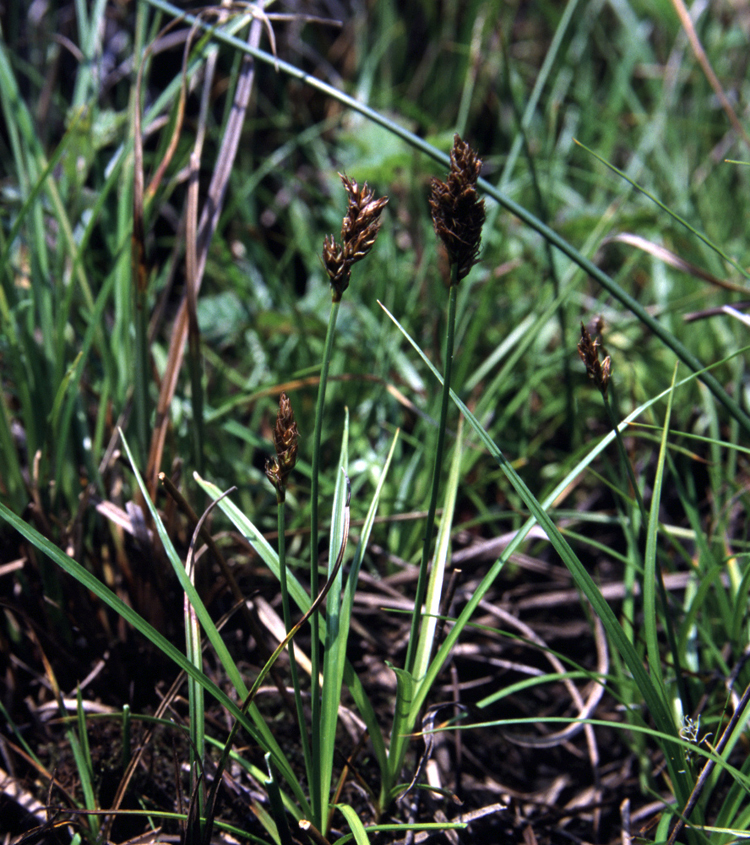
Carex pansa, commonly called California Meadow Sedge or Sand Dune Sedge, is a low, fine-textured, rhizomatous sedge of the Pacific Coast that has become one of the most popular native substitutes for turfgrass lawns in California gardens. In the wild it forms dense, spreading colonies in coastal dunes, bluffs, and open grasslands, knitting together loose sand with a network of underground rhizomes. In cultivation, that same spreading habit produces a soft, walkable, low-mowing (or no-mowing) groundcover that uses a fraction of the water a conventional lawn requires.
California Meadow Sedge occurs along the immediate coast and near-coastal terraces from Washington’s Pacific shoreline south through Oregon and down the length of California, usually within a few miles of salt air. It is extremely well adapted to sandy, well-drained soils, full coastal sun, and the wind that comes with an open dune or bluff-top site, but it also tolerates the fog, mild winters, and mixed sun of coastal gardens inland of the dunes themselves.
Because it spreads steadily by rhizome to form a continuous sod rather than growing in discrete clumps, California Meadow Sedge is increasingly planted as an ecological lawn alternative, a dune-stabilizing groundcover, and a soft green carpet beneath oaks and other drought-tolerant coastal trees where regular turfgrass struggles.
Identification
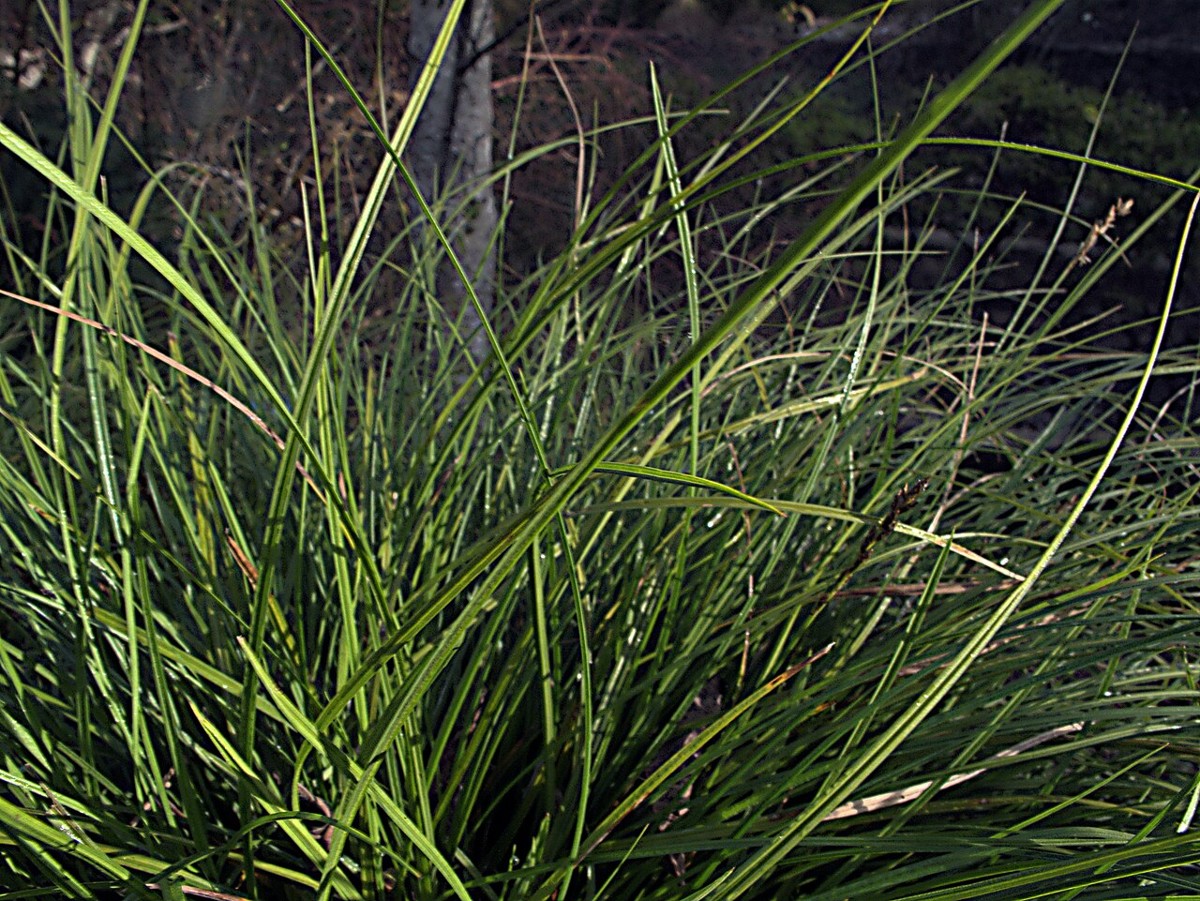
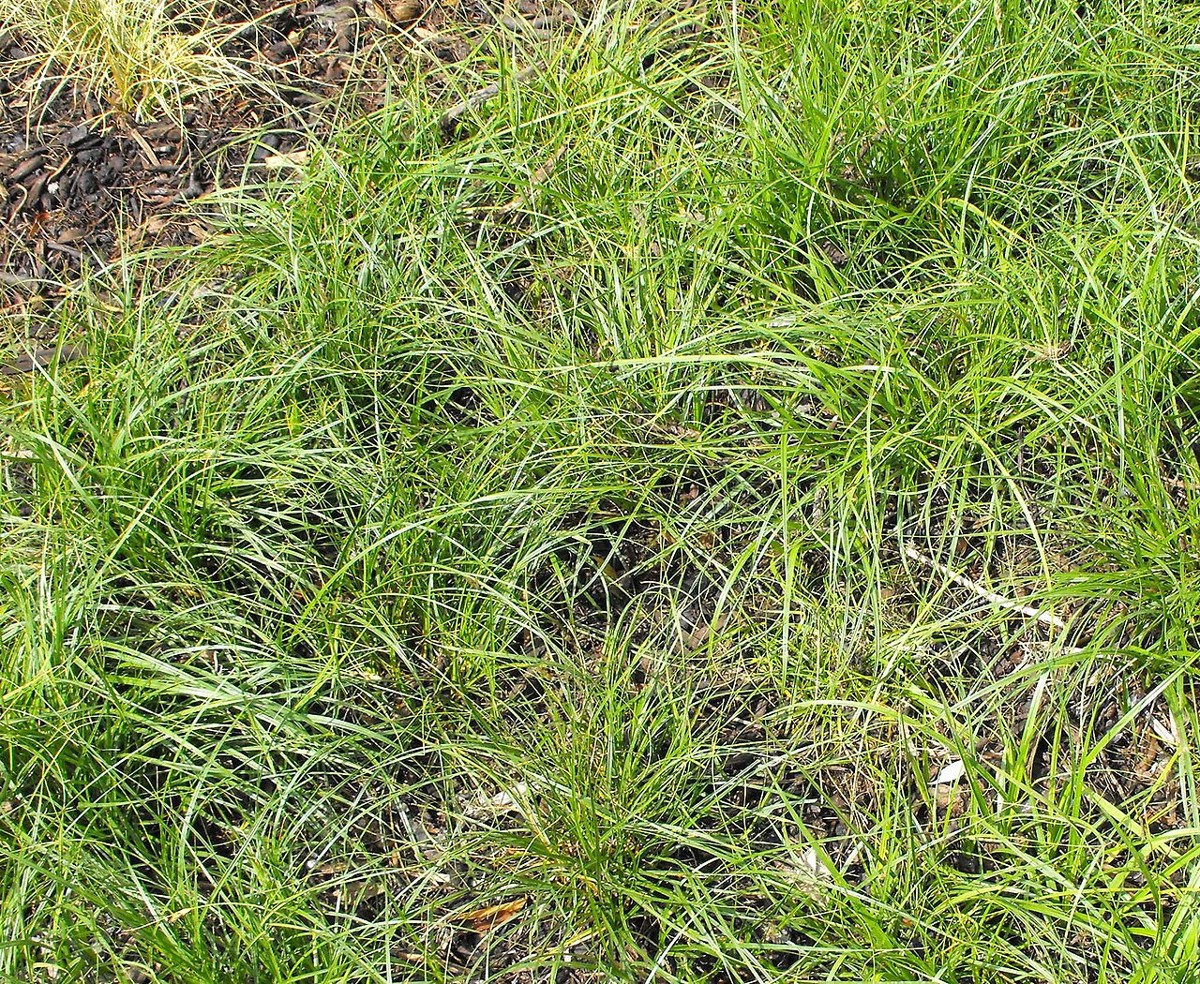
California Meadow Sedge is a low-growing, rhizomatous perennial that spreads to form a dense, even sod rather than isolated tussocks. Left unmowed, plants reach 6 to 12 inches tall with foliage arching over to 4 to 8 inches; mowed or grazed stands stay lower and denser, much like a fine-bladed lawn. The spreading rhizomes allow a single planting to knit together into a continuous mat within a couple of growing seasons.
Leaves & Stems
Leaves are narrow, only about 1/16 to 1/8 inch (1.5–3 mm) wide, medium to deep green, and distinctly fine-textured compared with most other native sedges — part of why it reads as “lawn-like” rather than coarse or clumpy. The foliage arches gracefully and holds its color well through the dry season, going somewhat dormant and straw-colored only under the most extreme summer drought.
Flowers
Flowering stems are short, often hidden within or just above the foliage, and easy to overlook — a practical advantage for a lawn substitute, since the plant does not produce the tall seed stalks that make some bunch grasses look unkempt. Each stem carries a single terminal male spike above one or two short female spikes, blooming from March into May. The flowers are wind-pollinated and visually unremarkable, brownish and papery rather than showy.
Fruit & Seeds
Small three-sided achenes develop inside beaked perigynia within the female spikes, ripening in late spring. Because flowering stems stay low and are often mowed off in lawn use, seed production in managed plantings is usually light; most garden spread comes from the creeping rhizomes rather than from seed.
Quick Facts
| Scientific Name | Carex pansa L.H. Bailey |
| Family | Cyperaceae (Sedge) |
| Plant Type | Rhizomatous Perennial Groundcover Sedge |
| Mature Height | 6–12 in unmowed; 2–4 in mowed |
| Mature Spread | Spreading indefinitely by rhizome into a continuous sod |
| Growth Rate | Moderate to fast once established |
| Sun Exposure | Full Sun to Partial Shade |
| Water Needs | Low to Moderate once established |
| Soil Type | Sandy, well-drained; tolerates poor, dune soils |
| Soil pH | 6.0–7.5 (neutral to slightly acidic) |
| Bloom Time | March – May |
| Flower Color | Brownish, inconspicuous |
| Fall Color | Stays green most of the year; straw in deep drought |
| Fruit | Small achenes in low, often-mowed spikes |
| Deer Resistant | Yes |
| USDA Hardiness Zones | 7–10 |
Native Range
California Meadow Sedge is a true coastal species, occurring in a narrow belt along the Pacific shoreline from Washington south through Oregon and the length of California. It is rarely found more than a few miles from salt air, favoring coastal dunes, bluff tops, headlands, and open grasslands directly influenced by onshore fog and wind.
In this coastal strip, it typically grows in stabilized or semi-stabilized dune systems and sandy coastal prairie, often alongside other low-growing coastal species. Its rhizomatous habit is an adaptation to this exact setting: by spreading laterally underground rather than relying on a single deep taproot, it can keep pace with gentle sand accretion and erosion while still holding the dune surface together.
Though confined to the coast in the wild, California Meadow Sedge tolerates a wider range of conditions in cultivation than its narrow native habitat might suggest, handling everything from full coastal sun to the partial shade of garden trees, provided drainage is reasonably good.
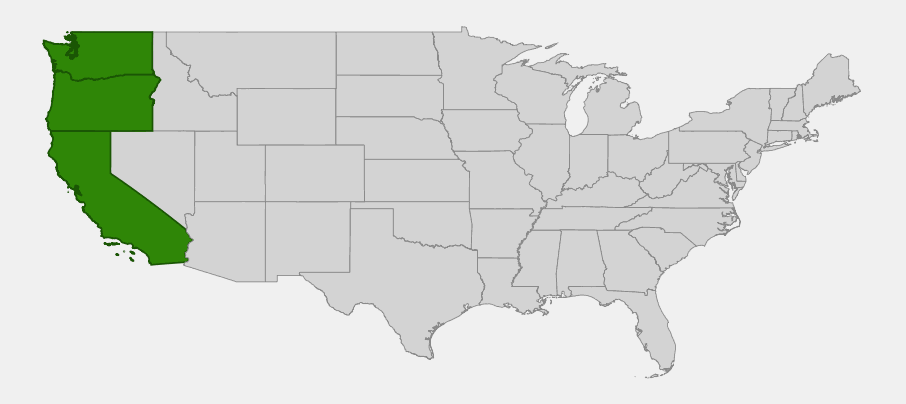
📋 Regional plant lists featuring California Meadow Sedge: California & Nevada · Western Oregon & Western Washington
Growing & Care Guide
California Meadow Sedge has become a favorite among coastal gardeners precisely because it behaves like a well-mannered lawn once established, while asking for a fraction of the water, fertilizer, and mowing that turfgrass demands.
Light
Plants perform best in full sun to light, dappled shade. In hot inland gardens outside its natural coastal fog belt, afternoon shade helps keep the foliage from scorching in summer; directly on the coast, full sun is rarely a problem.
Soil & Water
True to its dune origins, California Meadow Sedge prefers sandy, fast-draining soil but adapts to average garden loam as long as drainage is decent. Established plantings need only occasional deep irrigation through the dry season — far less than a conventional lawn — though a bit more regular water in the first year speeds rhizome spread and fills in bare patches faster. It does not tolerate heavy, poorly drained clay or standing water.
Planting Tips
Install plugs or small pots on a grid, typically 8 to 12 inches apart, and keep the soil consistently moist for the first growing season while rhizomes knit the planting together. Fall or early spring planting takes best advantage of the coast’s mild, rainy season. Once filled in, an occasional light mowing (2–3 times a year, or not at all) keeps the sod neat without the weekly maintenance a lawn requires.
Pruning & Maintenance
Mowing is optional rather than required — California Meadow Sedge never grows tall or leggy the way many grasses do. A single mow in late winter removes old foliage and tidies the planting before spring growth; beyond that, little upkeep is needed. It tolerates occasional light foot traffic well, though it is not as traffic-tough as true turfgrass.
Landscape Uses
Its spreading, lawn-like habit makes California Meadow Sedge useful well beyond pure turf replacement:
- No-mow or low-mow lawn alternative for coastal and mild-climate gardens
- Dune and slope stabilization, especially in sandy coastal sites
- Groundcover beneath oaks and other drought-tolerant coastal trees
- Erosion control on gentle sandy or loamy slopes
- Pathway borders and between-stepping-stone planting
Wildlife & Ecological Value
Though bred and promoted mainly as a lawn substitute, California Meadow Sedge still performs real ecological work both in the wild and in the garden.
For Birds
Ground-foraging birds use dense sedge sod as cover while hunting insects at ground level, and ripening seed provides a minor food source where plantings are allowed to flower and set seed rather than being mowed close.
For Pollinators & Insects
As a wind-pollinated sedge, it offers little in the way of nectar, but its dense foliage mat shelters ground-dwelling insects and spiders that in turn support birds and other predators. Left unmowed through spring, flowering stems can provide incidental pollen for generalist insects.
Ecosystem Role
In its native dune habitat, California Meadow Sedge is an important sand stabilizer, its spreading rhizome network binding loose, mobile dune sand and slowing wind erosion. In cultivated settings, a planting that replaces a conventional lawn delivers the same basic ecological benefit at a garden scale: less irrigation demand, no synthetic fertilizer dependence, and a living root system in the ground year-round instead of a shallow-rooted turf lawn.
Cultural & Historical Uses
California Meadow Sedge does not carry a prominent documented history of material use by Indigenous peoples comparable to some of its basketry-sedge relatives; its low, mat-forming growth habit on open dunes made it a less obvious source of long fiber than rhizomatous sedges found in wetter floodplain settings.
Its modern cultural significance comes instead from the native-plant horticulture movement of the past few decades. As California gardeners and municipalities have sought lower-water alternatives to traditional turf lawns, California Meadow Sedge — along with its close relative Carex praegracilis — has become one of the signature “sedge lawn” species promoted by native plant nurseries, water districts, and landscape designers throughout the coastal state.
That popularity has, in turn, driven renewed interest in its wild coastal dune populations, which remain important both as a genetic reservoir for horticultural selections and as functioning pieces of an increasingly rare and pressured dune ecosystem.
Frequently Asked Questions
Can California Meadow Sedge really replace a lawn?
Yes, for mild coastal and Mediterranean climates. It handles occasional foot traffic, needs far less water and mowing than turfgrass, and forms a dense, soft, walkable sod once established — though it is not quite as wear-tolerant as dedicated sports turf.
Does California Meadow Sedge need to be mowed?
No. Mowing is optional and mainly cosmetic, tidying old foliage in late winter. Many gardeners leave it unmowed entirely for a soft, naturalistic look.
How much water does an established planting need?
Considerably less than turfgrass — typically occasional deep watering through the dry season rather than weekly irrigation, especially in coastal gardens with regular fog.
Will it spread into areas I don’t want it?
It spreads by rhizome and will fill in open ground within its planting area, so it is best used with a defined edge (a path, border, or root barrier) where a hard boundary is needed, much like any spreading groundcover.
Is California Meadow Sedge native outside the coast?
No. Its native range is a narrow coastal belt in California, Oregon, and Washington; inland plantings are a horticultural use of the species outside its wild habitat, not a native planting in that inland location.

Looking for a nursery that carries California Meadow Sedge?
Browse our native plant nursery directory: California · Oregon · Washington