Santa Barbara Sedge (Carex barbarae)
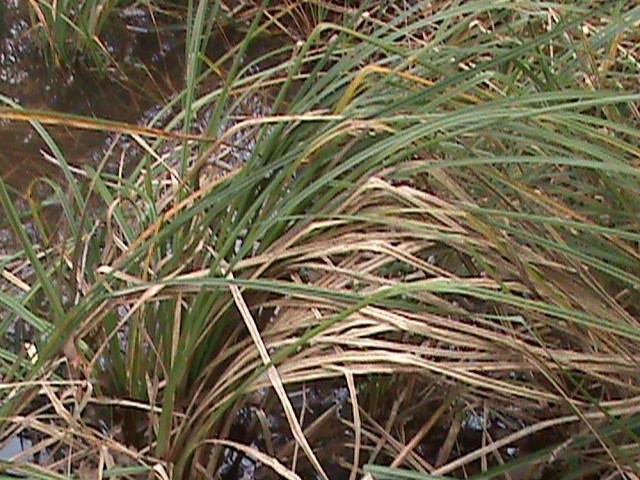
Carex barbarae, commonly known as Santa Barbara sedge or valley sedge, is a rhizomatous perennial sedge native to California and southwestern Oregon. A member of the Cyperaceae (sedge family), it is one of the most culturally and ecologically important sedges of California’s riparian corridors, prized both as a durable, attractive landscape plant and, historically, as a premier basketry material for Indigenous Californian weavers.
Santa Barbara sedge forms dense, arching clumps of narrow, grass-like, gray-green to blue-green leaves that spread gradually via long, pale rhizomes — the source of its other common name, “white root sedge.” Left undisturbed along a stream or pond edge, it spreads into substantial colonies that bind soil, filter runoff, and provide valuable structure in riparian plant communities.
Though it flowers, Santa Barbara sedge rarely sets abundant seed, and most individuals remain effectively sterile in the wild, relying instead on vegetative spread by rhizome for reproduction and persistence. This trait, combined with its tolerance for both wet soil and surprising drought once established, has made it a dependable and widely planted California native for restoration projects, rain gardens, and naturalistic landscaping alike.
Identification
Santa Barbara sedge is a rhizomatous perennial forming loose to dense clumps of arching foliage, typically 1 to 3 feet tall, with long, pale, cord-like rhizomes extending outward beneath the soil to form expanding colonies over time.
Rhizomes & Stems
The defining feature of this sedge is its long, tough, pale rhizome system — these white, cord-like underground stems can extend many feet from the parent plant, giving rise to new shoots and enabling the species to form substantial colonies along streambanks. Flowering stems (culms) are triangular in cross-section, as in all true sedges, and rise above the basal foliage.
Leaves
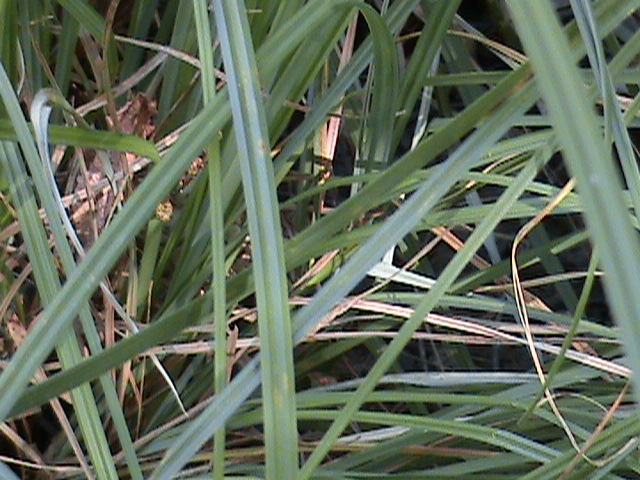
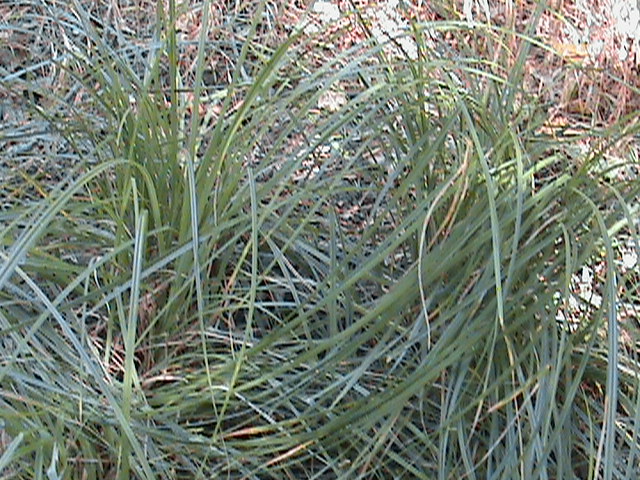
Leaves are narrow, flat to slightly channeled, gray-green to blue-green, and arch gracefully outward and downward, giving clumps a fountain-like form. Blades typically reach 1 to 3 feet long and roughly ⅛ to ¼ inch wide, somewhat rough-edged to the touch, as is typical of many sedges.
Flowers & Fruit
Flowering occurs in spring, with narrow, cylindrical, brownish spikes of reduced, wind-pollinated flowers rising above the foliage on triangular stems — separate male and female spikes on the same plant, as is typical of the genus. Unlike many sedges, Santa Barbara sedge rarely matures into a heavy fruiting stage; most individual plants remain largely sterile, producing few viable seeds and relying primarily on rhizome spread rather than seed for propagation and colony expansion.
Quick Facts
| Scientific Name | Carex barbarae |
| Family | Cyperaceae (Sedge) |
| Plant Type | Rhizomatous Perennial Sedge |
| Mature Height | 1–3 ft |
| Mature Spread | Spreading colony via long rhizomes, several feet over time |
| Growth Rate | Moderate to fast once established |
| Sun Exposure | Full Sun to Partial Shade |
| Water Needs | Moderate to High; tolerates occasional flooding and some drought once established |
| Soil Type | Adaptable; moist loam, clay, or sandy streambank soils |
| Soil pH | 6.0–7.5 |
| Bloom Time | March – May |
| Flower Color | Brown (inconspicuous) |
| Fall Color | Evergreen to semi-evergreen; gray-green year-round |
| Fruit | Rarely fruits; mostly sterile, spreads by rhizome |
| Deer Resistant | Generally yes |
| USDA Hardiness Zones | 7–10 |
Native Range
Santa Barbara sedge is native to California, where it occurs widely from the northern Coast Ranges and Sacramento Valley south through the Central Valley and Coast Ranges to Southern California, and into southwestern Oregon. It is primarily a lowland and foothill species of California’s Central Valley, Coast Ranges, and adjacent valleys, extending north into Oregon’s Willamette Valley and surrounding western valleys.
Across this range, Santa Barbara sedge is a defining plant of riparian corridors: streambanks, floodplains, valley oak woodland edges, and seasonally moist meadows, typically at low to moderate elevations below about 4,000 feet. It is notably tolerant of both seasonal flooding and summer dry-down once established, a combination well suited to California’s Mediterranean climate of wet winters and dry summers.
Significant riparian habitat loss across California’s Central Valley and foothill streams has reduced natural Santa Barbara sedge populations in many areas, making its use in streambank restoration and native landscaping an important tool for recovering riparian plant communities. Always source plants from reputable native nurseries rather than wild populations.
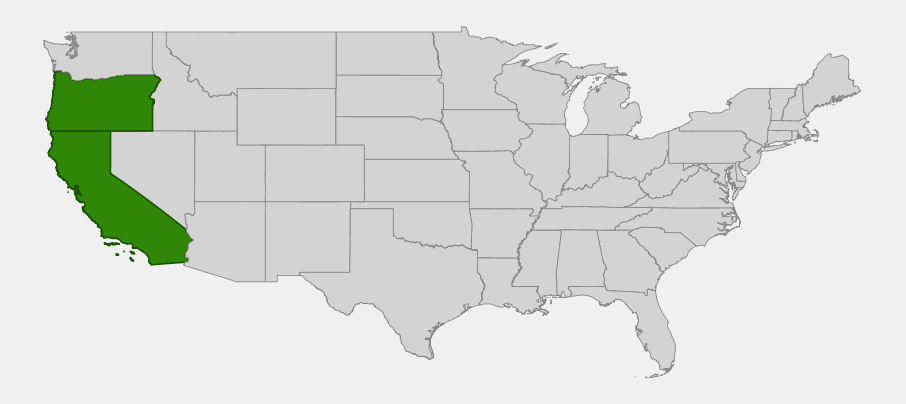
📋 Regional plant lists featuring Santa Barbara Sedge: California & Nevada · Western Oregon & Western Washington · Idaho, Eastern Oregon & Eastern Washington
Growing & Care Guide
Santa Barbara sedge is one of the easier California native sedges to grow, valued by landscapers and restoration practitioners alike for its tough, adaptable nature and attractive, low-maintenance form once established.
Light
This sedge grows well in full sun along open streambanks, where regular moisture offsets the intensity of exposure, and performs equally well in partial shade beneath open oak or riparian tree canopy. In hotter inland gardens, afternoon shade helps keep foliage looking its best through summer.
Soil & Water
Santa Barbara sedge adapts to a wide range of soils, from sandy streambank deposits to heavier clay, and tolerates both periodic flooding and, once well rooted, considerable summer drought — a flexibility that makes it valuable for California gardens with inconsistent water availability. For the lushest growth, provide regular moisture during the growing season; established plantings can be weaned to occasional deep watering.
Planting Tips
Plant container stock in fall or early spring, spacing plants 18 to 24 inches apart to allow room for rhizome spread into a naturalistic drift over a few growing seasons. It is particularly effective along pond edges, rain garden margins, and streambank restoration sites where its spreading root system can help stabilize soil.
Pruning & Maintenance
Cut back old or ragged foliage in late winter before new growth emerges to refresh the clump’s appearance; established plantings otherwise need little upkeep. Because it spreads by rhizome, gardeners wanting to contain its spread in smaller beds should plan for periodic edging or root barriers.
Landscape Uses
Santa Barbara sedge’s graceful form and adaptability suit a wide range of California garden and restoration settings:
- Streambank and pond-edge plantings where its rhizomes stabilize soil
- Rain gardens tolerant of both wet winters and dry summers
- Meadow and naturalistic garden borders for fine, arching texture
- Riparian restoration projects recovering Central Valley and foothill stream habitat
- Erosion control on moist slopes and streambanks
- Container plantings, where its fountain-like habit shows well
Wildlife & Ecological Value
Santa Barbara sedge is an ecologically important component of California’s riparian plant communities, offering structure and shelter to a wide range of wildlife along the state’s streams and floodplains.
For Birds
Dense sedge clumps provide nesting habitat and protective cover for songbirds along stream corridors, particularly species that favor low, dense riparian vegetation for concealment from predators.
For Mammals & Other Wildlife
The thick, arching foliage offers cover for small mammals and reptiles near water, while the plant’s root system and streamside presence contribute to the overall habitat quality that supports fish and other aquatic life by stabilizing banks and moderating sediment and temperature in adjacent waterways.
For Pollinators
As a wind-pollinated sedge, Santa Barbara sedge offers no direct nectar reward, but its presence supports the broader riparian insect community that depends on structurally diverse streamside vegetation for shelter and breeding habitat.
Ecosystem Role
Through its extensive rhizome system, Santa Barbara sedge plays a significant role in stabilizing California streambanks and floodplain soils, reducing erosion and filtering runoff before it reaches open water. As riparian habitat has been lost across much of the Central Valley and foothill regions, this sedge’s resilience and restoration value have made it one of the most widely used native sedges in California streambank revegetation projects.
Cultural & Historical Uses
Santa Barbara sedge holds a distinguished place in California Indigenous material culture. Its long, tough, pale rhizomes were a prized material for basketry and sewing fiber among several California Native American groups, including the Maidu and Pomo, who used carefully processed root material to create some of the fine, durable coiled and twined baskets for which California Indigenous weaving traditions are renowned.
Traditional harvesting of sedge rhizomes for basketry required careful, sustainable digging practices passed down through generations of weavers, often involving selective harvest that encouraged continued healthy growth of the sedge beds — a form of Indigenous land stewardship that helped maintain productive sedge populations along California streams for centuries.
Today, Santa Barbara sedge continues to be grown and gathered by California Indigenous basket weavers maintaining these traditions, while also serving a modern role in habitat restoration and native landscaping that helps preserve the riparian ecosystems this culturally significant plant has always depended on.
Frequently Asked Questions
Why is it also called “white root sedge”?
The name refers to its long, pale, cord-like rhizomes — the horizontal underground stems by which the plant spreads. These white roots are also the part traditionally harvested by California Indigenous weavers for basketry material.
Does Santa Barbara sedge produce seed?
Rarely. Most individual plants remain largely sterile and seldom mature into a heavy fruiting stage. The species spreads primarily by rhizome rather than by seed, which is why nursery-grown divisions are the typical way to establish new plantings.
Can Santa Barbara sedge handle both wet and dry conditions?
Yes — it is notably adaptable, tolerating periodic flooding along streambanks as well as considerable summer drought once well established, a flexibility well suited to California’s wet-winter, dry-summer climate.
Will it spread too aggressively in a garden bed?
It does spread by rhizome and can form substantial colonies over time, so give it room or plan for periodic edging in smaller beds. In streambank and restoration settings, this spreading habit is a benefit, helping stabilize soil.
Is Santa Barbara sedge native to areas outside California?
It also occurs natively in southwestern Oregon, particularly in the Willamette Valley and nearby western valleys, but it is not native farther north into Washington or east of the Cascades.

Looking for a nursery that carries Santa Barbara Sedge?
Browse our native plant nursery directory: California · Oregon