Common Muilla (Muilla maritima)
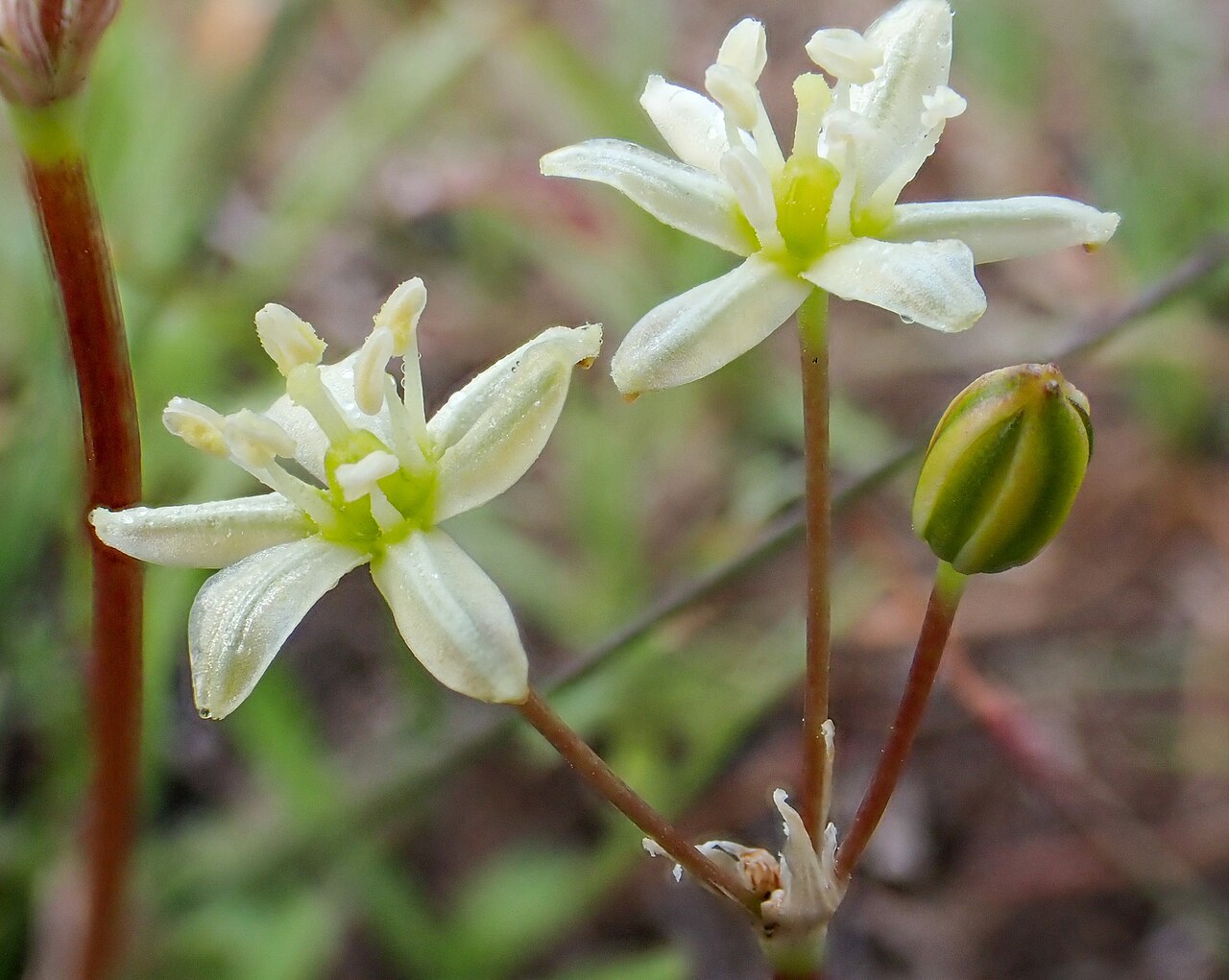
Muilla maritima, known as common muilla or sea muilla, is a delicate, bulb-forming perennial wildflower native to California and Baja California, Mexico. A member of the Asparagaceae family (subfamily Brodiaeoideae), it is closely related to the brodiaeas and ithuriels, sharing their habit of growing from an underground corm and sending up a slender flowering stalk topped with an umbel of small, starry flowers each spring. Despite its unassuming size, common muilla is a charming addition to a California native bulb garden, naturalizing readily in open, sunny sites and returning reliably year after year from its underground storage organ.
The genus name Muilla is simply “Allium” spelled backward — a nod to the plant’s superficial resemblance to wild onions, though common muilla lacks the oniony smell and taste that defines true Allium species. Instead, it offers a quiet elegance: wiry, leafless flowering stems rising above a low tuft of onion-like basal leaves, each stem carrying an open cluster of small, pale, green-tinged white flowers that sway in the slightest breeze.
Common muilla is remarkably adaptable across California’s varied terrain, found from coastal bluffs to inland deserts and mountain foothills. This flexibility makes it a forgiving choice for native bulb gardens, rock gardens, and naturalistic meadow plantings throughout much of the state, provided it is given the sharp drainage and dry summer dormancy period it requires to thrive.
Identification
Common muilla is a low-growing perennial bulb plant, with a basal tuft of leaves and a slender, erect flowering stem that can reach up to about 20 inches (50 cm) tall, though plants are often shorter in drier or more exposed sites.
Leaves
The plant produces a small cluster of narrow, grass-like to onion-like basal leaves, up to about 24 inches (60 cm) long in vigorous specimens, though typically shorter. Leaves emerge directly from the underground corm in late winter or early spring and often begin to wither as the plant comes into flower, directing energy toward bloom and seed production.
Flowers
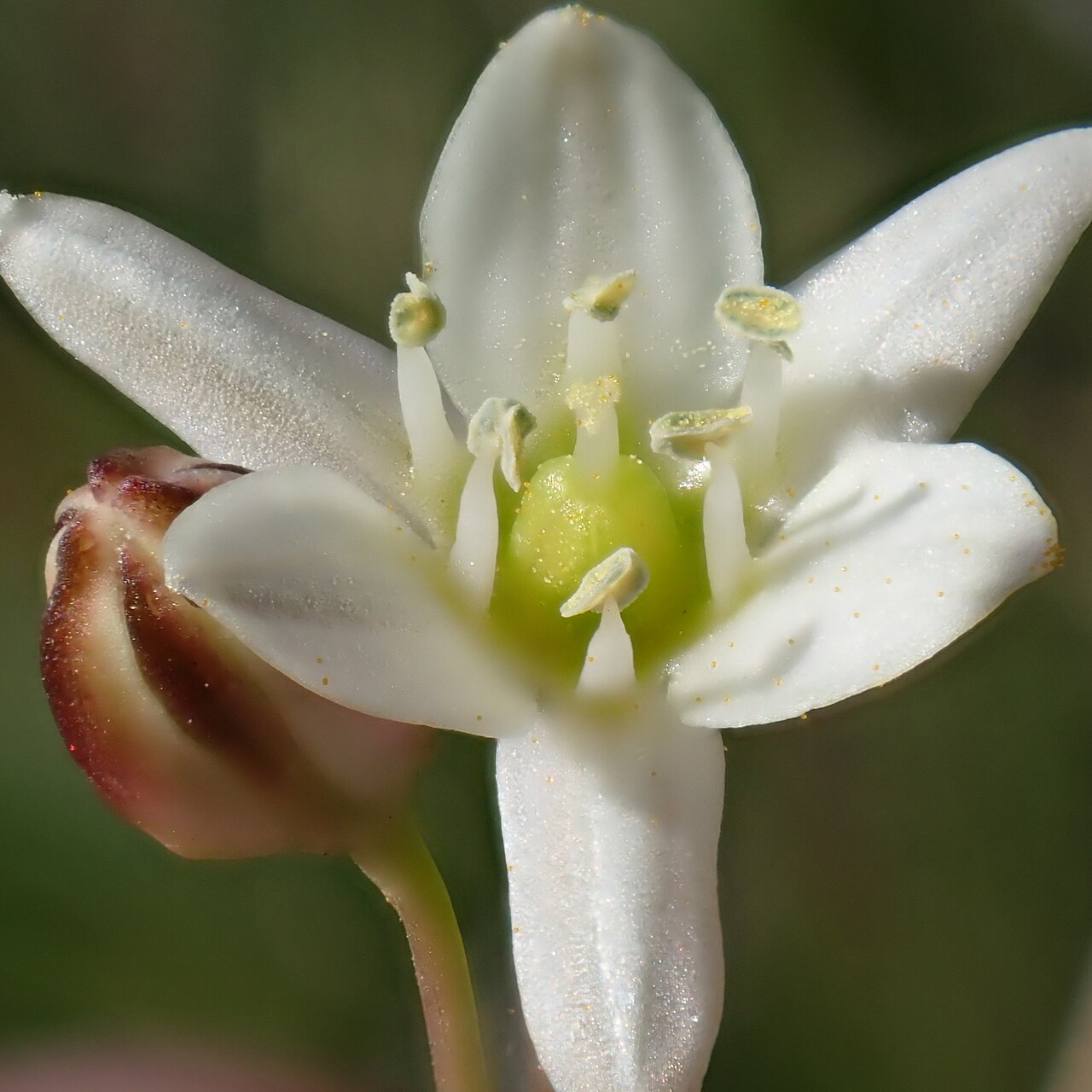
The leafless flowering stem bears an umbel-shaped cluster of numerous small flowers on slender pedicels up to 2 inches (5 cm) long. Each flower has six tepals, green-tinged white in color with fine brownish midribs, and no more than ¼ inch (6 mm) in length. At the center of each flower, six erect stamens display blue, green, or purplish anthers — a subtle but distinctive detail visible on close inspection. Bloom occurs primarily from March through June, varying somewhat with elevation and local climate across the plant’s range.
Fruit & Seeds
After flowering, common muilla produces a small, dry capsule containing black seeds, which mature and disperse as the plant finishes its above-ground growth cycle for the year. The underground corm persists through the dry summer and fall, allowing the plant to resprout reliably with the return of fall and winter rains, in the manner typical of California’s geophyte (bulb, corm, and tuber) wildflowers.
Quick Facts
| Scientific Name | Muilla maritima |
| Family | Asparagaceae (subfamily Brodiaeoideae) |
| Plant Type | Perennial Bulb (Corm) |
| Mature Height | 6–20 in (15–50 cm) in flower |
| Mature Spread | 4–6 in (10–15 cm) |
| Growth Rate | Moderate |
| Sun Exposure | Full Sun to Part Shade |
| Water Needs | Low once established |
| Soil Type | Well-drained; sandy, gravelly, or clay-loam |
| Soil pH | 6.5–8.0 (neutral to alkaline) |
| Bloom Time | March – June |
| Flower Color | Green-tinged white |
| Fall Color | None (dormant corm by fall) |
| Fruit | Small dry capsule with black seeds |
| Deer Resistant | Mostly (low palatability) |
| USDA Hardiness Zones | 7–10 |
Native Range
Common muilla is native to California, where it occurs widely from the coast to the Mojave Desert and into the Sierra Nevada foothills and other inland mountain ranges, as well as Baja California, Mexico. Its broad ecological tolerance allows it to grow across a striking variety of plant communities — coastal grasslands, oak woodland, chaparral, desert scrub, and montane forest openings — making it one of the more habitat-flexible native geophytes found in the state.
Within this wide range, common muilla typically grows in open, sunny locations with well-drained soils, from near sea level up to roughly 6,000 feet in the mountains. It is often found alongside other California native bulbs and wildflowers in grassy openings, vernal seeps, and rocky slopes, where its corm allows it to persist through fire, drought, and the long dry summer that defines the state’s Mediterranean climate.
Because common muilla naturally spans such a wide range of elevations and plant communities, it is adaptable to many California garden settings as long as the essential requirement — sharp drainage and a dry summer dormancy — is respected.
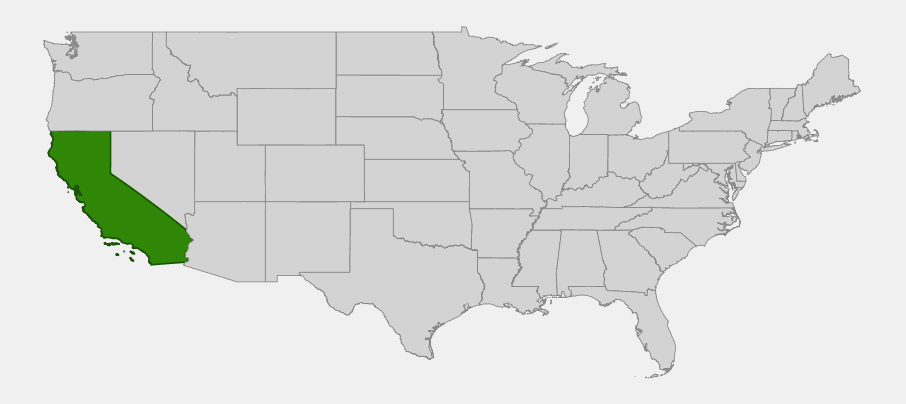
📋 Regional plant lists featuring common muilla: California & Nevada
Growing & Care Guide
Common muilla is an easy, trouble-free bulb for California native gardens, requiring little beyond good drainage and a true dry summer rest to perform well year after year.
Light
Full sun produces the heaviest bloom, though common muilla tolerates light, part-shade conditions reasonably well, particularly in hotter interior gardens where some afternoon relief can extend the display slightly.
Soil & Water
Sharp drainage is the single most important requirement — common muilla is adapted to a wide range of soil textures, from sandy to clay-loam, but will not tolerate standing water or consistently soggy conditions, especially during its summer dormancy. Water during the fall-through-spring growing season to support healthy foliage and bloom, then withhold water entirely through summer to allow the corm to rest, exactly as it would experience in the wild under California’s Mediterranean climate.
Planting Tips
Plant corms in fall, 2 to 3 inches deep, in a sunny, well-drained location. Common muilla is best planted in drifts or naturalized clusters among low grasses and other spring bulbs rather than as an isolated specimen, since its small flowers are easy to overlook individually but create a lovely effect en masse. Once established, corms will persist and slowly multiply for years with minimal care.
Pruning & Maintenance
Allow foliage to yellow and die back naturally after bloom before removing it — this period allows the corm to store energy for next year’s growth. No fertilizer is generally needed, and common muilla has few pest or disease problems when grown in appropriately well-drained soil.
Landscape Uses
Common muilla is well suited to several California native garden settings:
- Native bulb and geophyte gardens paired with brodiaeas and other California corms
- Naturalistic meadow plantings interspersed among native bunchgrasses
- Rock gardens with sharp, reliable drainage
- Dry summer-dormant borders that embrace California’s Mediterranean bloom cycle
- Restoration plantings in grassland and open woodland habitat projects
Wildlife & Ecological Value
As a native California geophyte, common muilla contributes to the spring wildflower display that supports pollinators and other wildlife across a wide range of the state’s plant communities.
For Pollinators
The small, open, umbel-clustered flowers attract native bees and other small pollinating insects drawn to the pale coloration and accessible pollen and nectar. Because the flowers bloom in clusters on a single stem, they offer a concentrated foraging stop for small bees working through grassland and woodland openings in spring.
For Birds & Small Wildlife
Seed produced in the dry capsules provides modest forage for ground-foraging birds and small mammals, while the underground corms — like those of related native bulbs — can be a food source for burrowing rodents and, historically, for larger wildlife that dug for them during lean seasons.
Ecosystem Role
Common muilla belongs to a guild of native California geophytes whose underground storage organs allow them to persist through fire, drought, and grazing in ways that many above-ground perennials cannot. This resilience makes bulb species like common muilla important components of post-fire and post-disturbance plant recovery in California grassland, chaparral, and woodland ecosystems, where they often reappear and bloom abundantly in the first spring after a burn, taking advantage of reduced competition and increased light.
Cultural & Historical Uses
As a member of the Brodiaeoideae, the same group that includes the well-documented “Indian potato” corms historically dug and eaten by California Indigenous peoples, common muilla’s corm may have been among the lesser-utilized bulbs gathered seasonally, though specific, well-documented ethnobotanical records for this species are limited compared to larger, more productive relatives such as Dichelostemma and Triteleia. Many California tribes practiced seasonal corm harvesting that, by selectively digging larger corms and leaving smaller ones or cormlets in place, is thought to have sustained and even enhanced wild bulb populations over centuries of traditional management.
The genus name Muilla — “Allium” spelled backward — was coined in recognition of the plant’s onion-like appearance and growth habit, despite its lack of the characteristic allium scent. This naming convention, playful by botanical standards, reflects 19th-century taxonomists’ frequent practice of noting resemblances between newly described California flora and already-familiar Old World plant groups.
Today, common muilla holds little commercial or culinary significance, but it has found a modest place in California native plant horticulture, valued by bulb enthusiasts and native garden designers for its delicate texture and reliable, low-maintenance performance across a wide range of growing conditions.
Frequently Asked Questions
Is common muilla related to wild onions?
It is in the same broader family (Asparagaceae, subfamily Brodiaeoideae) as other California native corm-forming plants related to onions, but it is not a true Allium and lacks any onion scent or flavor. The genus name is simply “Allium” spelled backward, referencing the resemblance rather than a close taxonomic relationship.
When should I plant common muilla corms?
Plant in fall, before the winter rainy season begins, so the corm can establish roots ahead of spring growth and bloom — the same timing used for most California native bulbs.
Why did my common muilla disappear in summer?
This is normal. Common muilla is a summer-dormant geophyte that dies back completely to its underground corm after flowering and seed set, re-emerging the following fall or winter with the return of rain. Avoid summer watering or digging in the dormant area, as it can damage the resting corm.
Can common muilla grow in a container?
Yes, provided the container has excellent drainage and is allowed to dry out completely during summer dormancy. A gritty, fast-draining potting mix similar to that used for other California native bulbs works well.
Does common muilla spread aggressively?
No. It multiplies slowly over time by producing offset corms and occasional self-sown seedlings, gradually forming larger clumps without becoming weedy or invasive.

Looking for a nursery that carries common muilla?
Browse our native plant nursery directory: California