Kauai White Hibiscus (Hibiscus waimeae)
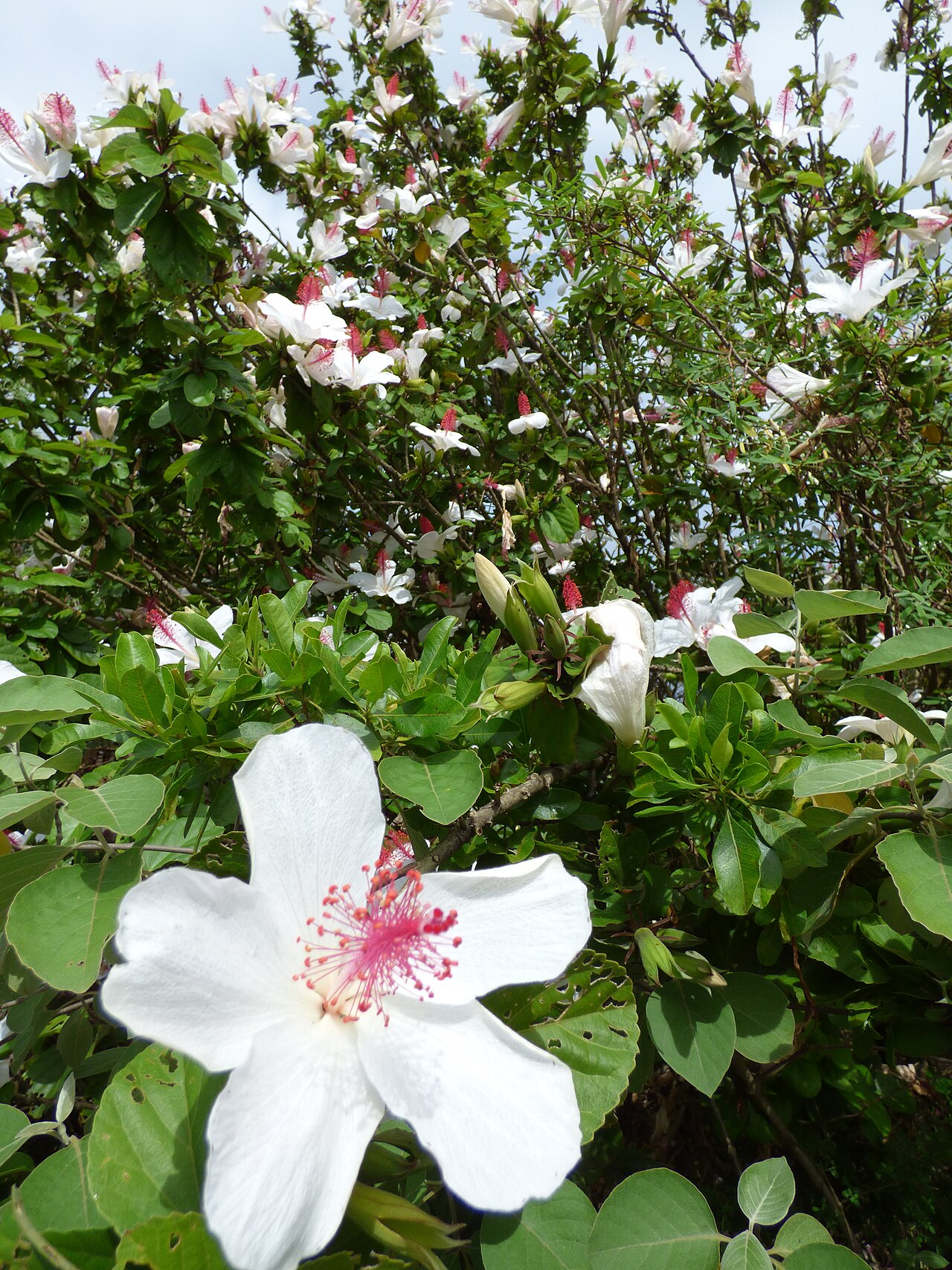
Hibiscus waimeae, the Kauai White Hibiscus, is known in Hawaiian as kokiʻo keʻokeʻo or kokiʻo kea — “the hibiscus that is white as snow.” It is one of only two Hawaiian hibiscus species with white flowers, the other being its island relative Kokiʻo Keʻokeʻo (Hibiscus arnottianus) of Oʻahu and Molokaʻi, and it is the only Hawaiian hibiscus with a noticeably sweet fragrance. This small, gray-barked flowering tree is found nowhere on Earth except the island of Kauaʻi, where it grows in the dry-to-mesic valleys and forested canyon walls around Waimea Canyon and the remote northwestern coast.
The flowers are a quiet showstopper: pure white, 3 to 5 inches across, with a long red staminal column projecting from the center like a lit match against snow. Each bloom lasts only a single day, opening crisp white in the morning and gradually blushing to pink by the following afternoon before dropping. A mature tree in full flower, dotted with dozens of these white-and-red blooms against glossy dark green foliage, is one of the most recognizable native Hawaiian plants in cultivation today.
Named for Waimea Canyon, where the typical subspecies grows, Hibiscus waimeae is a plant with real conservation urgency behind its beauty. The species as a whole is ranked Imperiled by NatureServe, and its rarer subspecies, hannerae, is formally listed as endangered under the U.S. Endangered Species Act. For home gardeners in Hawaiʻi, growing this species is both a chance to enjoy a genuinely spectacular native flower and a small contribution to the conservation of an island endemic found nowhere else on the planet.
Identification
Kauai White Hibiscus is recognized by its combination of smooth gray bark, glossy dark leaves, and large fragrant white flowers with a red central column — a distinctive look among Hawaiʻi’s native flora.
Bark & Growth Habit
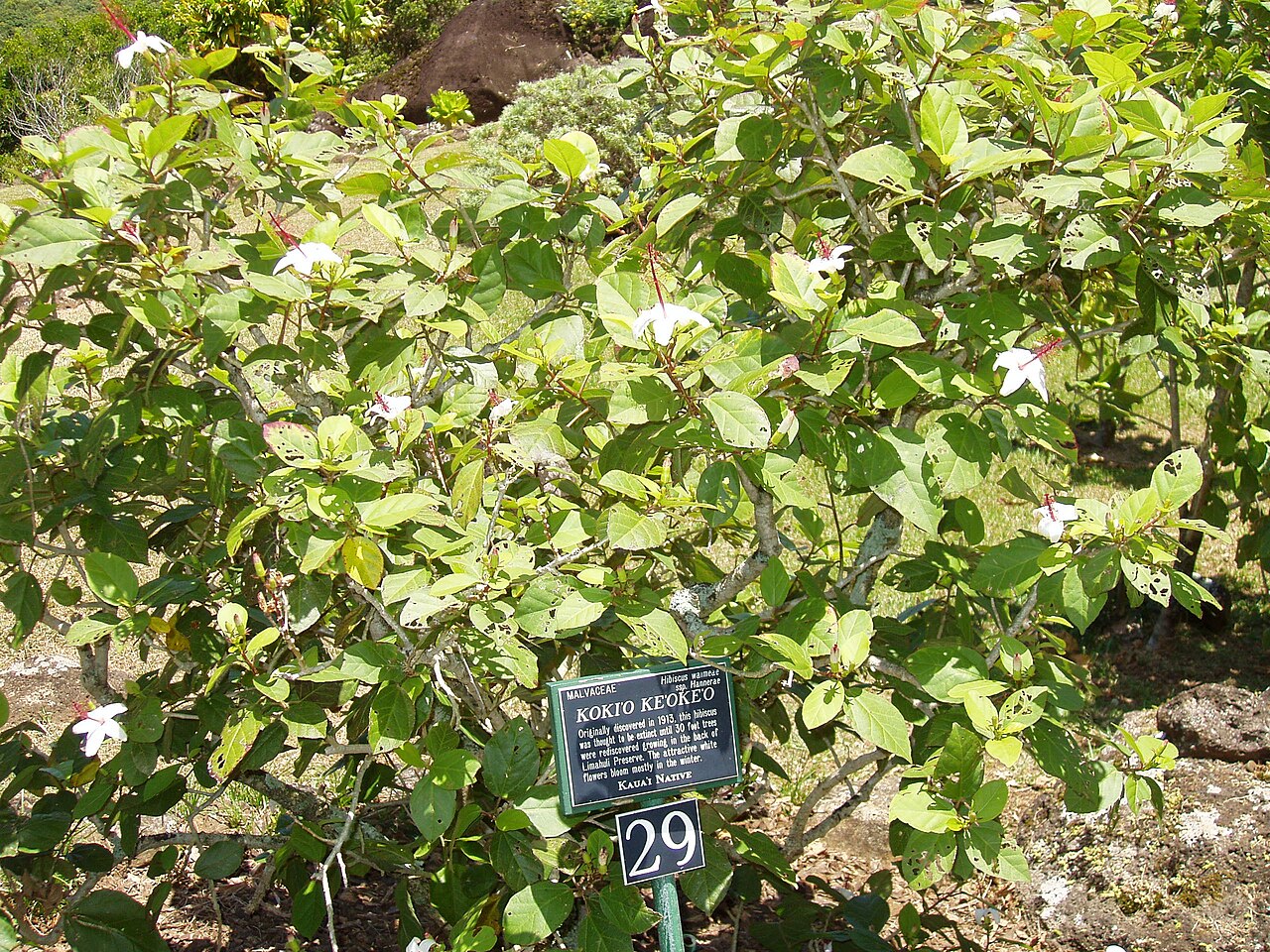
It grows as a small tree or large shrub, typically 20 to 33 feet (6–10 m) tall with a trunk around 1 foot in diameter, though cultivated specimens are often kept smaller through pruning. The bark is smooth and gray, and the overall form is rounded and densely branched, especially when grown in good light.
Leaves
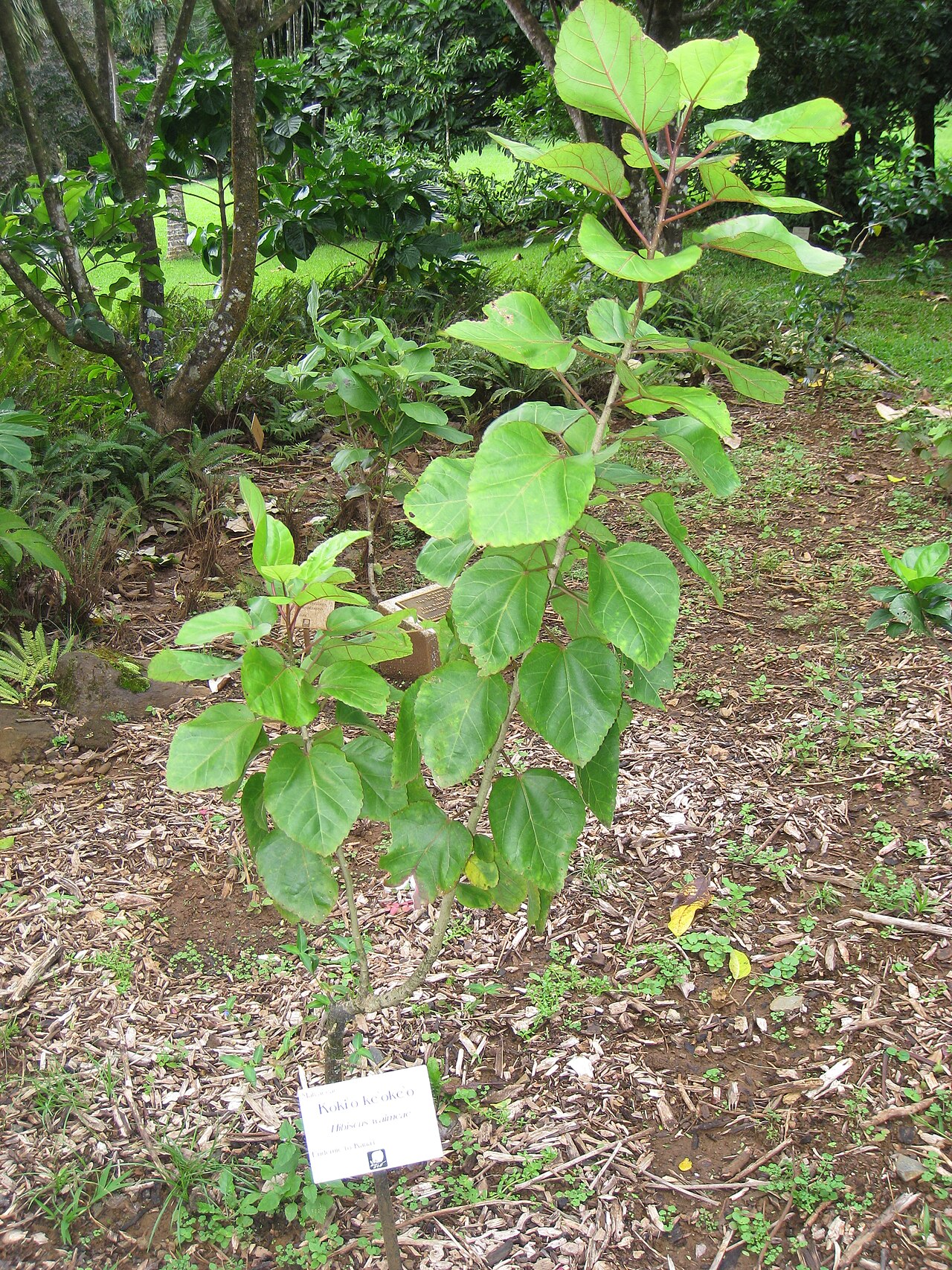
Leaves are simple, broadly oval, glossy dark green above and paler beneath, with smooth to finely toothed margins. They are considerably larger and more leathery in the rare subspecies hannerae than in the typical subspecies waimeae.
Flowers
Flowers are solitary, 3 to 5 inches across, with five broad white petals surrounding a long, slender red staminal column that extends well beyond the petals — a vivid contrast that makes the flower instantly recognizable. The blooms are sweetly fragrant, a trait shared with only one other hibiscus species worldwide. Flowering occurs more or less year-round, with a noticeable peak in the cooler winter months, and each individual flower opens white in the morning and fades to pink by the afternoon of the same day.
Fruit & Seeds
The fruit is an oblong seed pod roughly an eighth of an inch long, enclosing small, fuzzy brown seeds. Because hibiscus species hybridize readily, seed collected from a garden-grown plant near other hibiscus species may not come true to type; hand pollination is recommended for anyone propagating true Kauai White Hibiscus from seed.
Quick Facts
| Scientific Name | Hibiscus waimeae |
| Family | Malvaceae (Mallow) |
| Plant Type | Small Evergreen Tree / Large Shrub |
| Mature Height | 20–33 ft (6–10 m) |
| Trunk Diameter | About 1 ft (0.3 m) |
| Growth Rate | Moderate |
| Sun Exposure | Full Sun to Part Shade |
| Water Needs | Moderate; drought tolerant once established |
| Soil Type | Well-drained; tolerant of varied soils |
| Soil pH | 6.0–7.5 |
| Bloom Time | Year-round, heaviest in winter |
| Flower Color | White, fading to pink; red staminal column |
| Fruit | Small oblong seed pod |
| Deer Resistant | Not applicable (no deer in Hawaiʻi) |
| USDA Hardiness Zones | 10–11 |
Native Range
Kauai White Hibiscus is endemic to a single Hawaiian island — Kauaʻi — and grows nowhere else in the wild. The typical subspecies, Hibiscus waimeae subsp. waimeae, is found in the western and southwestern parts of the island, including the dry-to-mesic forests of Waimea Canyon and valleys opening toward the sea. The rarer subspecies hannerae is restricted to a handful of remote northwestern valleys — Hanakāpīʻai, Limahuli, and Kalihiwai — and is federally listed as endangered.
Across its range the species grows in coastal mesic, mixed mesic, and wet forest at elevations of roughly 820 to 3,940 feet (250–1,200 m), generally on steep canyon or valley walls where it escapes heavy competition from faster-growing introduced plants. Because so much of its habitat lies in rugged, hard-to-access terrain, significant populations have persisted even as lowland Hawaiian forest has been heavily altered elsewhere.
Kauai White Hibiscus is widely cultivated across the Hawaiian Islands, including on Oʻahu and Maui, well outside its small natural range — these garden and arboretum plantings are a valuable way to see and enjoy the species, but they are not wild populations. In the ground, it is best reserved for warm, frost-free Hawaiian gardens; it is not winter-hardy on the U.S. mainland outside the warmest coastal pockets of southern Florida, South Texas, and similar zone 10–11 climates, where it can be grown as a container or conservatory specimen.
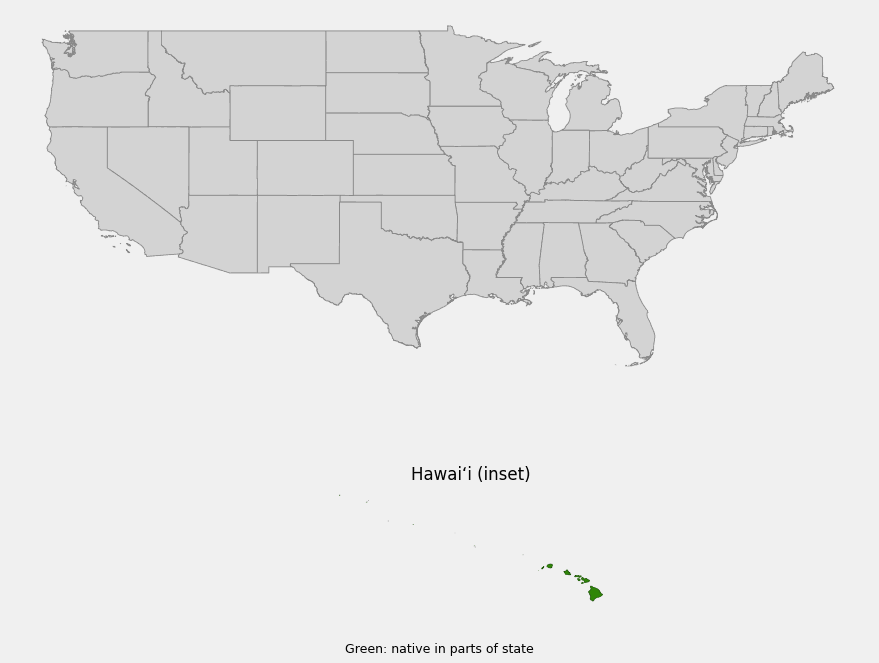
📋 Regional plant lists featuring Kauai White Hibiscus: Hawaii
Growing & Care Guide
Within its warm, frost-free native climate, Kauai White Hibiscus is a rewarding and relatively easy landscape tree, prized for its fragrance as much as its striking flowers.
Light
Plant in full sun to light part shade. Full sun produces the densest flowering and most compact habit, while light shade is tolerated and can be useful for protecting young plants from harsh afternoon sun.
Soil & Water
Kauai White Hibiscus adapts to a range of well-drained soils and, once established, tolerates considerable drought — a useful trait given its native habitat on dry-to-mesic canyon walls. Regular watering during establishment and in prolonged dry spells keeps flowering strongest, but soggy or waterlogged soil should be avoided.
Planting Tips
Choose a warm, frost-free, well-drained site; this species cannot tolerate freezing temperatures. Space plants to allow for their eventual 15- to 20-foot spread if grown as a free-standing tree. Because hibiscus species cross-pollinate easily, grow Kauai White Hibiscus away from other hibiscus species if collecting pure seed is a goal, and hand-pollinate flowers for reliable results.
Pruning & Maintenance
Prune after flowering to control size and shape, or to maintain it as a large shrub rather than a tree in smaller gardens. The species can be propagated by seed, stem cuttings, air layering, or grafting, giving gardeners several practical options for starting new plants.
Landscape Uses
Kauai White Hibiscus suits several Hawaiian landscape roles:
- Specimen flowering tree or large shrub near patios and entryways, where its fragrance can be enjoyed
- Native Hawaiian plant and conservation gardens
- Hedges and screens when trimmed and maintained
- Lei flower gardens, continuing a traditional Hawaiian use
- Conservatory or large container specimen in warm mainland climates (zones 10–11)
Wildlife & Ecological Value
As one of Hawaiʻi’s few native tree hibiscuses, Kauai White Hibiscus plays a role in the island’s native pollinator and bird communities that has become increasingly important as lowland native forest has shrunk.
For Pollinators
The large, fragrant flowers attract Hawaiʻi’s native yellow-faced bees (Hylaeus species) along with a range of other insects; the sweet scent — unusual among hibiscus species — likely helps draw pollinators from greater distances than scent-free hibiscus flowers can manage.
For Birds
Native Hawaiian honeycreepers and other nectar-feeding birds historically would have used flowering trees like this one as a food source, though on Kauaʻi today native forest birds are increasingly restricted to high-elevation refuges away from mosquito-borne avian malaria; in garden and lower-elevation settings, introduced birds and insects are the more frequent visitors.
Ecosystem Role
As a canopy or sub-canopy tree of Kauaʻi’s dry-to-mesic valley forest, Kauai White Hibiscus contributes structure and habitat in a native plant community under heavy pressure from invasive species, feral ungulates, and habitat loss. Conserving and planting genetically appropriate stock of this species supports the broader effort to maintain Kauaʻi’s unique native flora.
Cultural & Historical Uses
Kauai White Hibiscus holds a cherished place in Native Hawaiian culture. Like other native hibiscus, its flowers were traditionally worn in the hair or tucked behind the ear and were commonly strung into lei for important occasions and celebrations. The plant was also grown around homes purely for its beauty and fragrance, a practice that continues in Hawaiian gardens today.
Historical accounts record that the flowers were sometimes eaten by Native Hawaiian men and boys for their mild laxative effect — a traditional use noted in the ethnobotanical record rather than a practice recommended here. The species’ significance to Native Hawaiians, combined with its rarity and endemic status, makes it as much a cultural treasure as a botanical one.
Today, Kauai White Hibiscus is an important species in Hawaiian native-plant conservation and horticulture, cultivated at botanical gardens such as Limahuli Garden and Preserve and the Lyon Arboretum, which work to propagate and protect it alongside Hawaiʻi’s many other threatened endemic plants.
Frequently Asked Questions
How is Kauai White Hibiscus different from Hibiscus arnottianus?
Both are Hawaiian endemics with white flowers, but Hibiscus arnottianus is native to Oʻahu and Molokaʻi, while Hibiscus waimeae is endemic to Kauaʻi. Kauai White Hibiscus is also notably fragrant, a trait H. arnottianus largely lacks, and the two species occupy separate islands in the wild. A third native relative, Kokiʻo ʻUla (Hibiscus kokio), shares the same Hawaii Trees list but has red rather than white flowers.
Is Kauai White Hibiscus endangered?
The species overall is ranked Imperiled by NatureServe, and its rarer subspecies, hannerae, is formally listed as endangered under the U.S. Endangered Species Act. The more widespread subspecies waimeae is uncommon but not federally listed.
Can I grow Kauai White Hibiscus outside Hawaii?
Only in essentially frost-free climates, roughly USDA zones 10 to 11, such as South Florida or South Texas, where it can be grown outdoors; elsewhere it needs a warm greenhouse or conservatory, or can be grown as a container plant brought indoors for winter.
Why do the flowers change color during the day?
Like many hibiscus species, each flower opens for a single day. Kauai White Hibiscus opens crisp white in the morning and gradually fades to pink by the following afternoon as the flower ages, before dropping from the plant.
Is Kauai White Hibiscus related to the common red tropical hibiscus sold at garden centers?
It belongs to the same genus, Hibiscus, and the same mallow family, but most brightly colored hybrid hibiscus sold commercially descend primarily from Asian and other Pacific species, not from Hawaiʻi’s native white-flowered species.

Looking for a nursery that carries Kauai White Hibiscus?
Browse our native plant nursery directory: Hawaii