
Bigcone Douglas-fir (Pseudotsuga macrocarpa)
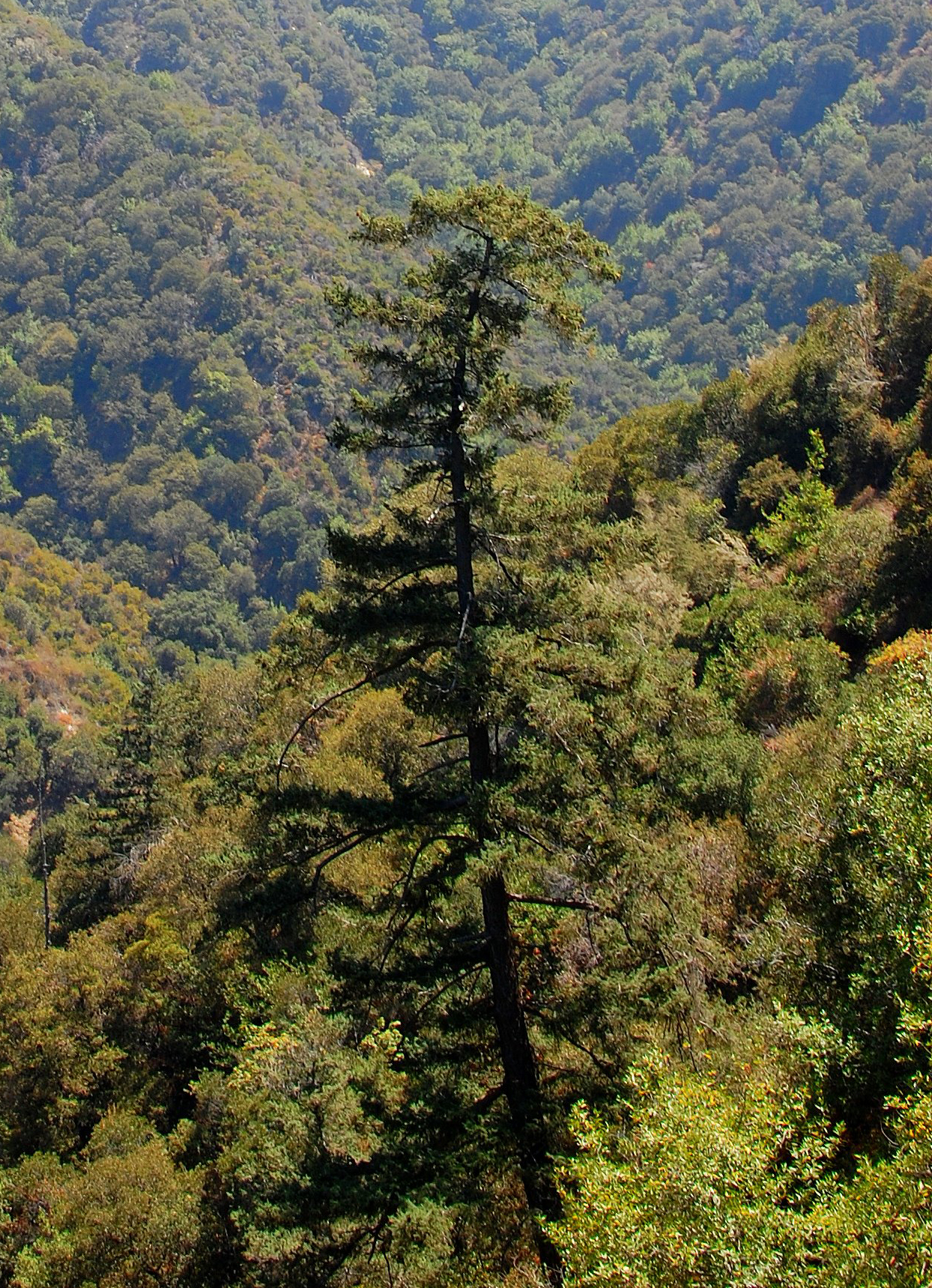
Pseudotsuga macrocarpa, commonly known as Bigcone Douglas-fir or Bigcone Spruce, is a stately evergreen conifer found nowhere on Earth outside the mountains of Southern California. Unlike its far more widespread cousin, Coast Douglas-fir (Pseudotsuga menziesii), Bigcone Douglas-fir has adapted to a Mediterranean climate of hot, dry summers and periodic wildfire, carving out a narrow but ecologically important niche in the canyons of the Transverse and Peninsular ranges.
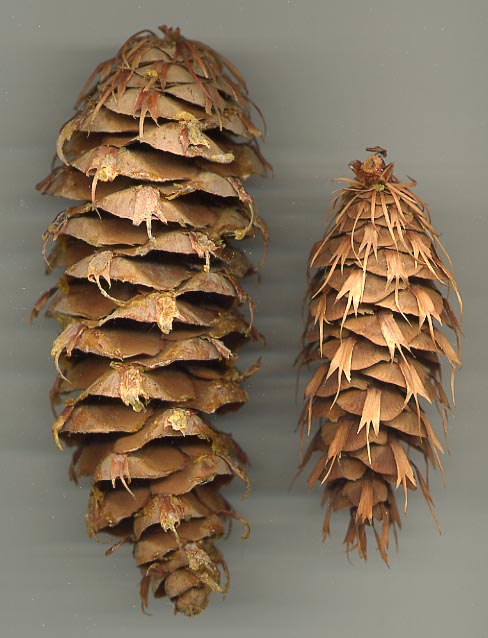
This long-lived tree typically reaches 40 to 100 feet in height, with old specimens in sheltered canyons growing considerably taller. It is immediately recognizable by its massive cones — up to 7 inches long, nearly twice the size of any other Douglas-fir’s — and by thick, deeply furrowed bark that insulates the trunk from the low-intensity fires that periodically sweep through its chaparral and mixed-conifer habitat. Where moisture collects in steep, north-facing canyons, Bigcone Douglas-fir forms cool, shaded groves that stand in sharp visual contrast to the surrounding sun-baked slopes.
Because it is restricted to a small, fire-prone range in one of the most heavily populated regions of the country, Bigcone Douglas-fir deserves far more attention from native-plant gardeners and land managers in Southern California than it currently receives. It is an excellent choice for large canyon-edge or hillside properties in its native range, where it provides shade, erosion control, and habitat found in few other conifers adapted to this climate.
Identification
Bigcone Douglas-fir is a single-trunked evergreen conifer with a broadly conical to irregular, open crown, especially in older trees growing in exposed sites. Trunk diameters of 3 to 5 feet are common in mature individuals, and the tallest canyon-bottom trees can exceed 150 feet, though most trees encountered on drier slopes are considerably smaller and more wind-sculpted.
Bark & Stems
The bark is thick, corky, and deeply furrowed into irregular ridges, turning dark reddish-brown to nearly black with age. This thick bark is a key fire adaptation, insulating the cambium from the heat of surface fires that frequently burn through its chaparral habitat. Young twigs are slender and orange-brown, becoming gray and rougher with age.
Leaves
Needles are flat, blunt-tipped, and arranged spirally around the twig, spreading in two loose ranks. Each needle is about ¾ to 1¼ inches long, dark yellow-green above with two whitish stomatal bands beneath. Crushed foliage releases a resinous, faintly citrus-like fragrance typical of the genus.
Flowers & Fruit
Like all Douglas-firs, this species is monoecious, with small reddish male pollen cones and upright green female cones appearing in spring near the branch tips. The defining feature of the species is its cone: a pendant, barrel-shaped structure 4 to 7 inches long, the largest of any Douglas-fir in the world. Each cone bears distinctive three-pronged bracts that extend well beyond the scales, giving the cone a shaggy, bristled appearance. Cones mature and shed seed in their first autumn, and the large, winged seeds are an important food source for several mountain wildlife species.
Quick Facts
| Scientific Name | Pseudotsuga macrocarpa |
| Family | Pinaceae (Pine) |
| Plant Type | Evergreen Conifer Tree |
| Mature Height | 40–100 ft (exceptional canyon trees to 150 ft) |
| Mature Spread | 20–35 ft |
| Growth Rate | Slow to moderate |
| Sun Exposure | Full Sun to Part Shade |
| Water Needs | Low to Moderate once established |
| Soil Type | Rocky, well-drained canyon and slope soils |
| Soil pH | 6.0–7.5 |
| Bloom Time | April (cones, not showy flowers) |
| Flower Color | Reddish male cones; green female cones |
| Fall Color | Evergreen (no fall color change) |
| Fruit | Large bristled seed cones, 4–7 in |
| Deer Resistant | Yes, generally |
| USDA Hardiness Zones | 7–9 |
Native Range
Bigcone Douglas-fir is endemic to the mountains of Southern California, found nowhere else in the world. Its range stretches from the San Rafael Mountains of central Santa Barbara County and the southwestern Tehachapi Mountains of Kern County, south through the Santa Ynez, San Gabriel, San Bernardino, and San Jacinto Mountains, to the Peninsular Ranges near Julian in San Diego County. It occurs at elevations roughly between 1,000 and 8,000 feet.
Within this range the species is confined mostly to steep, north-facing canyon walls and shaded ravines where soil moisture is more reliable than on surrounding south-facing chaparral slopes. It frequently grows in mixed stands with Coulter Pine, Canyon Live Oak, and Bigcone-dominated riparian pockets that persist as moist, fire-resilient refuges within an otherwise fire-adapted chaparral landscape.
The species’ narrow range and association with steep, fire-prone canyons make it vulnerable to the increasing frequency of high-severity wildfire in Southern California. Large, old-growth stands — some containing trees several centuries old — have been lost to recent mega-fires, making the remaining populations an important conservation priority within the Angeles, San Bernardino, and Cleveland National Forests.
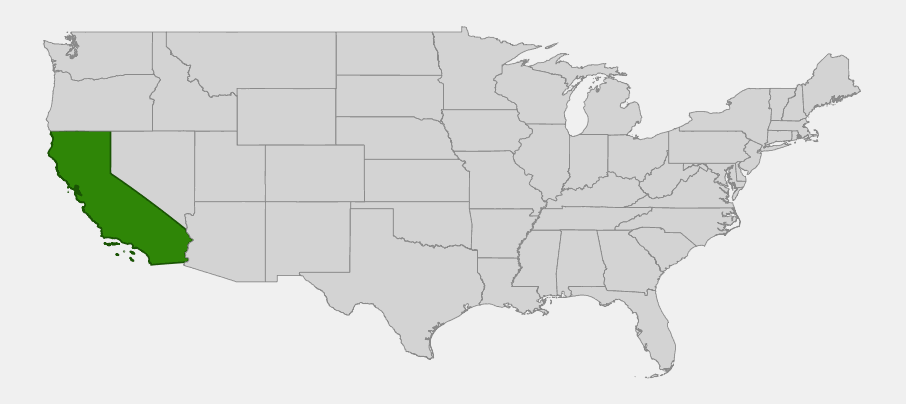
📋 Regional plant lists featuring Bigcone Douglas-fir: California & Nevada
Growing & Care Guide
Bigcone Douglas-fir is a long-term investment for large properties within or near its native range. It is not a fast tree, nor a tree for small yards, but for canyon-edge or hillside gardens in Southern California it offers a rare chance to grow a true regional endemic conifer.
Light
In the wild this species favors the partial shade of steep, north-facing canyon walls, but it tolerates full sun once established, particularly in cooler coastal-influenced microclimates. Young trees benefit from some afternoon shade or the shelter of existing vegetation while their root systems develop.
Soil & Water
Rocky, well-drained soils that mimic its native canyon slopes are ideal. While mature trees are remarkably drought-tolerant and adapted to long, dry Southern California summers, deep occasional watering during the first several years after planting greatly improves establishment. Avoid heavy clay or soils that stay waterlogged, which promote root disease in this species.
Planting Tips
Plant young container-grown trees in fall or winter, ahead of seasonal rains, so roots can establish before the dry season. Choose a site with good air circulation and avoid low frost pockets or heavy irrigation zones designed for lawns, which can encourage root rot. Because of its large eventual size, give it at least 25 to 30 feet of clearance from structures.
Pruning & Maintenance
Established trees need little pruning beyond removing dead or storm-damaged limbs. Because the species is adapted to periodic low-intensity fire, maintaining defensible space and clearing accumulated dead material beneath the canopy is especially important for homeowners in fire-prone canyon settings.
Propagation
Bigcone Douglas-fir is propagated from seed collected from fresh, mature cones in fall. Seed generally benefits from a period of cold stratification before sowing in well-drained nursery mix. Germination and early growth are slow compared with many landscape conifers, so container stock from specialty native nurseries is the most practical option for most gardeners.
Landscape Uses
Few Southern California landscapes make use of this distinctive regional conifer, but it has real value where space allows:
- Canyon-edge and hillside specimen tree on larger properties
- Erosion control on steep slopes within its native elevation range
- Wildlife habitat plantings that recreate native canyon woodland
- Restoration projects following wildfire in appropriate mountain settings
- Shaded windbreak or screen in large native-plant gardens
Wildlife & Ecological Value
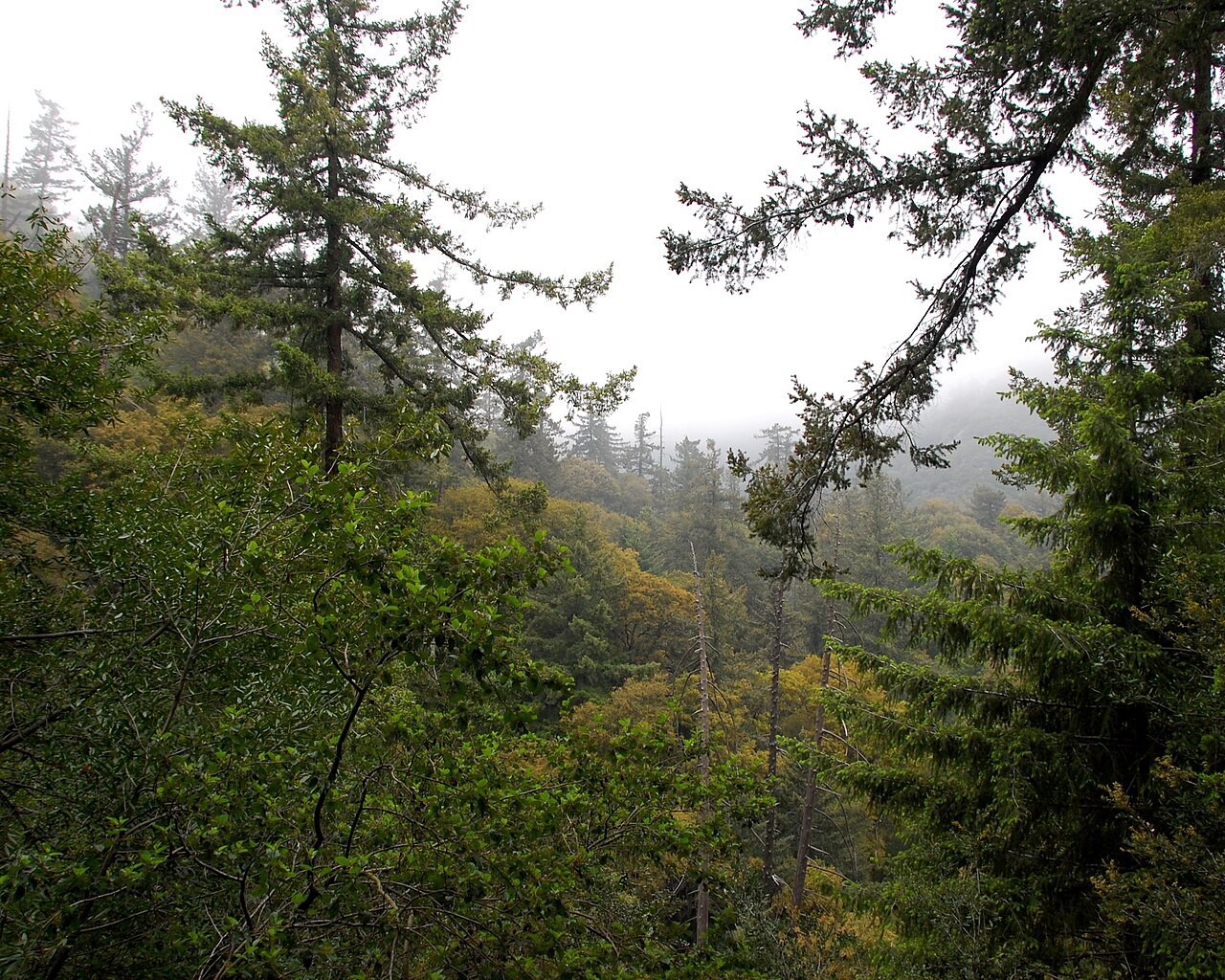
As one of the few large conifers adapted to Southern California’s hot, fire-prone mountains, Bigcone Douglas-fir provides a structurally unique habitat type within its narrow range.
For Birds
The dense evergreen canopy provides nesting and roosting cover for mountain birds, while the large seed crop feeds seed-eating birds such as Pine Siskins, finches, and jays. Raptors, including Red-tailed Hawks, often use the tallest canyon trees as perches and nest sites.
For Mammals
Douglas Squirrels and other tree squirrels harvest the large, resinous cones, caching seed for winter use. Black Bears and Mule Deer use the shaded canyon groves created by this species as cover and travel corridors during the heat of Southern California summers.
For Pollinators
Like other conifers, Bigcone Douglas-fir is wind-pollinated rather than insect-pollinated, so it offers little direct forage for pollinators. However, the cool, moist microclimate it helps maintain in canyon bottoms supports a wider community of flowering understory plants that do support native bees and other insects.
Ecosystem Role
Bigcone Douglas-fir functions as a keystone fire-refuge species in Southern California’s chaparral-dominated mountains. Its thick bark and canyon-bottom habitat allow it to survive fires that eliminate most other woody vegetation nearby, and surviving groves become critical seed sources and shaded microhabitats for forest recovery after large burns. The loss of old-growth stands to recent severe wildfires has made conservation of remaining populations a growing concern for Southern California forest ecologists.
Cultural & Historical Uses
Indigenous peoples of Southern California’s mountain ranges, including Gabrielino/Tongva, Serrano, and Cahuilla communities, lived among Bigcone Douglas-fir in the canyons and foothills where the tree grows, though it was not as heavily utilized as more abundant lowland species such as oaks, whose acorns formed a dietary staple.
Historically, the wood of Bigcone Douglas-fir has seen only limited commercial use compared with the vast timber harvests of its northern relative, Coast Douglas-fir, largely because the species’ rugged, inaccessible canyon habitat and relatively small, scattered population made large-scale logging impractical. This isolation has, ironically, helped preserve old-growth individuals in some protected canyons.
Today, the tree’s primary significance is ecological and scientific rather than economic — it is studied as an indicator of fire regime change in Southern California, and its ancient, fire-scarred individuals offer researchers a record of the region’s wildfire history stretching back centuries.
Frequently Asked Questions
Is Bigcone Douglas-fir the same tree as regular Douglas-fir?
No. Bigcone Douglas-fir (Pseudotsuga macrocarpa) is a distinct species from Coast and Rocky Mountain Douglas-fir (Pseudotsuga menziesii). The two do not naturally hybridize because their ranges do not overlap, and Bigcone Douglas-fir is identifiable by its much larger cones and more fire-adapted bark.
Where does Bigcone Douglas-fir grow natively?
It is endemic to the mountains of Southern California — the Transverse and Peninsular Ranges from Santa Barbara and Kern counties south to San Diego County — and is not native anywhere else in the United States.
Is Bigcone Douglas-fir fire resistant?
It is notably fire-adapted, with thick, insulating bark that helps mature trees survive low- to moderate-intensity fires. However, the high-severity, fast-moving wildfires now common in Southern California can still kill even large, old trees, which is a growing conservation concern.
How big does Bigcone Douglas-fir get?
Most trees reach 40 to 100 feet tall, though exceptional old-growth individuals in sheltered canyons can exceed 150 feet with trunk diameters of several feet.
Can I grow Bigcone Douglas-fir outside of Southern California?
It is best suited to USDA zones 7–9 with a Mediterranean-type climate similar to its native range. It is not well adapted to the humid summers or hard winter freezes found in much of the rest of the country, and performs best planted within or near its native Southern California range.

Looking for a nursery that carries Bigcone Douglas-fir?
Browse our native plant nursery directory: California
For more Southern California tree ideas, see our guides to the best shade trees to grow in California and the best shade trees for San Diego.

