
Pacific Sanicle (Sanicula crassicaulis)
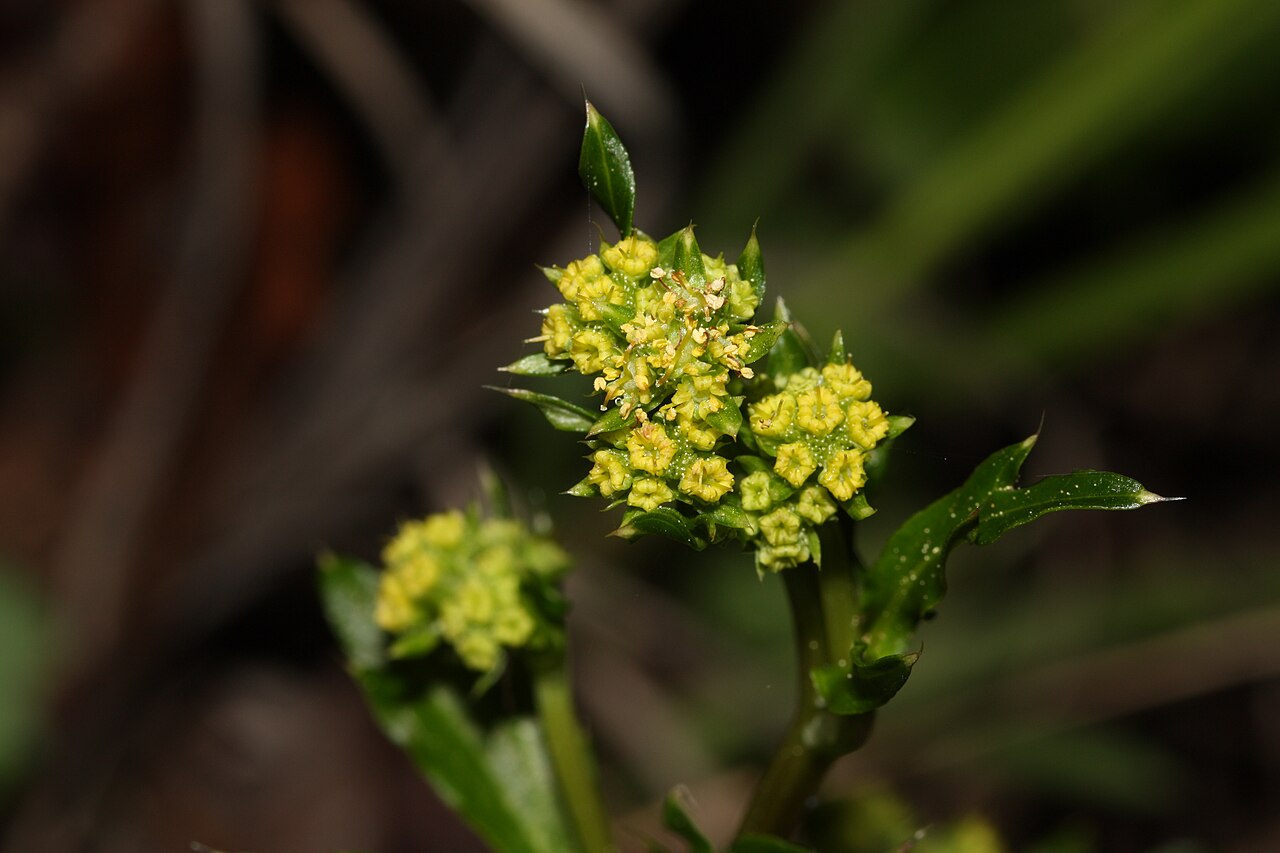
Sanicula crassicaulis, known as Pacific Sanicle and listed by USDA PLANTS as Pacific blacksnakeroot, is a native perennial wildflower of the Pacific Coast in the carrot family (Apiaceae). It grows from a stout taproot, forming a clump of broad, palmately lobed, toothed leaves that look a little like small maple or buttercup leaves. In spring it sends up branching stems 1 to 3 feet tall, topped with many little rounded heads of tiny yellow flowers.
Pacific sanicle is one of the most widespread and common sanicles in the West. It grows in oak woodlands, open conifer and mixed evergreen forests, forest edges, coastal scrub, chaparral openings and shady grassy slopes, from southern British Columbia through western Washington and Oregon to Baja California. Remarkably, it also grows in central Chile, one of a number of plants found on both sides of the tropics but nowhere in between.
It is not a showy plant, but it is a dependable part of spring in western woodlands. It feeds small native bees and flies, its bur-like fruits hitch rides on passing animals, and it is easy to grow in a shady, summer-dry garden. This guide covers how to identify it, where it grows, how to grow it, and its place in the ecosystem.
Identification
Pacific sanicle is easy to recognize in spring by its combination of maple-like leaves, branching stems and small yellow ball-shaped flower clusters. Several other sanicles grow in the same region, and they differ mainly in leaf shape, flower color and size.
Leaves
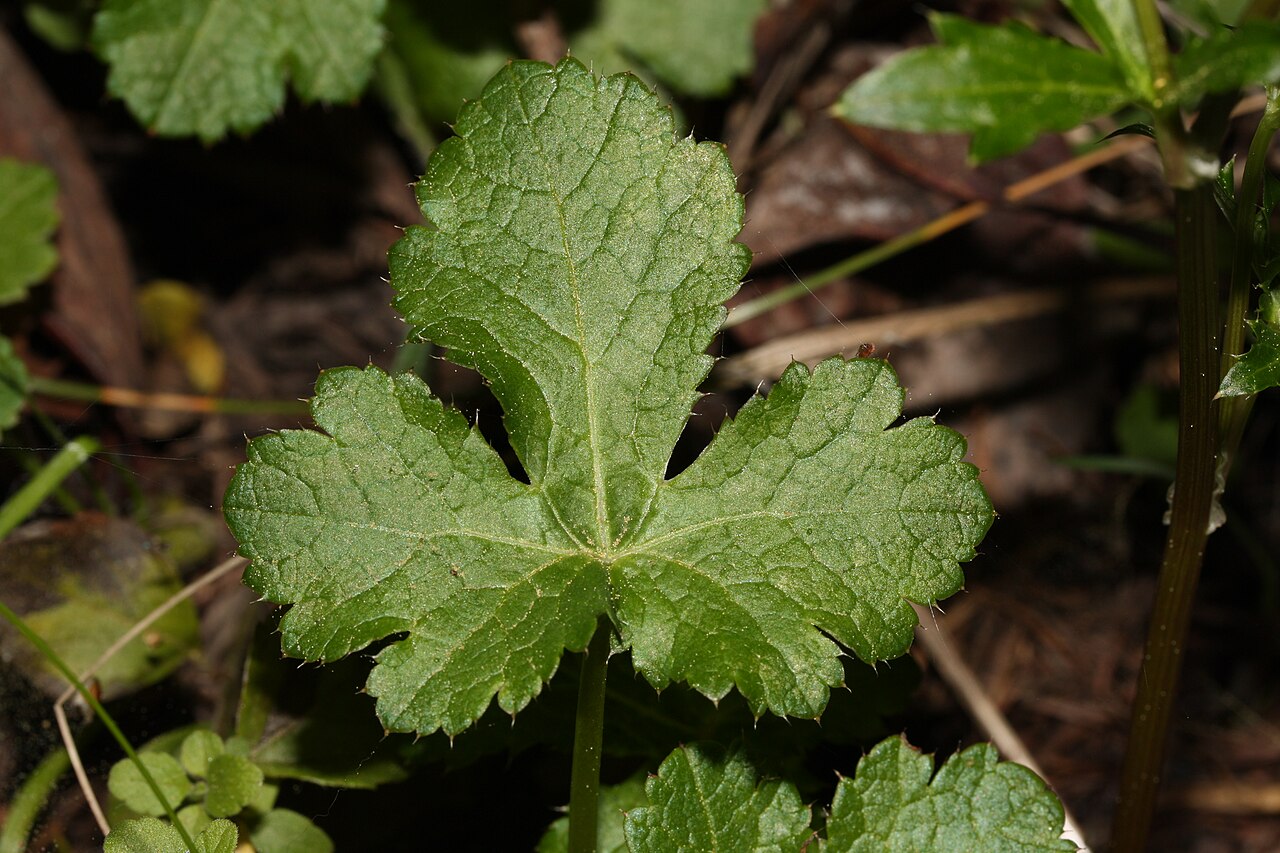
Most leaves arise from the base of the plant or low on the stem on long stalks. The blades are roughly round in outline, 1½ to 4 inches wide (sometimes larger in shade), and palmately divided into three to five broad lobes that are further cut and coarsely toothed, with small bristle tips on the teeth. Upper stem leaves are smaller and less divided. The foliage is bright to dark green and appears in winter or early spring.
Stems
Flowering stems are erect, branched and fairly stout for a sanicle (the species name crassicaulis means “thick-stemmed”), usually 1 to 3 feet tall and occasionally taller. They branch repeatedly near the top, each branch ending in a small cluster of flower heads.
Flowers
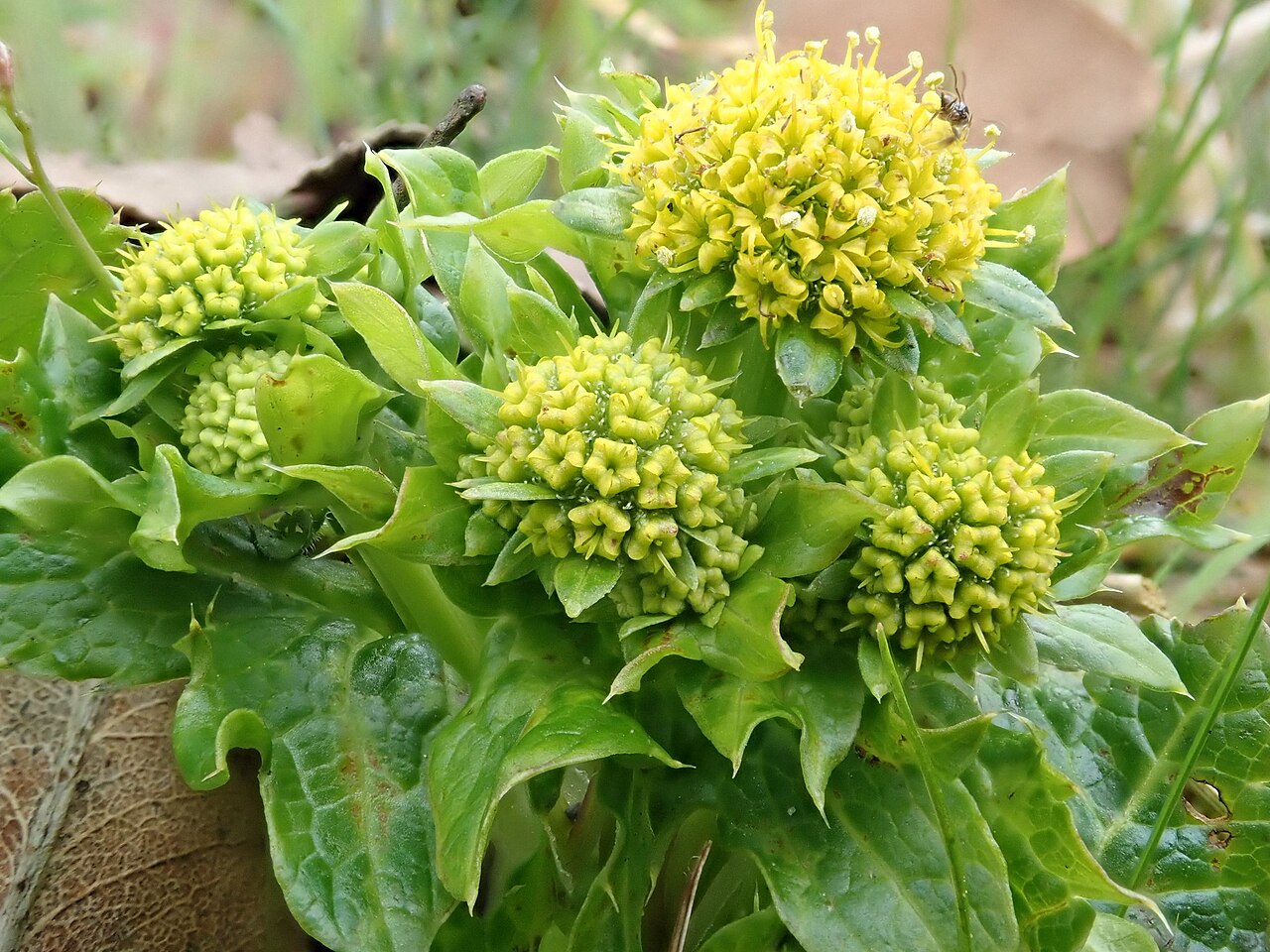
The flowers are tiny and yellow, gathered into small, tight, ball-like clusters (umbellets) about ¼ inch across, each surrounded by a few small green bracts. Several of these clusters sit at the ends of the branches. Each cluster contains both bisexual flowers and male-only flowers. Bloom is in spring, mostly March to June, earlier in southern California and later at higher elevations and farther north.
Fruit & Seeds
The fruits are small, egg-shaped and covered with hooked prickles, forming tiny burs about ⅛ inch long. They cling readily to fur, feathers and clothing. By early summer the plant dries and goes dormant, and the burs ripen on the dried stems.
Similar Species
Purple sanicle (Sanicula bipinnatifida) has dark purple or sometimes yellow flowers and deeply, pinnately divided leaves with a winged midrib. Footsteps of spring (Sanicula arctopoides) is a low, sprawling coastal plant with yellow-green leaves. Sierra sanicle (Sanicula graveolens) is smaller, with pinnately divided leaves, and grows mostly in drier mountain habitats. Buttercups (Ranunculus) have similar leaves but glossy, five-petaled flowers.
Quick Facts
| Scientific Name | Sanicula crassicaulis |
| Family | Apiaceae (carrot family) |
| Plant Type | Herbaceous perennial with a taproot; summer-dormant |
| Mature Height | 1–3 ft in flower |
| Mature Spread | 1–1½ ft |
| Growth Rate | Moderate |
| Sun Exposure | Partial shade to light shade; tolerates sun on the coast |
| Water Needs | Low to medium; moist in winter and spring, dry in summer |
| Soil Type | Loam, clay loam or rocky soil with leaf litter |
| Soil pH | About 5.5–7.5 |
| Bloom Time | March–June |
| Flower Color | Yellow |
| Fall Color | None; dormant from summer until winter rains |
| Fruit | Small bur covered with hooked prickles |
| Deer Resistant | Moderately; occasionally browsed |
| USDA Hardiness Zones | 7–10 |
Native Range
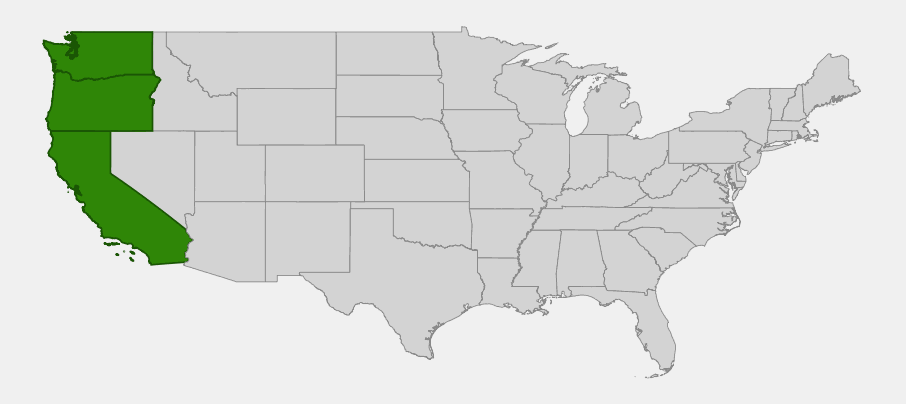
Pacific sanicle is native to the Pacific Coast of North America. USDA PLANTS records it from Washington, Oregon and California, and in Canada it grows in southwestern British Columbia, mostly on southern Vancouver Island, the Gulf Islands and the lower mainland. Its range continues south into northern Baja California, Mexico. It is common west of the Cascades in Washington and Oregon and occurs throughout much of California’s coast ranges and Sierra Nevada foothills.
In the Pacific Northwest it is a characteristic plant of Oregon white oak woodlands, prairie edges and open Douglas-fir forests in the Puget Trough and Willamette Valley. In California it grows in oak woodland, mixed evergreen forest, redwood forest edges, chaparral openings and coastal scrub, from near sea level to the middle elevations of the mountains.
Pacific sanicle also grows in central Chile, where it was first described by botanists. This is a classic example of an amphitropical disjunction, in which closely matched populations of a species occur in temperate western North and South America with none in the tropics between. Botanists believe such ranges arose through long-distance dispersal, possibly by migrating birds, and the hooked burs of sanicles are well suited to that kind of travel.
Growing & Care Guide
Pacific sanicle is an easy, low-maintenance native for woodland and oak gardens on the West Coast. It is seldom sold as a plant but is easy to start from seed, and it fits naturally into summer-dry gardens because it is dormant through the hottest, driest months.
Light
It does best in partial shade or the light shade of oaks and open conifers. Along the cool coast it tolerates more sun. In hot inland gardens, give it afternoon shade.
Soil & Water
Pacific sanicle grows in a wide range of soils, from loam and clay loam to rocky slopes, as long as they drain reasonably well. It needs moisture during the winter and spring growing season, which natural rainfall usually provides in its range. Once it goes dormant in summer it needs no watering, and summer irrigation can cause the taproot to rot.
Planting Tips
Sow seed outdoors in fall, just before the rains, on loosened soil under trees or along a woodland edge. Seeds germinate with winter rains, and plants usually flower in their second or third spring. Nursery plants, when available, are best planted in fall. Group several plants among native grasses, ferns and other woodland wildflowers.
Pruning & Maintenance
Little care is needed. Cut back the dry stems in summer once seed has dropped, especially near paths where the burs might cling to clothing or pets. Leave leaf litter in place as mulch.
Propagation
Propagation is by seed. Fresh seed sown in fall germinates best after the cool, moist conditions of winter. Because of the taproot, established plants do not divide or transplant well. Plants self-sow modestly in favorable sites.
Landscape Uses
- Oak woodland gardens: a natural companion under Oregon white oak and coast live oak
- Shade gardens in summer-dry climates: spring foliage and flowers, then summer dormancy without irrigation
- Woodland and prairie-edge restoration: within its native range in the Pacific states
- Pollinator gardens: early-season pollen and nectar for small native bees and flies
- Naturalized areas: self-sows modestly among native grasses and shrubs
Wildlife & Ecological Value
Pacific sanicle blooms early in the season, when many western woodland insects are just becoming active, and it is a steady, if modest, part of the food web in oak and conifer woodlands.
For Pollinators
The small yellow flower heads attract a variety of small pollinators, including small native bees such as mining bees and sweat bees, flies including hover flies, and small beetles. Because the plant produces many flower heads over several weeks in spring, it is a reliable early food source.
For Birds
Pacific sanicle is not an important food plant for birds, although ground-foraging birds may eat some seeds. The oak woodlands and forest edges where it grows are rich bird habitat.
For Mammals
Deer occasionally browse the leaves. Mammals such as deer, coyotes and rabbits carry the hooked burs in their fur, spreading the seeds to new places.
Ecosystem Role
Like other sanicles, Pacific sanicle relies on animals for seed dispersal. It is a common understory herb in oak savannas and woodlands, habitats that have declined sharply in the Pacific Northwest. Including it in oak woodland restoration helps rebuild the diverse native herb layer that these ecosystems once supported.
Cultural & Historical Uses
The genus name Sanicula comes from the Latin sanare, “to heal.” European sanicle (Sanicula europaea) was a well-known wound herb in medieval Europe. The common name “snakeroot” was applied to North American sanicles from the belief that they could treat snakebite. Such claims are historical, and there is no reliable evidence for them.
Pacific sanicle was first described from Chile by the Swiss botanist Augustin Pyramus de Candolle in 1830, based on a name proposed by Eduard Poeppig, who collected plants in South America. Its North American populations were later recognized as the same species.
Native peoples of California and the Pacific Northwest knew many members of the carrot family as food, medicine or poison, and some sanicles appear in ethnobotanical records. Since some relatives in the carrot family are dangerously toxic and look superficially similar, wild plants of this family should never be eaten without expert identification.
Frequently Asked Questions
Is Pacific sanicle the same as Pacific blacksnakeroot?
Yes. Pacific blacksnakeroot is the name used by USDA PLANTS for Sanicula crassicaulis. Pacific sanicle and gamble weed are other common names for the same species.
When does Pacific sanicle bloom?
Mostly from March to June, depending on location. It blooms earliest in southern and coastal California and latest at higher elevations and in the northern part of its range.
Does Pacific sanicle need summer water?
No. It is adapted to the wet-winter, dry-summer climate of the West Coast and goes dormant in summer. Summer irrigation can cause the root to rot.
Why does Pacific sanicle grow in Chile too?
It is one of a number of plants with an amphitropical range, found in temperate western North and South America but not in between. Botanists think its seeds were carried long distances, possibly on migrating birds, long ago.
Are the burs a problem?
The small hooked fruits can cling to socks and pet fur in early summer, but they are fewer and smaller than those of many weeds. Cutting the dry stems after flowering keeps them away from paths.

Looking for a nursery that carries Pacific Sanicle?
Browse our native plant nursery directory: California · Oregon · Washington