
Best Ground Cover Plants for New York: Top Varieties for Year-Round Growth and Low Maintenance
Last updated: October 19, 2026
Picking the right ground cover plants for New York takes a little thought about climate, soil, and sunlight. Hardy options thrive in both city and suburb, giving you easy-care green space that chokes out weeds and keeps soil where it should be.
Some of the best ground cover plants for New York? Think pachysandra, creeping thyme, and periwinkle. These plants handle the state’s unpredictable weather and soil with surprising ease.
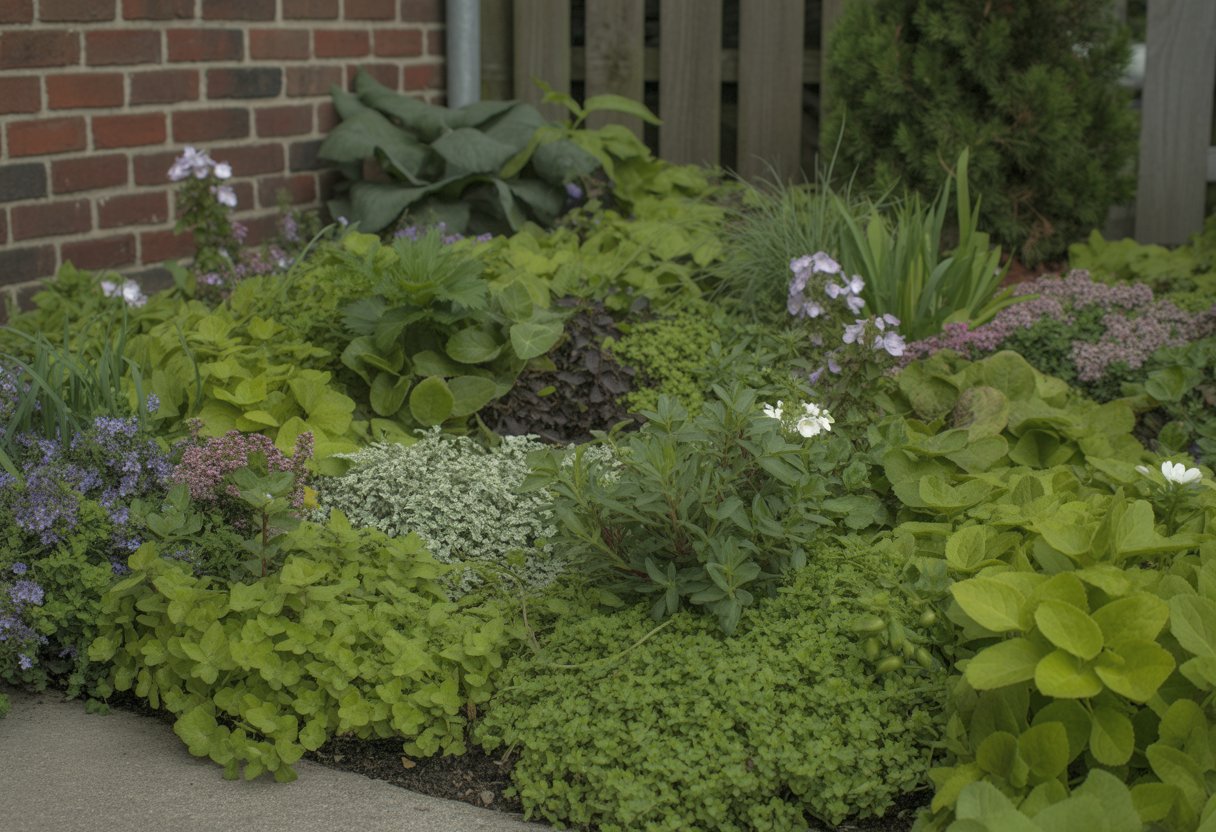
They push through cold winters and humid summers, so you get greenery that sticks around. You’ll also find plenty of variety in texture and looks, which means you can mix and match for whatever vibe you’re after.
Top Ground Cover Plants for New York
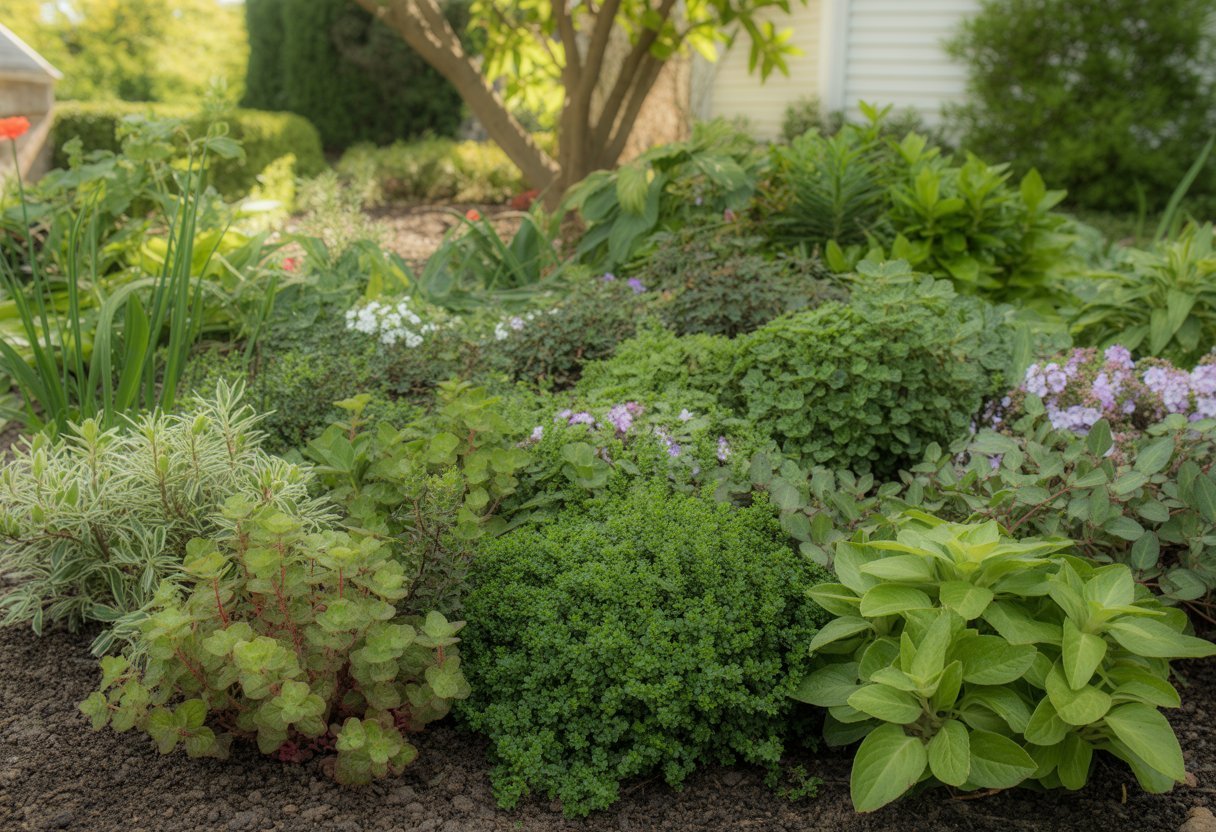
These groundcovers don’t mind New York’s unpredictable weather. Some like sun, some like shade, and most of them are just plain tough.
You’ll see less erosion, fewer weeds, and more color without much effort.
Creeping Thyme (Thymus serpyllum)
Creeping Thyme loves the sun and can handle drought. It hugs the ground, spreading out quickly to make a thick, fragrant carpet.
If you walk on it, you’ll catch a pleasant aroma. In late spring and early summer, it shows off with tiny purple blooms and attracts bees and butterflies.
Creeping Thyme doesn’t mind poor soil or foot traffic. It’s great for rocky spots or along pathways.
Sweet Woodruff (Galium odoratum)
Sweet Woodruff does best in shade or dappled sunlight. Its bright green leaves grow in whorls, and it puts out delicate white flowers each spring.
This plant likes moist, well-drained soil and works well under trees or shrubs. If you crush the leaves, you’ll notice a gentle vanilla scent.
Mondo Grass (Ophiopogon japonicus)
Mondo Grass handles shade and stays green year-round. Its foliage looks like grass, but it’s actually a groundcover that spreads slowly by rhizomes.
It adapts to lots of different soil types. Try it instead of regular grass in those tricky shaded corners.
Mondo Grass produces small, pale flowers in summer, but honestly, you might not notice them.
Delosperma (Ice Plant)
Delosperma, or Ice Plant, is a succulent that craves sun and well-drained soil. Its leaves are fleshy, and its daisy-like flowers pop from late spring through fall.
This plant shrugs off drought and loves rocky, dry spots—even steep slopes. Once it’s settled in, you barely need to water it.
Selecting the Right Ground Covers for Your Landscape
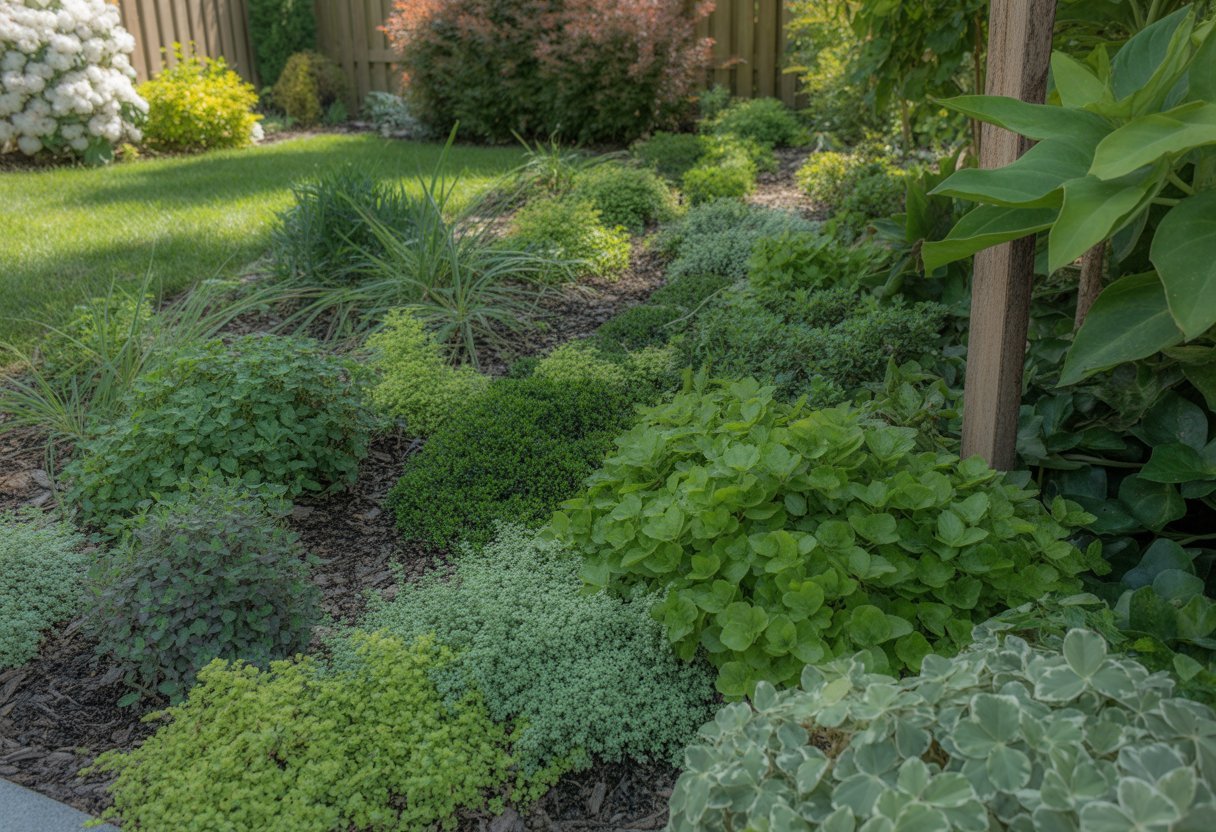
Your best bet is to match ground covers to your yard’s quirks. Light, soil, and critters all play a role in what survives and looks good.
Sun and Shade Requirements
Different ground covers crave different amounts of light. If you’ve got a sunny patch, creeping thyme or sedum will thrive with at least six hours of direct sun.
They shrug off heat and drought. But if your spot is shady, you’ll want something like pachysandra, lilyturf, or ajuga.
These plants do better under trees or on north-facing slopes. They only need a few hours of filtered light and help keep weeds at bay.
Knowing exactly how much sun your area gets saves you hassle later. You’ll end up with plants that need less water and fuss.
Soil and Moisture Preferences
Soil matters—a lot. Some ground covers love acidic or moist soil, while others need it dry or even a bit sandy.
Juniper, for example, likes soil that drains fast and doesn’t mind drought. Creeping phlox, on the other hand, prefers things a bit more moist and rich.
Test your soil’s pH and drainage if you can. Clay holds water, so you might want moisture-loving plants. Sandy spots suit drought-resistant ones.
Some groundcovers just can’t handle wet feet, so pick accordingly. Getting this right means less stress for your plants and you.
Deer Resistance and Hardiness
Deer can make or break your groundcover plans. Lamium and vinca don’t taste good to deer, so they usually leave them alone.
Hosta, though? Deer love it, so maybe skip that if you’ve got lots of four-legged visitors.
New York’s hardiness zones run from 4 to 7. Some plants, like creeping juniper and wintergreen, survive deep freezes just fine.
Others might die back but return in spring. Pick groundcovers that can take your local winter—your future self will thank you.
Planting and Care Tips for Groundcovers in New York
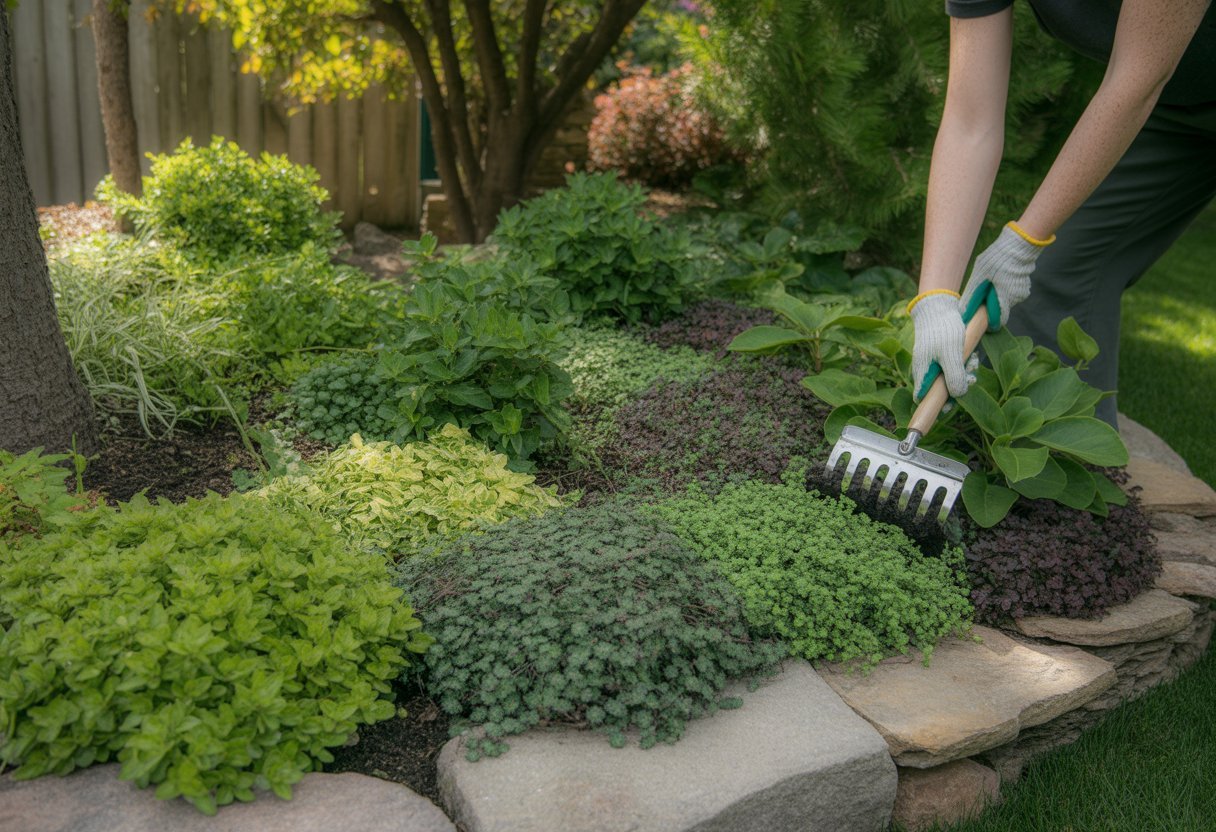
Getting groundcovers established in New York isn’t rocket science, but a little prep goes a long way. Pay attention to watering, soil, and a bit of pruning for the best results.
Site Preparation and Planting Methods
Start with well-drained soil that’s not too rich, not too poor. Aim for a pH between 6.0 and 7.0 if you can.
Clear out weeds and loosen the soil about 6 to 8 inches deep. Most groundcovers need about 12 to 24 inches of space between them so they can spread without crowding each other.
If you want fast coverage, use small plants or plugs instead of seeds. Spring or fall is the best time to plant—less heat stress that way.
A layer of mulch around each plant holds in moisture, keeps weeds down, and helps roots settle in.
Watering and Fertilization
Keep new groundcovers moist until they’re settled—usually about two or three weeks. Water deeply once or twice a week instead of every day.
That encourages deeper roots. Once your plants are established, most can handle dry spells, but a little extra water during drought doesn’t hurt.
Drip irrigation or soaker hoses work great and help avoid wetting the leaves too much. In early spring, feed with a balanced, slow-release fertilizer like 10-10-10.
Don’t overdo it—too much fertilizer means more leaves and fewer roots. Always follow the directions on the label, especially for groundcovers.
Pruning and Maintenance
Most groundcovers barely need much pruning at all. Just trim back any dead, damaged, or overgrown bits once a year—late winter or early spring works well, before new growth kicks in.
Aggressive spreaders like Pachysandra or Vinca can get a little wild, so give them a quick trim now and then to keep them in check. If you want to stop them from spreading everywhere, snip off flowers or seed heads as they appear.
Keep an eye out for pests like snails, slugs, or those annoying fungal diseases that love humid summers. I find that giving plants enough space for air to move around really helps keep most problems at bay.

