DIY Drip Irrigation for Gardens: Efficient Watering Made Simple
Last updated: September 2, 2026
Drip irrigation delivers water straight to plant roots, cutting down on waste and helping your garden thrive. You can tweak a DIY drip system to fit any garden, big or small, so it’s a handy option for anyone who likes to get their hands dirty.
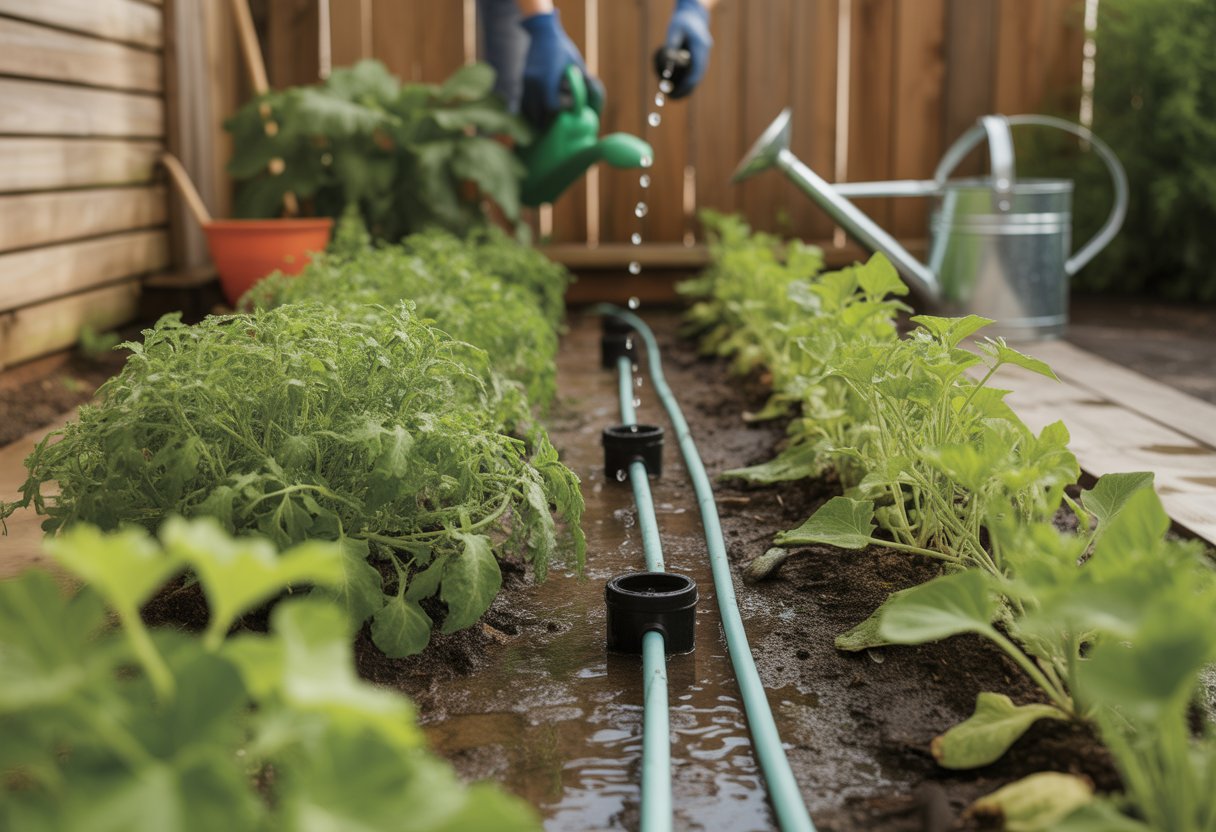
Building your own drip setup isn’t rocket science. You just need some tubing, connectors, and emitters—basic stuff you can grab at most hardware stores.
This kind of watering saves a ton of time, especially if you live somewhere dry or deal with droughts. It’s a relief not to drag hoses around every day.
With a drip system, plants get steady moisture right where they need it. You won’t end up drowning them, either.
It’s also nice that weeds don’t get much of a chance and your soil stays put. Less erosion, fewer weeds, healthier plants—it’s a win all around.
Understanding DIY Drip Irrigation Systems
DIY drip irrigation works by sending water through a network of tubes and emitters, right to the roots. You get to decide where the water goes, and it’s way easier to install than you might think.
This method conserves water and lets you target certain plants. You can change the setup as your garden grows.
How Drip Irrigation Works
Drip systems use small tubes or hoses with emitters that slowly release water at the base of your plants. The slow drip keeps evaporation and runoff to a minimum.
Most setups run at low pressure—usually 10 to 30 psi—so you have more control. You can put emitters wherever you need, depending on how your plants are spaced.
A main supply line connects to the drip lines or soaker hoses. Filters and pressure regulators help everything run smoothly and last longer.
Since water hits only the spots you want, weeds have a tougher time popping up. That’s always a plus.
Types of Drip Irrigation Systems
There are a few common types: point-source emitters, soaker hoses, and drip tape. Point-source emitters drip from specific spots, great for rows or beds.
Soaker hoses have tiny pores along their length, so water seeps out evenly. These work well for shrubs or plants that are close together.
Drip tape is basically a flat hose with microholes—ideal for big veggie gardens or farm rows. You can mix and match these in a DIY setup.
Tubing, connectors, valves, and timer controllers let you customize and even automate the system.
Benefits Over Sprinkler Systems
Drip irrigation puts water right at the roots, so you don’t lose much to wind or evaporation like you do with sprinklers. Plants seem to appreciate it, and you might notice a lower water bill.
Leaves stay dry, which helps keep diseases at bay. The system runs quietly and doesn’t wash away your soil.
You can set it up to fit weirdly shaped gardens or uneven ground. Maintenance is mostly about checking for leaks or cleaning emitters—not constantly fiddling with sprinkler heads.
Planning Your Drip Irrigation for Gardens
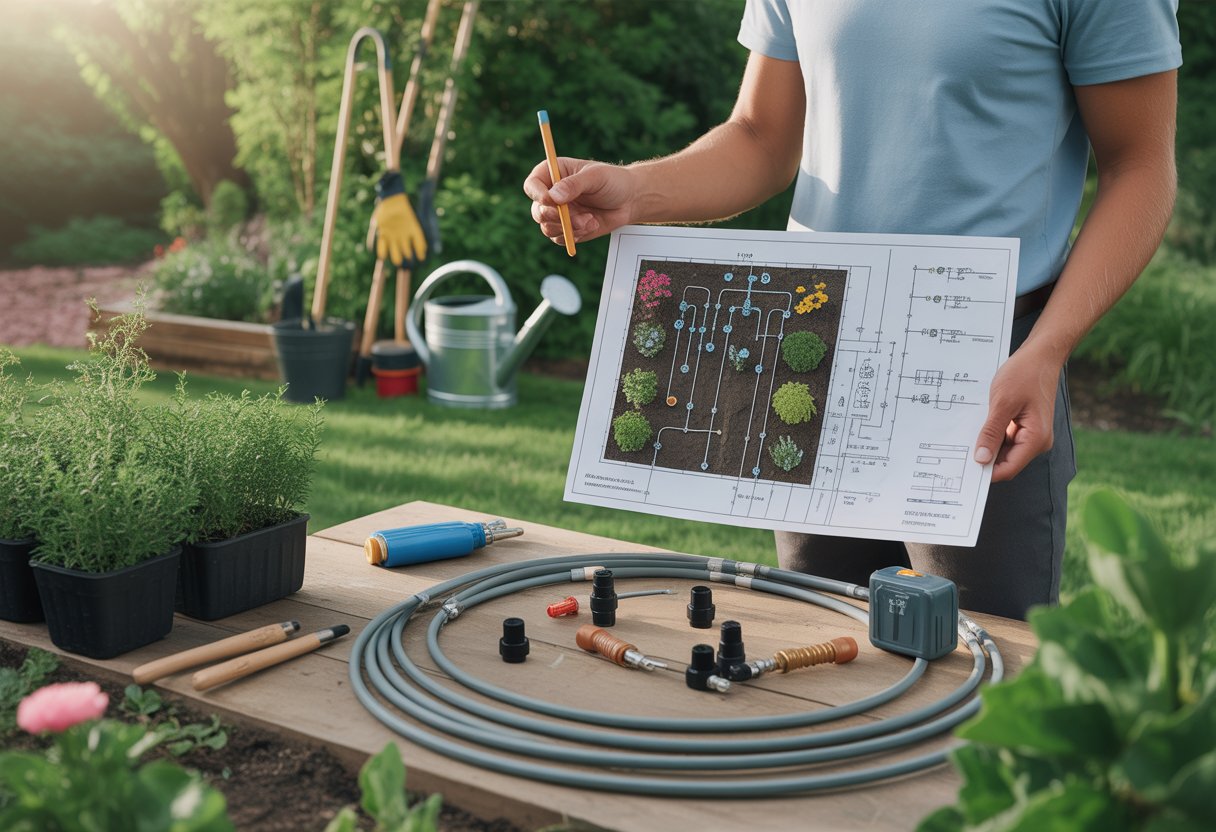
Good planning matters. You need to know your watering needs, sketch a layout, and pick materials that actually make sense for your space.
If you skip this part, you’ll probably end up wasting water or missing spots in your garden.
Assessing Garden Watering Needs
Start by figuring out what each area needs—veggies, flowers, containers, whatever you’ve got. Veggies usually want steady moisture, but flower beds can handle a little less.
Soil type makes a difference. Clay holds water longer, so you don’t need to water as often as you would with sandy soil.
Check soil moisture by hand so you don’t overdo it. It’s easy to get carried away.
Measure your water flow and pressure, too. This helps make sure every corner of the garden gets what it needs, even those self-watering containers in the sun.
Designing the Layout
Divide your garden into zones based on what you’re growing and how much sun each area gets. Each zone should have its own drip line or tubing.
Map out where you’ll put drip emitters. Make sure every plant’s roots get covered.
Arrange lines to avoid wasted water and pooling. If your yard isn’t flat, keep that in mind. Adjustable emitters let you tweak the flow for different plants.
Selecting and Sizing Components
Pick drip lines, emitters, and fittings that match your water pressure. If your pressure’s high, grab a regulator to keep emitters from blowing out.
Emitter flow rates are usually between 0.5 and 4 gallons per hour. Veggies and containers like a slower drip, while big flower beds might need a bit more.
For small gardens, 1/4-inch tubing is fine. Larger areas might need 1/2-inch main lines to keep the flow steady.
Look for parts that can handle sun and weather so you don’t have to replace them every season.
Step-by-Step DIY Installation Guide
When you’re ready to build, focus on picking the right parts, putting everything together without leaks, and placing emitters where they’ll do the most good.
Getting the flow just right is a bit of trial and error, but that’s half the fun.
Gathering Materials from the Hardware Store
Grab the basics: flexible tubing, PVC pipe for the main line, emitters, and maybe some soaker hoses.
Don’t forget a pressure regulator or reducer—you’ll need it to keep the system from getting wrecked by high pressure.
Here’s a quick checklist:
- Flexible tubing (¼” or ½”)
- PVC pipe (main line)
- Pressure regulator/reducer
- Drip emitters (get a few flow rates)
- Soaker hoses
- Connectors (tees, elbows, couplings)
- End caps
- Hose stakes
Buy the good stuff if you can. Cheap parts leak and break, and that’s just annoying.
Assembling the Main Line and Flexible Tubing
Lay out your main line from the water source with PVC or heavy tubing. Attach the pressure regulator right at the faucet.
Connect flexible tubing to the main line with the right fittings. Cut tubing for each garden zone and secure it with connectors.
Use stakes to keep the tubing in place. You don’t want it wandering all over.
Tighten connections enough to prevent leaks, but don’t go overboard or you’ll crack something.
Installing Emitters and Soaker Hoses
Stick drip emitters at the base of each plant. You can pick different flow rates depending on what each plant needs.
For bigger areas, run soaker hoses along the rows or beds. Punch holes in tubing for emitters with a drip system hole punch.
Pop end caps on the tubing so water doesn’t just run out the end. Space emitters and hoses evenly so everything gets watered.
Testing and Adjusting Water Flow
Turn the water on slow at first. Look for leaks or spots where the pressure drops.
Check every connection for drips. Watch the emitters—are they all working?
Swap out emitters if you need a different flow, or add a pressure reducer if things seem off. If you find dry patches, add more emitters or tweak their placement.
Keep an eye on things for the first week or two. Little fixes now save headaches later.
Optimizing and Maintaining Your Drip Irrigation
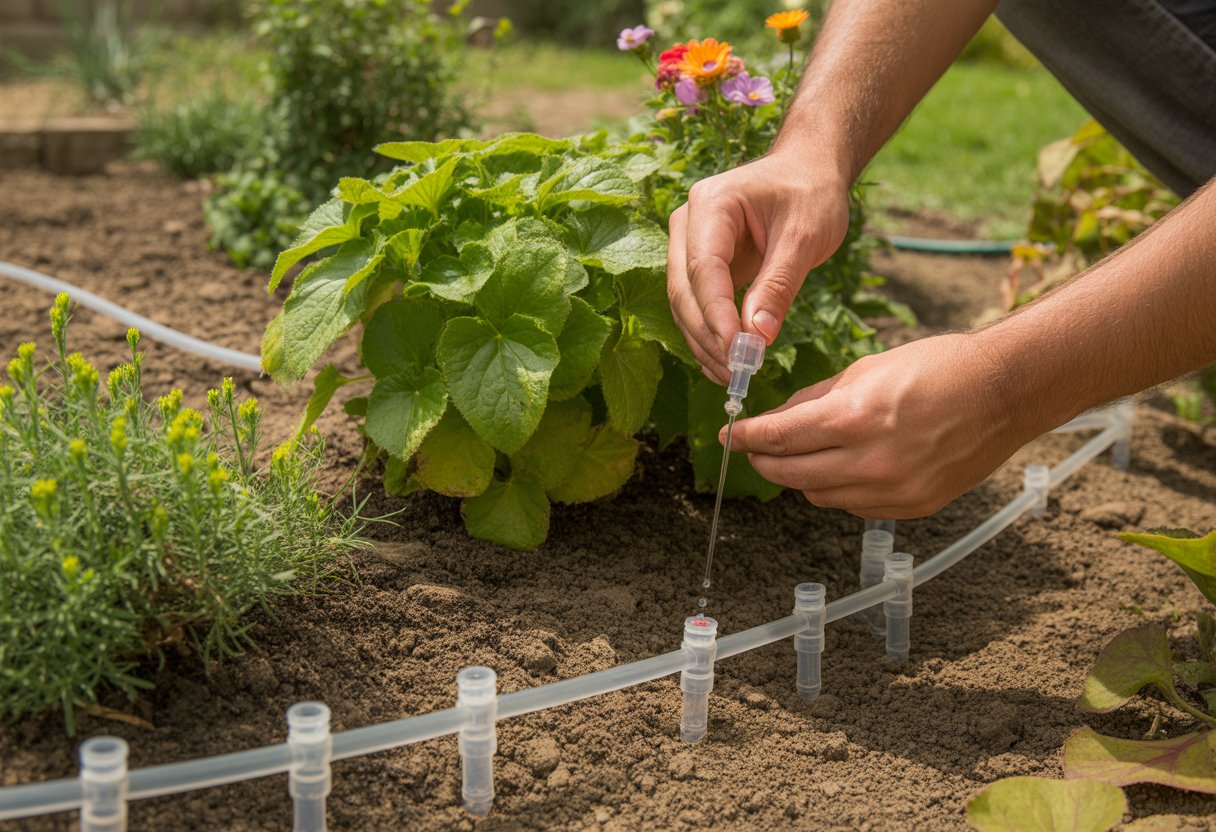
A good drip system needs a bit of attention now and then. Small tweaks and regular checks keep it running smooth and help you get the most out of every drop.
Mixing in some automation or using rain barrels can make life easier and save even more water.
Using Rain Barrels and Gravity Feed
Rain barrels are a smart way to catch and store water for your drip system. You’ll use less tap water and save a few bucks.
Set the barrel up on a platform, at least two feet above your lines. That gives you enough pressure for a gentle flow.
Hook a hose or drip line right to the barrel’s outlet. Check filters often so gunk doesn’t clog your emitters.
Gravity-fed systems aren’t high pressure, but they’re perfect for slow, deep watering. Your plants will thank you for it.
Improving Water Conservation with Mulch
Mulch is a drip system’s best friend. Toss some wood chips or straw around your plants to lock in moisture and keep the soil cool.
Spread mulch in a 2-3 inch layer, but don’t pile it against plant stems—nobody wants rot. Mulch also helps keep soil temps steady and makes your watering even more effective.
You’ll water less often, which means less work for you and better yields for your garden.
Automating with Solenoid Valves
If you’re tired of turning valves by hand, add solenoid valves for automation. Timers or moisture sensors can open and close them for you.
Install solenoid valves in the main water line to control each zone. Make sure you use waterproof boxes for the wiring—rain happens.
Automation means your plants get exactly what they need, even if you forget. It’s a bit of a project, but worth it for the peace of mind.
Troubleshooting Common Issues
Clogged emitters show up all the time. Just flush the lines and clean the filters regularly to keep water flowing.
Check the tubing for cracks or leaks. These can mess with water pressure and make the whole system less efficient.
If you notice uneven watering, maybe some emitters are blocked or spaced wrong. Try adjusting or swapping them out to get moisture spread evenly.
When the pressure suddenly drops, look for airlocks or kinks in the tubing. Keeping the system in good shape helps avoid wasting water and gives your crops a better shot at thriving.
 Looking for a nursery that carries native plants?
Browse our native plant nursery directory