
How to Grow Chard Successfully in Any Garden Environment
Last updated: August 21, 2026
Growing chard is surprisingly simple and pretty rewarding, especially if you already like leafy greens. Swiss chard, part of the beet family, loves well-drained soil with steady moisture and a mix of sun—partial or full.
The best way to grow chard is to plant seeds directly into the garden after the last frost, spacing them about 6 to 12 inches apart, and keeping the soil evenly moist.
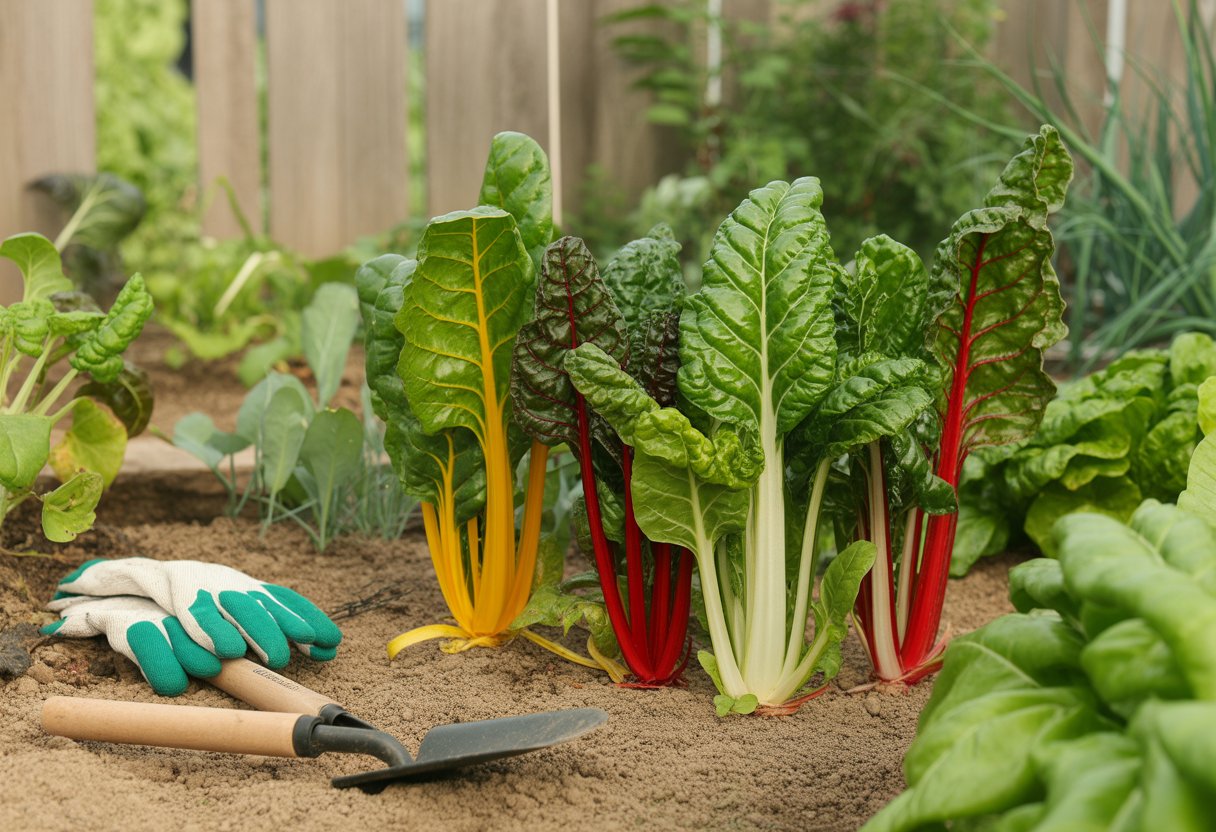
Chard grows fast and lets you harvest more than once—just snip the outer leaves and let the center keep chugging along. It handles a lot of climates, shrugs off most pests, and is a solid pick for anyone who wants an easy, nutritious green.
If you get a handle on Swiss chard’s soil needs and watering habits, you’ll see better yields and nicer leaves. Let’s walk through the basics for adding this versatile veggie to your garden.
Preparing to Grow Chard
Getting chard to thrive starts with picking the right variety, prepping nutrient-rich soil, and planting at the right time. Each step matters for healthy plants and a solid harvest.
Selecting Chard Varieties
Choosing a chard variety comes down to climate, flavor, and how much space you’ve got. Swiss chard is the classic, but options like Bright Lights (those wild-colored stems) and Ruby (deep red veins) are eye-catching.
Some folks go for beet greens or spinach, but honestly, chard is just tougher. Chard acts like a biennial but most gardeners treat it as an annual.
Heat-tolerant types keep going into summer, while others do better in spring or fall. Seed packets usually mention days to maturity—super handy for timing your harvest.
Choosing and Preparing Soil
Chard loves well-drained garden soil packed with organic matter. Mixing in compost boosts nutrients and helps water drain.
Aim for a soil pH between 6.0 and 7.0. Before planting, loosen the soil down to about a foot so roots have room.
A layer of mulch keeps moisture in and weeds out. Try to avoid heavy clay or soggy spots—chard roots really hate sitting in water.
Timing for Planting
The timing’s a bit of a dance. Chard can handle a light frost, but a hard freeze is a no-go.
In most areas, sow seeds 2–4 weeks before the last expected frost. For a steady supply, plant more every 3 weeks in spring and fall.
Chard slows down in summer heat, so in warm places, early spring or late summer is your best bet.
Planting Chard Successfully
Starting chard off right means picking your planting method and giving the seedlings some TLC. Where you put the seeds, when you plant, and how you care for them all make a difference.
Sowing Chard Seeds and Transplants
Sow chard seeds directly into the garden when the soil warms up to at least 50°F (10°C). Push them about half an inch deep, with rows spaced 18 to 24 inches apart.
If you’re starting indoors, plant seeds 4 to 6 weeks before the last frost. Move seedlings outside when they have 3 or 4 true leaves, spacing them just like direct-sown plants.
Once seedlings pop up, thin them to about 6 inches apart so they’re not fighting for space. Keep the soil consistently moist—chard seeds need steady dampness to sprout.
Germination usually takes a week or two. Tossing on a light mulch after planting helps keep moisture in and the soil temp more stable.
Spacing, Watering, and Care
Give chard room to breathe—good spacing means fewer weeds and healthier plants. Stick with rows 18 to 24 inches apart, and 6 to 12 inches between plants, depending on the type.
Chard isn’t super thirsty, but it does need regular water. Try for about an inch to an inch and a half per week, especially if it’s dry.
Mulch helps keep moisture steady and weeds under control. Pull weeds by hand early on so the chard gets all the nutrients.
Check for pests now and then—catching problems early is way easier than fixing them later.
Maintaining Healthy Chard Plants
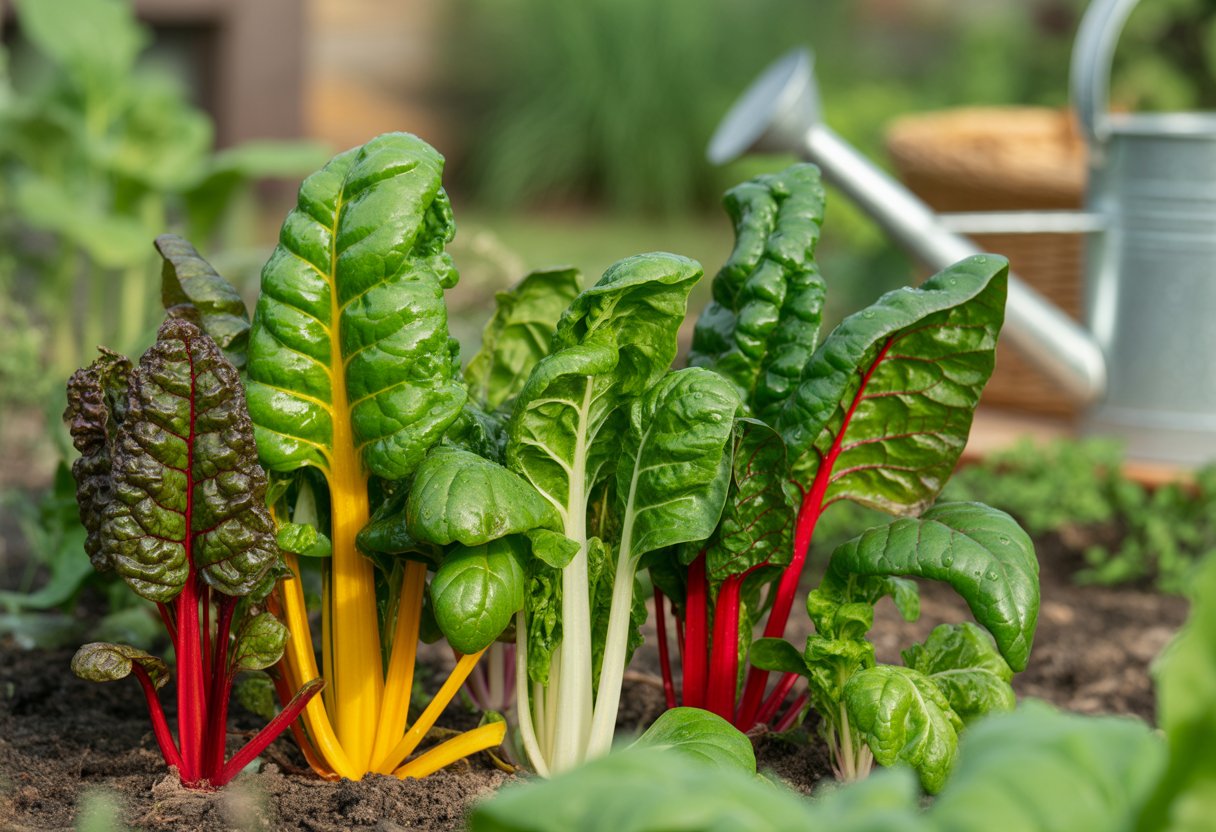
A little attention goes a long way with chard. Watch for pests, feed the soil, and your plants will reward you.
Managing Pests and Diseases
Chard doesn’t get hammered by pests too often, but aphids and leaf miners sometimes show up. Aphids gather on leaves and stems, sucking sap and weakening the plant.
Leaf miners tunnel through leaves, leaving weird squiggly tracks and making the foliage look rough. Check your plants regularly so you can spot trouble early.
Spray aphids with insecticidal soap if they get out of hand. For leaf miners, pull off and toss affected leaves right away.
Good airflow and watering at the soil (not overhead) help prevent leaf spot, which causes brown or yellow patches. Snip off any infected leaves quickly—don’t let it spread.
Fertilizing and Supporting Growth
Chard needs a steady diet of nutrients to keep pumping out leaves. Mixing compost into the soil before planting gives it a jump start.
During the season, feed with a balanced fertilizer or side-dress with compost every few weeks. Nitrogen helps with leafy growth, but too much can make stems weak and floppy.
Mulch helps keep moisture even and soil temps steady. Healthy roots mean happy chard.
Harvesting and Using Chard
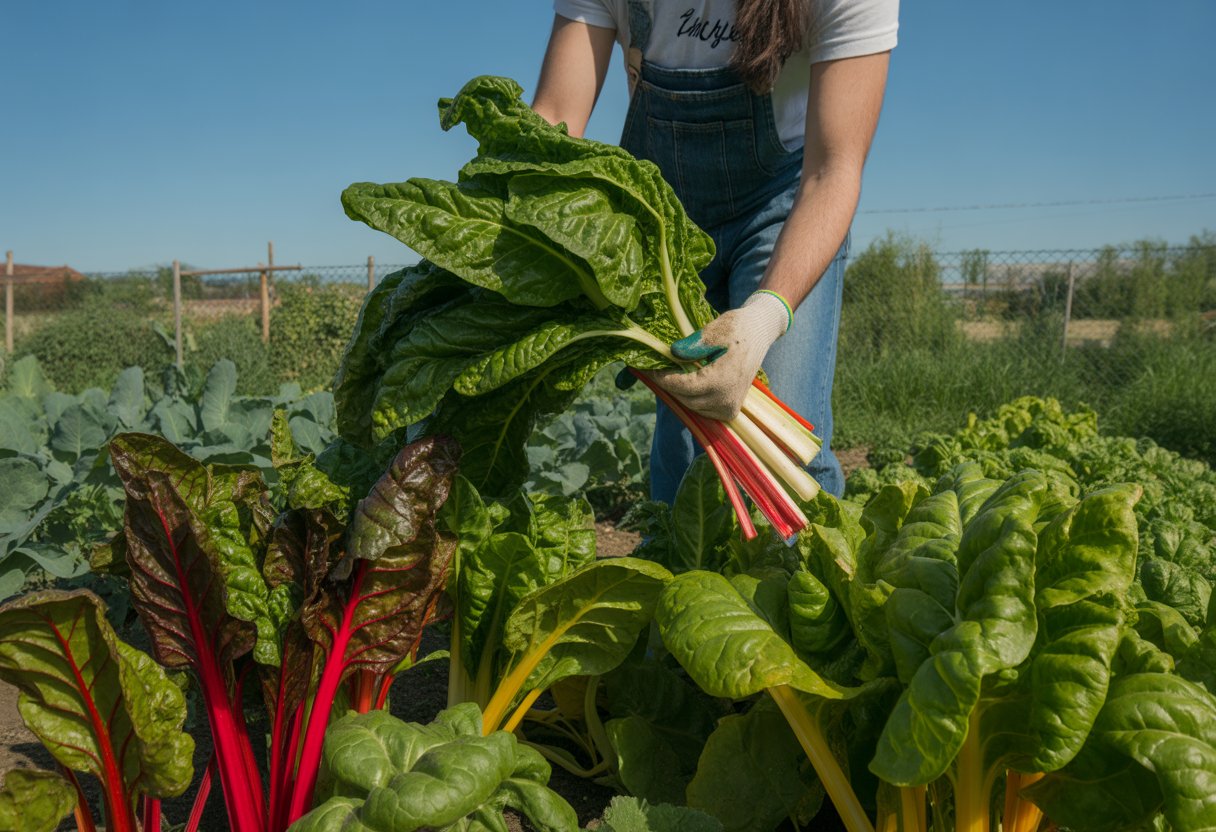
Chard’s super flexible—you can harvest leaves at different sizes for different recipes. Timing and technique matter for flavor, texture, and how long it stays fresh.
When and How to Harvest Chard
Once chard leaves hit 6–8 inches tall, you can start picking. Grab the older, outer leaves first by cutting them at the base, and let the younger ones keep growing.
The cut-and-come-again method is fantastic for a steady harvest. Don’t strip the plant bare, though—it needs some leaves to keep going.
Baby leaves are tender and mild, perfect for salads. The bigger, darker ones are best cooked.
Try harvesting early in the morning for the best flavor and less wilting. Use sharp scissors or a knife to avoid mangling the stems and to keep the plant bouncing back.
Storing and Preparing Chard for Meals
Keep chard unwashed in a plastic bag with a few air holes in the fridge. It usually stays fresh for up to 5 days.
Wash it right before you use it, or it’ll spoil way faster. For salads, toss in the raw, tender leaves—they bring a subtle earthy flavor.
Older, tougher leaves? They’re better cooked, maybe in soups, sautés, or steamed. I always pull out the tough stems before cooking since it makes the texture so much better.
Give the leaves a good rinse to get rid of any dirt. Slice the stems thin if you want to cook them; they need a bit more time than the leaves.
Chard fits into all kinds of recipes, honestly. It’s a pretty easy way to add some nutrition to your meals.
This was exactly what I needed.
Thank you for reading, Zach! Happy planting! -Plant Native Team