Mockorange, Syringa (Philadelphus lewisii)
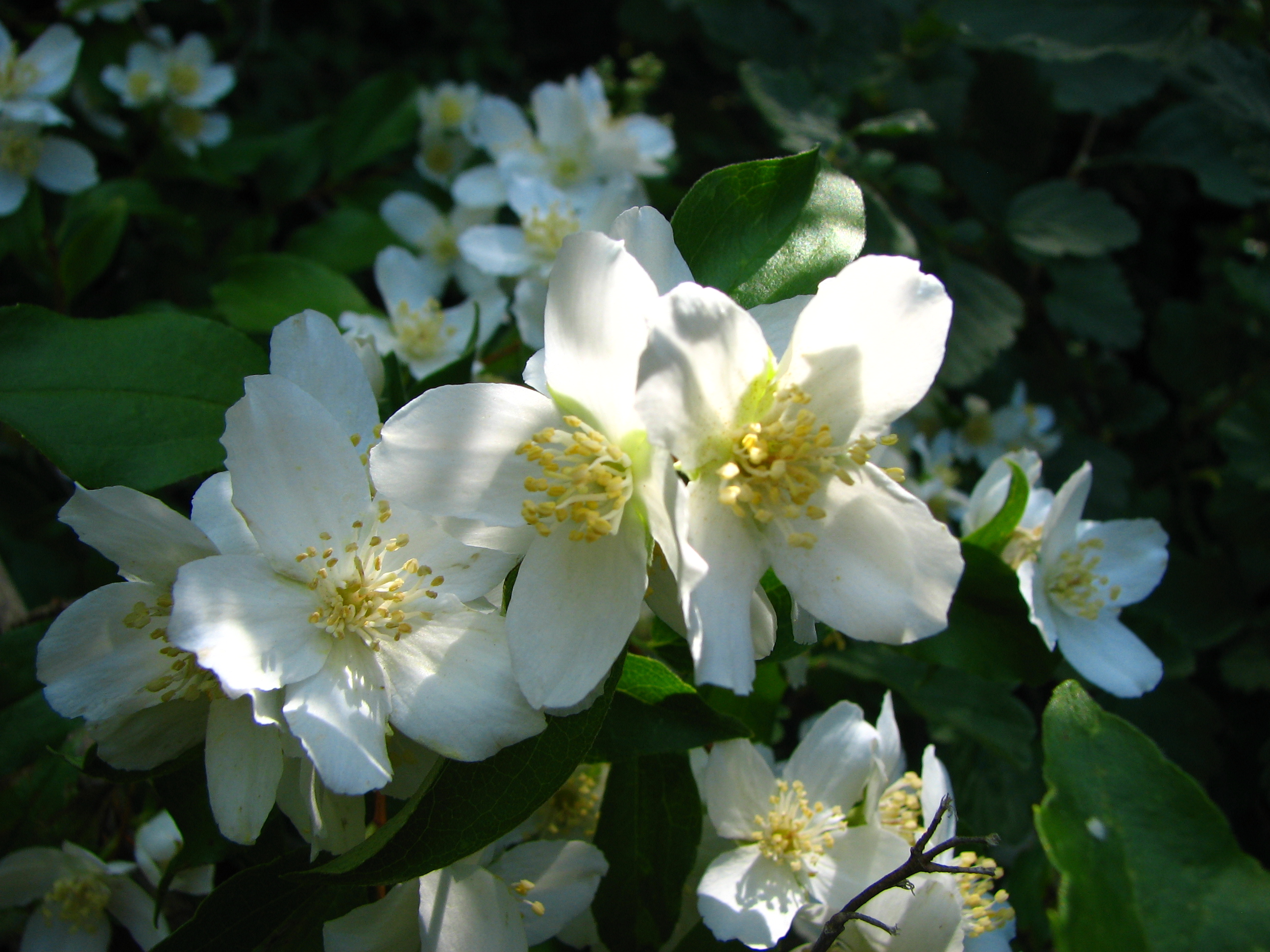
Philadelphus lewisii, commonly known as Lewis’ Mock-orange, Mockorange, or Syringa, is a deciduous shrub that captivates gardeners and wildlife alike with its profusion of intensely fragrant white flowers. Named after explorer Meriwether Lewis who collected the first scientific specimen during the famous Lewis and Clark Expedition in 1806, this hardy native offers four-season interest and exceptional drought tolerance once established. As Idaho’s state flower, Lewis’ Mock-orange represents the resilient beauty of the American West and serves as both an ornamental showpiece and crucial wildlife habitat in native plant gardens.
Quick Facts
| Scientific Name | Philadelphus lewisii Pursh |
| Plant Type | Deciduous shrub |
| Height | 5-10 feet (1.5-3 m) |
| Sun Exposure | Full sun to partial shade |
| Water Needs | Low to moderate (drought tolerant) |
| Soil Type | Well-drained, adaptable to rocky or poor soils |
| Soil pH | 6.0-8.0 (slightly acidic to alkaline) |
| Bloom Time | Late spring to early summer (May-July) |
| Flower Color | Pure white with yellow stamens |
| USDA Hardiness Zones | 3-9 |
Identification
Lewis’ Mock-orange is easily recognized by its distinctive combination of intensely fragrant white flowers, oppositely arranged leaves, and characteristic bark that peels off in small flakes. This rounded shrub typically reaches 5-10 feet in height with an equal or greater spread, creating an impressive presence in the landscape when in full bloom.
Leaves
The leaves are oppositely arranged, oval-shaped, and typically measure 1¼ to 2 inches (3-5 cm) in length. They vary somewhat in size across individual plants but consistently display a light green color with a distinctive rough texture that feels almost sandpapery to the touch. Leaf margins may be smooth or have fine serrations, and the leaves provide little fall color, turning yellow-brown before dropping in autumn.
Bark
Young stems emerge with a distinctive reddish color that gradually fades to gray as the branches mature. The bark on older stems develops an attractive shredding pattern, peeling off in small, fibrous flakes that reveal lighter colored bark underneath. This exfoliating characteristic adds winter interest and helps distinguish Lewis’ Mock-orange from similar shrubs.
Flowers
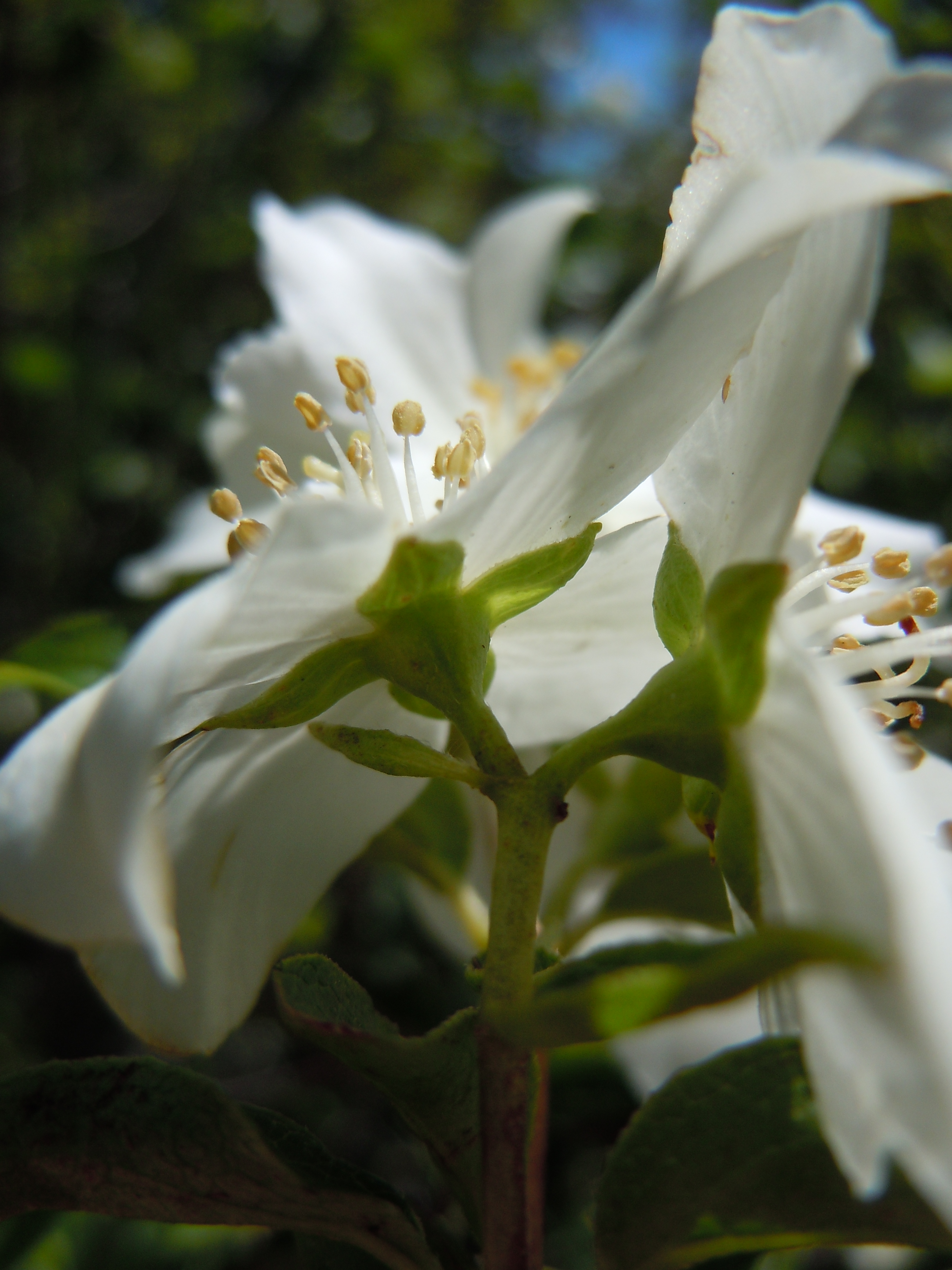
The flowers are the plant’s crowning glory, appearing in terminal clusters during late spring to early summer. Each flower features four pure white petals up to 1½ inches (4 cm) long, surrounding numerous bright yellow stamens that create a beautiful contrast. At peak bloom, the entire shrub becomes covered in a spectacular mass of blossoms that can be seen and smelled from considerable distances. The fragrance is often described as similar to orange blossoms with hints of pineapple, and it’s so intense that a single blooming shrub can perfume an entire garden area.
Fruit and Seeds
Following the impressive flower display, small woody capsules develop, each about 1 cm long with pointed, wing-like projections. These capsules contain numerous small brown seeds that are dispersed when the capsule splits open in late summer or fall. Drought stress during fruit development can prevent the production of viable seeds, making adequate moisture important during the post-bloom period if seed production is desired.
Native Range
Lewis’ Mock-orange has a broad native distribution across western North America, extending from northwestern California through the Pacific Northwest and inland to the northern Rocky Mountains. This extensive range demonstrates the species’ remarkable adaptability to diverse climatic and environmental conditions, from coastal regions to high mountain valleys.
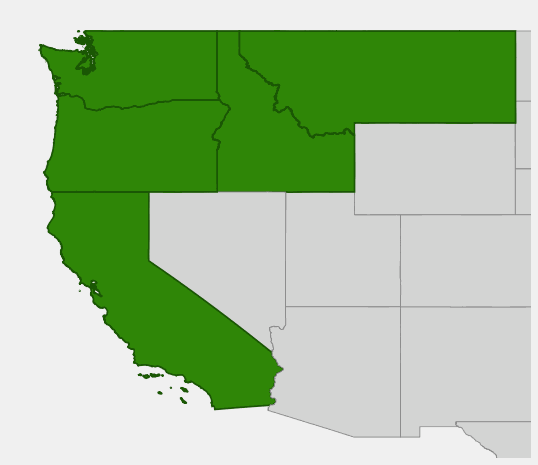
In the Cascade Range, Lewis’ Mock-orange grows from sea level up to 7,000 feet elevation, while in the Sierra Nevada it typically occurs between 1,000-5,000 feet. This elevational flexibility reflects the species’ tolerance for varying temperature and precipitation patterns. The plant shows particular affinity for forest edges, open woodlands, and transitional zones between different habitat types.
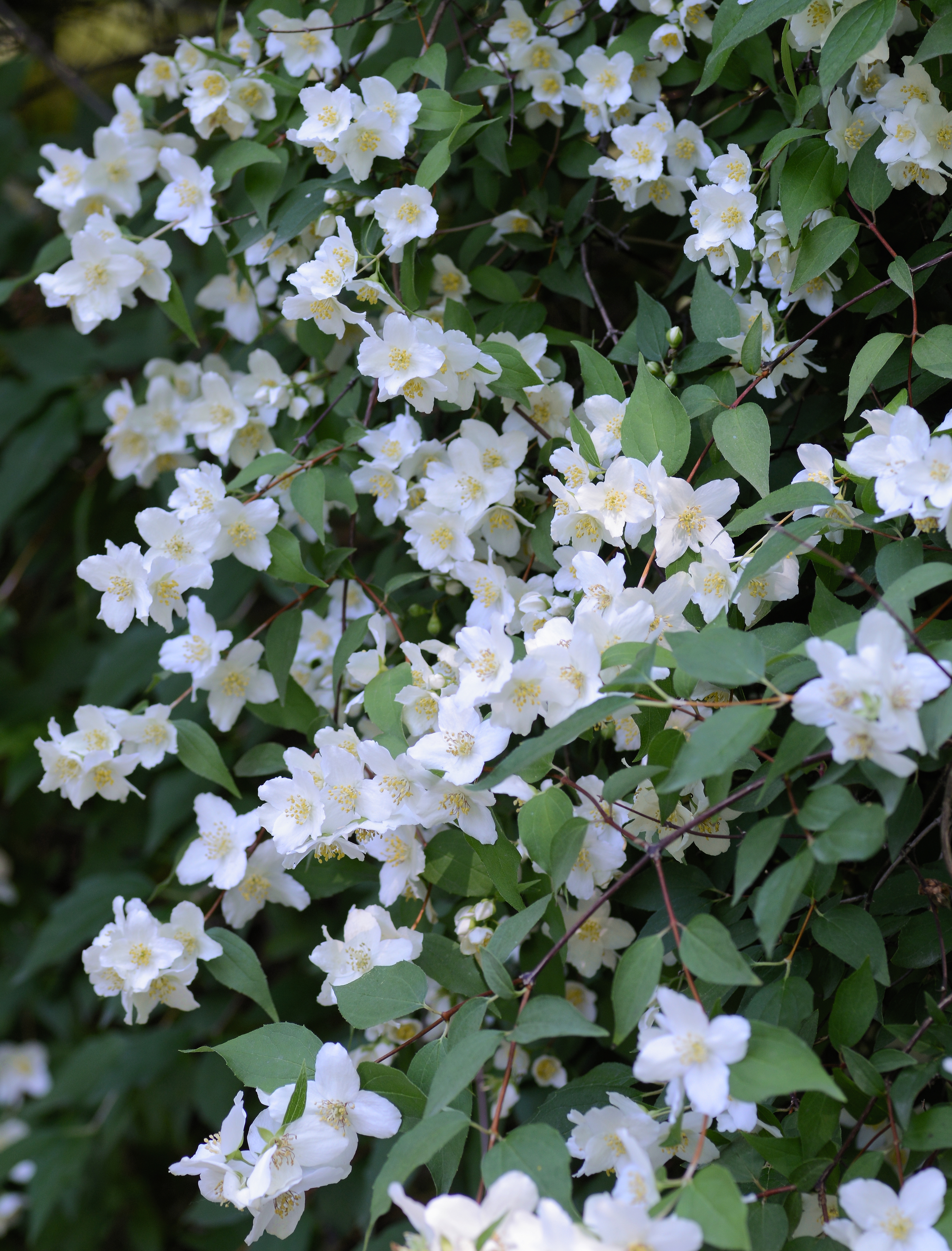
While Lewis’ Mock-orange prefers full sun locations, it demonstrates remarkable tolerance for partial shade conditions. In its native habitat, it commonly occurs in open coniferous forests dominated by Douglas-fir, Ponderosa pine, and various fir species. In drier regions of the Northwest, it tends to concentrate in moister microsites and riparian areas, while in areas with higher rainfall it can thrive on drier slopes and rocky outcrops.
📋 Regional plant lists featuring Lewis’ Mock-orange: Western Oregon & Western Washington
Growing & Care Guide
Lewis’ Mock-orange stands out as one of the most resilient and low-maintenance native shrubs for western gardens. Once established, it requires minimal care while providing maximum visual impact, making it an excellent choice for both novice and experienced gardeners seeking reliable native plant performance.
Light Requirements
For optimal flowering and overall health, provide Lewis’ Mock-orange with full sun exposure, which means at least 6 hours of direct sunlight daily. While the plant tolerates partial shade conditions and will still bloom reasonably well with 4-6 hours of sun, full sun locations produce the most abundant and fragrant flower displays. In excessively hot climates, some afternoon shade can help prevent stress during the hottest part of the day.
Soil Preferences
One of the plant’s greatest strengths is its adaptability to a wide range of soil conditions. Lewis’ Mock-orange thrives in well-drained soils but shows remarkable tolerance for rocky, sandy, or clay-based soils as long as drainage is adequate. The plant actually prefers somewhat lean soils and can struggle in overly rich, heavily fertilized conditions that promote excessive vegetative growth at the expense of flowering.
Soil pH flexibility is another advantage, with the plant tolerating everything from slightly acidic (6.0) to moderately alkaline (8.0) conditions. This pH tolerance makes it suitable for gardens with challenging soil chemistry where many other ornamental shrubs might struggle.
Water Requirements
Established Lewis’ Mock-orange plants are notably drought tolerant, making them ideal for xeriscaping and low-water gardens. During the first year after planting, provide regular watering to help establish a strong root system. Once established, the plant can survive extended dry periods with minimal supplemental irrigation.
In areas with typical Pacific Northwest precipitation patterns, mature plants often require no summer watering once established. However, some supplemental irrigation during bloom time and fruit development periods will ensure optimal performance and seed production if desired. Deep, infrequent watering is preferred over frequent shallow watering.
Planting Tips
Plant Lewis’ Mock-orange in spring or fall for best establishment results. Dig a hole twice as wide as the root ball but no deeper than the original container depth. Backfill with native soil rather than amended potting mix, as this encourages roots to venture beyond the planting hole and adapt to local soil conditions.
Space plants 6-8 feet apart to allow for mature spread, or plant closer for faster screening effects with the understanding that some thinning may be needed later. The plant’s natural form is quite attractive, so avoid the temptation to plant too closely just for immediate impact.
Pruning and Maintenance
Lewis’ Mock-orange requires minimal pruning when allowed to assume its natural rounded form. If pruning is necessary, perform it immediately after flowering since the plant blooms on previous year’s wood. Removing spent flowers can improve the plant’s appearance but isn’t necessary for plant health.
Older, overgrown specimens can be rejuvenated through selective removal of the oldest canes at ground level, allowing vigorous new growth to emerge from the base. This type of renewal pruning is best done in late winter or early spring before new growth begins.
Propagation
Lewis’ Mock-orange can be propagated through both seed and vegetative methods. Seeds require a cold stratification period and should be sown in fall or given 2-3 months of cold, moist treatment before spring planting. Vegetative propagation through softwood cuttings taken in early summer generally provides faster and more reliable results.
The plant also spreads naturally through underground rhizomes, and these natural divisions can be carefully separated and transplanted to new locations during dormancy.
Wildlife & Ecological Value
Beyond its ornamental appeal, Lewis’ Mock-orange provides crucial habitat and resources for native wildlife, making it a cornerstone species for ecological gardening and wildlife-friendly landscapes.
Pollinators
The intensely fragrant flowers serve as powerful pollinator magnets, attracting a diverse array of beneficial insects during the crucial late spring to early summer blooming period. Native bees, including mason bees, leafcutter bees, and various sweat bees, are frequent visitors, collecting both nectar and pollen from the abundant yellow stamens.
Butterflies and day-flying moths are also drawn to the fragrant blooms, while the extended flowering period ensures a reliable nectar source during a critical time for pollinator populations. The plant’s native status means it has co-evolved with regional pollinators, making it particularly valuable for supporting local pollinator communities.
Birds
Lewis’ Mock-orange provides important habitat structure for numerous bird species. The dense branching pattern offers excellent nesting sites for small songbirds, while the seeds, though small, are consumed by quail and other seed-eating birds during fall and winter months.
The shrub’s tendency to form thickets creates thermal cover and security habitat that’s particularly valuable during harsh weather periods. Many insectivorous birds also benefit from the abundant insect activity attracted to the flowers during blooming season.
Mammals
The foliage and young twigs provide important winter browse for elk and deer, particularly in mountainous regions where other food sources may be limited by snow cover. Research in Montana has documented mock-orange comprising up to 2% of mule deer winter diets in some areas.
Small mammals, particularly squirrels, harvest and cache the seeds for winter food supplies. The dense branching also provides shelter and escape cover for small mammals and ground-dwelling species.
Fire Ecology and Regeneration
Lewis’ Mock-orange has evolved in fire-prone ecosystems and demonstrates remarkable resilience to wildfire. While the above-ground portions are typically killed by fire, the plant’s extensive rhizome system allows for vigorous resprouting from the root crown and underground stems.
Post-fire regeneration is often spectacular, with burned plants producing multiple new shoots that can achieve 50% of their pre-fire size within a single growing season. This rapid recovery makes Lewis’ Mock-orange valuable for post-fire habitat restoration and erosion control.
Interestingly, fire-stimulated regrowth is often more palatable to browsing wildlife than unburned plants, with elk showing significantly higher utilization rates on recently burned sites. This suggests an important ecological role in post-fire ecosystem recovery.
Cultural and Historical Significance
Lewis’ Mock-orange holds special cultural significance as Idaho’s designated state flower, officially adopted in 1931. The selection recognized both the plant’s beauty and its symbolic representation of Idaho’s wild heritage and pioneer spirit.
Native American tribes throughout the plant’s range have utilized Lewis’ Mock-orange for numerous purposes for countless generations. The hard, dense wood was particularly valued for crafting hunting and fishing implements, snowshoes, pipes, combs, cradles, and furniture. The straight young stems were ideal for making arrows, giving rise to one of its traditional common names: Indian arrowwood.
The leaves and bark contain natural saponins (soap-like compounds) and were traditionally mixed with water to create a mild, biodegradable soap for cleaning purposes. This practical use led to the plant being called “soap plant” in some regions. The fragrant flowers were also used to prepare perfumes and aromatic teas, demonstrating the plant’s versatility in traditional cultures.
The plant’s scientific name honors Captain Meriwether Lewis of the famous Lewis and Clark Expedition, who first collected specimens for science during the expedition’s return journey in 1806. This historical connection adds another layer of significance for those interested in American exploration history and botanical discovery.
Cultivars and Varieties
While the straight species is widely available and generally recommended for native plant gardens, several cultivars have been developed for specific landscape applications:
‘Waterton’ is a compact selection developed by the Alberta Horticultural Research Station in Brooks, Alberta. This cultivar typically reaches only 4-6 feet in height, making it suitable for smaller gardens or foundation plantings. It was named after Waterton Lakes National Park in Canada, where the original specimen was discovered in 1933.
For most native plant applications, the straight species is preferred as it maintains the genetic diversity and ecological relationships that have developed over millennia. Cultivars may have altered characteristics that could affect their value to native wildlife or their long-term adaptability to local conditions.
Common Problems and Solutions
Lewis’ Mock-orange is remarkably trouble-free, with few serious pest or disease issues. Its biggest enemy is often improper siting or care rather than any inherent weaknesses.
Poor flowering is the most common complaint and usually results from insufficient sunlight, over-fertilization, or improper pruning. Ensure the plant receives at least 6 hours of direct sun and avoid high-nitrogen fertilizers that promote leafy growth at the expense of flowers. If pruning is necessary, do it immediately after flowering since buds for next year’s blooms form soon after.
Drought stress during the first year can cause leaf drop or poor establishment. While mature plants are very drought tolerant, newly planted specimens need regular water their first season. Mulching helps retain soil moisture and moderate soil temperatures.
Overgrowth in favorable conditions can create an unruly appearance. Rather than shearing the plant, which destroys its natural form and reduces flowering, selectively remove the oldest canes at ground level to encourage renewal from the base.

Looking for a nursery that carries Lewis’ Mock-orange?
Browse our native plant nursery directory: Oregon · Washington