American Larch (Larix laricina)
Larix laricina, commonly known as American Larch, Tamarack, or Eastern Larch, is one of North America’s most remarkable native trees — a deciduous conifer that sheds its needles every autumn in a spectacular blaze of golden yellow. Uniquely among conifers, it grows, flowers, bears cones, and completely renews its needle canopy each year, giving it the seasonal drama of a broadleaf tree and the cone-bearing structure of an evergreen. Its common name “tamarack” comes from the Algonquian language, reflecting centuries of Indigenous use throughout its northern range.
Growing naturally in cold boreal forests, bogs, and swampy ground across the northern United States and Canada, American Larch is a pioneer species that thrives in conditions many trees cannot tolerate — waterlogged, acidic, nutrient-poor soils, extreme cold, and open, sunny exposures. It is one of the hardiest trees in North America, surviving temperatures as low as –65°F (–54°C), and is one of the few trees that can grow in permafrost regions. Despite its association with harsh environments, Tamarack is a fast-growing, graceful tree that brings extraordinary autumn color to the northern landscape.
In the garden and restoration context, American Larch is prized for its ability to stabilize wetland edges, provide structure in rain gardens and wet meadows, and offer outstanding wildlife habitat. Its small, soft needles cast a delicate, open shade in summer, and its autumn golden display rivals any broadleaf tree. The inconspicuous male and female cones, though small, provide critical food for birds and small mammals in winter.
Identification
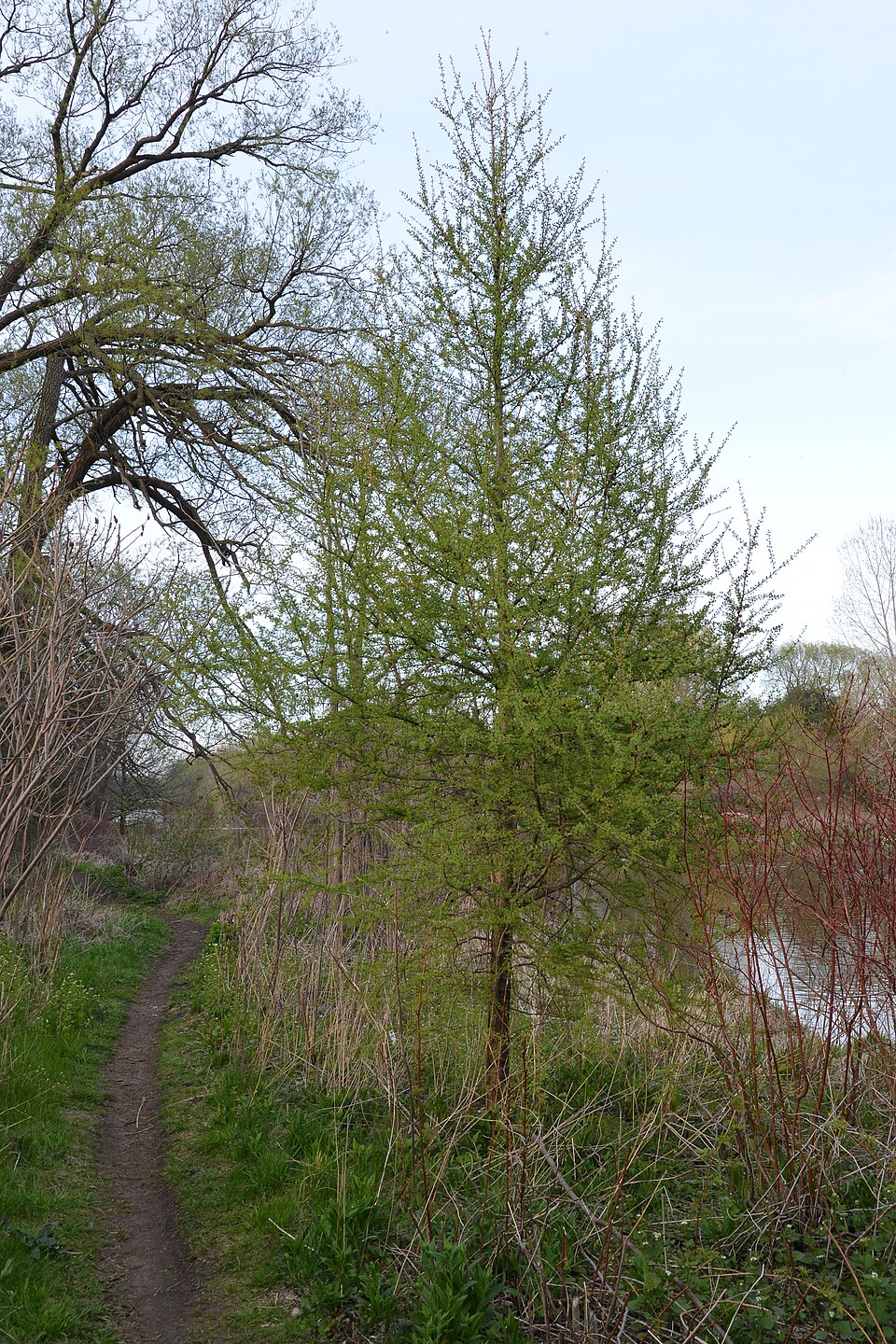
American Larch is a medium to large deciduous conifer typically reaching 50 to 70 feet (15–21 m) in height, though exceptional specimens can exceed 100 feet. The crown is conical and open in youth, becoming more irregular and spreading with age. The overall form is airy and somewhat sparse compared to evergreen conifers, with horizontal to slightly drooping branches.
Bark
The bark of young trees is smooth, thin, and gray-brown. As the tree matures, it develops a flaky, scaly texture with small reddish-brown to grayish plates that may become more deeply furrowed with age. The inner bark is purplish-red. The bark is relatively thin compared to other conifers, making the tree somewhat sensitive to surface fires, though it resprouts vigorously following low-intensity burns.
Needles
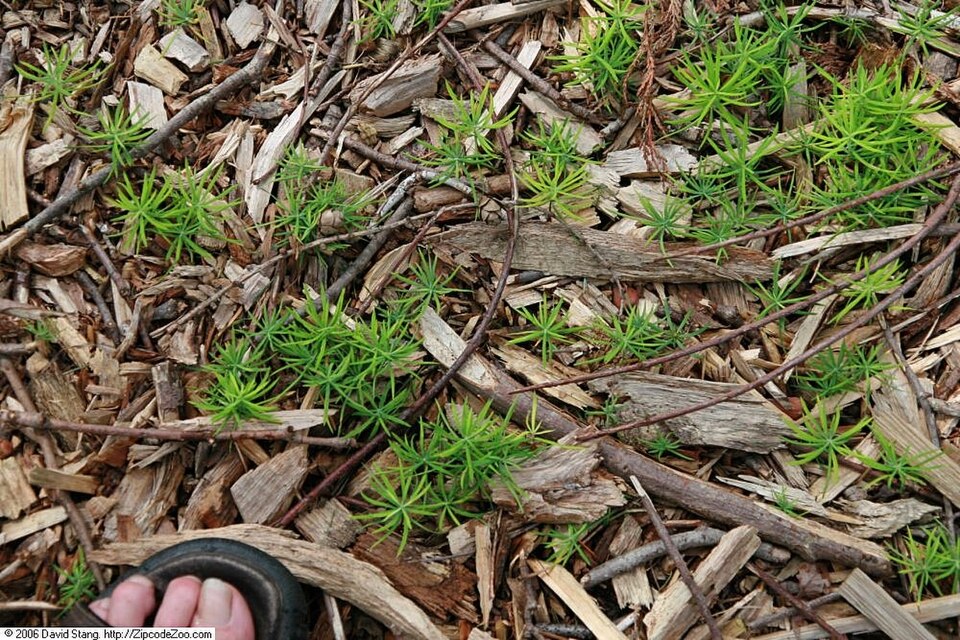
The needles are the tree’s most distinctive feature. Soft, slender, and ¾ to 1¼ inches (2–3 cm) long, they are blue-green in summer and turn a brilliant golden-yellow in autumn before dropping — making Tamarack the only native conifer in the Great Lakes region that loses all its needles each fall. Needles grow in dense clusters (fascicles) of 10 to 20 on short, woody spur shoots on older branches, and singly on new growth. This growth pattern creates the characteristic soft, feathery appearance of the foliage.
Cones & Reproductive Structures
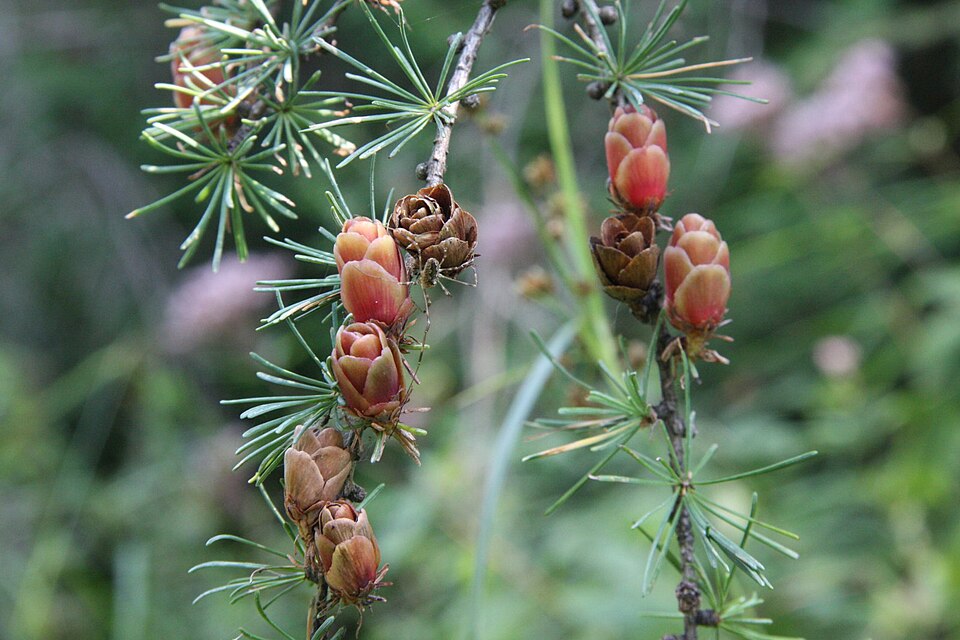
The cones are small — just ½ to ¾ inch (1–2 cm) long — erect, and ovoid to cylindrical, with 12 to 25 rounded, smooth scales. They are among the smallest seed cones of any North American conifer. The male pollen cones are small, rounded, and yellow. Seed cones mature from red-purple to brown and persist on the tree for several years after releasing their seeds. The small seeds (just 2–5 mm) are winged and dispersed by wind. Fruiting begins as early as 10–15 years of age, with good seed years every 3–6 years.
Quick Facts
| Scientific Name | Larix laricina |
| Family | Pinaceae (Pine) |
| Plant Type | Deciduous Conifer (Tree) |
| Mature Height | 50–70 ft |
| Sun Exposure | Full Sun |
| Water Needs | High |
| Bloom Time | April – May |
| Cone Type | Small, upright; ½–¾ in |
| Fall Color | Brilliant golden yellow |
| Growth Rate | Rapid (1–2 ft/year when young) |
| USDA Hardiness Zones | 1–6 |
Native Range
American Larch has one of the largest native ranges of any North American tree species, spanning from the Yukon and Alaska across the entire boreal forest belt to the Atlantic coast of Newfoundland and Labrador. Within the contiguous United States, it occurs naturally across the northern tier — from Maine, New Hampshire, Vermont, and New York south through Pennsylvania and West Virginia at higher elevations, then west through Ohio, Indiana, Michigan, Wisconsin, and Minnesota into the Dakotas and Montana. It is most abundant and widespread across the Great Lakes region and the northern New England states.
Within this range, Tamarack is closely associated with cold, poorly drained soils — sphagnum bogs, shrub swamps, and wet lowlands where cold air and waterlogged conditions limit competition from other conifers. It can grow on upland sites but is most competitive in wetland environments where it is often the dominant or co-dominant tree species. In Minnesota and Wisconsin, Tamarack bogs are an important and distinctive ecological community type.
Despite its vast range, Tamarack populations have declined in some areas due to rising minimum winter temperatures, which favor competing species such as Black Spruce (Picea mariana) and Balsam Fir (Abies balsamea). Climate change is expected to shift the southern boundary of American Larch’s range northward over the coming decades, making conservation planting in the Great Lakes states particularly important.
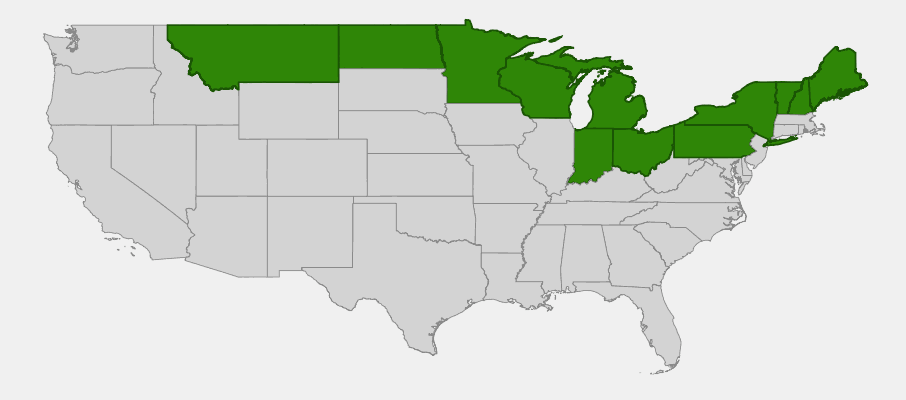
📋 Regional plant lists featuring American Larch: Michigan, Minnesota & Wisconsin
Growing & Care Guide
American Larch is a remarkably adaptable tree for northern gardens and restoration projects, especially in sites with wet or poorly drained soils where few other large trees can succeed. Its rapid growth rate and dramatic seasonal changes make it a rewarding landscape tree for those in the northern tier.
Light
Tamarack is a full-sun species and grows poorly in shade. In its natural habitat, it thrives in open bogs and wetlands where it receives unobstructed sunlight. Plant it in the sunniest available location. Young trees are especially sensitive to shade competition and may languish or die back if overtopped by faster-growing shrubs or trees.
Soil & Water
This is a tree built for wet, acidic, and nutrient-poor conditions. It excels in waterlogged soils that would kill most other trees, including poorly drained clay, sphagnum peat, and seasonally flooded sites. It tolerates standing water for extended periods. In garden settings, it performs best with consistent moisture — avoid dry, well-drained sites unless you can irrigate regularly. Soil pH of 4.0–6.0 (acidic) is ideal; it can tolerate slightly higher pH but growth may be reduced.
Planting Tips
Plant container-grown stock in spring or fall. Choose sites with consistent moisture access — rain gardens, pond margins, wetland edges, or low-lying areas with poor drainage are ideal. Space trees at least 20–30 feet apart for their mature spread. Tamarack establishes quickly once planted in appropriate conditions and typically requires no supplemental irrigation after the first growing season if sited in a suitably moist location.
Pruning & Maintenance
American Larch requires minimal maintenance once established. It is generally pest-resistant, though the Larch Casebearer moth (Coleophora laricella) can defoliate trees in some years — healthy trees typically recover fully without intervention. Prune only to remove dead or broken branches; significant pruning is rarely needed. The tree naturally self-prunes lower branches in shaded conditions.
Landscape Uses
- Wetland restoration — ideal for reforesting bogs, swamps, and poorly drained lowlands
- Rain gardens and bioswales — tolerates intermittent flooding
- Pond and lake margins — stabilizes banks while providing wildlife habitat
- Specimen tree — spectacular golden autumn display in large landscapes
- Windbreaks — fast-growing with good wind tolerance in northern climates
- Wildlife habitat plantings — small cones provide winter food for crossbills and siskins
Special Considerations
Do not plant American Larch on dry, well-drained, or alkaline soils — it will struggle and likely die. It is not suitable for southern gardens and is best in USDA Zones 1–6. Its deciduous habit surprises many gardeners in late fall when it looks “dead” — this is perfectly normal. It leafs out again in early spring with striking bright green new needles.
Wildlife & Ecological Value
American Larch is a keystone species of boreal and northern wetland ecosystems, supporting a remarkable diversity of wildlife throughout all seasons.
For Birds
The small seeds of Tamarack are a critical food source for several specialist boreal bird species. Common Redpolls, Pine Siskins, and both Red and White-winged Crossbills feed heavily on the seeds, which persist in cones on the tree through much of winter. Yellow-rumped Warblers forage in Tamarack branches during migration, and Golden-crowned Kinglets breed in dense Tamarack stands in the northern part of the range. Boreal Chickadees and Black-capped Chickadees also frequent Tamarack groves throughout the year. The open, airy crown structure provides excellent nesting sites for several warbler species.
For Mammals
Snowshoe Hares browse Tamarack bark and needles heavily during winter, and their population dynamics are closely tied to the availability of boreal trees including Tamarack. Moose feed on young Tamarack shoots and browse the bark in late winter. Porcupines occasionally girdle trees while feeding on inner bark. Beavers use Tamarack as dam-building material, and their impoundments often create new habitat for additional Tamarack establishment.
For Insects & Pollinators
The early spring pollen release by male cones provides an important early-season pollen source for native bees emerging from winter dormancy. The foliage supports specialist insects including the Larch Sawfly (Pristiphora erichsonii) and Larch Casebearer. Tamarack also hosts a variety of lepidopteran larvae, supporting the insectivorous bird community that breeds in northern forests.
Ecosystem Role
In boreal wetlands, Tamarack plays a critical structural role — it is often the only tree capable of colonizing the most nutrient-poor and waterlogged sites, providing the canopy layer that creates thermal cover and structural complexity. Its leaf litter, though relatively sparse compared to broadleaf trees, contributes to the unique soil chemistry of bog ecosystems. Fallen trunks create important coarse woody debris for saproxylic insects and cavity-nesting birds.
Cultural & Historical Uses
American Larch has a long history of use by Indigenous peoples across its range. The Algonquian-speaking peoples who gave the tree its common name “tamarack” used virtually every part of the tree. The inner bark was harvested and used as food during times of famine, and a tea made from the bark was used medicinally to treat various ailments including heart conditions, constipation, and skin diseases. The Ojibwe used the roots — which are flexible, strong, and rot-resistant — to stitch birchbark canoes together, lashing the bark panels with split Tamarack roots that were soaked to increase their pliability.
The wood of American Larch is exceptionally durable and rot-resistant, among the most resistant of any North American conifer. It was used by early settlers for fence posts, railroad ties, mine timbers, boat building, and barn foundations because it could last decades in contact with wet soil. The Haudenosaunee (Iroquois) used Tamarack bark medicinally as a poultice for wounds and skin infections. Various nations used the needles to stuff pillows and mattresses, and the gum that exudes from wounds in the bark was chewed and used as a sealant.
In commercial forestry, Tamarack has been used for structural lumber, poles, and pulpwood, though its commercial importance has declined since the mid-20th century. Today, it is primarily valued for its ecological role and ornamental beauty. The unique phenomenon of a deciduous conifer captures the imagination of naturalists and gardeners alike, and the golden autumn display of large Tamarack stands — particularly visible in aerial views of northern bogs — is one of the spectacular seasonal events of the boreal landscape.
Frequently Asked Questions
Is American Larch really a conifer if it loses its needles?
Yes — American Larch is a true conifer in the pine family (Pinaceae). It bears cones, has needle-like leaves, and is closely related to other larches (Larix species) worldwide. The deciduous habit — shedding all needles in autumn — is unusual among conifers but is shared by a few other genera including Dawn Redwood (Metasequoia) and Bald Cypress (Taxodium). It evolved this adaptation in part to reduce water loss and avoid branch damage from the heavy snow loads of boreal winters.
Can I grow American Larch in a garden that isn’t wet?
American Larch strongly prefers consistent moisture and can tolerate waterlogged soils, but it can grow in moderately moist (though not dry) garden soils as well. The key is avoiding dry, well-drained sites — in summer heat with dry soil, Tamarack often struggles and may decline. If your site is moderately moist and in a cool northern climate, it’s worth trying. Water regularly in the first 2–3 years to establish deep roots.
Why does my American Larch look dead in winter?
This is normal! American Larch is deciduous — it drops all its golden needles each autumn and stands bare through winter. This surprises many people who expect conifers to be evergreen. In early spring (April–May), brilliant bright green new needles emerge, completely renewing the canopy. The bare winter silhouette is actually quite attractive against snow, showing the tree’s graceful branching structure.
How fast does American Larch grow?
Tamarack is described as a rapid-growth species — it can grow 1–2 feet per year under ideal conditions in youth. Growth slows as the tree matures. It reaches functional size (30–40 feet) within 20–30 years in good conditions. This rapid growth makes it an excellent choice for restoration planting where quick establishment and canopy cover are goals.
Does American Larch have any serious pests or diseases?
The most significant pest is the Larch Casebearer (Coleophora laricella), a European moth introduced to North America in the 1880s that can cause significant defoliation in some years. Healthy, well-established trees usually recover with a new flush of growth. Larch Sawfly (Pristiphora erichsonii) can also cause defoliation. Native biological controls (parasitic wasps) typically keep populations in check over time.